Our readers keep the lights on and my smoothie glass nicely filled. As an Amazon Associate, I earn from qualifying purchases.
Choosing an affordable compact digital camera often means wading through conflicting claims about megapixels and zoom ranges, but the real challenge is finding a model that delivers consistent image quality without constant battery anxiety or sluggish performance. The best options balance a responsive sensor, reliable autofocus, and a lens that actually reaches beyond your smartphone’s digital crop.
I’m Mohammad Maruf — the founder and writer behind WellFizz. I’ve spent months analyzing sensor specifications, optical zoom mechanics, and real-world performance data across dozens of cameras to isolate the few that truly justify their price tag.
This guide breaks down the top performers across every budget tier, helping you zero in on the best affordable compact digital camera for your specific shooting needs.
How To Choose The Best Affordable Compact Digital Camera
Not all compact cameras are built alike. The right choice depends on how you shoot — casual travel snaps, wildlife at a distance, or vlogging on the go. Here are the critical specs to evaluate before buying.
Optical Zoom vs. Digital Zoom
Optical zoom uses the lens to magnify the subject, preserving image quality. Digital zoom simply crops and enlarges the image, degrading sharpness. For any camera labeled as having 40x or 52x zoom, confirm it is optical — digital zoom is a marketing metric you can ignore.
Sensor Size and Type
A larger sensor captures more light. Compact cameras typically use 1/2.3-inch CMOS sensors, but backside-illuminated (BSI) versions improve low-light performance by reducing noise. The difference between a 16MP and 20MP sensor is less important than whether that sensor can handle dimly lit rooms or twilight landscapes.
Image Stabilization
At full telephoto reach, even subtle hand shake becomes noticeable. Optical Image Stabilization (OIS) mechanically compensates for movement, keeping distant subjects sharp. Cameras without OIS will require a tripod or steady support at high zoom levels.
Battery and Power Source
Some budget compacts run on AA batteries, which are universally available but drain faster during extended use. Rechargeable lithium-ion packs offer longer life per charge and are more convenient for travel, but require a wall outlet or power bank to top up.
Quick Comparison
On smaller screens, swipe sideways to see the full table.
| Model | Category | Best For | Key Spec | Amazon |
|---|---|---|---|---|
| Panasonic LUMIX FZ80D | Superzoom | Wildlife & travel | 60x optical zoom, 20-1200mm | Amazon |
| Sony ZV-1F | Vlogging | Content creation | 1-inch sensor, 20mm wide lens | Amazon |
| Panasonic LUMIX ZS99 | Travel Compact | Pocketable everyday | 30x Leica zoom, 24-720mm | Amazon |
| Canon PowerShot SX740 HS | Ultra-Zoom | Concerts & events | 40x optical zoom, 4K video | Amazon |
| Kodak PIXPRO AZ528 | Superzoom | Astro & wildlife | 52x optical zoom, 6 fps burst | Amazon |
| Kodak PIXPRO AZ405 | Bridge | Beginner zoom | 40x optical zoom, 20MP sensor | Amazon |
| Minolta Retro 48MP | Compact Retro | Creative & style | 48MP stills, 5K video | Amazon |
| Kodak PIXPRO FZ45 | Entry-Level | First-time users | 16MP, 4x optical zoom | Amazon |
| Kodak PIXPRO FZ55 | Everyday Compact | Casual shooting | 16MP, 5x optical zoom | Amazon |
In‑Depth Reviews
1. Panasonic LUMIX FZ80D

The FZ80D brings a 60x optical zoom lens — equivalent to 20-1200mm — into a bridge body that remains lightweight enough for day hikes. Its Power O.I.S. actively counteracts hand shake at the telephoto end, a feature that proves essential when pulling in birds, athletes, or distant landmarks. The 2,360K-dot electronic viewfinder offers a glare-free alternative to the rear LCD in bright sunlight.
4K video recording at 30fps plus a dedicated 4K Photo mode allows you to extract 8-megapixel stills from video clips, useful for capturing fast-moving subjects where traditional shutter timing fails. The contrast-detection autofocus system covers 39 points and locks on quickly in good light, though low-light performance remains a limitation common to small-sensor superzooms. Users consistently praise its stabilization and reach over any smartphone zoom.
Battery drain is the main practical downside — users report faster depletion when shooting video or using the EVF extensively. It uses a rechargeable lithium-ion pack, so carrying a spare is wise for full-day outings. For anyone needing extreme optical reach without jumping to interchangeable-lens systems, this is the most capable contender in the segment.
Why it’s great
- 60x optical zoom (20-1200mm) unmatched in this price range
- Power O.I.S. keeps telephoto shots handheld and sharp
- 4K Photo extraction adds flexibility for action moments
Good to know
- Battery life decreases noticeably with zoom and video use
- Low-light image quality is average due to small sensor
- Menu interface feels less intuitive than competitors
2. Sony ZV-1F

The ZV-1F is purpose-built for content creators, not photographers. Its 20mm ultra-wide lens captures a generous field of view even at arm’s length, making it ideal for vloggers who want to stay in frame without a selfie stick. The larger 1-inch sensor with an F2.0 aperture delivers genuine background defocus — something compact cameras with smaller sensors struggle to achieve.
Sony’s Eye-AF and real-time autofocus tracking, powered by 425 phase-detection points, keep subjects sharp even during movement. The side-articulating touchscreen flips forward for self-recording, and the built-in directional 3-capsule microphone with an included windscreen provides clear audio without external gear. It records 4K video with solid dynamic range, and the Product Showcase mode automatically shifts focus between your face and an object held near the lens.
The trade-offs are significant for traditional photographers: no built-in flash, minimal optical zoom (only digital crop), and a battery life of roughly 45 minutes of continuous recording. This camera is a vlogging tool first and a stills camera second. If your priority is high-quality video for social media, it justifies the investment — but for general photography, a superzoom compact gives you more versatility.
Why it’s great
- 1-inch sensor with F2.0 lens enables real background blur
- 425-point phase-detect AF with Eye-AF for reliable tracking
- Flip-out screen and directional mic designed for vlogging
Good to know
- No optical zoom — relies entirely on digital crop
- Battery lasts about 45 minutes of video recording
- No built-in flash for low-light stills
3. Panasonic LUMIX ZS99

The ZS99 achieves a rare feat: packing a 24-720mm Leica-branded optical zoom into a body that slides into a jeans pocket. At 30x optical zoom with an additional 60x intelligent zoom mode, it covers everything from wide cityscapes to distant concert stages without the bulk of a bridge camera. The 1,840K-dot tiltable touchscreen makes waist-level and overhead compositions comfortable.
4K video recording at 30p and 4K Photo burst at 30fps give you the same extraction flexibility as the FZ80D, but in a smaller package. Bluetooth v5.0 and a dedicated Send Image button streamline photo transfer to your phone via the Panasonic Image App. Users consistently note that color accuracy and macro performance surpass expectations, and the auto mode handles most situations without menu diving.
Autofocus can hunt in dim conditions, and image quality above ISO 1600 shows noticeable noise. The deep menu system requires a learning curve. Battery life is solid for a compact lithium-ion unit, easily lasting a full day of mixed shooting. This is the best option for travelers who want serious zoom reach without carrying a dedicated camera bag.
Why it’s great
Good to know
4. Canon PowerShot SX740 HS
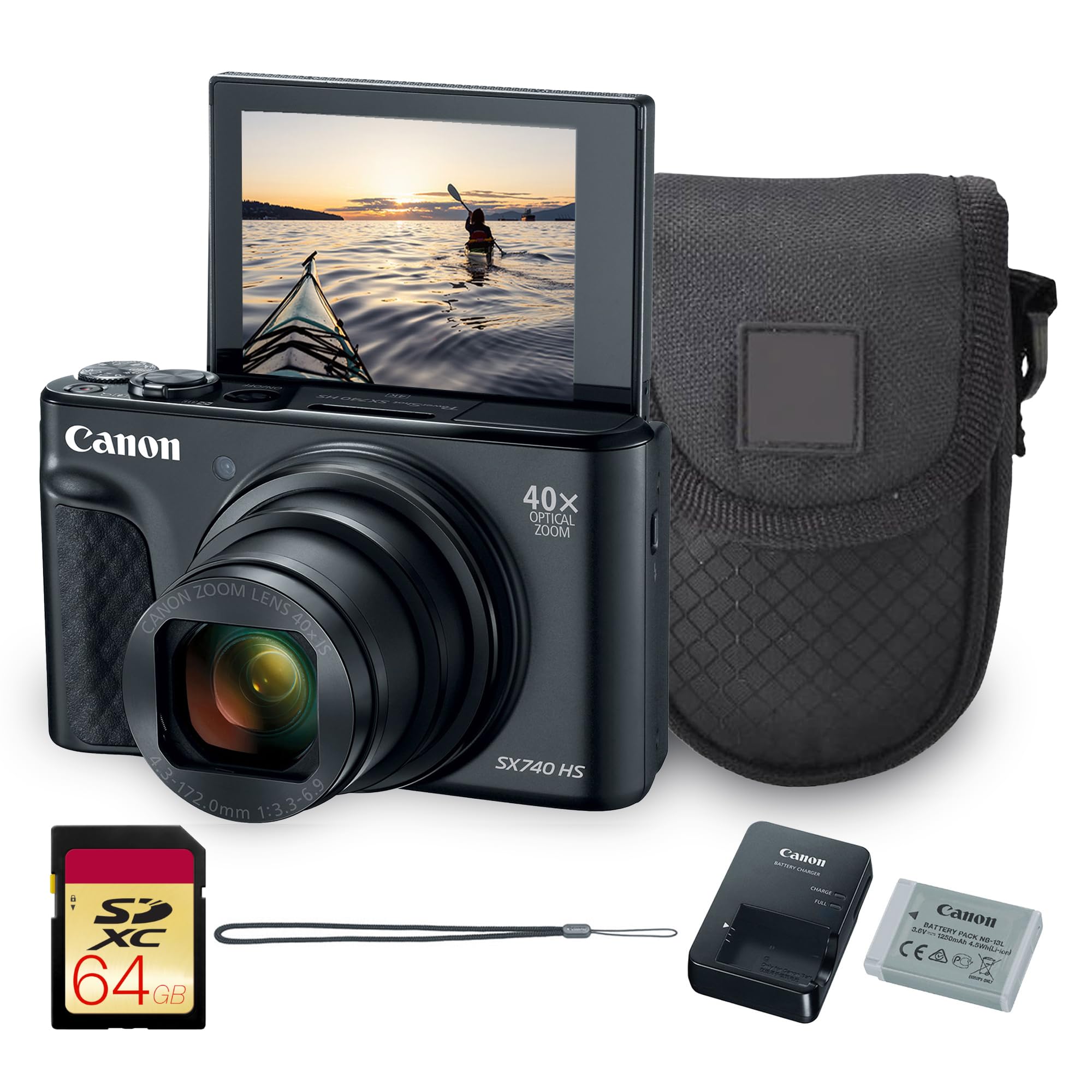
The PowerShot SX740 HS pairs a 20.3MP CMOS sensor with a 40x optical zoom lens covering 24-960mm, all within a compact body that fits in a jacket pocket. The DIGIC 8 image processor delivers fast autofocus and reduced noise compared to earlier Canon compacts. This bundle includes a carrying bag and a 64GB memory card, making it ready for immediate use.
4K UHD video at 30p benefits from built-in 5-axis image stabilization, producing smoother handheld footage than the previous generation. Wi-Fi and Bluetooth connectivity via the Canon Camera Connect app allow remote shooting and quick file transfers. The flip-up screen supports selfie framing, and users report impressive battery longevity even over extended multi-day trips.
The lack of a built-in flash and the small 1/2.3-inch sensor mean low-light stills require steady hands or a flash accessory. Some units shipped are international models without US warranty coverage — verify the seller before buying. For a compact that balances zoom range, video quality, and portability, the SX740 HS remains a top contender.
Why it’s great
- 40x zoom (24-960mm) in a genuinely compact body
- 4K video with 5-axis stabilization for smooth footage
- Excellent battery life reported by multiple users
Good to know
- No built-in flash; low-light stills are limited
- Some units are international models without US warranty
- Small sensor limits dynamic range in challenging light
5. Kodak PIXPRO AZ528
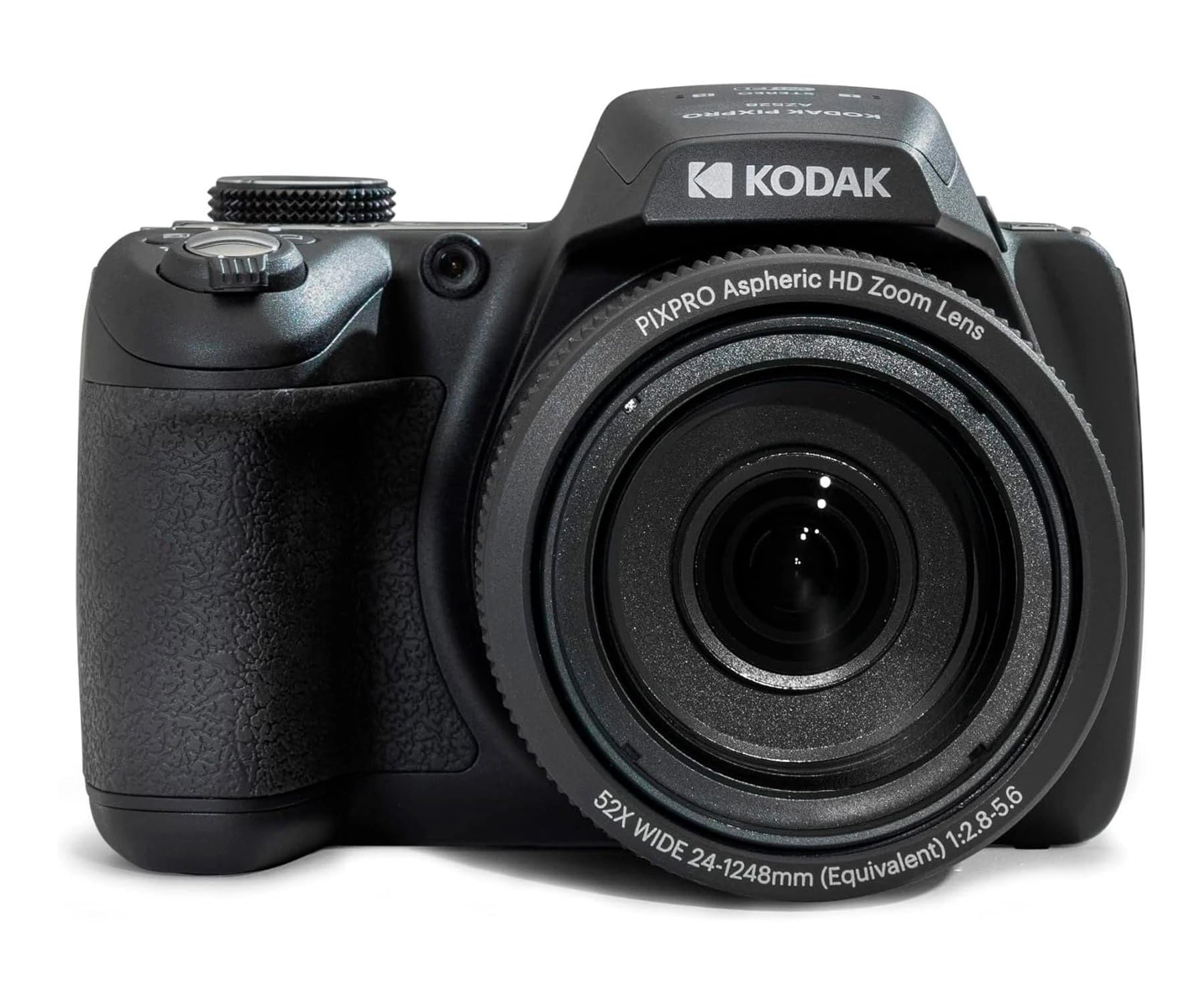
The AZ528 pushes optical reach to 52x — currently one of the longest zoom ranges available without stepping up to a premium superzoom. Its 16MP BSI CMOS sensor offers improved low-light sensitivity over standard CMOS sensors, and the built-in OIS helps stabilize handheld shots at the telephoto end. At 6 frames per second burst shooting, it captures fast action sequences effectively.
Built-in Wi-Fi allows wireless image transfer and remote control via smartphone, which is helpful for tripod-based wildlife or astrophotography setups. The camera body is lightweight and comfortable for extended handheld use, and the USB-C fast charging reduces downtime. Users report good results with bird photography and landscape telephoto shots when lighting conditions are favorable.
Battery life is one of the weaker points — the included lithium-ion pack requires mid-day charging during heavy shooting sessions. The body scuffs easily, and the autofocus can struggle with low-contrast subjects. For the price, the 52x zoom range is unmatched, but you trade some build refinement and battery endurance for that reach.
Why it’s great
- 52x optical zoom is the longest in its tier
- BSI CMOS sensor improves low-light captures
- USB-C fast charging and built-in Wi-Fi
Good to know
- Battery needs topping up during all-day shoots
- Body scuffs easily during travel
- AF struggles with low-contrast subjects
6. Kodak PIXPRO AZ405
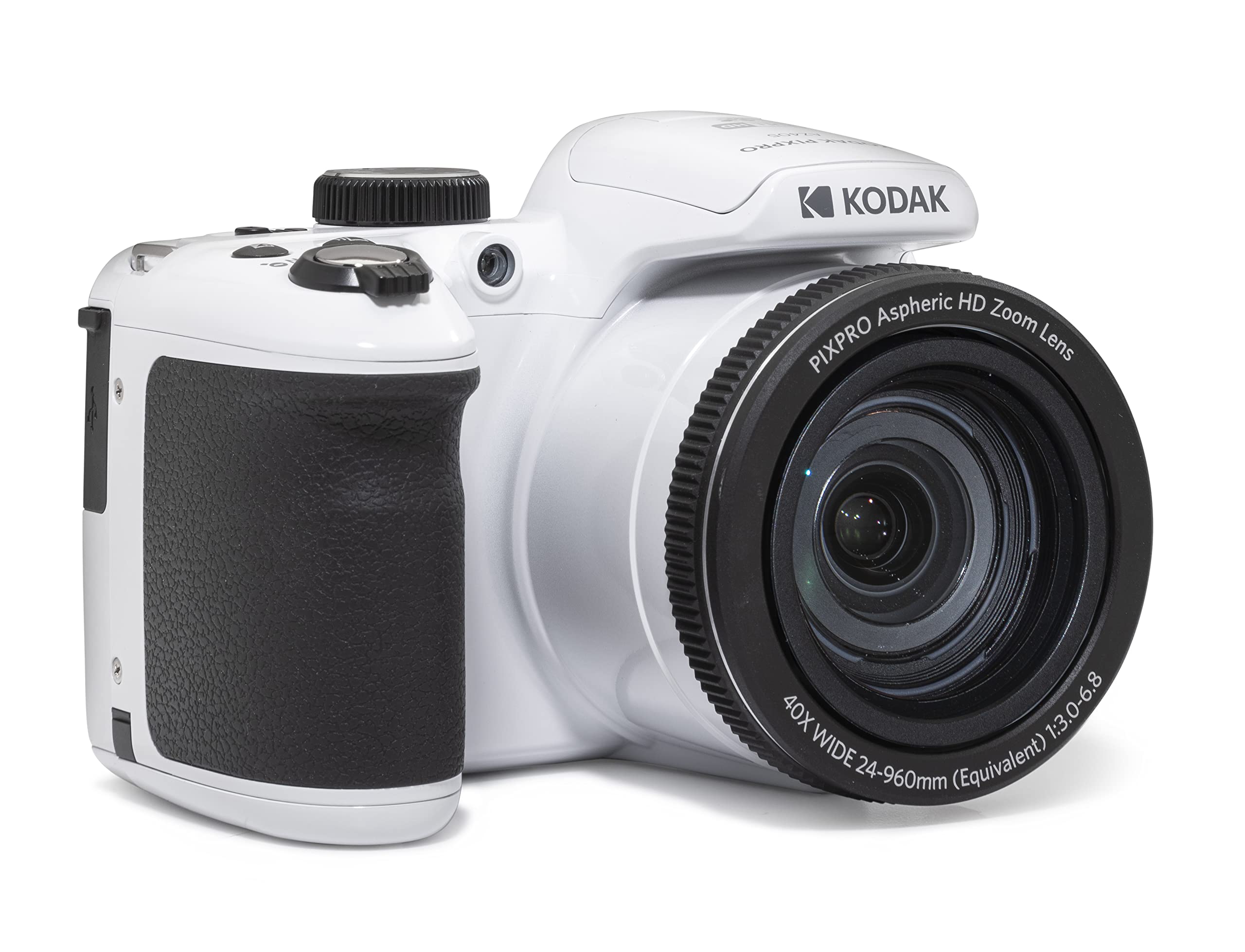
The AZ405 delivers a 40x optical zoom (24mm wide-angle equivalent) and a 20MP CMOS sensor in a bridge-style body that uses standard AA batteries. For travelers heading to remote locations without access to power outlets, the ability to buy fresh batteries anywhere is a practical advantage over proprietary lithium-ion packs. Optical Image Stabilization helps keep telephoto frames steady.
Multiple automatic scene detection modes handle exposure decisions, making this a straightforward option for beginners who want zoom range without manual complexity. The 3-inch LCD is bright enough for outdoor framing, and 1080p Full HD video recording covers family events and travel clips adequately. Users describe the image quality as good for the price, with vibrant colors in daylight.
The primary complaint centers on battery life — some users report rapid drain, with standard AA alkalines depleting after as few as 17 photos. Rechargeable NiMH batteries are strongly recommended to offset this. The menu system includes many features that can overwhelm new users, and the build quality is noticeably less refined than premium bridge cameras. This is a budget-oriented superzoom best suited for occasional use.
Why it’s great
- 40x optical zoom with OIS for steady telephoto shots
- AA battery power is ideal for remote travel
- Beginner-friendly automatic scene modes
Good to know
- AA batteries drain quickly — use rechargeable NiMH
- Build quality feels less robust
- Feature-rich menu can overwhelm new users
7. Minolta Retro 48MP

The Minolta Retro Digital Camera markets an eye-catching 48MP resolution and 5K Ultra HD video recording, backed by a 16x digital zoom and a rear selfie screen. Its retro body design appeals to creators seeking a vintage aesthetic with modern features like WiFi sharing and creative tools including time lapse, slow motion, and built-in color filters. The dual LCD screens and optical viewfinder add framing flexibility.
User experiences are sharply divided. Some praise the camera for its nostalgic digicam output, especially when using digital zoom, which produces a soft, early-2000s look that some creators actively seek. The macro mode performs well for close-up detail, and USB-C charging is convenient. A 32GB microSD card is included to get started immediately.
Indoor and low-light image quality receives consistent criticism — photos can appear grainy and lack sharpness compared to similarly priced models. The digital zoom degrades quality significantly at maximum reach, and users report that buttons feel cramped. It is best understood as a style-focused camera for casual, well-lit outdoor shooting rather than a serious imaging tool.
Why it’s great
- Retro design with modern WiFi and USB-C features
- Includes creative filters, time lapse, and slow motion
- Macro mode produces decent close-up detail
Good to know
- Indoor/low-light image quality is disappointing
- Digital zoom degrades image sharpness
- Button layout feels cramped for larger hands
8. Kodak PIXPRO FZ45
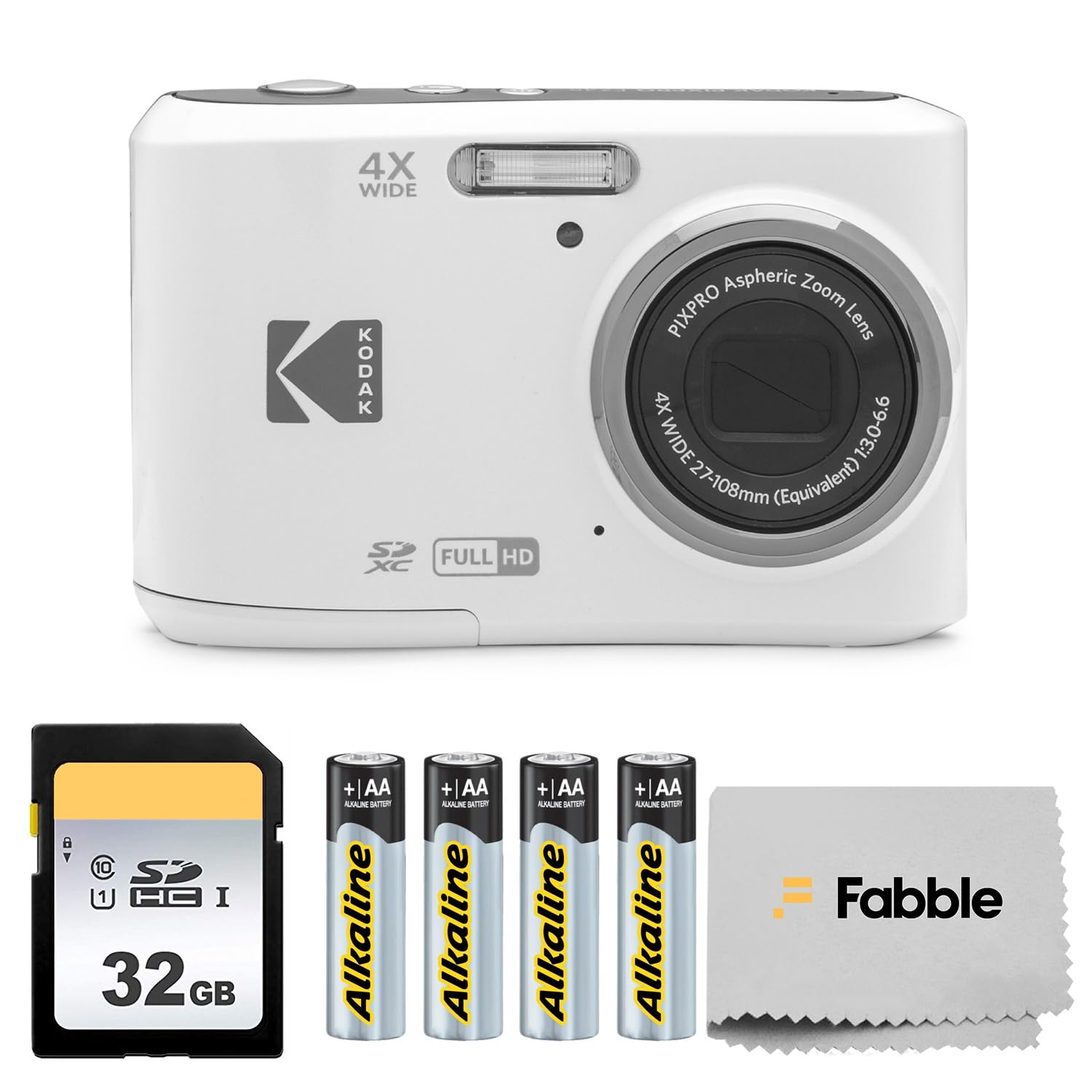
The FZ45 is an entry-level point-and-shoot aimed at users who want a simple, lightweight camera without complex menus or steep learning curves. Its 16MP sensor and 4x optical zoom with a 27mm wide-angle lens cover basic photography needs — family gatherings, travel snapshots, and everyday documentation. The bundle includes AA batteries, a 32GB SD card, and a lens cleaning cloth for true out-of-box readiness.
The 2.7-inch LCD screen is bright enough for framing, and 1080p Full HD video recording supports casual clips. Users consistently mention the camera’s compact size and ease of use as primary strengths, noting that image quality is solid for the entry-level price point. The optical zoom, while modest, delivers sharper results than the digital zoom on most smartphones.
Low-light performance is limited — without a flash or larger sensor, indoor photos after sunset require steady hands or additional lighting. The camera lacks image stabilization, so handheld shots at full zoom can show blur. AA battery convenience is a double-edged sword: widely available but runs through alkalines relatively quickly. This camera works well for young children, absolute beginners, or as a backup travel camera.
Why it’s great
- Extremely simple operation for beginners
- AA batteries are easy to replace anywhere
- Bundle includes SD card and cleaning cloth
Good to know
- No image stabilization limits handheld zoom shots
- Poor low-light performance without a flash
- Modest 4x zoom falls short of competitors
9. Kodak PIXPRO FZ55

The FZ55 improves on the FZ45 with a 5x optical zoom and a rechargeable lithium-ion battery, eliminating the need for constant AA replacements. The 16MP sensor and 28mm wide-angle lens are paired with 1080p Full HD video recording, making it a basic but functional compact for casual photographers. Its compact body is noticeably smaller than a typical smartphone, appealing to users who want to disconnect from their phone.
Users frequently highlight its nostalgic digicam aesthetic, which produces slightly soft, warm-toned images that mimic early 2000s digital cameras — a deliberate style choice that has gained popularity on social media. The camera is easy to operate with straightforward menus, and the included battery and charger reduce ongoing costs. It accepts SD, SDHC, and SDXC cards up to 512GB, offering generous storage for its class.
The 5x optical zoom, while better than the FZ45, still lags behind superzoom models by a wide margin. The camera lacks image stabilization and built-in flash, limiting its versatility in dim environments. Transferring photos to a phone requires an SD card reader, as there is no built-in WiFi. This is a viable option for young users, casual hobbyists, or anyone seeking a low-cost entry point into dedicated camera use.
Why it’s great
- Rechargeable battery saves money on disposables
- Nostalgic image style popular on social media
- Compact and lightweight for daily carry
Good to know
- No image stabilization for handheld telephoto
- No built-in flash for indoor low-light shots
- No WiFi — requires SD card reader for phone transfer
FAQ
Can an affordable compact digital camera take better photos than a smartphone?
What optical zoom range do I need for wildlife photography?
Are AA battery cameras a deal-breaker for travel?
Why do some affordable cameras have higher megapixels but worse image quality?
Final Thoughts: The Verdict
For most users, the best affordable compact digital camera winner is the Panasonic LUMIX FZ80D because its 60x optical zoom, reliable image stabilization, and 4K video capabilities set the standard for what a budget superzoom should deliver. If you want pocket-sized portability with serious reach, grab the Panasonic LUMIX ZS99. And for content creators prioritizing video and autofocus over stills, nothing beats the Sony ZV-1F.

Mo Maruf
I created WellFizz to bridge the gap between vague wellness advice and actionable solutions. My mission is simple: to decode the research and give you practical tools you can actually use.
Beyond the data, I am a passionate traveler. I believe that stepping away from the screen to explore new environments is essential for mental clarity and physical vitality.