Our readers keep the lights on and my smoothie glass nicely filled. As an Amazon Associate, I earn from qualifying purchases.
Landscapes, street scenes, and spontaneous moments don’t wait for bulky gear or expensive setups. The challenge isn’t finding a camera that captures your trip—it’s finding one that balances zoom reach, portability, and image quality without draining your budget before you even board the plane.
I’m Mohammad Maruf — the founder and writer behind WellFizz. I’ve spent years analyzing camera sensor specs, optical zoom ranges, stabilization systems, and real-world customer feedback to separate genuine travel value from overpriced hardware with mediocre optics.
Whether you’re chasing wildlife at 50x zoom or vlogging handheld in low-light alleys, you need a camera that fits your itinerary without breaking your bank account. This guide ranks the top affordable cameras for travel that deliver real performance for real trips.
How To Choose The Best Affordable Camera For Travel
Travel cameras live in a narrow sweet spot: small enough to carry daily, versatile enough to handle daylight landscapes and evening dimness, and durable enough to survive a jostling backpack. Three specs separate a travel-ready camera from a desk ornament.
Optical Zoom Range & Stabilization
A 24mm wide-angle captures bustling markets and cathedral interiors. A zoom beyond 200mm brings distant wildlife or stage performers into frame without stepping closer. Optical zoom is non-negotiable—digital zoom only crops pixels, degrading sharpness. Pair that with optical image stabilization (OIS) or in-body stabilization (IBIS) to avoid blurry shots at full telephoto reach, especially in dimmer light.
Sensor Size & Low-Light Performance
APS-C and Micro Four Thirds sensors (16-24MP) collect more light than the tiny 1/2.3-inch sensors found in budget superzoom compacts. For evening city walks or indoor museum shots without flash, a larger sensor with a wider maximum aperture (f/1.8–f/2.8) captures usable images where smaller sensors produce noise. Megapixels above 20 don’t improve real-world travel prints—sensor area does.
Weight, Battery Life & Charging
A camera you leave at the hotel is worthless. Below 600 grams with a kit lens is ideal for all-day carrying. Battery life rated for 300+ shots per charge covers a full day of casual shooting. USB-C charging is a game-changer—charge from a power bank on the go rather than hunting for wall outlets. Compact bodies under 500 grams with flip-out screens also double as vlogging rigs without needing a separate camcorder.
Quick Comparison
On smaller screens, swipe sideways to see the full table.
| Model | Category | Best For | Key Spec | Amazon |
|---|---|---|---|---|
| Nikon Z 30 + 16-50mm | Mirrorless | Vlogging & travel hybrid | 209-point phase-detect AF | Amazon |
| Sony ZV-E10 + 16-50mm | Mirrorless | Creator-focused travel | 425-point hybrid AF | Amazon |
| OM System E-M10 IV + 14-42mm | Mirrorless | Compact retro travel | 4.5-stop 5-axis IBIS | Amazon |
| Panasonic LUMIX G85 + 12-60mm | Mirrorless | Weather-sealed budget workhorse | 5-axis Dual I.S. 2 | Amazon |
| Canon EOS R100 + 18-45mm | Mirrorless | Entry-level RF system starter | 143 Dual Pixel CMOS AF zones | Amazon |
| Canon EOS Rebel T7 + 18-55mm | DSLR | Budget interchangeable lens learning | 9-point AF system | Amazon |
| Panasonic LUMIX ZS99 | Point & Shoot | Pocketable superzoom | 30x Leica 24-720mm zoom | Amazon |
| Kodak PIXPRO AZ528 | Bridge | Ultra-long reach wildlife travel | 52x optical zoom | Amazon |
| Xtra Edge Pro Action Camera | Action | Waterproof adventure travel | 65ft waterproof, no housing | Amazon |
In‑Depth Reviews
1. Nikon Z 30 with 16-50mm f/3.5-6.3 VR Lens

The Nikon Z 30 strikes the hardest-to-find balance in travel cameras: a compact 405g body with a true APS-C sensor, a versatile 16-50mm kit zoom, and video tools that don’t require external gear. The 209-point hybrid phase-detect autofocus with eye tracking for people and pets locks onto subjects fast enough for street photography and keeps them sharp during 4K recording. The flip-out touchscreen selfie monitor and red REC light make vlogging intuitive without adding bulk.
Low-light performance is solid for its class—the larger sensor gathers enough light to shoot handheld in dimly lit cafes or twilight plazas at ISO 3200 without excessive noise. The built-in stereo microphone includes adjustable sensitivity, and USB-C power delivery means you can run the camera from a power bank during long streaming sessions or all-day walkarounds. The 16-50mm VR lens provides optical stabilization that pairs with the body’s electronic stabilization to smooth out handheld footage.
Missing an electronic viewfinder, which may irk traditional photographers accustomed to eye-level framing, but the rear screen offers accurate exposure preview. Battery life is good for a mirrorless body at roughly 330 shots per charge. For travelers who want one camera for both stills and vlogging without overspending, this is the most versatile balance on the market.
Why it’s great
- Excellent 209-point phase-detect AF with eye tracking for humans and pets
- Compact 405g body with APS-C sensor delivers genuine low-light advantage
- USB-C power delivery for all-day shooting from a power bank
Good to know
- No built-in electronic viewfinder
- Kit lens aperture narrows to f/6.3 at telephoto end
2. Sony Alpha ZV-E10 with 16-50mm f/3.5-5.6 OSS II Lens
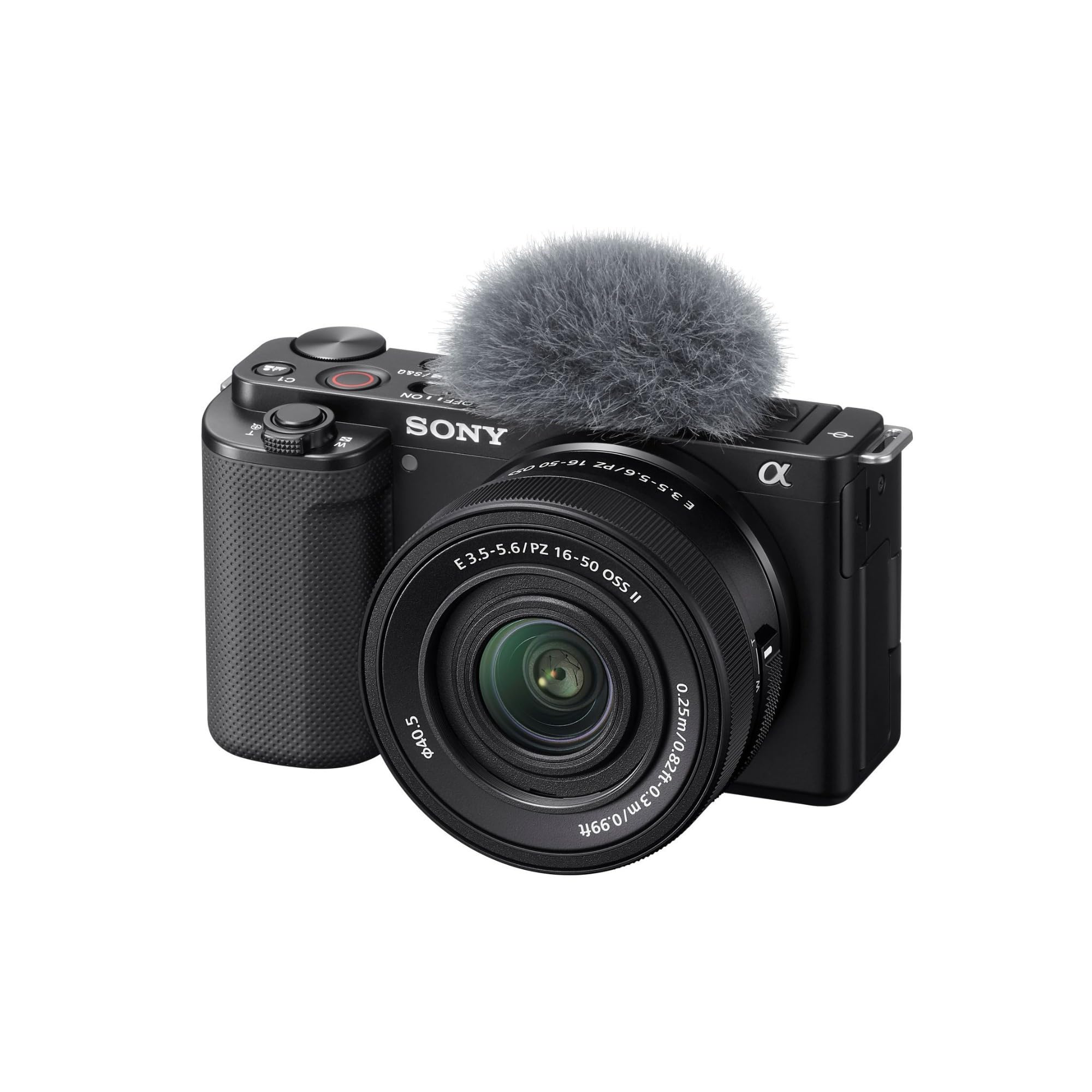
The Sony ZV-E10 packs a 24.2MP APS-C Exmor CMOS sensor and BIONZ X processor into a body built specifically for hybrid content creation on the go. The 425-point hybrid autofocus system with real-time eye tracking for humans and animals is the most advanced in this price tier, making it nearly impossible to miss focus on a moving subject. The Product Showcase Setting smoothly transitions focus from your face to an object held up to the lens—useful for gear reviews or food shots during travel.
4K video is oversampled from a 6K readout with full pixel readout and no pixel binning, delivering noticeably sharper detail than many competitors at this level. The Background Defocus button instantly switches between a blurred background and a deep focus, which is faster than dialing aperture manually. The 16-50mm power zoom lens includes Optical SteadyShot stabilization, and the body supports microSD cards for a smaller footprint.
The lack of in-body stabilization means you rely entirely on lens OIS, which is acceptable for walking shots but limited for run-and-gun video. Battery life is average for mirrorless at about 440 shots. For creators who prioritize autofocus speed and video resolution over still-image viewfinders, this Sony is the sharpest tool in the affordable travel kit.
Why it’s great
- 425-point hybrid AF with real-time eye tracking leads the category
- 4K oversampled from 6K readout with no pixel binning
- Product Showcase and Background Defocus buttons speed up vlogging
Good to know
- No in-body image stabilization
- Battery life demands a spare for full-day shooting
3. OM System Olympus E-M10 Mark IV with 14-42mm f/3.5-5.6 EZ Lens

The E-M10 Mark IV combines a retro-styled metal body with a 20MP Micro Four Thirds sensor and 5-axis in-body image stabilization rated at 4.5 shutter speed steps. This IBIS is the standout feature for travel: it turns a 1/15 second handheld shot into a sharp image inside a dim cathedral without raising ISO into noisy territory. The 14-42mm EZ pancake lens retracts flush with the body, making the whole package small enough to slip into a jacket pocket—rare for an interchangeable lens camera.
The flip-down monitor with dedicated selfie mode activates automatically when you tilt the screen down, which is more elegant than navigating menus. 16 Art Filters including Instant Film give JPEG shooters creative looks straight out of camera without post-processing. The 121-point contrast-detect autofocus is slower than phase-detect systems, but the stabilization more than compensates for handheld sharpness in real-world travel scenarios.
Battery life is middling at around 330 shots, and the Micro Four Thirds sensor produces slightly more noise above ISO 3200 compared to APS-C rivals. The silver body is handsome but scuffs more visibly than black finishes. For travelers who value pocketability and IBIS above raw sensor size, this OM System body is the most portable interchangeable-lens option.
Why it’s great
- 5-axis IBIS delivers 4.5-stop stabilization for handheld low-light shots
- Pancake zoom lens retracts to make the body jacket-pocket portable
- Flip-down selfie screen with automatic mode switching
Good to know
- Contrast-detect AF is slower than phase-detect systems
- Micro Four Thirds sensor shows noise above ISO 3200
4. Panasonic LUMIX G85 with 12-60mm Power O.I.S. Lens

The Panasonic G85 is a weather-sealed Micro Four Thirds body with 5-axis in-body dual image stabilization that works in concert with the 12-60mm lens OIS. This Dual I.S. 2 system compensates for five types of shake, making handheld 4K video remarkably smooth even when walking. The 16MP sensor lacks a low-pass filter, which resolves roughly 10% more fine detail than standard 16MP MFT sensors—visible in landscape shots where texture and foliage matter.
The magnesium-alloy body with sealed joints resists dust and splashes, so a sudden downpour in the middle of an outdoor shoot isn’t a disaster. The 3-inch tilt touchscreen and 2.36M-dot OLED electronic viewfinder give you both waist-level and eye-level framing. 4K PHOTO mode captures bursts at 30fps, letting you extract the perfect frame from a sequence after the fact—useful for unpredictable wildlife or fast-moving kids.
Autofocus is contrast-detect and hunts more in low light compared to phase-detect systems, especially during 4K video. Battery life is below average at about 330 shots, and the camera is heavier than pure compact mirrorless options at about 505g with the kit lens. For travelers who shoot in variable weather and prioritize stabilization above everything else, this is the most rugged value in the list.
Why it’s great
- 5-axis Dual I.S. 2 produces exceptionally smooth handheld footage
- Weather-sealed magnesium-alloy body handles rain and dust
- 4K PHOTO burst capture at 30fps with post-shot focus selection
Good to know
- Contrast-detect AF struggles in dim light during 4K video
- Battery life is short for all-day travel shooting
5. Canon EOS R100 with RF-S18-45mm f/4.5-6.3 IS STM Lens

The EOS R100 is the smallest and lightest body in Canon’s RF mount system, and the 18-45mm retracted lens keeps the package under 500g. The 24.1MP APS-C sensor paired with the DIGIC 8 processor delivers 143-zone Dual Pixel CMOS AF with human face and eye detection, along with animal and vehicle tracking. This autofocus system is fast and confident for stills, covering a wide area of the frame.
4K video records at up to 24fps, which is limited but acceptable for casual travel clips. The 6.5 fps continuous shooting in One-Shot AF captures action sequences reliably. The RF mount opens access to Canon’s expanding lens lineup, including compact primes and zooms that can grow with your skills. The camera is built for beginners—the guided menu interface explains settings without overwhelming new users.
4K is capped at 24fps with a significant crop, and the kit lens aperture narrows to f/6.3 at the telephoto end, restricting low-light performance. The single SD slot lacks UHS-II support for fast transfer. For budget-conscious travelers who want to start with Canon’s RF system and plan to upgrade lenses later, this is the cheapest entry point without sacrificing Canon color science.
Why it’s great
- Smallest and lightest RF mount body with 24.1MP APS-C sensor
- 143-zone Dual Pixel CMOS AF with human, animal, and vehicle detection
- Guided menu interface ideal for first-time interchangeable lens users
Good to know
- 4K video is limited to 24fps with a heavy crop factor
- Kit lens f/6.4 aperture struggles in dim conditions
6. Canon EOS Rebel T7 with EF-S 18-55mm f/3.5-5.6 IS II Lens

The Canon Rebel T7 is the longest-running affordable DSLR on the market for a reason. The 24.1MP APS-C CMOS sensor and 9-point AF system with AI Servo tracking deliver reliable, predictable autofocus for static and slowly moving subjects. The optical viewfinder shows 95% frame coverage with no lag, which many traveling photographers still prefer over electronic viewfinders for composing in bright daylight.
Built-in Wi-Fi and NFC let you transfer photos to a phone for quick social sharing. The EF-S 18-55mm IS II kit lens includes optical image stabilization that reduces blur at slower shutter speeds. Battery life is the strongest of any camera here—rated at 500 shots per charge, which translates to two full days of casual travel shooting without recharging.
The 9-point AF system is dated and covers a small central area, making it hard to track subjects in the outer frame. The optical viewfinder lacks exposure preview, so you need to check the rear screen or learn metering manually. Full HD video tops out at 30fps. For travelers who want the longest battery life, a traditional DSLR experience, and the lowest entry price into interchangeable lenses, the T7 is the sensible pick.
Why it’s great
- 500-shot battery life is the best in this roundup for extended travel
- Optical viewfinder with zero lag and 95% frame coverage
- 24.1MP APS-C sensor with Canon color science at a low entry price
Good to know
- 9-point AF system is dated with limited frame coverage
- Full HD video only, no 4K option
7. Panasonic LUMIX ZS99 (TZ99) Point and Shoot Camera

The Panasonic ZS99 slips into any pocket while delivering a 24-720mm Leica DC zoom lens with 30x optical reach. This focal range covers everything from wide cathedral interiors to distant mountain peaks or concert stage performers without carrying multiple lenses. The 1,840k-dot tiltable touchscreen works at various angles, and the 5-axis Hybrid O.I.S. keeps telephoto shots steadier than the focal length suggests.
4K video at 30fps and 4K PHOTO burst mode at 30fps extract stills from moving footage. The dedicated Send Image button triggers Bluetooth v5.0 transfer to your smartphone via the Panasonic Image App, bypassing manual pairing menus. USB-C charging is built in, so the same cable that juices your phone powers the camera. Auto mode produces well-exposed JPEGs without manual intervention, which is the point of a point-and-shoot.
The small 1/2.3-inch sensor produces noticeable noise above ISO 800, and low-light handheld photos are often unusable without flash. The autofocus system is contrast-detect with only 1 zone, which hunts in dim conditions. For travelers who prioritize zoom reach and pocketability over sensor quality, and who shoot mostly in daylight, the ZS99 is the most packable superzoom you can buy.
Why it’s great
- 30x Leica zoom covers 24-720mm in a pocket-size body
- 5-axis Hybrid O.I.S. steadies telephoto shots effectively
- USB-C charging and Bluetooth v5.0 for fast image transfer
Good to know
- 1/2.3-inch sensor struggles above ISO 800, poor in low light
- Contrast-detect AF with single zone is slow in dim conditions
8. Kodak PIXPRO Astro Zoom AZ528
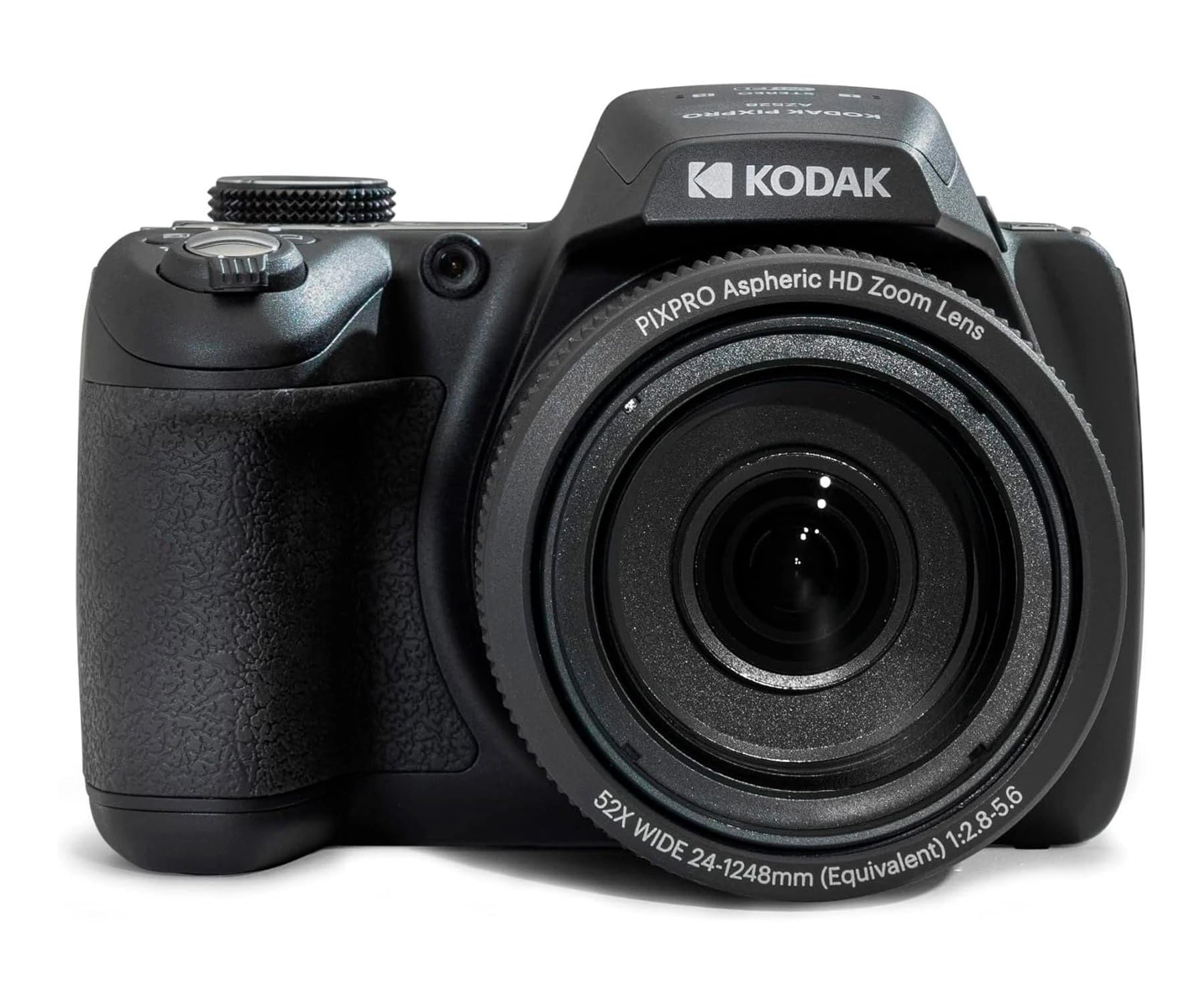
The Kodak PIXPRO AZ528 offers a staggering 52x optical zoom (24-1248mm equivalent), which reaches farther than any other camera in this price tier. The 16MP BSI CMOS sensor provides sharp detail in good light, and the built-in optical image stabilization compensates for hand shake at full extension—though you’ll still want bracing or a mini tripod at maximum zoom. The 24mm wide-angle captures landscapes without stepping backward.
Burst shooting at 6 fps captures sequences of birds in flight or athletes in motion, and the 1080p Full HD video records at 30fps with continuous autofocus. Built-in Wi-Fi connects to the Kodak app for remote shooting and quick transfers. The 3-inch LCD has decent resolution for framing and review, and the camera accepts SD cards up to 512GB for storing thousands of shots without swapping cards.
Low-light performance is limited by the small BSI sensor and the variable aperture that narrows to f/5.6 at full zoom. Battery life is average, and the camera body is bulkier than compact mirrorless or point-and-shoot options. For wildlife travelers, safari-goers, or birders who need extreme reach on a strict budget, the AZ528 outperforms everything else at this price point for pure focal length.
Why it’s great
- 52x optical zoom (24-1248mm) reaches farther than any competitor at this price
- 6 fps burst mode catches fast-moving wildlife sequences
- BSI CMOS sensor delivers sharp daylight detail with OIS support
Good to know
- Small sensor limits image quality in low light and at high ISO
- Camera body is bulkier than mirrorless or compact options
9. Xtra Edge Pro Action Camera
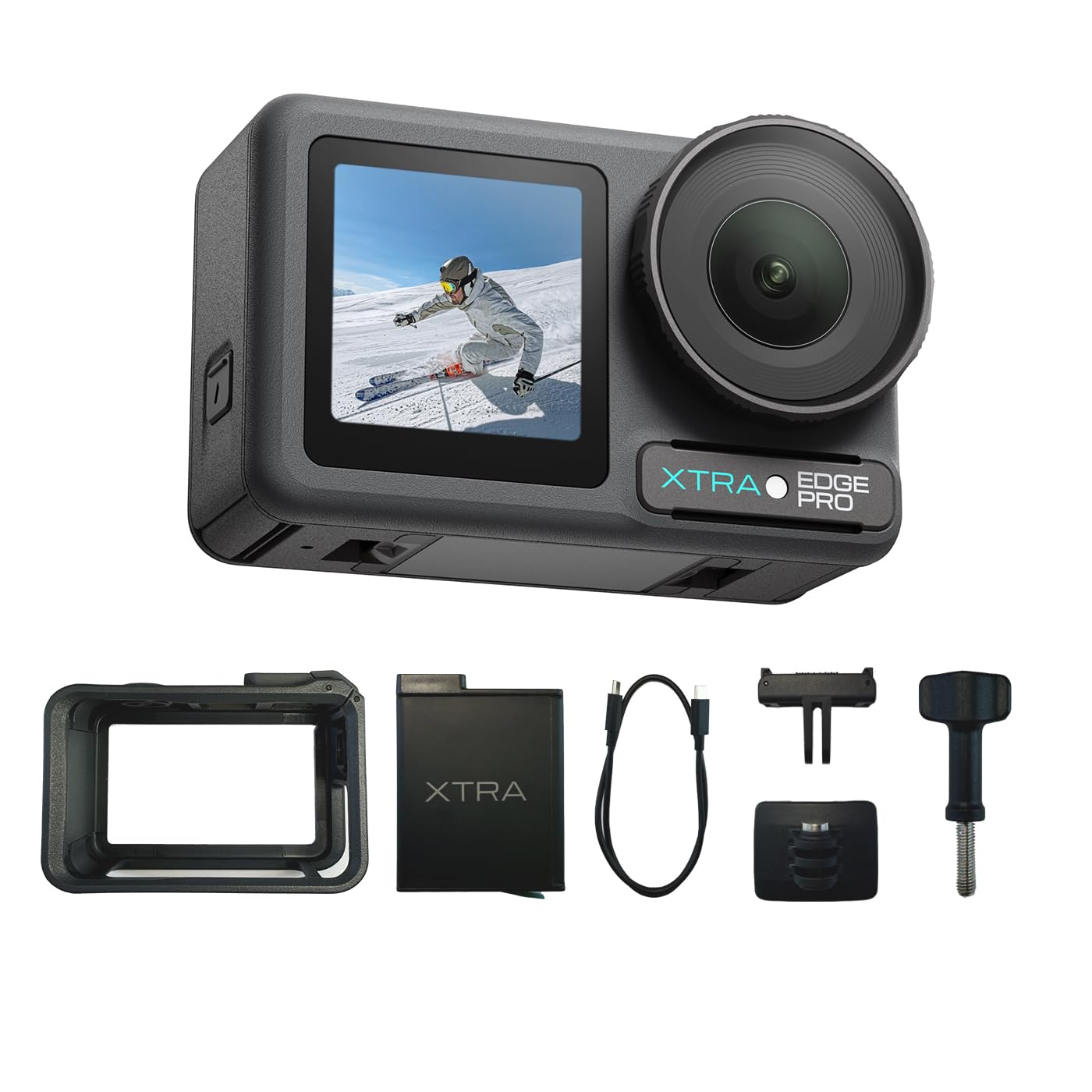
The Xtra Edge Pro houses a large 1/1.3-inch sensor in a rugged body that operates down to 65 feet underwater without an external housing. The larger sensor collects significantly more light than typical action camera sensors, resulting in cleaner 4K/60fps footage and better low-light performance through the dedicated Night View mode. The 216-minute battery life is exceptional for an action camera, covering full-day snorkeling or hiking shoots without swapping batteries.
Stabilization comes from a three-prong system: 360 Lock for horizon-leveling, TiltGuard for tilt correction, and MotionMaster for high-frequency vibration damping. This combination keeps footage smooth whether you’re mountain biking, skiing, or running. The dual-facing mount adapter lets the camera point forward and backward simultaneously, which is useful for POV vlogging. 32x slow motion at lower resolutions adds creative flexibility for action replays.
The image sensor is a known leap over entry-level action cams, but the brand lacks the accessory ecosystem of GoPro or DJI, limiting third-party mounts and cases. The included cold-resistant battery aids winter shooting but the standard battery life in cold climates may drop faster. For adventure travelers who primarily shoot underwater, biking, or snow sports and want a large sensor without paying for a flagship brand, this is the strongest value action camera.
Why it’s great
- Large 1/1.3″ sensor for cleaner low-light 4K footage than typical action cams
- Waterproof to 65 feet without a housing, 216-minute battery life
- Triple stabilization system (360 Lock, TiltGuard, MotionMaster) smooths intense motion
Good to know
- Limited third-party accessory ecosystem compared to GoPro
- Battery performance drops in freezing conditions despite cold-resistant model
FAQ
Is a DSLR or mirrorless camera better for travel?
How much optical zoom do I actually need for travel?
Can I use a vlogging camera for travel photography?
What memory card speed do I need for 4K travel video?
Final Thoughts: The Verdict
For most travelers, the best affordable cameras for travel winner is the Nikon Z 30 because it packs a true APS-C sensor, professional-grade autofocus, and vlogging tools into a lightweight body without crossing into premium pricing. If you want extreme stabilization in a weather-sealed body, grab the Panasonic LUMIX G85. And for pocketable superzoom reach that you can carry every day without a bag, nothing beats the Panasonic LUMIX ZS99.

Mo Maruf
I created WellFizz to bridge the gap between vague wellness advice and actionable solutions. My mission is simple: to decode the research and give you practical tools you can actually use.
Beyond the data, I am a passionate traveler. I believe that stepping away from the screen to explore new environments is essential for mental clarity and physical vitality.