Our readers keep the lights on and my smoothie glass nicely filled. As an Amazon Associate, I earn from qualifying purchases.
The line between a smartphone and a dedicated camera has never been thinner, but the price gap between a practical everyday shooter and a flagship device remains a canyon. You don’t need to spend four figures to get a primary sensor that handles low light, a telephoto lens that captures real detail, and video stabilization that keeps your clips watchable. The real challenge is distinguishing genuine camera hardware from marketing megapixel counts.
I’m Mohammad Maruf — the founder and writer behind WellFizz. My research focuses on dissecting sensor sizes, aperture specs, and computational photography pipelines to find the phones that actually deliver image quality without the premium markup.
After analyzing over a dozen models across multiple price tiers, I’ve narrowed the field to the devices that offer the most photographic value for your dollar. This is your guide to the best affordable camera phone options available right now, where the spec sheet matches the real-world shot.
How To Choose The Best Affordable Camera Phone
Buying a camera phone on a budget means prioritizing the hardware and software that directly affect image quality, not flashy spec-sheet numbers. Here are the key factors to weigh before you buy.
Sensor Size and Megapixel Reality
A larger sensor, measured in inches, captures more light per pixel. A 50MP sensor with a 1/1.28-inch size will produce cleaner low-light images than a 108MP sensor on a smaller 1/1.52-inch base, even at the same resolution. Look for 1/1.5-inch or larger sensors in your target range — that’s the sweet spot for dynamic range and noise control. High megapixel counts often use pixel binning (combining pixels) to improve low-light sensitivity, meaning a 50MP camera may output 12.5MP images with better detail.
Optical Zoom vs. Digital Crop
Optical zoom uses lens elements to magnify the image without quality loss. A 2x or 3x optical telephoto lens is far more useful for portraits and distant subjects than a 50x digital zoom that creates soft, noisy results. Look for phones with dedicated telephoto lenses (periscope designs offer 5x or more) or high-quality Super Res Zoom that uses multi-frame processing to approximate optical quality. Avoid any “zoom” specification that doesn’t mention optical or periscope.
Stabilization for Video and Low Light
Optical Image Stabilization (OIS) physically shifts the lens to counteract hand shake, which is critical for sharp photos in dim conditions and smooth 4K video. Electronic Image Stabilization (EIS) uses software cropping and gyroscope data to reduce shake but can introduce a jello effect in fast motion. A phone with OIS on the main sensor is a minimum requirement for handheld video stability; some models add OIS to the telephoto lens for consistent reach.
Quick Comparison
On smaller screens, swipe sideways to see the full table.
| Model | Category | Best For | Key Spec | Amazon |
|---|---|---|---|---|
| Nothing Phone (3a) Pro | Mid-Range | Optical zoom & selfie quality | 50MP periscope 3x optical, 60x ultra zoom | Amazon |
| Google Pixel 10a | Mid-Range | AI-assisted photography & updates | 4300mAh battery, 7 years Pixel Drops | Amazon |
| Samsung Galaxy S25 FE | Premium | Generative AI photo edits & display | 6.7″ 120Hz display, 4900mAh battery | Amazon |
| HMD Skyline | Mid-Range | User repairability & 108MP main camera | 6.55″ 144Hz pOLED, 108MP triple camera | Amazon |
| Nothing Phone (2) | Premium | Clean OS & unique Glyph interface | Snapdragon 8+ Gen 1, 50MP dual OIS | Amazon |
| Xiaomi 13T Leica | Premium | Leica color science & 144Hz display | Leica 50MP triple, 5000mAh battery | Amazon |
| Google Pixel 10 | Premium | Computational photography & AI tools | 5x telephoto, Tensor G5 chip | Amazon |
| Ulefone Armor 25T Pro | Mid-Range | Rugged durability & thermal imaging | ThermoVue sensor, 6500mAh battery | Amazon |
| Blackview XPLORE X1 | Mid-Range | Long battery life & secondary display | 10000mAh battery, 55W charging | Amazon |
| Motorola One Zoom | Budget | Versatile zoom & clean Android | 48MP quad-pixel, 4000mAh battery | Amazon |
| Panasonic LUMIX ZS99 | Budget | Dedicated 30x optical zoom camera | 24-720mm Leica lens, 4K video | Amazon |
In‑Depth Reviews
1. Nothing Phone (3a) Pro

This phone brings a genuine periscope telephoto lens — 50MP with 3x optical zoom — to a mid-range price point, a feature usually reserved for devices costing twice as much. The 60x ultra zoom is usable for daylight shots, though optical range stops at 3x, and the OIS on the telephoto lens keeps handheld shots sharp at moderate zoom levels. The 50MP front-facing camera with autofocus also makes it one of the best selfie cameras in its class.
The 6.77-inch AMOLED display hits 3000 nits peak brightness, which means outdoor visibility is excellent even under direct sun. The 120Hz adaptive refresh rate pairs well with the Snapdragon 7s Gen 3 chip for smooth daily use. Battery life hits two days on mixed use thanks to the 5000mAh cell, and the 50W charging pushes the phone to 50% in about 20 minutes.
The unique Glyph interface LEDs and Essential Key for quick voice memos or screenshots add personality without compromising function. The main trade-off is the lack of wireless charging and IP rating is just water-resistant, not fully dustproof. If your priority is camera versatility — especially telephoto reach — this is the most compelling package at this price tier.
Why it’s great
- Rare periscope 3x optical zoom with OIS
- Excellent daylight photo and video quality
- Clean, bloatware-free Android experience
Good to know
- No wireless charging
- Only water-resistant, not IP68 rated
- Limited carrier compatibility (no Verizon CDMA)
2. Google Pixel 10a

The Pixel 10a inherits the computational photography expertise that defines Google’s camera strategy. While the hardware is a single 64MP rear sensor, the real magic is in the software: processing that handles exposure, white balance, and detail better than most multi-lens systems. The Night Sight mode delivers clean, low-noise images in near-darkness, and the Camera Coach tool provides real-time framing advice that genuinely improves your shots.
The 6.1-inch Actua display with 3000-nit peak brightness is sharp and outdoor-friendly, and the IP68 rating means it survives submersion. The 4300mAh battery delivers a full day of mixed use, and the 30+ hour rated talk time is accurate for moderate use. The Tensor G5 chip (shared with the flagship Pixel 10) powers advanced AI features like Gemini Live and on-device language processing without lag.
The 7-year commitment to Pixel Drops — monthly feature and security updates — is unmatched at this price and means the phone stays relevant through 2032. The two compromises are the lack of a dedicated telephoto lens (you rely on Super Res Zoom digital crop) and the absence of a Dual SIM slot in the US model, though eSIM support is available. For point-and-shoot simplicity with top-tier image processing, the Pixel 10a is hard to beat.
Why it’s great
- Best-in-class computational photography
- 7 years of guaranteed software updates
- Excellent low-light performance from single sensor
Good to know
- No optical telephoto lens
- Only single physical SIM (eSIM secondary)
3. Google Pixel 10

The standard Pixel 10 is the most balanced camera phone in Google’s lineup. It upgrades to a proper 5x optical telephoto lens (up to 20x Super Res Zoom), which captures actual detail at concerts or wildlife outings without the mushy artifacts of a software zoom. The 50MP primary sensor with a wide aperture handles indoor and evening scenes reliably, and the Night Sight processing is predictably excellent across all three rear lenses.
The 6.3-inch Actua display at 3000 nits peak brightness remains readable in harsh sunlight, and the IP68 rating adds peace of mind. The 4970mAh battery lasts a solid 24+ hours under moderate use, and the Tensor G5 chip ensures smooth performance for AI tools like Gemini Live and Magic Editor. The build is premium — aluminum frame and Gorilla Glass Victus 2 — but it also makes the phone a touch heavier than the Pixel 10a.
The addition of a physical telephoto lens makes this a proper camera-centric device, not just a capable point-and-shoot. The main downside is the price bump over the Pixel 10a and the single physical SIM limitation in the US (eSIM secondary). For photographers who want real optical zoom without jumping to a dedicated camera, the Pixel 10 delivers that capability in a polished everyday phone.
Why it’s great
- Genuine 5x optical zoom lens
- Outstanding computational photography overall
- Premium, durable build materials
Good to know
- Higher entry price than Pixel 10a
- No expandable storage or headphone jack
4. HMD Skyline

The HMD Skyline is a unique proposition: a mid-range phone with a 108MP main sensor, 50MP selfie with autofocus and 4K recording, and the ability to replace your own cracked screen or battery using iFixit tools without voiding the warranty. The 108MP main camera produces sharp, detailed shots in good light using pixel binning for improved low-light performance, and the 50MP selfie is one of the highest-resolution front cameras at this price.
The 6.55-inch pOLED screen runs at a buttery 144Hz, making scrolling and animations feel exceptionally fluid. The 4600mAh battery supports 33W fast charging and Qi2 wireless charging (with magnetic alignment), plus 5W reverse wireless charging for earbuds or accessories. The Snapdragon 7 Gen 2 chip handles daily tasks and moderate gaming without hiccups.
Software is the clearest trade-off: HMD promises only two OS upgrades, which is behind competitors like Google and Samsung who offer 4–7 years. The camera processing also isn’t as sophisticated as Google’s or Samsung’s, so you’ll rely more on the sensor’s raw resolution than AI tuning. If repairability and a 108MP main shooter matter more than long-term software commitments, this is a compelling choice.
Why it’s great
- User-repairable design with official parts
- High-resolution 108MP main and 50MP selfie camera
- Qi2 wireless charging support
Good to know
- Only two years of OS updates
- Slippery glass back requires a case
5. Nothing Phone (2)

The Nothing Phone (2) combines a flagship-grade Snapdragon 8+ Gen 1 chipset with a unique design language that includes the transparent back and customizable Glyph LED interface. The dual 50MP rear cameras — main and ultra-wide — both feature OIS, which is rare for the wide lens at this price. The image processing prioritizes natural color and contrast over aggressive AI sharpening, producing photos that look true-to-life rather than oversaturated.
The 6.7-inch LTPO OLED display adapts from 1Hz to 120Hz, saving battery during static content. The 4700mAh cell delivers about 22 hours of mixed use, and 15W Qi wireless charging is supported along with 5W reverse wireless charging. The build uses 100% recycled aluminum and tin, making this one of the most sustainable premium options available.
The main limitation for photographers is the lack of a dedicated telephoto lens — zoom is handled by a 2x Super Res crop from the main sensor. Additionally, US carrier support is limited to GSM networks (T-Mobile, AT&T), and there is no IP68 rating (only IP54 splash resistance). For users who value design, clean Android, and a capable dual-camera system over raw telephoto reach, this is a standout device.
Why it’s great
- High-end Snapdragon 8+ Gen 1 processor
- OIS on both main and ultra-wide cameras
- Unique, customizable Glyph LED interface
Good to know
- No dedicated optical telephoto lens
- Limited to GSM carriers in the US
6. Samsung Galaxy S25 FE
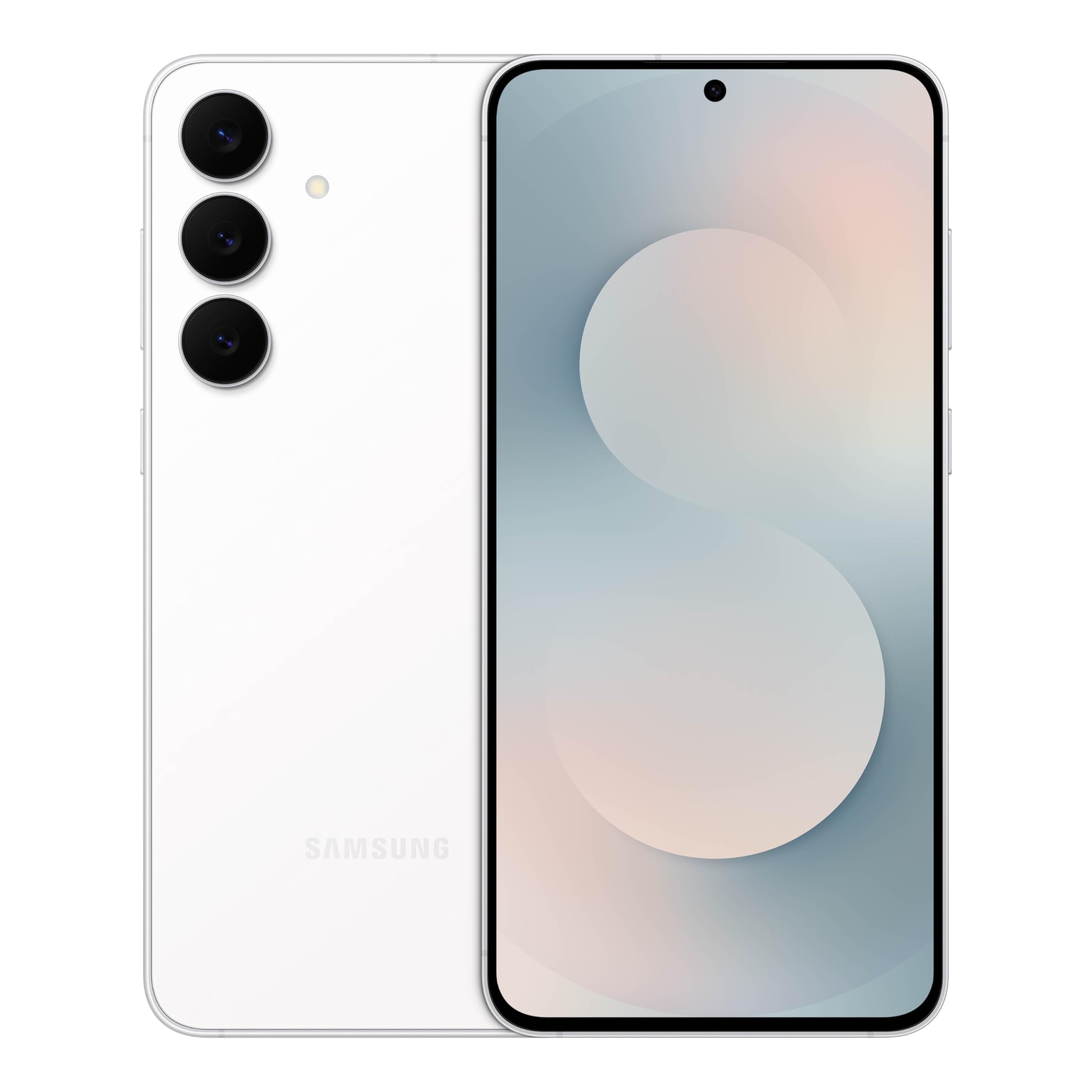
The Galaxy S25 FE is the budget-conscious entry into Samsung’s 2025 flagship family, and it inherits the core camera features of the S25 series. The main 50MP sensor with OIS captures detailed shots in most lighting conditions, and the ProVisual Engine enhances portrait mode with better edge detection and natural bokeh. The 12MP selfie camera benefits from the same engine, producing clear, well-exposed shots without the over-processing that plagues some competitors.
The 6.7-inch display with 120Hz refresh rate is bright and large, perfect for reviewing photos and editing on the go. The 4900mAh battery comfortably lasts a full day and reaches a full charge quickly with Super Fast Charging 2.0. The Armor Aluminum frame and Gorilla Glass Victus+ are reassuringly durable for daily carry.
Generative Edit — Samsung’s AI tool for moving, resizing, or removing objects from photos — is a genuine productivity boost. The phone lacks a dedicated telephoto lens, relying on a 3x digital crop from the main sensor, which is acceptable for social media but not for preserving distant detail. For users who want Samsung’s premium software experience, long update support, and a polished camera system without the ultra-premium price, the S25 FE is a smart choice.
Why it’s great
- Powerful AI editing tools build into the gallery
- Large, bright 6.7-inch 120Hz display
- Durable build with Gorilla Glass Victus+
Good to know
- No optical telephoto zoom lens
- Starts at 128GB storage with no expansion
7. Xiaomi 13T Leica

The Xiaomi 13T is a camera-first phone co-engineered with Leica, featuring a dedicated LEICA VARIO-SUMMICRON lens system. The 50MP main sensor (1/1.28-inch) with a wide f/1.9 aperture captures excellent dynamic range and color accuracy, producing images with natural contrast and a pleasing film-like grain. The 50MP telephoto lens provides 2x optical zoom, and the 12MP ultra-wide completes a versatile triple setup.
The 6.67-inch AMOLED display runs at up to 144Hz, making it one of the smoothest screens in its price range. The MediaTek Dimensity 8200-Ultra chip delivers flagship-level performance for photo processing and gaming alike. The 5000mAh battery with 67W turbo charging refuels from zero to 100% in about 42 minutes, which is among the fastest charging speeds in this list.
The biggest caveat is carrier compatibility: this global version works only with T-Mobile and its MVNOs (Mint, Tello) in the US, and it lacks official US warranty support. The software skin (MIUI) includes some bloatware, and there is no microSD slot. For international users or those on T-Mobile who want a Leica-tuned camera system, the Xiaomi 13T is a genuinely unique option with no direct competitor at this price.
Why it’s great
- Leica-tuned color science in three lenses
- Extremely fast 67W charging
- Smooth 144Hz AMOLED display
Good to know
- Limited to T-Mobile/Mint/Tello in the US
- No official US warranty support
8. Ulefone Armor 25T Pro
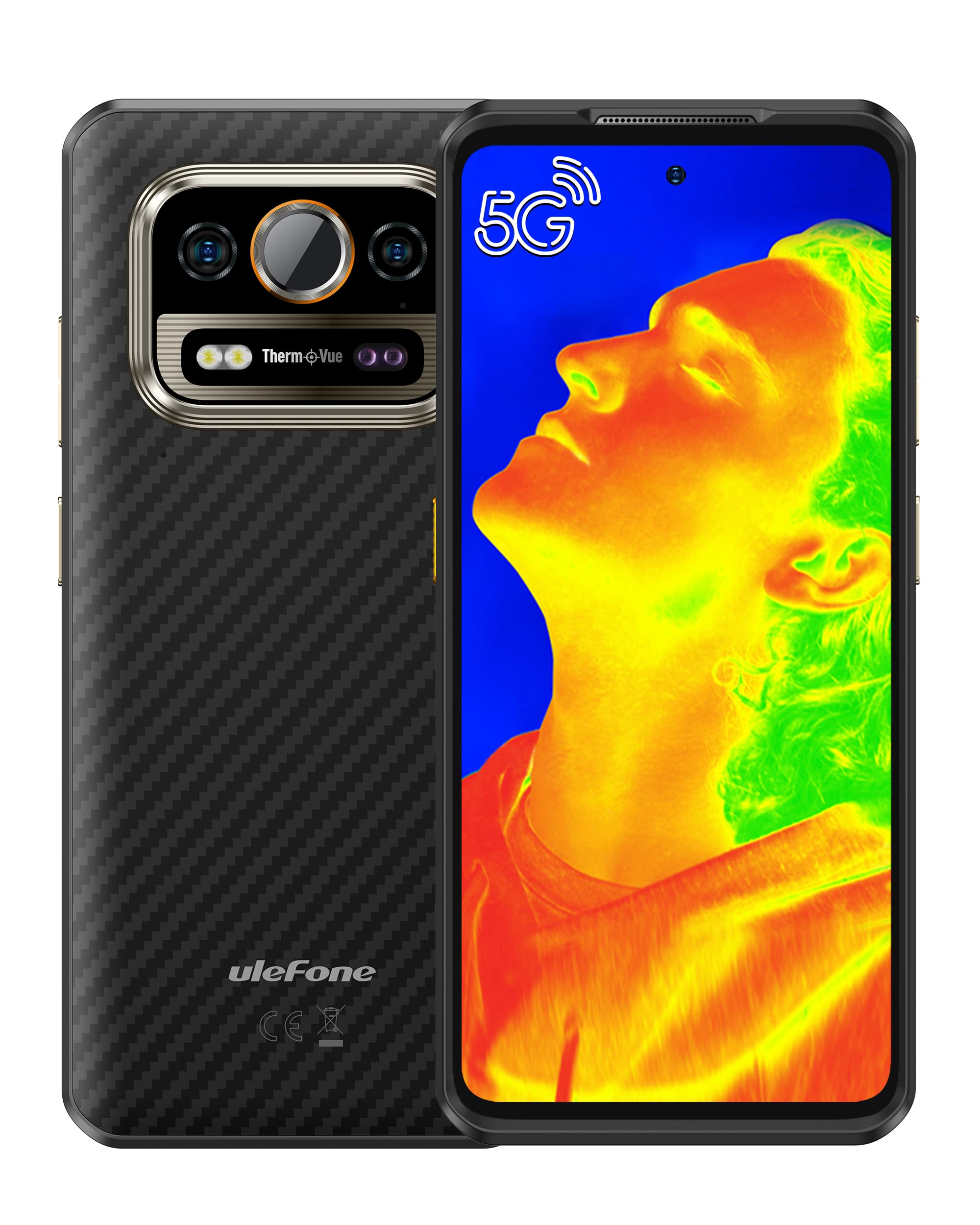
The Ulefone Armor 25T Pro is a niche device that combines a fully rugged body (IP68/IP69K, MIL-STD-810H) with a built-in ThermoVue thermal imaging sensor. The 160×120 resolution thermal camera with 25Hz refresh rate is genuinely useful for electricians, HVAC technicians, and outdoor enthusiasts looking for hot spots or insulation leaks. The main 50MP Samsung ISOCELL GN1 sensor delivers solid daylight photos, while the dedicated 64MP night vision camera with infrared LEDs captures usable monochrome images in complete darkness.
The 6500mAh battery with 33W wired and 30W wireless charging ensures long field days without a power bank. The 6.78-inch FHD+ display with 120Hz refresh rate and Gorilla Glass Victus is both durable and smooth for media consumption. The phone also includes an IR blaster, headset-free FM radio, and a customizable key for quick access to tools or a flashlight.
The heavy weight (326g) and thick profile (12.5mm) make this an impractical everyday carry for most people. The MediaTek Dimensity 6300 is adequate for basic tasks and light gaming but won’t match the performance of Snapdragon-powered competitors. For anyone who needs thermal imaging and true durability in a single device, however, the Armor 25T Pro is the only realistic option at this price.
Why it’s great
- Integrated thermal imaging camera with 25Hz refresh
- Extreme IP68/IP69K and MIL-STD-810H durability
- Large 6500mAh battery with wireless charging
Good to know
- Very heavy and thick for daily carry
- Mediocre chipset performance for gaming
9. Blackview XPLORE X1
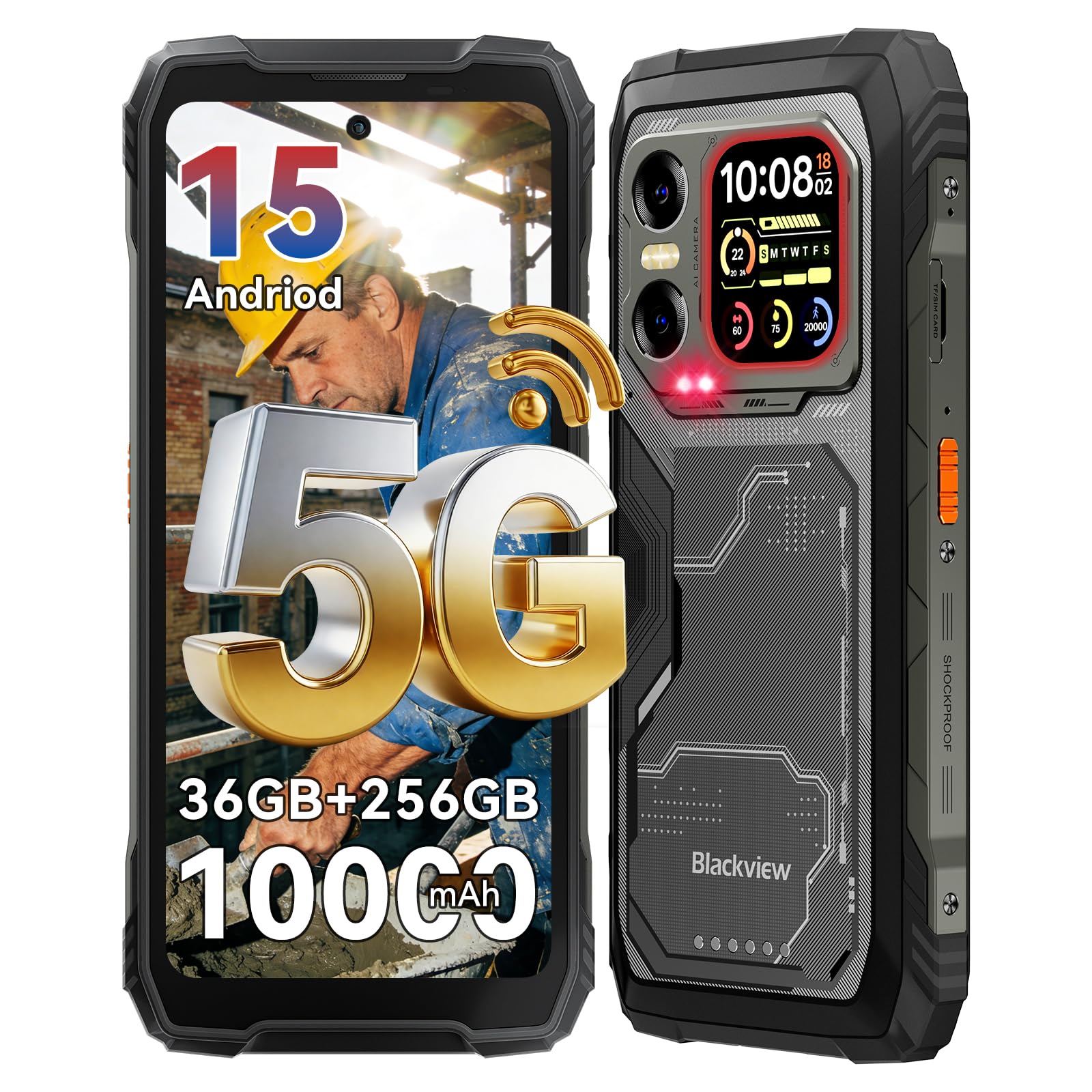
The Blackview XPLORE X1 is engineered for extreme endurance with a massive 10000mAh battery that can last multiple days on a single charge and even power other devices via OTG. The 108MP main camera, paired with a 50MP front-facing camera and a 20MP night vision lens, covers a broad range of shooting scenarios. The night vision camera uses two IR LEDs for clear imaging in pitch-black environments, and the 108MP sensor captures high-resolution detail in good light.
The 6.78-inch FHD+ display runs at 120Hz and offers 700 nits brightness, sufficient for most outdoor conditions. The IP68/IP69K and MIL-STD-810H certifications mean it survives submersion, dust ingress, and drops. A unique feature is the 2.01-inch secondary display on the back, which can show notifications, a compass, or serve as a selfie viewfinder when using the rear cameras.
The phone is heavy at 420g and bulky, making it unsuitable for slim-pocket carry. The 55W fast charging is welcome given the massive battery, but full charge still takes considerable time. The AI-assisted camera processing lags behind Google and Samsung in terms of dynamic range and color consistency. This phone is purpose-built for outdoor workers, adventurers, or anyone who prioritizes battery life and durability above all else.
Why it’s great
- Monster 10000mAh battery for multi-day trips
- IP68/IP69K fully rugged certification
- Useful secondary display on the back
Good to know
- Extremely heavy and large
- Mediocre AI camera tuning
10. Motorola One Zoom

The Motorola One Zoom is a budget-friendly option that prioritizes versatile zoom capability without a telephoto lens. The 48MP Quad Pixel main sensor uses 4-in-1 pixel binning to create brighter 12MP shots in low light, and the dedicated zoom lens allows up to 3x optical zoom equivalent — though the optical range is limited to 3x, beyond which digital crop takes over. OIS on the main sensor reduces blur from hand shake.
The 4000mAh battery delivers solid two-day battery life under light use, and the 6.4-inch OLED display offers vibrant colors and deep blacks. The in-display fingerprint reader is responsive, and the near-stock Android experience means no bloatware or heavy skin. The phone also retains the 3.5mm headphone jack, a rarity on modern devices.
Camera processing is the weakest area; dynamic range is narrower than mid-range competitors, and low-light shots show noticeable noise even with the Quad Pixel technology. Video recording is capped at 4K without EIS, so you need a steady hand. For the price-conscious buyer who wants a decent primary camera, zoom flexibility, and clean software, the One Zoom offers good value but won’t match the image quality of newer mid-range options.
Why it’s great
- Very affordable entry point for camera features
- Includes 3.5mm headphone jack
- Clean, near-stock Android interface
Good to know
- Mediocre low-light camera performance
- No OIS on the zoom lens
11. Panasonic LUMIX ZS99

The Panasonic LUMIX ZS99 is not a smartphone — it is a dedicated compact camera that fills the role of a camera phone for users who prioritize zoom range and image quality over app integration. Its 24-720mm Leica lens with 30x optical zoom captures distant subjects with genuine detail that no smartphone zoom can match at this price. The 20.3MP 1/2.3-inch sensor is small by modern camera standards but far exceeds phone sensors for telephoto reach.
The tiltable 1,840k-dot touchscreen makes it easy to compose shots from low or high angles, and the built-in 4K video/photo modes allow 30fps burst captures that are useful for action scenes. The 5-axis Hybrid OIS+ stabilization does a credible job of smoothing handheld video at the long end of the zoom. Bluetooth 5.0 and a dedicated Send Image button make transferring photos to a smartphone simple.
The trade-offs are significant for modern users: low-light performance is poor due to the small sensor, and the camera overheats after about 15 minutes of 4K recording, stopping automatically. Battery life is limited to about 6 hours of active shooting. For travel, concerts, or daytime wildlife photography where zoom reach is everything, the ZS99 is the best tool under , but it doesn’t replace a smartphone for general use.
Why it’s great
- 30x optical zoom from a truly pocketable body
- Leica-branded lens with good daylight sharpness
- Easy one-touch image transfer to phone
Good to know
- Very poor low-light and night performance
- Overheating limit on 4K recording
FAQ
What does “optical zoom” mean on a camera phone?
How many megapixels do I need for good quality photos?
Do I need a phone with a dedicated night mode?
Is a dedicated compact camera like the Panasonic ZS99 better than a phone for zoom?
Final Thoughts: The Verdict
For most users, the best affordable camera phone winner is the Nothing Phone (3a) Pro because it brings a genuine periscope 3x optical zoom lens, a 50MP selfie camera, and clean software to a mid-range price, offering the most camera versatility per dollar. If you want effortless point-and-shoot quality with seven years of updates, grab the Google Pixel 10a. And for a true optical zoom machine that separates camera functionality from smartphone limitations, nothing beats the Panasonic LUMIX ZS99.

Mo Maruf
I created WellFizz to bridge the gap between vague wellness advice and actionable solutions. My mission is simple: to decode the research and give you practical tools you can actually use.
Beyond the data, I am a passionate traveler. I believe that stepping away from the screen to explore new environments is essential for mental clarity and physical vitality.