Our readers keep the lights on and my smoothie glass nicely filled. As an Amazon Associate, I earn from qualifying purchases.
Freezing a fast-moving athlete or a speeding ball into a sharp, frame-worthy image demands a camera that prioritizes burst rate, autofocus intelligence, and low-light sensor performance above all else. The wrong choice means blurred sequences, missed peak action, and endless frustration on the sidelines.
I’m Mohammad Maruf — the founder and writer behind WellFizz. My market research focuses on dissecting autofocus tracking algorithms, buffer depths, and lens ecosystem costs to find where real-world sports performance meets realistic budgets.
After analyzing the latest mirrorless and DSLR options, the right affordable camera for sports photography should combine dependable subject tracking with a fast enough burst rate to capture the decisive moment without breaking your bank.
How To Choose The Best Affordable Camera For Sports Photography
A successful sports camera is defined by three non-negotiable pillars: autofocus tracking speed, continuous shooting rate, and the ability to handle high ISO noise when the light drops. A camera that delivers all three without demanding a second mortgage is the goal.
Autofocus & Subject Tracking Technology
For sports, predictive autofocus that locks onto a moving player and stays on them is far more important than raw megapixel count. Look for phase-detection AF points that cover a wide portion of the frame. The best systems can detect eyes, faces, and bodies of athletes and even track specific jersey numbers.
Continuous Shooting Speed & Buffer Depth
Burst rate (measured in frames per second, or fps) determines how many rapid-fire shots you can capture during a single play. However, a high fps is useless if the buffer fills instantly after one second. A deep buffer allows you to keep shooting a sequence like a go-ahead touchdown or a breakaway goal without waiting for the camera to catch up.
Sensor Size & Low-Light Capability
A larger sensor (APS-C or Full-Frame) collects more light, which translates to cleaner images at higher ISO speeds. This is critical for indoor sports like basketball or volleyball where shutter speeds must stay high to freeze motion, but artificial lighting is often dim. A full-frame sensor offers an edge, but modern APS-C sensors are incredibly capable and often cheaper with longer reach from telephoto lenses.
Quick Comparison
On smaller screens, swipe sideways to see the full table.
| Model | Category | Best For | Key Spec | Amazon |
|---|---|---|---|---|
| Sony a7 III | Mirrorless Full-Frame | Versatile full-frame action | 10 fps burst / 693 phase-detect AF | Amazon |
| Canon EOS R6 Mark II | Mirrorless Full-Frame | High-speed tracking & low light | 40 fps (e-shutter) / Eye-detection AF | Amazon |
| Canon EOS R10 | Mirrorless APS-C | Budget mirrorless speed | 15 fps mechanical / 651 AF points | Amazon |
| Nikon Z50 II | Mirrorless APS-C | Compact travel & sports | 20.9 MP / 9 subject detections | Amazon |
| Nikon D7500 | DSLR APS-C | Reliable DSLR action | 8 fps / 51-point AF system | Amazon |
| Sony Alpha a6100 | Mirrorless APS-C | Ultra-fast AF on a budget | 0.02 sec AF / 11 fps burst | Amazon |
| Panasonic LUMIX G85 | Mirrorless MFT | Stabilized video & photo | 5-Axis IBIS / 4K video | Amazon |
| Canon T7 Rebel Bundle | DSLR APS-C | Entry-level starter kit | 24.1 MP / 3 fps burst | Amazon |
| XbotGo Falcon | AI Action Camera | Auto-tracking team sports | 4K dual-lens / AI tracking | Amazon |
| DJI Osmo Action 6 | Action Camera | POV action & waterproof | 8K video / 1/1.1″ sensor | Amazon |
| Insta360 X5 | 360° Action Camera | Immersive 360° capture | 8K30fps 360 / Dual 1/1.28″ sensors | Amazon |
In‑Depth Reviews
1. Sony a7 III Full-Frame Mirrorless with 28-70mm Lens

The Sony a7 III offers the best blend of full-frame low-light performance and professional-grade autofocus available in this price tier. Its 24.2MP BSI sensor delivers 15 stops of dynamic range, allowing you to push ISO without ruining detail — critical for indoor basketball or evening soccer matches. The 693-point phase-detection AF covers 93% of the frame, pairing with Real-time Eye AF for humans and animals.
At 10 fps with continuous AE/AF tracking, the buffer holds up well for extended sequences of fast breaks or volleys. The kit lens (28-70mm) is a decent starter but you will eventually want a telephoto zoom to get closer to the action. Battery life is exceptional, often lasting an entire tournament day on a single charge.
Real-world review data confirms the autofocus speed dramatically outperforms older Canon DSLRs, and 4K video quality is stunning with a UHS-II card. The menu system is deep but rewards learning with incredible flexibility. This is the benchmark affordable full-frame sports camera.
Why it’s great
- Excellent high-ISO performance for indoor sports
- Fast, accurate 693-point phase-detect AF with eye tracking
- Exceptional battery life for day-long shoots
Good to know
- Kit lens is not ideal for distant action
- Complex menu system takes time to learn
2. Canon EOS R6 Mark II (Body Only)

The Canon R6 Mark II is a speed demon, capable of 40 fps with its electronic shutter while maintaining full AF/AE tracking. Its 24.2MP full-frame sensor combined with the DIGIC X processor delivers exceptional high-ISO performance and a broad dynamic range, making it ideal for capturing fast transitions from shadow to sunlight on a playing field.
The enhanced subject detection recognizes people, animals, vehicles, horses, trains, and aircraft — incredibly useful for motorsports or equestrian events. The 8-stop In-Body Image Stabilization (IBIS) allows you to shoot handheld at slower shutter speeds when needed, and the vari-angle touchscreen gives flexibility for low-angle sideline shots.
While it is the highest-priced option here, its 6K oversampled 4K60p video, robust weather sealing, and dual SD card slots make it a long-term investment. Reviewers consistently praise its autofocus as reliable in all conditions, calling it a powerhouse for high-speed and low-light work.
Why it’s great
- Blazing 40 fps burst with full AF tracking
- Excellent subject detection for many sports types
- 8-stop IBIS and weather-sealed build
Good to know
- Body only requires separate lens investment
- Premium price pushes the budget ceiling
3. Canon EOS R10 with RF-S18-150mm Lens Kit

The Canon EOS R10 packs many of the advanced AF features from Canon’s pro lineup into a compact, affordable APS-C body. Its 24.2MP sensor with the DIGIC X processor enables subject detection for people, animals, and vehicles, while the 651 AF points cover almost the entire frame. This translates into reliable tracking for soccer, football, and track events.
With a mechanical shutter speed of 15 fps, the R10 can capture rapid action sequences without blackout. The included RF-S18-150mm lens provides a versatile 28.8-240mm equivalent zoom range, giving you solid reach for field sports straight out of the box. The body is lightweight, making it easy to carry for an entire game day.
User feedback highlights its easy-to-use interface and excellent feedback in manual modes. The main drawback is battery life, often requiring a spare battery for a full day of shooting. Beginners will appreciate the guided interface, while more advanced users will value the deep control options.
Why it’s great
- Fast 15 fps burst with intelligent subject tracking
- Versatile kit lens with useful telephoto reach
- Compact design perfect for carrying to games
Good to know
- Battery life is limited for all-day use
- Kit lens struggles in very low light
4. Nikon Z50 II with Two Lenses Kit

The Nikon Z50 II is a compact mirrorless that punches above its weight for sports photography. Its 20.9MP DX-format sensor is paired with a robust autofocus system that automatically detects and tracks nine distinct subjects, including people, dogs, cats, birds, and vehicles. Dedicated bird and airplane modes improve accuracy for specific action types.
The dual-lens kit includes the NIKKOR Z DX 16-50mm VR for general use and the 50-250mm VR, providing 75-375mm equivalent reach for field sports. Built-in electronic VR helps stabilize video, and 4K UHD/60p recording delivers smooth slow-motion in Full HD at up to 120p. The 31 built-in Picture Controls are a bonus for creating unique looks in-camera.
Reviewers appreciate the light weight as a travel alternative to bulky gear, but note a learning curve for the menu system. The kit includes only one battery, so purchasing an extra is wise. For a compact, go-anywhere sports camera with solid tracking, the Z50 II delivers strong value.
Why it’s great
- Lightweight and very portable for travel
- Dual-lens kit gives wide and telephoto reach
- Advanced 9-subject detection autofocus
Good to know
- Includes only one battery in the box
- Menu system has a learning curve
5. Nikon D7500 with 18-140mm VR Lens

The Nikon D7500 is a classic DSLR that still competes strongly in the affordable sports category. Its 20.9MP APS-C sensor draws from the same lineage as the pro-grade D500, delivering class-leading ISO performance and metering. The 51-point AF system with 15 cross-type sensors and group-area AF provides reliable tracking for moving subjects.
With up to 8 fps continuous shooting, the D7500 can handle most action, from high school football to track events. The 18-140mm VR lens offers a 27-210mm equivalent range, covering wide team shots and closer individual action. The large 3.2-inch tilting LCD is useful for low-angle sports photography, and the optical viewfinder offers lag-free composition.
User reviews mention fast, accurate autofocus that is particularly good for fast-moving subjects. The weather-resistant build and excellent battery life are major pluses for outdoor sports. The biggest caveat is the age of the design; it is an older model but remains a very capable tool at a great price point.
Why it’s great
- Pro-level AF system derived from the D500
- Excellent build quality with weather sealing
- Long battery life for extended use
Good to know
- Heavier and larger than mirrorless options
- Older model with no USB-C or advanced connectivity
6. Sony Alpha a6100 with 16-50mm & 55-210mm Lenses

The Sony a6100 offers the fastest autofocus in its class with a world-beating 0.02-second acquisition time. Its 24.2MP APS-C Exmor sensor with front-end LSI and Real-time AF object tracking makes it incredibly sticky on subjects, ideal for erratic sports like basketball or soccer. The 425 phase-detection AF points provide dense coverage across the frame.
With up to 11 fps continuous shooting, you can confidently fire off bursts during peak action. The dual-lens kit includes the 16-50mm standard zoom and a 55-210mm telephoto (82.5-315mm equivalent), giving you solid reach for sideline shooting. 4K movie recording with 2.4x oversampling ensures high-quality video for highlight reels.
Reviews frequently praise the exceptional autofocus for the price, with one user noting it is great for a starter. The 180-degree tiltable touchscreen is vlogger-friendly for on-the-go content. The main downside is that the 16-50mm kit lens is considered mediocre, but the overall AF performance more than compensates for the budget lens setup.
Why it’s great
- Extremely fast and accurate Real-time AF
- Telephoto kit lens included for extra reach
- Compact size easy to carry to games
Good to know
- Standard kit lens has limited quality
- Smaller body may feel cramped for large hands
7. Panasonic LUMIX G85 with 12-60mm Lens

The Panasonic LUMIX G85 is a Micro Four Thirds camera that excels in video and photo stabilization thanks to its class-leading 5-axis Dual Image Stabilization (IBIS). This makes it exceptionally good for shooting handheld video of sports from the sideline without a gimbal. The 16MP sensor with no low-pass filter provides a noticeable boost in fine detail resolving power.
The 12-60mm Power O.I.S. lens offers a 24-120mm equivalent range, which is versatile but limited for distant action. The G85 shines in 4K video with exclusive 4K Photo and Post Focus features, allowing you to extract high-resolution stills from video clips at 30 fps. The eye-level OLED viewfinder and a 3-inch tilting touchscreen offer flexible composition.
Users consistently praise the intuitive ergonomics and superior build quality with weather sealing. One reviewer called it the “price/performance king of entry/mid-level mirrorless cameras.” The autofocus can be sluggish in low light for 4K, and the battery life is below average, but for its stabilization and video-centric sports shooting, the G85 is a unique value.
Why it’s great
- Outstanding 5-axis stabilization for steady video
- Weather-sealed magnesium alloy body
- Versatile 4K video features including Post Focus
Good to know
- Autofocus can be slow in low light
- Battery life is shorter than many competitors
8. Canon T7 Rebel DSLR with 18-55mm & 75-300mm Lenses Bundle
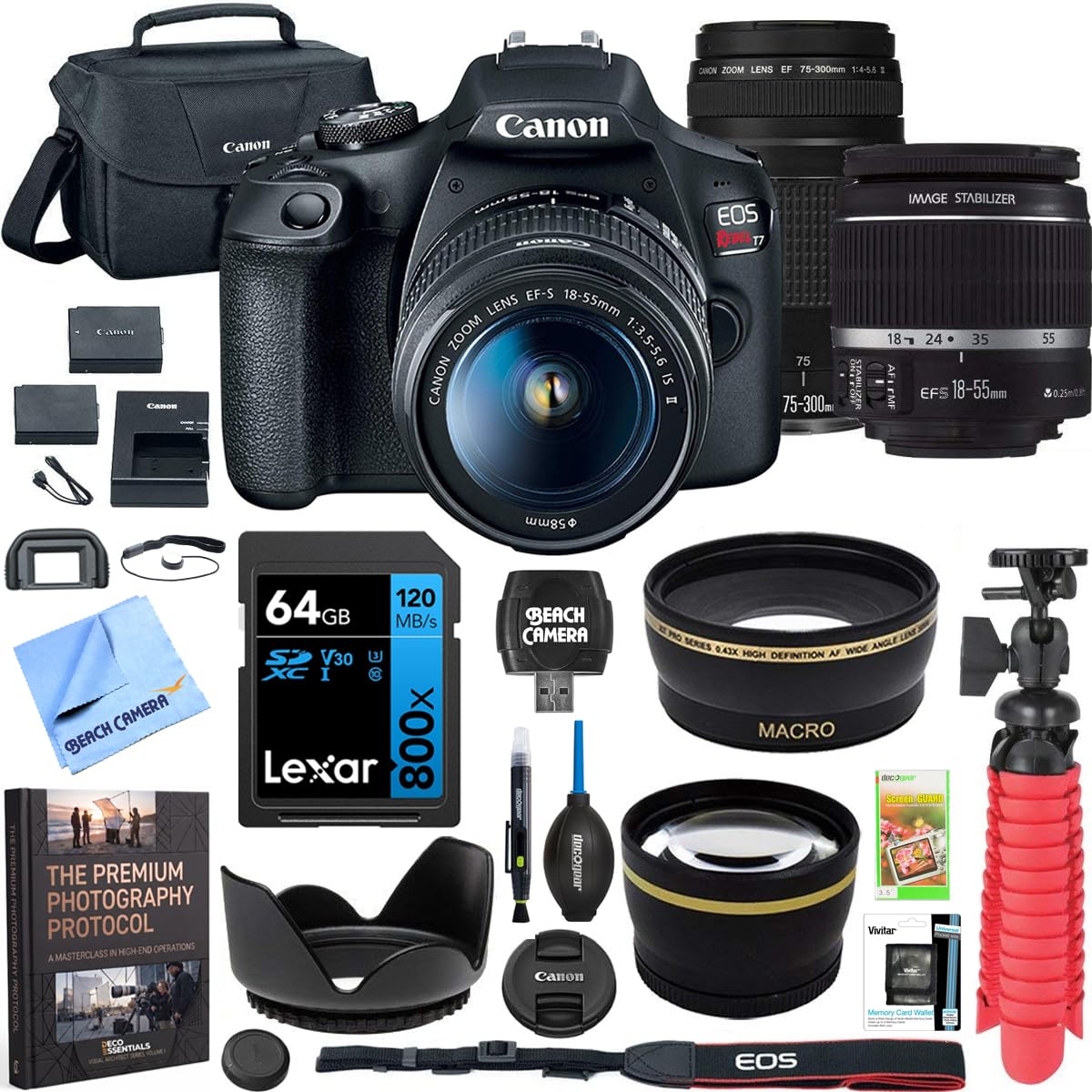
The Canon T7 Rebel is the classic entry-level DSLR, and this bundle ups its value significantly with two lenses, extra batteries, memory card, and accessories. The 24.1MP APS-C sensor produces clear, detailed images, and the included 75-300mm telephoto lens provides the reach needed for field sports. The 9-point AF system is basic but functional for slower action when you have time to compose.
The most significant limitation for sports is the 3 fps burst rate. This is fine for predictable movements like a pitcher winding up, but it will miss the peak of a fast break layup or a diving catch. The DIGIC 4+ processor is dated, so buffer depth is shallow and ISO performance is not as clean as newer models in dim lighting.
User feedback is overwhelmingly positive for beginners who want a cheap way into photography. The bundle includes everything you need to start, including a mini tripod and cleaning kit. This is a great starter kit to learn fundamentals, but serious sports shooters will quickly outgrow its speed limitations for action-heavy events.
Why it’s great
- Complete all-in-one kit with telephoto lens
- Excellent image quality for the low price point
- Very user-friendly for photography beginners
Good to know
- 3 fps burst is too slow for fast action
- Dated processor limits low-light performance
9. XbotGo Falcon AI Action Camera
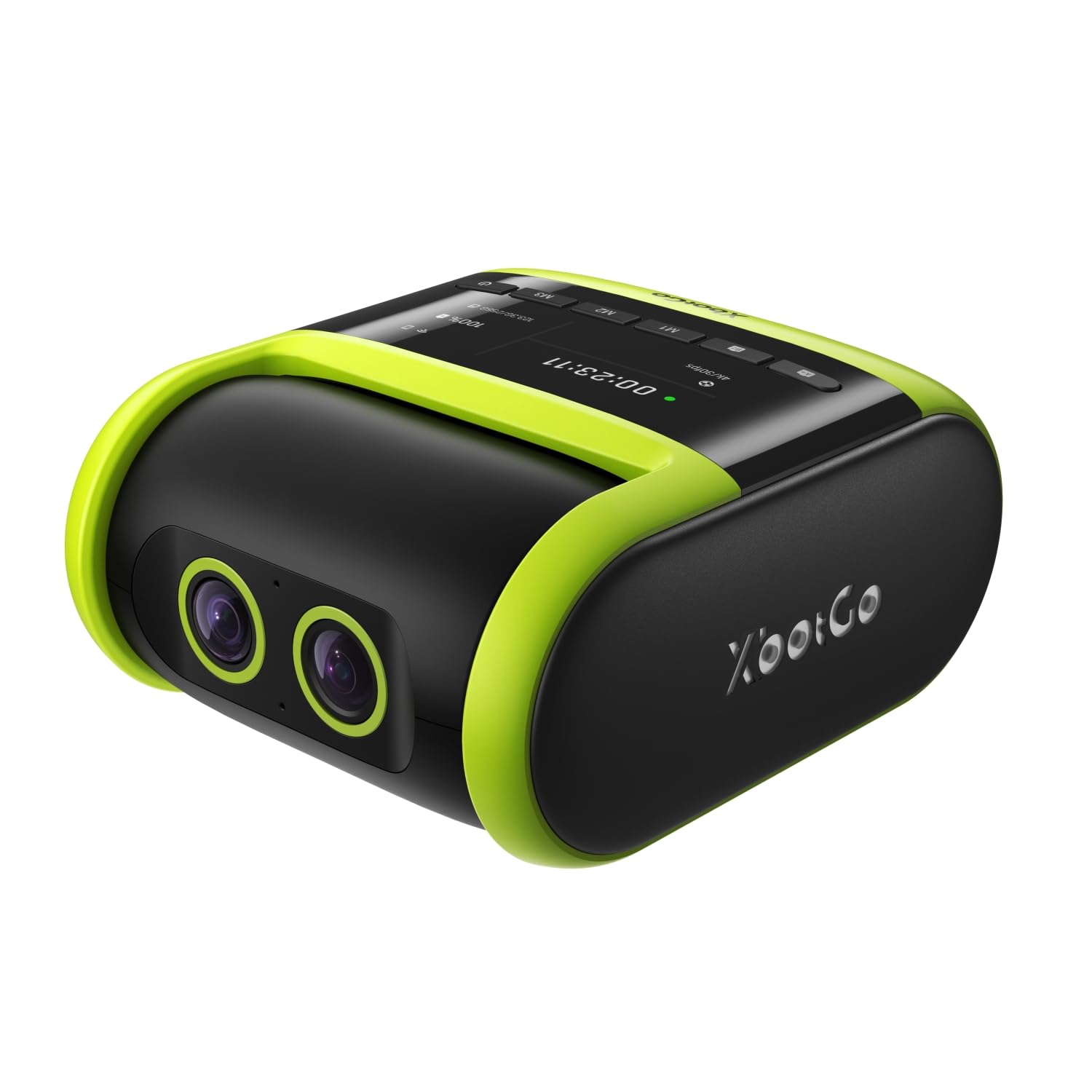
The XbotGo Falcon takes a completely different approach to sports photography: it is an AI-powered action camera that automatically tracks players and the ball in real-time. With 6 TOPS AI performance and an 8-core processor, it functions as a robotic cameraman, ideal for parents and coaches who want to be present at the game instead of behind the lens.
The dual-lens system combines a 4K recording lens with an AI-assisted lens for smarter tracking. It works best for soccer, basketball, and football, and no subscription is required. The IPX5 water-resistant design handles standard sideline conditions, and it supports live streaming via built-in Wi-Fi. It mounts easily on any tripod with a standard 1/4-inch screw.
User reviews are very positive for outdoor use, with one lacrosse coach praising the 4K quality and tracking. However, tracking can hesitate in dim indoor lighting, and one user reported issues with live streaming functionality. For hands-free capture of team sports, this is a unique, purpose-built device in this category.
Why it’s great
- AI auto tracking works well for team sports
- No subscription required for full features
- Compact, all-in-one design for the sideline
Good to know
- Tracking accuracy drops in low indoor light
- Requires microSD card sold separately
10. DJI Osmo Action 6 Bundle
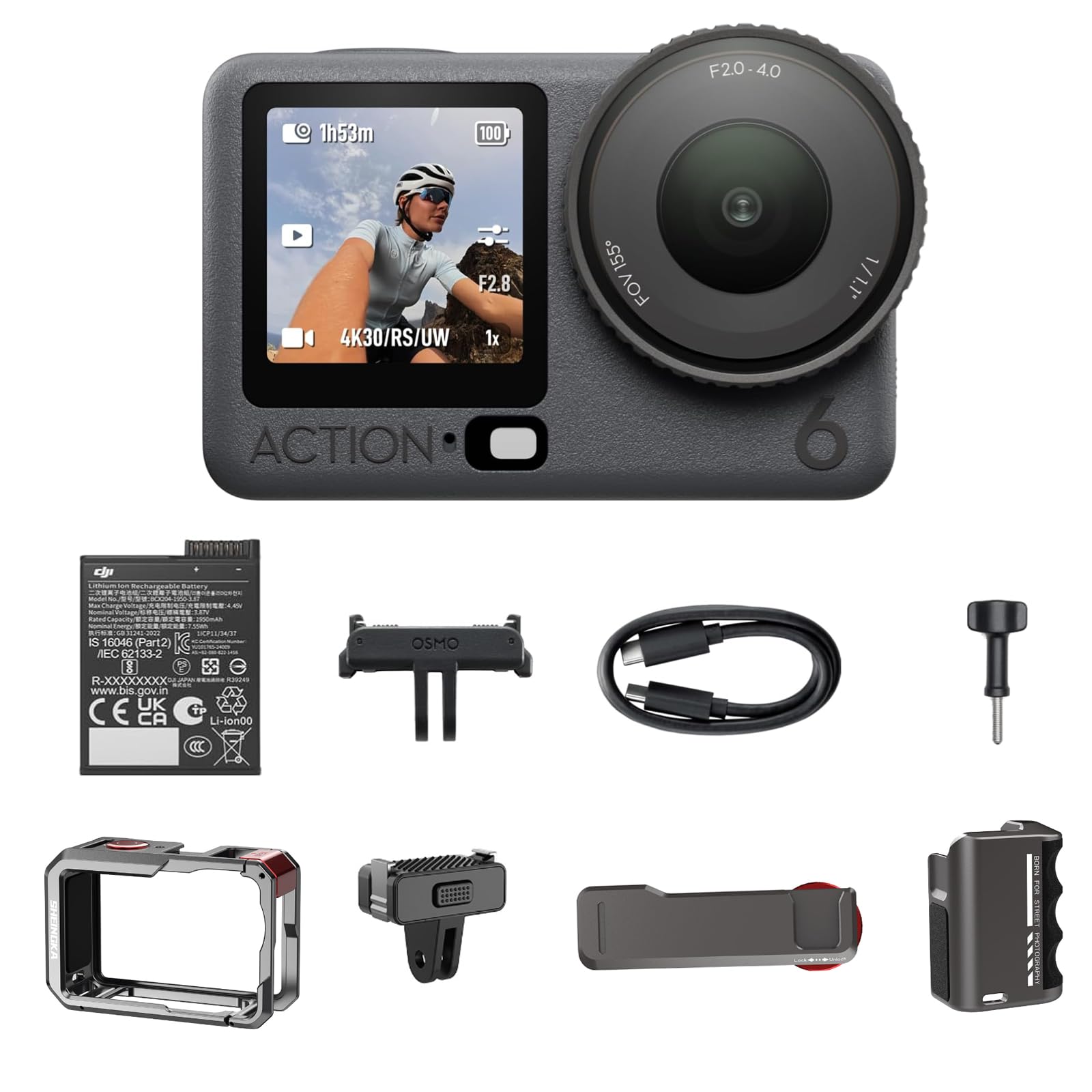
The DJI Osmo Action 6 is a rugged action camera that brings 8K video resolution and a unique variable aperture (f/2.0–f/4.0) to the sports world. It is built for dynamic POV shots where you are in the action yourself — think cycling, skiing, or even surfing, with waterproofing down to 20m without a case. The 1/1.1-inch square sensor delivers vibrant colors and sharp detail.
Advanced stabilization like 360° HorizonSteady keeps footage level even when the camera rotates fully. The bundle includes a Street Photography Handle Kit, and the 4-hour battery life ensures long recording sessions. Gesture and voice control make hands-free operation easy when you are focused on the event. The 50GB internal storage is a bonus for immediate shooting without a card.
Real-world users praise its versatility for scuba, motorcycle helmet mounting, and hiking. The magnetic mount system is loved for quick attachment. The main limitation for traditional sports photography is the fixed wide lens — it lacks the telephoto reach for distant subjects. It excels when the camera is part of the action, not just watching it from afar.
Why it’s great
- 8K video with variable aperture for any light
- Excellent stabilization for smooth POV footage
- Long 4-hour battery and waterproof design
Good to know
- Fixed wide lens lacks telephoto reach
- Best for POV action, not sideline shooting
11. Insta360 X5 Waterproof 360° Action Camera

The Insta360 X5 is a radical departure from traditional cameras: it captures everything in 8K 360° video using dual 1/1.28-inch sensors. This means you can shoot first and choose your angle later, making it impossible to miss a play because the camera sees in every direction at once. This is a game-changer for team sports or solo adventure sports where you cannot predict the action.
The triple AI chip design powers advanced low-light processing and noise reduction, while FlowState Stabilization with full 360° Horizon Lock keeps footage perfectly level. The invisible selfie stick effect creates compelling third-person perspectives. The rugged, replaceable lenses add durability, and the 4-mic array with a new Wind Guard improves audio clarity for vlogs and narration.
User reviews are overwhelmingly positive, with one calling it the “best 360 camera on the market.” It requires fast SD cards for 8K recording, and file sizes are large. There is a learning curve for 360 editing. For capturing every angle of a sports event without aiming, the X5 offers unparalleled flexibility.
Why it’s great
- Gives full 360° coverage, you never miss a play
- Excellent stabilization and low-light performance
- User-replaceable lenses for long-term durability
Good to know
- Requires fast SD cards for 8K recording
- Larger file sizes and a learning curve for editing
FAQ
What is the minimum burst rate needed for sports photography?
Should I choose an APS-C or Full-Frame sensor for affordable sports photography?
What is more important for sports: autofocus speed or burst rate?
Final Thoughts: The Verdict
For most users, the affordable camera for sports photography winner is the Sony a7 III because it delivers full-frame low-light performance, a robust 693-point AF system, and 10 fps burst at a price that undercuts most full-frame competitors. If you want faster burst rates and professional speed, grab the Canon EOS R6 Mark II. And for a compact, entry-level mirrorless with impressive subject tracking, nothing beats the Canon EOS R10.

Mo Maruf
I created WellFizz to bridge the gap between vague wellness advice and actionable solutions. My mission is simple: to decode the research and give you practical tools you can actually use.
Beyond the data, I am a passionate traveler. I believe that stepping away from the screen to explore new environments is essential for mental clarity and physical vitality.