Our readers keep the lights on and my smoothie glass nicely filled. As an Amazon Associate, I earn from qualifying purchases.
Shooting after dark often leads to grainy, unusable images and frustrating missed moments. The difference between a keeper and a disaster in low light comes down to sensor size, lens speed, and how well the camera handles high ISO without introducing noise. This guide cuts through the marketing to help you invest your budget where it actually matters for night photography.
I’m Mohammad Maruf — the founder and writer behind WellFizz. I have spent years analyzing camera hardware specifications, sensor technology, and real-world low-light performance data to help buyers make informed decisions without wasting money on unsuitable gear.
You will learn exactly what separates a capable night shooter from one that falls apart after sunset, and which specific models deliver the best return on your investment for affordable camera for night photography.
How To Choose The Best Affordable Camera For Night Photography
Night photography demands a combination of hardware traits that differ from general-purpose shooting. The three pillars are a sensor that collects light efficiently, a lens that lets that light in, and a stabilization system that keeps everything sharp. Here is what to prioritize.
Sensor Size and High-ISO Performance
Full-frame sensors have large individual pixels that capture more photons, producing cleaner images at high ISO values. APS-C sensors are smaller but still far superior to 1-inch or phone sensors. The Canon EOS 6D, which has a full-frame sensor, can shoot at ISO 6400 with low noise, while a 1-inch sensor in the Sony RX100 VII will begin to show grain at ISO 1600. For night photography, prioritize sensor size over megapixel count — a 20MP full-frame sensor will outperform a 24MP APS-C sensor in low light.
Lens Aperture and Focal Length
A lens with a wider maximum aperture (lower f-number like f/1.8 or f/2.8) lets in significantly more light than a kit lens at f/3.5-5.6. This allows faster shutter speeds to freeze motion and reduces the need to push ISO higher. Interchangeable lens cameras like the Panasonic LUMIX G85 and the Sony a6400 allow you to swap in fast primes, whereas fixed-lens cameras like the Panasonic TZ/ZS99 are limited to their built-in lens. For the best night results, look for a camera system that supports fast prime lenses.
Image Stabilization (IBIS vs Lens-Based)
In-body image stabilization (IBIS) steadies the camera sensor itself, working with any lens you mount. The OM SYSTEM E-M10 Mark IV and the Panasonic LUMIX G85 have 5-axis IBIS systems that can add up to 4.5 stops of stability. Lens-based stabilization only helps with lens shake, not camera movement. For handheld night shots without a tripod, cameras with effective IBIS are a massive advantage, allowing clear exposures at shutter speeds as low as 1/5th of a second.
Quick Comparison
On smaller screens, swipe sideways to see the full table.
| Model | Category | Best For | Key Spec | Amazon |
|---|---|---|---|---|
| Sony a6700 | Mid-Range | Low-light hybrid shooting | APS-C 26MP / 759 AF points | Amazon |
| Canon EOS R100 | Budget | Entry-level night learning | APS-C 24.1MP / DIGIC 8 | Amazon |
| OM SYSTEM E-M10 Mark IV | Value | Handheld low-light stills | MFT 20MP / 5-axis IBIS | Amazon |
| Panasonic LUMIX G85 | Mid-Range | Video + photo in low light | MFT 16MP / Dual I.S. 2 | Amazon |
| Nikon Z 50 | Mid-Range | Compact APS-C night walkaround | APS-C 20.9MP / 209 AF points | Amazon |
| Canon EOS 6D | Premium | Full-frame night image quality | Full frame 20.2MP / ISO 25600 | Amazon |
| Sony a6400 | Mid-Range | Fast AF night street photography | APS-C 24.2MP / 0.02s AF | Amazon |
| Nikon D7500 | Mid-Range | Reliable night DSLR shooting | APS-C 20.9MP / 51 AF points | Amazon |
| Sony RX100 VII | Premium | Pocketable night travel camera | 1-inch 20.1MP / 24-200mm | Amazon |
| Sony FX30 | Premium | Cinematic night video | APS-C 20.1MP / Dual ISO | Amazon |
| Panasonic TZ/ZS99 | Budget | Travel zoom with daylight backup | 1/2.3″ 20.3MP / 30x zoom | Amazon |
In‑Depth Reviews
1. Sony Alpha a6700

The Sony a6700 stands as the most capable APS-C hybrid camera for night photography in this tier, pairing a 26MP back-illuminated sensor with the powerful BIONZ XR processor. The back-illuminated design boosts light-gathering efficiency, and the AI-based subject recognition locks onto eyes and animals even in dim environments. Users report excellent dynamic range and low noise, particularly when paired with fast prime lenses like the Sigma 15-50mm.
Video shooters benefit from 4K/60p oversampled from 6K, plus 4K/120p for slow-motion, all with S-Log3 and LUT handling for color grading. The 759-point phase-detection AF system delivers near-instant lock-on in low-light situations, which is crucial for street and event photography after dark. The compact body also provides solid battery life for extended shoots.
However, the in-body stabilization is decent but not gimbal-level, so smooth handheld video may require a gimbal for walking shots. The menu system is complex and takes time to learn. For those who prioritize low-light photo and video performance in a portable body, this is a top-tier choice.
Why it’s great
- Excellent high-ISO noise control with back-illuminated sensor
- AI autofocus locks onto subjects reliably in dim conditions
- 4K/120p slow-motion with advanced color options
Good to know
- IBIS not sufficient for smooth handheld video without gimbal
- Complex menu system requires a learning curve
- Poor low light and high ISO performance relative to full-frame
2. OM SYSTEM E-M10 Mark IV

The OM SYSTEM E-M10 Mark IV delivers exceptional value for handheld night photography thanks to its 5-axis in-body stabilization, which compensates for up to 4.5 shutter speed stops. This allows sharp shots at 1/5th second or slower, which is transformative for capturing city lights or low-light interiors without a tripod. The 20MP Micro Four Thirds sensor produces clean images up to ISO 1600, and the built-in Art Filters add creative flair for night scenes.
Its compact, retro body is lightweight and almost pocketable with the 14-42mm EZ pancake lens. The flip-down monitor enables selfie mode, and the camera includes panorama stitching and scene modes for beginners. Users praise its quick autofocus and the ability to push exposure length thanks to effective stabilization.
While the MFT sensor has a physical size disadvantage compared to APS-C or full-frame, the stabilization system often compensates for this, allowing longer exposures. The included 14-42mm kit lens is decent, but upgrading to a faster prime lens like the OM System 12-45mm f/4 PRO noticeably sharpens images. The app and WiFi connection is slow. This camera is ideal for those who prioritize handheld stills over video.
Why it’s great
- In-body 5-axis stabilization enables sharp handheld low-light shots
- Very lightweight and compact for travel
- Fun Art Filters for creative night photography
Good to know
- MFT sensor shows more noise at high ISO than APS-C
- Kit lens is decent but benefits from quality upgrade
- Slow WiFi and app connectivity
3. Sony RX100 VII
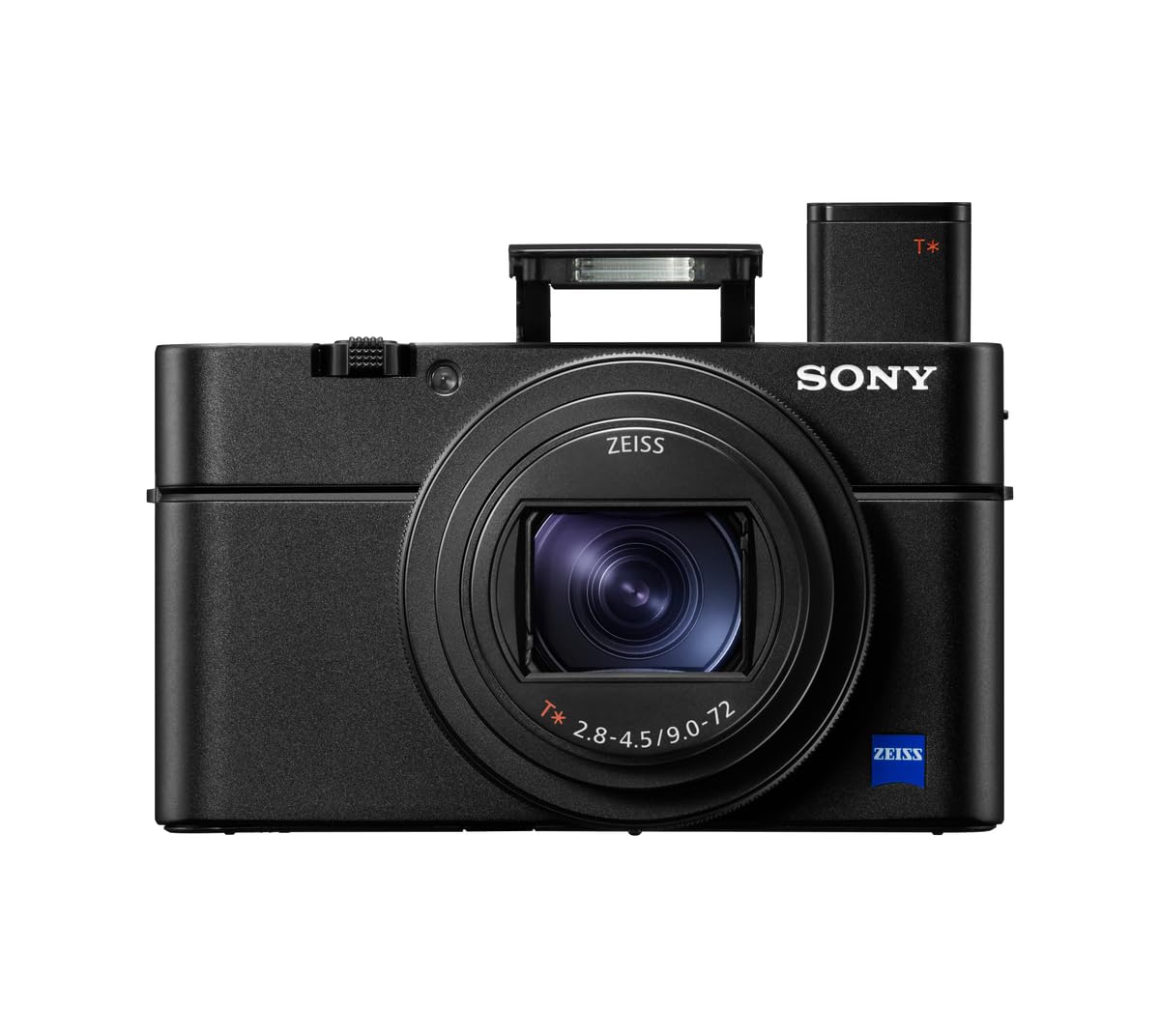
The Sony RX100 VII packs a 1-inch stacked CMOS sensor and a Zeiss 24-200mm f/2.8-4.5 lens into a truly pocketable body, making it a unique option for night photography on the move. The 0.02-second autofocus and 357-point phase-detection AF system are remarkably fast, locking onto subjects quickly even in low light. Users who tested it in dim environments were impressed by the image quality, especially when taking the time to dial in the manual settings.
The 4K video with mic input and S-Log3 gamma makes it a capable compact vlogging tool for evening scenes. The built-in electronic viewfinder is a lifesaver for composing shots in bright streetlights, and the 20fps burst speed captures fleeting moments. The lens reaches f/4.5 at the long end, so night shooting at 200mm will push the ISO higher.
The 1-inch sensor cannot match the noise performance of larger sensors, so images at ISO 3200 and above will show noticeable grain. The body is also slippery and lacks a built-in flash, and there is no included battery charger. It is best for travelers who need a pocketable camera for mixed lighting and are willing to work within its low-light limits.
Why it’s great
- Pocketable size with a versatile 24-200mm range
- Fast and accurate autofocus in low light
- 4K video with mic input and S-Log3
Good to know
- 1-inch sensor shows noise above ISO 3200
- Slippery body finish without included grip
- No built-in battery charger included
4. Sony Cinema Line FX30

The Sony FX30 is a cinema-oriented camera designed for videographers who need professional-grade low-light performance without stepping up to full-frame costs. Its dual base ISO (640 for normal and 2500 for high sensitivity) delivers outstanding dynamic range and minimal noise in dim environments, outputting S-Cinetone color science for a cinematic look with minimal grading. The 6K oversampled 4K video at up to 60fps is sharp, and the active cooling system prevents overheating during long shoots.
The autofocus is identical to Sony’s top-tier systems, with fast and reliable subject tracking even in near-darkness. The camera body is compact and lightweight, making it easy to rig for gimbal work. It includes dual card slots and timecode support for professional workflows. Users report fantastic low-light quality, especially for interview and documentary settings.
The FX30 is an APS-C camera, so the depth-of-field and low-light ceiling are not as high as full-frame options like the Sony a7S series. Battery life is mediocre, typically lasting 1-2 hours of recording. This is a specialized tool for video-centric night photography, not a general-purpose stills camera.
Why it’s great
- Dual base ISO produces clean images at ISO 2500
- 6K oversampled 4K video with S-Cinetone
- Active cooling prevents overheating for extended shoots
Good to know
- APS-C sensor limits shallow depth of field vs full-frame
- Battery life is mediocre for video recording
- Primarily a video camera, limited for still photography
5. Canon EOS 6D

The Canon EOS 6D remains a benchmark for affordable full-frame night photography. Its 20.2MP full-frame sensor delivers exceptionally clean images at ISO 6400 and usable results up to ISO 25600, with noise that resembles fine grain rather than color blotching. The center AF point is rated to -3 EV, meaning it can focus in near-total darkness where other cameras fail. Users consistently praise its low-light performance as its strongest attribute.
WiFi connectivity allows remote shooting and instant image transfer to a smartphone, which is useful for night timelapses or astrophotography. The magnesium alloy body with weather sealing is durable for outdoor conditions. It lacks a built-in flash, but the high-ISO capability often makes it unnecessary. The 4.5fps burst rate is adequate for most night scenarios.
The 11-point AF system is limited compared to modern cameras, and only the center point is cross-type for accurate detection in dim light. The plastic body does not match the build quality of higher-end Canons. It is also a DSLR, so it relies on optical viewfinder shooting. For pure still image quality at night, this is an outstanding value, but it is not ideal for video shooting at night.
Why it’s great
- Full-frame sensor delivers exceptional high-ISO noise control
- Center AF point works in near-total darkness (-3 EV)
- Excellent image quality for the price point
Good to know
- Only 11 AF points, with limited coverage and fewer cross-type sensors
- Plastic body feels less premium than high-end Canon models
- Not suitable for modern video requirements
6. Sony Alpha a6400

The Sony a6400 excels for night street and documentary photography where fast autofocus makes the difference between a sharp shot and a missed moment. Its Real-Time Eye AF and object tracking are among the best in any APS-C camera, locking onto moving subjects even in dim alley light. The 24.2MP sensor produces vibrant colors and good dynamic range, although low-light noise is more pronounced than in full-frame models.
The 4K video quality is excellent for the class, and the lack of a recording limit makes it suitable for long events. The compact size and lightweight body are ideal for a discreet street setup. Users recommend pairing it with a Tamron 17-70mm f/2.8 lens for a powerful low-light combination. The 11fps burst speed captures fast action even at night.
Camera reviewers consistently mention a “greenish” color cast straight out of camera, which requires adjustment in post-processing. The menu system is complex and the touchscreen implementation is poor, with limited functionality. The rolling shutter in 4K is noticeable when panning. It is a stellar stills camera for low-light street but less ideal for handheld video due to weak stabilization.
Why it’s great
- Industry-leading autofocus performance works well in low light
- Compact and lightweight for street photography
- No recording limit for 4K video
Good to know
- Skin tones can appear greenish out of camera
- Complex menu system with limited touchscreen functionality
- Poor in-body stabilization for handheld video
7. Panasonic LUMIX G85

The Panasonic LUMIX G85 is a mirrorless camera that delivers outstanding value by combining a 16MP Micro Four Thirds sensor with class-leading 5-axis dual image stabilization (IBIS + lens-based). The Dual I.S. 2 system compensates for camera shake across 5 axes, allowing sharp handheld exposures at very slow shutter speeds. This makes it highly effective for low-light photography without raising the ISO and introducing noise. The magnesium alloy body is weather-sealed, offering durability in damp night conditions.
It shoots 4K video with the ability to extract 8MP stills from 30fps bursts via the 4K Photo function. The post-focus feature lets you choose the focus point after capturing the shot, which is useful for night scenes. It includes a high-resolution 2360K-dot OLED viewfinder and a fully articulating touch screen. The ergonomics are excellent with a large, comfortable grip for long night shoots.
While the 16MP sensor is lower resolution than many competitors, the absence of a low-pass filter boosts fine detail. The micro four thirds sensor does show more noise at high ISO than APS-C sensors. Autofocus can be sluggish in very low light compared to Sony offerings. It is a fantastic entry-level mirrorless option for night photography, especially for those who prioritize stabilization and video features.
Why it’s great
- 5-axis dual stabilization allows sharp handheld shots in low light
- Weather-sealed magnesium alloy body is durable
- Great value for a 4K mirrorless camera
Good to know
- Autofocus can be sluggish in very dark environments
- 16MP MFT sensor shows more noise at high ISO than APS-C
- Poor battery life for extended shooting sessions
8. Nikon D7500

The Nikon D7500 is a robust DSLR that borrows image quality and processing from the pro-level D500. Its 20.9MP sensor and EXPEED 5 processor produce clean, detailed images up to ISO 6400 with impressive color accuracy. The 51-point AF system, with 15 cross-type sensors, delivers fast and accurate focusing in low light, and the 8fps continuous shooting is quick enough for night sports or events. Viewfinder shooting feels responsive and familiar for DSLR users.
The large 3.2-inch tilting touchscreen is useful for shooting from awkward angles. The 18-140mm VR kit lens provides a very versatile zoom range with optical stabilization. The camera is built with weather resistance and long battery life, making it reliable for all-night outdoor shoots. 4K video (30fps) is basic but functional, and the timelapse function is a nice extra.
As a 2017 model, it lacks the latest tech like USB-C or built-in WiFi for fast transfer. The body and lens combination is heavy compared to modern mirrorless systems, which can be a downside for extended night walkarounds. The single memory card slot (SD) is a limitation for professional backup. It is an excellent choice for traditional DSLR shooters who want dependable low-light performance.
Why it’s great
- Excellent image quality and low-noise performance up to ISO 6400
- Fast and reliable 51-point AF system in low light
- Very long battery life and weather-sealed body
Good to know
- Older model lacks USB-C and fast WiFi transfer
- Heavy body and lens compared to mirrorless alternatives
- Only one SD card slot
9. Canon EOS R100

The Canon EOS R100 is the smallest and lightest EOS R-series camera, designed as an entry-level gateway to affordable mirrorless photography. The 24.1MP APS-C sensor paired with the DIGIC 8 processor produces Canon’s characteristic color science and can achieve decent low-light shots when paired with a fast lens like the RF 50mm f/1.8. The Dual Pixel CMOS AF covers 143 zones with face and eye detection, which helps maintain focus in lower light conditions.
The 4K video at 24fps is acceptable for learning, and Full HD at 60fps with 120fps HD slow-motion adds creative flexibility. The camera is lightweight and easy to handle for beginners, with a beginner-friendly GUI. The kit lens is the RF-S 18-45mm f/4.5-6.3, which is quite slow (narrow aperture) for night photography, so upgrading to a faster RF lens is recommended for evening use.
The slow kit lens aperture means the camera will push ISO high in dim light, resulting in noise. The small EVF and 3-inch touchscreen are basic. It lacks IBIS, so steady shooting requires a tripod or good technique. This is a perfect entry-level learning tool for understanding exposure but will need a fast prime lens for serious night work.
Why it’s great
- Affordable entry point into the Canon RF mirrorless system
- Compact and lightweight for easy carrying
- Good Dual Pixel AF with face tracking for low light
Good to know
- Kit lens aperture (f/4.5-6.3) is very slow for night photography
- No in-body stabilization, needs tripod for low light
- Basic EVF and touchscreen quality
10. Nikon Z 50

The Nikon Z 50 is a compact mirrorless camera that brings the Z-mount’s performance to a portable APS-C body. The large 55mm mount allows more light to reach the sensor, improving low-light performance compared to many DSLRs. The 20.9MP sensor combined with the EXPEED 6 processor delivers clean images with good dynamic range, and the eye AF works well for portraits at night. The 209-point hybrid AF system is fast and reliable.
The flip-down touch LCD is ideal for self-portraits and vlogging, and the 4K UHD video (30fps) is serviceable. The camera is easy to use and intuitive, making it a great transition from a smartphone. It is compatible with NIKKOR Z lenses and F-mount lenses via the FTZ adapter, offering a wide range of potential optics. The kit lens (16-50mm f/3.5-6.3 VR) is stabilized but slow for night.
Battery life is a common complaint, with users noting fast drain and recommending carrying spare batteries. The Z-mount lens selection is still limited compared to F-mount, and the FTZ adapter adds cost and bulk. It is a good travel-sized mirrorless that can handle low-light with a fast prime, but the kit lens limits its night capabilities out of the box.
Why it’s great
- Large Z-mount enhances light capture for better low-light performance
- Compact and lightweight, ideal for travel
- Intuitive controls and easy-to-use interface
Good to know
- Battery life drains quickly, spares recommended
- Limited native Z-mount lens selection
- Kit lens aperture is too slow for effective night photography
11. Panasonic LUMIX ZS99

The Panasonic LUMIX ZS99 is a compact superzoom camera built for portability and reach in daylight. Its 24-720mm Leica lens and 30x optical zoom are fantastic for capturing distant subjects, concerts, or daytime landscapes. The 20.3MP 1/2.3-inch sensor is bright in good sun but will struggle significantly as light drops. The camera includes a tiltable touchscreen and Bluetooth for easy sharing.
For travel photographers, the ZS99 slips into a pocket and covers an extraordinary zoom range. The 4K video and 4K Photo bursts at 30fps add versatility. Users appreciate its ease of use and the Leica lens’s color quality. The dedicated Send Image button makes transferring images to a phone quick.
This camera is not designed for night photography. The small sensor will produce noisy, soft images at moderate ISO values, and the variable aperture (f/3.3-6.4) limits light intake. The built-in flash is useless for range. It is purely a daylight companion. For those whose primary shooting is at night, this is not a suitable choice.
Why it’s great
- Incredible 30x zoom range for daytime travel use
- Pocketable design is easy to carry anywhere
- Good image quality in bright daylight conditions
Good to know
- Small sensor produces noisy images in low light
- Variable aperture lens is slow for night shooting
- Image quality is not comparable to APS-C or full-frame cameras
FAQ
Can I use a basic APS-C camera for astrophotography?
Does in-body stabilization (IBIS) help for night photography?
Why does my camera produce grainy images at night?
Which is more important for night photos: a fast lens or a good sensor?
Is a DSLR or mirrorless better for low-light photography?
Final Thoughts: The Verdict
For most users, the affordable camera for night photography winner is the Sony a6700 because it combines a modern, back-illuminated APS-C sensor with exceptional AI autofocus and advanced video features, making it the most versatile tool for low-light capture. If you want the best still-image quality at night, grab the Canon EOS 6D for its full-frame sensor and very high-ISO performance. And for handheld night stills without a tripod, nothing beats the OM SYSTEM E-M10 Mark IV with its powerful 5-axis stabilization that rescues shots in near-darkness.

Mo Maruf
I created WellFizz to bridge the gap between vague wellness advice and actionable solutions. My mission is simple: to decode the research and give you practical tools you can actually use.
Beyond the data, I am a passionate traveler. I believe that stepping away from the screen to explore new environments is essential for mental clarity and physical vitality.