Our readers keep the lights on and my smoothie glass nicely filled. As an Amazon Associate, I earn from qualifying purchases.
Moving from a smartphone to a dedicated mirrorless or action camera for content creation is a leap in image quality, but the sheer volume of specs—sensor size, bit depth, autofocus points, stabilization axes—can stall even a prepared buyer. The difference between a capable starter body and a bottleneck that limits your growth often comes down to just two or three specific technical choices, especially when your budget sits in the mid-range territory where trade-offs are sharpest.
I’m Mohammad Maruf — the founder and writer behind WellFizz. I’ve spent years analyzing camera hardware specifications, comparing sensor readout speeds, color bit depth, and stabilization geometry across hundreds of models to determine which features actually translate to better footage for creators rather than just better marketing copy.
To cut through the noise, I’ve assembled this guide to the best affordable camera for content creators, focusing on models that deliver real usable performance without requiring you to finance a second mortgage.
How To Choose The Best Affordable Camera For Content Creators
Choosing a camera in this price range means balancing sensor performance against autofocus reliability and stabilization quality. The wrong pick can leave you with grainy low-light clips or footage that requires an expensive gimbal to fix. Here are the three decisive factors to evaluate.
Sensor Size And Low-Light Performance
Sensor size is the single most important hardware differentiator. A 1-inch sensor (found in compact vlogging cameras like the Sony ZV-1) collects less light than an APS-C sensor (found in the Canon EOS R50 or Sony ZV-E10), which in turn collects less light than a full-frame sensor. Larger sensors produce shallower depth of field for that blurred-background look and maintain cleaner signal-to-noise ratios in dim environments. For content creators shooting indoors or at golden hour, an APS-C sensor represents the best balance of image quality and cost in the current market.
Autofocus Architecture For Video
For solo creators who record themselves talking to a camera, autofocus is not a luxury—it is the core of the workflow. Contrast-detect systems hunt and pulse, creating visible focus breathing in footage. Hybrid systems that combine phase-detection pixels with contrast-detection, such as Canon’s Dual Pixel CMOS AF II or Sony’s Real-Time Eye AF, deliver smooth, silent transitions that maintain sharpness on a face that moves around the frame. Look for models with face and eye tracking that works during video recording, not just stills.
Stabilization: Mechanical Vs. Electronic
Handheld footage without stabilization looks amateur. In-body image stabilization (IBIS) uses floating sensor mechanisms to cancel out micro-jitters, while lens-based optical stabilization steadies the image path within the lens barrel. Electronic stabilization crops into the sensor and can produce a wobbly “jello” effect during rapid movement. For vlogging and run-and-gun shooting, cameras with either IBIS or highly effective lens stabilization—like the Panasonic LUMIX G97 with its 5-axis Dual I.S.2—save you the cost and bulk of an external gimbal.
Quick Comparison
On smaller screens, swipe sideways to see the full table.
| Model | Category | Best For | Key Spec | Amazon |
|---|---|---|---|---|
| DJI Osmo Pocket 3 Creator Combo | Gimbal Camera | Ultra-stable vlogging on the move | 1″ CMOS, 3-axis mech. stabilization | Amazon |
| Canon EOS R50 Kit | Mirrorless | Beginner-friendly hybrid photo/video | APS-C, Dual Pixel AF II, vari-angle LCD | Amazon |
| Sony ZV-E10 Kit | Mirrorless | Interchangeable lens vlogging | APS-C, 425 phase-detect AF points | Amazon |
| Panasonic LUMIX G97 Kit | Mirrorless | Color grading and long 4K takes | MFT, 12-stop V-Log L, 5-axis IBIS | Amazon |
| Canon EOS R100 Kit | Mirrorless | Budget entry to interchangeable lenses | APS-C, 24.1 MP, Dual Pixel CMOS AF | Amazon |
| DJI Osmo Nano Standard (128GB) | Action Cam | Compact POV and adventure clips | 1/1.3″ sensor, 4K/60fps, 10-bit color | Amazon |
| Mevo Start | Streaming Cam | Wireless live streaming, multi-cam | 1080p, LTE/Wi-Fi, Auto-Director app | Amazon |
| Sony ZV-1 Bundle | Compact Vlog | Point-and-shoot vlogging with bokeh | 1″ sensor, F1.8-2.8 Zeiss lens | Amazon |
| Panasonic LUMIX S9 Kit | Full-Frame | Compact full-frame for social media | Full-frame, Open Gate, LUT support | Amazon |
| Canon EOS R6 Mark II | Full-Frame | Pro-grade hybrid stills and video | Full-frame, 40fps, 6K oversampled 4K | Amazon |
| Canon EOS M50 Creator Kit | Mirrorless | Complete kit with external mic | APS-C, Dual Pixel AF, 4K UHD | Amazon |
In‑Depth Reviews
1. DJI Osmo Pocket 3 Creator Combo

The Osmo Pocket 3 sits in a category of its own because it integrates a 1-inch CMOS sensor—typically found in premium compact cameras—with a built-in 3-axis mechanical gimbal that eliminates the need for post-production stabilization or an external gimbal rig. The 1-inch sensor gathers significantly more light than the 1/1.3-inch and 1/2.3-inch sensors used in action cameras, producing cleaner 4K footage at 120fps with genuine low-light capability that doesn’t fall apart when you step indoors.
The Creator Combo sweetens the deal with the DJI Mic 2 transmitter, a wide-angle lens, a battery handle that extends runtime to 166 minutes, and a mini tripod. The 2-inch rotatable touchscreen switches between horizontal and vertical orientation instantly, which is a practical time-saver for creators who publish to both YouTube and TikTok without rotating the entire camera body.
ActiveTrack 6.0 locks onto a subject and keeps them centered even during dynamic movement like dancing or jogging, and the 10-bit D-Log M color profile preserves over one billion colors for serious grading work. The trade-off is that the gimbal mechanism is fragile by nature—you cannot drop this camera or treat it like an action cam—and the fixed lens means you cannot swap optics for different focal lengths.
Why it’s great
- 1-inch sensor with 4K/120fps performance that rivals larger mirrorless cameras in controlled lighting
- Built-in 3-axis gimbal removes the need for external stabilization gear entirely
- Included DJI Mic 2 transmitter provides broadcast-quality wireless audio out of the box
Good to know
- No interchangeable lens system limits creative flexibility for different shot types
- Gimbal is delicate and not designed for rugged outdoor abuse or accidental drops
2. Canon EOS R50 Mirrorless Camera Kit
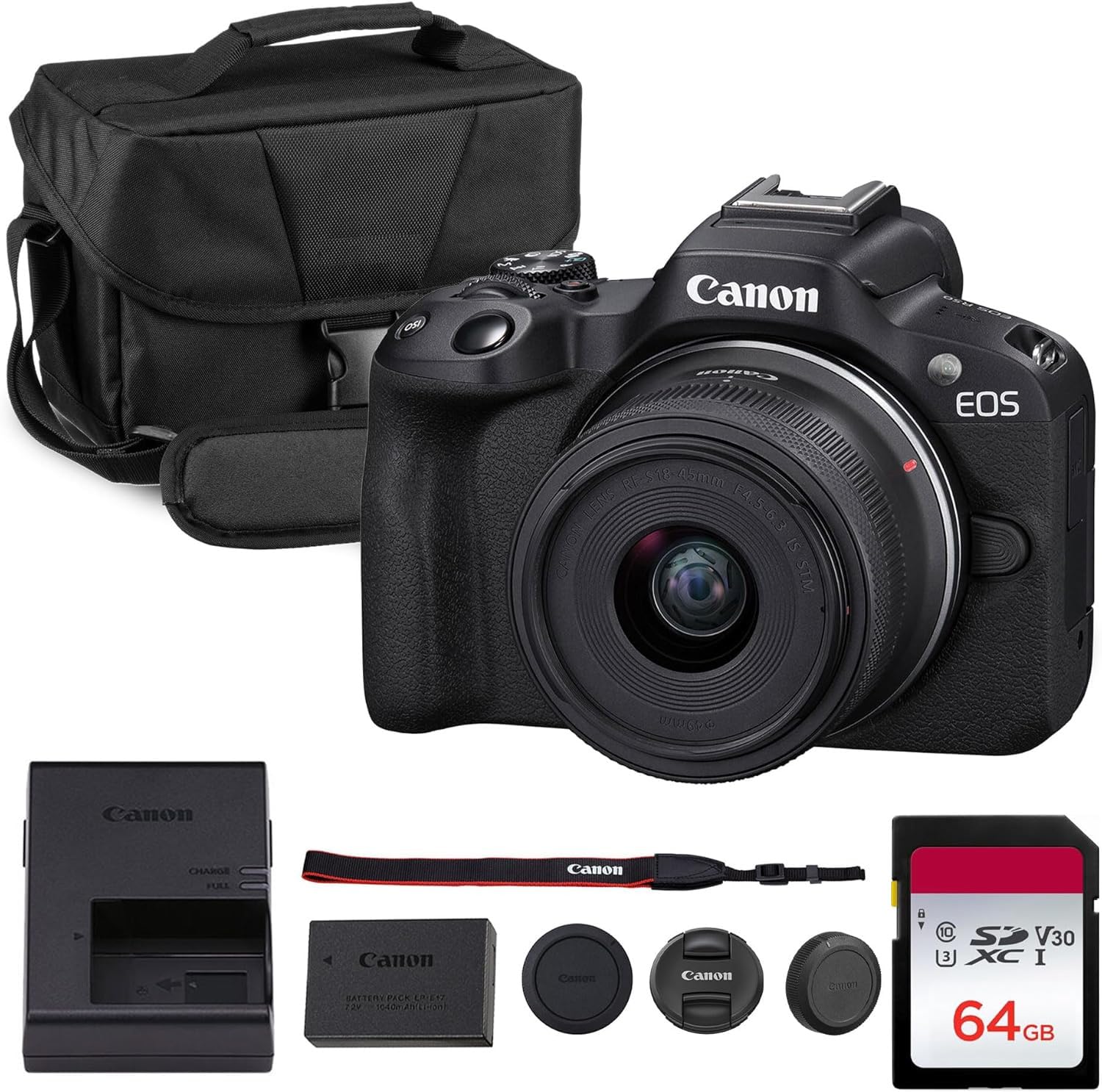
The Canon EOS R50 is the lightest APS-C body in the EOS R series, and that weight reduction matters for creators who hold the camera for extended recording sessions. The 24.2-megapixel APS-C sensor produces oversampled 4K video from a 6K readout, meaning the final footage retains more detail and less aliasing than lower-bin 4K implementations. Dual Pixel CMOS AF II with face and eye detection tracks subjects reliably during video, even when they turn their head or move across the frame.
The vari-angle touchscreen flips out to the side, a critical detail for self-recording because it keeps the screen visible without being blocked by a microphone or hotshoe accessory. Creative Assist mode provides real-time visual guidance for beginners who are still learning the exposure triangle, and vertical video support means the camera can shoot in a 9:16 aspect ratio natively without requiring post-production rotation.
The kit includes the RF-S 18-45mm f/4.5-6.3 IS STM lens, which offers optical stabilization but has a slow variable aperture that limits low-light performance without raising ISO. You will want to invest in a faster prime lens—such as the RF 50mm f/1.8—to unlock the sensor’s true potential in dim environments.
Why it’s great
- Oversampled 4K from 6K readout delivers sharp, detailed footage with minimal moiré
- Dual Pixel CMOS AF II provides smooth, reliable face and eye tracking during video
- Lightweight body and vari-angle side screen are ideal for handheld vlogging
Good to know
- Kit lens aperture is slow, requiring higher ISO or additional lighting indoors
- No in-body image stabilization—relies on lens-based optical stabilization
3. Sony Alpha ZV-E10 Kit
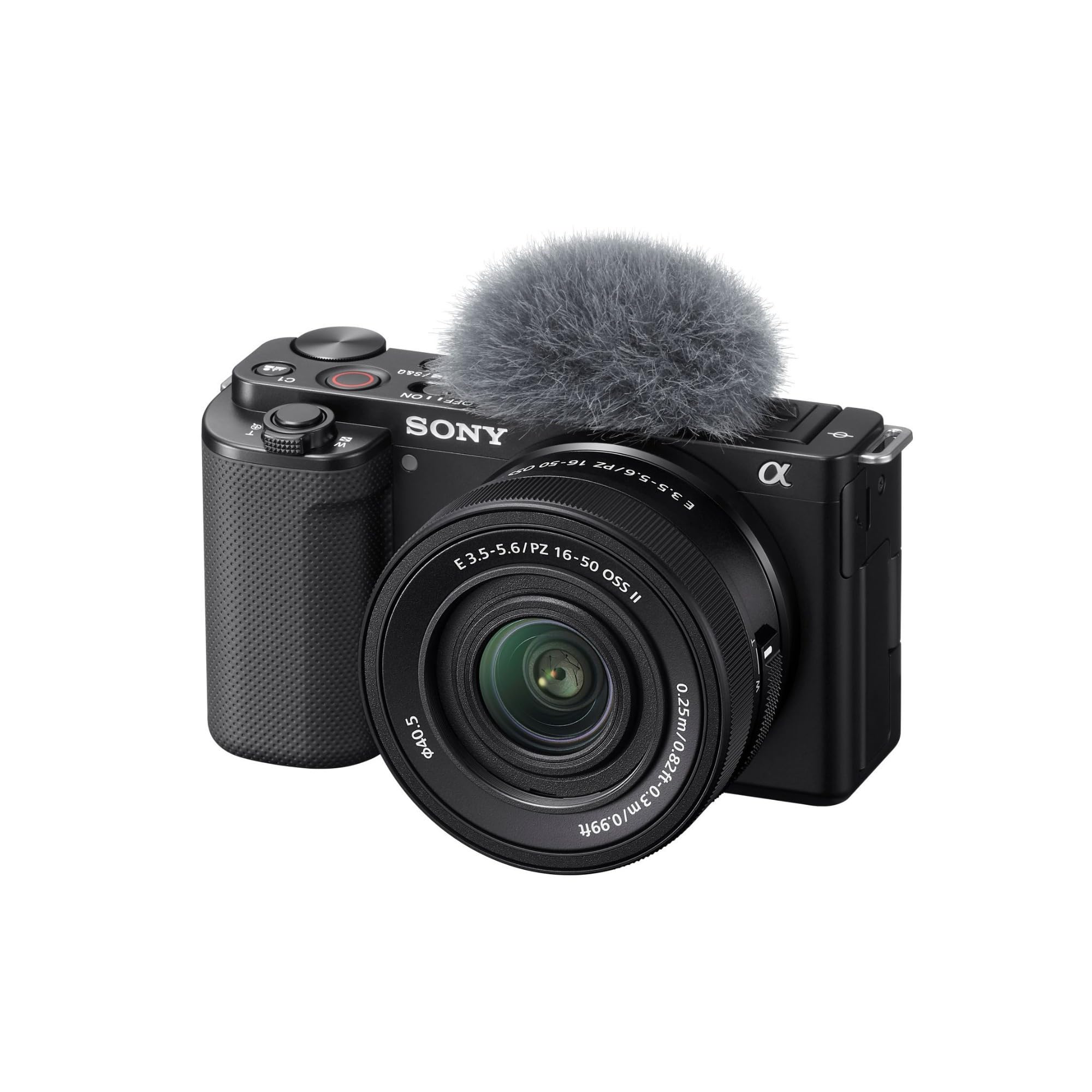
The Sony ZV-E10 has been a benchmark for vlogging-focused mirrorless cameras since its release, and the updated kit with the E PZ 16-50mm F3.5-5.6 OSS II lens retains everything that made the original popular. The 24.2-megapixel APS-C sensor oversamples 4K from a 6K readout with full pixel readout and no pixel binning, which preserves maximum detail and avoids the softness that plagues binned 4K. The 425 phase-detection autofocus points cover a wide area of the frame, and Real-Time Eye AF for humans and animals locks on and stays locked even during erratic movement.
Product Showcase Setting is a unique feature for creators who review products or unbox items on camera: when you hold an object near the lens, the autofocus instantly transitions from your face to the object, then flips back when you lower the object. The Background Defocus button provides a one-press toggle between shallow depth of field and a stopped-down aperture, which is handy for quickly switching between a professional look and a more informative shot.
The ZV-E10 lacks in-body image stabilization, so handheld footage may require a gimbal or active stabilization mode, which crops the frame. Battery life is average for the category, and the kit lens is optically modest, but the E-mount ecosystem offers the largest selection of affordable third-party lenses available, including Sigma’s f/1.4 primes.
Why it’s great
- Real-Time Eye AF with 425 phase-detection points delivers industry-leading subject tracking
- Product Showcase Setting is a practical time-saver for review and unboxing content
- E-mount ecosystem offers extensive and affordable third-party lens options
Good to know
- No in-body image stabilization, so handheld footage may show micro-jitters
- Kit lens is optically mediocre; budget for a separate prime lens
4. Panasonic LUMIX G97 Kit
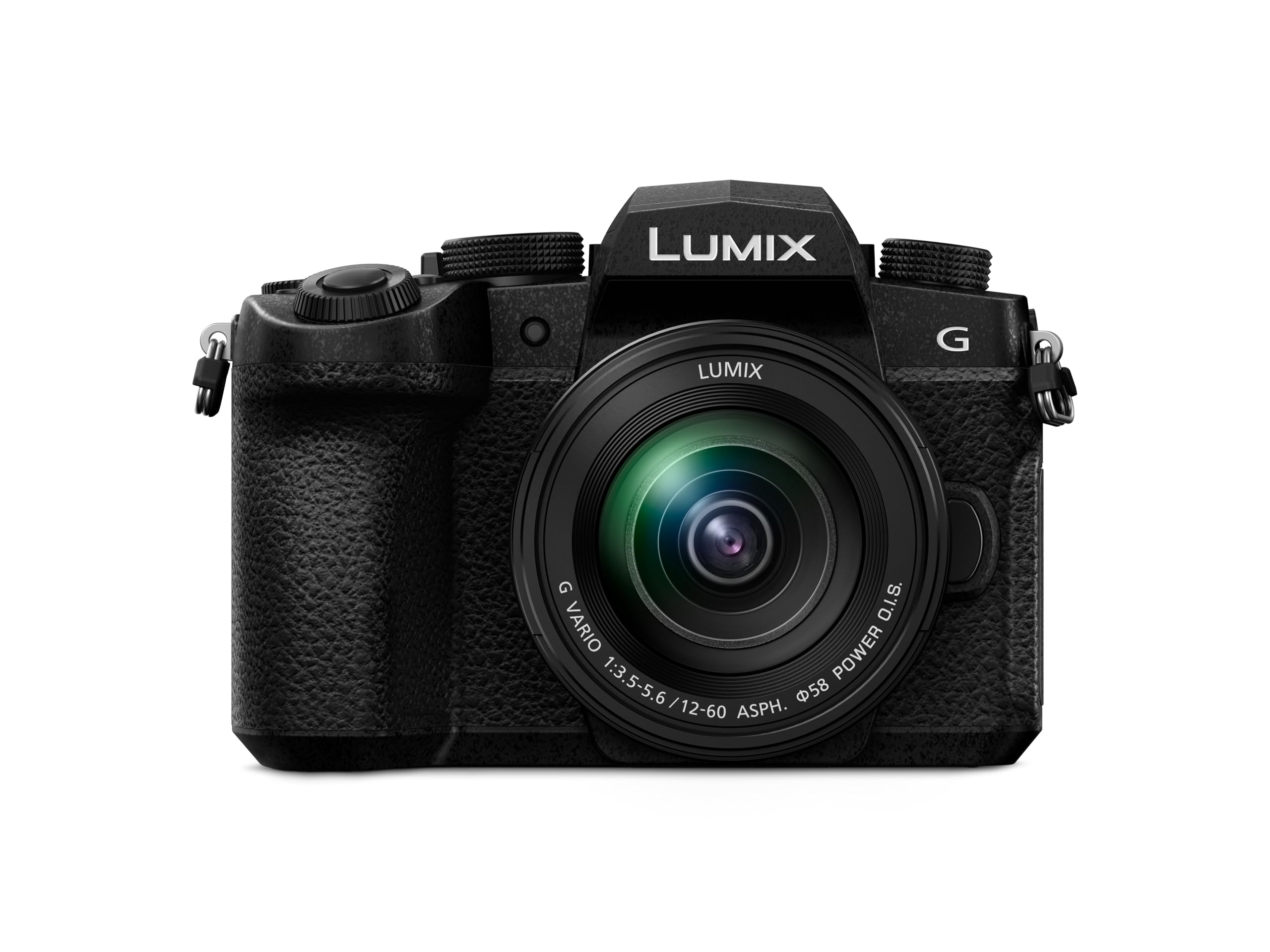
The Panasonic LUMIX G97 is the most color-workflow-friendly camera in this price bracket because it includes V-Log L pre-installed, offering 12 stops of dynamic range for log recording. This is a feature typically reserved for much more expensive cinema cameras, and it allows you to grade footage with significant latitude before introducing noise or banding. The Micro Four Thirds sensor is smaller than APS-C, which means less shallow depth of field at equivalent apertures, but the trade-off is access to a massive, affordable lens library and significantly smaller body dimensions.
The 5-axis Dual I.S.2 stabilization is class-leading for handheld work. Panasonic rates it at 5 stops of correction, which in real-world use means you can shoot handheld at a 1/15th shutter speed and still produce usable stills, and handheld 4K video that looks like it was shot on a monopod. The 1,840k-dot free-angle LCD and 2,360k-dot OLED viewfinder provide high-resolution framing even in bright sunlight.
The 12-60mm kit lens is sharp and versatile, covering a 24-120mm equivalent focal range, making it suitable for everything from wide vlogging to tight portraits. The autofocus uses DFD (Depth From Defocus) contrast detection, which is fast in good lighting but hunts more than phase-detect systems in low light or when tracking erratic movement.
Why it’s great
- Built-in 12-stop V-Log L enables serious color grading without external recorders
- 5-axis Dual I.S.2 stabilization provides gimbal-like handheld footage
- Excellent ergonomics with dedicated ISO, WB, and exposure compensation dials
Good to know
- DFD autofocus hunts in low-light scenarios compared to phase-detect systems
- Micro Four Thirds sensor has less background blur potential than APS-C at equivalent apertures
5. Canon EOS R100 Kit

The Canon EOS R100 is the smallest and lightest body in the EOS R series, and its target audience is explicitly the beginner who wants to step up from a smartphone without the complexity of higher-end mirrorless cameras. The 24.1-megapixel APS-C sensor paired with the DIGIC 8 processor delivers the same sensor performance found in previous-generation Canon APS-C bodies, producing clean images up to ISO 3200 and 4K video at 24fps with Dual Pixel CMOS AF covering 143 zones.
The human face and eye detect AF works reliably during video for stationary or slow-moving subjects, and the continuous shooting speed of 6.5 fps is adequate for capturing candid moments without filling up a memory card in seconds. The RF-S 18-45mm kit lens provides a versatile starting range, and the RF mount offers a clear upgrade path to faster primes or longer zooms as your skills develop.
The R100 lacks a vari-angle touchscreen—it uses a fixed LCD—which makes self-recording more challenging because you cannot see your framing while in front of the lens. The 4K video mode also imposes a crop factor, reducing the effective field of view compared to shooting in Full HD. This is a camera for learning the fundamentals, not for advanced video workflows.
Why it’s great
- Lightest EOS R body makes it easy to carry for daily shooting
- Dual Pixel CMOS AF provides reliable face and eye detection for beginner video
- RF mount compatibility allows future lens upgrades without changing the body
Good to know
- Fixed LCD screen prevents accurate self-recording framing
- 4K video is cropped, reducing the effective wide-angle view
6. DJI Osmo Nano Standard Combo 128GB
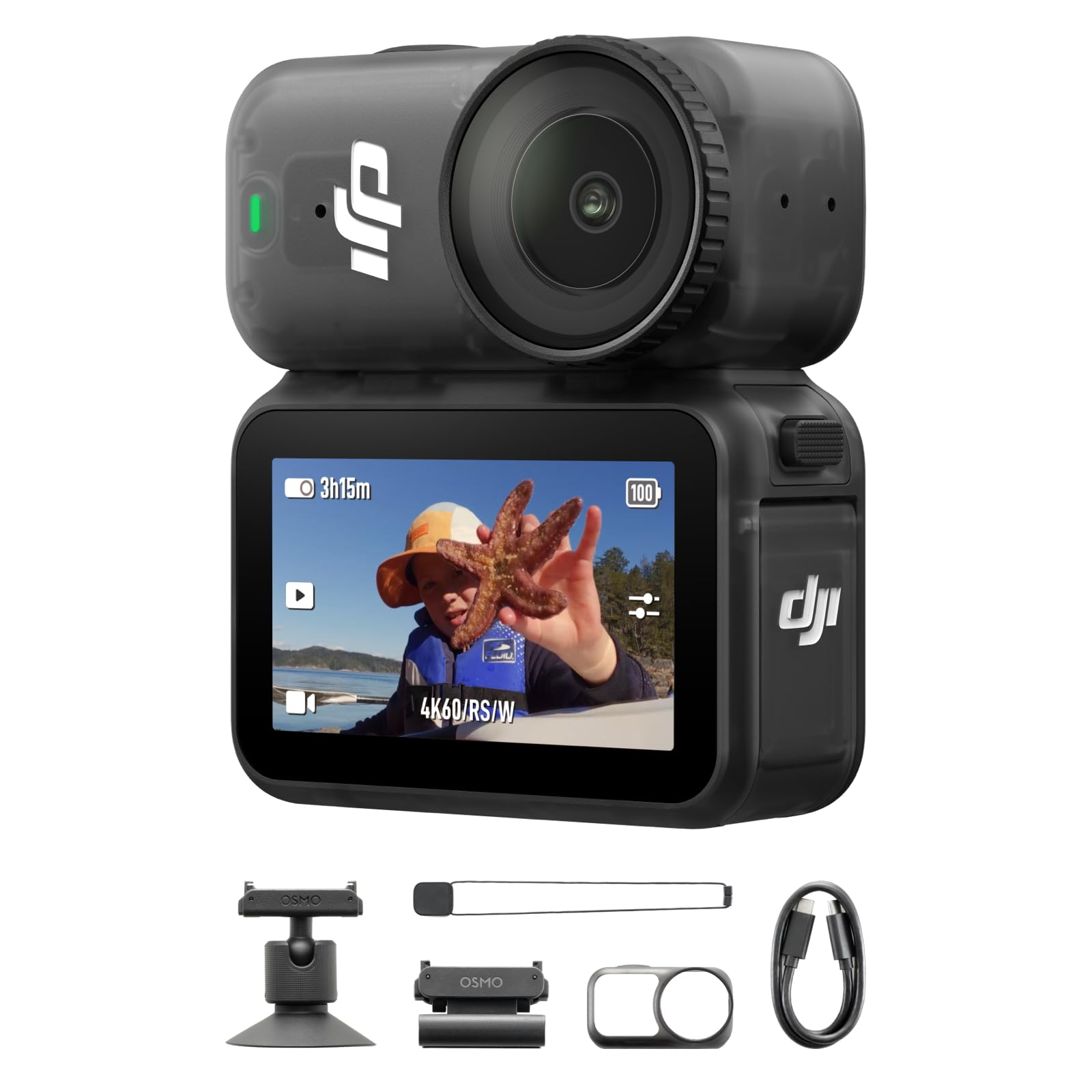
The DJI Osmo Nano is an action camera, but its positioning as a content-creation tool is distinct from competitors because it prioritizes magnetic mounting accessories and integrated storage over rugged waterproofing. The 1/1.3-inch sensor records 4K at 60fps with a 143-degree ultra-wide field of view, and the 10-bit D-Log M color profile provides grading flexibility that is rare in the action camera segment. The magnetic ecosystem—including a hat clip, lanyard, and ball-joint adapter—allows you to attach the camera to virtually any surface or clothing without bulky clamps.
The 128GB of built-in storage means you can start recording immediately without buying a memory card, and the expandable microSD slot adds capacity for longer shoots. Battery life reaches up to 200 minutes with the Vision Dock, and the camera is waterproof to 10 meters without a housing, making it a viable option for aquatic content or outdoor shoots in rain.
The Osmo Nano supports direct connection to two DJI microphones via OsmoAudio, delivering clean audio without the hassle of wireless sync. The compact size and magnetic mounting make it ideal for first-person perspective content, cooking videos, or pet adventures, but the small sensor cannot match the low-light performance or depth-of-field control of larger cameras.
Why it’s great
- Magnetic mounting system enables creative POV angles without bulky accessories
- 128GB built-in storage removes the immediate need for a separate memory card
- 10-bit D-Log M color allows grading despite the action camera form factor
Good to know
- Small sensor limits low-light quality compared to 1-inch or APS-C alternatives
- No interchangeable lens and fixed ultra-wide angle restricts compositional variety
7. Mevo Start

The Mevo Start is not a traditional camera for recording edited content—it is a dedicated live-streaming camera designed for creators who broadcast to YouTube, Twitch, Facebook, or other platforms in real time. The 1080p HD resolution is modest by modern standards, but the wireless design is where the Mevo Start differentiates itself: it connects via Wi-Fi, Ethernet, or even a smartphone’s LTE network, allowing you to stream from locations where running an HDMI cable is impractical.
The intelligent app control includes Auto-Director, which automatically switches between different angles when you connect up to three Mevo Start cameras, creating a multi-cam broadcast without a dedicated switcher or operator. The 6-hour battery life covers most live events, and the built-in microphone captures usable audio, though you can connect an external mic via the aux input for better quality.
The Mevo Start supports simultaneous streaming to multiple platforms and integrates with RTMP and NDI|HX protocols for advanced setups. It is not suitable for recording high-resolution archival footage or photos, and the digital zoom introduces edge distortion at higher magnifications. This is a specialized tool for live content workflows.
Why it’s great
- Wireless LTE and Wi-Fi streaming allows broadcasting from remote locations
- Auto-Director automates multi-camera switching without external hardware
- 6-hour battery life covers extended live events without power interruptions
Good to know
- Maximum 1080p resolution is insufficient for high-detail archival video
- Digital zoom degrades image quality beyond 2x magnification
8. Sony ZV-1 Bundle
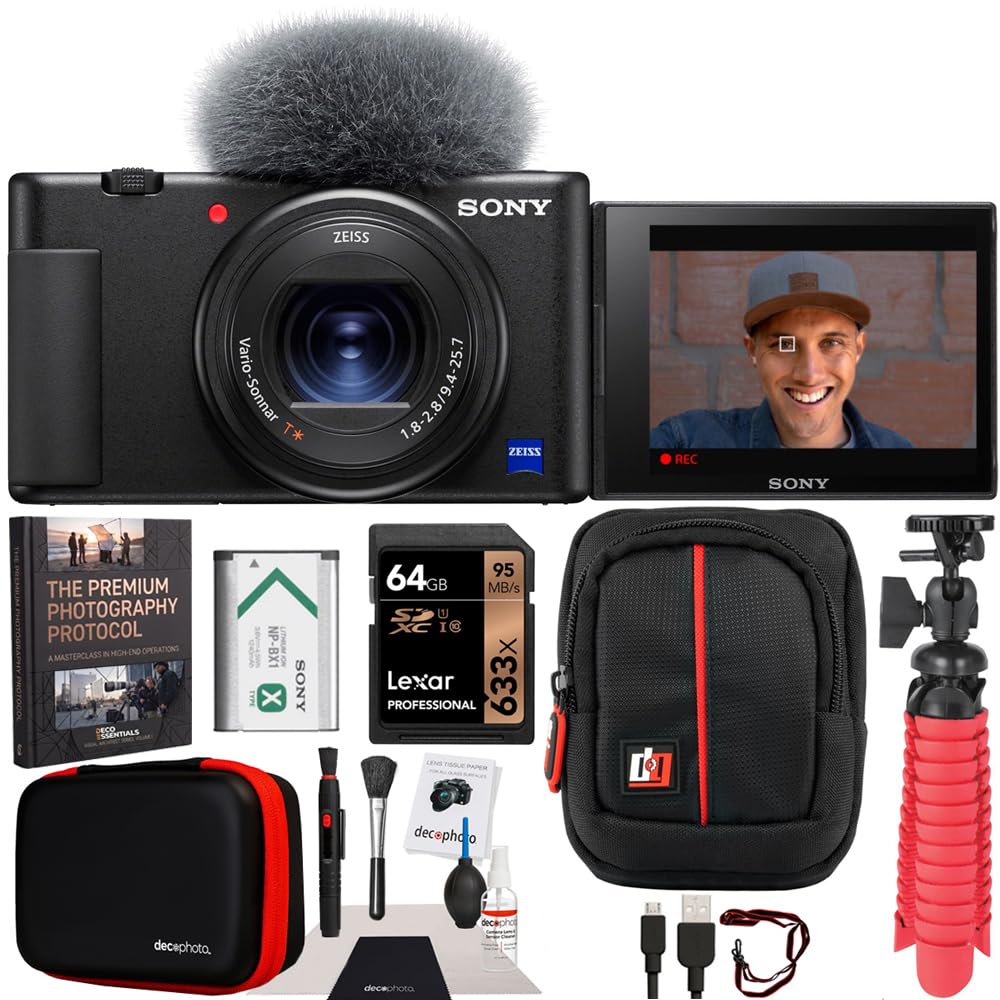
The Sony ZV-1 is a fixed-lens compact camera that packs a 1-inch stacked CMOS sensor behind a Zeiss Vario-Sonnar T* 24-70mm f/1.8-2.8 lens, giving it a bright aperture at the wide end that produces visible background blur—the “bokeh switch” effect that Sony markets heavily. The 20.1-megapixel sensor with DRAM enables 4K HDR video recording and high-speed readout that minimizes rolling shutter distortion during panning shots.
The side flip-out touchscreen is specifically designed for vlogging, keeping the mic on top of the camera unobstructed by the screen. The built-in directional 3-capsule microphone includes a wind screen adapter that reduces wind noise for outdoor recording, and the MI shoe allows attachment of an external microphone without dangling cables. Fast Hybrid AF with Real-Time Eye AF locks onto faces with speed and accuracy, making it one of the easiest point-and-shoot vlogging cameras to operate.
Battery life is the ZV-1’s primary weakness—you will get roughly 45 minutes of 4K recording on a single charge, so the bundled spare battery and charger in this package are necessities, not luxuries. The 1-inch sensor also cannot match the shallow depth of field or high-ISO performance of APS-C cameras, and the fixed lens limits your ability to change focal length beyond the built-in 2.7x digital zoom.
Why it’s great
- Bright f/1.8-2.8 Zeiss lens produces real background blur without lens swapping
- Built-in directional microphone with wind screen improves outdoor audio clarity
- Compact body and side flip-out screen are highly portable for daily carry
Good to know
- Battery life is short—expect less than an hour of continuous 4K recording
- Fixed lens limits focal length range and upgrade potential
9. Panasonic LUMIX S9 Kit
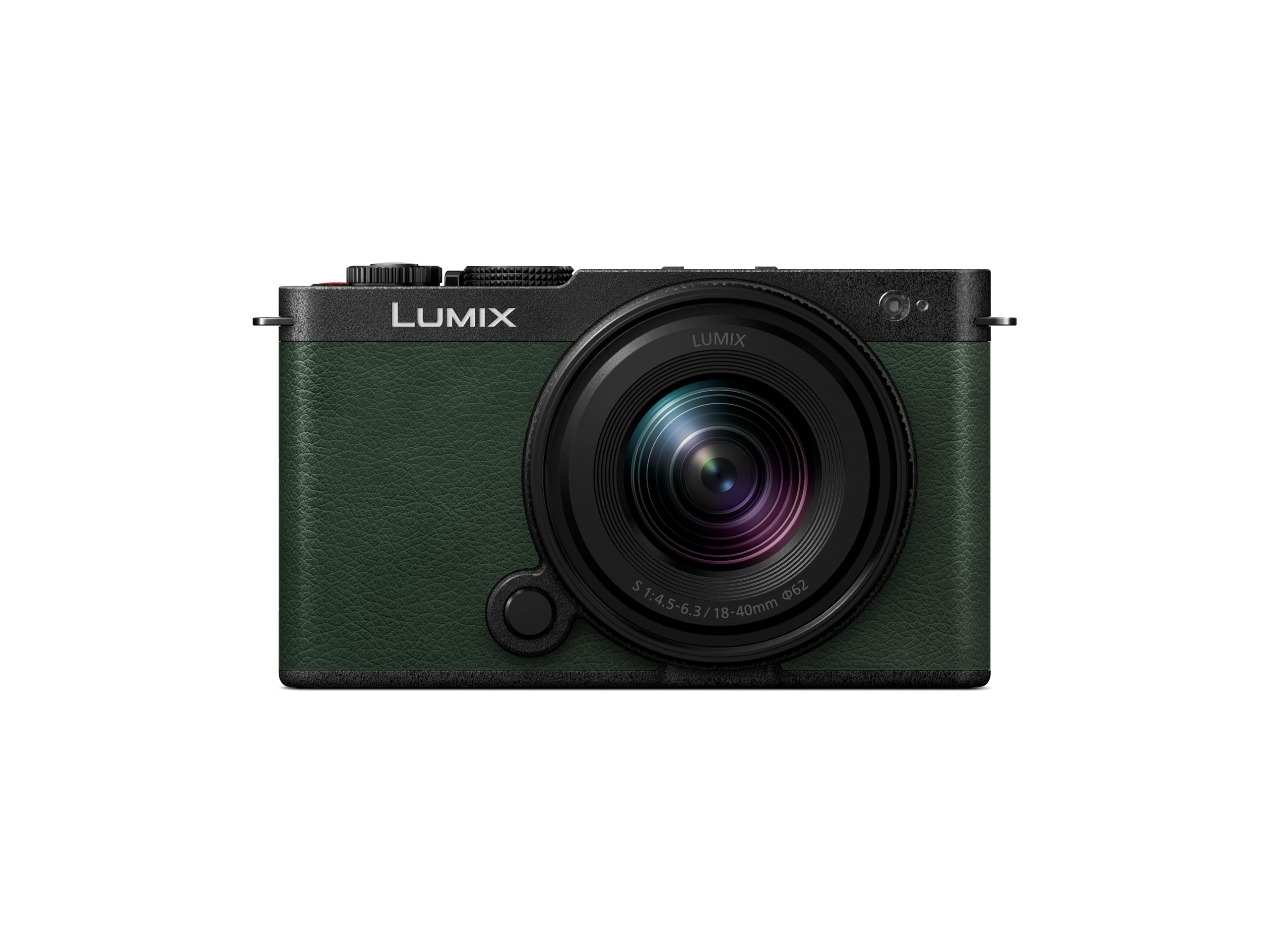
The Panasonic LUMIX S9 is one of the most compact full-frame mirrorless cameras available, and its target audience is social-media-focused creators who want full-frame image quality without the bulk of a traditional DSLR-sized body. The 24.2-megapixel full-frame sensor delivers professional-grade dynamic range and low-light performance, and the Open Gate recording mode captures the full sensor readout in 3:2 aspect ratio, allowing you to extract both 16:9 and 9:16 crops from the same clip without re-shooting.
The LUMIX Lab app integration enables ultra-fast Wi-Fi transfer of full-resolution files to your phone, and the built-in LUT support allows you to apply color presets in-camera or directly within the app, which speeds up the social media posting workflow significantly. The 18-40mm kit lens collapses to an incredibly compact size when not in use, making the entire setup small enough to fit in a large coat pocket.
The S9 lacks a hotshoe and an electronic viewfinder, which are non-issues for creators who primarily use the rear LCD for composition but are dealbreakers for those who want to attach external flashes or monitors. The autofocus uses Panasonic’s Depth From Defocus system, which is reliable for static subjects but lags behind phase-detect systems for fast-moving content.
Why it’s great
- Full-frame sensor in an exceptionally compact body for serious image quality on the go
- Open Gate recording enables simultaneous vertical and horizontal framing from one clip
- In-camera LUT support eliminates the need for desktop color grading software
Good to know
- No hotshoe limits flash accessory use and some external microphone options
- DFD autofocus is less reliable than phase-detect for tracking fast movement
10. Canon EOS R6 Mark II

The Canon EOS R6 Mark II is the most expensive camera on this list, but it earns its position by delivering full-frame performance that competes with cameras costing twice as much. The 24.2-megapixel full-frame CMOS sensor with the DIGIC X processor enables 6K oversampled 4K video at up to 60fps with no crop, producing footage with exceptional detail and minimal rolling shutter. The electronic shutter hits 40 fps with continuous autofocus, making this one of the fastest stills cameras for capturing fleeting moments.
The Dual Pixel CMOS AF II system detects heads, faces, eyes, animals, vehicles, and even horses and trains, automatically selecting the subject type without manual switching. The 8-stop in-body image stabilization works with all mounted lenses, providing steady handheld footage that often eliminates the need for a gimbal. The weather-sealed magnesium-alloy body, dual SD card slots, and 6-hour Full HD recording limit make it a reliable workhorse for serious creators.
This camera does not include a lens in the box, so you will need to budget for RF glass, which is expensive. The R6 Mark II is overkill for beginners who only shoot for social media, but for creators who want a body that can handle professional client work, event coverage, and high-end personal projects, it justifies its position as a long-term investment.
Why it’s great
- 6K oversampled 4K video with no crop delivers the highest detail in this price tier
- 40 fps electronic shutter with continuous AF captures split-second action perfectly
- 8-stop IBIS and weather sealing provide reliability in demanding shooting conditions
Good to know
- Sold as body-only—budget – minimum for a quality lens
- Feature set is more advanced than most beginner content creators require
11. Canon EOS M50 Video Creator Kit

The Canon EOS M50 Video Creator Kit bundles the M50 mirrorless body with the EF-M 15-45mm lens, a Rode VideoMic GO shotgun microphone, and a memory card, giving you everything needed to start recording immediately without multiple separate purchases. The 24.1-megapixel APS-C sensor and DIGIC 8 processor provide the same core image quality as the EOS R100, with Dual Pixel CMOS AF delivering fast and accurate autofocus during 1080p recording.
The fully articulating touchscreen flips out and rotates 180 degrees, allowing you to face the camera while still seeing your composition. The built-in Wi-Fi and Bluetooth enable easy file transfers to a smartphone for quick social media posting, and the EOS Utility Webcam Beta Software allows the camera to function as a high-quality webcam for live streaming or video calls.
The M50’s 4K mode imposes a 1.6x crop and disables Dual Pixel AF, making it significantly less useful for 4K video than its Full HD mode. The EF-M lens mount is a dead-end ecosystem—Canon has discontinued the M-series line in favor of the RF mount—meaning future lens purchases will require an adapter. The kit includes the Rode VideoMic GO, a popular entry-level microphone, though some users report static interference that requires a high-quality extension cable to resolve.
Why it’s great
- All-in-one kit with microphone and memory card reduces initial accessory costs
- Fully articulating screen and Dual Pixel AF in 1080p simplify self-recording
- Webcam functionality provides dual use for streaming without extra hardware
Good to know
- 4K mode has a heavy crop and disables Dual Pixel AF, limiting video flexibility
- EF-M lens mount is a discontinued system, limiting future upgrade paths
FAQ
Is a 1-inch sensor good enough for professional content creation?
What is the minimum bit depth I should accept for video color grading?
Does in-body image stabilization replace the need for a gimbal?
Final Thoughts: The Verdict
For most creators looking for the best affordable camera for content creators, the winner is the DJI Osmo Pocket 3 Creator Combo because it combines a large 1-inch sensor with built-in 3-axis mechanical stabilization in a form factor that requires zero additional gear for stable, gradeable 4K footage. If you need interchangeable lenses and the shallow depth-of-field control that comes with an APS-C sensor, grab the Canon EOS R50 Kit for its lightweight body and reliable Dual Pixel AF II. And for creators who prioritize color grading and handheld stability above all else, the Panasonic LUMIX G97 delivers 12-stop V-Log L and class-leading IBIS at a price that undercuts most competitors with similar video-centric features.

Mo Maruf
I created WellFizz to bridge the gap between vague wellness advice and actionable solutions. My mission is simple: to decode the research and give you practical tools you can actually use.
Beyond the data, I am a passionate traveler. I believe that stepping away from the screen to explore new environments is essential for mental clarity and physical vitality.