Our readers keep the lights on and my smoothie glass nicely filled. As an Amazon Associate, I earn from qualifying purchases.
Compacted soil is the quiet killer of a lush lawn—it starves roots of the oxygen, water, and nutrients they need to thrive. Manual aeration tools put you back in control, letting you target problem patches without renting a heavy machine or paying for a service.
I’m Mohammad Maruf — the founder and writer behind WellFizz. I’ve analyzed hundreds of gardening tool specifications and customer performance reports to find the manual aerators that actually penetrate tough soil without bending or breaking.
Whether you need to revive a high-traffic walkway or prep a new seeding bed, choosing the right best aeration tools means understanding the difference between spike and core designs for your specific soil type.
How To Choose The Best Aeration Tools
The wrong aeration tool turns a weekend project into a workout with disappointing results. Focus on three core factors: the type of tine, the build quality of the head and handle, and the tool’s size relative to your lawn area.
Spike vs. Core (Plug) Aerator: Which one for your soil?
A spike aerator punches solid tines into the ground, creating holes that can actually compact the soil around the edges in heavy clay. Core aerators use hollow tines to remove a plug of soil, leaving an open channel that relieves compaction without compressing the sides. For clay-heavy lawns, core aeration is almost always the better choice. Spike tools work fine on sandy or loamy soil where compaction is less severe.
Tine count, material, and wall thickness
More tines mean more holes per step, but each tine also increases the force required to penetrate. A 2-tine or 3-tine core aerator balances efficiency with manageable effort. Look for heat-treated steel or stainless steel (SUS 304 grade resists rust best). For core tools, wall thickness matters: thin walls (under 1.5 mm) bend or crack when you hit roots or dry clay. Thicker walls, around 2 mm, handle repeated abuse without deforming.
Handle height and pedal design
A handle that reaches your waist or lower chest lets you drive the tool with body weight rather than arm strength. Taller users (over 6 feet) need handles near 38–40 inches to avoid stooping. The foot pedal should be wide enough to accommodate your shoe without slipping, and a crossbar-style pedal reduces ankle strain compared to a small step. Discomfort during a single session signals a poor ergonomic match for your height.
Quick Comparison
On smaller screens, swipe sideways to see the full table.
| Model | Category | Best For | Key Spec | Amazon |
|---|---|---|---|---|
| Dolibest 4‑Plug Coring Aerator | Core | Medium lawns, clay soil | 4 SUS 304 steel tines with tray | Amazon |
| Yard Butler Spike Aerator IM‑7C | Spike | General maintenance, loam soil | 4 spikes, 3‑inch depth | Amazon |
| EEIEER 3‑Tine Aerator with Basket | Core | Compacted soil, small yards | 2 mm wall thickness, 38″ handle | Amazon |
| LawnVigor Manual Core Aerator | Core | High‑traffic patches, clay | 3 hollow tines, 3‑inch cores | Amazon |
| MEIIOFS Coring Aerator with Tray | Core | Dead spots, re‑seeding prep | 2 tines, 6.4 lbs weight | Amazon |
| BARAYSTUS Rotary Cultivator | Rotary | Seed bed prep, topsoil mixing | 4 star‑wheels, adjustable 57″ handle | Amazon |
| Jardineer Spike Aerator | Spike | Budget, small residential lawns | 12 spikes, 2.75‑inch length | Amazon |
In‑Depth Reviews
1. Dolibest Lawn Coring Aerator, 4 Stainless Steel Plugs
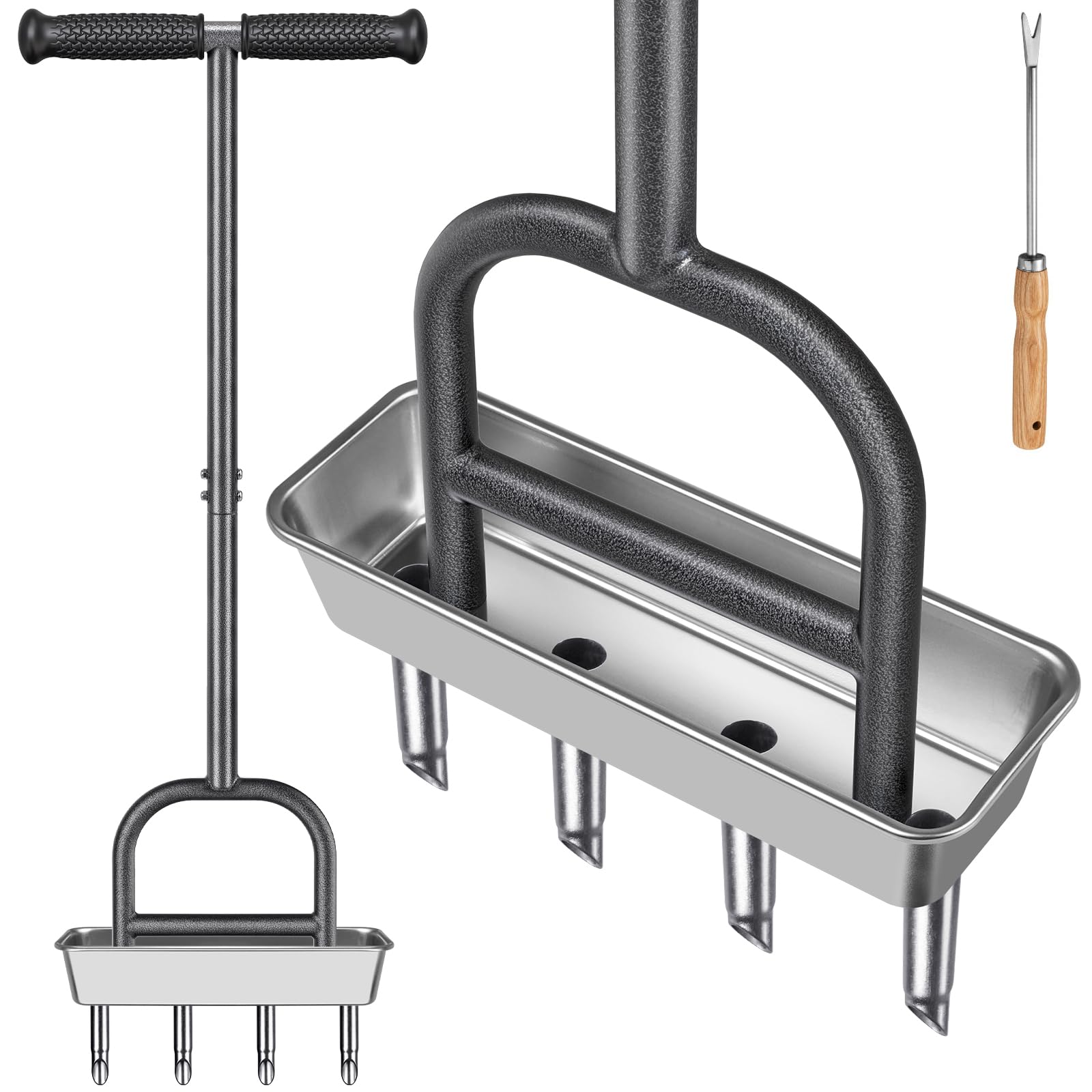
The Dolibest aerator uses four SUS 304 stainless steel hollow tines, which resist rust far better than standard carbon steel. Each tine extracts a clean plug rather than compressing the soil sideways, making it the most effective option for clay-heavy yards. The integrated soil collection tray prevents plug mess, and the soft rubber grip reduces hand fatigue during longer sessions.
Assembly takes about two minutes with the three-part locking system, and the elevated crossbar keeps your shoe from interfering with plug ejection. At roughly 6.2 pounds, it has enough mass to drive the tines deep with a firm step, yet it remains manageable for carrying around the yard. Multiple verified buyers noted it is the same build as units sold at big-box retailers for nearly double the cost.
The only drawbacks are that the tines could be sharper for extremely dense clay, and the storage tray fills quickly in very moist soil, requiring occasional emptying. Still, for a 4-tine core aerator at this build level, it outperforms most competitors in both durability and value.
Why it’s great
- Four stainless steel tines extract clean plugs without edge compaction
- Soil storage tray saves cleanup time after aeration
- Solid steel rod with powder coating resists bending and rust
Good to know
- Tines could be sharper for cutting into very hard dry clay
- Soil tray fills quickly in wet conditions and needs periodic dumping
2. Yard Butler Spike Aerator IM-7C
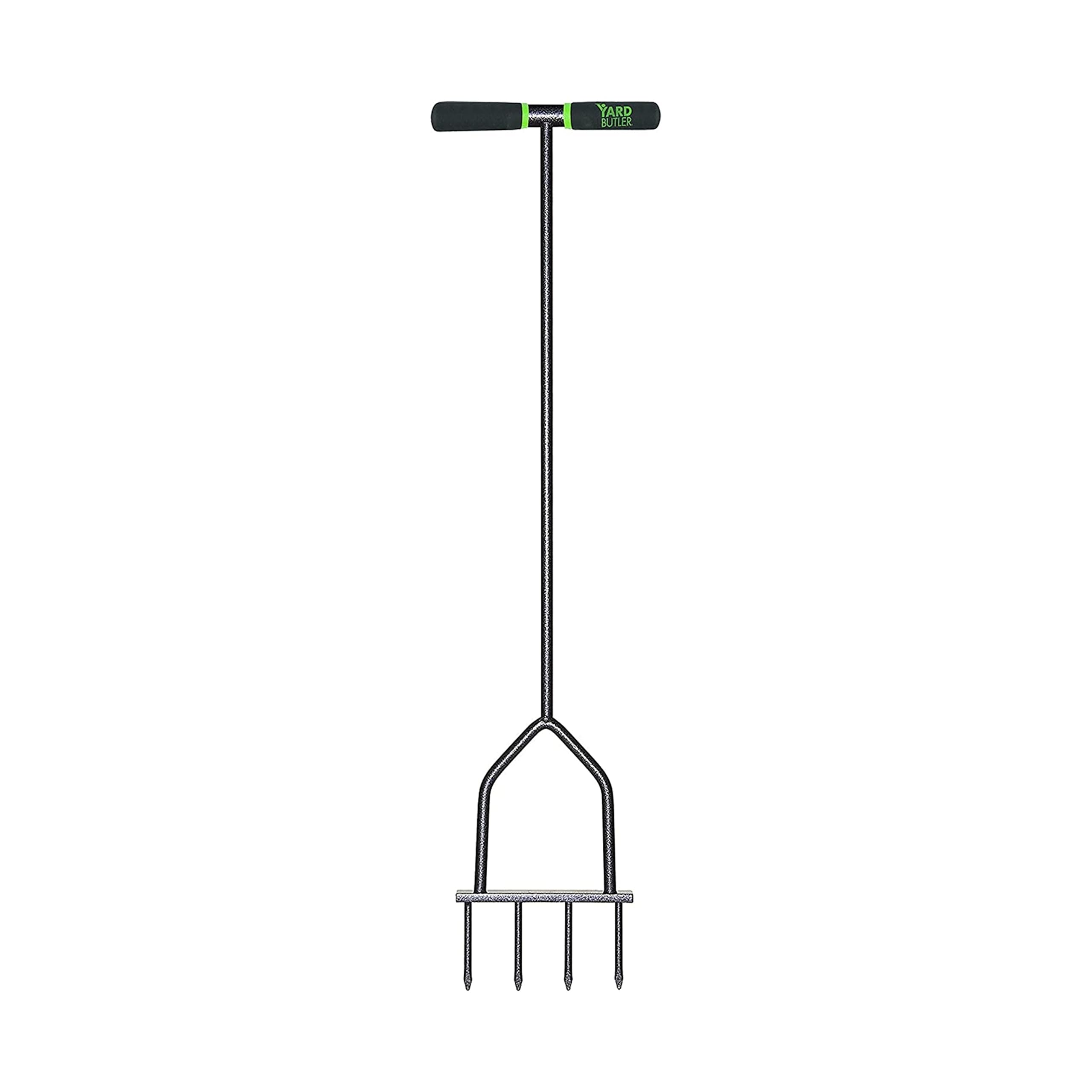
The Yard Butler IM-7C is a straightforward spike aerator built from powder-coated steel with four 3-inch spikes spaced to cover ground efficiently. It is ideal for light-to-moderate aeration on loamy soil where spike compaction around the hole edge is less of a concern. The long handle provides extra leverage, reducing the need to bend, and the spike assembly is welded solidly to the frame.
Users consistently report that it works well on moist clay soil after a light rain, covering roughly 325 square feet per hour with steady effort. The 36-inch handle height suits average-height users well, though taller individuals over 6 feet may wish it were a few inches longer. A simple rocking motion after insertion widens the holes slightly, improving water infiltration on sloped sections of the yard.
Because it is a spike design, it does not remove soil cores, so you do not have to rake up plugs afterward. However, on heavily compacted or clay-dominant lawns, the spike action can compress the sides of the holes, partially negating the benefit. This tool is best for routine seasonal aeration on healthy soil, not for rehabilitating hard-packed patches.
Why it’s great
- Simple, durable welded steel construction with no assembly needed
- Long handle provides leverage and reduces back strain during use
- No soil plugs to clean up after aeration
Good to know
- Spike design can compact hole edges in heavy clay soil
- Handle may feel short for users over 6 feet tall
3. EEIEER Manual Lawn Aerator Tool with Soil Storage Basket

The EEIEER aerator introduces a patented one-piece bottom structure that avoids the weak weld joints found on many competing core tools. The wall thickness of the tines has been increased from 1.2 mm to 2 mm, making it noticeably more resistant to bending when you hit roots or dry soil. The 38-inch handle and heightened foot pedal reduce the effort required to drive the tines deep, and the included cleaning stick unclogs the hollow tines quickly.
The attached soil storage basket collects ejected cores, keeping your lawn tidy and saving a separate raking step. On soft, moist soil the tool works smoothly with moderate exertion, creating deep 3-inch channels. Several buyers reported noticeable improvements in lawn health within a week of use, especially in areas with poor drainage or high foot traffic.
The downsides include a tendency to clog in damp, sandy soil and a foot bar that some users found too low for their stride. The foam handle grips may wear over time with heavy use. Still, for a core aerator with this level of reinforcement and the basket convenience, it delivers excellent performance for small to medium lawns.
Why it’s great
- Reinforced 2 mm wall thickness resists bending in tough soil
- Soil storage basket eliminates post-aeration cleanup
- One-piece bottom construction avoids weld failures
Good to know
- Can clog in damp, sandy soil and requires the cleaning stick
- Foam handle grips may degrade after heavy seasonal use
4. LawnVigor Manual Core Aerator, 3 Hollow Tines
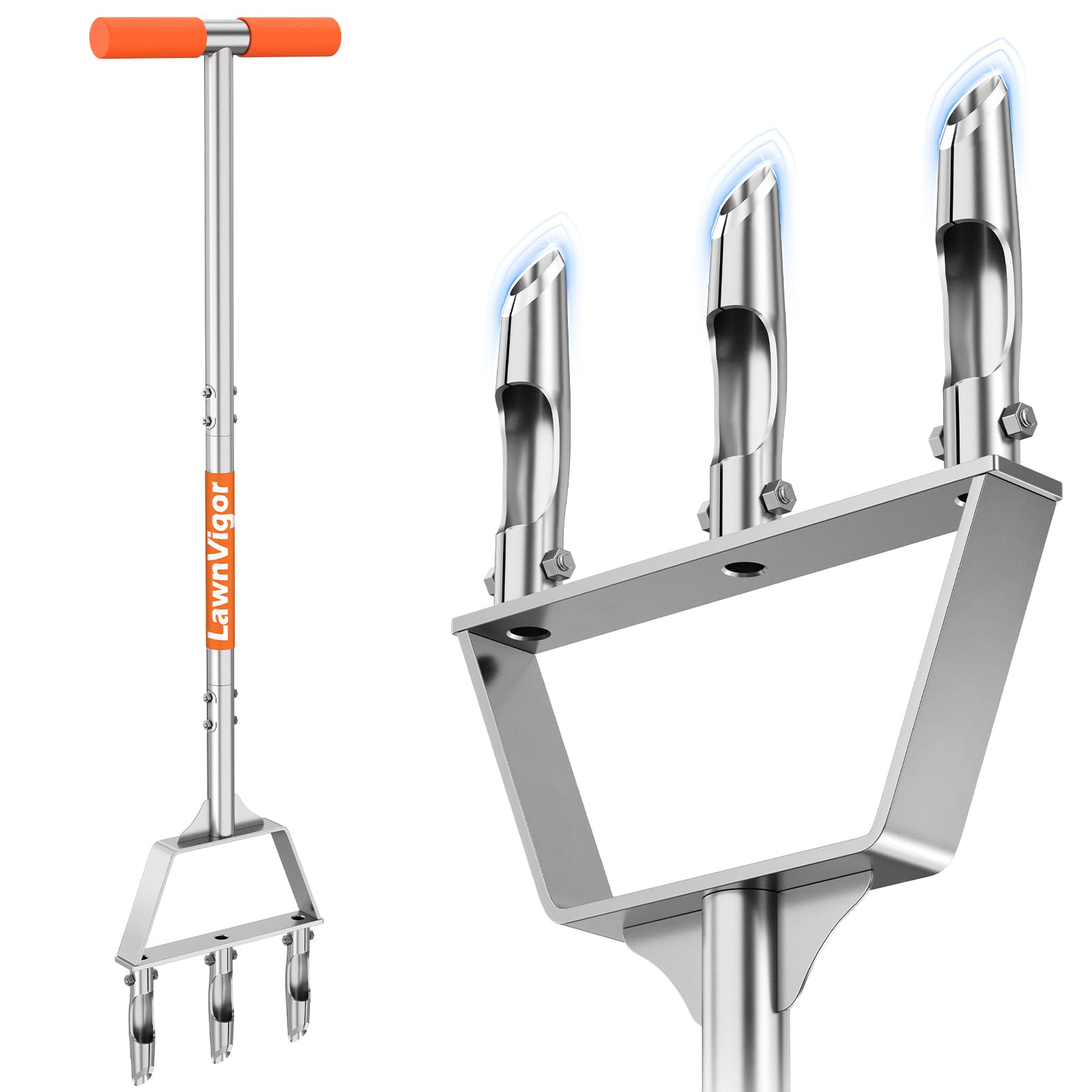
LawnVigor’s core aerator uses three heat-treated hollow tines that penetrate deeply without clogging, even in the red clay soils that stump many spike tools. The heavy-duty powder-coated steel frame and wide T-handle with foam grips give you solid control, and the foot bar provides enough leverage to drive the tines a full 3 inches. White plastic inserts inside the tines help release soil plugs cleanly on each lift.
Buyers with highly compacted clay reported that the tool extracted clean, consistent cores after moistening the ground, cleaning up to 1,500 square feet in an afternoon. The semi-assembled design includes a wrench and allen key, so you can have it ready in about five minutes. Unlike many spike aerators, the tool avoids compressing the sides of the holes, which leads to better water absorption and root growth in dense soil.
The main limitation is that the tool requires straight, vertical insertion—any rocking or prying motion can damage the hollow tines or pull up extra soil around the hole. It is also best suited for small to medium lawns; large acreage would make the manual process exhausting. For targeted aeration of high-traffic patches and clay-heavy zones, this is a highly effective tool.
Why it’s great
- Heat-treated hollow tines cut through heavy clay without clogging
- White plastic inserts ensure reliable soil plug ejection
- Wide T-handle and foot bar reduce strain during extended use
Good to know
- Rocking or prying the tool sideways can bend the tines
- Not efficient for large lawns due to manual effort per hole
5. MEIIOFS Coring Aerator with Soil Core Storage Tray

The MEIIOFS coring aerator is a compact tool built with two high-density alloy hollow tines and an integrated soil storage tray that catches plugs as you work. At 6.4 pounds, it has substantial heft that helps drive the tines into dry soil, and the T-handle with a cushioned grip improves comfort during repetitive use. The included cleaning stick clears blockages quickly and doubles as a weeding tool for small garden tasks.
This model is particularly effective for hitting dead spots and preparing small patches for re-seeding. Users noted that watering the lawn an hour or two before aeration significantly improved penetration and plug extraction. The storage tray prevents the scattered soil mess that often accompanies hollow-tine tools, keeping the lawn tidy during and after the job.
On the downside, the tool is smaller than most photos suggest, which means it covers ground slowly on larger lawns. The two-tine design also requires more steps per square foot compared to three- or four-tine models. It is best suited for homeowners focused on spot treatment rather than whole-lawn aeration.
Why it’s great
- Built-in soil storage tray prevents scattered plug mess
- Heavy 6.4-pound frame aids penetration in harder soil
- Included cleaning stick clears tines and serves as a weeding tool
Good to know
- Smaller footprint covers ground slowly on larger lawns
- Two-tine design requires more steps per square foot
6. BARAYSTUS Rotary Cultivator Garden Tool
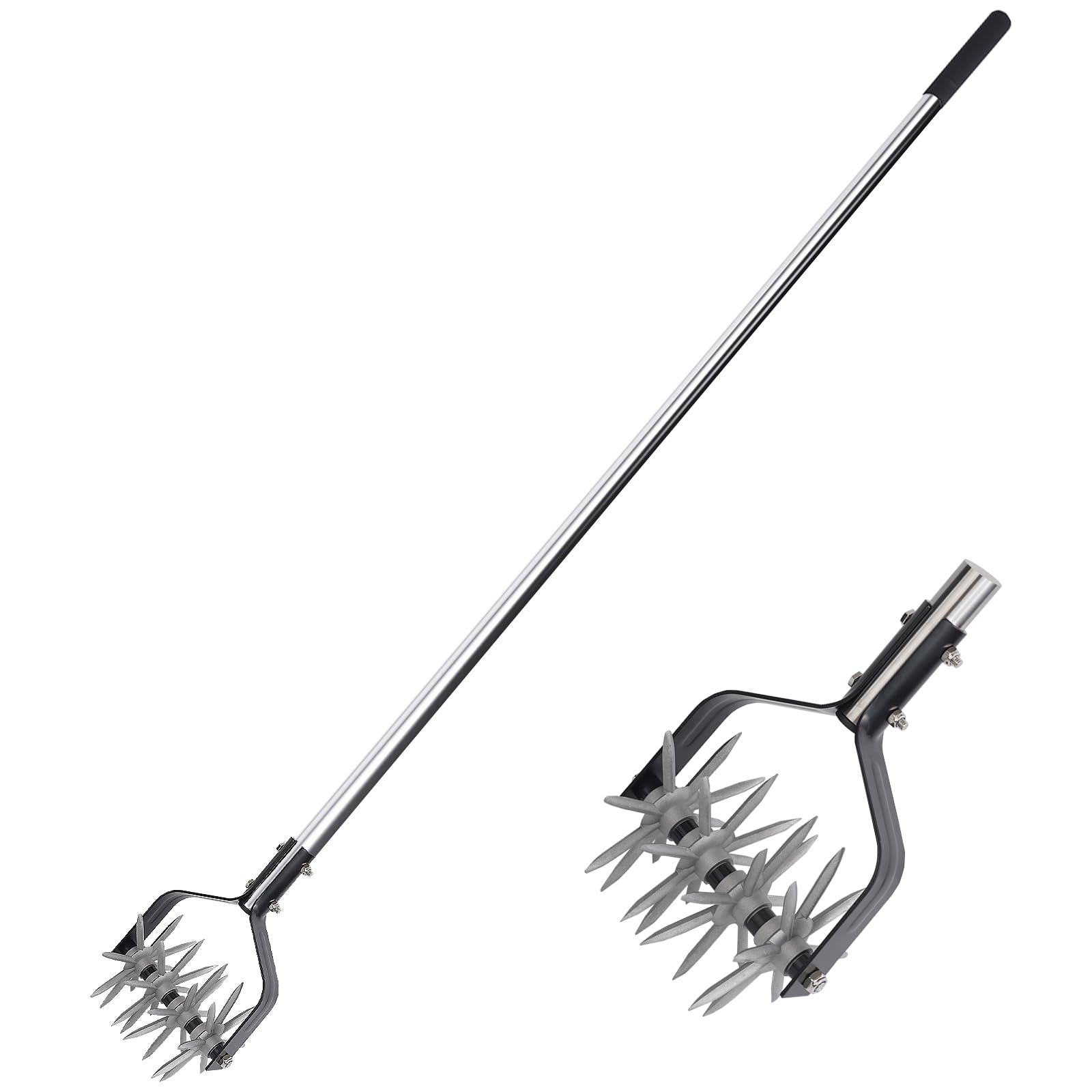
The BARAYSTUS rotary cultivator takes a different approach to aeration by using four star-shaped aluminum wheels that rotate as you push, churning and loosening the top layer of soil. The handle adjusts to three heights—29.7, 43.7, and 57 inches—accommodating users of different statures and reducing the need to bend. This tool is less about deep core removal and more about breaking up crusted topsoil, mixing in seed, and preparing garden beds.
The stainless steel and aluminum construction resists rust, and the rolling mechanism makes the work feel less like a repeated stomp and more like a steady walk. Buyers praised it for saving time when planting grass seed after landscaping work, and found the assembly straightforward with included instructions. The 2.2-pound weight makes it easy to maneuver around flower beds and narrow strips.
The trade-off is that the wheels only penetrate the top few inches of soil, so this tool will not relieve deep compaction the way a core aerator does. On hard, dry ground it requires significant downward pressure to get the wheels to bite. For gardeners focused on seed bed prep and surface level aeration, this is a practical and ergonomic choice.
Why it’s great
- Rotary star wheels churn topsoil with a pushing motion instead of stomping
- Adjustable handle from 29 to 57 inches fits different user heights
- Lightweight aluminum and stainless steel resist rust and fatigue
Good to know
- Only penetrates top few inches—does not relieve deep soil compaction
- Requires moist soil and downward pressure to engage wheels in hard ground
7. Jardineer Lawn Aerator Tool, 12 Spike

The Jardineer spike aerator packs 12 heat-treated steel spikes onto a single foot plate, creating many holes per step for fast coverage of small residential lawns. The 36-inch handle with a rubber grip reduces bending, and the pre-assembled design means you can start aerating minutes after opening the box. A solid steel foot plate supports your full weight to drive the spikes through moderately compacted soil without flexing or breaking.
Users found it effective for breaking up surface compaction on clay, sand, and loam soils after a light watering. The included spare spikes are a practical touch—two spikes bent on a few units when hitting hidden rocks, but replacements allowed work to continue immediately. The tool is light enough at 5 pounds to carry one-handed, and the detachable handle makes storage easy in a shed or garage.
The spike design means the Jardineer is not ideal for heavy clay soil that needs core aeration, and it can be strenuous on the arms for larger areas beyond 3,000 square feet. The paint on the spikes may chip with repeated use in rocky soil, though this does not affect performance. For a budget-friendly entry into lawn aeration, it covers the basics reliably.
Why it’s great
- 12 spikes create many holes per step for quick coverage
- Pre-assembled with spare spikes included for on-the-go replacement
- Lightweight and compact for easy storage and carrying
Good to know
- Spike design may compact hole edges in heavy clay soil
- Strenuous for larger lawns over 3,000 square feet
FAQ
Should I water my lawn before using a manual aerator?
How often should I aerate my lawn with a manual tool?
Can I use a spike aerator on clay soil without damaging the lawn?
How many tines do I need for my lawn size?
Final Thoughts: The Verdict
For most users, the best aeration tools winner is the Dolibest 4-Plug Coring Aerator because it combines four stainless steel tines, a soil storage tray, and robust construction at a price that outperforms big-box equivalents. If you need a reliable spike tool for general maintenance on loamy soil, grab the Yard Butler IM-7C. And for targeted core aeration on heavy clay patches, nothing beats the LawnVigor 3-Tine Core Aerator.

Mo Maruf
I created WellFizz to bridge the gap between vague wellness advice and actionable solutions. My mission is simple: to decode the research and give you practical tools you can actually use.
Beyond the data, I am a passionate traveler. I believe that stepping away from the screen to explore new environments is essential for mental clarity and physical vitality.