Our readers keep the lights on and my smoothie glass nicely filled. As an Amazon Associate, I earn from qualifying purchases.
Bonding wood to glass is one of the trickier tasks in any workshop. The two materials have wildly different surface porosities and expansion rates, so an adhesive that works perfectly on wood alone will often peel right off glass after a temperature swing. You need a formula engineered to bridge that gap — something that grabs the slick surface of glass while locking into the grain of the wood, and stays flexible enough to handle the stress of different climates.
I’m Mohammad Maruf — the founder and writer behind WellFizz. I have spent years analyzing adhesive formulations, reading hundreds of customer stress-test reports, and cross-referencing chemical data sheets to find which products actually deliver on their claims for mixed-material bonding.
This guide cuts through the confusion to help you pick the right adhesive for wood to glass by examining the real-world strengths and limitations of five top contenders across different budgets and use cases.
How To Choose The Best Adhesive For Wood To Glass
Selecting the wrong glue for a wood-to-glass joint often leads to a failed project — the adhesive either won’t stick to the glass or becomes brittle and shatters. Focus on these three factors to get it right the first time.
Bonding Mechanism: Non-Porous vs. Porous
Wood is porous, which means it soaks up liquid adhesives for a mechanical grip. Glass is non-porous and relies entirely on surface adhesion. The best formulas include solvents or chemical agents that etch or wet out the glass surface, creating a molecular bond rather than just sitting on top. Avoid basic white glues and carpenters’ wood glues here — they will never hold on glass.
Cure Flexibility and Thermal Expansion
Glass expands and contracts with temperature changes at a different rate than wood. If your adhesive cures rock-hard and brittle, the joint will eventually crack or snap. You want a formula that retains some flexibility after curing — typically a polyurethane or a rubberized construction adhesive — so the bond can absorb slight movement without failing.
Clarity and Aesthetics
Many wood-to-glass projects are decorative — picture frames, display cases, tabletops, or jewelry boxes. A yellow or white glue line ruins the look. Look for adhesives labeled “crystal clear” or that dry transparent. Epoxies often cure amber, while certain construction adhesives and PVAs dry completely clear. Decide whether visible glue matters for your project before you buy.
Quick Comparison
On smaller screens, swipe sideways to see the full table.
| Model | Category | Best For | Key Spec | Amazon |
|---|---|---|---|---|
| Loctite Power Grab Ultimate Crystal Clear | Construction Adhesive | Invisible, weatherproof bonds | Dries crystal clear | Amazon |
| Weldbond Multi-Surface Adhesive | PVA Multi-Surface | Versatile indoor projects | 420ml bottle volume | Amazon |
| Brampton Multi-Purpose Epoxy | 2-Part Epoxy | High-impact repairs | 5400 PSI tensile strength | Amazon |
| RH Adhesives S-18 All-Purpose | Contact Cement | Flexible, waterproof bonds | Neoprene-based formula | Amazon |
| Endhokn Epoxy Putty | Epoxy Putty Stick | Gap-filling and sculpting | 300g total putty weight | Amazon |
In‑Depth Reviews
1. Loctite Power Grab Ultimate Crystal Clear
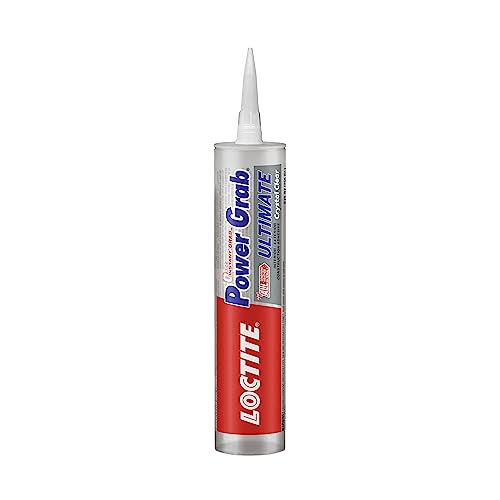
The Loctite Power Grab Ultimate Crystal Clear is a construction adhesive designed specifically to vanish after curing — it dries completely transparent, making it ideal for wood-to-glass projects where the glue line would otherwise ruin the visual. Its formula bonds both porous and non-porous surfaces, which is exactly what you need when one side is thirsty wood and the other is slick glass. The initial tack is strong enough to reduce the need for bracing, saving time on vertical or overhead applications.
Weatherproofing is a standout feature here. The adhesive handles temperatures from 0°F to 140°F and resists both moisture and UV exposure, so outdoor glass-and-wood assemblies like greenhouse frames or decorative window panels stay bonded through seasonal extremes. The 9-fluid-ounce cartridge size is generous for medium-scale projects, and the low-odor formulation makes indoor use more comfortable than solvent-based competitors.
One thing to note: the consistency is jello-like rather than runny, which gives you some gap-filling ability but requires you to push the adhesive into the joint. It also takes a full 24 hours to reach maximum strength, so you cannot rush the clamping process. Users report that the tip must be sealed well between uses, and performance drops noticeably in freezing weather — the cure slows dramatically below 32°F.
Why it’s great
- Dries completely clear — invisible glue line
- Strong initial tack reduces clamping needs
- Waterproof and temperature resistant for outdoor use
Good to know
- 24-hour full cure requires patience
- Not effective in sub-freezing conditions
- Jello-like texture needs manual pushing into joints
2. Weldbond Multi-Surface Adhesive
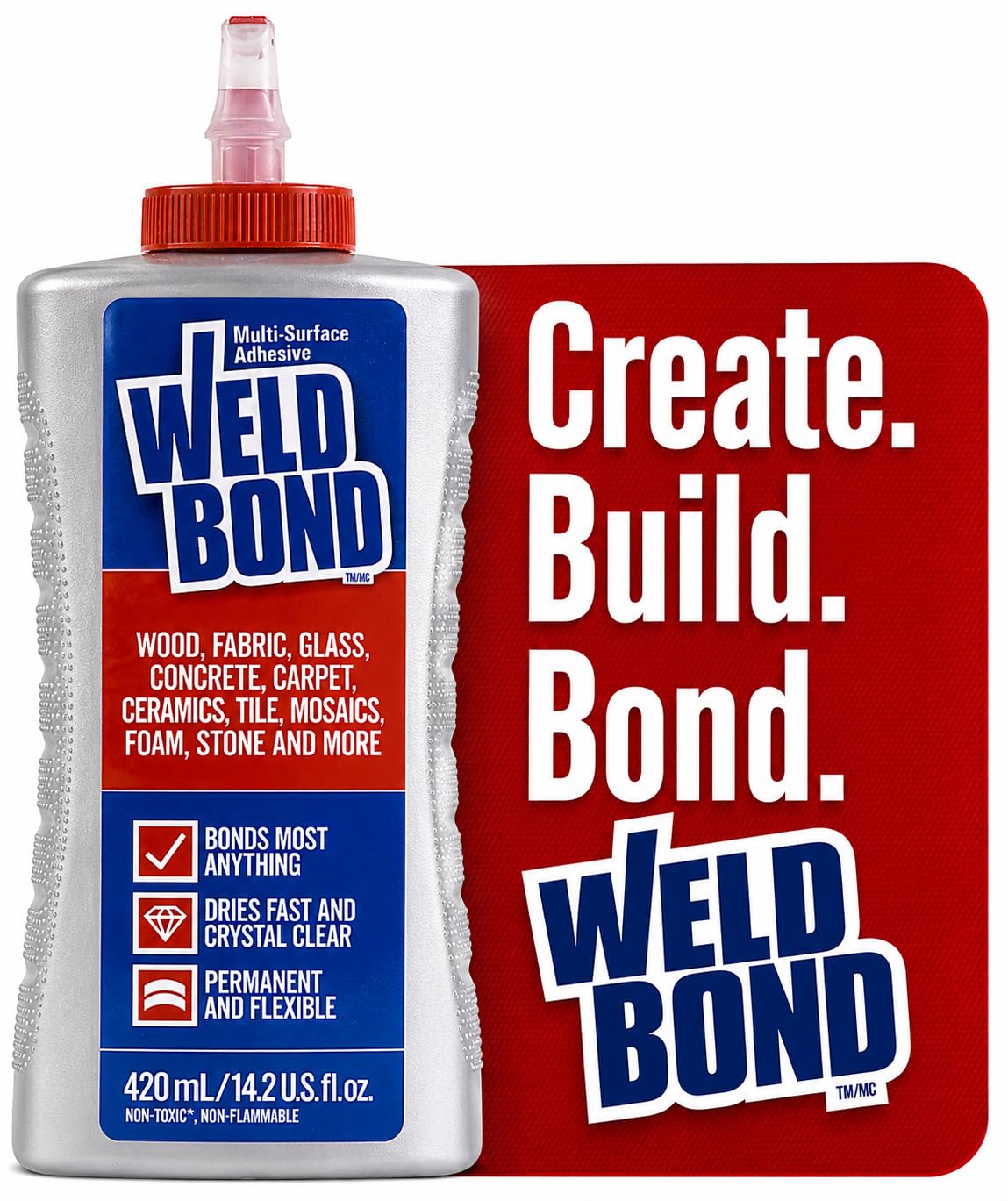
Weldbond is a PVA-based multi-surface adhesive that stands out for its ability to bond wood to glass while remaining flexible after cure. Unlike standard wood glues that become brittle, Weldbond retains a slight rubbery give, which helps the joint survive thermal expansion and minor impacts. It dries crystal clear, so your glass surface remains visible through the bond line — a critical detail for mosaic work, glass tabletops, and display cases.
The 420ml bottle provides excellent value for the price, especially since a little goes a long way. Users consistently praise its low odor and easy dispensing — the nozzle does not clog between uses, and the glue flows smoothly without stringing. Many shoppers report replacing E6000 with Weldbond for projects involving glass because it is less messy, has no toxic fumes, and still delivers a strong permanent hold on non-porous surfaces.
One limitation: as a PVA formula, it is not fully waterproof. While the manufacturer says it is water resistant and weatherproof, prolonged direct exposure to standing water can weaken the bond over time. It also requires clean, dry surfaces for maximum adhesion — any residue or moisture on the glass will reduce grip. For purely decorative indoor wood-to-glass applications, however, it performs admirably.
Why it’s great
- Dries crystal clear with a flexible bond
- Low odor and easy to dispense without clogs
- Excellent for mosaic and craft projects
Good to know
- Not fully waterproof for outdoor use
- Requires clean, dry surfaces for best grip
- Limited gap-filling ability
3. Brampton Multi-Purpose Epoxy

When the wood-to-glass joint needs to bear real weight — think a glass shelf mounted on wooden brackets or a heavy glass panel in a display cabinet — the Brampton Multi-Purpose Epoxy delivers the highest measured strength in this list. Its 5400 PSI tensile rating means the bond itself is stronger than most of the materials it connects. The 30-minute set time gives you a practical window to position and clamp your pieces before the epoxy hardens, and full cure is reached in just one hour.
The 1:1 mixing ratio is straightforward, and the amber color it cures to is less obtrusive than some dark epoxies, though it is not completely clear. This formula is 100% waterproof and impact-resistant, making it suitable for high-moisture environments like bathrooms or kitchens where a glass-and-wood backsplash could be exposed to steam. The shock-resistant compounds in the formulation also help it survive minor knocks that would crack a brittle epoxy joint.
The trade-off: epoxy is rigid when fully cured. If your wood and glass assembly will face frequent temperature swings or structural movement, the hard bond may eventually separate from the glass surface. It also has a noticeable odor from the hardener, so good ventilation is necessary during mixing and application. Some users report the cured bond is brittle and snaps under sharp impact — this is not a flexible adhesive, so plan your project accordingly.
Why it’s great
- Extremely high 5400 PSI tensile strength
- Fast 1-hour full cure for quick projects
- 100% waterproof and impact resistant
Good to know
- Rigid bond — not suitable for moving joints
- Amber color, not completely transparent
- Requires ventilation due to hardener odor
4. RH Adhesives S-18 All-Purpose
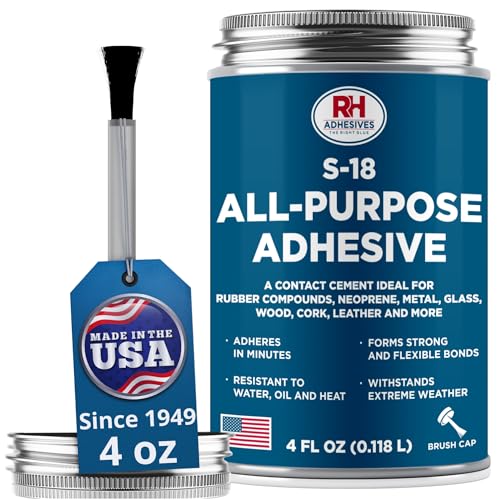
The RH Adhesives S-18 is a neoprene-based contact cement that offers a very different approach to wood-to-glass bonding. Unlike epoxies that lock rigidly, S-18 forms a flexible, rubbery film that can absorb vibration and movement. This makes it a strong candidate for glass-and-wood assemblies in high-traffic areas or marine environments — it is water resistant and holds up well in humid conditions where PVA glues would soften.
Application requires a slightly different technique: you apply the adhesive to both the wood and the glass surfaces, let the solvent flash off until the adhesive feels tacky, then press the pieces together. The bond forms immediately with no need for clamping. The off-white color dries to a translucent film that is less visible than you might expect, though not fully invisible like a clear construction adhesive. Users report excellent results bonding rubber to metal, which confirms the formula’s ability to handle non-porous surfaces like glass.
The main drawback is the solvent fumes. This is a strong-smelling adhesive that demands very good ventilation — several reviews emphasize using it outdoors or in a space with active airflow. It also has a limited shelf life once opened; the solvent evaporates gradually, and the remaining adhesive thickens and loses effectiveness over time. For one-off wood-to-glass projects, the 4-ounce can size is sufficient, but you will need to use it within a few months of opening.
Why it’s great
- Flexible rubber bond absorbs movement well
- Water resistant for marine and humid uses
- Instant bond with no clamping required
Good to know
- Strong solvent fumes need heavy ventilation
- Short shelf life after opening
- Not completely transparent when cured
5. Endhokn Epoxy Putty
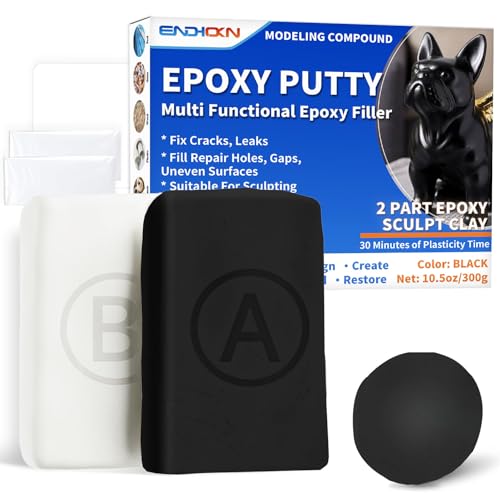
The Endhokn Epoxy Putty is a two-part stick that you knead together by hand, making it a uniquely useful option for wood-to-glass repairs where the joint has a gap or irregular shape. Instead of trying to fill a crack with a liquid adhesive that runs off, you can mold this putty directly into the void. After 30 minutes of working time, it cures to a hard, black surface that can be drilled, sanded, and painted — ideal for repairing a broken glass panel set into a wooden frame or reinforcing a loose joint.
The 300-gram total weight (150g each of Part A and Part B) is generous for the price, and the kit includes gloves, sealed bags, and a scraper. Users report strong adhesion to dissimilar materials, with one review noting it held a 50-pound unicycle handle. The putty can even be applied underwater, which makes it suitable for pools, aquariums, or outdoor water features where wood meets glass. Heat resistance from -50°C to 130°C covers most real-world conditions.
The biggest limitation for wood-to-glass use is the long open time: the putty stays workable for over 30 minutes, which is great for sculpting but frustrating when you need to hold a vertical glass piece in place while the putty cures. It also requires a full 24 hours to reach maximum hardness, so you cannot rush the project. The final color is opaque black, which works for hidden joints but will be visible if used on transparent glass surfaces in a decorative context.
Why it’s great
- Excellent gap-filling and sculpting ability
- Bonds to wet surfaces and underwater
- Can be drilled, sanded, and painted after cure
Good to know
- Long 24-hour cure time to full strength
- Opaque black color is not invisible
- Needs to be held in place during open time
FAQ
Can I use regular wood glue for bonding wood to glass?
What is the best way to prepare glass before applying adhesive?
Will the adhesive hold up in an outdoor wood-to-glass project?
Why does my epoxy keep failing when bonding glass to wood?
Final Thoughts: The Verdict
For most users, the adhesive for wood to glass winner is the Loctite Power Grab Ultimate Crystal Clear because it combines invisible drying, strong non-porous adhesion, and full weatherproofing in a single cartridge — making it the most reliable all-around choice. If you want a strong, fast-curing bond for a load-bearing project, grab the Brampton Multi-Purpose Epoxy. And for flexible, waterproof bonding in marine or high-moisture environments, nothing beats the RH Adhesives S-18 All-Purpose.

Mo Maruf
I created WellFizz to bridge the gap between vague wellness advice and actionable solutions. My mission is simple: to decode the research and give you practical tools you can actually use.
Beyond the data, I am a passionate traveler. I believe that stepping away from the screen to explore new environments is essential for mental clarity and physical vitality.