Our readers keep the lights on and my smoothie glass nicely filled. As an Amazon Associate, I earn from qualifying purchases.
The moment standard super glue touches Styrofoam, the surface bubbles, dissolves, and your project turns into a melted mess. Finding an adhesive that bonds without chemically eating through the foam is the single biggest hurdle for anyone working with expanded polystyrene (EPS), extruded polystyrene (XPS), or EPO foam. Whether you are repairing an RC plane wing, installing ceiling tiles, or building a D&D terrain piece, the right adhesive is the difference between a durable fix and a crumbling disaster.
I’m Mohammad Maruf — the founder and writer behind WellFizz. I have spent the last three years analyzing the chemistry, tack time, and real-world failure rates of specialized adhesives, separating the foam-safe formulas from the damaging solvents that ruin projects.
This guide puts five genuinely foam-safe candidates through the paces — from spray-on industrial solutions to precision dropper bottles — so you know exactly which one to reach for. These are the options that make up the best adhesive for styrofoam for any build or repair you have in mind.
How To Choose The Best Adhesive For Styrofoam
Before you pick a tube or bottle, you need to understand one non-negotiable rule: the adhesive must be solvent-free. Any glue containing acetone, toluene, or cyanoacrylate in high concentrations will melt EPS foam on contact. Beyond that, your choice boils down to the project scale and the kind of bond you need.
Working Time vs. Fixing Speed
Spray adhesives like the 3M 78 give you up to 15 minutes to reposition large foam boards before the bond sets. Precision super glues like the Bob Smith Industries Super-Gold bond in 5 to 15 seconds — perfect for small repairs but punishing if you misalign a piece. For model building and crafting where you need a few minutes to adjust, water-based tack glues offer a forgiving middle ground.
Bond Flexibility and Impact Resistance
RC planes and foam hinges need a bond that bends, not snaps, under vibration and stress. A stiff cyanoacrylate bond can shatter on impact, while a rubbery, flexible glue like the Woodland Scenics Foam Tack Glue absorbs shock and allows hot-wire cutting through the bonded seam without melting issues.
Application Method and Surface Area
Aerosol sprays cover large square footage efficiently for insulation boards and big scenery panels. Tube-applied pastes work best for ceiling tiles and vertical surfaces where drip prevention matters. Precision dropper bottles give you control for small model parts, but the 1 oz volume means you will restock often for larger builds.
Quick Comparison
On smaller screens, swipe sideways to see the full table.
| Model | Category | Best For | Key Spec | Amazon |
|---|---|---|---|---|
| Bob Smith Industries Super-Gold | Super Glue | Precision repairs & models | 5-15 second bond time | Amazon |
| Delux Materials AD34 Foam 2 Foam | Contact Glue | RC plane & EPO repairs | Clear, high tack formula | Amazon |
| Soudal 50A Universal Adhesive | Paste | Ceiling tile installation | 10.1 fl oz tube, solvent-free | Amazon |
| Woodland Scenics Foam Tack Glue | Liquid Tack | Model scenery & flexible hinges | Dries clear, rubbery finish | Amazon |
| 3M 78 Spray Adhesive | Aerosol | Insulation board bonding | 15-minute working time | Amazon |
In‑Depth Reviews
1. Bob Smith Industries BSI-139H Super-Gold Odorless Foam Safe Super Glue
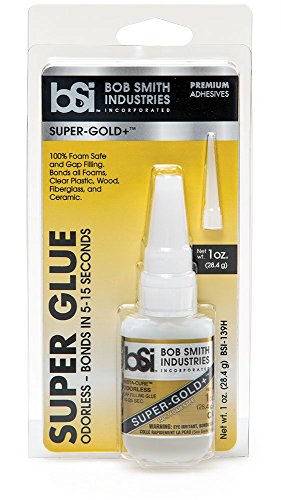
The BSI Super-Gold is the closest thing to a universal foam-safe super glue on the market. Its cyanoacrylate formula is engineered to be completely odorless and will not fog or dissolve EPS, XPS, or EPO foams. The bond initiates in 5 to 15 seconds, which is lightning fast for a glue that does not degrade the substrate — a feat most hardware-store super glues cannot touch.
This 1 oz bottle comes with an extender tip for precise application, making it ideal for D&D terrain crafting, scale model assembly, and small RC plane repairs where accuracy matters more than volume. Reviewers consistently note that bonds from this glue are stronger than the surrounding foam, meaning a break will happen elsewhere, not at the glue line.
The trade-off is speed: there is almost zero repositioning time. If you misalign a part, you have a fraction of a second to correct it before the bond cures. For large surface areas or projects requiring adjustment, this is not the right pick, but for spot repairs and detail work, it is the benchmark.
Why it’s great
- Truly odorless and foam-safe with no melting or fogging
- Bonds faster than any other adhesive in this guide
- Dries crystal clear, preserving the look of your model
Good to know
- Virtually no working time — misalignment is permanent
- Small 1 oz volume runs out fast on larger projects
2. Delux Materials AD34 Foam 2 Foam, Clear, High Tack Glue

The Delux Materials AD34 is a contact adhesive formulated specifically for foam-to-foam applications, and it has earned a dedicated following in the RC plane community for one simple reason: repairs frequently outlast the original foam. Users report breaking the same part twice, with the second break occurring in fresh foam rather than at the glue joint, indicating a bond stronger than the base material.
This glue comes in a 1.7 fl oz bottle with a brush-style applicator that lays down a clear, high-tack film. It requires a short drying time before joining the pieces — a contact glue approach that allows for alignment adjustment during application. Unlike instant super glues, you have enough working time to get the seam perfect before the bond locks in.
One notable consideration is pricing: while the performance is excellent, the same product is available at a lower cost through hobby-specific retailers like Horizon Hobby, so checking around before purchase is wise. The chemical composition is gentle on EPS and EPO foams, producing no melt-back or discoloration even on thin wing skins.
Why it’s great
- Creates a bond stronger than the surrounding foam itself
- Allows repositioning before the final contact bond sets
- Safe for thin EPO and EPS foams without chemical damage
Good to know
- Priced higher at Amazon than at some specialty hobby shops
- Must apply to both surfaces and let dry before joining
3. Soudal 50A Universal Adhesive for Styrofoam Ceiling Tiles
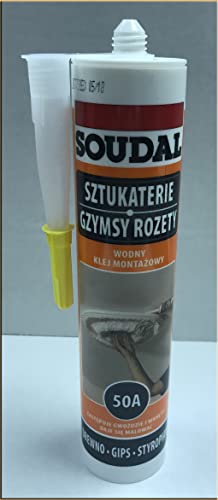
The Soudal 50A is a polymer-based paste adhesive designed for one dominant use case: sticking Styrofoam ceiling tiles to drywall or wood ceilings. Its solvent-free formulation ensures zero melting or deformation of the tile surface, which is critical when the adhesive has to bear the full weight of the tile overhead without sagging or dripping.
The tube format works with a standard caulking gun, and the paste has enough body to bridge small gaps between uneven ceiling surfaces. Users report that tiles stay firmly in place after application, though one review noted a failure when the tile was released before the adhesive had adequate grab time — suggesting a 20-minute hold period is necessary before letting go of heavier tiles.
The main downside is the tube size at 10.1 fl oz; for large ceiling jobs, you will need multiple tubes, and the tube design leaves a small amount of product unreachable at the end. The packaging is also labeled in German, which caused some confusion, but the application method is identical to standard construction adhesive.
Why it’s great
- Solvent-free paste that won’t dissolve styrofoam ceiling tiles
- Strong initial tack holds tiles on vertical and overhead surfaces
- Versatile — bonds to wood, drywall, ceramic, and metal
Good to know
- Tiles require a 20-minute hold time before the bond is secure
- Tube waste at the end and German-only labeling may frustrate
4. Woodland Scenics ST1444 Foam Tack Glue

Woodland Scenics Foam Tack Glue is a water-based liquid adhesive purpose-built for model railroad scenery and foam crafting, but its most impressive trick is the finish: it dries into a flexible, rubbery consistency rather than a brittle solid. This rubbery bond is what makes it the go-to adhesive for creating control surface hinges on foam RC planes — a hinge that bends thousands of times without cracking.
The 12 oz bottle provides generous coverage for layout building, and the glue remains workable for roughly 30 minutes before initial set. Full cure takes about six hours, which is slow compared to cyanoacrylates but allows for extensive repositioning and clamping. After full cure, you can hot-wire cut through a glued seam without the wire snagging or melting the bond line unevenly.
The main limitation is that this is not a gap-filler — it works best when the two foam surfaces are pressed tightly together. It also requires patience: rushing the cure time leads to weak bonds, and the water-based formula can warp thin foam if over-applied. For projects where flexibility and long-term durability matter, this is the best choice.
Why it’s great
- Dries to a flexible, rubbery hinge ideal for moving parts
- Long 30-minute working time for complex assemblies
- Hot-wire cuttable without damaging the bond after cure
Good to know
- Full cure takes six hours — not a quick-fix solution
- Water-based formula can warp thin foam if applied too heavily
5. 3M 78 Polystyrene Foam Insulation Spray Adhesive

The 3M 78 is not a craft glue — it is an industrial spray adhesive designed for bonding expanded and extruded polystyrene foam boards in construction and insulation applications. The aerosol can delivers a lace-pattern spray that provides even coverage across large surfaces, and the chemical formulation is specifically engineered to prevent the solvent degradation that standard spray adhesives cause to polystyrene.
Application requires spraying both surfaces, waiting 3 to 5 minutes for the adhesive to become tacky, and then pressing them together. Users report up to 15 minutes of repositioning time, which is generous for aligning large foam boards. Once the bond cures over 24 hours, it is stronger than the foam itself — a critical property for structural insulation panels.
This product is labeled for industrial and occupational use only and is not available for sale in California due to propellant regulations. The nozzle has three spray settings, though it can gum up with extended use. The solvent smell is strong, requiring excellent ventilation. For large-scale foam bonding where a tube of glue would take forever, the 3M 78 is unmatched in efficiency.
Why it’s great
- Covers large surface areas quickly with consistent lace pattern
- Provides up to 15 minutes of repositioning time for adjustments
- Industrial-strength bond that exceeds foam board strength
Good to know
- Requires excellent ventilation — strong solvent fumes
- Not available for sale in California; industrial use labeling only
- Nozzle can clog with repeated use if not cleaned promptly
FAQ
Will regular super glue melt Styrofoam?
How long does spray adhesive take to cure on foam board?
Can I paint over foam-safe adhesive once it dries?
Final Thoughts: The Verdict
For most users, the best adhesive for styrofoam winner is the Bob Smith Industries Super-Gold because it combines instant foam-safe bonding with zero odor and crystal-clear results — the best all-around performer for precision repairs. If you need a flexible bond for moving parts and model scenery, grab the Woodland Scenics Foam Tack Glue. And for large insulation panels or industrial-scale foam board work, nothing beats the coverage and repositioning time of the 3M 78 Spray Adhesive.

Mo Maruf
I created WellFizz to bridge the gap between vague wellness advice and actionable solutions. My mission is simple: to decode the research and give you practical tools you can actually use.
Beyond the data, I am a passionate traveler. I believe that stepping away from the screen to explore new environments is essential for mental clarity and physical vitality.