Our readers keep the lights on and my smoothie glass nicely filled. As an Amazon Associate, I earn from qualifying purchases.
A loose shower tile isn’t just an eyesore—it’s a moisture wick waiting to rot your backer board and invite mold into your wall cavity. The wrong adhesive choice can leave you with a failed bond, a cloudy haze, or a repair that pops loose again within weeks. You need a formula that grabs hard, cures waterproof, and can handle the thermal expansion of a steam-filled enclosure without shrinking or cracking.
I’m Mohammad Maruf — the founder and writer behind WellFizz. I’ve spent years analyzing construction adhesive chemistries, reading through thousands of field reports on polyurethane, epoxy, and latex-based formulations to understand exactly which bonds survive in wet, vertical, and high-vibration tiled environments.
Whether you are re-sticking a loose floor tile, filling a chip in a porcelain wall, or securing a marble threshold, the best adhesive for shower tile repair depends on the specific failure mode you are facing and the surface condition beneath the tile.
How To Choose The Best Adhesive For Shower Tile Repair
Shower tile repair isn’t a one-solution job. The adhesive you need changes depending on whether you are rebonding a hollow floor tile, filling a hairline crack in porcelain, or gluing a decorative ceiling tile exposed to steam. Before you buy, match the product to the specific damage type and the surface material you are working with.
Chemical Composition: Polyurethane vs. Epoxy vs. Mastic
Polyurethane construction adhesives provide excellent flexibility and waterproof performance, making them ideal for shower walls where thermal movement occurs. Two-part epoxy compounds like the MendMight kit cure into a rigid, sandable surface that resists yellowing but require precise color mixing. Mastics such as Henry 314 are workable for small DIY projects in low-moisture areas but do not offer the same long-term water resistance as polyurethane or epoxy formulations.
Cure Time and Water Exposure Window
Fast-curing adhesives allow you to restore shower use sooner, but many polyurethane adhesives require a full 24-hour undisturbed cure before water exposure. Check the technical specifications—some formulas resist moisture immediately after application, while others remain tacky and weak for hours. If you’re repairing a shower that gets daily use, plan ahead and block off the area during the cure window.
Quick Comparison
On smaller screens, swipe sideways to see the full table.
| Model | Category | Best For | Key Spec | Amazon |
|---|---|---|---|---|
| Fix-A-Floor | Mid-Range | Loose hollow floor tiles | Self-leveling, 24hr cure | Amazon |
| MendMight Repair Kit | Premium | Chips and cracks in porcelain | Epoxy putty, 6 pigments | Amazon |
| Loctite Power Grab | Mid-Range | Clear-drying wall tiles | Crystal clear, 24hr cure | Amazon |
| Ankita Tile Repair Kit | Premium | Color-matched chip fill | 7 pigments, waterproof | Amazon |
| Henry 314 Mastic | Budget | Small low-moisture projects | Premixed, 1 quart | Amazon |
In‑Depth Reviews
1. Fix-A-Floor Original Loose Tile Repair Adhesive
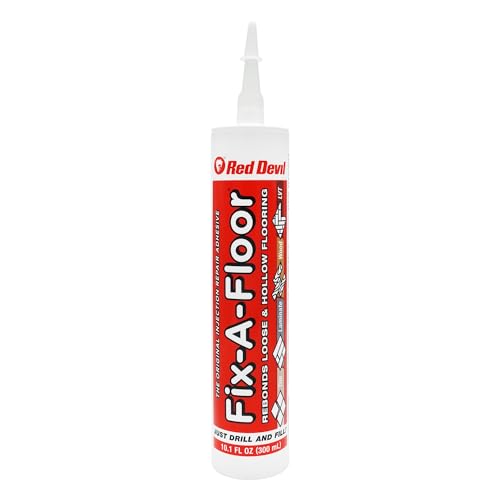
The Fix-A-Floor kit is purpose-built for the most common shower tile failure: hollow-sounding tiles that have lost bond with the subfloor. Its self-leveling formulation flows easily through small grout-line holes drilled into the void, then seeks out the low spots and fills the air gap with strong CoPolymer adhesive that cures to a rigid, durable hold within 24 hours. Multiple user reports confirm it rescued 80 square feet of loose 18×18 inch porcelain without any tile removal.
This is not a surface cosmetic repair—it is a structural rebonding solution. The trimmable nozzle lets you dial in the exact thickness for your grout joint, from 2.5mm up to 1/4 inch, so you don’t waste material or create a mess. The deep-fill technique works on marble, stone, ceramic, and even creaky wood subfloors, making it the most versatile wet-area tile rebonder currently available at a consumer price point.
One important note: the manufacturer advises against skeleton-style or high-thrust caulk guns, which can cause the tube to leak under pressure. Several experienced users recommend transferring the adhesive into 30ml syringes with 14-gauge blunt tips for precise, mess-free injection into narrow grout slots. If you follow that tip, you will get professional-grade results on your first attempt.
Why it’s great
- Trimmable nozzle fits any grout line width
- Self-leveling formula fills voids without air pockets
- Works on tile, stone, marble, and wood subfloors
Good to know
- Requires a specific caulk gun type for clean delivery
- Full cure needs 24 undisturbed hours before grouting
2. MendMight Tub & Tile Repair Kit
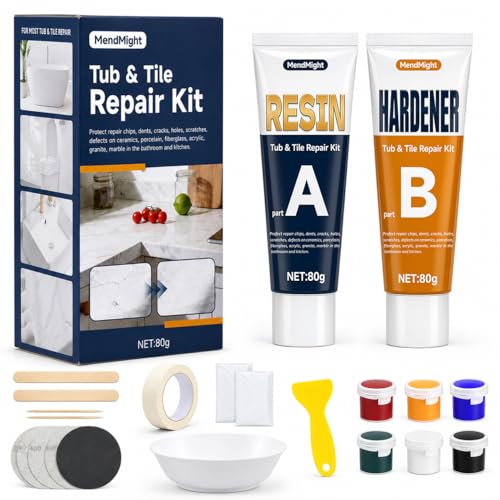
When a shower tile is cracked or chipped but still structurally sound, you don’t need to rip it out—you need an epoxy filler that matches the color and sands smooth. The MendMight kit delivers that exact capability with a two-part epoxy paste that cures into a hard, water-resistant surface that resists yellowing. The six included pigments let you mix white, off-white, beige, gray, stone, and marble-like tones, which is far more flexible than any white-only paste on the market.
Users report impressive results on hairline cracks that became invisible after sanding, and the included multi-grit sandpaper allows you to feather the repair flush with the surrounding glaze. One reviewer saved over five thousand dollars by fixing 20-year-old kitchen floor tiles instead of replacing them. The epoxy is also suitable for bathtubs, sinks, fiberglass showers, and granite countertops, so this single kit covers most cosmetic surface damage across a bathroom.
The color-matching process requires patience—you add pigment slowly and test on a scrap surface before committing. Some users wished for more pigments for uncommon beige or grey tones, but the mixability of the six base colors covers the vast majority of standard tile shades. For deep chips, apply thin layers and sand between each coat for the smoothest final result.
Why it’s great
- Water-resistant sandable finish that doesn’t yellow
- Complete kit with mixing tools and sandpaper included
- Six mixable pigments for close color matching
Good to know
- Color matching can be tricky for uncommon shades
- Works best for small chips, not large structural gaps
3. Loctite Power Grab Ultimate Crystal Clear
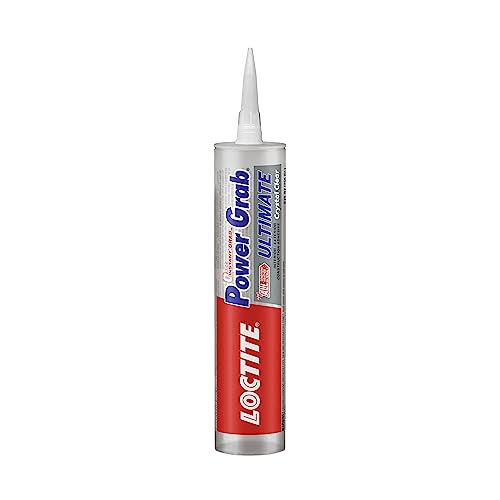
If your repair requires an invisible bond—like securing clear glass tile accents or re-gluing a translucent shower niche shelf—the Loctite Power Grab Crystal Clear is the standout choice. Unlike white or beige construction adhesives that leave a visible haze, this polyurethane formula dries completely transparent with zero shrinkage. Users have successfully bonded stainless steel backsplashes and decorative ceiling tiles with a low-odor, jello-like consistency that grabs quickly and reduces the need for temporary bracing or nailing.
The weatherproof claim extends from 0°F to 140°F, so it handles the thermal swings of a steam shower far better than standard hobby glue or basic mastic. The 9-ounce cartridge is small enough for a single vertical-tile repair but still provides enough volume to cover larger backsplash installations. The tip seals well if you store it upright, but you must cut the nozzle at a clean angle to avoid air bubbles forming in the cure layer.
One limitation: the cure time slows significantly in cold conditions. In sub-freezing temperatures, the bond remained tacky after 24 hours even with supplemental heat, so plan your application for a consistent 60–75°F environment. Cleanup requires mineral spirits if the adhesive dries on skin or tools, so keep solvent and gloves handy before you start.
Why it’s great
- Dries completely transparent with no shrinkage
- Low odor—safe for enclosed shower spaces
- Grips two non-porous surfaces effectively
Good to know
- Slow cure in cold temperatures below 50°F
- Mineral spirits required for cleanup after drying
4. Ankita Tile Repair Kit
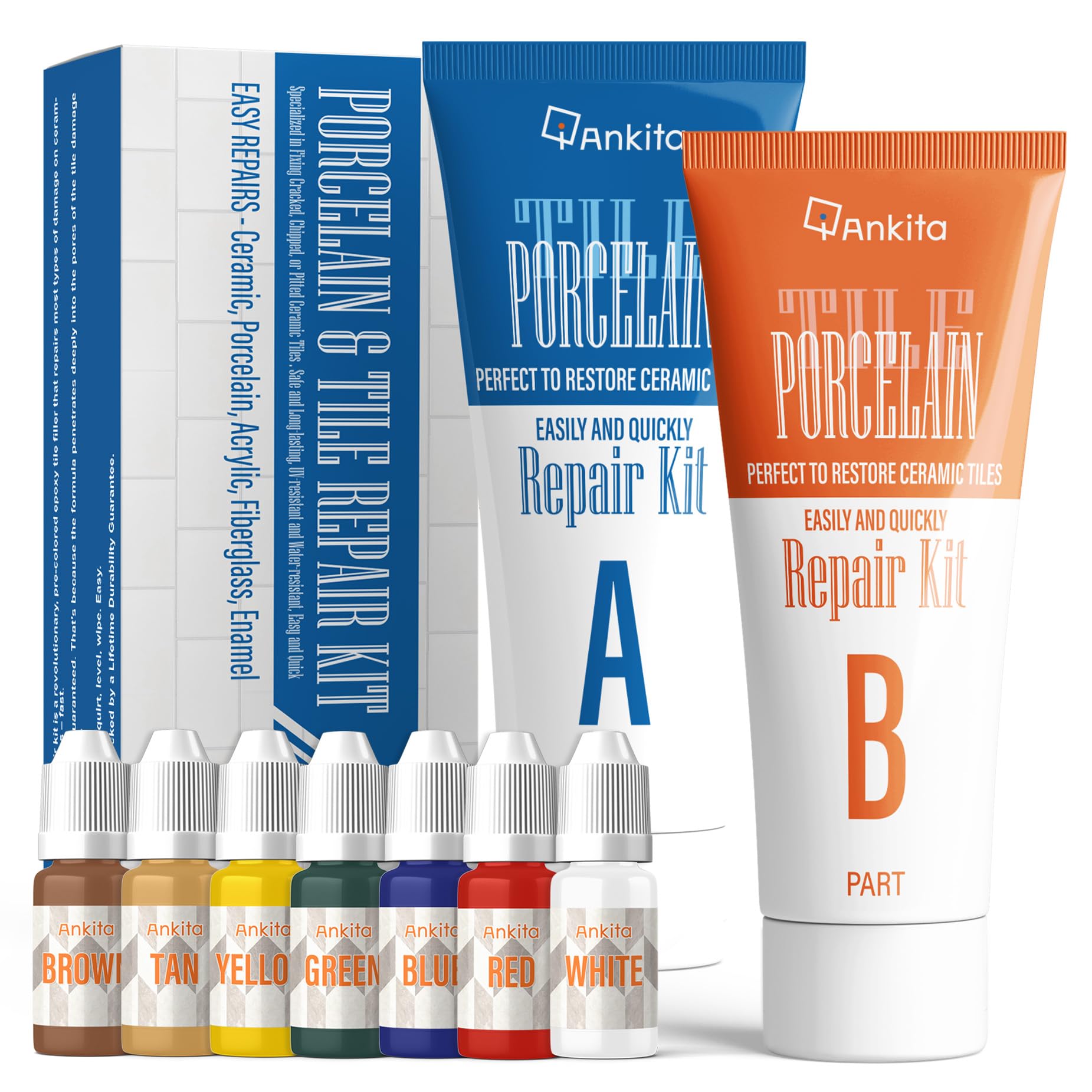
The Ankita kit offers the most extensive color-matching palette in this roundup, with seven pigments that cover white, beige, gray, almond, blue, black, and common tile colors. This is a two-part paste system designed specifically for ceramic, porcelain, and acrylic surfaces—ideal for shower wall chips, tub-edge cracks, and sink scratches where a seamless finish matters. Users report strong adhesion and good sandability, with the waterproof claim holding up well in high-use wet areas after the full cure cycle.
The step-by-step application guide makes this accessible for first-time DIYers who want professional-looking results without investing in expensive tools. The fast-mix paste allows you to repair chips as small as a freckle or fill scratched sink enamel where old porcelain has worn thin. One reviewer effectively filled deep scratches in a 1960s kitchen sink, though they noted that achieving a glass-smooth surface required careful sanding with the included paper.
A consistent observation across multiple reviews is that the color match can shift slightly over time, with some white repairs taking on a faint cream tone after several weeks. The epoxy itself remains strong and waterproof, but if absolute color fidelity is your top priority—especially for bright white shower tiles—you may want to test a small patch first and top-seal with a clear appliance epoxy if needed.
Why it’s great
- Seven pigments for broader color matching
- Waterproof after cure for wet-area confidence
- Beginner-friendly step-by-step instructions
Good to know
- Some white repairs may yellow or cream over time
- Requires careful sanding for a glass-smooth finish
5. Henry 314 Premixed Mastic Adhesive

The Henry 314 is an entry-level premixed mastic that works for small, low-moisture tiling projects where convenience matters more than maximum waterproof performance. The quart-sized pail is ready to use straight out of the container—no mixing, no measuring, just trowel on and set your tile. Users report success on small decorative projects like tiling a metal plant stand or a narrow backsplash area where water exposure is minimal and the substrate is stable.
The drying time is fast, which is a double-edged sword. While you can continue working quickly without long waits, you must apply the mastic and set your tiles within a short open window or the adhesive dries out and crumbles. Reviews confirm that working in small batches is essential, especially in warm or dry conditions. The fast tack also means you need to be precise with placement the first time—adjusting a tile after the bond starts setting will weaken the grip.
This is not a waterproof construction adhesive. It is a mastic, so it is not suitable for submerged shower floors or anywhere that standing water pools regularly. For a quick weekend repair on a dry bathroom wall tile or a small craft project, the Henry 314 delivers at a very accessible entry point. Just be aware that the thin plastic pail lid can crack during shipping, so inspect the seal before opening.
Why it’s great
- Premixed—no stirring or mixing required
- Fast drying time speeds up small projects
- Strong bond on concrete and metal surfaces
Good to know
- Not waterproof for wet shower floor areas
- Dries quickly—must work fast to avoid crumbling
FAQ
Can I use standard construction adhesive for shower tile repair?
How long should I wait before using the shower after applying adhesive?
Can I fill a large missing tile chunk with epoxy filler?
Final Thoughts: The Verdict
For most users, the adhesive for shower tile repair winner is the Fix-A-Floor Original because it directly addresses the most common shower tile failure—hollow, loose tiles that need structural rebonding without demolition. If your priority is invisible cosmetic repair on a cracked or chipped porcelain tile, grab the MendMight Repair Kit for its excellent color-matching and sandable epoxy finish. And for a quick, clear-drying wall tile fix where appearance matters most, nothing beats the Loctite Power Grab Crystal Clear.

Mo Maruf
I created WellFizz to bridge the gap between vague wellness advice and actionable solutions. My mission is simple: to decode the research and give you practical tools you can actually use.
Beyond the data, I am a passionate traveler. I believe that stepping away from the screen to explore new environments is essential for mental clarity and physical vitality.