Our readers keep the lights on and my smoothie glass nicely filled. As an Amazon Associate, I earn from qualifying purchases.
An adhesive failure in a shower isn’t just a repair — it’s a cascading headache. One weak bond leads to a loose panel, water sneaks behind the shower wall, and suddenly a small flaw becomes mold damage and a full strip-and-replace job. The right adhesive for shower panels eliminates that entire risk chain from the start.
I’m Mohammad Maruf — the founder and writer behind WellFizz. I’ve spent years analyzing construction-grade adhesives, reading third-party chemical data sheets, and comparing bond strengths across formulations to identify which products actually solve the unique demands of wet, vertical environments.
If you need a single, reliable solution that withstands moisture, temperature swings, and the weight of wall materials, these are the best options available today in the adhesive for shower panels market. Each one has distinct strengths for specific panel types.
How To Choose The Best Adhesive For Shower Panels
Not every sticky substance is built for a shower environment. The constant humidity, thermal expansion from hot water, and sheer weight of large panels demand a specific set of properties. Understanding these will save you from a failed installation.
Panel Material Compatibility
Your choice of adhesive must chemically match your panel. PVC panels require a solvent-based PVC cement that chemically welds the joint. Acrylic or fiberglass panels bond best with a high-strength, low-odor silicone or polymer adhesive. Foam or lightweight ceiling tiles need an instant-grab construction glue that doesn’t sag before curing.
Water and Steam Resistance
An adhesive for shower panels must be 100% waterproof after curing. Silicone-based products naturally resist moisture, but many construction adhesives are only water-resistant, not waterproof. Check the technical data for explicit waterproof certification. A bond that weakens with humidity will eventually let go.
Grab Strength and Cure Time
Shower panels are heavy and vertical. The adhesive must have enough initial tack to hold the panel in place immediately without sliding or needing mechanical fasteners. Fast-curing formulas (under 24 hours) allow you to proceed with plumbing and sealing sooner, but some paste-consistency silicones offer a longer working time for adjustments.
Quick Comparison
On smaller screens, swipe sideways to see the full table.
| Model | Category | Best For | Key Spec | Amazon |
|---|---|---|---|---|
| Momentive RTV103 | Silicone Sealant | Glass shower doors and acrylic panels | Paste consistency for vertical hold | Amazon |
| À LA MAISON Ceilings Instant Grab | Construction Adhesive | Foam board and lightweight ceiling tiles | Instant grab, water-resistant | Amazon |
| HH-66 Toluene Free Vinyl Cement | Vinyl/PVC Cement | PVC panels and vinyl lining repairs | Flexible, waterproof bond | Amazon |
| Titebond PVC Trim Joint Adhesive | Cyanoacrylate Glue | Small PVC trim and hobbyist repairs | Gap-filling, 100% waterproof | Amazon |
| CS-4300 Mirror Adhesive | Mirror/Glass Adhesive | Backer-board mirrors and glass panels | Low odor, VOC compliant | Amazon |
In‑Depth Reviews
1. Momentive RTV103 One Part Silicone Sealant
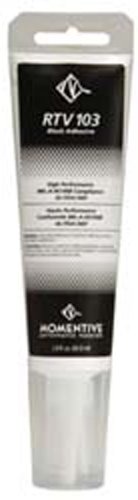
This is the adhesive that solved a problem most silicones cannot handle: preventing a heavy glass shower door from slipping downward under its own weight. Momentive RTV103 uses a paste consistency rather than a runny liquid, which means it stays exactly where you apply it on vertical surfaces without sagging or dripping. Multiple verified reports confirm it holds bracket-mounted sliding doors securely where standard sealants fail.
The black color blends invisibly behind most shower hardware and trim, and the high-temperature range (up to 400°F continuous) means it won’t degrade from hot water contact. It complies with NSF Standard 51 and FDA 21 CFR 177.2600, so it’s safe for incidental food contact areas — a strong indicator of its non-toxic, stable formulation.
One small trade-off: the 2.8-ounce tube is small for large-format panel jobs. For a full wall of acrylic or fiberglass panels you may need multiple tubes. But for securing glass doors, mirror brackets, or small panel repairs, the grip is unmatched by anything else in this category.
Why it’s great
- Paste consistency holds heavy glass doors without downward creep
- Withstands continuous heat and humidity without losing bond strength
- FDA and NSF certified for safety and chemical stability
Good to know
- Small tube size limits use to repairs and fixtures, not full-wall panels
- Black color is not paintable and will show behind clear glass
2. À LA MAISON CEILINGS Instant Grab
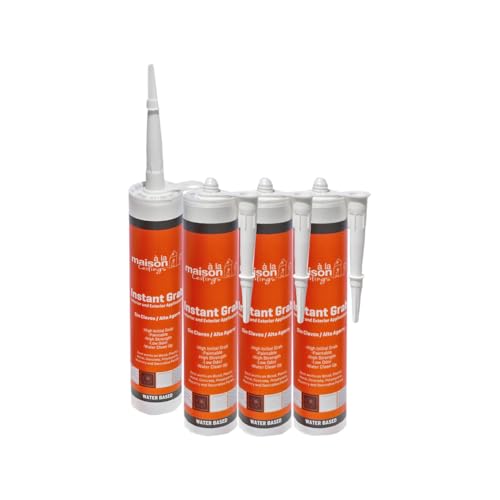
Designed primarily for ceiling tiles and wall panels, this adhesive brings a crucial advantage to the shower space: immediate grab that eliminates the need for temporary bracing. The 4-pack provides ample coverage for a standard shower surround installation, and the white, paintable finish allows you to match the adhesive to your panel color for a seamless look.
The water-resistant formula is suitable for the high-humidity environment of a shower, though it is not a fully submersible waterproof adhesive. It bonds well to wood, drywall, tile, and metal backer surfaces — the common substrates behind modern shower panels. Users consistently describe it as beginner-friendly, with a 12-minute working window that allows adjustments before the bond sets.
One limitation: because it is a construction adhesive rather than a specialty silicone, it lacks the extreme temperature resistance of silicone-based seals. For steam showers or panels in direct contact with hot water flow, consider pairing it with a dedicated silicone bead at the seams. For standard daily showers with foamboard or composite panels, this is an incredibly easy, reliable choice.
Why it’s great
- Instant hold eliminates need for clamps or support during curing
- Paintable finish blends into white paneling and trim
- Four-tube pack offers excellent value per project
Good to know
- Not fully waterproof; avoid direct submersion or continuous spray
- Requires a standard caulking gun for application
3. HH-66 Toluene Free Vinyl Cement

HH-66 is the specialist of this lineup, purpose-built for PVC and vinyl. Where most adhesives create a rigid bond that can crack under thermal cycling, this vinyl cement remains flexible after curing, expanding and contracting with the panel material. The 4-ounce can is small, but the brush-on applicator delivers precise control for repairs around shower niches, seams, and edges.
The ability to apply it underwater and have it cure into a fully flexible, waterproof joint is unique. For shower panel repairs where you cannot dry the area completely — a leak at the base of a panel, for instance — this is the only product in this list that can still form a strong bond. It also tolerates temperature swings from -30°F to 150°F, covering the extremes of both outdoor exposure and hot shower water.
It is not a general-purpose grab adhesive. HH-66 requires surface preparation (cleaning with alcohol, applying in 5-10 inch sections, and bonding immediately while tacky). The solvent smell, though reduced in the toluene-free version, is still present and requires ventilation. For DIYers who need to repair a vinyl panel or bond PVC trim inside a shower, the hold is professional grade.
Why it’s great
- Flexible bond prevents cracking from thermal expansion in PVC panels
- Can be applied to wet or underwater surfaces for emergency repairs
- Built-in brush applicator allows precise seam and edge work
Good to know
- Not compatible with polyethylene (blue tarp) or extremely thin vinyl
- Requires fast working time; bond sets within seconds
4. Titebond PVC Trim Joint Adhesive

This is a cyanoacrylate (CA) glue specially thickened for PVC applications, not a construction adhesive or silicone. The thick formula fills small gaps that thin CA glue would leave hollow, and the 100% waterproof rating makes it suitable for shower environments. It bonds in 60 seconds with clamping, so you can seal a PVC joint and move on quickly.
The 4-ounce bottle is ideal for small-scale work: attaching PVC trim pieces, repairing a cracked shower panel corner, or bonding PVC column wraps around shower columns. Users note that applying it to both surfaces gives you about 10 seconds of alignment time before the grip locks. The gap-filling property is particularly useful when mating slightly uneven panel edges.
The single-component formula means no mixing, but it also means the glue dries out in the bottle after opening. This is not a product you can open, use a drop, and store for a year. Plan to use it in one focused project session. For large panel surfaces (anything over one square foot), a construction adhesive or silicone will provide better coverage and bond geometry.
Why it’s great
- Thick, gap-filling consistency binds uneven PVC edges
- Full waterproof cure in 8 hours for immediate confidence
- Easy brush-on bottle for small joint and trim work
Good to know
- Bottle dries out after opening; not suitable for multiple uses
- Not intended for large panel surface bonding
5. Seal Bond CS-4300 Mirror Adhesive
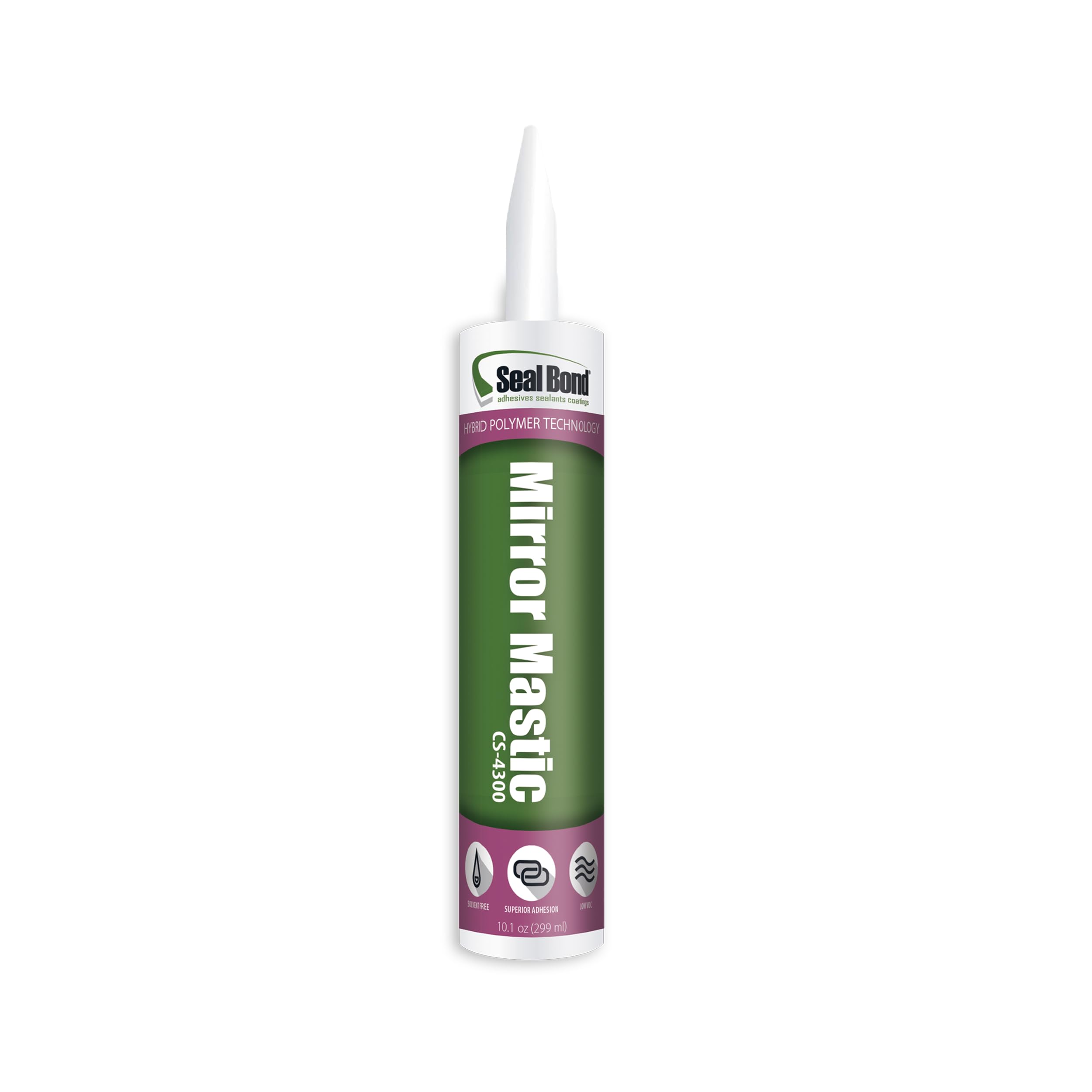
CS-4300 is a solvent-free, low-odor adhesive formulated specifically for mirrors but equally effective on glass and acrylic shower panels. The key advantage here is indoor air quality: no isocyanates, no strong solvent fumes, and ultra-low VOCs that pass SCAQMD and CDPH standards. In an enclosed shower space with limited ventilation, that makes a meaningful difference for your health during application and curing.
The product delivers a strong initial grab, holding 10-pound mirrors vertically without mechanical fasteners after 48 hours of cure. For backer-board panels or accent glass panels in a shower niche, this is a secure, clean solution. Users appreciate the minimal repositioning window (about 1/16 inch) — it grabs immediately but allows micro-adjustments if you work quickly.
The 10.1-ounce cartridge is large, and multiple reviewers note that one tube is more than enough for a single large mirror or panel. There is no smaller size available, so if you only need a small amount, you will have leftover adhesive. It also requires a standard caulking gun and works best on clean, dry surfaces without residual oils or dust.
Why it’s great
- No solvent fumes make it comfortable for indoor shower installation
- High initial grab holds panels without temporary support brackets
- Compatible with both conventional and acrylic mirror backings
Good to know
- Minimal repositioning time; alignment must be precise
- Single large cartridge is excessive for small repairs
FAQ
Can I use standard construction adhesive for PVC shower panels?
How long should I wait before using the shower after applying adhesive?
What adhesive works best on acrylic shower surrounds?
Do I need to sand the shower wall before applying adhesive?
Final Thoughts: The Verdict
For most users, the adhesive for shower panels winner is the Momentive RTV103 because its paste consistency solves the single hardest problem in shower panel installation: keeping the panel in place on a vertical surface while it cures. If you need an instant grab for lightweight foam panels and want a paintable finish, grab the À LA MAISON Ceilings Instant Grab. And for heavy-duty PVC panel repairs or underwater application, nothing beats the HH-66 Toluene Free Vinyl Cement.

Mo Maruf
I created WellFizz to bridge the gap between vague wellness advice and actionable solutions. My mission is simple: to decode the research and give you practical tools you can actually use.
Beyond the data, I am a passionate traveler. I believe that stepping away from the screen to explore new environments is essential for mental clarity and physical vitality.