Our readers keep the lights on and my smoothie glass nicely filled. As an Amazon Associate, I earn from qualifying purchases.
Bonding rubber to wood presents a unique challenge because these two materials have drastically different surface energies and flexibilities. A standard wood glue or a simple rubber cement often fails under stress, leaving you with a joint that peels apart or cracks over time. You need an adhesive that can bridge the gap between porous wood fibers and slick, elastic rubber.
I’m Mohammad Maruf — the founder and writer behind WellFizz. I’ve spent years analyzing construction and specialty adhesive chemistries, from hybrid polymers to neoprene-based contact cements, to understand exactly which formulations deliver lasting bonds on mixed-material assemblies.
This guide breaks down the top contenders for the job, focusing on grab strength, flexibility, and weather resistance. Finding the right adhesive for rubber to wood means matching the adhesive’s specific properties to your project’s demands, whether that is indoor crafts or heavy outdoor installations.
How To Choose The Best Adhesive For Rubber To Wood
Selecting the right adhesive for rubber-to-wood bonding is less about brand names and more about understanding how the adhesive’s chemistry interacts with the two surfaces. Rubber is flexible and non-porous while wood is rigid and porous. You need a formulation that can handle both traits simultaneously.
Grab strength and open time
Instant grab adhesives lock down materials immediately, which is essential for vertical installations where gravity works against you. However, some projects require a few minutes of repositioning to get alignment perfect. Look for a product that specifies its open time — the window you have to adjust the parts before the bond becomes permanent.
Flexibility and impact resistance
Rubber expands and contracts with temperature changes, especially in outdoor applications. A rigid glue will crack under this movement. A good rubber-to-wood adhesive maintains some elasticity after curing, allowing the joint to flex without breaking. Contact cements and hybrid polymers typically offer this balance better than epoxies or cyanoacrylates.
Water and weather resistance
For outdoor projects like attaching rubber bumpers to wooden decks or sealing strips to doors, you need an adhesive that is explicitly waterproof and resistant to UV and extreme temperatures. Check the temperature range and water-resistance claims. A product rated from -40°F to 200°F will handle most climates without losing bond integrity.
Quick Comparison
On smaller screens, swipe sideways to see the full table.
| Model | Category | Best For | Key Spec | Amazon |
|---|---|---|---|---|
| Bostik Grip n Grab | Hybrid Polymer | Heavy vertical installations | Instant grab + waterproof | Amazon |
| S-18 All-Purpose Adhesive | Contact Cement | Flexible bonds & marine use | Water resistant solvent | Amazon |
| Titebond TiteGrab Plus | Construction Adhesive | Versatile general construction | Advanced polymer formula | Amazon |
| DAP Weldwood Contact Cement | Contact Cement | Laminating & large surfaces | Neoprene based | Amazon |
| 3M Hi-Strength 94 ET | Spray Adhesive | Large area laminations | 60-minute bonding range | Amazon |
In‑Depth Reviews
1. Bostik Grip n Grab
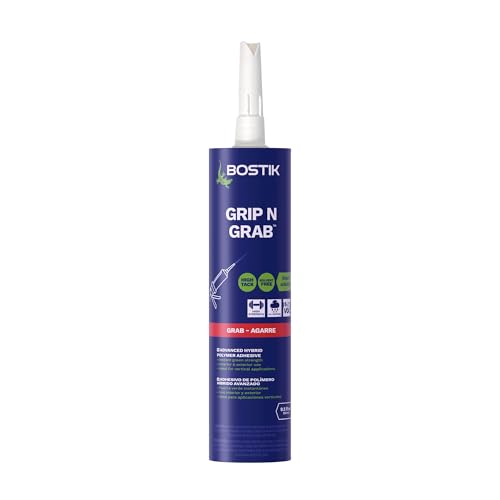
The Bostik Grip n Grab is a hybrid polymer adhesive that delivers instant grab for heavy vertical installations, making it ideal for bonding rubber treads or bumpers to wooden surfaces without needing clamps or bracing. Its formulation is 100% waterproof and solvent-free, with low odor and VOC content under 15 g/L, so it works well indoors and out. The cartridge format requires a standard caulking gun, and the material can be repositioned for up to 10 minutes after application.
Users consistently praise its ability to hold heavy materials like stone and mirrors on vertical walls with zero sag, and it has demonstrated excellent performance on rubber and wood combinations. The bond reaches full cure within 24 hours, and the temperature resistance spans from -40°F to 200°F, making it suitable for extreme climates. Made in the USA by Bostik, a brand with over a century of adhesive manufacturing experience, this product is a reliable choice for demanding projects.
One common complaint is that the tube can be extremely hard to squeeze, requiring a sturdy caulking gun or warm ambient temperature before application. Some users report that long-term durability in extreme weather conditions, such as Florida storms, has not been fully tested. For those willing to manage the application effort, the holding power is unmatched in this category.
Why it’s great
- Instant grab eliminates need for fasteners or bracing on vertical surfaces
- Waterproof and weather-resistant from -40°F to 200°F
- Low odor and low VOC formula suitable for indoor use
Good to know
- Tube is very difficult to squeeze without a high-quality caulking gun
- Some users report limited long-term data in severe outdoor exposure
- Repositioning window is only 10 minutes, so work quickly
2. RH Adhesives S-18 All-Purpose Adhesive
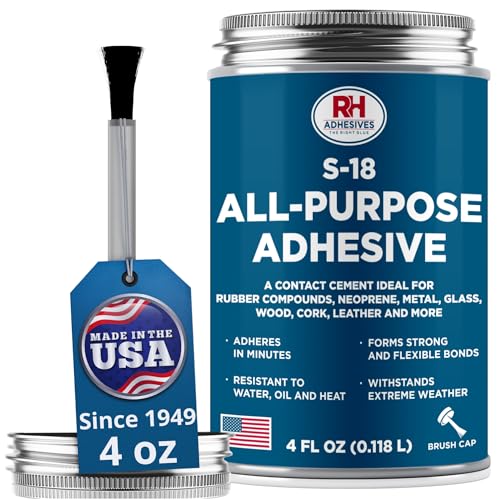
The S-18 from RH Adhesives is a neoprene-based contact cement that creates strong, flexible films ideal for bonding rubber to wood, metal, and other materials. It is water resistant and performs well in marine environments and difficult temperature conditions, making it a solid choice for outdoor or damp applications. The liquid format comes in a 4 oz can and requires application to both surfaces before pressing them together after a drying period, typically 24 hours for full cure.
Customers have used it successfully for leather boot repairs, neoprene hail protection for cars, and general DIY projects, noting that thorough surface preparation — removing old glue and sanding — significantly improves bond strength. The product delivers excellent peel strength and aging properties, resisting oil and heat up to moderate levels. It is made in the United States by a company with a manufacturing history dating back to 1949.
However, the adhesive has strong fumes and requires very good ventilation during application. Some users have reported that the bond failed under harsh conditions like rain and high heat when used outdoors, especially on neoprene in direct weather exposure. The small can size also means frequent repurchases for larger projects, and the adhesive can gum up at the opening if not sealed properly between uses.
Why it’s great
- Creates flexible, oil-resistant films ideal for rubber and metal bonds
- Water resistant and performs well in marine applications
- Long track record from a reputable American manufacturer
Good to know
- Strong solvent fumes require excellent ventilation and a mask
- May not hold up under direct outdoor rain and heat exposure
- Can size is small for larger projects, requiring multiple cans
3. Titebond TiteGrab Plus Construction Adhesive
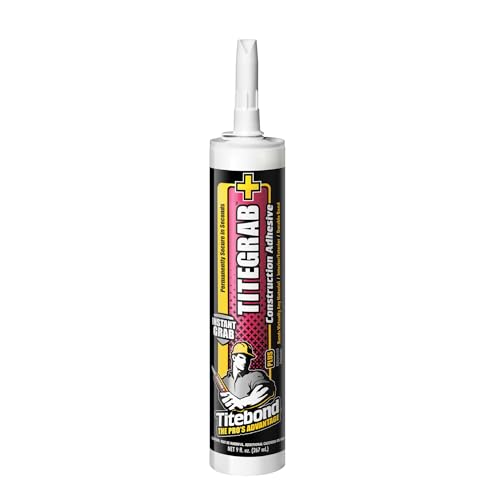
Titebond TiteGrab Plus is a construction adhesive built on an advanced polymer formula that provides instant grab and fast strength development on porous and non-porous surfaces alike. It bonds wood, metal, concrete, foam board, and rubber effectively, making it a versatile choice for general renovation projects. The creamy, high-solids formula extrudes smoothly from a standard cartridge and offers a repositioning window of 2 to 3 minutes before the grip locks in.
Users have applied it successfully to tile backsplashes, ceiling tiles, wood trim, and other demanding vertical applications, noting that it holds firmly without sagging even overnight. The adhesive is waterproof and all-weather rated, meaning it will not shrink or become brittle over time, suitable for both interior and exterior use. A single 9 oz cartridge provides enough material for multiple mid-size projects, and the 24-hour full cure time is standard for construction adhesives.
One limitation is that the bond strength on completely smooth, non-porous surfaces — such as certain glossy rubbers — is noticeably weaker than on rough or porous materials. Some users noted that while it grabs instantly, the final bond may not be as durable as specialized contact cements for certain rubber-to- wood applications. Plan your surface preparation accordingly for best results.
Why it’s great
- Instant grab with ability to reposition for 2 to 3 minutes
- Waterproof and weather-resistant for indoor and outdoor use
- Smooth extrusion from a standard caulking gun cartridge
Good to know
- Less effective on smooth, non-porous rubber surfaces
- Repositioning window is short — plan your placement carefully
- Full cure requires 24 hours for maximum strength
4. DAP Weldwood High Strength Rubber Contact Cement

The DAP Weldwood High Strength Rubber Contact Cement is a neoprene-based contact adhesive that has been a staple in workshops for decades, particularly for laminating Formica and similar materials to wooden substrates. It bonds rubber to wood with a strong, water-resistant hold that sets quickly once the solvent evaporates — typically a short waiting time of 15 to 30 minutes before pressing the surfaces together. The 1 pt can provides enough adhesive for several medium-size laminating tasks.
Reviews from experienced users highlight its reliability for countertop laminations and similar projects where a permanent, high-strength bond is needed. The cement meets all CPSC requirements and is fast-drying, allowing you to proceed with the next steps relatively quickly. For rubber-to-wood bonds that require immediate handling strength without clamps, this contact cement delivers consistent performance.
On the downside, some users found that Weldwood was not strong enough to reattach shoe soles, even after reapplying a second time, indicating it may struggle with high-flex or heavy-load applications. Additionally, the solvent fumes are strong and require a well-ventilated workspace. The small can size may not be economical for large projects, and the cement thickens over time if not sealed properly after each use.
Why it’s great
- Fast-drying formula with short waiting time before bonding
- Water resistant and neoprene-based for durable flexible joints
- Trusted brand with decades of reliable performance in laminations
Good to know
- Not strong enough for high-stress applications like shoe sole repair
- Solvent fumes are strong and require excellent ventilation
- Small can size necessitates frequent repurchases for larger jobs
5. 3M Hi-Strength 94 ET Spray Adhesive
The 3M Hi-Strength 94 ET is a spray adhesive that excels in large surface laminations, offering a longer open time of up to 60 minutes for precise positioning of rubber sheets, foam, carpet, or laminate onto wood. It is Low VOC and GREENGUARD certified, contributing to LEED credits, making it a strong choice for environmentally conscious projects. The aggressive tack ensures that materials bond firmly once pressed, and the bond remains flexible enough to handle minor movements.
Users have applied it effectively for van insulation on metal surfaces, soundproofing foam to plastic in cold temperatures, and general craft projects where a strong, durable bond is required. The 19.75 oz can provides ample coverage for large areas, and the 24-hour full cure time yields a resilient joint that resists peeling. This product is ideal for applications where even distribution of adhesive across a wide surface is critical.
The primary drawbacks are the strong solvent smell, which requires the use of gloves and a mask, and the relatively long drying time before pressing surfaces together (about 30 minutes for best results). Some users noted a learning curve in timing the spray and dry phases perfectly for maximum bond strength. Additionally, the spray pattern can be difficult to control in windy outdoor conditions, leading to overspray.
Why it’s great
- 60-minute open time allows careful repositioning of large panels
- Low VOC and GREENGUARD certified for safer indoor use
- Aggressive tack bonds rubber, foam, and carpet to wood and metal
Good to know
- Strong solvent smell requires gloves and ventilation mask
- Spray pattern can be hard to control outdoors or in wind
- Requires 30-minute drying time before pressing surfaces together
FAQ
What is the strongest adhesive for bonding rubber to wood?
Can I use standard wood glue for rubber to wood?
How long does rubber to wood adhesive take to fully cure?
Final Thoughts: The Verdict
For most users, the adhesive for rubber to wood winner is the Bostik Grip n Grab because it delivers the best combination of instant vertical grab, waterproof performance, and flexibility for mixed-material bonds. If you need a solvent-based contact cement for laminating large rubber sheets to wood, grab the 3M Hi-Strength 94 ET. And for budget-friendly versatility in general construction, nothing beats the Titebond TiteGrab Plus.

Mo Maruf
I created WellFizz to bridge the gap between vague wellness advice and actionable solutions. My mission is simple: to decode the research and give you practical tools you can actually use.
Beyond the data, I am a passionate traveler. I believe that stepping away from the screen to explore new environments is essential for mental clarity and physical vitality.