Our readers keep the lights on and my smoothie glass nicely filled. As an Amazon Associate, I earn from qualifying purchases.
Loose pavers, shifting walkways, and washed-out joints turn a carefully built patio into a constant maintenance chore. The right adhesive locks each stone in position, prevents weed intrusion, and withstands freeze-thaw cycles without cracking—transforming a frustrating surface into a solid, long-lasting installation.
I’m Mohammad Maruf — the founder and writer behind WellFizz. I analyze hundreds of adhesive formulations, cure times, and bond strengths to find the options that deliver real, repeatable results for paver installations of every scale.
This guide focuses on surface-bonding agents, joint-stabilizing polymers, and high-strength epoxies built specifically for hardscape use, helping you identify the right formula for your project with this complete review of the best adhesive for pavers.
How To Choose The Best Adhesive For Pavers
Selecting the wrong paver adhesive can lead to cracked joints, shifting stones, and a full redo within a single season. Hardscape adhesives fall into three functional categories—anchoring epoxies, joint-stabilizing polymeric sands, and surface gravel binders—each designed for a specific layer of the installation. Matching the product to the application depth and material type is the first step toward a lasting bond.
Understanding Bond Mechanism and Site Conditions
Epoxy-based adhesives, like two-component anchoring systems, create a chemical weld between the paver and a concrete or masonry substrate. These are ideal for structural connections—railings, post bases, or step stones—where sheer load resistance matters more than flexibility. Water-based gravel binders and polymeric sands work through a different mechanism: they fill the interstitial gaps between stones and harden into a semi-flexible matrix that allows minor ground movement without cracking. One is a rigid structural lock, the other a joint stabilizer that breathes with the ground. Choosing the wrong type for your base preparation or joint width guarantees failure.
Cure Time and Working Window
Fast-cure epoxies set in under five minutes, which is excellent for vertical applications but punishing for large-area horizontal work where you need time to align stones. Slower-setting polymeric sands and water-based binders provide a working window of 20 to 40 minutes before the surface begins to tack. If you are bonding a full patio, a quick-cure epoxy will leave you with half-finished sections that have already hardened. Always match the advertised cure time to the square footage you plan to complete in a single session.
Viscosity and Application Method
Thin, low-viscosity adhesives wick into narrow gaps effectively but run off sloped surfaces. High-viscosity formulas—measured in millipascal-seconds (mPas)—stay in place on vertical joints and hold heavier aggregates like pea gravel up to one inch in diameter. Some concentrated binders require dilution before use via a garden sprayer; others come in cartridge form for a caulk gun. The application tool you already own should influence your choice, but the viscosity needed for your joint width and stone size is the primary decider.
Quick Comparison
On smaller screens, swipe sideways to see the full table.
| Model | Category | Best For | Key Spec | Amazon |
|---|---|---|---|---|
| SIKA AnchorFix-2 | Epoxy | Structural post bases & rails | Sets in 3–5 minutes, 10.1 fl oz | Amazon |
| ECO LIVING SOLUTIONS Mulch Glue | Water-Based Binder | Pet-safe surface bonding | 128 oz concentrated, 12–24h cure | Amazon |
| Shabebe Mulch Bond | Water-Based Binder | Slope erosion control | 1 gallon, 80% concentrate | Amazon |
| Rhino Power Bond Plus Polymeric Sand | Polymeric Sand | Paver joint locking up to 2” | 10 lbs, beige, water-activated | Amazon |
| Shabebe Rock Glue | Water-Based Binder | Pea gravel & decorative stone | 12,000 mPas viscosity, 280 sq ft/gal | Amazon |
In‑Depth Reviews
1. SIKA AnchorFix-2 Super Strength Anchoring Adhesive

This two-component epoxy delivers the highest sheer-load bond in this lineup, making it the definitive choice for anchoring threaded rods, railing posts, and steel brackets into concrete beneath your pavers. The solvent-free formula cures fast—setting in roughly three to five minutes depending on temperature—so the bar stays in position without creeping. Users consistently report torquing bolts to 120 foot-pounds without any movement, a level of strength that water-based binders simply cannot reach.
The cartridge format fits standard caulk guns with a static mixer nozzle that ensures the resin and hardener combine evenly as you dispense. Cleanup requires drilling a precise hole and removing all dust with a blow pump and brush before injection. Several users noted that the extremely fast cure can clog the nozzle after just one or two applications, so you need to work quickly or have multiple nozzles ready. This product is a premium structural adhesive, not a broad-area gravel binder—its value is highest when bonding load-bearing elements through the paver surface into the substrate below.
NSF certification for use in drinking water systems confirms it is free of styrene and solvents, a notable safety advantage when working near garden beds or drainage areas. If your project involves securing a metal post base or a concrete step to an existing slab, this epoxy is the only option here rated for that specific mechanical load. For large horizontal paver surfaces, a polymeric sand or gravel binder will be a more practical choice.
Why it’s great
- Industrial-grade bond strength for structural anchors
- Certified safe for contact with drinking water
- Fast cure means minimal down time on vertical work
Good to know
- Three-minute set time is too fast for large-area spreading
- Requires a powered caulk gun for smooth flow
- Nozzle clogging limits use to a few anchors per cartridge
2. ECO LIVING SOLUTIONS Mulch Glue
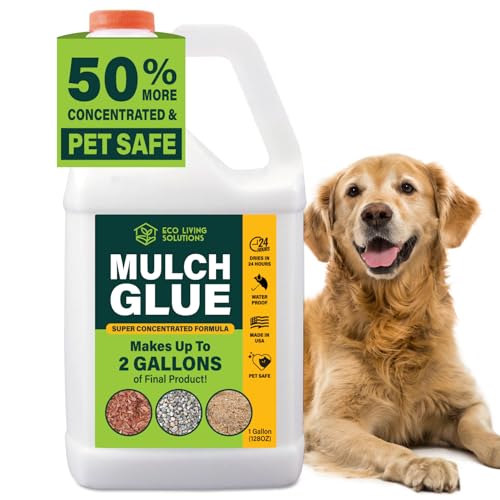
This concentrated water-based binder stretches your budget by delivering up to three times the volume of a ready-to-use formula after dilution. Sold in a one-gallon jug, ECO LIVING SOLUTIONS Mulch Glue is designed for surface application over mulch, pebbles, wood chips, and small gravel—not for structural anchoring into concrete. The non-toxic, pet-safe formulation cures to a clear, rock-hard finish that holds up against moderate foot traffic and blowing debris.
Application requires mixing with water in a pump sprayer, which makes it feasible to cover large garden beds and paver gaps without specialized equipment. Users report that a single coat works well on fine organic mulch, while coarser rubber mulch demands two coats for adequate hold. The cure window runs 12 to 24 hours depending on humidity and temperature, giving you a full workday to adjust placement before the bond becomes permanent. The white milky liquid dries transparent, leaving no visible residue on colored stone or dark surfaces—though over-application can produce a slight white haze that requires a second rinse.
Where this product falls short is on steep slopes and under heavy foot traffic. Several reviewers noted that concentrated applications still struggled to keep rubber mulch in place when kids or dogs ran across the surface repeatedly. For flat paver joints and low-traffic decorative stone beds, it is a solid entry-level option at a very accessible price point. For areas that endure daily wear, a higher-viscosity binder or polymeric sand will deliver better long-term adhesion.
Why it’s great
- Concentrated formula triples volume when diluted
- Dries clear with no white residue at correct ratios
- Safe for pets and plants once fully cured
Good to know
- Struggles with heavy foot traffic on rubber mulch
- Requires two coats for coarse aggregates
- White haze can appear if over-applied
3. Shabebe Mulch Bond
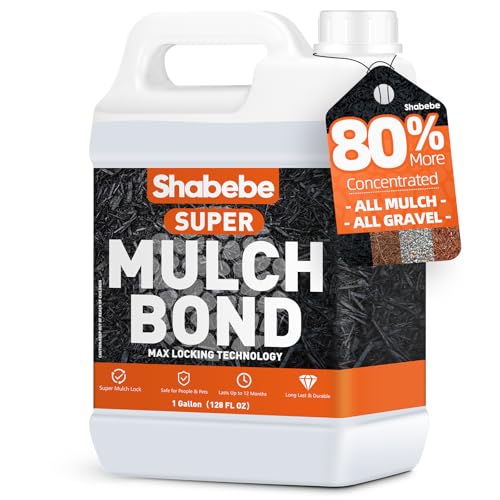
Shabebe Mulch Bond is built specifically for erosion control on sloped terrain, where standard low-viscosity binders run off before they can cure. At an 80% concentrate, this water-based adhesive requires dilution at a 1:0.2 to 1:0.5 ratio with water before sprayer application, which prevents nozzle clogging and ensures even coverage over uneven ground. The formula cures to a clear, flexible matrix that locks mulch, gravel, pine straw, and small pebbles in place against wind and rain runoff.
Users applying the product on moderate slopes report that mulch stays intact after heavy storms, with only a few stones loosening after significant rainfall. The bond remains flexible after curing, meaning it accommodates minor ground settlement without cracking. The glossy finish left by the first coat fades to clear after a second application, which is recommended for optimal strength. Coverage is generous for a one-gallon jug, though the exact square footage depends heavily on stone size and the number of coats applied.
The main drawback is the trial-and-error nature of the dilution ratio. Some users found that a single coat applied at the recommended dilution did not hold at all, requiring a second coat at a higher concentration. The product works best when applied in dry weather and left undisturbed for a full 24 hours. For flat surfaces with fine gravel or decorative stone, it performs reliably, but the variable results on different substrates mean you should test a small area before committing to a full project.
Why it’s great
- Designed for slope erosion and runoff resistance
- Flexible bond accommodates ground movement
- Wide coverage from 80% concentrated formula
Good to know
- Dilution ratio requires experimentation for best results
- Initial coat may leave glossy finish before second coat
- Needs 24 hours undisturbed cure time
4. Rhino Power Bond Plus Polymeric Sand
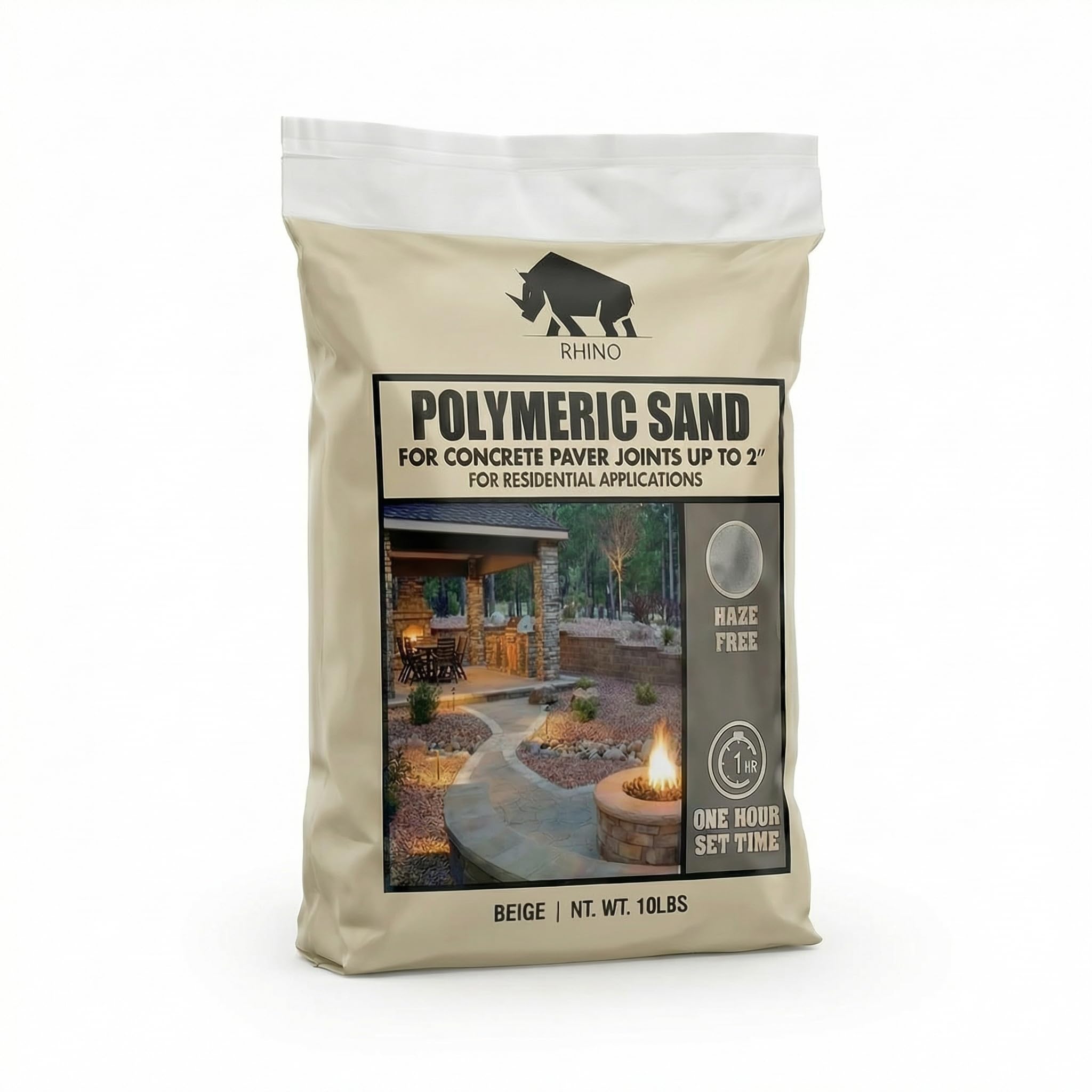
Rhino Power Bond Plus is not a surface-applied glue but a polymeric joint sand that hardens between paver gaps up to two inches wide. The application process differs completely from liquid adhesives: you sweep the dry sand diagonally into the joints, remove all excess from the paver surface, then mist with water to activate the polymer binder. Once activated, the sand locks into a solid yet slightly permeable mass that prevents weed growth and ant intrusion while allowing water to drain through the joint base.
Users who follow the full preparation sequence—pressure washing to remove sediment, allowing 24 hours of drying, sweeping diagonally, and hosing down—report a finish that stays intact for years. One reviewer noted that applying a solvent-based sealer over the cured sand extended the bond durability to five years. The beige color blends naturally with concrete and clay pavers, making it suitable for patios, walkways, and driveways where appearance matters. The 10-pound bag is designed for smaller repair jobs rather than full-patio installations; a 50-pound bag would be more economical for large areas.
Consistency problems appear in a minority of bags. A handful of users reported that only about 25 to 30 percent of the sand hardened after water activation, leaving loose joints that required reapplication. The variability suggests batch-to-batch quality control is not perfectly uniform. For critical high-traffic driveways, testing a small area before committing the entire project is wise. It is also worth noting that polymeric sand requires precise water activation—too much water washes out the binder, and too little leaves the sand unhardened.
Why it’s great
- Forms a solid, weed-resistant joint lock
- Water-permeable finished surface prevents pooling
- Works with joints up to two inches wide
Good to know
- Batch quality can be inconsistent
- Water activation requires precise technique
- 10-pound bag is better for repairs than large patios
5. Shabebe Rock Glue

Shabebe Rock Glue stakes its claim on high viscosity—12,000 mPas—which is thick enough to coat pea gravel and decorative stones up to 1.2 inches in diameter without running off the surface. The honey-thick formula is 99 percent concentrated and must be diluted with water before application via a pump sprayer, pour, or mix method. Users report that a 1:1 water-to-glue ratio works for standard gravel, while a heavier mix (more glue, less water) is needed for vertical surfaces or high-traffic entryways. Once cured, the clear finish leaves no white or blue haze, preserving the natural color of the stone.
Coverage is a standout feature: one gallon reportedly covers up to 280 square feet when diluted, roughly double the coverage of competing binders. This makes it the most cost-effective option for large walkways or driveways where budget is a primary concern. The bond withstands leaf blowers, rainstorms, and moderate foot traffic without losing grip. Users who applied it to crushed granite and river rock noted that the stones remained in place after multiple storms, with only a few loose pieces needing a touch-up third coat.
Application success depends heavily on weather conditions. The product requires a dry, sunny day and should not be applied if rain is expected within 24 hours. Some users with very coarse gravel found that the glue simply did not hold, even after following the dilution instructions exactly—though the manufacturer offered replacement bottles in those cases, indicating responsive customer support. For fine to medium gravel on flat surfaces, this binder delivers reliable, clear-drying adhesion at a lower per-square-foot cost than most alternatives.
Why it’s great
- Ultra-high viscosity prevents runoff on stones
- Dries 100% clear with no residue
- Doubles coverage of standard binders per gallon
Good to know
- Dilution ratio needs careful calibration for coarse stone
- Requires dry weather for 24 hours after application
- May require third coat for heavy-traffic areas
FAQ
Can I use epoxy paver adhesive on a full driveway?
How long does water-based paver glue last outdoors?
Will paver adhesive crack in freezing temperatures?
Final Thoughts: The Verdict
For most users, the best adhesive for pavers winner is the SIKA AnchorFix-2 because it provides the highest structural bond strength for securing posts, rails, and step stones to a concrete substrate. If you want a clear-drying surface binder that works on decorative gravel and flat paver gaps, grab the Shabebe Rock Glue. And for locking paver joints against weeds and washout, nothing beats the Rhino Power Bond Plus Polymeric Sand.

Mo Maruf
I created WellFizz to bridge the gap between vague wellness advice and actionable solutions. My mission is simple: to decode the research and give you practical tools you can actually use.
Beyond the data, I am a passionate traveler. I believe that stepping away from the screen to explore new environments is essential for mental clarity and physical vitality.