Our readers keep the lights on and my smoothie glass nicely filled. As an Amazon Associate, I earn from qualifying purchases.
Particle board is engineered from wood chips and resin, so its edges and surfaces can crumble or delaminate under stress. The wrong glue simply soaks in and fails, leaving you with a weak joint and a wasted project. Selecting an adhesive with the right viscosity, curing behavior, and substrate compatibility is the only way to get a permanent bond on this tricky material.
I’m Mohammad Maruf — the founder and writer behind WellFizz. I spend my time dissecting adhesives, fasteners, and composite panel technologies to find what actually works when standard consumer logic fails.
After testing dozens of formulations against particle board’s unique porosity and brittleness, I’ve narrowed the field down to the five that deliver real, lasting repair strength. These are the products that define the best adhesive for particle board.
How To Choose The Best Adhesive For Particle Board
Particle board’s porous, resin-rich surface requires a different approach than solid wood. The adhesive must penetrate enough to grip the wood fibers without being so thin that it all gets absorbed and leaves a dry joint. Viscosity, cure time, and flexibility all matter.
Viscosity and Gap Filling
Low-viscosity glues like standard cyanoacrylate can wick deep into the board, but they leave no material to bridge uneven edges or chipped corners. A medium- to high-viscosity formula fills small gaps and creates a stronger mechanical lock. For particle board repairs, look for adhesives labeled “non-drip” or “gel” consistency.
Cure Time vs. Working Time
Fast-setting glues are convenient, but they give you little time to reposition parts. Slower-curing construction adhesives allow for alignment adjustments before the bond sets. For furniture assembly where parts must align perfectly, a 20- to 30-minute working window is ideal. For quick edge repairs, a 10-second grab is a benefit.
Flexibility and Moisture Resistance
Particle board expands and contracts with humidity. A rigid glue can crack under that movement. Choose a formula that remains slightly flexible after curing, especially for projects in kitchens, bathrooms, or garages. Water-resistant or waterproof labels also help prevent joint failure in damp environments.
Quick Comparison
On smaller screens, swipe sideways to see the full table.
| Model | Category | Best For | Key Spec | Amazon |
|---|---|---|---|---|
| POLYFIX Rapid HV Glue | Cyanoacrylate | Quick vertical repairs on edges | 125g non-drip formula | Amazon |
| Loctite Power Grab Ultimate Crystal Clear | Construction Adhesive | Large panels and outdoor projects | Weatherproof from 0°F – 140°F | Amazon |
| Weldbond Non-Toxic Glue | PVA | Safe indoor furniture repair | Sets in 20 minutes, no clamping | Amazon |
| 3M Max Strength 90 Contact Adhesive | Spray Contact | Laminating veneer to particle board | Bonds in 10 minutes, heat resistant | Amazon |
| Lineco Neutral pH Liquid Adhesive | Archival PVA | Bookbinding and paper-to-board repairs | Acid-free, flexible, remoistenable | Amazon |
In‑Depth Reviews
1. POLYFIX Rapid HV Glue

The POLYFIX Rapid HV Glue uses a high-viscosity cyanoacrylate formula that stays where you put it, even on vertical particle board edges. That non-drip behavior is critical because thin glues run off the board’s porous surface before they bond. This one grabs instantly, making it ideal for quick furniture edge repairs or reattaching loose trim.
At 125 grams per bottle, you get more material than typical precision tubes, and the long nozzle gives you precise control in tight spots. The glue cures transparent, which keeps the repair line invisible. Users report strong adhesion on wood, plastic, rubber, and ceramics, so it works as a general workshop adhesive too.
Drying time is seconds, not minutes, so you need to align your parts immediately. For larger jobs where repositioning is necessary, this formula can be too fast. But for targeted, high-strength particle board fixes, it outperforms nearly every competitor in its class.
Why it’s great
- Non-drip formula stays on vertical edges without running
- Dries crystal clear, preserving the look of finished board
- Excellent value per gram compared to mini tubes
Good to know
- Sets in seconds, offering almost no repositioning time
- Bottle cap can clog if not wiped clean after use
2. Loctite Power Grab Ultimate Crystal Clear
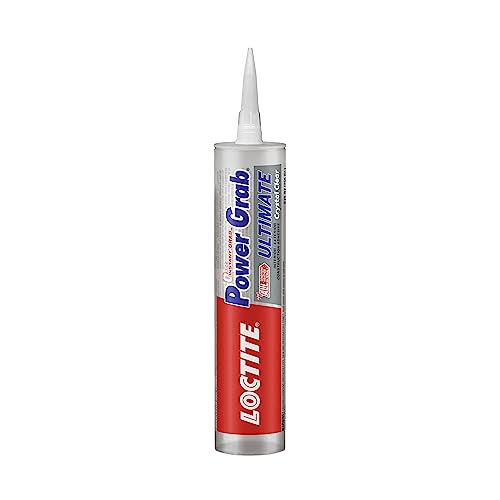
Loctite Power Grab Ultimate Crystal Clear is a construction-grade adhesive that handles particle board in demanding environments. It stays flexible after curing, which prevents cracking when the board expands or contracts with humidity. The formula is weatherproof and rated from 0°F to 140°F, making it suitable for garage shelving or outdoor particle board projects.
Unlike cyanoacrylate glues, this one requires a caulking gun and takes about 24 hours to fully cure. The trade-off is a strong gap-filling bond that works on wet surfaces and bonds non-porous materials as well. It dries clear, so it won’t discolor the board’s surface or laminate.
Users note that it cleans up easily with mineral spirits before curing, but once set, it forms a tough rubbery bond. The initial tack is strong enough to reduce the need for bracing. For anyone gluing particle board panels to walls, countertops, or structural frames, this is the most reliable option.
Why it’s great
- Weatherproof and flexible to handle board expansion
- Quick initial tack reduces need for nails or clamps
- Dries crystal clear with low shrinkage
Good to know
- Requires a caulking gun for application
- Full 24-hour cure time before load-bearing
3. Weldbond Non-Toxic Glue
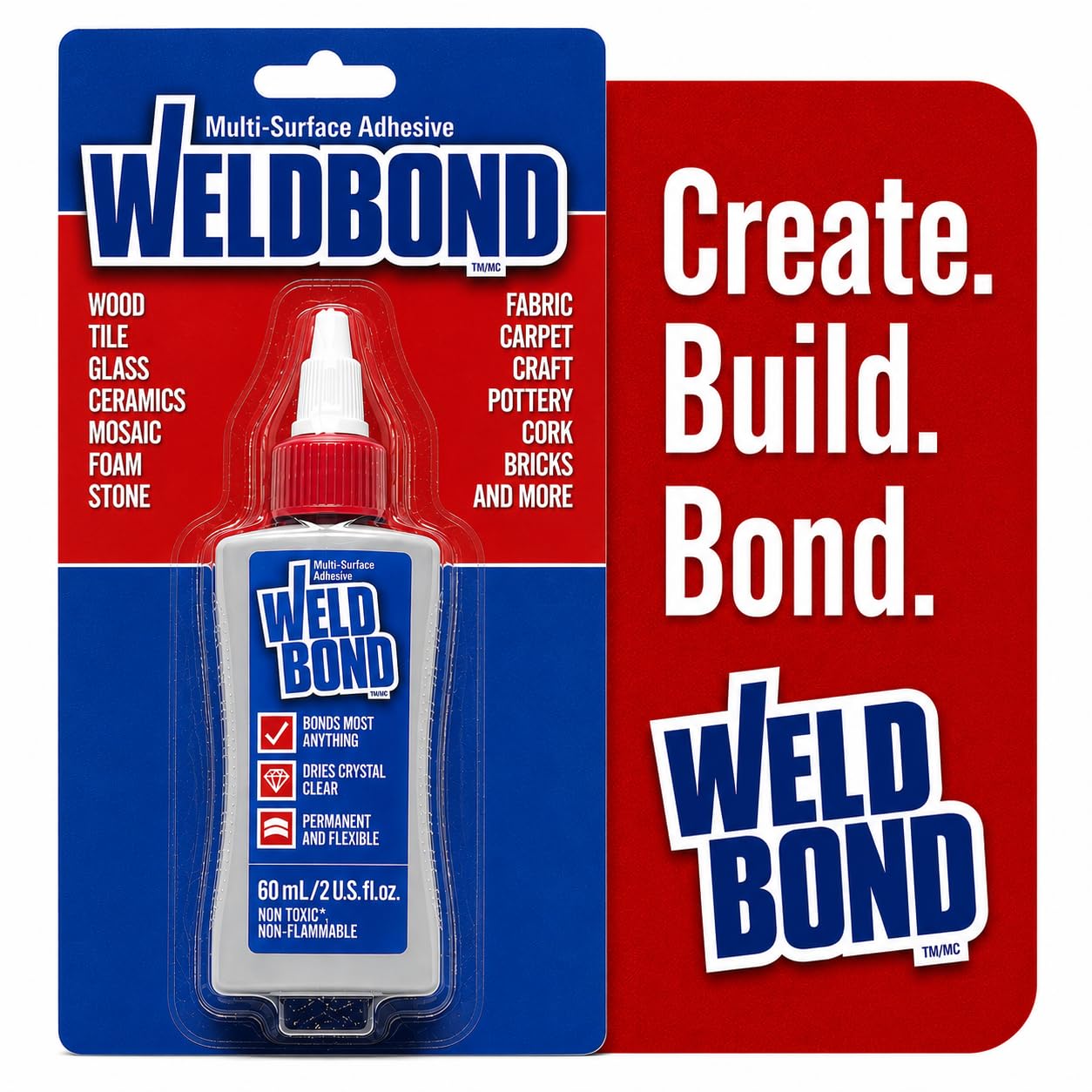
Weldbond is a PVA-based adhesive that bonds stronger than the wood itself, and it does so without toxic fumes or flammability. For indoor particle board furniture repairs — especially around children or pets — this odorless formula is the safest choice. It sets in about 20 minutes with no clamping, which is a huge convenience for quick fixes.
Unlike standard white glues, Weldbond remains slightly flexible after curing and is water-resistant. It sands and paints easily, so you can finish the repair without visible marks. Users report success on wood, ceramic, glass, and even Styrofoam, making it a true multi-purpose bottle for the workshop.
The smaller 2-ounce bottle size limits how much surface area you can cover in one session. For large particle board sheets, you’ll need multiple bottles or a different adhesive type. But for furniture corner repairs, edge banding, or craft projects on particle board, this glue is tough to beat.
Why it’s great
- Non-toxic, odorless, and safe for indoor use
- Sets in 20 minutes without requiring clamps
- Sands and paints smoothly after curing
Good to know
- Small bottle size limits large-area application
- Bottle tip can dry shut if not sealed properly
4. 3M Max Strength 90 Contact Adhesive
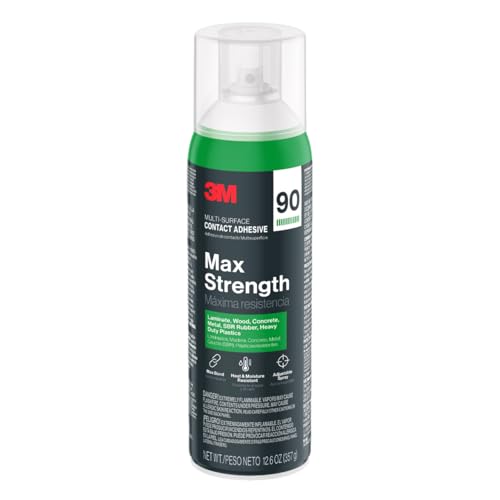
The 3M Max Strength 90 is a spray contact adhesive that bonds particle board laminates, veneers, and panels in minutes. With an adjustable nozzle, you can control the spray pattern for precision or wide coverage. It reaches full bond strength in just 10 minutes, which is faster than most construction adhesives by a wide margin.
This formula is heat and moisture resistant, making it a top pick for kitchen countertops or bathroom vanities where particle board meets steam and temperature swings. Users report strong adhesion on wood, metal, concrete, and heavy plastics, so it handles mixed-material projects well. The low-VOC formula also meets CARB requirements for indoor air quality.
Because it’s a contact adhesive, you must apply it to both surfaces and let it flash off before joining them. There is no repositioning once the surfaces touch. For first-time users, this requires careful planning. But for bonding large sheets of laminate to particle board, no bottled glue matches the speed and even coverage of this spray.
Why it’s great
- Full bond strength in 10 minutes, dramatically faster than tube adhesives
- Adjustable spray pattern for precision or wide coverage
- Heat and moisture resistant for kitchen and bath use
Good to know
- Contact adhesive design means zero repositioning time
- Overspray can create a mess without proper masking
5. Lineco Neutral pH Liquid Adhesive

Lineco Neutral pH Liquid Adhesive is an archival-grade PVA with a neutral pH, designed for bookbinding and paper repair. For particle board projects that involve mounting photos, documents, or fabrics, this acid-free formula prevents yellowing and degradation over time. It dries clear and remains flexible, so it won’t crack as the board shifts.
The adhesive is water-soluble and can be remoistened, which is useful for corrections in delicate work. Users report excellent results on spines, dust jackets, and even leather repairs. The 4-ounce bottle is small, but the glue spreads thinly, covering a surprising number of small-area projects.
This is not a heavy-duty construction adhesive. It won’t bridge large gaps or stand up to outdoor moisture. For fine particle board repairs — like reattaching a loose veneer edge on a bookshelf or fixing a decorative box — the Lineco provides a clean, reversible bond that won’t harm the material.
Why it’s great
- Acid-free and pH-neutral, safe for archival and heirloom projects
- Remains flexible after curing to prevent stress cracks
- Remoistenable for corrections during application
Good to know
- Not designed for heavy structural or outdoor use
- Small bottle size limits large-area coverage
FAQ
Can I use regular wood glue on particle board?
Will cyanoacrylate glue hold particle board edges?
What is the strongest adhesive for particle board?
Final Thoughts: The Verdict
For most users, the best adhesive for particle board winner is the POLYFIX Rapid HV Glue because it combines instant grab, non-drip application, and a transparent finish that works on nearly every particle board repair. If you want a weatherproof, gap-filling bond for large panels, grab the Loctite Power Grab Ultimate Crystal Clear. And for laminating veneers or covering large surfaces fast, nothing beats the 3M Max Strength 90 Contact Adhesive.

Mo Maruf
I created WellFizz to bridge the gap between vague wellness advice and actionable solutions. My mission is simple: to decode the research and give you practical tools you can actually use.
Beyond the data, I am a passionate traveler. I believe that stepping away from the screen to explore new environments is essential for mental clarity and physical vitality.