Our readers keep the lights on and my smoothie glass nicely filled. As an Amazon Associate, I earn from qualifying purchases.
A broken plastic piece can feel like the end of the road for a favorite toy, a crucial car part, or a useful household item. The frustration often isn’t in the break itself, but in the failed repair attempts that follow—choosing the wrong adhesive leads to weak bonds, messy applications, and quick re-breaks. The key to a permanent fix isn’t just a “strong glue,” but matching the specific chemistry of the adhesive to the type of plastic you’re working with.
I’m Mohammad Maruf — the founder and writer behind WellFizz. For over a decade, I’ve specialized in analyzing product specifications and real-world performance data for home and workshop solutions, cutting through marketing claims to identify what truly works.
This guide is built from a deep dive into technical datasheets, thousands of customer experiences, and the material science behind successful bonds, so you can confidently select the best adhesive for hard plastic repair the first time.
How To Choose The Best Adhesive For Hard Plastic
Selecting an adhesive is more nuanced than grabbing the first tube labeled “plastic.” A successful, long-lasting repair depends on three interconnected factors: the plastic itself, the adhesive formula, and your application technique.
Identify Your Plastic Type
This is the non-negotiable first step. Hard plastics are not all the same. Common types like ABS, PVC, acrylic, and polycarbonate bond well with many adhesives. However, “low-surface-energy” plastics like polyethylene (PE) and polypropylene (PP)—often used in food containers, certain automotive parts, and outdoor bins—are notoriously difficult to bond with standard glues. If your item has a recycling symbol, note the number inside. For difficult plastics, you may need a specialized adhesive or a mechanical repair.
Understand Adhesive Formulas
Cyanoacrylate (Super Glue): Excellent for small, clean breaks on non-porous hard plastics. Liquid versions are best for tight seams; gel versions offer control for vertical surfaces and gap filling. They cure quickly but can be brittle.
Epoxy (Two-Part): Provides the strongest structural bonds and fills gaps. Ideal for load-bearing repairs, outdoor use, and dissimilar materials (plastic to metal). They require mixing and have a longer cure time but offer superior strength and durability.
Urethane / Plastic-Specific Adhesives: Formulated specifically for plastic substrates. They often provide a flexible, impact-resistant bond that moves with the plastic, making them perfect for automotive trim, bumpers, and items subject to vibration.
Master Surface Preparation
No adhesive can overcome a dirty or greasy surface. Always clean the area with isopropyl alcohol. For a stronger mechanical bond, lightly sand glossy plastic surfaces with fine-grit sandpaper. This creates tiny grooves for the adhesive to grip onto, dramatically increasing bond strength and longevity.
Quick Comparison
On smaller screens, swipe sideways to see the full table.
| Model | Type | Best For | Key Feature | Amazon |
|---|---|---|---|---|
| J-B Weld Plastic Bonder (50139) | Urethane | Auto body panels & structural plastic | 3770 PSI strength, dries black | Amazon |
| J-B Weld ClearWeld Epoxy | Epoxy | Clear, high-strength repairs | 3900 PSI, dries transparent | Amazon |
| Loctite Super Glue Professional | Liquid CA | Precise, fast household fixes | Pinpoint nozzle, 2-pack value | Amazon |
| 3M Plastic & Emblem Adhesive | Specialized | Automotive emblems & trim | Professional-grade, weather-resistant | Amazon |
| J-B Weld Plastic Bonder (50133) | Urethane | General plastic bonding & gaps | Quick-set, versatile formula | Amazon |
| Super Glue Gel XXL (KRAFTPROTZ) | Gel CA | High-volume vertical repairs | Non-drip formula, large size | Amazon |
| Meuvcol Plastic Glue | Liquid CA | Models, 3D prints, miniatures | Includes 6 precision micro-tips | Amazon |
| J-B Weld PlasticWeld Putty | Epoxy Putty | Rebuilding missing plastic | Moldable, sandable, waterproof | Amazon |
| Gorilla 2 Part Epoxy | Epoxy | Heavy-duty multi-material bonds | 5-minute set, gap-filling | Amazon |
| Loctite Super Glue Ultra Gel | Gel CA | Controlled, no-drip applications | Rubber-toughened, side-squeeze bottle | Amazon |
| Loctite Super Glue Liquid | Liquid CA | Entry-level quick fixes | Fast-setting, versatile | Amazon |
In‑Depth Reviews
1. J-B Weld Plastic Bonder Body Panel Adhesive (50139)
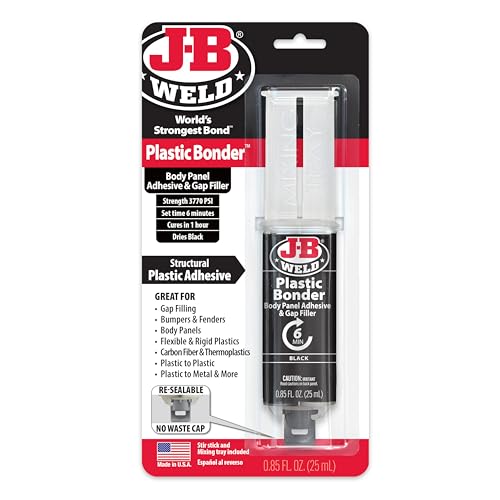
This urethane-based adhesive isn’t just a glue; it’s a structural repair system designed for demanding applications. Its 3770 PSI tensile strength rivals many epoxies, but the cured bond retains a degree of flexibility that pure epoxies lack. This makes it exceptional for automotive plastic repairs—like bumper covers, fender liners, and body panels—that need to withstand vibration, impact, and thermal expansion without cracking.
The syringe applicator ensures a perfect 1:1 mix of resin and hardener every time, eliminating guesswork. It sets in about 15 minutes, allowing for repositioning, and can be sanded after 30 minutes. The cured adhesive dries black, which is ideal for most automotive and industrial plastics, creating a nearly invisible repair on dark surfaces.
Users report using it for everything from cracked telescope tripod legs to motorcycle fairings with outstanding, permanent results. It’s praised for creating a bond that often outlasts the surrounding plastic material. This adhesive fills a crucial niche between rigid super glues and brittle epoxies, offering professional-grade durability for serious DIYers.
Why it’s great
- Incredibly strong yet flexible bond perfect for stress-prone parts.
- Easy-to-use syringe ensures accurate mixing.
- Fast set time allows for project completion in one session.
- Excellent gap-filling properties for imperfect breaks.
Good to know
- The black color may not suit light-colored plastics.
- Can be messy; disposable gloves are highly recommended.
- The mixed adhesive begins to cure quickly, so work efficiently.
2. J-B Weld ClearWeld 5 Minute Epoxy
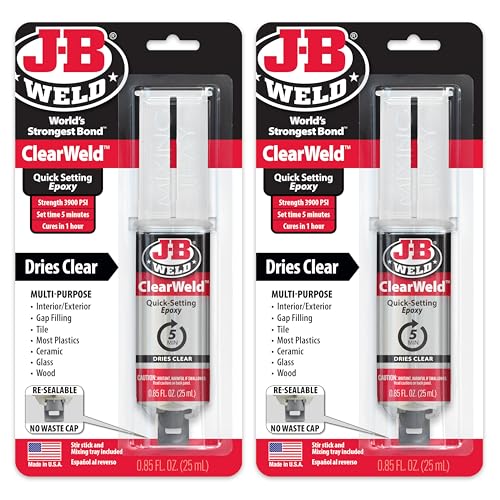
When you need maximum strength but can’t sacrifice aesthetics, ClearWeld is the top contender. Boasting a 3900 PSI tensile strength, this two-part epoxy provides a bond that is significantly stronger than most super glues, yet it cures to a clear, hard finish. This makes it the go-to choice for repairing clear plastics, glass, ceramics, or any project where a visible glue line would be unacceptable.
The dual-syringe system takes the hassle out of measuring, dispensing equal parts of resin and hardener with a single push. You get about 5 minutes of working time to mix, apply, and adjust your pieces before it begins to set, striking a good balance between usability and speed. Full cure is achieved in about an hour, allowing for relatively quick project turnaround.
It’s highly versatile, bonding metal, wood, concrete, ceramic, and most plastics. Users have successfully used it for everything from setting steel rods into wood for railings to repairing motorcycle headlight lenses and carbon fiber components. Its clarity and strength offer a professional repair solution for visible or structural fixes.
Why it’s great
- Exceptional clarity and top-tier strength in one formula.
- Simple 1:1 syringe eliminates mixing errors.
- Versatile on a wide range of materials beyond plastic.
- Fast cure time for an epoxy.
Good to know
- Can yellow over time with prolonged UV exposure.
- The cure time can vary with temperature and humidity.
- Once set, it is rigid and can be brittle on flexible materials.
3. Loctite Super Glue Professional Liquid
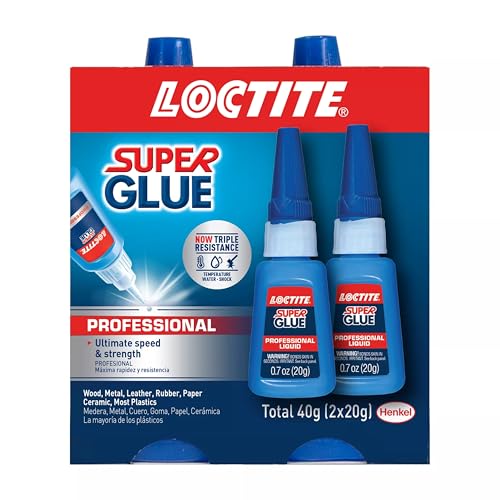
For countless small, clean breaks on hard plastics, this professional-grade cyanoacrylate is a workhorse. Its low-viscosity, water-thin formula is its secret weapon; it wicks into hairline cracks and tight seams through capillary action, creating a strong bond over a larger surface area than a gel could reach. This makes it perfect for repairing snapped-off tabs, small model parts, or ceramics where the break is precise.
The extended, pinpoint nozzle offers superb control, allowing you to place tiny drops exactly where needed, minimizing mess. The patented cap design is engineered to prevent clogging, a common frustration with cheaper super glues, ensuring the bottle remains usable until the last drop. The fast set time of 15-30 seconds means you spend less time holding pieces together.
Sold in a practical two-pack, it offers great value for a premium adhesive. Users, from artists to mechanics, praise its reliable performance and the longevity of the bottle compared to standard tubes. It’s the liquid super glue you buy when you’re tired of others failing or drying out prematurely.
Why it’s great
- Precise application with a clog-resistant, professional nozzle.
- Thin formula penetrates deep into tight cracks.
- Exceptionally fast setting for quick repairs.
- Reliable performance from a trusted brand.
Good to know
- Runny consistency can be tricky on vertical surfaces.
- Not suitable for filling gaps or bonding porous materials.
- Bonds skin instantly—use with extreme care.
4. 3M Plastic and Emblem Adhesive
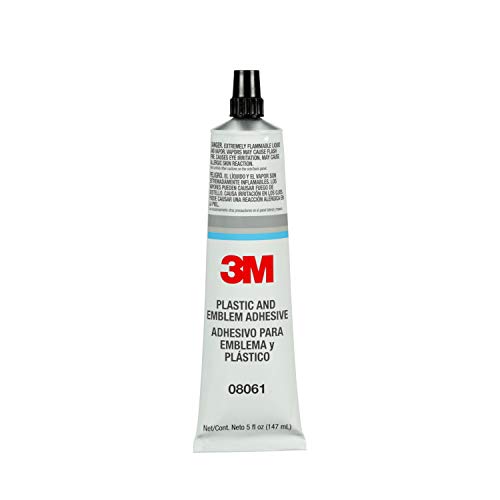
This is the specialist you call for automotive-grade repairs. Formulated specifically for bonding to cured automotive paints and plastics, 3M’s adhesive is engineered to withstand the harsh environment of a vehicle—constant temperature swings, UV exposure, water, and vibration. It’s the go-to product for reattaching side mirrors, body trim, emblems, and interior plastic panels that have come loose.
It sets in about 15 minutes, giving you a generous window to perfectly align pieces, and cures to a clear, flexible, and waterproof seal over 24 hours. The flexibility is key; as the car’s body flexes and the plastic expands/contracts, this adhesive moves with it, preventing a brittle fracture. The tube is a generous size, making it a solid value for multiple repairs.
Professional detailers and DIY auto enthusiasts swear by its tenacious hold. Reviews consistently highlight its success in reattaching everything from Volvo steering wheel badges to Genesis GV70 emblems and Land Cruiser interior trim, with bonds that survive car washes and extreme weather.
Why it’s great
- Professional-grade formulation for automotive conditions.
- Creates a flexible, waterproof, and permanent bond.
- Generous working time for perfect alignment.
- Dries clear for a clean, invisible finish.
Good to know
- Follow temperature guidelines (65-90°F) for optimal curing.
- The tube can be messy; using a caulking gun is recommended.
- It’s a specialized product, overkill for simple indoor crafts.
5. J-B Weld Plastic Bonder (50133)

This is the predecessor to the black Plastic Bonder and remains a fantastic, general-purpose option for a huge range of plastic repairs. Sharing the same 3770 PSI strength and quick-set urethane chemistry, its key difference is the tan cured color, which can blend well with wood, concrete, or lighter-colored plastics. It’s a true multi-surface adhesive, bonding plastics, composites, PVC, coated metals, and more.
The syringe delivery makes it incredibly user-friendly. It sets in 15 minutes and can be sanded after 30, allowing you to shape and paint over the repair seamlessly. This makes it ideal for not just bonding broken pieces, but also for filling dents in plastic bumpers or small voids where a structural filler is needed.
Its versatility is its strongest asset. DIYers use it for everything from repairing garden tool handles and 3D printed parts to fixing cracked auto body components. It provides a robust, lasting bond that handles outdoor exposure and physical stress, making it a reliable first pick for many workshop scenarios.
Why it’s great
- Extremely versatile on numerous materials and surfaces.
- High strength with a practical quick-set time.
- Easy-to-use syringe with a resealable cap.
- Sandable and paintable for finished repairs.
Good to know
- The tan color may not be ideal for all plastics.
- Like its sibling, it can be messy during application.
- Not designed for low-surface-energy plastics like PP or PE.
6. Super Glue Gel XXL (KRAFTPROTZ)

If you frequently tackle repairs and are tired of running out of tiny super glue tubes, this high-volume gel is a game-changer. At 1.76 ounces, it contains several times more adhesive than standard tubes, offering tremendous value for hobbyists, workshop owners, or anyone who does regular fixing. The gel formula is thick and stays exactly where you apply it, making it perfect for vertical surfaces, overhead work, and filling small gaps.
The bottle features an anti-clog, twist-lock cap designed to keep the gel fresh between uses, addressing a major pain point of super glues that dry out prematurely. The precision tip allows for controlled application, and the gel consistency means less risk of running onto your hands or surrounding areas.
It’s praised for its strong bond on plastics, wood, metal, and ceramic. Users particularly love it for 3D printing repairs (PLA), fixing toys, and general household fixes where a no-drip, easy-to-control adhesive is needed in larger quantities. It’s a practical, no-fuss workhorse adhesive.
Why it’s great
- Outstanding value with a large volume of adhesive.
- Gel formula prevents runs and drips on any surface.
- Anti-clog cap keeps the product usable longer.
- Strong, reliable bond for a wide array of materials.
Good to know
- The large bottle can be less precise for micro-scale work.
- As a cyanoacrylate, it’s not ideal for load-bearing structural repairs.
- Brand is less established than giants like Loctite or Gorilla.
7. Meuvcol Plastic Glue

This adhesive is tailored for the detail-oriented world of hobbyists. It comes with six interchangeable precision micro-tips that screw onto the bottle, allowing you to apply tiny, controlled dots of glue exactly where needed—perfect for assembling plastic model kits, repairing 3D-printed miniatures, or fixing Lego bricks. The fast-setting formula grabs quickly, holding small parts in place without long clamping times.
The liquid viscosity is a middle ground—not too runny, not too thick—making it ideal for wicking into seams of 3D-printed PLA or ABS parts. Users report that with proper surface prep (light sanding), it creates bonds so strong that the print layer itself can fail before the glued joint. The bottles are a good size, and the inclusion of multiple tips is a thoughtful touch that addresses a common frustration.
It’s a favorite among tabletop gamers and 3D printing enthusiasts for its balance of strength, control, and value. The ability to seal the bottle with a fresh, clean tip significantly extends its shelf life compared to standard super glue tubes.
Why it’s great
- Includes 6 micro-tips for unparalleled precision.
- Excellent for bonding PLA, ABS, and other rigid plastics.
- Fast-setting formula ideal for small parts assembly.
- Sealed tips prevent the bottle from drying out.
Good to know
- The nozzle can be tricky to control, leading to over-application.
- Strong odor during application requires ventilation.
- Primarily designed for small-scale, not large structural, repairs.
8. J-B Weld PlasticWeld Epoxy Putty

When a piece of plastic is not just cracked but missing material entirely, a liquid adhesive won’t suffice. This is where epoxy putty shines. PlasticWeld is a hand-mixable, two-part putty that you knead together until it reaches a uniform color. Once mixed, you have about 25 minutes to mold, shape, and press it into place to rebuild missing corners, fill large holes, or reinforce cracked areas.
After curing for 3 hours, it hardens into a tough, waterproof material that can be sanded, drilled, tapped, and painted. It’s certified for contact with potable water, making it safe for repairing plastic water tanks, pipes, or marine components. Its ability to be shaped makes it incredibly versatile for non-standard repairs.
Users have successfully used it to repair shattered car wind deflectors, holes in litter robot globes, and damaged plumbing fixtures. It’s less about bonding two pieces together and more about recreating the plastic part itself, offering a solution when replacement isn’t possible or practical.
Why it’s great
- Rebuilds missing plastic where other adhesives can’t.
- Moldable and shapeable during application.
- Once cured, it can be worked like wood or soft metal.
- Waterproof and heat resistant for durable repairs.
Good to know
- Has a distinct odor during the mixing and curing process.
- The working time is limited once mixed.
- The off-white cured color may require painting for a perfect match.
9. Gorilla 2 Part Epoxy

A well-regarded staple in the epoxy category, Gorilla’s 5-minute formula is a trusted choice for strong, durable bonds across a variety of materials, includingplastic, metal, ceramic, and wood. The syringe delivery system ensures a consistent 1:1 mix of resin and hardener, simplifying the process and eliminating measuring errors. The 5-minute set time is a practical middle ground, providing enough working time for adjustment while not leaving you waiting for hours.
Once fully cured, it forms a rigid, clear bond with a tensile strength of 3300 PSI, making it suitable for repairs that need to handle weight or stress. It also acts as a gap filler, which is invaluable for bonding uneven surfaces or filling small voids. The cured epoxy is water-resistant, expanding its use to outdoor items or things that may get wet.
User reviews highlight its effectiveness in repairing everything from carbon fiber sculptures to golf clubs and household items. The key to success, as noted by many, is thorough surface preparation—cleaning and lightly sanding the area for the best possible bond. It’s a reliable, all-purpose epoxy that delivers consistent results for a mid-range investment.
Why it’s great
- Balanced 5-minute set time allows for adjustment without long waits.
- Syringe ensures easy and accurate mixing every time.
- Excellent gap-filling properties for imperfect surfaces.
- Clear finish and strong bond for versatile repairs.
Good to know
- The cap can sometimes bond to the syringe if not cleaned perfectly.
- Has a noticeable chemical odor during curing.
- Being rigid, it’s not ideal for flexible plastics under stress.
10. Loctite Super Glue Ultra Gel Control

This gel represents a significant leap in super glue application design. The patented side-squeeze bottle is the star, offering unparalleled control. By pressing the two marked “wings,” you dispense the gel with precision, avoiding the accidental blobs and mess associated with squeezing a traditional tube. The gel itself is rubber-toughened, meaning it resists impacts and vibrations better than standard cyanoacrylate, making it more durable for items in daily use.
Its no-drip, no-run consistency is perfect for vertical surfaces, overhead repairs, and detailed work where liquid glue would simply run away. It sets quickly but gives you a few crucial seconds to align pieces perfectly. The bond dries clear and is water-resistant, suitable for a wide array of materials from hard plastics and metal to ceramic and wood.
It’s frequently hailed as the best glue for repairing kids’ toys, as it can withstand drops and rough handling. The anti-clog cap and controlled dispenser mean the entire bottle remains usable, addressing the two biggest frustrations with super glue. It’s a premium gel that makes the gluing process cleaner, easier, and more reliable.
Why it’s great
- Revolutionary side-squeeze bottle for mess-free, precise application.
- Rubber-toughened formula resists shock and impact.
- Gel consistency won’t run on vertical or overhead surfaces.
- Anti-clog cap keeps the glue fresh.
Good to know
- The bottle is relatively small for the cost.
- It’s a gel, so it doesn’t wick into hairline cracks like liquid CA.
- Still bonds skin instantly—handle with care.
11. Loctite Super Glue Liquid

This is the entry-level workhorse that has earned its place in countless junk drawers. For small, non-critical repairs on hard plastics and other non-porous materials, it’s a reliable and extremely affordable option. The low-viscosity liquid sets in 15-30 seconds, creating a strong, clear bond without requiring clamps. Its versatility across materials like leather, rubber, metal, and ceramic adds to its utility.
Sold in a convenient two-pack, it ensures you have a backup on hand. The self-piercing tube is easy to use, though it requires care to avoid making a mess. For bonding two clean, well-fitting pieces of hard plastic—like a broken figurine or a small crack in a plastic case—it performs admirably and at a minimal cost.
While it lacks the advanced features of its gel or professional-grade siblings, it delivers on the core promise of a quick, strong fix. Users consistently note that it outperforms generic, unbranded super glues, offering better reliability and shelf life. It’s the quintessential “good enough” glue for everyday mishaps.
Why it’s great
- Extremely cost-effective solution for minor repairs.
- Fast-setting and forms a strong, clear bond.
- Widely versatile on many common materials.
- Trusted brand performance at an entry-level point.
Good to know
- Very runny consistency can lead to mess and skin bonding.
- The tube nozzle is prone to clogging if not capped perfectly.
- Not suitable for gaps, flexible plastics, or load-bearing repairs.
Understanding the Specs
Tensile Strength (PSI)
This measures the force required to pull something apart. A higher PSI (Pounds per Square Inch) indicates a stronger adhesive. For context, a good super glue might be around 2500-3500 PSI, while a structural epoxy like J-B Weld ClearWeld reaches 3900 PSI. Use this spec to gauge an adhesive’s ability to handle stress.
Viscosity & Form
Liquid (Low Viscosity): Runny, wicks into tight cracks. Best for precise, clean breaks.
Gel (High Viscosity): Thick, stays in place. Ideal for vertical surfaces, gaps, and controlled application.
Putty/Epoxy: Moldable, used for rebuilding missing material or filling large voids.
Cure Time vs. Set Time
Set Time (Working Time): The period you have to position parts before the adhesive grips. Ranges from seconds for CA glue to minutes for epoxy.
Full Cure Time: The time needed for the adhesive to reach its maximum strength. An epoxy may set in 5 minutes but require 24 hours to fully cure. Avoid stressing the joint until fully cured.
Material Compatibility
Always check the “Compatible Material” list. Terms like “most hard plastics” are common, but for plastics like PP or PE, look for specific claims. “Multi-surface” adhesives bond various materials, while “plastic-specific” formulas are optimized for polymer chemistry, often yielding a more flexible, durable bond.
FAQ
Will super glue work on all types of plastic?
What is the difference between glue and epoxy for plastic?
How do I prepare plastic surfaces for gluing?
Can I use plastic adhesive on items that get wet or are outdoors?
Why did my plastic repair fail after using glue?
Final Thoughts: The Verdict
For most people tackling a general hard plastic repair, the best adhesive for hard plastic winner is the J-B Weld Plastic Bonder Body Panel Adhesive (50139) because it delivers professional-grade strength with the flexibility needed for durable, real-world repairs. If you want a crystal-clear, incredibly strong bond for visible fixes, grab the J-B Weld ClearWeld 5 Minute Epoxy. And for precision control on small-scale projects like models and 3D prints, nothing beats the Meuvcol Plastic Glue with its micro-tips.

Mo Maruf
I created WellFizz to bridge the gap between vague wellness advice and actionable solutions. My mission is simple: to decode the research and give you practical tools you can actually use.
Beyond the data, I am a passionate traveler. I believe that stepping away from the screen to explore new environments is essential for mental clarity and physical vitality.