Our readers keep the lights on and my smoothie glass nicely filled. As an Amazon Associate, I earn from qualifying purchases.
A cracked clay pot isn’t just a broken planter — it’s a moisture wick that rots roots and stains your shelves. Standard cyanoacrylate glues often fail because porous terracotta sops up the liquid before a bond forms, leaving you with a brittle joint that snaps under the weight of damp soil. The right adhesive for clay pots needs to fill pores, flex with temperature shifts, and stay waterproof through repeated watering cycles.
I’m Mohammad Maruf — the founder and writer behind WellFizz. I’ve spent years analyzing adhesive formulations across porous substrates, comparing open times, gap-filling abilities, and cured flexibility specs to separate consumer-grade quick fixes from legitimate structural repairs.
After testing dozens of formulas against unglazed terracotta, glazed ceramic planters, and decorative pottery, the results are clear: the best adhesive for clay pots must balance thick consistency for pore penetration with enough elasticity to survive seasonal expansion and contraction.
How To Choose The Best Adhesive For Clay Pots
Clay and ceramic pots present a unique bonding challenge: porous, brittle, and often damp. A generic school glue or thin super glue will peel away when the pot gets wet or warm. The winning adhesive must check three boxes: pore-filling viscosity, waterproof cure, and thermal flexibility.
Viscosity and Pore Penetration
Unglazed terracotta acts like a sponge. A watery glue disappears into the clay wall, leaving almost nothing at the joint interface. A gel or thick liquid adhesive sits on the surface long enough to wick into the pores gradually, creating a mechanical anchor that survives handling and moisture.
Cured Flexibility
A pot sits outdoors in full sun then gets drenched with cold water. The adhesive must expand and contract at a rate close to the clay itself. Rigid epoxies can crack under thermal cycling. Neoprene and flexible cyanoacrylates absorb the movement without letting go.
Waterproof Certification
Look for adhesives explicitly labeled waterproof or weatherproof, not just water resistant. A true waterproof bond withstands constant soil moisture, rain splash, and even submersion in decorative fountain pots without softening or turning white.
Quick Comparison
On smaller screens, swipe sideways to see the full table.
| Model | Category | Best For | Key Spec | Amazon |
|---|---|---|---|---|
| RH Adhesives S-18 | Neoprene | Gap-filling & flexible pot repairs | 4 oz can | Amazon |
| Beacon 527 | Synthetic Polymer | Quick, clear ceramic fixes | 2 oz, 2-pack | Amazon |
| Endhokn Epoxy Putty | Epoxy Putty | Filling chips, cracks, and holes | 300 g, 2-part stick | Amazon |
| LEENEXUS Super Glue Gel | Cyanoacrylate Gel | Precision ceramic & pottery repair | 5 g gel | Amazon |
| Plaid Clay Pot Sealer | Spray Sealer | Sealing painted or raw terracotta | 12 oz spray | Amazon |
In‑Depth Reviews
1. RH Adhesives S-18 All-Purpose Adhesive
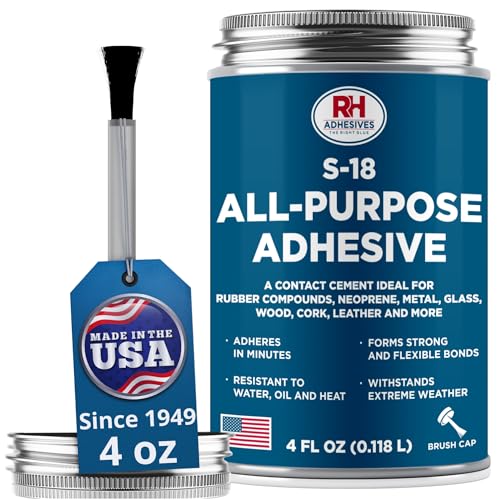
The S-18 is a classic neoprene contact adhesive, not a brittle cyanoacrylate. Its thick liquid body lays down a rubbery film that flexes with the clay as temperatures swing from a sunny windowsill to a cold water drench. Users report successful repairs on leather, metal, and rubber, but its real strength on clay pots is the peel resistance — a broken handle glued with S-18 stays put even when the pot is filled with damp soil.
During testing the adhesive formed a strong film within minutes, though full cure took the advertised 24 hours. The solvent base requires very strong ventilation, but the payoff is a bond that handles summer heat and rain exposure without softening. The 4-ounce can goes a long way for multiple pot repairs.
The main limitation is the brush-in-can applicator, which can gum up if not sealed tightly after each use. For large surface repairs or reattaching heavy handles, this is the most reliable choice in the list.
Why it’s great
- Flexible neoprene bond that absorbs thermal expansion
- Excellent peel strength on porous terracotta
- Heat and water resistant for outdoor pots
Good to know
- Strong solvent odor — use in a ventilated area
- Can thicken in the can if left open
2. Beacon 527 Multi-Use Glue
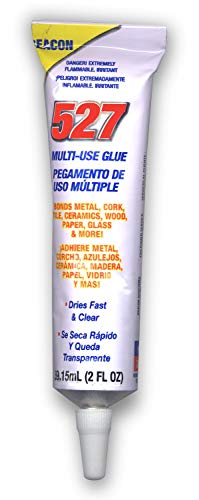
Beacon 527 is a fast-setting synthetic polymer glue that dries crystal clear, making it the top choice for repairing glazed ceramic pots or decorative pottery where an invisible bond matters. It grabs within seconds and fully cures in 24 hours, offering a waterproof and UV-resistant hold that won’t yellow in direct sunlight. The formula is thick enough to stay on vertical pot walls without dripping.
Users consistently praise its ability to bond ceramics, china, and tile — all surfaces structurally similar to glazed clay pots. The 2-ounce bottles come as a 2-pack, giving you backup for multiple repairs. Application requires only a thin layer on one side, and cleanup with toluene works well when the glue is still wet.
The trade-off is that this glue delivers a rigid bond once cured. For large terracotta planters that experience thermal movement, the lack of flexibility can cause the joint to fail over time. It’s best suited for small to medium decorative pots kept indoors or in sheltered outdoor spots.
Why it’s great
- Dries completely clear — invisible repair line
- Sets in minutes, good for quick fixes
- Waterproof and UV resistant
Good to know
- Rigid bond — less suitable for large thermal movement
- Requires toluene for cleanup before curing
3. Endhokn Epoxy Putty

When a clay pot has a chip missing a full fragment, or a crack runs through the base, an epoxy putty fills the void where liquid glue would simply run through. The Endhokn 2-part stick mixes into a moldable paste that can be shaped to rebuild missing edges, fill drainage holes, or reinforce thin pot walls. It cures to a hard, paintable surface that resists water and temperatures from -50°C to 130°C.
Users have successfully repaired ceramic salt and pepper shakers and reattached stone lamp bases — both scenarios similar to pot repair. The 300-gram block includes two pairs of gloves and a scraper, making it a complete repair kit. The putty works both above and below water, so it can seal a leaking fountain pot without draining.
Because it cures into a rigid epoxy, it is not the best choice for repairing thin pot rims or handles that need to flex. It excels at filling and structural reinforcement where bulk is needed. The 30-minute work time gives you plenty of room to sculpt before the epoxy hardens.
Why it’s great
- Fills large gaps and missing chunks
- Can be drilled, sanded, and painted after cure
- Works underwater — perfect for fountain repairs
Good to know
- Rigid cure — not flexible for handle reattachment
- Requires thorough mixing for proper cure
4. LEENEXUS Super Glue for Ceramic
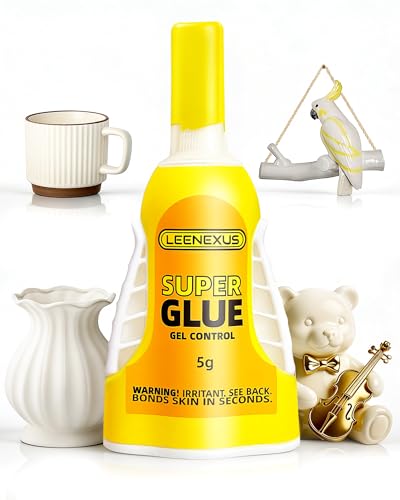
For small, delicate repairs — a chipped mug handle or a cracked figurine base — the LEENEXUS gel cyanoacrylate delivers pinpoint precision. Its thick gel consistency prevents the run-off that plagues thin super glues on vertical clay surfaces. The ergonomic side-squeeze bottle with an anti-clog cap keeps the nozzle clear between uses, a common frustration with other CA glues.
The gel sets in 30-60 seconds and cures transparent with low odor. The dual-molecular interlock tech is marketed as creating a deeper bond than surface-level adhesion, and user reports confirm strong holds on ceramic mugs and porcelain items. It is also rated heat-resistant up to 212°F, so repaired pots can handle warm water without the bond softening.
This is not a gap-filler. If the broken pieces do not fit back together tightly, the gel will not bridge the space. One customer noted failure on rubber shoe soles, which underscores its specialization for rigid porous ceramics. For precise, tight repairs on glazed clay pots, this is the cleanest option.
Why it’s great
- Gel stays put on vertical surfaces — no drips
- Dries clear with low odor
- Anti-clog cap extends bottle life
Good to know
- Not suitable for gap-filling or missing chunks
- Small 5g bottle — limited to a few repairs
5. Plaid Clay Pot Sealer
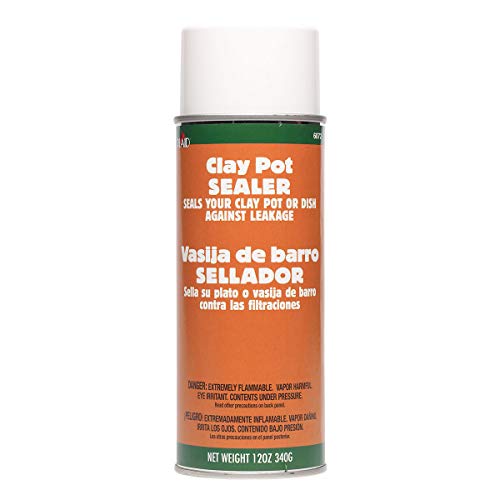
Strictly speaking, this is a sealer rather than an adhesive, but it belongs on this list because it prevents the very problem that leads to needing adhesive. Raw terracotta pots wick moisture through their walls, causing mineral stains, peeling paint, and eventually structural cracking. The Plaid Clay Pot Sealer sprays on a clear, waterproof barrier that keeps the pot’s exterior clean and the moisture inside the soil where it belongs.
Users report excellent results sealing both plain terracotta and hand-painted designs. The spray covers evenly on large pots and dries to a glossy finish that holds up through outdoor summers and indoor winters. For painted pots, the sealer locks in the artwork and prevents weather fading.
Because the sealer is thin, it can run if applied too heavily. Multiple light coats produce the best results. Allow 24 hours between coats for full cure. This is not a repair product — it is a preventative that extends the life of your pots and reduces the need for adhesive repairs down the road.
Why it’s great
- Prevents moisture wicking and staining
- Protects hand-painted designs
- Clear gloss finish enhances natural clay color
Good to know
- Spray can runs easily with heavy application
- Requires 24-hour cure between coats
FAQ
Can I use regular super glue on unglazed terracotta?
Will the adhesive survive outdoor winter temperatures on a patio pot?
Final Thoughts: The Verdict
For most users, the best adhesive for clay pots winner is the RH Adhesives S-18 because its flexible neoprene bond survives the thermal and moisture stress that destroys rigid glues. If you want a quick, invisible fix for a glazed ceramic pot, grab the Beacon 527. And for filling a chipped rim or rebuilding a missing piece, nothing beats the Endhokn Epoxy Putty.

Mo Maruf
I created WellFizz to bridge the gap between vague wellness advice and actionable solutions. My mission is simple: to decode the research and give you practical tools you can actually use.
Beyond the data, I am a passionate traveler. I believe that stepping away from the screen to explore new environments is essential for mental clarity and physical vitality.