Our readers keep the lights on and my smoothie glass nicely filled. As an Amazon Associate, I earn from qualifying purchases.
Loose tiles, cracked grout, and failed repairs are the most common frustrations for anyone working with ceramic surfaces. Whether you are setting new tile or fixing a hollow-sounding floor, the bond you choose determines whether the job lasts a few months or a decade. The wrong adhesive leads to peeling, crumbling, or moisture damage that forces a costly redo.
I’m Mohammad Maruf — the founder and writer behind WellFizz. I have spent years analyzing construction adhesives, thin-set mortars, and epoxy repair kits, comparing their tensile strength, cure times, and real-world application quirks to separate effective products from marketing hype.
After evaluating the market’s leading options across shear strength, drying speed, and versatility, these recommendations represent the most reliable picks for any project. To help you make the right choice, this guide covers the best adhesive for ceramic tile, from pre-mixed mortars to high-strength repair kits.
How To Choose The Best Adhesive For Ceramic Tile
Choosing the right adhesive depends on the project scale, tile size, and whether you are setting new tile or repairing an existing installation. Thin-set mortars work best for new floors and walls, while specialized repair kits handle chips, cracks, and loose tiles without removing the old material. Bonding agents and multi-surface glues offer flexibility for small crafts and mosaic work.
Match the Adhesive to Your Project Type
For installing new ceramic tile up to 8 inches by 8 inches, a pre-mixed thin-set mortar removes the guesswork of mixing powder. For larger tiles or heavy stone, you need a high-bond mortar or a latex additive that boosts tensile strength above 300 PSI. Repair kits focused on chips and cracks use a two-part epoxy that cures hard and resists wear, but they are not suitable for setting entire floors.
Evaluate Cure Time and Workability
Fast-drying formulas set in as little as 20 minutes, allowing you to complete small repairs in a single session. Slower-curing options give you more time to adjust tile placement but require longer before foot traffic. Pre-mixed mortars typically need 24 to 48 hours of drying before grouting, while epoxy repair fillers cure in a few hours to a hard, sandable finish.
Check Subfloor and Surface Compatibility
Adhesives designed for ceramic tile must bond to plywood, concrete, cement board, or existing tile without peeling. Some products include acrylic fortifiers that resist freeze-thaw damage for outdoor use, while others are formulated for indoor floors only. Always verify that the adhesive is rated for the specific subfloor material in your home.
Quick Comparison
On smaller screens, swipe sideways to see the full table.
| Model | Category | Best For | Key Spec | Amazon |
|---|---|---|---|---|
| CUSTOM SimpleSet Thin-Set Mortar | Pre-Mixed Mortar | Small to medium tile installations | No-mix formula, bonds tile up to 8×8″ | Amazon |
| SIKA SikaLatex R | Bonding Admixture | Concrete bonding and mortar fortifier | 500 PSI bond strength, 1 gallon | Amazon |
| Weldbond Multi-Surface Glue | Multi-Surface Adhesive | Mosaic, crafts, and small repairs | Dries clear in 20 minutes, non-toxic | Amazon |
| Ankita Tile Repair Kit | Epoxy Repair Kit | Chipped and cracked tile repair | 8 pigments for color matching, paste form | Amazon |
| Fix-A-Floor Loose Tile Adhesive | Injection Adhesive | Loose and hollow tile re-bonding | Custom precision tips, works under heated floors | Amazon |
In‑Depth Reviews
1. CUSTOM BLDG PRODUCTS SimpleSet Pre-Mixed Thin-Set Mortar

The CUSTOM SimpleSet eliminates the mixing hassle of traditional thin-set powders by coming ready to use straight from the quart container. Its no-mix formula spreads smoothly and bonds ceramic, porcelain, marble, and stone tiles up to 8 inches by 8 inches effectively. For interior wall and floor installations, it provides reliable adhesion without the dust and mess of dry mortar bags.
This gray mortar works best on small to medium projects where you want to avoid wasting dry mix that hardens before you finish. Users report strong initial grab and quick hardening, making it ideal for mosaic sheets and backsplash repairs. The 1-pound quart size covers roughly 2 to 3 square feet at 1/8-inch thickness, so plan accordingly for larger areas.
The product can handle tiles with one side up to 15 inches, but dry time increases significantly beyond the 8-inch recommendation. Stored properly with the lid sealed tight, the mortar remains workable for multiple sessions without drying out in the container. It is a practical choice for DIYers who want professional-grade results without investing in mixing tools.
Why it’s great
- No mixing required — use directly from the container
- Works on ceramic, porcelain, marble, and stone
- Quick grab reduces tile slipping during installation
Good to know
- Limited coverage per quart for larger rooms
- Not recommended for tiles over 15 inches
- Gray color may show through lighter stone
2. SIKA SikaLatex R Concrete Bonding Adhesive

SIKA SikaLatex R is an acrylic-polymer latex admixture designed to be added to Portland-cement mortar or concrete, not used alone. It boosts bond strength to 500 PSI, significantly improving adhesion for ceramic tile installations on concrete and masonry substrates. The white liquid mixes easily and resists damage from repeated freezing and thawing, making it suitable for outdoor applications.
Users report excellent results for concrete repairs, brick replacement, and attaching ceramic fixtures like soap dishes when mixed with quickset or mortar. The 1-gallon size covers a large area when diluted appropriately, and the formula requires no additional dilution before use. It also works as an acrylic coating primer for grout, enhancing the density and toughness of the finished surface.
The full cure time reaches 30 days for maximum strength, so heavy traffic should be avoided for several weeks after application. SikaLatex R has a 1-year shelf life once opened, and drips should be wiped immediately before they harden. For users needing a versatile bonding agent that strengthens cement-based mixes, this is a premium solution that delivers lasting results.
Why it’s great
- 500 PSI bond strength when mixed with mortar
- Resists freeze-thaw damage for outdoor use
- Large 1-gallon size for extensive projects
Good to know
- Requires mixing with cement or mortar — not standalone
- Full cure takes 30 days for maximum strength
- One-year shelf life after opening
3. Weldbond Multi-Surface Strong Glue
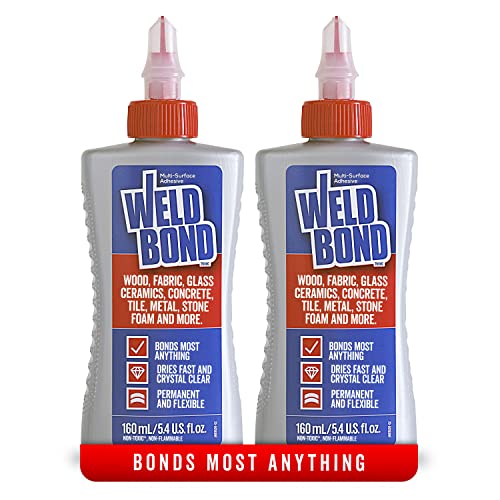
Weldbond is a clear-drying, non-toxic adhesive that bonds ceramic, glass, wood, metal, and stone with exceptional holding power. It sets in just 20 minutes and dries completely clear, making it ideal for mosaic projects where aesthetics matter. The 2-pack provides two 5.4-ounce bottles, which is economical for multiple small projects.
Mosaic artists and crafters consistently praise Weldbond for its low odor, water cleanup, and ability to reposition tiles up to an hour after application. It applies white but dries transparent, leaving no visible residue on finished work. The glue is also weatherproof and resistant to moisture and temperature changes, suitable for both indoor and outdoor crafts.
While not designed for large floor installations or high-moisture areas like shower pans, Weldbond excels for repairs on pottery, tile trim, and decorative surfaces. Users note that a thin layer provides strong adhesion, and the glue remains flexible enough to absorb minor vibrations without cracking. For small repairs and creative work, it is a versatile and safe choice.
Why it’s great
- Dries clear with no visible residue
- Non-toxic, odorless, and safe for kids’ crafts
- Fast-setting in 20 minutes with repositioning window
Good to know
- Not suitable for large floor tile installations
- Requires 24 hours for full cure strength
- Not designed for submerged or wet areas
4. Ankita Tile Repair Kit for Chips & Cracks
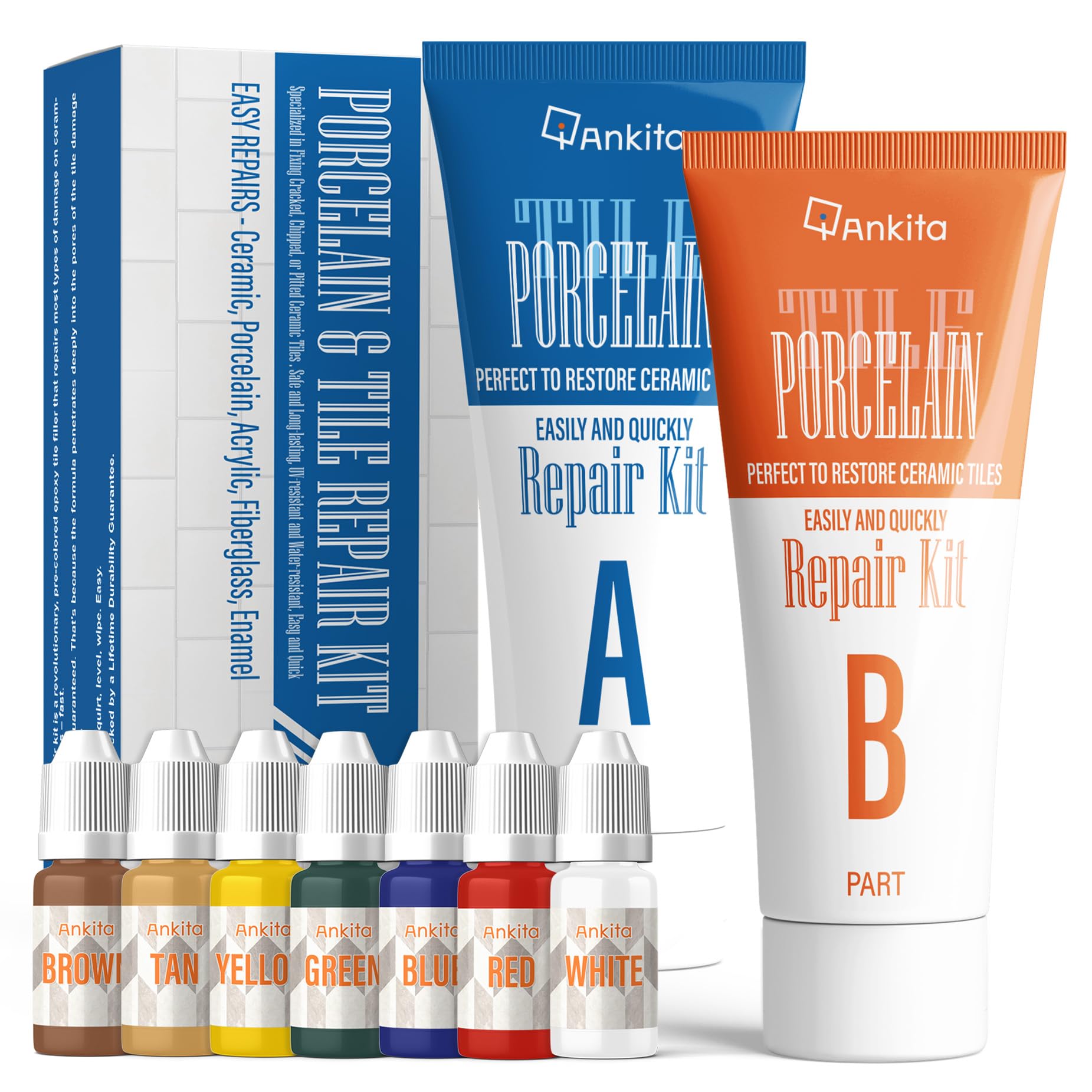
The Ankita Tile Repair Kit uses a two-part epoxy paste system that cures to a super-hard, scratch-resistant finish. It includes eight pigments that allow unlimited color mixing to match white, beige, gray, brown, and other common ceramic tile shades. The kit is designed specifically for repairing chips, cracks, scratches, and small holes on ceramic and porcelain surfaces.
Users report that the epoxy bonds strongly to tile and cures in a few hours, creating a seamless surface that resists water, heat, and stains. The included instruction manual guides beginners through the mixing and application process, making it accessible for first-time repair attempts. The formula uses nanotechnology for a high-gloss finish that blends with surrounding tile.
One limitation is that the color-matched repair can shift to cream or yellow over time, particularly in areas exposed to direct sunlight or heat. Sanding the cured epoxy smooth requires careful work, and rough spots may remain if not polished properly. For small cosmetic repairs on bathroom walls, kitchen backsplashes, and sinks, this kit provides a durable solution when precision matters.
Why it’s great
- Eight pigments allow custom color matching
- Cures to a hard, scratch-resistant finish
- Water and heat resistant for long-lasting repair
Good to know
- May yellow over time in UV-exposed areas
- Sanding required for a smooth finish
- Best for small repairs only, not large areas
5. Fix-A-Floor Loose Tile Repair Adhesive
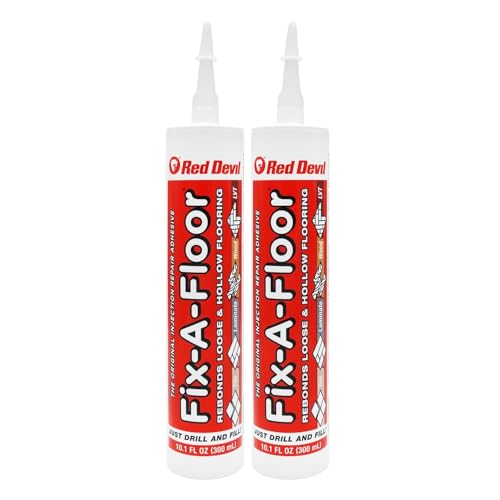
Fix-A-Floor is an injection-based adhesive system designed to re-bond loose and hollow-sounding tiles without removing them. The kit includes precision tip applicators in four sizes (1/8 inch, 3/16 inch, 1/4 inch, and 2.5mm) to match different grout line widths. The extra-strength formula bonds ceramic, porcelain, marble, stone, and even creaky wood floors, with compatibility for underfloor heated areas.
Users follow a straightforward drill-and-fill method: drill small holes in the grout lines, inject the adhesive using a caulk gun, and allow it to spread under the tile. The self-leveling formula flows into voids and cures to a strong, flexible bond that does not dry out or crack over time. Many users report success with 18-inch tiles and larger, noting that the adhesive fills gaps up to 1/8 inch effectively.
Some users find the delivery mechanism challenging — the syringe tips can leak under pressure from a caulk gun, and switching to a 30ml luer-lock syringe is a common workaround. The adhesive is very fluid, so slow, steady pressure is required to avoid lifting the tile further. For homeowners wanting to avoid the mess and cost of tile removal, Fix-A-Floor offers a practical and proven repair method.
Why it’s great
- Re-bonds loose tiles without removal
- Four precision tips fit any grout line width
- Works with underfloor heating systems
Good to know
- Delivery tips may leak under pressure
- Requires a caulk gun for proper application
- Adhesive is very fluid; squeeze slowly
FAQ
Can I use regular construction adhesive for ceramic tile?
How long does thin-set mortar take to dry before grouting?
What adhesive works best for loose floor tiles?
Is epoxy better than thin-set for ceramic tile repair?
Final Thoughts: The Verdict
For most users, the best adhesive for ceramic tile winner is the CUSTOM SimpleSet Pre-Mixed Thin-Set Mortar because it balances ease of use with reliable bonding for small to medium tile installations. If you need a heavy-duty bonding agent for concrete fortification, grab the SIKA SikaLatex R. And for repairing loose or hollow floor tiles without removal, nothing beats the Fix-A-Floor Loose Tile Adhesive.

Mo Maruf
I created WellFizz to bridge the gap between vague wellness advice and actionable solutions. My mission is simple: to decode the research and give you practical tools you can actually use.
Beyond the data, I am a passionate traveler. I believe that stepping away from the screen to explore new environments is essential for mental clarity and physical vitality.