Our readers keep the lights on and my smoothie glass nicely filled. As an Amazon Associate, I earn from qualifying purchases.
Finding the right advice for parenting a child with ADHD can feel like searching for a map in a fog—every book promises a path, but which one actually leads to calmer mornings and fewer meltdowns? The right guide doesn’t just explain the diagnosis; it delivers actionable strategies that fit into the beautiful, chaotic reality of family life, transforming frustration into understanding.
I’m Mohammad Maruf — the founder and writer behind WellFizz. For over a decade, my research has focused on analyzing consumer data and technical specifications within the wellness space, specializing in distilling dense clinical information into clear, practical frameworks for everyday life.
This guide is the result of a deep-dive analysis of the most recommended titles, cross-referencing expert authorship with thousands of real parent reviews to surface the books that genuinely change dynamics at home. best adhd books for parents are those that meet you where you are, whether you need foundational science or a daily playbook for peace.
How To Choose The Best ADHD Book For Parents
Not all ADHD parenting books are created equal. Some are encyclopedic references, others are gentle companions, and a few are tactical manuals for specific battles. Your choice should hinge on where you are in your journey, your child’s age, and the kind of guidance that resonates with your parenting style.
Author Credibility & Approach
Look for authors who are both clinically credentialed and personally invested—be it as a therapist, educator, researcher, or parent of a child with ADHD. The most effective books blend evidence-based science with compassionate, real-world application. Avoid titles that rely on generic parenting tips; ADHD requires tailored strategies that address neurological differences in motivation, memory, and emotional regulation.
Scope & Practicality
Consider your immediate needs. Are you seeking a comprehensive overview of ADHD (causes, brain science, treatment options) or a focused toolkit for improving homework routines and reducing conflict? Books heavy on theory are invaluable for understanding the “why,” while workbook-style guides with checklists and scripts provide the “how.” Many parents benefit from starting with one of each type.
Child’s Age & Specific Challenges
The strategies that work for a frustrated toddler are different from those for a forgetful middle-schooler or an overwhelmed teen. Some books offer a broad age range, while others target specific developmental stages. Also, consider if your child has co-occurring conditions like anxiety or explosive behaviors, as some texts specialize in these complex overlaps.
Quick Comparison
On smaller screens, swipe sideways to see the full table.
| Model | Type | Best For | Key Feature | Amazon |
|---|---|---|---|---|
| Taking Charge of ADHD | Comprehensive Guide | Foundational, science-based understanding | Authoritative & research-dense | Amazon |
| Smart but Scattered | Skills Framework | Building executive function skills | Actionable assessment tools | Amazon |
| Mindful Parenting for ADHD | Mindfulness Guide | Reducing parent stress & reactivity | Calm-focused exercises & worksheets | Amazon |
| The Essential Guide to Raising Complex Kids | Coaching Manual | ADHD with anxiety or other layers | Parent-as-coach mindset shift | Amazon |
| 12 Principles for Raising a Child with ADHD | Principles Guide | Clear, memorable parenting pillars | Science-backed simple principles | Amazon |
| Smart but Scattered Teens | Teen Focus | Adolescents struggling with independence | Teen-involved assessment & planning | Amazon |
| Parenting Kids and Teens with ADHD | Practical Handbook | Holistic support across development | Educational & emotional well-being focus | Amazon |
| What Your ADHD Child Wishes You Knew | Perspective Shift | Understanding the child’s inner experience | Direct quotes from kids & the “5 C’s” method | Amazon |
| The Explosive Child | Collaborative Method | Chronic inflexibility & explosive behaviors | Collaborative & Proactive Solutions (CPS) | Amazon |
| The ADHD Parenting Guide for Boys | Gender-Specific | Boys’ behavioral expression | Scenario-based responses for common issues | Amazon |
| Scattered to Focused | Executive Function Starter | Accessible entry-level strategies | Relatable, heart-felt tone | Amazon |
In‑Depth Reviews
1. Taking Charge of ADHD

Authored by the preeminent expert Dr. Russell Barkley, this book is often considered the definitive scientific resource for parents. It doesn’t just skim the surface; it delves deep into the neurobiology of ADHD, explaining it as a developmental disorder of executive function. This foundation is critical for moving from seeing behavior as intentional defiance to understanding it as a skill deficit.
The guide is meticulously organized, covering everything from diagnosis and medication to managing behavior at home and school. Its evidence-based approach provides immense credibility, helping parents advocate effectively with schools and healthcare providers. Readers consistently note it transforms their perspective, replacing guilt and frustration with a structured, compassionate understanding.
While dense, its value lies in its completeness. It’s the book you return to as new challenges arise, offering a reliable reference point. For parents who want to truly master the subject, not just apply quick fixes, this is the essential text that underpins all other advice.
Why it’s great
- Unrivaled scientific authority and depth of research.
- Empowers parents to become informed advocates.
- Covers the full lifespan from childhood to adulthood.
Good to know
- The dense, academic style can be overwhelming for some.
- More focused on explanation than step-by-step daily scripts.
2. Smart but Scattered

Dawson and Guare’s groundbreaking work shifts the focus from the broad label of “ADHD” to the specific, trainable “executive skills” that underlie it—like organization, time management, and emotional control. This book provides parents with a clear framework to identify their child’s unique profile of strengths and weaknesses, which is incredibly empowering.
The included assessment questionnaires are a standout feature, allowing you to pinpoint exactly where breakdowns occur. Each chapter then targets a specific skill with concrete, incremental strategies. This methodical approach turns overwhelming challenges into manageable, solvable problems, which both parents and children find relieving.
It’s highly practical, filled with real-life examples and adaptable interventions for home and school. The tone is hopeful and constructive, reinforcing that these skills can be taught and strengthened over time. It’s less about pathology and more about building capability.
Why it’s great
- Provides a clear, actionable framework for skill-building.
- Excellent assessment tools to personalize your approach.
- Strategies are practical and easily integrated into daily routines.
Good to know
- Can feel workbook-like and requires active participation from the parent.
- Primarily focused on the elementary to middle school age range.
3. Mindful Parenting for ADHD
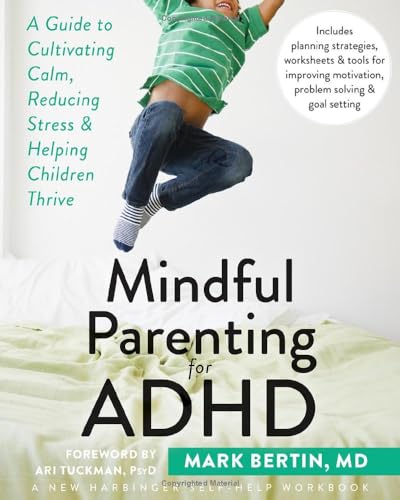
Dr. Mark Bertin addresses a critical but often overlooked component: the parent’s own stress and reactivity. This guide operates on the principle that a regulated adult is the best tool for helping a dysregulated child. It seamlessly blends ADHD science with mindfulness practices tailored for the unique frustrations of parenting neurodiverse kids.
The book is structured with end-of-chapter worksheets, action plans, and guided mindfulness exercises, making it an interactive experience. It teaches you to pause before reacting, observe your child’s behavior without immediate judgment, and respond from a place of intention rather than exhaustion.
Parents report that this book doesn’t just change their interactions with their child; it changes their internal experience, reducing burnout and fostering a more peaceful home environment. It’s the perfect companion to more behavioral-focused texts, ensuring you have the emotional capacity to implement other strategies.
Why it’s great
- Uniquely focuses on parental self-regulation and mental space.
- Practical exercises and worksheets facilitate real change.
- Compassionate tone reduces feelings of isolation and blame.
Good to know
- The mindfulness focus may not appeal to those seeking direct behavioral scripts.
- Requires a commitment to personal practice for full benefit.
4. The Essential Guide to Raising Complex Kids

Elaine Taylor-Klaus, a parent coach and founder of Impact Parents, writes specifically for those navigating ADHD alongside anxiety, autism, or other “layers.” This book moves beyond standard ADHD advice by teaching a “coach approach” to parenting. It empowers you to guide your child toward solving their own problems, fostering independence and self-awareness.
The core philosophy is that children are not broken and that sustainable change comes from collaboration, not control. It’s filled with relatable quotes from parents, validating the unique exhaustion of raising a complex child while offering a hopeful, pragmatic path forward. The emphasis is on setting realistic expectations and finding peace first, as a precursor to finding solutions.
This guide is ideal for parents who feel traditional methods have failed and who are ready for a deeper, more relational shift in their parenting identity. It’s less about compliance and more about connection and capability-building.
Why it’s great
- Specifically addresses the overlap of ADHD with anxiety and other conditions.
- Promotes a sustainable, relationship-focused coaching mindset.
- Exceptionally validating and reduces parental isolation.
Good to know
- The coaching model requires a significant shift in parent mindset and habits.
- Less focused on immediate, concrete behavioral interventions.
5. 12 Principles for Raising a Child with ADHD

This book distills vast amounts of research into twelve clear, memorable principles for effective ADHD parenting. It successfully bridges the gap between science and daily application, explaining the neurological “why” behind each principle before showing the “how.” This structure makes complex information digestible and easy to recall in stressful moments.
Parents appreciate that it cuts through the noise, offering a logical, consistent framework. The principles cover everything from promoting skill development and using rewards effectively to managing relationships with schools. It feels like having a trusted, knowledgeable advisor who helps you prioritize what matters most.
The tone is both informative and supportive, emphasizing that applying these principles logically, not emotionally, leads to better outcomes. It’s an excellent choice for parents who want evidence-based guidance without wading through an encyclopedia.
Why it’s great
- Distills complex science into an actionable, memorable framework.
- Logical, non-emotional approach reduces parental stress.
- Excellent for creating a consistent, predictable home environment.
Good to know
- Some may find the principle-based approach less scenario-specific.
- Requires the parent to adapt the principles to their unique situations.
6. Smart but Scattered Teens

This is the essential follow-up to the original *Smart but Scattered*, expertly adapted for the adolescent brain and the push for independence. The strategies here are less about parental management and more about coaching your teen to self-manage. It includes assessments for both parent and teen to complete, facilitating insightful and non-confrontational conversations about strengths and challenges.
The book tackles teen-specific issues like driving, dating, college planning, and technology use through the lens of executive skill development. It provides a respectful framework for stepping back as a “consultant” while still providing the scaffolding a teen with ADHD needs to succeed.
By involving the teen in their own skill assessment and plan creation, it promotes buy-in and self-awareness, which are critical for long-term success. This book is a lifeline for parents navigating the tumultuous teen years, offering a path to reduce conflict and build competence.
Why it’s great
- Specifically addresses the unique executive demands of adolescence.
- Designed to involve teens in their own growth, promoting independence.
- Practical for real-world issues like homework, jobs, and social life.
Good to know
- Requires a teen who is somewhat receptive to collaboration.
- The process can feel slow compared to direct parental intervention.
7. Parenting Kids and Teens with ADHD
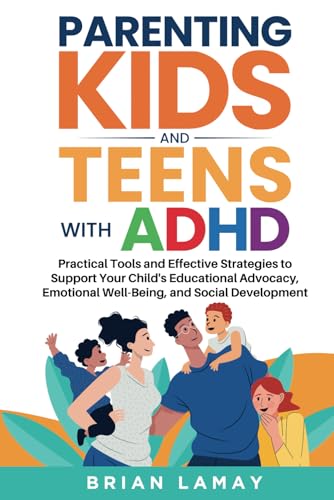
Brian Lamay’s guide offers a well-rounded, compassionate overview that spans from childhood through the teen years. It successfully balances myth-busting, scientific explanation, and practical strategy across the key domains of a child’s life: education, emotional health, and social development.
The book is praised for its accessible tone and its use of case studies to illustrate concepts. It helps parents understand gender differences in ADHD presentation—a crucial insight often missed—and provides clear guidance on creating ADHD-friendly home environments and routines.
It serves as a reliable, single-volume reference for parents who want a broad understanding without getting lost in excessive detail. The focus on advocacy and emotional well-being makes it a supportive and empowering read for those early in their journey or looking for a refresher.
Why it’s great
- Comprehensive coverage across developmental stages and life domains.
- Clear, accessible writing demystifies ADHD science.
- Strong focus on advocacy and nurturing emotional resilience.
Good to know
- Broad scope means less depth on any single topic than specialized books.
- Some readers noted minor editing issues in the text.
8. What Your ADHD Child Wishes You Knew

Dr. Sharon Saline centers the child’s experience in this impactful book, weaving in direct quotes from kids with ADHD to illuminate their inner world of frustration, shame, and hope. This powerful device instantly builds empathy, helping parents see situations from their child’s point of view and dismantling the myth of laziness or intentional disobedience.
The book is built around the practical “5 C’s” framework: Self-Control, Compassion, Collaboration, Consistency, and Celebration. This offers a simple, memorable structure for positive interactions. The strategies are relationship-focused, designed to reduce power struggles and build a team mentality between parent and child.
For parents feeling stuck in a cycle of nagging and negative reactions, this book provides a compassionate reset. It’s particularly powerful for rebuilding connection and trust after periods of conflict.
Why it’s great
- Powerful empathy-building through the voices of children with ADHD.
- The “5 C’s” provide an easy-to-remember, positive interaction model.
- Focuses on healing the parent-child relationship as the foundation for change.
Good to know
- Less focused on the neurological/science explanation of ADHD.
- Strategies require a high degree of parental self-regulation.
9. The Explosive Child

Dr. Ross Greene’s seminal work introduces Collaborative & Proactive Solutions (CPS), a revolutionary approach for children who are frequently frustrated and “chronically inflexible.” The core philosophy is “Kids do well if they can.” If they’re not doing well, they’re lacking a skill, and our job is to figure out what that skill is and help them learn it.
The CPS model involves a structured conversation to collaboratively solve problems that cause meltdowns. It moves away from reward/punishment systems for children who can’t meet expectations in the moment. This method has been transformative for families dealing with severe behavioral challenges, reducing explosions and teaching critical problem-solving skills.
While applicable to many children with ADHD, it is particularly vital for those whose inflexibility leads to frequent, intense conflicts. It’s a game-changer for restoring peace and teaching lifelong skills.
Why it’s great
- Life-changing approach for reducing severe, explosive conflicts.
- Teaches children problem-solving and flexibility skills.
- Shifts dynamic from adversarial to collaborative.
Good to know
- The CPS process requires significant patience and practice to implement well.
- The title can feel stigmatizing, though the content is profoundly compassionate.
10. The ADHD Parenting Guide for Boys
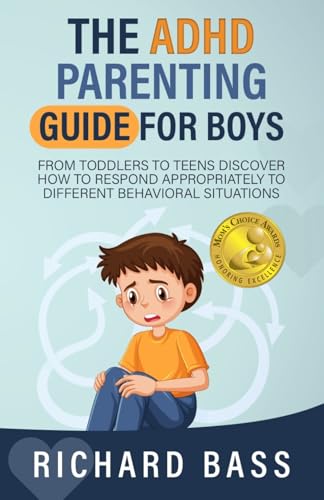
This guide acknowledges that ADHD often manifests differently in boys, frequently with more externalized hyperactivity and impulsivity. It provides a targeted resource for parents navigating the specific behavioral and social challenges their sons may face from toddlerhood through the teen years.
The book is structured to help parents “respond appropriately to different behavioral situations,” offering concrete scripts and strategies for common struggles. This scenario-based approach is helpful for parents in the moment, providing a playbook for defusing tension and teaching better habits.
While the principles apply broadly, the focus on boys’ typical expression of ADHD makes it feel specifically relevant and relatable for parents of sons. It’s a straightforward, practical manual for managing daily life.
Why it’s great
- Addresses the common behavioral presentation of ADHD in boys.
- Practical, situation-specific advice for immediate use.
- Easy-to-read and accessible for busy parents.
Good to know
- Limited utility for parents of girls or those seeking deep scientific insight.
- Strategies are more reactive/corrective than proactive/skill-building.
11. Scattered to Focused
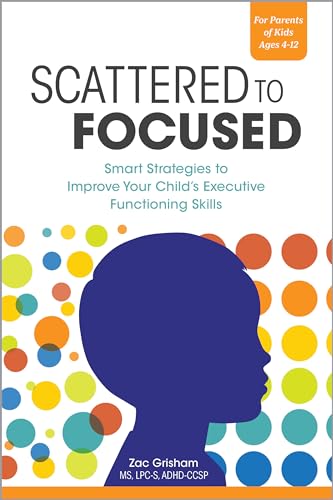
Zac Grisham’s book servesas an excellent, heart-felt introduction to executive functioning strategies. Written from the dual perspective of a therapist and someone who experienced ADHD himself, it demystifies concepts with warmth and relatability. It’s particularly effective for parents who are newly diagnosed or feeling overwhelmed by more clinical texts.
The strategies are presented in an easy-to-digest manner, focusing on improving skills like working memory, emotional regulation, and time management in both home and school settings. It connects with other popular parenting philosophies, making it a gentle on-ramp to the world of ADHD literature. Parents report feeling seen and less alone, which in itself is a powerful first step.
While it may not have the depth of more comprehensive guides, its strength is in its accessibility and compassionate tone. It’s the book that can provide immediate hope and a few solid strategies to start with, building confidence to tackle more complex materials later.
Why it’s great
- Highly relatable and compassionate tone reduces initial overwhelm.
- Excellent, digestible introduction to executive function concepts.
- Practical strategies that are easy to implement immediately.
Good to know
- Those with prior knowledge may find it too basic.
- Less comprehensive on medical or school advocacy topics.
Understanding the Specs
When evaluating ADHD parenting books, think of them as tools with different specifications. Knowing these core attributes helps you select the right “tool” for your current family dynamic and challenges.
Authoritative Depth vs. Practical Scripts
Some books are built on decades of clinical research and aim to give you a master’s-level understanding of ADHD neuroscience and treatment (Authoritative Depth). Others prioritize ready-to-use scripts, checklists, and step-by-step plans for common conflicts (Practical Scripts). Your need might shift from one to the other over time.
Framework vs. Anecdotal Advice
A strong book provides a consistent, repeatable framework—like the “5 C’s” or the “Collaborative Problem Solving” model—that you can apply to various situations. Books based mainly on anecdotal stories can be validating but may lack the structured methodology needed for lasting change. A clear framework becomes your parenting compass.
FAQ
Which ADHD book is best for a parent who is completely new to this?
I need help with my teen’s forgetfulness and school disorganization. What should I read?
My child has ADHD and severe anxiety. Is there a book that addresses both?
Are these books a substitute for therapy or medical advice?
Final Thoughts: The Verdict
For most people, the best adhd books for parents winner is the Taking Charge of ADHD because it provides the authoritative, scientific foundation that makes all other strategies make sense. If you want actionable steps to build life skills, grab the Smart but Scattered. And for managing your own stress to break the cycle of reactivity, nothing beats the Mindful Parenting for ADHD. Remember, the best book is the one you actually read and apply; start where you are, and let it guide you toward a more peaceful, understanding relationship with your amazing child.

Mo Maruf
I created WellFizz to bridge the gap between vague wellness advice and actionable solutions. My mission is simple: to decode the research and give you practical tools you can actually use.
Beyond the data, I am a passionate traveler. I believe that stepping away from the screen to explore new environments is essential for mental clarity and physical vitality.