Our readers keep the lights on and my smoothie glass nicely filled. As an Amazon Associate, I earn from qualifying purchases.
Choosing the right device to monitor your daily movement and health metrics can feel overwhelming, with countless options promising everything from basic step counts to advanced physiological insights. The truth is, the effectiveness of an activity tracker hinges on how well its sensors, software, and design align with your personal health narrative.
I’m Mohammad Maruf — the founder and writer behind WellFizz. With over a decade of analyzing wearable tech specifications and consumer health data, I focus on translating complex metrics into actionable insights for everyday wellness.
After dissecting the latest models and sifting through thousands of data points, I’ve structured this research to help you navigate the core differences in performance and value. This guide cuts through the noise by evaluating core performance metrics to help you identify the best activity trackers for your unique health journey.
How To Choose The Best Activity Trackers
Selecting an activity tracker isn’t just about picking the one with the most features; it’s about finding the device that reliably captures the data you care about. A mismatch between a tracker’s capabilities and your lifestyle can lead to frustration or inaccurate feedback. Let’s break down the critical elements to consider.
Sensor Accuracy and Data Reliability
The core purpose of a tracker is to provide trustworthy data. Look for devices with validated optical heart rate sensors and accelerometers. Note that wrist-based pedometers can overcount steps during non-walking arm movements, and blood pressure readings from wearables are estimations, not medical-grade measurements. Prioritize models with consistent performance in user reviews over those claiming expansive but unverified health metrics.
Battery Life and Charging Convenience
Frequent charging disrupts continuous health monitoring, especially for sleep tracking. Mid-range and premium trackers often offer one to three weeks of battery, while budget models may last around a week. Consider charging mechanisms: magnetic cables are convenient, while built-in USB plugs offer portability but can compromise water resistance over time.
Feature Alignment with Your Goals
Define your primary use case. Are you motivating daily movement, training for specific sports, managing stress, or monitoring family activity? A simple pedometer suffices for basic step goals, while swimmers need 5ATM or IP68 waterproofing. For comprehensive health insights, seek trackers with robust sleep analysis, heart rate variability, and stress tracking algorithms.
Ecosystem and App Experience
The companion app is where your data comes to life. A clunky or limited app can undermine even the best hardware. Evaluate apps for data visualization depth, goal setting flexibility, and social features. Check compatibility with your smartphone’s OS and whether the app syncs with other health platforms you use, like Google Fit or Apple Health.
Quick Comparison
On smaller screens, swipe sideways to see the full table.
| Model | Type | Best For | Key Feature | Amazon |
|---|---|---|---|---|
| XIAOMI Mi Smart Band 10 | Smart Band | Value-seekers wanting premium features | 21-day battery & AMOLED display | Amazon |
| Amazfit Band 7 | Fitness Tracker | Users wanting Alexa integration | 18-day battery & 120 sports modes | Amazon |
| Fitbit Inspire 3 | Health Tracker | Comprehensive health monitoring | Stress management & sleep tracking | Amazon |
| Gydom Smart Watch | Smart Watch | Women wanting style and calls | 1.8″ display & Bluetooth calls | Amazon |
| FITVII Fitness Tracker (H56) | Smart Watch | Mid-range health tracking | Blood pressure monitoring | Amazon |
| FITVII Slim Fitness Tracker | Slim Tracker | Discrete daily wear | Slim design & blood oxygen | Amazon |
| LIVIKEY Fitness Tracker | Fitness Tracker | Budget entry-level | IP68 waterproof & basic tracking | Amazon |
| ENGERWALL Fitness Tracker | Fitness Tracker | Slim design enthusiasts | Slim band & heart rate monitor | Amazon |
| ZURURU Fitness Tracker | Fitness Tracker | Budget with blood pressure | Built-in USB charging | Amazon |
| Fitbit Ace 2 | Kids Tracker | Children 6+ | Swim proof & virtual badges | Amazon |
| Fitbit Ace 3 | Kids Tracker | Kids with longer battery | 8-day battery & animated faces | Amazon |
In‑Depth Reviews
1. XIAOMI Mi Smart Band 10
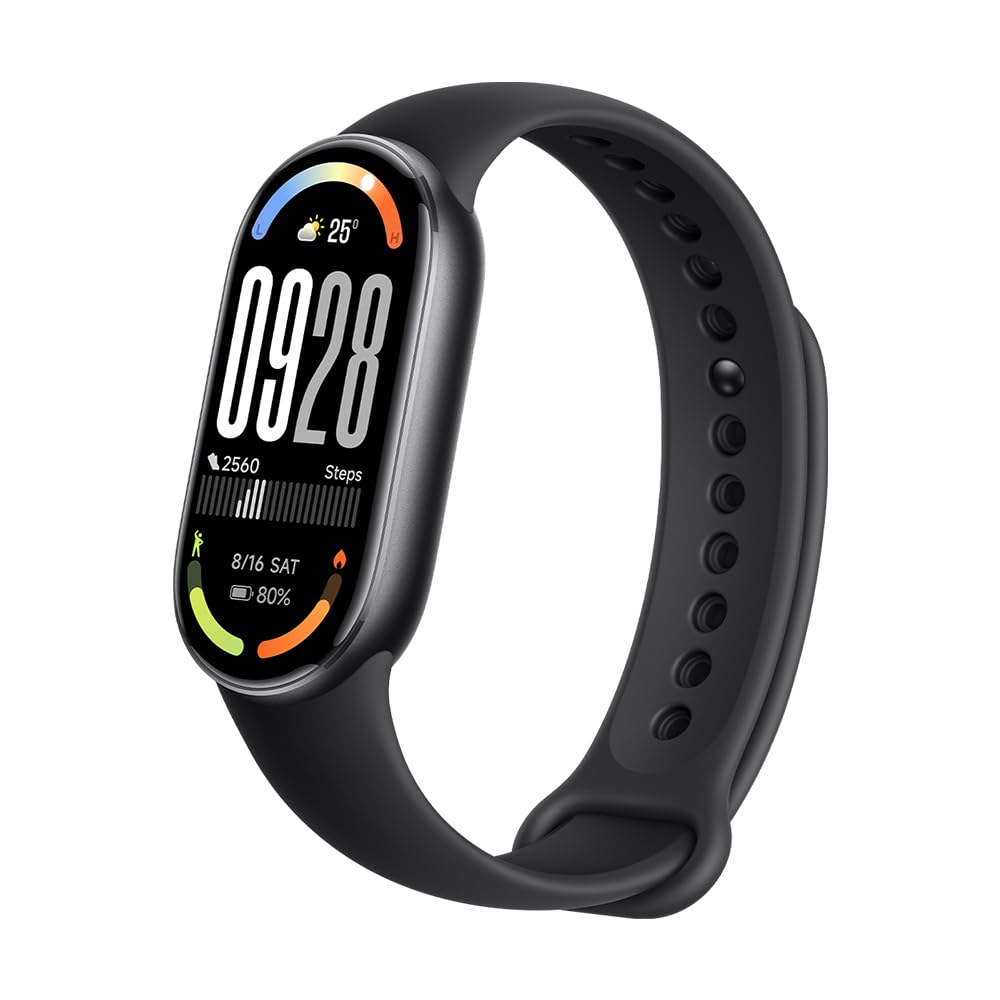
The Xiaomi Mi Smart Band 10 represents a significant leap in value-oriented wearables, blending a premium AMOLED display with exceptional battery longevity. Its 1.72-inch screen boasts 1500 nits brightness for outdoor readability and a 73% screen-to-body ratio, offering a visually immersive experience typically found in higher-priced segments.
Under the hood, it provides comprehensive 24/7 health monitoring, including heart rate, blood oxygen, and detailed sleep stage analysis. The new high-precision electronic compass enhances swimming tracking accuracy, while over 100 sports modes cater to diverse workout routines. The integration with HyperOS ensures a smooth, responsive interface for daily interactions.
User feedback consistently highlights the device’s impressive stamina, often lasting nearly three weeks on a single charge, which reduces charging interruptions. The companion Mi Fitness app, while robust, primarily uses metric units, requiring a sync with Google Fit for imperial measurements—a minor workflow consideration for some users.
Why it’s great
- Outstanding battery life that minimizes maintenance
- Vibrant, sunlight-readable AMOLED display
- Accurate heart rate and sleep tracking for its class
- Swim-proof design with improved directional tracking
Good to know
- App defaults to metric measurements without third-party sync
- The screen can be prone to micro-scratches without a protector
- GPS relies on smartphone connection
2. Amazfit Band 7

Amazfit Band 7 stands out by packing smart assistant capabilities and a expansive sports library into a sleek band form factor. The 1.47-inch always-on AMOLED display is 112% larger than its predecessor, making navigation and data glanceability significantly easier without increasing bulk.
Health monitoring is holistic, offering continuous heart rate, blood oxygen, stress tracking, and menstrual cycle logging. The 5ATM water resistance makes it a reliable companion for swimmers, while the 120 sports modes provide detailed metrics for everything from running to dance. The built-in Amazon Alexa allows for voice-controlled timers, queries, and smart home commands directly from your wrist.
Reviews praise its battery life, consistently delivering over two weeks of use, and its accurate sleep stage detection. Some users note that the band’s closure can occasionally catch on sleeves, and the device must be connected to its charger to power on if fully shut down, which is a consideration for travelers.
Why it’s great
- Useful Alexa integration for hands-free control
- Very good battery life for an always-on display
- Wide variety of tracked sports and activities
- Comfortable, lightweight design for 24/7 wear
Reviews praise its battery life, consistently delivering over two weeks of use, and its accurate sleep stage detection. Some users note that the band’s closure can occasionally catch on sleeves, and the device must be connected to its charger to power on if fully shut down, which is a consideration for travelers.
Why it’s great
- Useful Alexa integration for hands-free control
- Very good battery life for an always-on display
- Wide variety of tracked sports and activities
- Comfortable, lightweight design for 24/7 wear
Good to know
- Band closure design can snag and potentially come loose
- No way to power on without the charging cable
- GPS is connected, not built-in
3. Fitbit Inspire 3

The Fitbit Inspire 3 focuses on holistic wellness rather than just fitness, offering tools for stress management, sleep improvement, and activity encouragement. Its standout feature is the Daily Readiness Score, which suggests when your body is primed for exercise or needs recovery based on your sleep, activity, and heart rate variability.
It automatically tracks sleep stages, provides a detailed Sleep Score, and includes a personalized Sleep Profile over time. The device also monitors stress via a Stress Management Score and offers guided breathing sessions. With up to 10 days of battery and water resistance to 50 meters, it supports consistent wear without constant charging.
Users appreciate its slim, lightweight profile and the depth of insights within the Fitbit app, which is one of the most polished in the industry. The included 6-month Premium trial unlocks advanced analytics. Some note that the band’s pin hinge can be a point of failure over time, and the small screen, while discreet, shows limited data at a glance.
Why it’s great
- Comprehensive stress and sleep tracking with actionable scores
- Slim, comfortable design ideal for 24/7 wear
- Mature, user-friendly app with strong social features
- Reliable automatic exercise and sleep detection
Good to know
- Premium features require a subscription after trial
- The band’s connection point can be less durable
- Small display limits on-wrist data visualization
4. Gydom Smart Watch
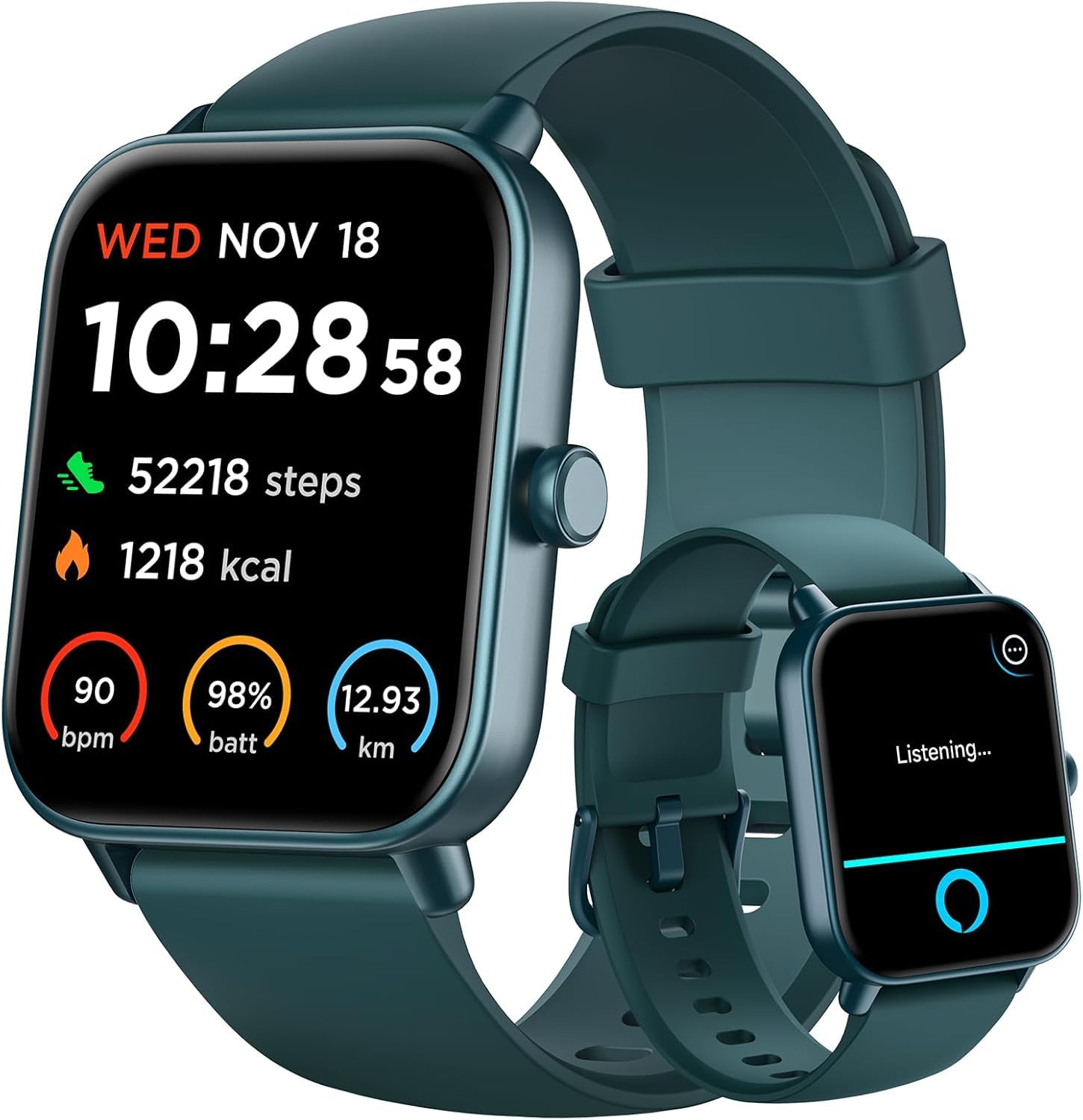
This smartwatch from Gydom merges a fashion-forward design with communication-centric features, including the ability to make and answer calls directly from your wrist. The 1.8-inch HD touch screen offers ample space for interacting with notifications, controlling music, and viewing health stats, all wrapped in a stylish case.
It provides 24/7 health monitoring for heart rate, blood oxygen, and sleep, alongside over 100 sports modes. The built-in Alexa voice assistant adds smart functionality for queries and commands. With a week of battery life and IP68 waterproofing, it’s designed for all-day use and can handle splashes and rain.
Reviewers are often surprised by the feature set at its price point, praising the call quality and the vibrant, customizable watch faces. Some mention that the companion app involves promotional nudges and that certain watch faces may require additional purchase, which can affect the user experience.
Why it’s great
- Direct call functionality from the watch is convenient
- Large, colorful display is easy to read and interact with
- Stylish design that resembles more expensive smartwatches
- Includes Alexa for voice commands
Good to know
- App experience includes promotions and upsells
- Battery life is shorter than dedicated fitness bands
- Health sensor accuracy is typical for the segment
5. FITVII Fitness Tracker (H56)

The FITVII H56 offers a mid-range feature set, including blood pressure estimation and a bright 1.69-inch color display, at an accessible price. It tracks heart rate, blood oxygen, sleep, and over 20 sports modes, presenting data on a screen that’s clear and responsive to touch.
Smart notifications, weather display, and practical functions like sedentary reminders and music control make it a useful daily companion. The magnetic charging system is user-friendly, and the IP68 rating provides peace of mind against water exposure. Battery life typically stretches to a week or more with normal use.
User experiences highlight the attractive display and the convenience of having multiple health metrics in one device. However, accuracy, particularly for step counting and blood pressure, can vary. The step algorithm may undercount when hands are stationary, like when pushing a stroller, which is a common limitation for wrist-based pedometers.
Why it’s great
- Large, vibrant color display for easy reading
- Includes blood pressure monitoring (for trend observation)
- Practical smart features and solid battery life
- Comfortable design with interchangeable bands
Good to know
- Step count can be inaccurate during non-arm-swing activities
- Blood pressure readings are estimates, not medical-grade
- GPS requires smartphone connection
6. FITVII Slim Fitness Tracker

This tracker prioritizes a discreet, jewelry-like design with a slim oval case and a narrow 16mm band, making it one of the more subtle options on the market. It doesn’t sacrifice core features, offering 24/7 heart rate, blood oxygen, and blood pressure monitoring, along with sleep tracking and smart notifications.
With seven sports modes and a week-long battery, it covers the essentials for daily activity monitoring. The companion app allows for watch face customization and detailed health data review. Its slim form factor is particularly appealing for those with smaller wrists or who prefer a less obtrusive wearable.
Feedback indicates that the slim band is comfortable for continuous wear, including during sleep. Some users report that the band’s material may not be as durable as hoped, and the blood pressure reading, like many optical estimates, should be used for tracking trends rather than exact values.
Why it’s great
- Very slim and lightweight, almost unnoticeable on the wrist
- Tracks key health metrics in a minimalist package
- Comfortable for 24/7 wear and sleep tracking
- Easy-to-use touch interface on a clear display
Good to know
- The band may show wear or break over time
- Limited sports modes compared to broader models
- Health metrics are for wellness guidance only
7. LIVIKEY Fitness Tracker
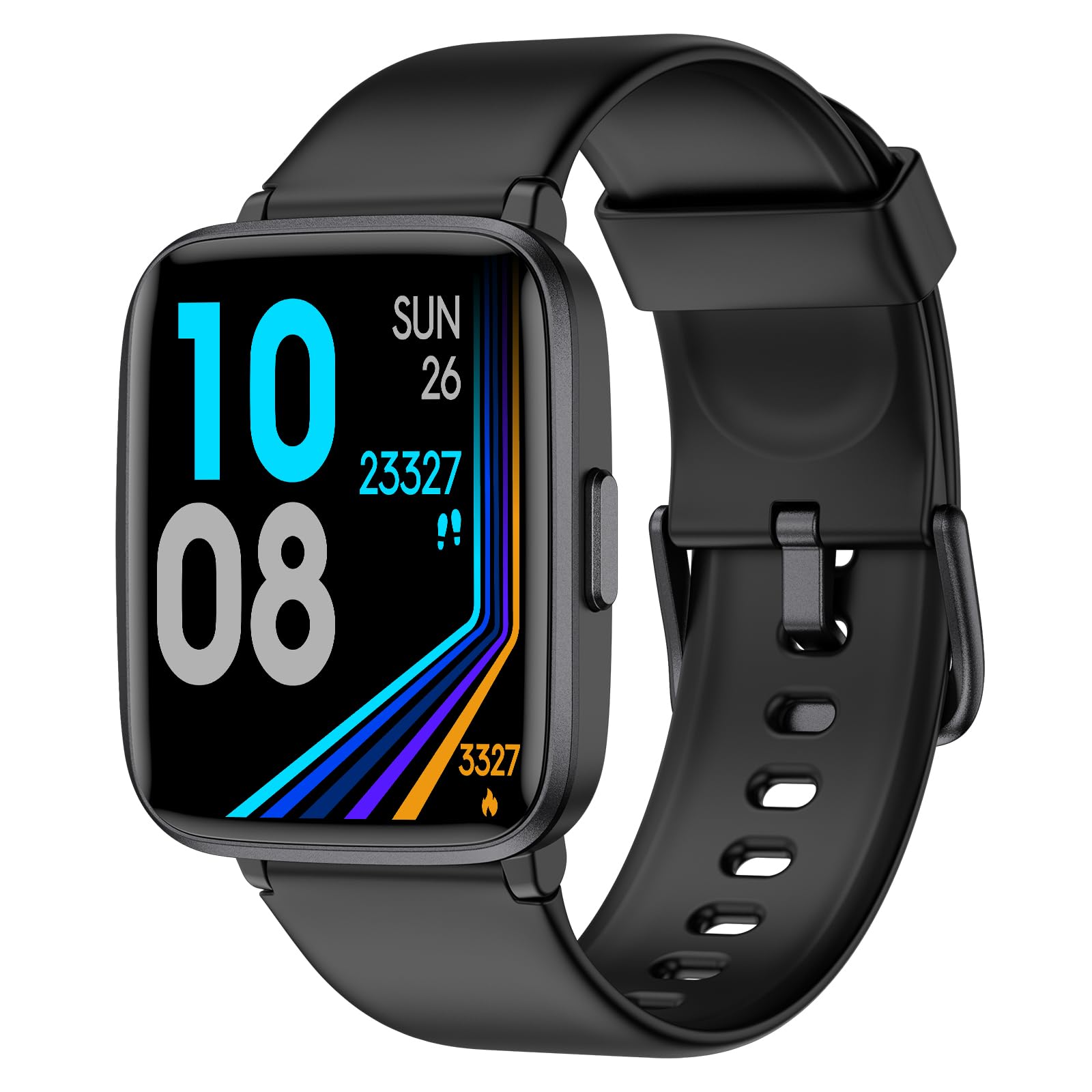
The LIVIKEY tracker is a compelling entry-level option that delivers the fundamental features of step counting, heart rate monitoring, and sleep tracking. Its 1.3-inch display is functional, and the IP68 rating means it can withstand sweat, rain, and handwashing, making it suitable for most daily activities.
It offers nine sport modes, call and message notifications, and a battery life of five to seven days. The setup is straightforward via Bluetooth, and the companion app provides basic data analysis. For the cost, it represents a low-risk introduction to activity tracking.
Users appreciate its value, often comparing it favorably to more expensive brands for basic functionality. Common critiques center on pedometer accuracy—it can overcount steps based on arm movement rather than leg motion—and sleep tracking that may not capture all wake periods, which is typical for budget sensors.
Why it’s great
- Extremely affordable way to start tracking activity
- Rugged IP68 waterproof build for everyday use
- Provides basic heart rate and sleep data
- Long battery life for the category
Good to know
- Step count can be inaccurate during stationary arm movement
- Sleep tracking may not be highly detailed
- Display and materials are basic but functional
8. ENGERWALL Fitness Tracker

ENGERWALL’s tracker emphasizes a slim, unique band design that is comfortable for a wide range of wrist sizes. It monitors an array of metrics including heart rate, blood oxygen, blood pressure, and even skin temperature, providing a broad snapshot of wellness through its companion app.
With 16 sports modes and connected GPS for route tracking, it encourages an active lifestyle. The device uses a direct USB charging method by removing the tracker from the band and plugging it into a USB port, eliminating the need for a separate cable.
Customer experiences are mixed, with some praising its comfort and feature set, while others report issues with charging reliability and battery life inconsistency. The accuracy of advanced metrics like blood pressure and temperature is noted to be variable, which is an important consideration for those relying on precise data.
Why it’s great
- Very slim and comfortable band design
- Unusual inclusion of skin temperature sensing
- Convenient USB plug charging (no extra cable)
- Good selection of sports modes
Good to know
- Charging mechanism can be finicky for some units
- Battery performance may vary between devices
- Advanced health metrics are for general wellness only
9. ZURURU Fitness Tracker

ZURURU’s tracker stands out with its built-in USB plug, allowing you to charge it by directly plugging the device into any USB port. It offers essential activity tracking, heart rate and blood pressure monitoring, sleep analysis, and 11 sports modes with connected GPS functionality.
The IP68 waterproof rating and up to a week of battery life make it a practical choice for daily wear. Notifications for calls and messages keep you connected, and the companion H Band app organizes your health data for review.
Long-term users note its durability, though some mention the plastic bands can break over time. The accuracy of step counting and sleep tracking is in line with other budget options—useful for trends but not clinical precision. The convenience of direct charging is a major plus for those who travel light.
Why it’s great
- Highly convenient built-in USB charging
- Solid basic tracking for steps, heart rate, and sleep
- Durable core device based on user reports
- Affordable price point for the feature set
Good to know
- Replacement bands may be needed over time
- Data accuracy is suitable for trends, not medical use
- App experience is functional but not as polished as others
10. Fitbit Ace 2

Designed specifically for children aged 6+, the Fitbit Ace 2 focuses on making fitness fun through virtual badges, on-screen celebrations, and friendly competitions. It tracks steps and active minutes, encouraging kids to move more with a parent-managed account that provides a safe, limited view for the child.
Its swim-proof design (water resistant to 50m) means it can survive cannonballs and spills, and the battery lasts up to five days. The device pairs with a family account, allowing parents to monitor activity and set goals, while kids can send each other cheers and challenges in the app.
Parents report that the Ace 2 effectively motivates children to be more active. Some note that the band’s design, where the tracker module can detach, poses a risk of loss during vigorous activity or swimming, so securing it properly is important.
Why it’s great
- Excellent motivational tools like badges and challenges for kids
- Durable and swim-proof for active children
- Parent-controlled account for safety and oversight
- Comfortable, flexible band for all-day wear
Good to know
- The tracker module can pop out of the band and get lost
- Battery life is shorter than adult-focused models
- Requires a smartphone for parent setup and sync
11. Fitbit Ace 3

The upgraded Ace 3 extends battery life to eight days and introduces animated clock faces that evolve as kids meet their activity goals. It includes all-day activity and sleep tracking, with bedtime reminders and silent alarms to help establish healthy routines.
Like its predecessor, it’s swim-proof and connects to a family account for parental management. The improved battery means less frequent charging, which is a plus for both kids and parents. The device aims to blend fun, engagement, and healthy habit formation.
Feedback highlights the longer battery as a significant upgrade. However, some parents find the setup process for a child’s supervised Google account (required for Fitbit) to be cumbersome and occasionally problematic, which can be a frustrating initial hurdle.
Why it’s great
- Improved battery life over the Ace 2
- Engaging animated watch faces that reward activity
- Includes sleep tracking and bedtime reminders
- Robust parental controls through family account
Good to know
- Account setup for children can be technically challenging
- The core band design still allows the module to detach
- Premium features are not the focus here
Understanding the Specs
Heart Rate Monitor Type
Most trackers use optical heart rate (OHR) sensors with LED lights to detect blood flow changes. Accuracy varies by sensor quality and skin contact. Medical-grade accuracy isn’t guaranteed; these are best for tracking trends, resting heart rate, and exercise intensity (via heart rate zones) rather than precise, clinical measurements.
Water Resistance Ratings
IP68 means protection against dust and sustained immersion in water (usually 1.5m for 30 mins). 5ATM or 50m water resistance is better for swimming and showering. Always check manufacturer guidelines; water resistance can degrade over time, and salt water or soap may require rinsing with fresh water.
GPS Connectivity
“Connected GPS” uses your smartphone’s GPS to map routes, which drains your phone’s battery but keeps the tracker small and affordable. Built-in GPS is found in premium models, allowing you to leave your phone behind. For accurate pace and distance during outdoor runs or cycles, GPS (connected or built-in) is essential.
Battery Life Claims
Stated battery life is based on typical use with default settings. Enabling always-on displays, continuous heart rate monitoring, and frequent GPS use will significantly reduce runtime. Consider your charging habits; a 7-day battery means weekly charging, while 21-day battery reduces maintenance but may come with a larger device.
FAQ
How accurate are wrist-based blood pressure monitors?
Can I wear my fitness tracker while swimming?
Why does my step count seem too high or low?
Do I need a smartphone to use an activity tracker?
What is the difference between a fitness tracker and a smartwatch?
Final Thoughts: The Verdict
For most people, the best activity trackers winner is the XIAOMI Mi Smart Band 10 because it delivers an exceptional balance of a brilliant display, outstanding battery life, and accurate core tracking at a mid-range value point. If you want deep wellness insights and stress management, grab the Fitbit Inspire 3. And for keeping kids motivated and active, nothing beats the Fitbit Ace 3 for its engaging features and durable design.

Mo Maruf
I created WellFizz to bridge the gap between vague wellness advice and actionable solutions. My mission is simple: to decode the research and give you practical tools you can actually use.
Beyond the data, I am a passionate traveler. I believe that stepping away from the screen to explore new environments is essential for mental clarity and physical vitality.