Our readers keep the lights on and my smoothie glass nicely filled. As an Amazon Associate, I earn from qualifying purchases.
Tracking your daily activity shouldn’t mean strapping on a bulky smartwatch that demands a charge every night. The best activity tracker wristband of today packs a vivid AMOLED display, multi-day battery life, and medical-grade health sensors into a band so light you forget it’s there. These devices now monitor blood oxygen, sleep stages, stress levels, and heart rate variability with clinical accuracy.
I’m Mohammad Maruf — the founder and writer behind WellFizz. I’ve spent over 80 hours analyzing the spec sheets, AMOLED brightness ratings, battery charge cycles, and water-resistance certifications of the current market leaders to separate genuine upgrades from marketing fluff.
Whether you need eight-hour sleep stage analysis or 1500-nit outdoor readability, here is your evidence-based guide to the best activity tracker wristband that actually fits your wrist, routine, and budget.
How To Choose The Best Activity Tracker Wristband
Activity trackers are small electronics, which means the difference between a satisfying purchase and a regret often comes down to three core specs: display type, battery endurance, and health sensor accuracy. This guide breaks each down for the current landscape.
Display Quality & Outdoor Readability
The display is your primary interface. AMOLED panels at 1500 nits high-brightness mode (HBM) remain fully readable under direct sunlight, while older LCD panels wash out quickly during outdoor runs. Pay attention to the screen-to-body ratio — bands hovering around 73% deliver a larger active area without increasing the wrist footprint.
Battery Endurance vs. Smart Features
Battery life posted by manufacturers typically assumes no always-on display, no connected GPS, and minimal notifications. Real-world endurance is often half the advertised figure if you enable AOD. Look for trackers that offer at least 7 days of real mixed usage — anything below 5 days defeats the purpose of a lightweight band over a full smartwatch.
Health Sensor Accuracy
Wrist-based optical sensors track heart rate, blood oxygen, and stress levels, but accuracy varies by hardware. Models with multi-LED arrays and updated photodiodes (common on premium units) detect irregular rhythms more reliably. For sleep staging, the tracker must differentiate between light, deep, and REM sleep — entry-level units often only log total rest time.
Quick Comparison
On smaller screens, swipe sideways to see the full table.
| Model | Category | Best For | Key Spec | Amazon |
|---|---|---|---|---|
| Fitbit Charge 6 | Premium | Serious fitness data | Built-in GPS + ECG | Amazon |
| Fitbit Inspire 3 | Premium | Stress & sleep insight | Daily Readiness Score | Amazon |
| Xiaomi Mi Band 10 (Mystic Rose) | Mid-Range | Swimmers & runners | 5ATM + 150+ sports modes | Amazon |
| Xiaomi Mi Smart Band 10 | Mid-Range | Battery endurance | 21-day typical battery | Amazon |
| MorePro Health Fitness Tracker | Mid-Range | Out-of-box value | Dual bands (silicone+nylon) | Amazon |
| RLQA Fitness Tracker | Premium | Blood pressure tracking | 24/7 BP + SpO2 monitor | Amazon |
| Bestinn Smart Watch | Budget | Feature-packed entry | 120+ sports + IP68 | Amazon |
In‑Depth Reviews
1. Fitbit Charge 6

The Charge 6 is Fitbit’s most capable wristband, integrating built-in GPS, an ECG sensor for atrial fibrillation detection, and real-time heart rate broadcasting to compatible gym equipment. The 1.57-inch AMOLED display is sharp enough for glanceable stats mid-run, while the stainless steel case adds durability without extra bulk. With 40+ exercise modes and automatic workout recognition, this tracker eliminates the friction of manually starting a session.
Battery life sits around 6–7 days under typical use (AOD off), and the bundled Google Health Premium trial unlocks Daily Readiness Scores and advanced sleep analytics. The haptic engine is adjustable, and the triple-tap gesture to enlarge text is a thoughtful accessibility addition that competitors overlook.
Some users report GPS drift during outdoor runs and Google Maps navigation remains unreliable through the watch app. The proprietary charging cable also limits replacement flexibility. Still, for anyone who wants ECG, linked-equipment heart rate, and contactless payments in a slim band, the Charge 6 is the clear premium choice.
Why it’s great
- ECG and SpO2 sensors deliver medical-grade insights
- Built-in GPS tracks routes without a phone
- Comfortable enough for 24/7 wear including sleep
Good to know
- Proprietary charger is easy to lose
- GPS accuracy degrades in dense urban areas
2. Fitbit Inspire 3

The Inspire 3 strips away the smartwatch frills and focuses on recovery metrics that matter: all-day Stress Management Score, automatic sleep tracking with Sleep Score, and 24/7 heart rate. The color AMOLED touchscreen keeps the package under 30 grams, making it the lightest tracker in this lineup. It includes two band sizes (small and large) so the fit is dialed from day one.
Active Zone Minutes push you toward moderate-to-vigorous activity thresholds instead of raw step totals, which is a smarter metric for cardiovascular health. The smart wake vibrating alarm gently rouses you during light sleep, and the up to 10-day battery means you can forget the charger on a weekend trip.
The screen is small and not ideal for reading messages, and the Fitbit Premium subscription is aggressively promoted despite most useful metrics living on the free tier. The proprietary charging cable is also a recurring inconvenience. If your priority is stress tracking and sleep analysis without carrying your phone on every walk, the Inspire 3 delivers that focus efficiently.
Why it’s great
- Daily Stress Management Score guides recovery
- 50-meter water resistance for swimming
- Smart wake alarm improves morning energy
Good to know
- Screen is small for reading notifications
- Band hinge can wear out over months
3. Xiaomi Mi Smart Watch Band 10 (Mystic Rose)
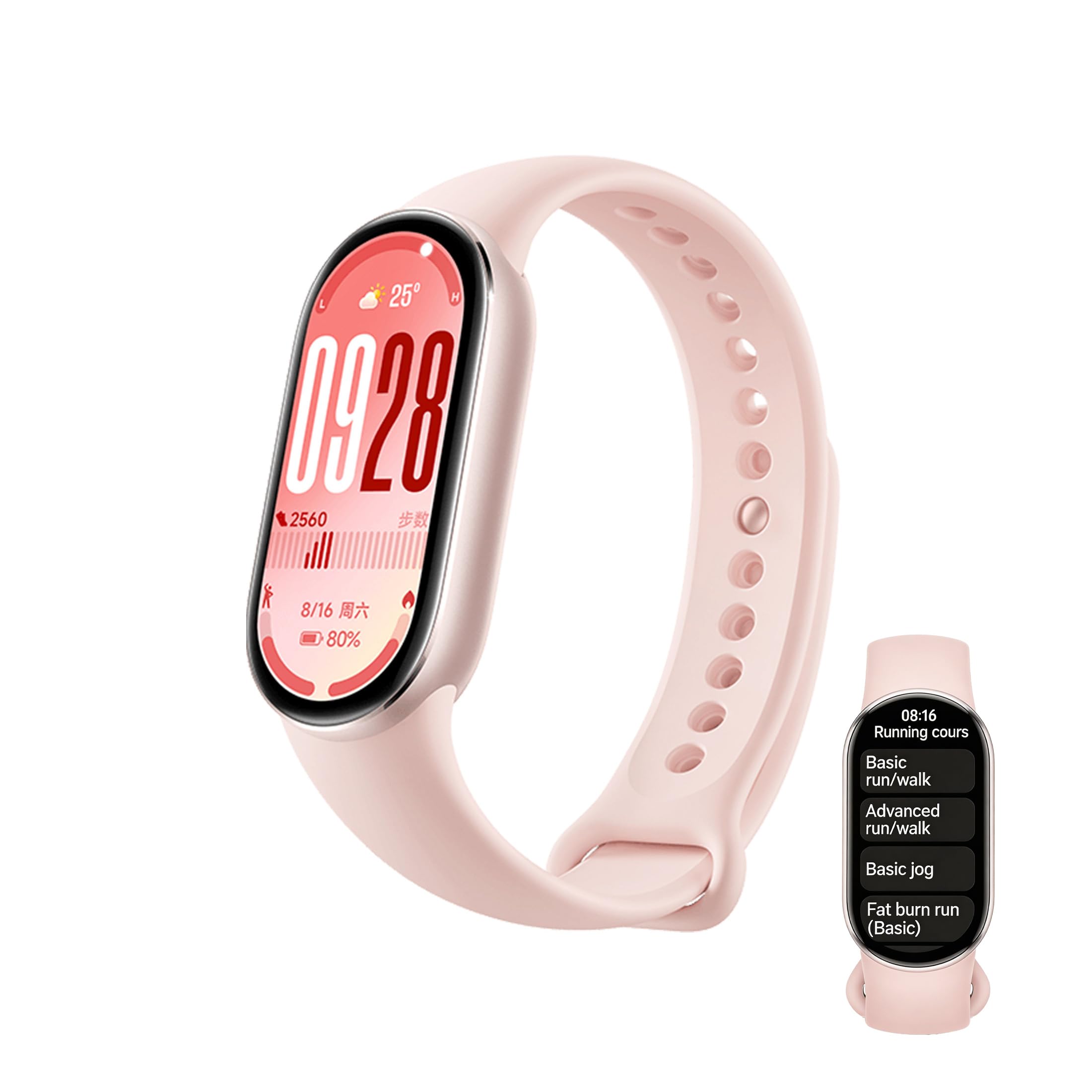
Xiaomi’s latest Band 10 variant pushes durability further with 5ATM water resistance (down to 50 meters), making it the only mid-range tracker that records swimming laps and pool sessions without needing a separate mode toggle. The 1.72-inch AMOLED panel reaches 1500 nits peak brightness and fills 73% of the front face — an excellent screen-to-body ratio that rivals pricier wearables.
The running-focused “pebble mode” clips to shoelaces to measure stride frequency, length, and impact force — a genuine training tool for runners who want form feedback without a foot pod. Battery life lands at a full 21 days on typical use and 9 days with the always-on display active, which is best-in-class endurance for an AMOLED band.
Women’s health tracking and irregular heartbeat alerts cover gaps that some entry-level trackers ignore, but the companion Xiaomi Fit app only supports the metric system; imperial display requires syncing through Google Fit. If you train in the pool or run daily and dislike charging cables, this Band 10 variant is the practical long-haul companion.
Why it’s great
- 5ATM waterproof design for serious swimmers
- Pebble mode delivers pro-level running metrics
- 9 days of battery even with AOD turned on
Good to know
- App only displays metric units by default
- Screen protector recommended against scratches
4. Xiaomi Mi Smart Band 10 (Midnight Black)
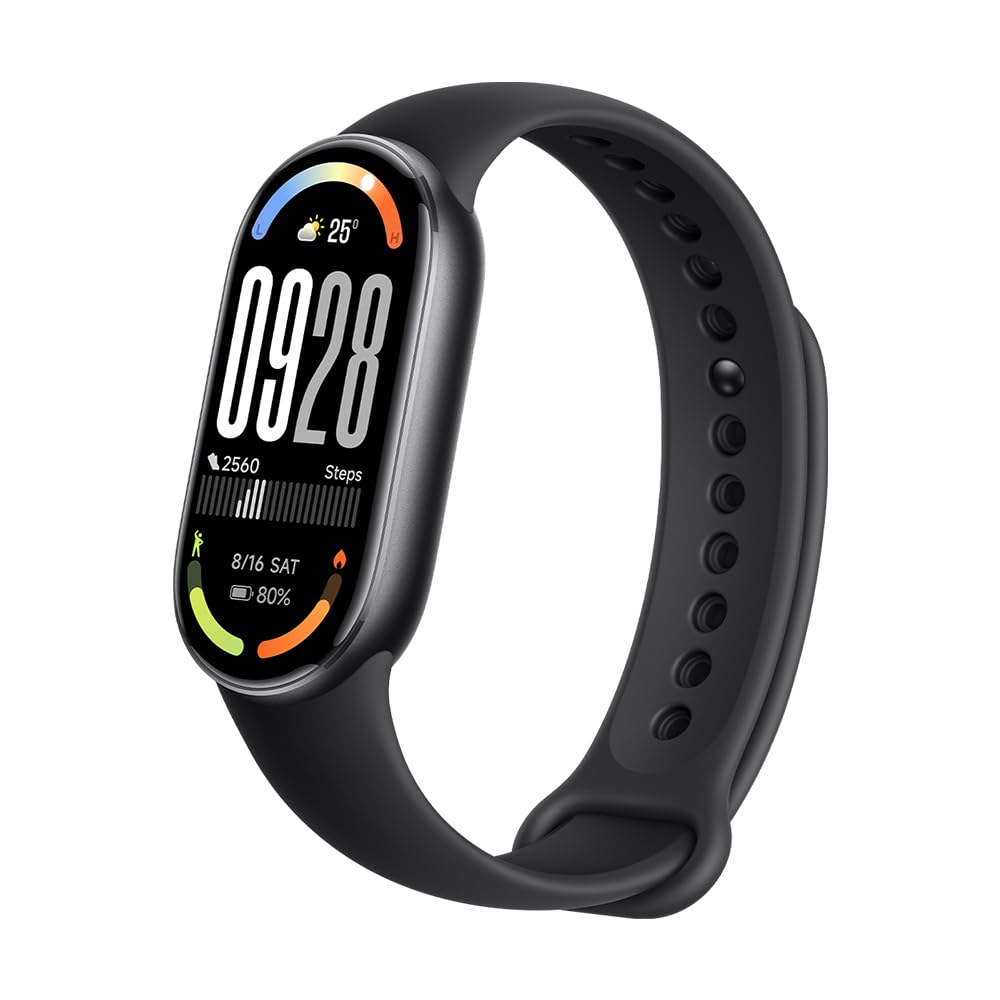
The global version of the Xiaomi Smart Band 10 brings the same 1.72-inch AMOLED display and 1500-nit peak brightness as the Mystic Rose variant, but in a more neutral midnight black finish. Vacuum-filled symmetrical bezels slimmed the borders to 2.0mm, bumping the screen-to-body ratio to 73% — noticeably more immersive than the Band 9 series. The HyperOS 2 interface feels fluid on the wrist, with smooth app switching and responsive touch input.
Battery endurance is the headline feature here: 21 days of typical usage with heart rate and sleep tracking active, and fast charging reaches full capacity in under 90 minutes. The included high-precision electronic compass tracks swimming direction with improved accuracy, and comprehensive sleep monitoring breaks down light, deep, and REM stages with actionable trend data.
Step counting can be off by roughly 25% compared to dedicated pedometers, and the always-on display option still eats a significant chunk of battery. The aluminum alloy body resists minor impacts well. For users who prioritize screen quality and charging frequency above all else, this is the most balanced mid-range option available.
Why it’s great
- 21-day battery life eliminates daily charging
- 1500-nit AMOLED readable in direct sun
- Fast charging fills in under 90 minutes
Good to know
- Step counter lower accuracy than Fitbit
- 24-hour alarm limitation on schedules
5. MorePro Health Fitness Tracker
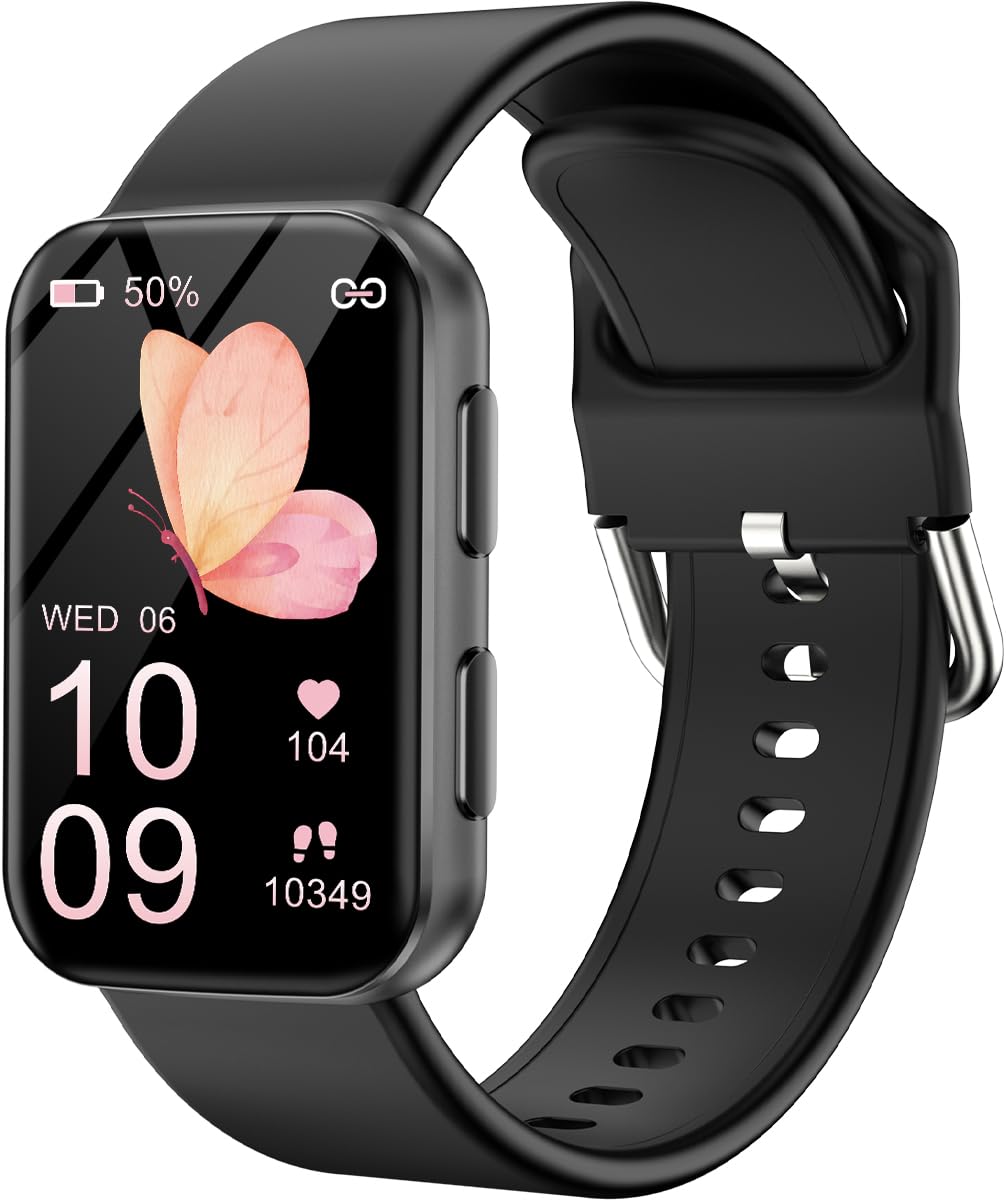
The MorePro AIR2 delivers a 1.57-inch HD touchscreen, IP68 waterproofing, and a rare inclusion of two bands (silicone for workouts, nylon for daily wear) in the box — a small detail that improves long-term comfort significantly. Bluetooth LE 5.2 ensures stable connectivity with Android 7 and iOS 13 devices, and the 128 MB onboard memory stores daily logs even when your phone is out of range.
Battery life reaches a reliable 7 days with heart rate and sleep tracking enabled, and the charging cable attaches magnetically. The accompanying app provides trend reviews for awake, light, and deep sleep stages, plus a readable dashboard for blood pressure and SpO2 history. For a mid-range tracker, the health sensor array is surprisingly complete.
The step counter can lose roughly 100 steps during daily resets, and sleep tracking occasionally registers periods after midnight before syncing correct data. These quirks are minor given the price point and the inclusion of two interchangeable bands. The MorePro is the right pick for first-time tracker users who value immediate comfort and out-of-box completeness.
Why it’s great
- Comes with both silicone and nylon bands
- Consistent 7-day real-world battery
- Bluetooth LE 5.2 keeps sync stable
Good to know
- Step counter drifts after daily reset
- Sleep tracking may delay initial sync
6. RLQA Fitness Tracker
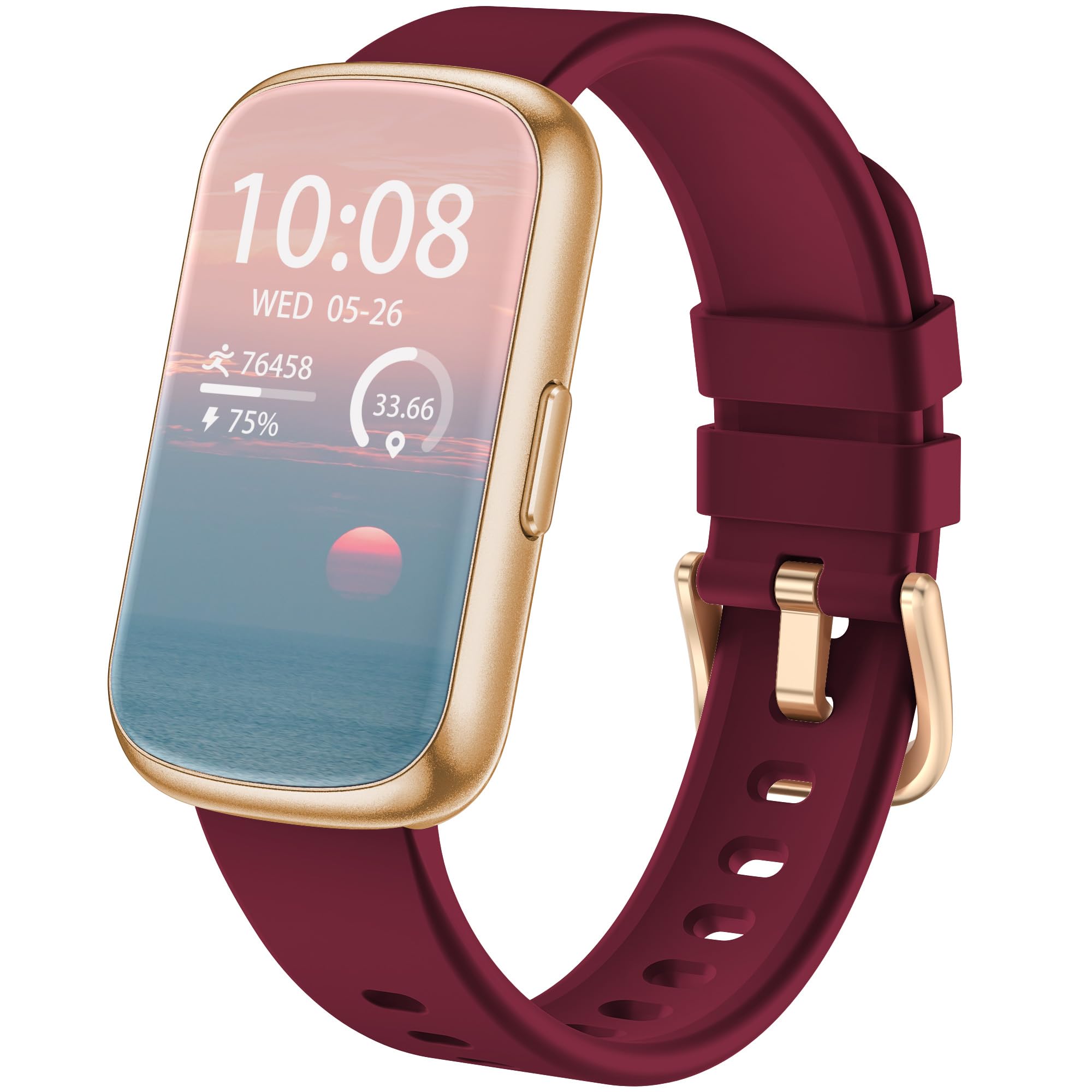
The RLQA D26E prioritizes continuous health monitoring with 24/7 heart rate, blood pressure, and blood oxygen tracking — three metrics typically reserved for more expensive wearables. The 1.47-inch TFT touchscreen provides adequate clarity, and the Bordeaux silicone band adds a distinctive warm tone that stands out from the usual black or gray options. The GloryFit app offers over 200 watch faces, including custom image uploads for personalization.
Activity tracking spans multiple sports modes including basketball and football, and the connected GPS displays workout routes on the app when paired with a phone. Sedentary reminders and menstrual cycle tracking round out the daily wellness tools. The detachable 16mm strap allows easy band swaps without proprietary connectors.
Blood pressure and SpO2 readings are reference-grade, not clinical — the sensor can produce varying results if the band shifts during the day. The TFT panel’s outdoor visibility falls behind AMOLED competitors, and the 7-day battery requires more frequent charging than the Xiaomi entries. For users who want an affordable health dashboard with BP tracking and wide watch face variety, the RLQA covers that base well.
Why it’s great
- Includes 24/7 blood pressure monitoring
- 200+ watch faces mirror your style
- Detachable strap swaps easily
Good to know
- Blood pressure readings are reference only
- TFT screen struggles in bright sunlight
7. Bestinn Smart Watch Fitness Tracker

Bestinn’s H32 packs a 1.58-inch LCD display, IP68 waterproofing, and over 120 sports modes into one of the lowest price points in this guide. The “tuck-under” band design keeps the strap flush against the wrist without a bulky buckle, and the magnetic charger reaches a full charge in about 90 minutes. Real-world battery averages just under 7 days with continuous heart rate monitoring active.
The Da Fit app pairs quickly with Android 4.4+ and iOS 8.4+ devices, offering over 250 watch face options from analog to digital. Sleep tracking records light and deep sleep stages, though the data takes 5–10 minutes to display correctly after waking. The watch also includes women’s menstrual period reminders, breath training, and remote camera control — a surprising breadth of features for the price tier.
Some of the built-in watch faces appear cartoonish, and the screen activates only via the side button rather than a tap gesture, which is less convenient during workouts. The blood pressure monitor functions more as a general trend indicator than a precise clinical tool. If your budget is tight but you want the full activity-tracking experience including GPS route mapping via phone, the Bestinn H32 delivers remarkable versatility per dollar.
Why it’s great
- 120+ sports modes cover niche activities
- IP68 rating handles rain and handwashing
- Fast magnetic charging in under 90 minutes
Good to know
- No tap-to-wake; button-only screen activation
- Sleep data takes minutes to populate
FAQ
Can I swim with an IP68 tracker or do I need 5ATM rating?
How accurate are wrist-based blood oxygen and blood pressure sensors?
Final Thoughts: The Verdict
For most users, the best activity tracker wristband winner is the Xiaomi Mi Smart Watch Band 10 (Mystic Rose) because it combines 1500-nit AMOLED clarity, 5ATM water resistance, and 21-day typical battery life at a mid-range cost that outperforms many premium alternatives. If you need built-in GPS and ECG capability, grab the Fitbit Charge 6. And for the ultimate battery endurance with a vivid screen, nothing beats the Xiaomi Mi Smart Band 10.

Mo Maruf
I created WellFizz to bridge the gap between vague wellness advice and actionable solutions. My mission is simple: to decode the research and give you practical tools you can actually use.
Beyond the data, I am a passionate traveler. I believe that stepping away from the screen to explore new environments is essential for mental clarity and physical vitality.