Our readers keep the lights on and my smoothie glass nicely filled. As an Amazon Associate, I earn from qualifying purchases.
You wear a tracker, it gives you a sleep score, but you still wake up feeling like you ran a marathon in your dreams. The data feels disconnected from your reality. The truth is, not all sleep tracking is created equal; the quality of the sensors, the sophistication of the algorithms, and the very form factor of the device can dramatically change the story it tells about your rest.
I’m Mohammad Maruf — the founder and writer behind WellFizz. For years, I’ve dissected the specifications and analyzed the market data behind hundreds of wearables, cutting through the marketing hype to understand which sensors and software actually deliver meaningful, actionable insights for better sleep.
This guide cuts through the noise, comparing advanced algorithms against basic motion detection, and pinpointing which devices are worth your trust for truly understanding your rest. Our goal is to help you find a device that doesn’t just count sleep but helps you improve it, making an informed choice about the best activity tracker for sleep a straightforward process.
How To Choose The Best Activity Tracker For Sleep
Selecting a sleep tracker is more nuanced than picking a step counter. You need a device that’s comfortable enough to wear all night, equipped with sensors that work reliably in the dark, and backed by software that turns raw data into useful advice. Let’s break down what truly matters.
Prioritize Sleep Stage Detection Over Simple Timing
The most basic trackers only guess when you’re asleep or awake. For meaningful insight, you need a device that distinguishes between light, deep, and REM sleep stages. This requires a combination of continuous heart rate monitoring and advanced algorithms. Look for trackers that provide a detailed sleep breakdown in their companion app, as understanding your sleep architecture is the first step to improving it.
Consider Form Factor and Comfort for 24/7 Wear
You can’t track sleep if you take the device off. A bulky smartwatch might be fine for the day but uncomfortable in bed. Traditional wristbands are a common compromise. For the utmost comfort, dedicated arm bands (worn on the bicep) or smart rings are becoming popular, as they are lightweight and eliminate pressure points on the wrist. Your personal comfort will dictate compliance.
Evaluate Sensor Suite and Data Integration
Core sleep tracking relies on an accurate optical heart rate sensor. For deeper insights, look for Pulse Ox (SpO₂) monitoring for blood oxygen levels and skin temperature tracking, which can reveal trends related to recovery and menstrual cycles. Crucially, check how this data is presented. Does the app offer a cohesive Readiness or Recovery score that synthesizes your sleep, stress, and activity data? This holistic view is more valuable than isolated metrics.
Understand the True Cost: Hardware vs. Subscriptions
Many advanced platforms lock their most insightful analytics behind a monthly subscription. Determine if you’re comfortable with an ongoing fee or prefer a one-time purchase. Some devices offer robust free apps, while others provide only basic numbers without a subscription. Factor this into the total long-term investment.
Quick Comparison
On smaller screens, swipe sideways to see the full table.
| Model | Type | Best For | Key Feature | Amazon |
|---|---|---|---|---|
| Fitbit Charge 6 | Fitness Tracker | Balanced daily wear & sleep | Google Apps, GPS, ECG | Amazon |
| Oura Ring 4 | Smart Ring | Unobtrusive 24/7 wear | Skin temp, sleek design | Amazon |
| WHOOP 5.0 | Activity Strap | Detailed recovery analytics | 14-day battery, coaching | Amazon |
| Amazfit Helio Strap | Armband Strap | Gym & sleep combo | Strength training focus | Amazon |
| Fitbit Inspire 3 | Fitness Tracker | Value-focused tracking | 10-day battery, slim profile | Amazon |
| Garmin Index Sleep | Armband Monitor | Garmin ecosystem users | Dedicated sleep band | Amazon |
| Gydom Smart Watch | Smartwatch | Call features & Alexa | Built-in calls, 100+ sports | Amazon |
| Smart Health Ring | Smart Ring | Entry-level ring form | No subscription fee | Amazon |
| Smart Bracelet | Screenless Band | Distraction-free tracking | 47-day claimed battery | Amazon |
| Blackview Military Watch | Rugged Smartwatch | Outdoor durability | 100-day standby, flashlight | Amazon |
| FITVII Fitness Tracker | Smartwatch | Budget multi-feature | Blood pressure estimate | Amazon |
In‑Depth Reviews
1. Fitbit Charge 6

The Fitbit Charge 6 represents the sweet spot for those who want comprehensive sleep tracking integrated into a capable daily fitness tracker. It builds on Fitbit’s established sleep algorithm, providing detailed Sleep Scores with breakdowns of light, deep, and REM sleep, alongside blood oxygen variation tracking. For sleep-focused users, the automatic tracking is reliable and the data is presented clearly within the Fitbit app, which is one of the most user-friendly in the category.
Beyond sleep, it offers a full suite of health tools including an ECG app and continuous heart rate monitoring. The inclusion of built-in GPS is a significant advantage for runners and cyclists who don’t want to carry their phone. The Google integration with Maps and Wallet adds smart convenience. Its form factor is slim enough for comfortable overnight wear, and the battery life supports several days of use, including sleep tracking, between charges.
This device is ideal for someone who doesn’t want a full smartwatch but desires more than basic activity tracking. It delivers robust sleep analytics without requiring a subscription for core features, though a Premium membership unlocks deeper trends and guided programs. The balance of advanced health sensors, dependable sleep tracking, and useful smart features makes it a versatile and reliable choice.
Why it’s great
- Excellent, detailed sleep stage tracking and Sleep Score.
- Built-in GPS and useful Google integrations (Maps, Wallet).
- Includes advanced health sensors like ECG and continuous SpO₂.
- Slim, comfortable design suitable for 24/7 wear.
Good to know
- The most insightful trend analysis requires a Premium subscription.
- Battery life is good but not class-leading.
- Some users report syncing quirks with the app.
2. Oura Ring 4

The Oura Ring 4 is the pinnacle of unobtrusive, luxury sleep and recovery tracking. Worn on your finger, it eliminates any wrist discomfort, making it exceptionally easy to wear 24/7 for consistent data collection. Its primary strength lies in its sophisticated sensor array, which includes infrared photoplethysmography (PPG) for heart rate, an accelerometer, and a skin temperature sensor. This combination allows it to generate detailed sleep stage analysis and unique insights like body temperature trends, which are invaluable for spotting illness onset or understanding menstrual cycle patterns.
Sleep tracking is automatic and comprehensive, providing a detailed breakdown of sleep stages, timing, and latency. The ring’s form factor also means it’s less likely to be disturbed by arm movements during the night, potentially leading to more consistent data. The titanium build is durable, water-resistant, and designed to look like elegant jewelry rather than a tech gadget.
It’s crucial to understand that the Oura experience is powered by its monthly membership. While the ring tracks data without it, you lose access to almost all insights, scores, and historical analysis. This makes it a premium, subscription-based ecosystem best suited for individuals who prioritize discrete design, advanced metrics like temperature trends, and are committed to a long-term investment in their health data.
Why it’s great
- Extremely comfortable, jewelry-like design for 24/7 wear.
- Advanced sensors including skin temperature for unique health trends.
- Detailed sleep staging and insightful readiness scores.
- No screen or notifications to disrupt sleep or focus.
Good to know
- Requires a monthly subscription to access nearly all data.
- Premium price point for the hardware.
- Workout heart rate tracking is not continuous; it takes spot readings.
3. WHOOP 5.0
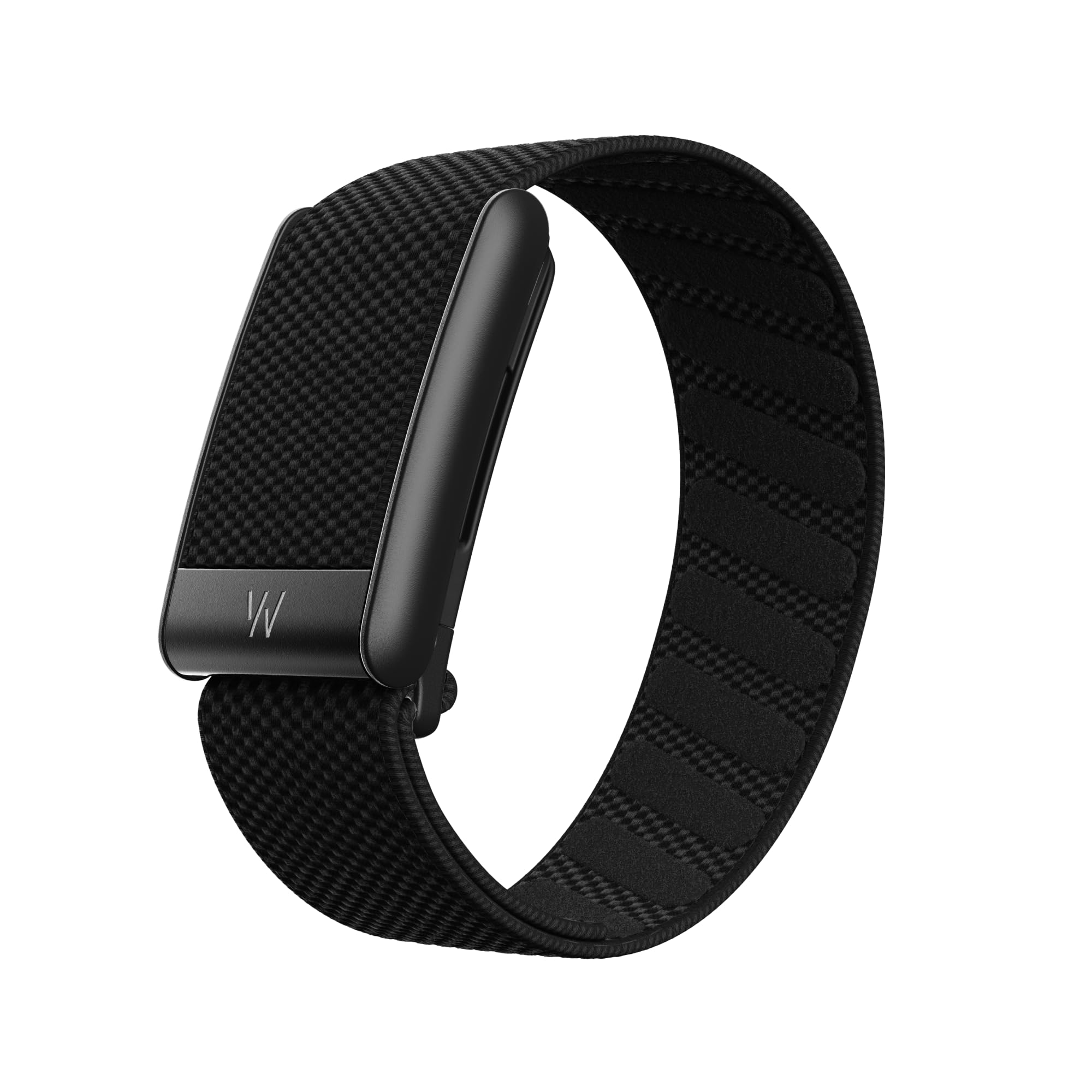
WHOOP is not just a sleep tracker; it’s a comprehensive recovery and performance system. The 5.0 strap is designed to be worn 24/7, and its entire philosophy revolves around using sleep data as the core input for its proprietary Strain and Recovery scores. It tracks sleep automatically with detailed stage breakdowns (light, deep, REM, awake) and uses that, along with heart rate variability (HRV), resting heart rate, and respiratory rate, to assign you a daily Recovery score that dictates how hard you should train.
For sleep optimization, WHOOP provides clear feedback on your sleep performance versus your need, helping you understand if you’re accumulating sleep debt. The app’s journaling feature lets you log behaviors (like caffeine or alcohol) and see their correlation with your sleep and recovery metrics over time. The innovative wireless charging battery pack allows you to charge the device without taking it off, supporting true continuous wear.
This model is for the data-driven athlete or biohacker who wants coaching derived from their physiology. The subscription model includes the hardware, so you’re paying for the ongoing analytics and algorithm updates. It’s a commitment, but for those who live by their training data, the insights can be transformative.
Why it’s great
- Unmatched battery life with innovative on-the-go wireless charging.
- Deep, actionable recovery and strain coaching based on sleep data.
- Behavioral journaling to correlate habits with sleep quality.
- Comfortable, screen-free design focused purely on health metrics.
Good to know
- Operates on a mandatory subscription model (hardware included).
- No display; all data is viewed in the smartphone app.
- Some users report heart rate accuracy variability during intense lifting.
4. Amazfit Helio Strap

The Amazfit Helio Strap is a brilliant alternative for those seeking Whoop-like functionality without a subscription. This screenless armband is designed for 24/7 wear, offering advanced sleep tracking with stage analysis, continuous heart rate, and blood oxygen monitoring. Its nylon strap is highly breathable and comfortable for sleep, and its discreet profile means you can wear it alongside a traditional watch during the day.
Where it truly shines for the active individual is its optimization for strength training. It can automatically detect weightlifting sessions and track reps, sets, and rest periods—a rare feature in wearables. This makes it a powerful tool for those whose fitness routine revolves around the gym but who also want detailed overnight recovery metrics. The data syncs to the free Zepp app, which provides detailed sleep reports, recovery analysis, and workout insights.
This device is an outstanding value proposition. It delivers serious athletic and recovery tracking for a one-time fee. It’s ideal for lifters, CrossFit enthusiasts, or anyone who wants detailed sleep and recovery data without the ongoing cost of a subscription service, and who prefers a band that can be worn on the bicep for potentially better heart rate accuracy during workouts.
Why it’s great
- Excellent strength training tracking with rep counting.
- Detailed sleep stage analysis and recovery metrics.
- No subscription fees; all features are free in the Zepp app.
- Comfortable armband design, good for sleep and intense exercise.
Good to know
- No built-in GPS; relies on connected phone.
- The hook-and-loop strap may wear out over time.
- Advanced features work best when paired with an Amazfit watch.
5. Fitbit Inspire 3

The Fitbit Inspire 3 is the go-to recommendation for anyone wanting reliable, detailed sleep tracking on a budget. It packs the core sleep-tracking algorithm of more expensive Fitbits into a tiny, lightweight package that’s almost unnoticeable on the wrist at night. It provides automatic sleep tracking with a daily Sleep Score and a detailed breakdown of light, deep, and REM sleep stages. Over time, it even offers a monthly Sleep Profile, categorizing your sleep style and offering trends.
Battery life is a major highlight, easily lasting up to ten days, which means fewer charging interruptions and more consistent sleep data collection. The color touchscreen is bright and clear for checking stats, and it’s water-resistant for showering or swimming. While it lacks advanced sensors like ECG or built-in GPS, it covers all the sleep and daily activity fundamentals exceptionally well.
This tracker proves you don’t need to spend a lot to get quality sleep insights. It’s perfect for beginners, those with smaller wrists, or anyone who prioritizes long battery life and core health tracking over smartwatch features. The included 6-month Premium trial lets you explore deeper analytics, but the free app still provides ample useful data.
Why it’s great
- Excellent battery life for worry-free sleep tracking.
- Accurate, detailed sleep stage tracking and Sleep Score.
- Very lightweight and comfortable for 24/7 wear.
- Provides great value with core Fitbit features.
Good to know
- No built-in GPS or advanced health sensors like ECG.
- The screen is small, though functional.
- Some features (like Sleep Profile details) are enhanced with Premium.
6. Garmin Index Sleep Monitor

The Garmin Index Sleep Monitor is a dedicated solution for Garmin watch users who want more comfortable sleep tracking without wearing their watch to bed. This lightweight armband, worn on the bicep, is designed to seamlessly integrate with the Garmin Connect ecosystem. It tracks sleep stages, HRV, Pulse Ox, and skin temperature, feeding that data directly into your daily Morning Report, Training Readiness, and Body Battery metrics.
The primary advantage is comfort. Many find a watch uncomfortable for sleeping, and this band solves that while ensuring your Garmin metrics aren’t missing crucial overnight data. It uses a gentle vibration for a smart wake alarm and claims to have more accurate sleep detection by being placed on the upper arm, which may move less than the wrist. For those deeply invested in Garmin’s training metrics, this device ensures continuity.
It’s important to note that compatibility is key. This device works best and is most reliable when paired with newer Garmin watch models. Some users of older watches have reported syncing issues or incomplete data integration. It’s a niche but valuable tool for the dedicated Garmin athlete seeking the most complete physiological picture.
Why it’s great
- Ideal for Garmin users who dislike sleeping in a watch.
- Feeds sleep data directly into Garmin’s Training Readiness and Body Battery.
- Comfortable armband design with skin temperature sensing.
- No subscription fees; one-time purchase.
Good to know
- Functionality and syncing can be limited with older Garmin watches.
- Battery life is shorter than some competitors.
- Some users report occasional missed sleep sessions or sync delays.
7. Gydom Smart Watch for Women
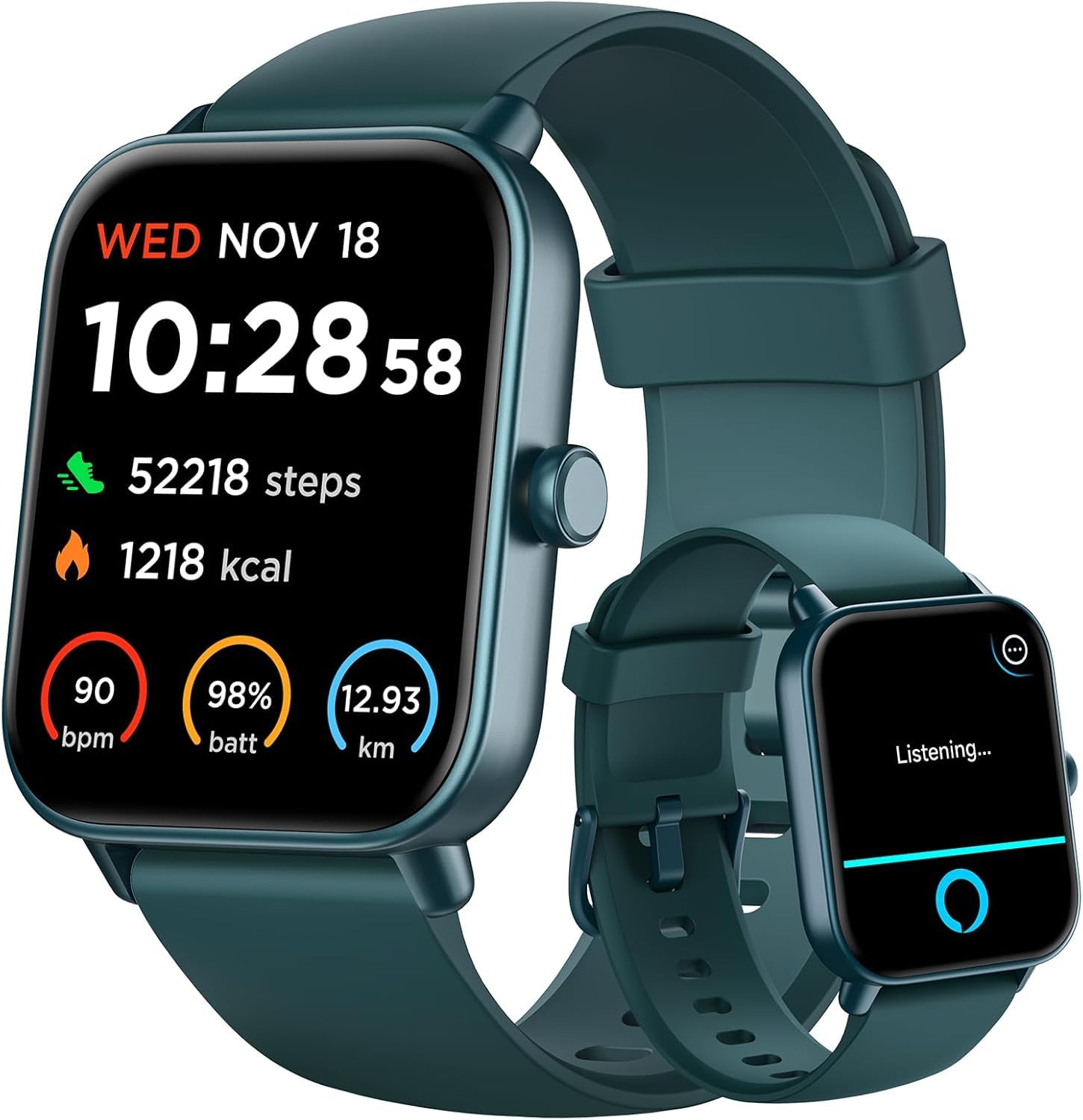
This Gydom smartwatch offers a feature-packed mid-range option for those who want sleep tracking integrated into a full smartwatch experience. It boasts a large, vibrant 1.8-inch touchscreen and the ability to make and answer Bluetooth calls directly from your wrist—a convenience not found on basic fitness trackers. For sleep, it provides automatic tracking with a detailed analysis report in the companion app, covering stages and quality.
Health monitoring includes 24/7 heart rate, blood oxygen, and stress tracking, all of which contribute to a more holistic view of your recovery. The inclusion of Alexa allows for voice-controlled smart features. With over 100 sports modes and IP68 waterproofing, it’s a capable fitness companion for day-to-day activities. The week-long battery life is respectable for a color-screen smartwatch with calling features.
This watch is a strong choice if your priority is a blend of connectivity, style, and health tracking. It’s for the user who wants to see notifications, take quick calls, and use voice commands, but also wants to keep tabs on their sleep patterns without switching devices at night. It represents a balanced midpoint between a basic tracker and a high-end smartwatch.
Why it’s great
- Direct call answering and making from the watch.
- Large, colorful display and Alexa voice assistant.
- Comprehensive sleep tracking with stage analysis.
- Good battery life for a feature-rich smartwatch.
Good to know
- The app may have promotional upsells for watch faces.
- Accuracy of health sensors is good but not medical-grade.
- Design may be more suited to smaller wrists.
8. Smart Health Ring
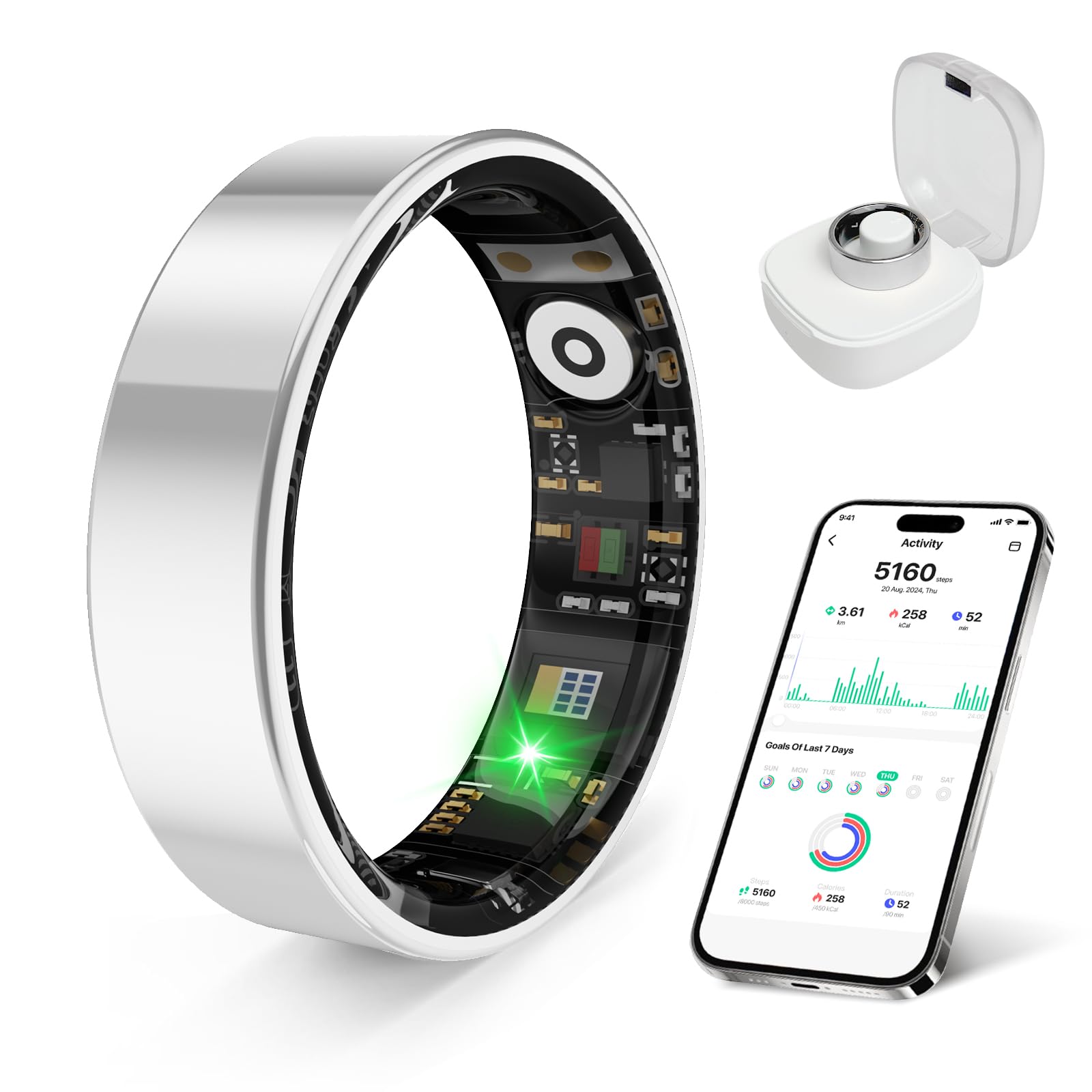
This smart ring from prxxhri is an accessible entry point into the ring-form-factor tracker market. It promises the core benefits of discreet, comfortable wear for sleep tracking without a hefty price tag or a mandatory subscription. It tracks sleep patterns, daily steps, heart rate, and estimated blood pressure, syncing the data to a free smartphone app. The ring is waterproof and has a battery life of several days, making it suitable for continuous wear.
The primary appeal is the combination of the ring’s low-profile design and the lack of recurring fees. For someone curious about ring trackers but hesitant to invest in premium models, this offers a way to test the concept. The sleep tracking provides basic insights into duration and quality, and the automatic activity tracking works in the background. It includes a charging case that can extend total usage time away from an outlet.
As an entry-level device, expectations should be calibrated accordingly. The sensors and algorithms are not as advanced as those in the Oura Ring, and the app experience is more basic. However, for straightforward sleep and activity tracking in a comfortable, subscription-free package, it represents solid value and is a thoughtful gift option for health-conscious friends or family.
Why it’s great
- Affordable introduction to the smart ring form factor.
- No subscription required to access your data.
- Comfortable, waterproof design for 24/7 wear.
- Includes a portable charging case.
Good to know
- Sleep and health tracking is more basic than premium rings.
- Accuracy of metrics like blood pressure should be viewed as estimates.
- Getting the correct size before ordering is critical.
9. Smart Bracelet
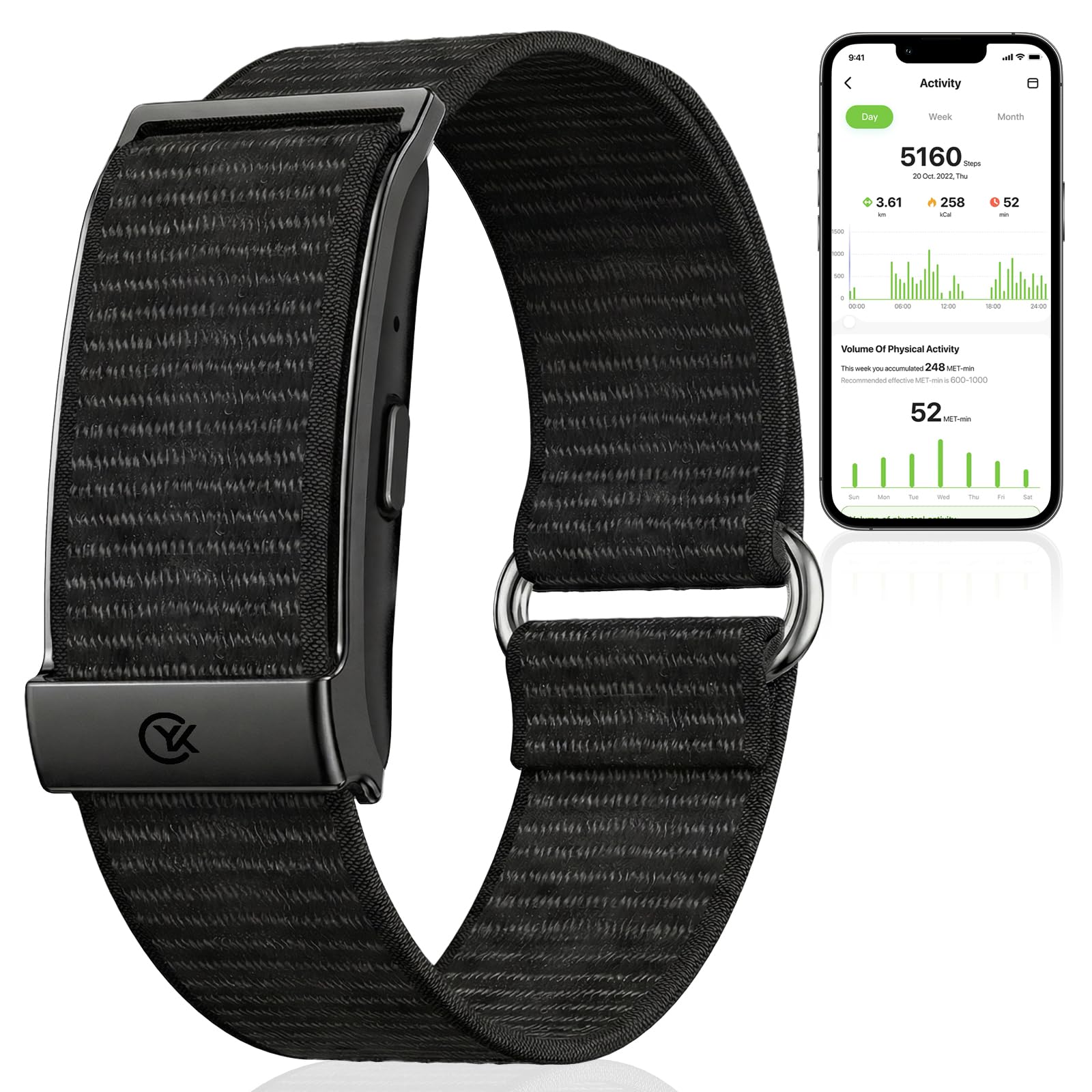
This screen-free smart bracelet is designed for users who want maximum battery life and continuous health tracking without any digital distractions. It monitors heart rate, blood oxygen, stress, and sleep 24/7, syncing all data to your phone via Bluetooth. Its claim to fame is an exceptionally long battery life—up to 47 days on a single charge—which is ideal for those who travel frequently or simply dislike constant charging.
For sleep, it provides detailed staging (light, deep, REM) and quality analysis within its app. The lack of a screen means it’s incredibly lightweight and comfortable for sleeping, and you’re not tempted to interact with it at night. It supports over 100 sports modes for daytime activity tracking, making it a comprehensive yet simple health companion. The nylon band is breathable and suitable for all-day, every-daywear.
The value proposition here is strong: extensive health metrics, ultra-long battery, and no subscription, all in a minimalist package. It’s often compared to higher-end subscription services but at a much lower entry cost. If you want detailed sleep and recovery data without a screen causing distraction or requiring daily charging, this bracelet is a compelling, focused tool.
Why it’s great
- Extremely long claimed battery life minimizes charging hassle.
- Comprehensive 24/7 health tracking without screen distractions.
- Detailed sleep stage analysis and stress monitoring.
- No subscription fees for app access.
Good to know
- Actual battery life may vary from the 47-day claim.
- All data must be viewed in the smartphone app (no on-device display).
- Sensor accuracy, especially for blood pressure, is for wellness tracking only.
10. Blackview Military Smart Watch

The Blackview W60 is built for durability first. It passes military-standard tests for shock, dust, and water resistance, making it suitable for construction, outdoor work, or adventurous activities. Beyond its rugged exterior, it packs a full suite of health tracking, including sleep monitoring with stage analysis, continuous heart rate, SpO₂, and stress tracking. The large 2.01-inch screen is easy to read, and it includes practical outdoor tools like a flashlight and compass.
For sleep tracking, it provides the necessary data in its app, breaking down your night into stages. The standout feature here is the exceptional battery performance, offering weeks of use on a single charge, which ensures you rarely miss a night of data due to charging. It also supports making and receiving Bluetooth calls directly on the watch. It comes with two bands (silicone and nylon) for versatility.
This watch is for the user whose environment demands toughness. If you work with your hands, enjoy hiking or camping, or simply want a watch that can take a beating while still tracking your sleep and health, this is a robust option. It sacrifices some sleekness for sheer durability and battery longevity.
Why it’s great
- Extremely durable, military-tested construction.
- Outstanding battery life for a color-screen smartwatch.
- Useful outdoor features like a flashlight and compass.
- Includes call functionality and sleep stage tracking.
Good to know
- Large, rugged design may be uncomfortable for some to sleep in.
- Health sensor accuracy is in line with mid-range expectations.
- The interface and app can feel utilitarian compared to polished brands.
11. FITVII Fitness Tracker

The FITVII H56 is an entry-level smartwatch that packs a surprising number of features for its cost. It boasts a bright color display, notifications, over 20 sport modes, and health monitoring including heart rate, blood oxygen, and estimated blood pressure. Its sleep tracking function analyzes awake, light, and deep sleep periods, providing basic insights into your nightly rest.
For the budget-conscious user, it offers a taste of smartwatch functionality with health tracking. The week-long battery life is practical, and the IP68 rating means it can handle water exposure. It’s a device that lets you explore whether sleep and activity tracking are valuable to you without a significant upfront investment.
It’s important to set realistic expectations. While it provides sleep data, the accuracy of its sensors, particularly for blood pressure estimation and detailed sleep staging, is not on par with clinical devices or more established brands. It’s best viewed as a general wellness indicator rather than a precise medical tool. For someone wanting an affordable, full-color smartwatch with basic sleep tracking, it represents considerable value.
Why it’s great
- Very affordable with a full-color touchscreen display.
- Tracks a wide array of health metrics including sleep stages.
- Good battery life and solid build for the price.
- Easy to set up and use with smartphone notifications.
Good to know
- Health metrics, especially blood pressure, are rough estimates for wellness only.
- Step counting and sleep accuracy may be less reliable than mainstream brands.
- The companion app is functional but basic.
Understanding the Specs
Sleep Stage Detection
This is the gold standard for sleep tracking. Using heart rate variability (HRV) and movement data, advanced algorithms estimate time spent in Light, Deep, and REM sleep stages. This is far more insightful than simply knowing “time asleep,” as it helps you understand sleep quality and recovery. Devices from Fitbit, WHOOP, Oura, and Garmin typically excel here.
Pulse Ox (SpO₂) & Skin Temperature
Pulse Ox measures blood oxygen saturation variations overnight, which can be an indicator of sleep disturbances like apnea. Skin temperature tracking (found in rings and some armbands) monitors subtle nightly changes, providing trends related to menstrual cycles, illness onset, and overall recovery. These are secondary but valuable metrics for a complete picture.
Battery Life & Charging
For 24/7 sleep tracking, battery life is critical. Look for claims of 7+ days to avoid nightly charging. Some devices, like WHOOP with its wireless battery pack or rings with charging cases, allow you to charge without taking the tracker off, ensuring no data gap. Consider your tolerance for charging frequency when choosing.
Form Factor & Comfort
Your ability to wear the device consistently is paramount. Traditional watches may be bulky for sleep. Slim wristbands are a common compromise. Armbands (bicep) and smart rings offer the least obtrusive experience, often leading to better compliance and potentially more consistent data due to less movement artifact.
FAQ
How accurate are sleep trackers?
Do I need a subscription for sleep tracking?
Is it bad to wear a tracker to sleep?
Can a sleep tracker diagnose sleep apnea?
Where is the best place to wear a sleep tracker?
Final Thoughts: The Verdict
For most people, the best activity tracker for sleep winner is the Fitbit Charge 6 because it strikes the best balance between accurate sleep staging, daily fitness features, smart integrations, and a comfortable design—all without a mandatory subscription. If you want the most discreet and comfortable 24/7 wear with advanced temperature trends, grab the Oura Ring 4. And for detailed, subscription-free recovery analytics tailored for gym-goers, nothing beats the Amazfit Helio Strap.

Mo Maruf
I created WellFizz to bridge the gap between vague wellness advice and actionable solutions. My mission is simple: to decode the research and give you practical tools you can actually use.
Beyond the data, I am a passionate traveler. I believe that stepping away from the screen to explore new environments is essential for mental clarity and physical vitality.