Our readers keep the lights on and my smoothie glass nicely filled. As an Amazon Associate, I earn from qualifying purchases.
Choosing the right companion for your runs is more than counting steps; it’s about finding a device that translates every heartbeat, stride, and recovery phase into actionable data you can trust. The wrong tracker can leave you guessing about your progress, while the right one becomes a silent coach on your wrist.
I’m Mohammad Maruf — the founder and writer behind WellFizz. My process involves deep market research, analyzing thousands of data points and technical specifications from manufacturers to separate marketing hype from genuine performance.
After evaluating sensor accuracy, battery demands, and real-world runner feedback, I’ve curated this list to help you find the ideal tool for your training. best activity tracker for running should deliver precise metrics without complicating your stride.
How To Choose The Best Activity Tracker For Running
Selecting a running tracker isn’t about the most features, but the right ones for your goals. A marathoner’s needs differ from a casual jogger’s. Focus on the specifications that directly impact the accuracy and usefulness of your running data.
GPS: Built-In vs. Connected
For accurate pace and route mapping, GPS is non-negotiable. A built-in GPS means the tracker acquires a satellite signal independently, which is crucial for leaving your phone behind. Connected GPS uses your smartphone’s receiver, which is convenient but less reliable if your phone is in a pocket or bag, and adds bulk to your run.
Battery Life Realities
Manufacturer claims are based on minimal use. Continuous GPS use, optical heart rate monitoring, and always-on displays dramatically reduce battery life. For runners, look for a device that can last through your longest weekly run on a single charge, and consider how often you’re willing to plug it in.
Heart Rate Sensor & Advanced Metrics
An optical heart rate sensor is standard, but accuracy during high-intensity intervals varies. More advanced devices offer heart rate variability (HRV), stress tracking, and recovery scores like Body Battery or Recovery Time. These metrics help you understand your body’s readiness to train, preventing overtraining.
The Companion App Ecosystem
The hardware is only half the story. The accompanying app should present your data clearly, allow for in-depth analysis of trends, and ideally sync with broader platforms like Strava or Apple Health. A cluttered, confusing app undermines even the most capable tracker.
Quick Comparison
On smaller screens, swipe sideways to see the full table.
| Model | Type | Best For | Key Feature | Amazon |
|---|---|---|---|---|
| SAMSUNG Galaxy FIT 3 | Fitness Tracker | Balanced daily tracking | Vibrant AMOLED, 14-day battery | Amazon |
| Garmin vívosmart 5 | Advanced Tracker | Serious training data | Body Battery, stress tracking | Amazon |
| XIAOMI Mi Smart Band 10 | Slim Band | Long battery life | 21-day battery, 1.72″ AMOLED | Amazon |
| Fitbit Charge 6 | Ecosystem Tracker | Google app integration | Built-in GPS, ECG app | Amazon |
| WHOOP 5.0/MG | Recovery Band | Deep recovery insights | Strain/Recovery coach, 14-day battery | Amazon |
| Amazfit Band 7 | Smart Band | Alexa on a budget | Alexa built-in, 18-day battery | Amazon |
| Fitpolo Smart Watch | Smartwatch | Calls & notifications | Make/receive calls, AMOLED screen | Amazon |
| Blackview Smart Watch | Budget Smartwatch | Max features, minimal cost | Built-in flashlight, call function | Amazon |
| ZURURU Fitness Tracker | Health Tracker | Blood pressure monitoring | BP & SpO2 tracking | Amazon |
| LIVIKEY Fitness Tracker | Entry Tracker | First-time users | Essential tracking, IP68 waterproof | Amazon |
| ENGERWALL Fitness Tracker | Slim Tracker | Smaller wrists | Adjustable, lightweight design | Amazon |
In‑Depth Reviews
1. SAMSUNG Galaxy FIT 3
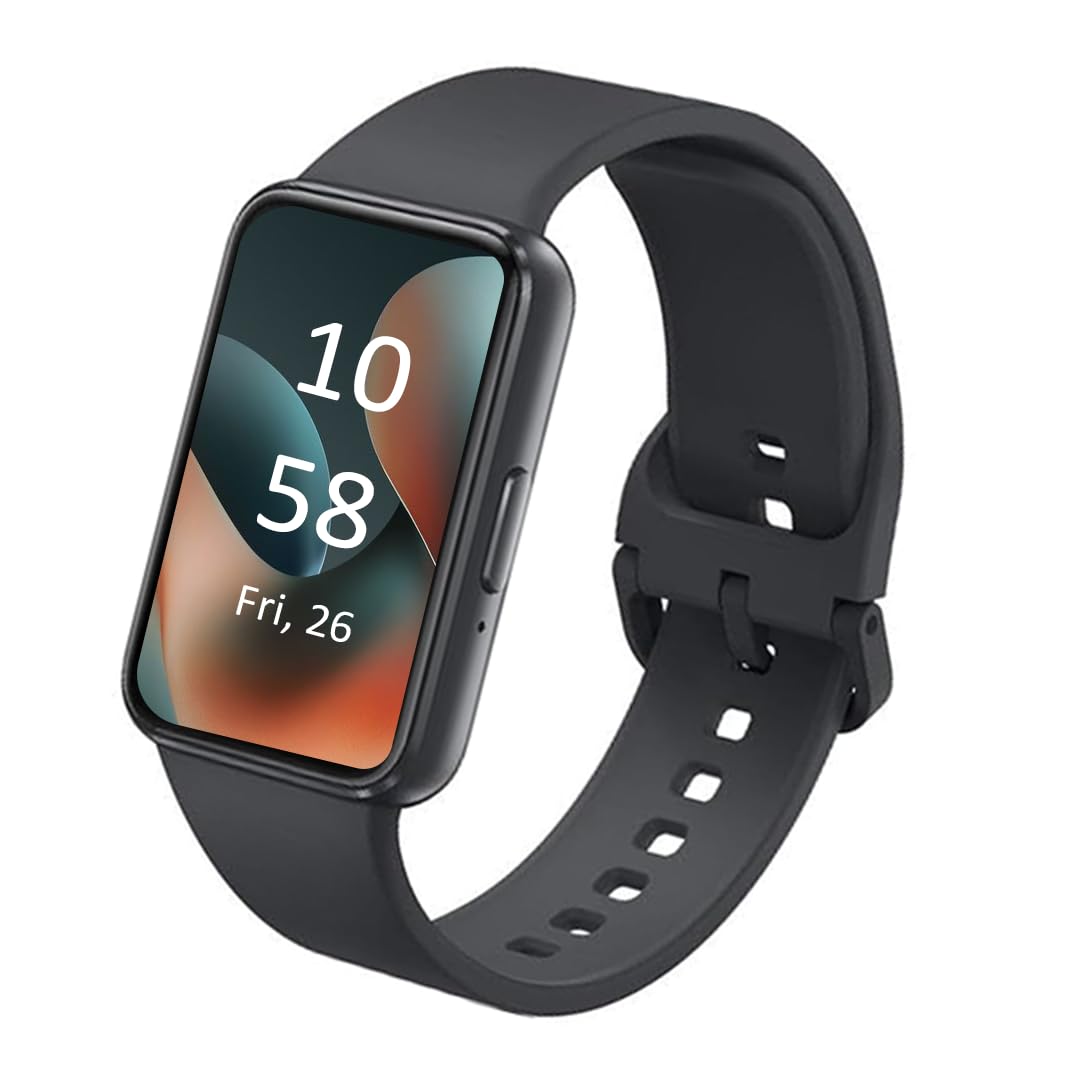
The Samsung Galaxy FIT 3 strikes a remarkable balance between a sleek, modern design and robust fitness tracking, making it an excellent daily companion for runners. Its vibrant 1.6-inch AMOLED display is bright and easy to read mid-stride, offering a premium feel typically found in higher-tier devices. The auto-workout detection for common activities is a thoughtful touch that ensures you never miss logging a spontaneous run.
Where it truly shines for runners is its seamless integration with the Samsung Health ecosystem, which provides comprehensive data analysis without a subscription fee. The connected GPS reliably maps your routes when your phone is nearby, and the 14-day battery claim holds up well under typical use, meaning fewer charging interruptions. The 5ATM water resistance also means sweat and rain are non-issues.
It’s important to note this is an international model without a US warranty, but for a mid-range tracker, it delivers exceptional value. The interface is intuitive, switching between stats is smooth, and the data presented—from sleep stages to active minutes—is both accessible and actionable for improving your running routine.
Why it’s great
- Stunning AMOLED screen is highly visible in sunlight.
- Exceptional battery life for a device with a color display.
- Clean, user-friendly interface with helpful auto-detection.
- Swim-ready with 5ATM water resistance.
Good to know
- Relies on connected GPS, not built-in.
- International model lacks a domestic manufacturer warranty.
- Some advanced metrics may not match dedicated sports watches.
2. Garmin vívosmart 5

The Garmin vívosmart 5 is a powerhouse disguised as a simple fitness band, packing advanced physiological metrics that serious runners will appreciate. Its standout feature is the Body Battery energy monitoring, which combines stress, heart rate variability, sleep, and activity data to numerically suggest your body’s readiness to perform. This allows for truly personalized training—pushing hard when you’re recovered and easing off when stressed.
For running, its connected GPS provides detailed route maps when paired with your phone, and the built-in sports apps accurately track everything from a pool swim to a yoga session. The health monitoring suite is extensive, featuring Pulse Ox, respiration tracking, and women’s health logging, all accessible through the best-in-class Garmin Connect app. The data depth here is exceptional for a tracker of this size.
The monochrome OLED display is functional rather than flashy, prioritizing battery life (up to 7 days) over color. The touchscreen and button interface is reliable even when sweaty. While it lacks built-in GPS, the accuracy of its other sensors and the actionable intelligence it provides make it a premium tool for athletes focused on holistic training and recovery.
Why it’s great
- Advanced Body Battery and stress tracking for recovery insights.
- Comprehensive health metrics in a slim, comfortable band.
- Integrates seamlessly with the powerful, free Garmin Connect app.
- Accurate heart rate monitoring and connected GPS.
Good to know
- Screen is small and monochrome.
- GPS requires connection to your smartphone.
- Some users report occasional syncing issues after major app updates.
3. XIAOMI Mi Smart Band 10
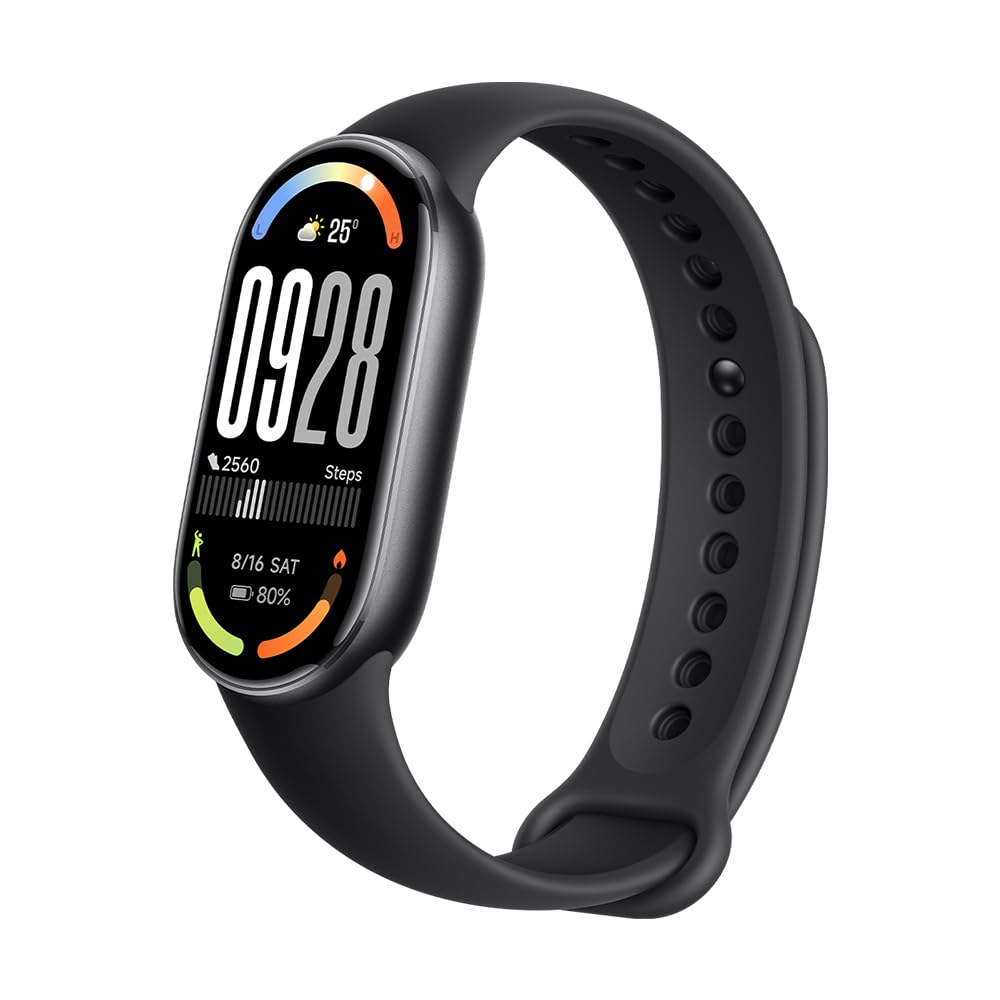
If your top priority is forgetting about charging, the Xiaomi Mi Smart Band 10 is in a league of its own. The promise of up to 21 days of battery life on a single charge is not just a claim—it’s a reality that fundamentally changes how you interact with a tracker. You can focus on weeks of consistent running data without the anxiety of a dying device before a long workout.
It doesn’t sacrifice aesthetics for endurance. The 1.72-inch AMOLED display is vibrant and sharp with impressively thin bezels, making it a pleasure to use. It tracks over 150 sports modes, provides detailed sleep analysis with readiness scores, and includes 5ATM water resistance for swimming. The new HyperOS offers a smooth user experience, though the companion Mi Fitness app is metric-only, requiring a sync to Google Fit for imperial measurements.
For runners, the lack of built-in GPS means you’ll need your phone for precise route mapping. However, for daily activity tracking, heart rate monitoring, and sleep analysis, its sensor accuracy is commendable for a mid-range band. It’s the ultimate set-it-and-forget-it device that delivers premium screen quality and epic battery life at an accessible point.
Why it’s great
- Class-leading battery life lasting nearly three weeks.
- Large, beautiful AMOLED display with high brightness.
- Lightweight and comfortable for 24/7 wear.
- Excellent value for the feature set provided.
Good to know
- Companion app uses metric system; imperial requires Google Fit sync.
- No built-in GPS for independent run tracking.
- The screen can be prone to micro-scratches without a protector.
4. Fitbit Charge 6

The Fitbit Charge 6 represents the pinnacle of the dedicated fitness tracker form factor, integrating deeply with Google’s ecosystem while offering robust standalone features for runners. Its built-in GPS is a key advantage, allowing you to accurately map runs, pace, and elevation without carrying your phone, and the data seamlessly populates the detailed Fitbit app.
Beyond running, it excels as a holistic health device with an ECG app, high/low heart rate notifications, and a Daily Readiness Score that suggests optimal workout intensity. The inclusion of Google Maps turn-by-turn directions and Google Wallet tap-to-pay on your wrist adds genuine smart utility. The 6-month Premium membership trial unlocks deeper insights, workout videos, and wellness reports.
Battery life is respectable at up to 7 days, though using GPS regularly will reduce that. The always-on display option is a bonus for quick glances. While the app has undergone controversial redesigns, the depth of data—from sleep stages to heart rate variability—remains top-tier. It’s for the runner who wants clinical-grade health insights paired with everyday Google convenience.
Why it’s great
- Accurate built-in GPS for phone-free run tracking.
- Deep integration with Google Maps and Wallet.
- Comprehensive health suite including ECG and SpO2.
- Includes a 6-month Premium membership for advanced analytics.
Good to know
- Battery depletes quickly with constant GPS use.
- The Fitbit app redesign has been polarizing for long-time users.
- Premium features require a subscription after the trial.
5. WHOOP 5.0/MG
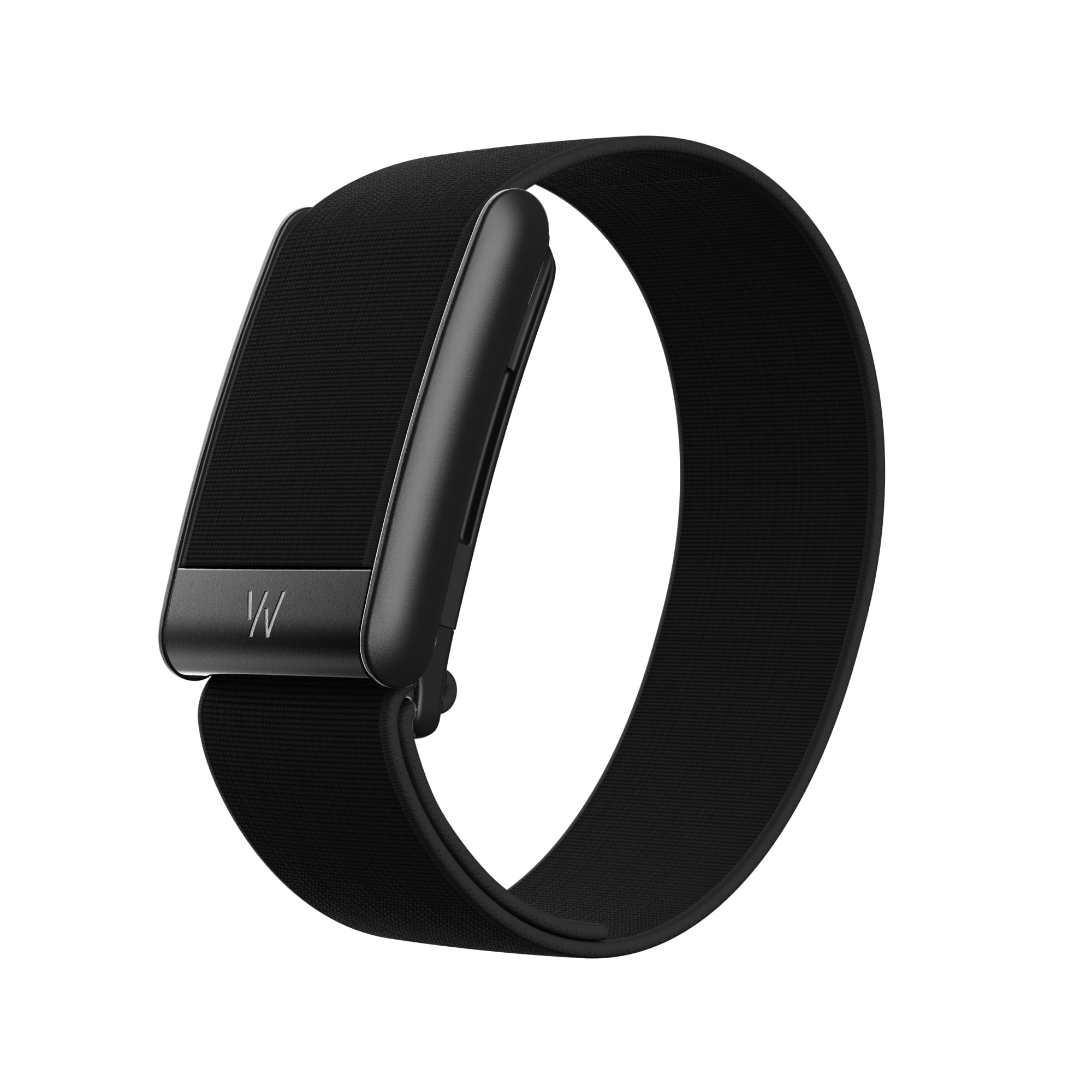
WHOOP redefines the activity tracker by focusing almost entirely on recovery and strain, making it a unique tool for runners obsessed with optimization. This band has no screen; all interaction happens via a minimalist LED strip and the profoundly detailed WHOOP app. It continuously monitors heart rate, HRV, skin temperature, and respiratory rate to calculate a daily Recovery score and recommend a optimal Strain target.
For runners, this means you get a data-driven answer to “how hard should I train today?” The 14+ day battery life is achieved via a clever sliding battery pack that charges the device while you wear it, so you never take it off. The daily Journal feature lets you log over 160 behaviors (sleep, nutrition, stress) to see their precise impact on your recovery. It’s less about counting steps and more about understanding the effect of every step.
The subscription model includes the hardware and continuous updates. It’s a premium investment for athletes, coaches, or anyone who views their body as a system to be fine-tuned. If your goal is to prevent overtraining, maximize performance, and understand the lifestyle factors affecting your runs, WHOOP provides unparalleled insight.
Why it’s great
- Unmatched focus on recovery and strain guidance for peak performance.
- Battery never needs removal; charge with the wearable Power Pack.
- Journaling feature reveals precise impact of habits on recovery.
- Comfortable, screen-free design for 24/7 wear.
Good to know
- Requires an ongoing membership subscription.
- No display for real-time stats during a run.
- Strength training tracking can be less precise without manual logging.
6. Amazfit Band 7

The Amazfit Band 7 punches above its weight class by packing a large 1.47-inch AMOLED display, impressive 18-day battery life, and the convenience of Amazon Alexa into a very accessible package. For runners who use Alexa to control smart home devices, set timers, or get quick answers, having that functionality on your wrist is remarkably handy without needing to pull out your phone mid-stretch.
The fitness tracking is comprehensive, with 120 sports modes, continuous heart rate and SpO2 monitoring, and detailed sleep staging. The 5ATM water resistance makes it swim-proof. The Zepp OS is snappy, and the always-on display option is useful for checking time or stats with a glance. Connected GPS reliably maps your runs when your phone is nearby.
It strikes a smart balance: it offers more screen and smart features than basic bands but maintains the long battery life and focused fitness tracking of a dedicated tracker. The value proposition is strong, providing a feature set that rivals more expensive options, making it a fantastic choice for runners who want smart assistant integration without sacrificing core tracking capabilities.
Why it’s great
- Built-in Alexa allows for hands-free queries and smart home control.
- Large, vibrant AMOLED display is easy to read.
- Excellent battery life for a color display device.
- 5ATM waterproof rating for swimming and intense sweat.
Good to know
- Band design can sometimes catch and detach.
- To turn the device on after a shutdown, you must connect the charger.
- Some users note step and distance accuracy can vary.
7. Fitpolo Smart Watch

The Fitpolo Smart Watch offers a full smartwatch experience, including the ability to make and receive calls directly from your wrist, at a mid-range price point. This is a significant advantage for runners who want to stay connected but dislike carrying a phone. The 1.3-inch AMOLED display is crisp, and the built-in speaker and microphone provide clear call quality.
Beyond communication, it serves as a capable fitness tracker with over 120 sports modes, continuous heart rate and SpO2 monitoring, and sleep analysis. The connected GPS will map your runs, and the battery can last 8-12 days on a charge. It also supports smart notifications, music control, and even has a remote camera shutter function.
While it may not have the brand recognition or refined app ecosystem of Samsung or Fitbit, it delivers an impressive array of features for the cost. For runners who prioritize call functionality and a bright, colorful interface in a traditional watch shape, the Fitpolo represents strong value and versatility.
Why it’s great
- Direct call functionality from the watch is convenient.
- Bright, colorful AMOLED display with always-on option.
- Comprehensive health and activity tracking suite.
- Long battery life for a full smartwatch.
Good to know
- Stress and recovery metrics may not be as accurate as specialized devices.
- The sheer number of features can make the interface feel cluttered.
- Build quality, while good, may not feel as premium as higher-end brands.
8. Blackview Smart Watch
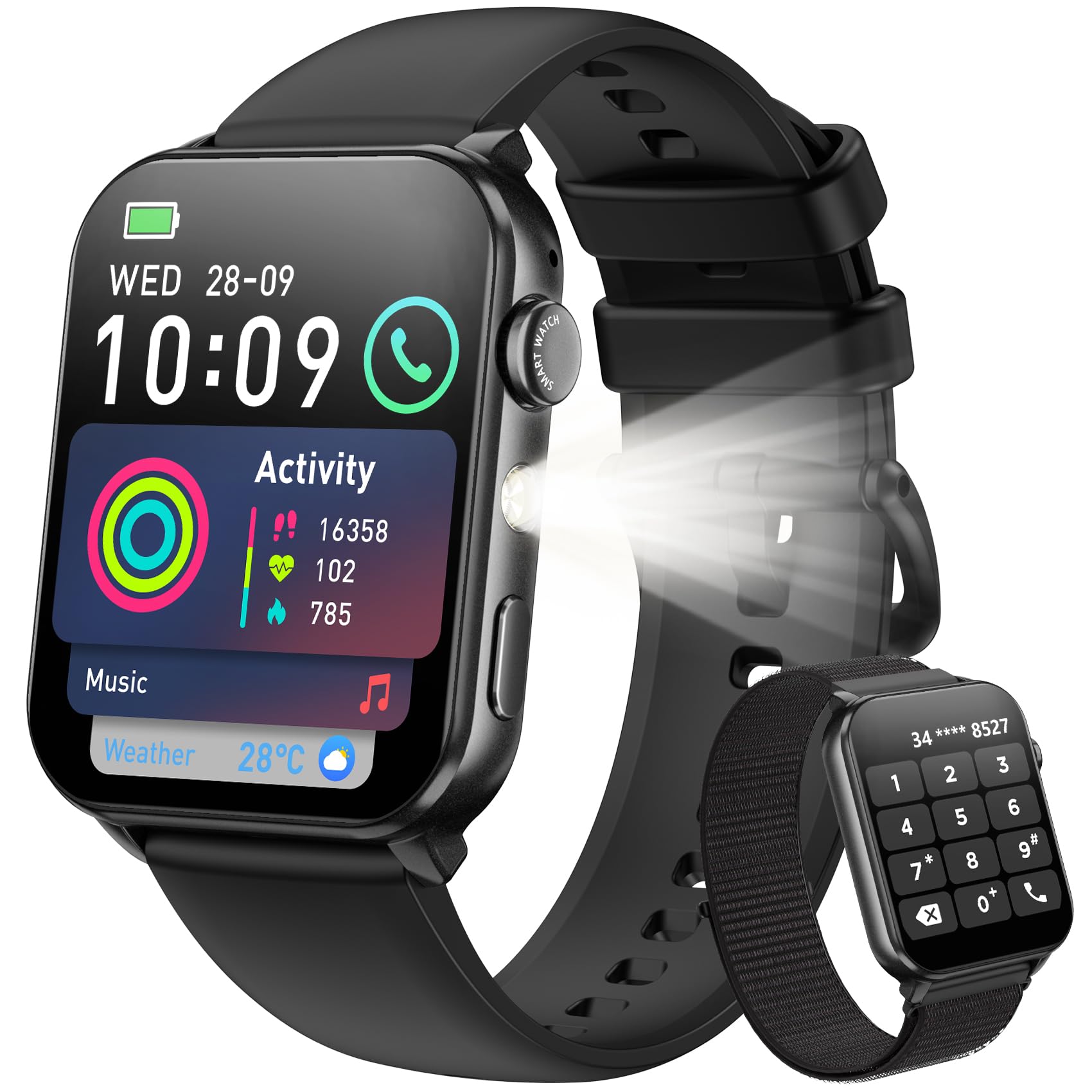
The Blackview Smart Watch is a feature-packed entry-level device that convincingly mimics the look and feel of much more expensive smartwatches. Its 1.91-inch HD touchscreen is large and responsive, and it includes practical extras like a built-in LED flashlight—surprisingly useful for early morning or late evening runs. You can also make and receive Bluetooth calls directly on the watch.
For fitness, it tracks over 100 sports modes, monitors heart rate and blood oxygen, and uses connected GPS to map your routes. The inclusion of two bands (nylon and silicone) adds versatility for different activities. Battery life is respectable for a device with a large screen, lasting up to 6 days with typical use.
As an entry-level option, expectations for sensor clinical accuracy should be tempered. However, for providing core smartwatch functions, basic activity tracking, and a big display at a very accessible price, it delivers exceptional value. It’s an ideal starter device for new runners or those on a tight budget who still want a full smartwatch experience.
Why it’s great
- Large, clear screen and smartwatch aesthetics at a budget price.
- Practical built-in flashlight and call functionality.
- Comes with two interchangeable bands for different occasions.
- Tracks a wide variety of sports and health metrics.
Good to know
- Sensor accuracy, especially for step counting, can be inconsistent.
- Bluetooth connection range may be limited in buildings.
- Interface and app experience may feel less polished than established brands.
9. ZURURU Fitness Tracker

The ZURURU tracker stands out in the budget segment by offering blood pressure monitoring alongside the standard heart rate and SpO2 tracking. This feature, while not intended for medical diagnosis, can provide interesting trend data for users curious about their cardiovascular health. The built-in USB plug is a notably convenient design, allowing you to charge it directly from any USB port without a separate cable.
For running, it offers 11 sports modes and connected GPS to map your routes via your smartphone. The IP68 waterproof rating and week-long battery life are standard but reliable features for daily wear. Notifications for calls and messages keep you connected, and the companion Hband app presents your data in a straightforward manner.
It’s important to manage expectations with the blood pressure readings, as wrist-based optical sensors are not as accurate as arm cuffs. However, as a general activity and health trend tracker, the ZURURU provides a unique set of metrics at a very accessible price, making it a compelling option for health-conscious users on a budget.
Why it’s great
- Includes blood pressure monitoring, a rare feature at this price.
- Convenient built-in USB charger requires no extra cables.
- Tracks a solid range of sports and health metrics.
- Reliable waterproofing and battery life for daily use.
Good to know
- Blood pressure readings are estimates and not medically accurate.
- Some users report data syncing issues or lost activity logs.
- The plastic band may be prone to breaking over time.
10. LIVIKEY Fitness Tracker
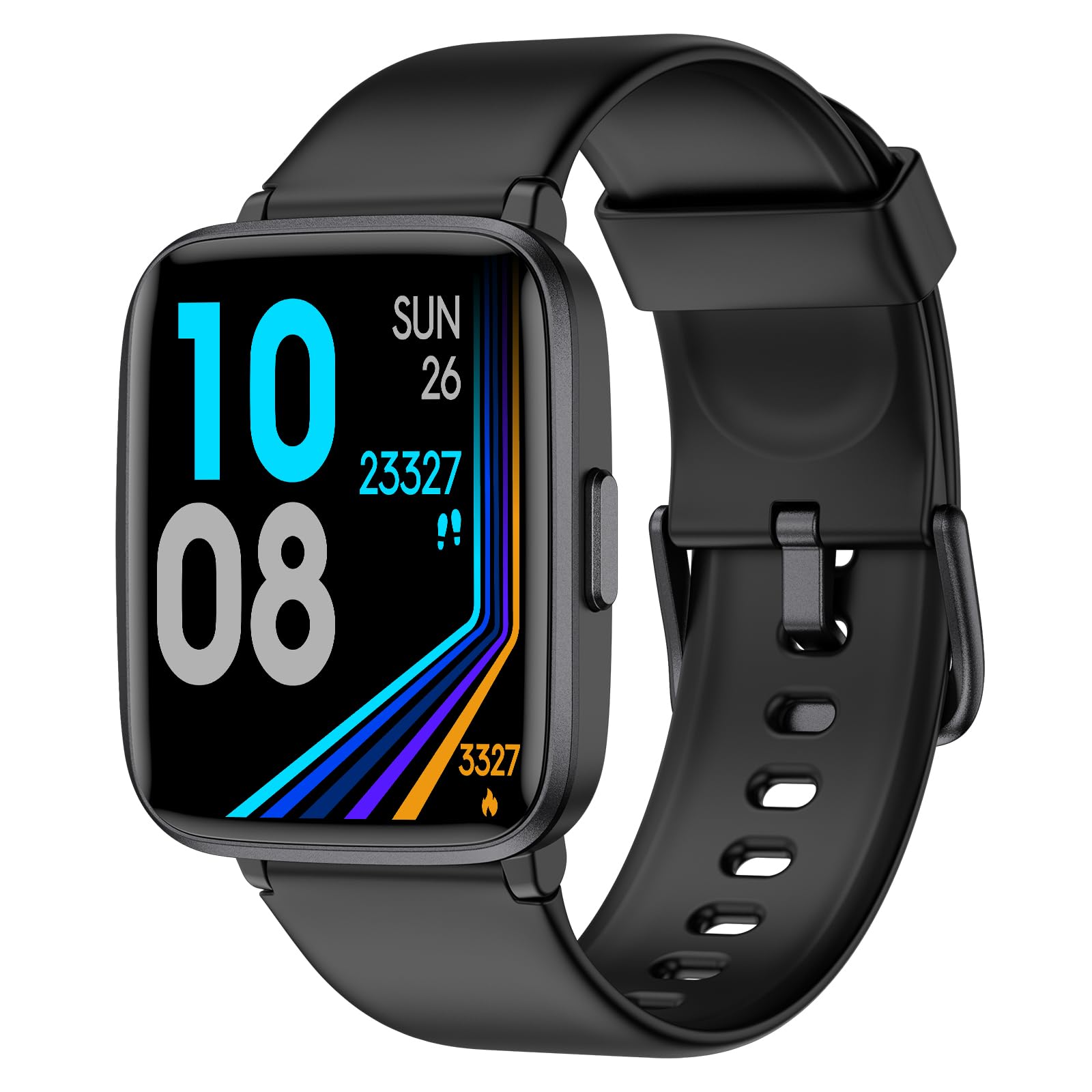
The LIVIKEY Fitness Tracker is the definition of an entry-level device that covers all the basics competently. It offers continuous heart rate monitoring, sleep stage analysis, and notifications for calls and messages on a clear 1.3-inch color screen. For runners, it includes 9 sport modes to log your activities, and the IP68 rating means it’s fully protected against sweat and rain.
Battery life is a strong point, consistently delivering 5-7 days on a two-hour charge. The companion app is functional, allowing you to set goals and review your data over time. It’s a straightforward device that focuses on the core functions most people need from a fitness tracker without any overwhelming complexity or unnecessary features.
Accuracy, particularly with the pedometer, can be variable as it relies heavily on arm movement. However, for establishing a baseline of activity, monitoring general heart rate trends, and improving sleep awareness, it provides tremendous value. It’s an ideal first tracker or a reliable backup device.
Why it’s great
- Covers essential tracking (heart rate, sleep, steps) at a minimal cost.
- Long battery life and fast charging.
- IP68 waterproofing for worry-free wear during workouts.
- Simple, no-fuss setup and operation.
Good to know
- Step counting can be inaccurate due to arm movement detection.
- Sleep tracking may not be precise for light or restless sleepers.
- Build materials feel functional rather than premium.
11. ENGERWALL Fitness Tracker

The ENGERWALL tracker is designed with versatility in mind, featuring an adjustable band that can fit wrists from 4.7 to 8.3 inches, making it suitable for adults, kids, and those with smaller wrists. It’s exceptionally lightweight and slim, aiming to be unobtrusive during sleep or all-day wear. The 0.96-inch display provides clear basic data at a glance.
It tracks 16 sports modes, monitors heart rate and sleep, and offers smart notifications. The IP68 rating ensures durability against water. The companion Runmefit app allows for detailed data review and setting reminders for water and sedentary alerts. For the price, it offers a comprehensive feature set in a discreet package.
As with many budget trackers, sensor accuracy and long-term reliability can be inconsistent. Some users report charging difficulties or devices failing after a few months. However, for its adjustable fit and basic tracking functions, it represents a viable budget-conscious option, especially for those who have struggled with standard-sized bands.
Why it’s great
- Highly adjustable band fits a wide range of wrist sizes, including children.
- Extremely lightweight and slim profile for comfort.
- Covers a good range of sports and health tracking features.
- Very accessible price point for a full-featured tracker.
Good to know
- Battery life and charging reliability have been inconsistent for some users.
- Long-term durability may be a concern.
- App experience and data accuracy are basic.
Understanding the Specs
GPS Type
Built-in GPS uses an onboard chip for independent location tracking, essential for phone-free running. Connected GPS relies on your smartphone’s signal, which is convenient but less reliable and adds phone dependency. For pure running accuracy, built-in is superior, but connected GPS works well for casual runners who always carry their phone.
Battery Life & Charging
Claims like “14-day battery” are based on minimal use. Continuous heart rate monitoring, GPS activity, and screen interactions slash that time. Fast charging (1-2 hours) is a valuable feature for quick top-ups. Consider your charging habits: if you forget often, prioritize long life; if you have a routine, fast charging may suffice.
Heart Rate Sensor
Optical sensors use LED lights to detect blood flow. Accuracy drops during high-intensity intervals or in cold weather. Chest straps are more accurate for training zones. Look for devices that also measure Heart Rate Variability (HRV)—a key indicator of recovery and stress that helps tailor workout intensity to your body’s readiness.
Water Resistance Rating
IP68 means protection against dust and sustained immersion in water (usually 1.5 meters for 30 minutes). 5ATM or 50-meter water resistance is better for swimming and showering. For runners, IP68 handles sweat and rain perfectly, but if you swim for cross-training, aim for 5ATM or higher.
FAQ
Do I need built-in GPS for running?
How accurate are wrist-based heart rate monitors?
What is the most important feature for improving my running?
Can I wear my fitness tracker in the shower or while swimming?
Final Thoughts: The Verdict
For most people, the best activity tracker for running winner is the SAMSUNG Galaxy FIT 3 because it masterfully balances a brilliant display, exceptional battery life, and comprehensive tracking at a mid-range price point. If you want deep recovery insights and strain guidance, grab the WHOOP 5.0/MG. And for unbeatable battery life in a slim band, nothing beats the XIAOMI Mi Smart Band 10.

Mo Maruf
I created WellFizz to bridge the gap between vague wellness advice and actionable solutions. My mission is simple: to decode the research and give you practical tools you can actually use.
Beyond the data, I am a passionate traveler. I believe that stepping away from the screen to explore new environments is essential for mental clarity and physical vitality.