Our readers keep the lights on and my smoothie glass nicely filled. As an Amazon Associate, I earn from qualifying purchases.
Finding the right activity tracker for an older adult isn’t about the most features; it’s about minimizing friction. The wrong choice can lead to frustration, abandonment, and missed opportunities for vital movement. My analysis focuses on eliminating complexity while preserving the core benefits of monitoring.
I’m Mohammad Maruf — the founder and writer behind WellFizz. My research involves dissecting market data and user feedback to identify which specifications actually translate to daily, hassle-free use for this specific demographic.
This guide cuts through the noise, comparing options from basic step-counters to connected health hubs to help you find a match that encourages consistent activity, not confusion. The right activity tracker for elderly wearers should feel like a helpful companion, not another piece of complicated tech.
How To Choose The Best Activity Tracker For Elderly
Selecting a tracker isn’t about finding the most powerful device, but the most appropriate one. The goal is to encourage movement and awareness, not to introduce a new learning curve. Focus on these core pillars to make a confident choice.
Prioritize Simplicity of Operation
The single biggest predictor of long-term use is ease. For many seniors, a device that works right out of the box without smartphone pairing, app downloads, or Bluetooth setup is ideal. Basic pedometers that clip on and simple watches with touchscreen or button-only navigation remove significant barriers to entry. Ask yourself: can this be used and understood without a manual or tech support?
Evaluate Display and Readability
A brilliant, data-rich screen is useless if it can’t be read. Look for large, high-contrast digital displays with adjustable brightness. Color LCD or AMOLED screens are excellent for watch-style trackers, while extra-large digits are key for basic pedometers. The information shown should be minimal and essential—steps, time, and maybe heart rate—to avoid visual clutter.
Consider Battery Life and Charging
Frequent charging is a common point of failure. A basic pedometer with a user-replaceable battery that lasts a year is the ultimate in low-maintenance. For rechargeable watches, aim for a week or more of battery life and a simple magnetic charging system that’s easy to align. Complicated cables or ports can be frustrating.
Assess Comfort and Wearing Options
Wrist-based trackers should have soft, hypoallergenic bands that are adjustable for a secure but not tight fit. Some users prefer clipping a device to a belt or pocket, which can be more comfortable and often provides more accurate step counting than wrist-based motion. Lightweight designs are crucial for all-day, everyday wear.
Quick Comparison
On smaller screens, swipe sideways to see the full table.
| Model | Type | Best For | Key Feature | Amazon |
|---|---|---|---|---|
| Fitbit Inspire 3 | Smart Tracker | Balanced health monitoring | 10-day battery, Sleep Profile | Amazon |
| Parsonver Smart Watch | Smartwatch | Staying connected | Make/answer calls, 100+ sports | Amazon |
| Gydom Smart Watch | Smartwatch | Voice assistant users | Alexa Built-in, 1.8″ screen | Amazon |
| DAVIKO Smart Watch (No App) | Fitness Watch | Independent health tracking | No phone needed, HR & SpO2 | Amazon |
| Blackview Smart Watch | Smartwatch | Feature-rich value | Flashlight, 2 straps, calls | Amazon |
| 3DFitBud Simple Step Counter | Pedometer | Pure step counting | Clip/lanyard, 12-month battery | Amazon |
| LIVIKEY Fitness Tracker | Fitness Band | Essential smart features | Heart rate & sleep, 7-day battery | Amazon |
| TYKOIT Pedometer Watch | Fitness Watch | Simple watch-style tracker | No app required, touchscreen | Amazon |
| DAVIKO Pedometer Watch (App Optional) | Fitness Watch | Flexible connectivity | Use with or without phone | Amazon |
| Pautios Pedometer Watch | Fitness Watch | Large, clear display | 1.8″ AMOLED, no phone needed | Amazon |
| NESKLA 3D Pedometer | Pedometer | Ultra-basic budget tracking | Clip-on, zero setup | Amazon |
In‑Depth Reviews
1. Fitbit Inspire 3

The Fitbit Inspire 3 represents the sweet spot between sophisticated health insights and approachable design. It’s a premium device that avoids feeling overly complex, offering robust 24/7 heart rate monitoring, detailed sleep stage analysis with a Sleep Profile, and a useful Stress Management Score. Its slender profile is one of its greatest assets, making it exceptionally lightweight and comfortable for all-day, every-day wear, which is critical for consistent tracking.
Where it truly excels for a mindful senior is in its battery longevity and intuitive app. The up to 10-day battery life means charging is a rare, brief task. The companion app, while optional for basic viewing, provides a clean, easy-to-navigate dashboard of health trends for those who want to dig deeper, often with a family member’s help. Features like reminders to move and a gentle vibrating smart alarm are practical nudges towards healthier habits.
User feedback consistently highlights its durability and reliability. It’s water-resistant for swimming and showers, and the simple touchscreen responds well. While it requires a smartphone for full setup and data syncing, the on-device display shows the essentials clearly: steps, heart rate, time, and daily progress. It’s a trusted ecosystem that delivers meaningful data without overwhelming the user.
Why it’s great
- Industry-leading 10-day battery life minimizes charging hassle.
- Provides deep, actionable health insights (sleep, stress, readiness) beyond just steps.
- Slim, lightweight, and comfortable design ideal for 24/7 wear.
- Reliable brand with a straightforward, informative app for data viewing.
Good to know
- Requires a smartphone and app for initial setup and detailed data viewing.
- A premium option within the category.
- The small screen, while sleek, may be challenging for some to read without glasses.
2. Parsonver Smart Watch

The Parsonver Smart Watch is a feature-dense option that brings the convenience of wrist-based calling to a mid-range device. Its standout ability to make and answer Bluetooth calls directly through the built-in speaker and microphone is a significant benefit for anyone who wants to stay connected without constantly reaching for their phone. This, combined with comprehensive notifications for texts and apps, makes it a powerful communication tool.
Beyond calls, it functions as a full-fledged health hub, offering continuous heart rate and blood oxygen monitoring, sleep tracking, and a massive library of over 100 sports modes. The 1.32-inch circular HD display is bright and clear, and with over 200 customizable watch faces, it can be personalized for easy readability. The battery life is solid, offering up to a week of use, which is impressive given the calling feature.
Feedback from long-term users praises its value and performance. The setup is straightforward via the companion app, and the watch feels robust in daily use. It’s ideal for a senior who is comfortable with a smartphone and wants the safety and convenience of call functionality directly on their wrist, alongside detailed fitness tracking.
Why it’s great
- Direct call functionality on the wrist adds a layer of convenience and safety.
- Extremely feature-rich for its category, with extensive health and fitness tracking.
- Bright, customizable circular display that’s easy to read.
- Strong battery life considering the powerful feature set.
Good to know
- The wealth of features and app pairing requires some tech comfort.
- The interface, while customizable, has a learning curve.
- As with most call-enabled watches, it does not support sending text messages.
3. Gydom Smart Watch (Alexa Built-in)

Integrating Alexa directly into a wristwatch, the Gydom Smart Watch offers a uniquely hands-free experience. Users can ask for the weather, set alarms, control smart home devices, or start a timer using just their voice, which can be incredibly helpful for those who prefer not to navigate touchscreen menus. This voice-first approach, combined with Bluetooth call functionality, positions it as a highly interactive assistant.
The hardware is designed for clarity and ease. The 1.8-inch touchscreen is among the larger displays in this guide, making stats like steps, heart rate, and notifications exceptionally easy to see. It also tracks over 100 sports modes and provides 24/7 health monitoring for heart rate, blood oxygen, and sleep. The week-long battery life and fast magnetic charging add to its practical, daily-driver appeal.
Customers who enjoy voice-controlled ecosystems find this watch to be a game-changer. It reduces the need to interact with a phone for simple tasks. The setup requires a smartphone and the VeryFit app, but once paired, the voice commands work independently. It’s a fantastic choice for a user who is already familiar with and enjoys using Alexa.
Why it’s great
- Built-in Alexa allows for convenient, voice-controlled assistance and smart home control.
- The large 1.8-inch display is excellent for readability.
- Includes both call functionality and comprehensive health tracking.
- Strong 7-day battery life supports regular use.
Good to know
- Voice feature requires a Wi-Fi or data connection via the paired phone.
- The companion app may prompt for additional permissions or upsells.
- Best suited for users already bought into the Alexa ecosystem.
4. DAVIKO Smart Watch (No App Required)
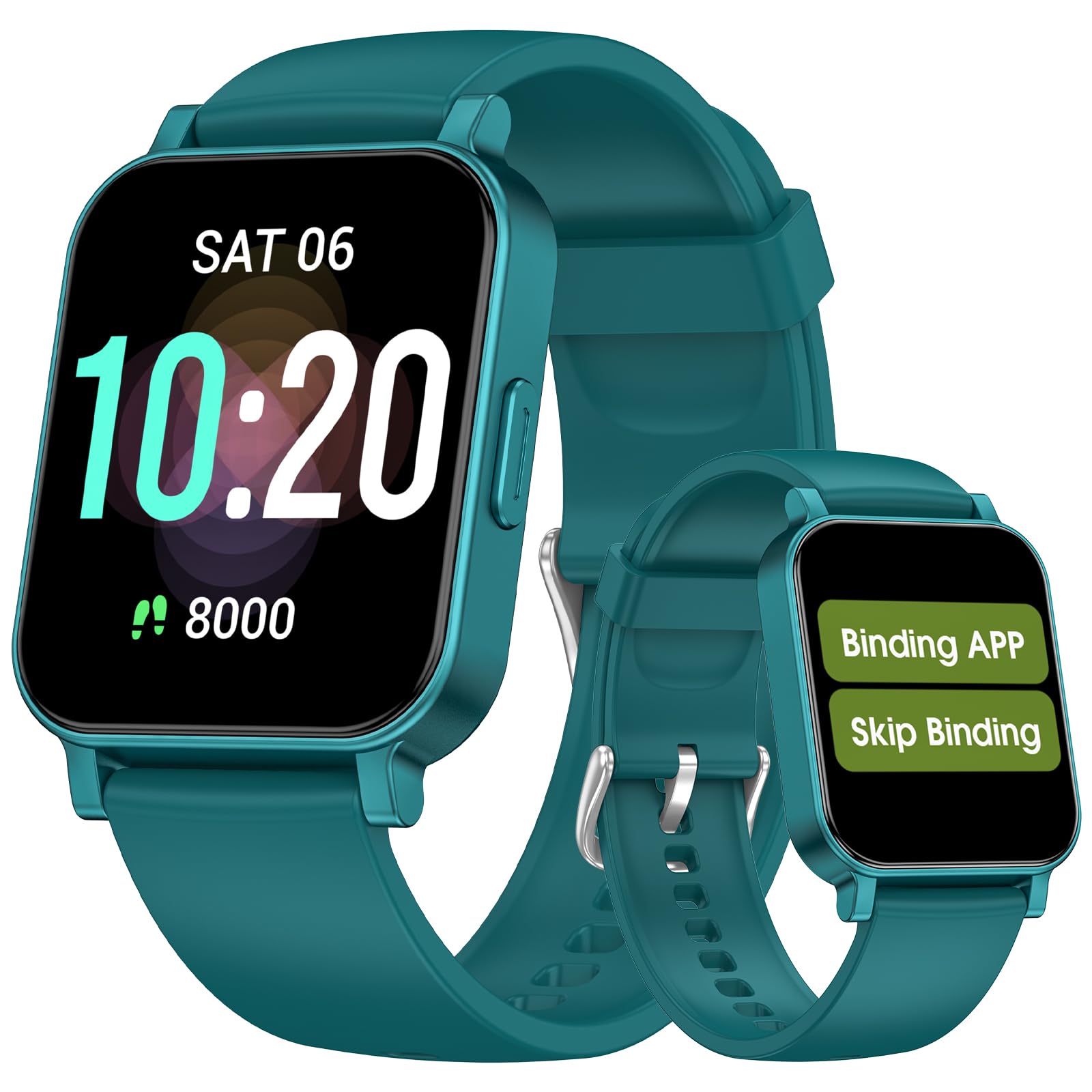
This DAVIKO watch addresses a core need: advanced health tracking without tethering to a smartphone. It operates completely independently, using its responsive touchscreen for all settings and data viewing. You can monitor heart rate in real-time, manually check blood oxygen, track sleep patterns, and of course, count steps and calories—all without ever downloading an app or pairing with Bluetooth.
This independence is its superpower for tech-wary users. The large LCD color display is bright and menus are navigable via touch. It charges easily with a magnetic cable and lasts about a week, and its IP68 rating means it can handle handwashing and rain. The design is straightforward, presenting health data in a clear, accessible way directly on the device, which empowers the wearer with immediate feedback.
Reviews from those purchasing for seniors highlight this hassle-free experience. It’s a watch first, offering time and date, with the bonus of health metrics. There’s no learning curve for app management or syncing issues to troubleshoot. It’s a self-contained health monitor that prioritizes simplicity and direct access to information.
Why it’s great
- Truly standalone operation—no smartphone, app, or internet required.
- Provides meaningful health data (HR, SpO2, sleep) directly on a clear touchscreen.
- One-week battery life with simple magnetic charging.
- Eliminates the complexity and potential frustration of device syncing.
Good to know
- Data is only stored on the device (no long-term trend history without manual logging).
- The touchscreen interface, while simple, still requires some navigation learning.
- Manual SpO2 readings require the user to initiate a scan.
5. Blackview Smart Watch
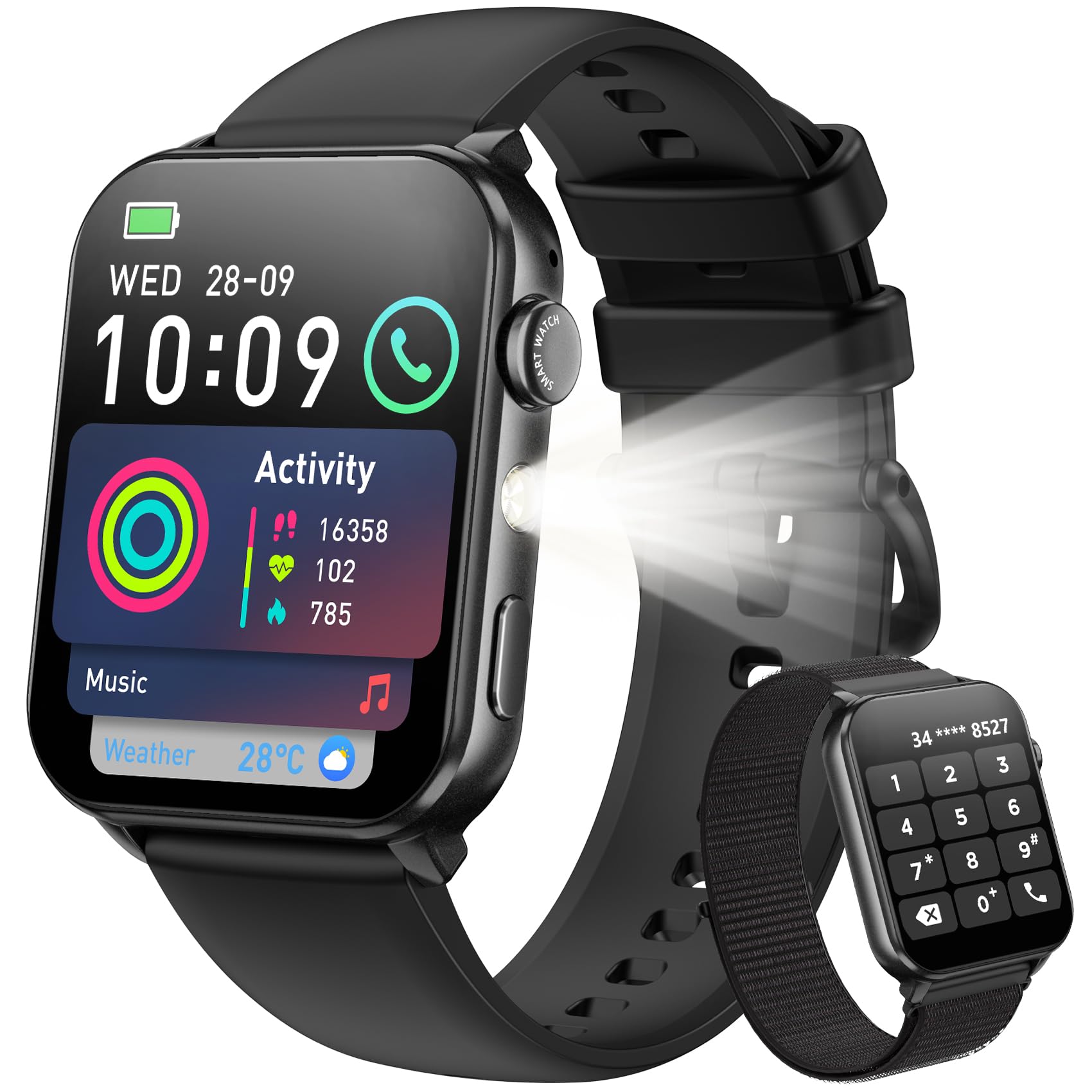
The Blackview Smart Watch packs a surprising number of thoughtful, practical features into a budget-friendly package. The built-in LED flashlight is a standout—exceptionally useful for nighttime navigation, reading labels, or finding keys in a dark purse. It also includes two bands (nylon and silicone) in the box, allowing immediate customization for comfort and style.
Beyond the extras, it covers all the smartwatch bases well: Bluetooth call functionality, notifications, 100+ sports modes, and continuous health monitoring for heart rate, blood oxygen, and sleep. The 1.91-inch HD screen is vivid and responsive. Battery life is reliable for up to 6 days of use, and it charges quickly. It feels like a device that considers real-world daily needs beyond just fitness metrics.
Users are consistently pleased with the value it delivers. The inclusion of the flashlight and extra strap is frequently mentioned as a major plus. The setup with the Da Fit app is standard, and once connected, it performs reliably. It’s an excellent choice for someone who appreciates utility and wants a full-featured watch without a premium investment.
Why it’s great
- The integrated flashlight is a brilliantly practical, everyday tool.
- Includes both a silicone and a more breathable nylon band for versatility.
- Offers call functionality and comprehensive tracking at a mid-range point.
- Large, clear screen that’s easy to interact with.
Good to know
- Some users note the voice assistant feature can be finicky to set up.
- Battery life reports vary, with some experiencing less than the advertised duration.
- Requires smartphone app for full functionality and setup.
6. 3DFitBud Simple Step Counter

When the goal is purely to count steps with absolute minimal fuss, the 3DFitBud is a top contender. This dedicated pedometer uses proven 3D sensor technology for accurate counting whether it’s clipped to a waistband, placed in a pocket, or worn around the neck on its included lanyard. It has one job, and it’s designed to do it exceptionally well with zero technological overhead.
The user experience is refreshingly direct: clip it on in the morning, press the reset button, and walk. The extra-large digital display shows the step count in bold numbers that are easy to glance at. Its greatest practical advantage is the pre-installed CR2032 battery, which lasts up to an entire year, eliminating any concern about charging cables or dead devices. It automatically sleeps when idle to conserve power.
Long-term users love its reliability and motivational simplicity. It’s a physical reminder to move, with no distractions from notifications or complex data. The two-year warranty from 3DActive also speaks to its build quality. For anyone overwhelmed by smart devices or who just wants an honest measure of daily ambulation, this is a perfect, trustworthy tool.
Why it’s great
- Ultra-simple, single-purpose device with no setup or connectivity required.
- Year-long battery life means truly “set it and forget it” operation.
- Accurate 3D sensor works in multiple carrying positions (clip, pocket, lanyard).
- Large, easy-to-read screen focused solely on step count.
Good to know
- Only tracks steps—no time, heart rate, or other metrics.
- The clip or lanyard can be lost if not secured properly.
- Some users report rare instances of the device resetting on its own.
7. LIVIKEY Fitness Tracker
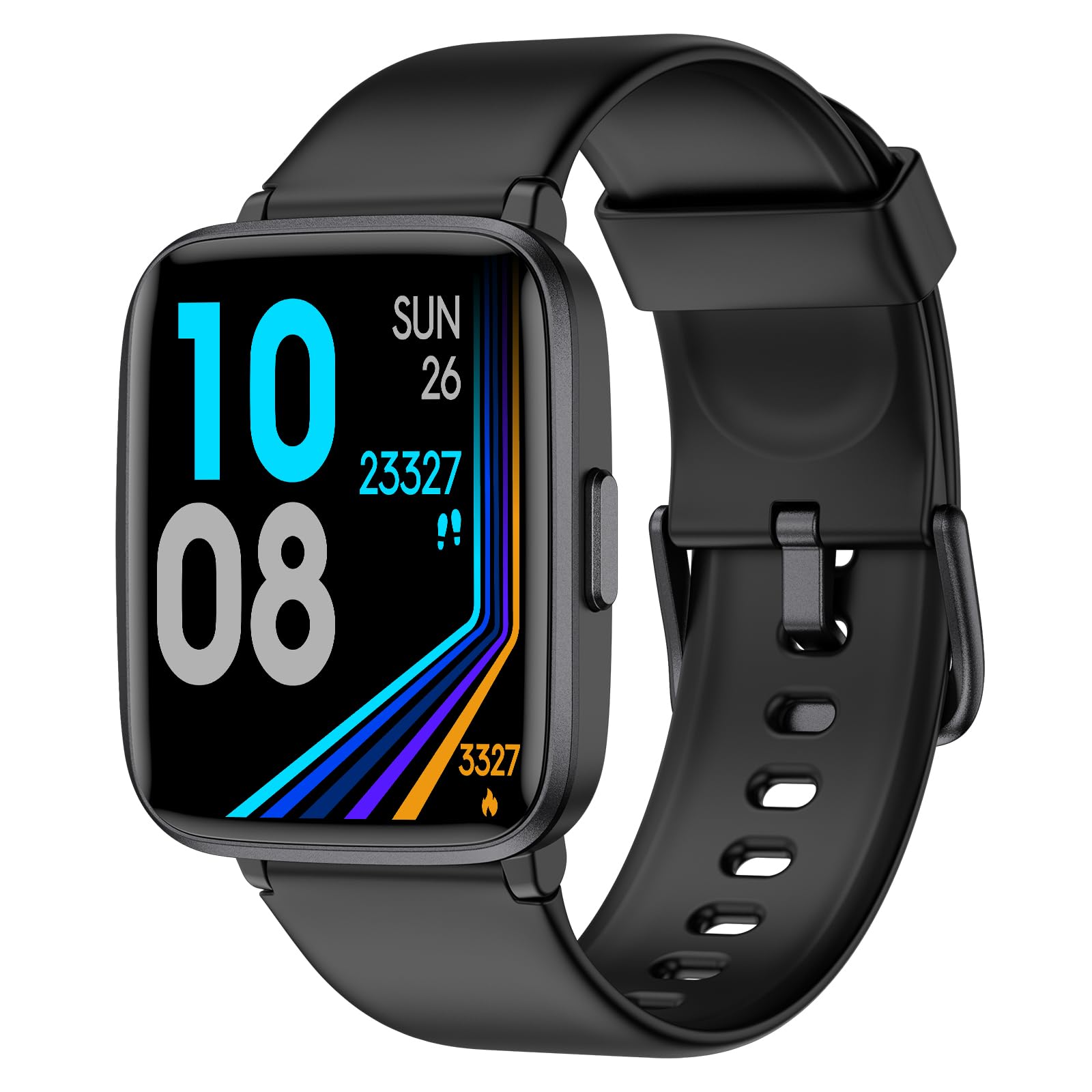
The LIVIKEY Fitness Tracker is a compelling entry-point into the world of smart bands, offering core health tracking features at a very accessible point. It provides continuous heart rate monitoring, automatic sleep stage analysis, and basic activity tracking for steps, distance, and calories. For a user curious about more than just steps but not ready for a full smartwatch, this strikes an ideal balance.
It connects via Bluetooth to a smartphone app where you can view detailed historical data, set goals, and receive smart notifications for calls and texts on the tracker’s screen. The device itself has a bright, color 1.3-inch touchscreen that’s responsive. Battery life is reliable for nearly a week, and it charges fully in about two hours. Its IP68 rating makes it safe for handwashing and workouts.
Feedback often notes its comfort and surprising quality for the category. While the step counting can be influenced by arm movement (a common issue with wrist-based trackers), the heart rate and sleep data are generally considered helpful and accurate enough for personal trend observation. It’s a no-frills gateway to connected health tracking.
Why it’s great
- Provides essential smart features (HR, sleep, notifications) at a budget-friendly level.
- Comfortable, lightweight band design suitable for all-day wear.
- Good battery life and quick charging.
- Easy-to-use companion app for data review.
Good to know
- Step counting accuracy can be inflated by non-walking arm movements.
- Sleep tracking may not capture all wake periods perfectly.
- Requires a smartphone and app for setup and detailed data.
8. TYKOIT Pedometer Watch

Similar in philosophy to the DAVIKO, the TYKOIT Pedometer Watch offers a standalone, watch-first experience. It requires no smartphone connection to function, making it instantly usable. All operations, from setting the time to checking heart rate or sleep data, are performed directly on the device via its responsive color touchscreen. This makes it feel familiar—like setting a digital watch—but with added health insights.
It tracks steps, calories, distance, and active time automatically. It also monitors heart rate and allows for manual blood oxygen checks. The sleep tracking happens automatically at night. The design is clean and lightweight, and it charges via a simple magnetic cable with a battery life of about 7 days. It’s a straightforward alternative to a basic watch, with the bonus of activity awareness.
Users who value independence appreciate this model. There’s no account to create, no software to update, and no sync errors. The data is present on the wrist for immediate review. It’s an excellent “set it once and wear it” solution that reduces digital friction to almost zero while still providing useful fitness feedback.
Why it’s great
- Fully independent operation with an intuitive touchscreen interface.
- Functions as a regular watch while tracking key activity and health metrics.
- Week-long battery life with hassle-free magnetic charging.
- No reliance on a smartphone or external apps eliminates a major point of failure.
Good to know
- All data is stored on-device only, with no cloud backup or long-term trend analysis.
- Initial time/date setup is done on the watch itself, which some may find fiddly.
- The band quality has been noted as a potential weak point by some.
9. DAVIKO Pedometer Watch (App Optional)
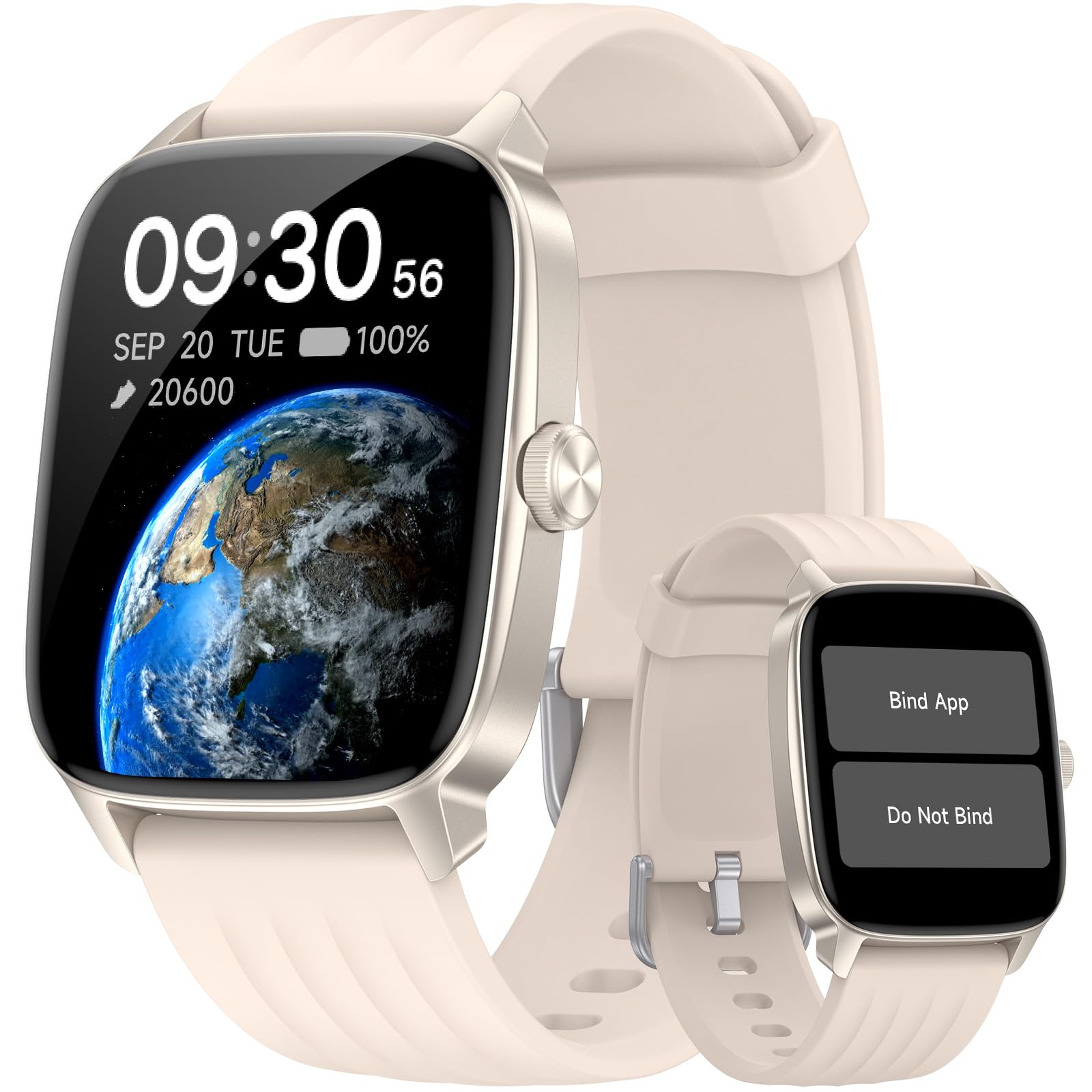
This DAVIKO model offers a clever “best of both worlds” approach. Out of the box, it works as a capable standalone tracker with a large 1.85-inch display, showing steps, heart rate, and sleep data without any phone connection. This makes it immediately accessible. However, if the user wants to dive deeper, they have the option to connect it to the VeryFit app via Bluetooth to unlock more sports modes, customizable watch faces, and call/message notifications.
This flexibility is its key advantage. It can start as a simple device and grow into a smarter one if and when the user is ready. The retina-grade screen is bright and clear, and the watch is IP68 waterproof. Battery life is up to 7 days, and it offers basic health monitoring that is viewable directly on the device. It respects the user’s current comfort level while leaving a door open to more features.
For a caregiver setting up the device, this is a safe choice. You can set it up in its simple, independent mode for immediate use. Later, if the senior becomes more curious, the added features are available without buying a new device. It’s a thoughtful design that accommodates a potential evolution in usage.
Why it’s great
- Offers flexible use—simple standalone mode or enhanced features with app pairing.
- Large, high-quality 1.85-inch display is very easy to read.
- IP68 waterproof and reliable week-long battery life.
- Grows with the user’s comfort level, providing a future-proof option.
Good to know
- The dual-mode concept might still require explanation initially.
- To get the most from it, eventual smartphone pairing is needed.
- Some app-connected features (like notifications) add complexity.
10. Pautios Pedometer Watch
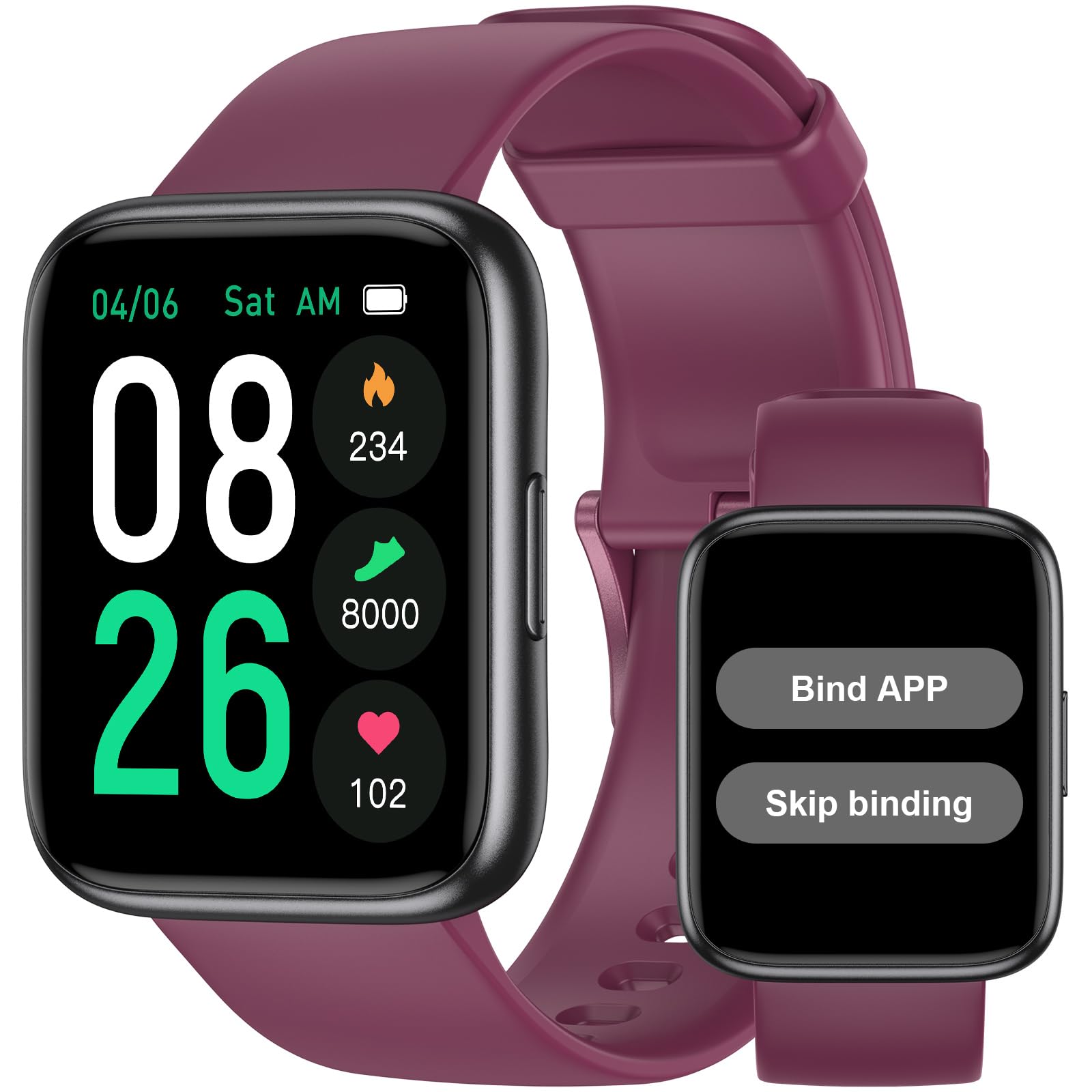
The Pautios watch distinguishes itself with a superior 1.8-inch AMOLED display, which offers richer colors, deeper blacks, and better visibility in various lighting conditions compared to standard LCD screens. This focus on screen quality makes all the data it presents—steps, heart rate, blood oxygen, sleep—exceptionally clear and legible at a glance, which is a major advantage for visual ease.
Like several others in this guide, it operates completely independently of a smartphone. There’s no Bluetooth pairing or app required for core functionality. It tracks health metrics and activity using its built-in sensors and shows everything on that vibrant screen. The battery can last up to 14 days of typical use, which is outstanding, and it charges quickly in about 1.5 hours.
User reviews that are positive highlight the stunning screen and the freedom from a phone. However, some note that the lack of a detailed manual can make initial configuration (like setting the time) a bit of a puzzle. Once set up, it’s a reliable, beautiful, and simple health-tracking watch that prioritizes display clarity above all else.
Why it’s great
- Beautiful, high-contrast AMOLED display maximizes readability.
- Fully independent operation with no smartphone tethering.
- Exceptional 14-day battery life leads the category.
- Tracks comprehensive health data (HR, SpO2, sleep) on-device.
Good to know
- Initial setup and navigation can be confusing without a clear manual.
- The user interface, while on a great screen, may not be the most intuitive.
- Lacks the option to connect to an app for those who later want it.
11. NESKLA 3D Pedometer

The NESKLA Pedometer is the definition of a bare-bones, entry-level step counter. It has one function: count steps using a 3D sensor. There is no Bluetooth, no screen beyond the step counter, no apps, and no connectivity of any kind. You clip it to a waistband, belt, or pocket, and it counts. This extreme simplicity is its greatest strength for those who are deeply tech-averse.
It features a large LCD display that shows only the step count, making it impossible to misinterpret. The included CR2032 battery lasts up to a year, and the device automatically sleeps when not in motion. It comes with both a clip and a lanyard for wearing options. For someone whose sole fitness goal is to be aware of and increase daily steps, this removes every possible barrier.
Feedback confirms it’s accurate for basic step counting when worn correctly. The primary caution from users is that the clip can sometimes be prone to releasing, and a hard drop might cause it to reset. However, for its intended ultra-simple purpose, it delivers reliable performance at the most accessible end of the market.
Why it’s great
- The ultimate in simplicity—literally just a step counter with zero setup.
- Large, single-purpose display is impossible to misread.
- Year-long battery life means no charging ever.
- Very budget-friendly way to start tracking movement.
Good to know
- Only tracks steps—no time, distance, or any other metrics.
- The clip mechanism may not be secure on all types of clothing.
- Can be prone to accidental resets if dropped or bumped hard.
Understanding the Specs
Standalone vs. Connected
A critical distinction. Standalone devices (like basic pedometers and some watches) operate entirely on their own, storing data on the device. They require no smartphone and are simpler but offer no long-term trend analysis. Connected devices sync via Bluetooth to an app on a smartphone. This enables detailed historical data, insights, and notifications but adds complexity and requires a compatible phone and user comfort with the app.
Sensor Type & Accuracy
For step counting, 3D Tri-Axis sensors (in pedometers) are generally more accurate than wrist-based accelerometers, especially when clipped at the waist. Wrist-based trackers estimate steps from arm motion, which can include false steps from activities like cooking. For health metrics, optical heart rate sensors (LED lights on the back) provide continuous readings but are less clinical than a chest strap; they’re excellent for tracking trends over absolute precision.
FAQ
Do elderly users really need a smartwatch with all the features?
How accurate are the heart rate and sleep tracking on these devices?
Is a clip-on pedometer better than a wrist tracker for counting steps?
What happens if they don’t have a smartphone for the tracker?
Final Thoughts: The Verdict
For most people, the activity tracker for elderly winner is the Fitbit Inspire 3 because it delivers trustworthy health insights with minimal daily hassle and outstanding battery life. If you want complete independence from a smartphone, grab the DAVIKO Smart Watch (No App Required). And for the absolute simplest, most foolproof step counting, nothing beats the 3DFitBud Simple Step Counter.

Mo Maruf
I created WellFizz to bridge the gap between vague wellness advice and actionable solutions. My mission is simple: to decode the research and give you practical tools you can actually use.
Beyond the data, I am a passionate traveler. I believe that stepping away from the screen to explore new environments is essential for mental clarity and physical vitality.