Our readers keep the lights on and my smoothie glass nicely filled. As an Amazon Associate, I earn from qualifying purchases.
Chlorine aftertaste, sediment haze, and lingering odors from the tap are not just sensory gripes—they signal the presence of dissolved organic compounds and residual treatment chemicals that slip through municipal lines. An activated carbon water filter targets exactly these impurities, its porous surface trapping chlorine, volatile organic compounds (VOCs), and particulates through adsorption rather than simple straining. The result is water that tastes cleaner, smells neutral, and sits more comfortably on the palate for drinking, cooking, and brewing.
I’m Mohammad Maruf — the founder and writer behind WellFizz. I spent years evaluating water filtration hardware, analyzing micron ratings, media density, NSF certification scopes, and real-world gallon throughput to separate marketing claims from measurable performance.
This guide breaks down the top contenders so you can find the best activated carbon water filter for your specific set-up and water quality concerns.
How To Choose The Best Activated Carbon Water Filter
Activated carbon filters are not interchangeable. The media format, micron rating, and certification scope determine whether a unit solves your actual water problem or just adds another step to your faucet routine. Three variables dominate the decision.
Media Format: Granular vs. Block
Granular activated carbon (GAC) filters—like those inside most pitcher reservoirs—use loose carbon bits packed into a perforated housing. They excel at chlorine taste reduction and maintain good flow rates but channel water around particles, reducing contact time for smaller contaminants. Solid carbon block filters compress carbon into a dense matrix, forcing water through a 0.5–5.0 micron pore structure. This traps finer particles, cysts, and some heavy metals, though flow resistance is higher and pressure must be adequate for under-sink or whole-house applications.
Certification Depth: NSF/ANSI Standards 42 vs. 53 vs. 401
Standard 42 covers aesthetic improvements—chlorine taste, odor, and sediment. Standard 53 goes further, certifying reduction of health-related contaminants like lead, mercury, and cryptosporidium. Standard 401 targets emerging compounds including pharmaceuticals and PFOA/PFOS. A filter carrying only Standard 42 certification is fine for taste improvement but insufficient if you need heavy metal reduction. Always check the certifying body logo, not just the phrase “tested to standards.”
Micron Rating and Flow Trade-offs
The micron number printed on a carbon block filter refers to the size of particles it physically blocks. A 0.5-micron filter catches most protozoan cysts and fine sediment but slows water noticeably—expect lower output in a whole-house housing. A 5-micron filter flows faster but lets small particles and some bacteria-sized organisms pass. For standard municipal tap water with no known well contamination, 1.0 to 5.0 microns offers a practical compromise between performance and flow.
Quick Comparison
On smaller screens, swipe sideways to see the full table.
| Model | Category | Best For | Key Spec | Amazon |
|---|---|---|---|---|
| Waterdrop ED01W | Electric Pitcher | Instant dispensing, 30-day battery | 0.5 µm block, 200‑gal capacity | Amazon |
| Waterdrop PT-04B | Pitcher (Wooden Handle) | Long filter life, 4 filters included | 200‑gal per filter, NSF 42 & 372 | Amazon |
| Exp. Water ACB 10‑Pack | Carbon Block (10”) | RO/whole‑house, bulk value | 5.0 micron, coconut shell carbon | Amazon |
| Brita Wave 10‑Cup | Pitcher (Flip Lid) | Fridge storage, easy refill | GAC media, 40‑gal per filter | Amazon |
| Brita Large 10‑Cup | Pitcher (Standard) | Budget‑friendly, NSF certified | GAC media, 40‑gal per filter | Amazon |
| EXCELPURE 4‑Pack | CTO Carbon (10”) | Whole‑house, chlorine & sediment | 1.0 micron, 13,000‑gal total | Amazon |
| AO Smith AO‑MF‑ADV‑R | Under‑Sink (Direct Connect) | High contaminant reduction, NSF 53 | 78 contaminants reduced, 784‑gal | Amazon |
In‑Depth Reviews
1. Waterdrop ED01W Electric Water Filter Pitcher
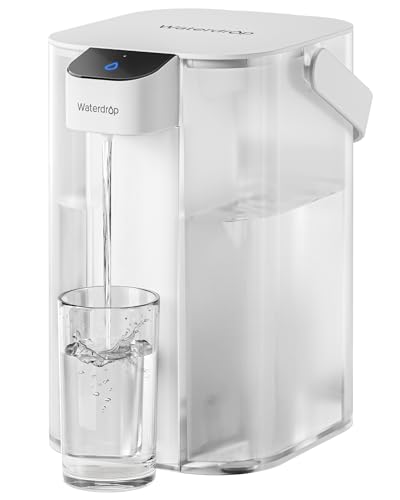
The Waterdrop ED01W rethinks the pitcher format entirely by adding an internal pump and rechargeable battery that delivers filtered water on demand in about one second. Its 0.5-micron carbon block filter targets lead, chlorine, microplastics, and over 45 other contaminants, and the unit carries NSF/ANSI certifications under Standards 42, 53, 401, and 372 — a rare depth of third-party testing for a countertop dispenser. The 200-gallon filter life means you replace the cartridge roughly every three months, and the 30-day standby battery ensures you are not tethered to an outlet.
The touch-button dispensing eliminates the tilt-and-pour motion that bothers some users with heavy pitchers. Because this is a carbon block design rather than GAC, you get better sediment hold and more consistent contact time for VOC reduction. The unit does not lower TDS, so mineral content remains unchanged — a preference for some, a drawback for anyone seeking demineralized water. The maximum fill line must be respected to avoid leaks from the reservoir seam.
Customer feedback highlights the water taste improvement and the ease of use across ages from young children to seniors. The electric mechanism is quiet enough for an open-plan kitchen, and the USB-C charging port eliminates proprietary cables. For anyone who wants instant filtered water without plumbing changes, this is the most complete all-in-one solution available.
Why it’s great
- One-second dispensing with no waiting or tilting
- 0.5-micron block removes cysts and fine sediment effectively
- NSF/ANSI certified under three standards for health and aesthetic contaminants
Good to know
- Does not reduce TDS — mineral content stays the same
- Battery requires USB-C charging every 30 days
- Filter life indicator is helpful but not precise for all water qualities
2. Waterdrop PT-04B 10-Cup Pitcher with 4 Filters

Waterdrop’s PT-04B combines a natural wood handle with an advanced ACF (activated carbon fiber) filter that outperforms standard GAC in flow speed and contact efficiency. Each of the four included filters lasts 200 gallons — five times longer than a typical Brita standard filter — so you can run the pitcher for roughly a year before needing replacements. The unit is NSF 42 and 372 certified for chlorine reduction (97.4%) and lead-free materials, with third-party testing showing effective PFOA/PFOS reduction.
The hands-free spout lid design lets you refill through a top opening without removing the lid, which also keeps dust out of the reservoir. The wooden handle sits comfortably in the hand, and the pitcher’s 10-inch height fits standard fridge shelves. Dual-section filter media speeds up the filtration rate noticeably compared to single-stage GAC pitchers — you can pour a full glass in about 10 seconds from a freshly topped reservoir.
Users consistently praise the taste improvement over tap water and the build quality of the spout mechanism. The one recurring caution is that the top reservoir can pop off if the pitcher is tipped forward while full, so pour with the body supported. For a classic pitcher that delivers premium filter longevity and a kitchen-friendly aesthetic, this is the strongest performer in its segment.
Why it’s great
- Four filters included deliver about one year of use
- 200-gallon lifespan per filter reduces replacement frequency
- Wooden handle adds comfort and a refined look
Good to know
- Top lid can detach when pouring with a full reservoir
- Does not reduce TDS — mineral content is preserved
- Heavy when full; requires two-handed pour for safety
3. Express Water 10‑Pack Activated Carbon Block ACB

The Express Water ACB 10-pack delivers solid carbon block filters built from 100% coconut shell carbon processed in vacuum-heated laboratory conditions. At 5.0 microns, these 10-inch cartridges are optimized for under-sink reverse osmosis systems, whole-house housings, and countertop units that accept standard 10″ x 2.5″ formats. The carbon block structure ensures every drop of water contacts the media surface, improving VOC and chlorine reduction compared to wound or pleated sediment filters of the same micron rating.
Each filter carries an ANSI/NSF certification and targets chlorine taste, odor, cloudiness, and industrial solvents. The 10-pack pricing brings the per-filter cost well below most single retail replacements, which matters if you maintain multiple filter housings or change cartridges frequently. Users with well water report that pairing this block after a sediment pre-filter yields noticeable improvements in sulfur odor and rust taste without a significant flow reduction.
Some buyers noted that recent packaging removed the internal cardboard separators, occasionally causing the end caps to detach during shipping. Inspect the caps on arrival before installation. For anyone running a multi-stage RO system or a 10-inch whole-house rig, this bulk pack provides a reliable carbon block upgrade that outperforms generic wound filters at a per-unit cost that is hard to beat.
Why it’s great
- Coconut shell carbon block offers higher adsorptive surface than GAC
- 10-pack bulk pricing cuts per-filter cost significantly
- Fits standard 10″ x 2.5″ housings across multiple brands
Good to know
- Some batches lacked cardboard separators, risking cap damage
- 5.0 micron rating allows small particles through
- Not suitable as a standalone filter for heavy sediment loads
4. Brita Wave 10 Cup Pitcher
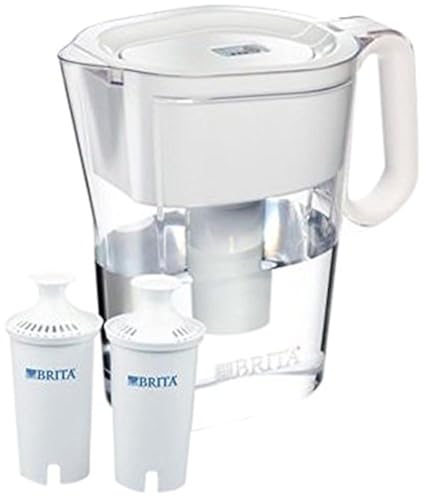
Brita’s Wave redesign focuses on ergonomic and functional improvements over older pitcher generations. The flip-top lid lets you refill from the faucet without removing the entire top, and the narrow footprint sits comfortably on refrigerator shelves. Its GAC media reduces chlorine taste and odor and is certified to lower copper, cadmium, and mercury levels. Each standard filter lasts 40 gallons — about two months for an average household — and the package includes two filters to get you started.
The Wave shape curves inward at the grip, making pouring easier for smaller hands compared to the classic Brita rectangle. The electronic filter indicator on the lid tracks usage time rather than gallon volume, giving a reasonable approximation of when to swap cartridges. The 10-cup capacity fills roughly three standard reusable bottles, which is adequate for a household of two to three people between refills.
Users note that the spout door sometimes sticks or does not open fully, causing water to spill inside the cabinet if the pitcher is poured too aggressively. The plastic body feels lighter than earlier Brita models, which some interpret as reduced durability. For a low-maintenance, widely available GAC pitcher with a proven filtration track record, the Wave is a reliable choice for chlorine-focused taste improvement.
Why it’s great
- Flip-top lid simplifies refilling without removing the lid
- Narrow footprint fits most refrigerator door shelves
- Built-in electronic indicator reduces guesswork on filter changes
Good to know
- Spout door can stick, causing cabinet spills during pour
- 40-gallon filter life requires more frequent swaps than premium options
- Plastic body feels less robust than earlier Brita designs
5. Brita Large 10-Cup Pitcher
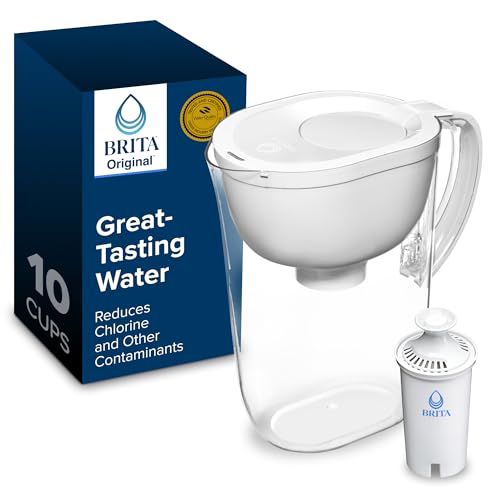
This is the classic Brita large pitcher, validated by WQA against NSF/ANSI standards for chlorine taste and odor, zinc, copper, and cadmium reduction. The BPA-free plastic body holds 10 cups and fits within a 5.4-inch width, making it one of the slimmest 10-cup options for tight fridge shelves. The easy-fill locking lid stays in place during pouring and prevents the cap from falling off, a practical fix for the loose-lid complaint from earlier Brita generations.
Filtration relies on standard Brita GAC cartridges, which you replace every 40 gallons or roughly two months. The Longlast+ filter is also compatible here, extending the change interval to 120 gallons or six months. Users report noticeable improvements in coffee and tea flavor after switching, because the chlorine removal allows the subtle notes of the brew to come through without chemical interference. The pitcher’s handle is ergonomically shaped and sits comfortably for one-handed pouring.
The main durability concern is that the pitcher becomes heavy when full — about 8.5 pounds — and some users have experienced cracks at the handle joint after extended use. The replacement reminder stickers on the filters are small and can be difficult to remove. For an entry-level GAC pitcher with solid certification backing and broad filter availability, this remains a sound and widely trusted option.
Why it’s great
- WQA certified to NSF/ANSI 42 for chlorine and taste reduction
- Narrow width fits easily in refrigerator doors
- Compatible with Longlast+ filters for extended 6-month use
Good to know
- Can feel heavy when full; handle may crack over time
- 40-gallon standard filter life requires frequent changes
- Filter reminder stickers are small and hard to peel off
6. EXCELPURE 1 Micron 10″ CTO Carbon 4‑Pack

EXCELPURE’s 10″ x 2.5″ CTO carbon filter is built for whole-house and countertop systems that rely on standard size housings. The 1.0-micron rating catches sand, rust, sediment, and color bodies more effectively than coarser 5-micron blocks, while still maintaining a practical flow rate for most residential set-ups. Each filter handles up to 13,000 gallons in total across the 4-pack — enough to cover a full year of whole-house filtration for an average family of four, assuming pre-sediment filtration is in place.
The filter uses food-grade materials certified to European EC1935-2004, Australia WaterMark, and BPA-free standards. EXCELPURE specifically recommends these for treated municipal tap water, not raw well water containing large mud and sand particles that could clog the block prematurely. For well water, a higher-capacity pre-filter like their B08XLTD9RM should precede this CTO stage. Compatibility spans a wide cross-section of brands: DuPont, Whirlpool, GE, Culligan, Everpure, and Flotec models all accept this cartridge.
Users with moderate sediment loads report the water runs clear and tastes noticeably better after installation. The 4-pack value undercuts most single-brand replacements while maintaining consistent build quality. The main caveat is that this is a true chlorine, taste, and odor (CTO) filter — it does not reduce heavy metals or VOCs to the degree a catalytic carbon or specialty block would. For straightforward chlorine and sediment cleanup at a high flow rate, it is an excellent workhorse.
Why it’s great
- 1.0-micron rating catches fine sediment and color bodies
- 13,000-gallon total capacity across four filters
- Broad compatibility with major whole-house system brands
Good to know
- Not designed for raw well water without a pre-sediment filter
- Does not target heavy metals or VOCs beyond chlorine
- Requires confirmation of housing dimensions before purchase
7. AO Smith Advanced Direct Connect Replacement Filter

AO Smith’s AO-MF-ADV-R is a proprietary under-sink replacement filter designed exclusively for the AO-MF-ADV system, leveraging Claryum three-stage filtration that combines activated carbon, ion exchange, and sub-micron mechanical retention. The unit is IAPMO certified to NSF/ANSI Standards 42, 53, and 401, targeting 78 contaminants including lead, mercury, asbestos, pesticides, pharmaceuticals, chlorine, and microplastics. The 784-gallon capacity translates to roughly six months of use for a family of four, and the direct-connect twist-on design eliminates the need for tubing or wrenches during changes.
The carbon component in the Claryum media uses a dense block structure that maximizes contact time with incoming water, which is why it achieves up to 99% reduction for the listed contaminants. Users in areas with hard water report noticeable softening effects and reduced scale buildup in coffee machines and kettles. The flow rate remains strong throughout the filter’s life, with some users reporting 7–8 months before noticing any drop in performance.
The major limitation is strict incompatibility: only the exact AO-MF-ADV-R filter works with this system — generics will leak or fail to seat correctly. The replacement cost is higher than typical carbon block cartridges, but the certified reduction scope justifies the expense for households concerned about heavy metals and pharmaceuticals. For an under-sink solution that addresses health contaminants beyond taste and odor, this filter sets the benchmark.
Why it’s great
- NSF 42, 53, and 401 certification covers 78 contaminants
- Claryum media combines carbon block with ion exchange for broad removal
- 784-gallon capacity reduces change frequency to twice per year
Good to know
- Proprietary design — only AO-MF-ADV-R filter fits the system
- Higher per-filter cost than generic carbon block cartridges
- May not be widely stocked in retail stores; order ahead
FAQ
What is the difference between a standard and a Longlast Brita filter for activated carbon filtration?
Can an activated carbon filter remove fluoride from drinking water?
How do I know when to replace my activated carbon water filter?
Final Thoughts: The Verdict
For most users, the best activated carbon water filter winner is the Waterdrop ED01W because it combines a 0.5-micron certified carbon block with instant electric dispensing, all in a countertop footprint that requires no plumbing. If you want the longest filter life and a classic pitcher aesthetic, grab the Waterdrop PT-04B. And for under-sink installation with the broadest contaminant reduction — covering lead, pharmaceuticals, and VOCs — nothing beats the AO Smith Advanced Direct Connect.

Mo Maruf
I created WellFizz to bridge the gap between vague wellness advice and actionable solutions. My mission is simple: to decode the research and give you practical tools you can actually use.
Beyond the data, I am a passionate traveler. I believe that stepping away from the screen to explore new environments is essential for mental clarity and physical vitality.