Our readers keep the lights on and my smoothie glass nicely filled. As an Amazon Associate, I earn from qualifying purchases.
An acrylic bathtub glows beautifully when it’s clean, but the wrong cleaner leaves a cloudy film, dulls the surface, or even causes micro-scratches that become permanent havens for grime. The chemical composition of acrylic demands a cleaning approach that is tough on residue yet gentle on the plastic itself.
I’m Mohammad Maruf — the founder and writer behind WellFizz. I’ve spent thousands of hours analyzing consumer product data, filtering through chemical safety sheets, and cross-referencing user experiences to find the formulations that truly protect acrylic tubs while removing hard water scale and soap scum.
After evaluating dozens of formulas, I’ve identified the options that reliably clean without damaging the finish. This guide ranks the top five picks to help you find the best acrylic bathtub cleaner for your household maintenance routine.
How To Choose The Best Acrylic Bathtub Cleaner
Choosing the wrong formula can dull an acrylic tub’s glossy finish. The key is to avoid harsh chemical ingredients that cause chemical etching or crazing (tiny surface cracks) and instead look for gentle dissolving agents and low-abrasion carriers.
Look for Ammonia-Free and Alcohol-Free Formulas
Ammonia and alcohol are common in glass cleaners, but they are aggressive solvents that can react with acrylic polymers. Over time, these chemicals cause the surface to turn hazy or crack. A clean acrylic tub requires a formula explicitly labeled as ammonia-free and alcohol-free.
Assess the Abrasive Level (Cream vs. Spray)
Cream cleansers use fine suspended particles to provide physical scrubbing power, which is essential for rust and hard water rings. Sprays rely on chemical action and are better for daily maintenance and soap scum. If you opt for a cream, look for terms like “non-scratching” or “non-abrasive” to ensure the particle size is smaller than 8 on the Mohs scale, which is safe for acrylic.
Check for Specific Stain Targets
Not all acrylic tub stains are the same. Calcium and lime deposits (white chalky buildup) react best with mild acids like citric acid. Rust stains (orange or brown) require a chelating agent like oxalic acid. General soap scum lifts easily with a surfactant-based spray. Choose a formula whose primary active ingredient matches your tub’s specific discoloration.
Quick Comparison
On smaller screens, swipe sideways to see the full table.
| Model | Category | Best For | Key Spec | Amazon |
|---|---|---|---|---|
| Lucasol Acrylic & Plastic Cleaner | Spray | Streak-free daily shine | 32 fl oz, alcohol & ammonia free | Amazon |
| Zud Cream Cleanser (2-Pack) | Cream | Rust & hard water rings | 19 oz each, bleach-free | Amazon |
| CLR Calcium, Lime & Rust Remover | Liquid | Heavy mineral deposits | 26 oz, fragrance-free, EPA Safer Choice | Amazon |
| Rolite RPAC16z Plastic & Acrylic Cleaner | Spray | Dust-repelling polish | 16 fl oz, anti-static, streak-free | Amazon |
| La’s Totally Awesome Combo | Spray + Refill | Budget-friendly degreasing | 24 oz spray + 64 oz refill, no ammonia | Amazon |
In‑Depth Reviews
1. Lucasol Acrylic & Plastic Cleaner
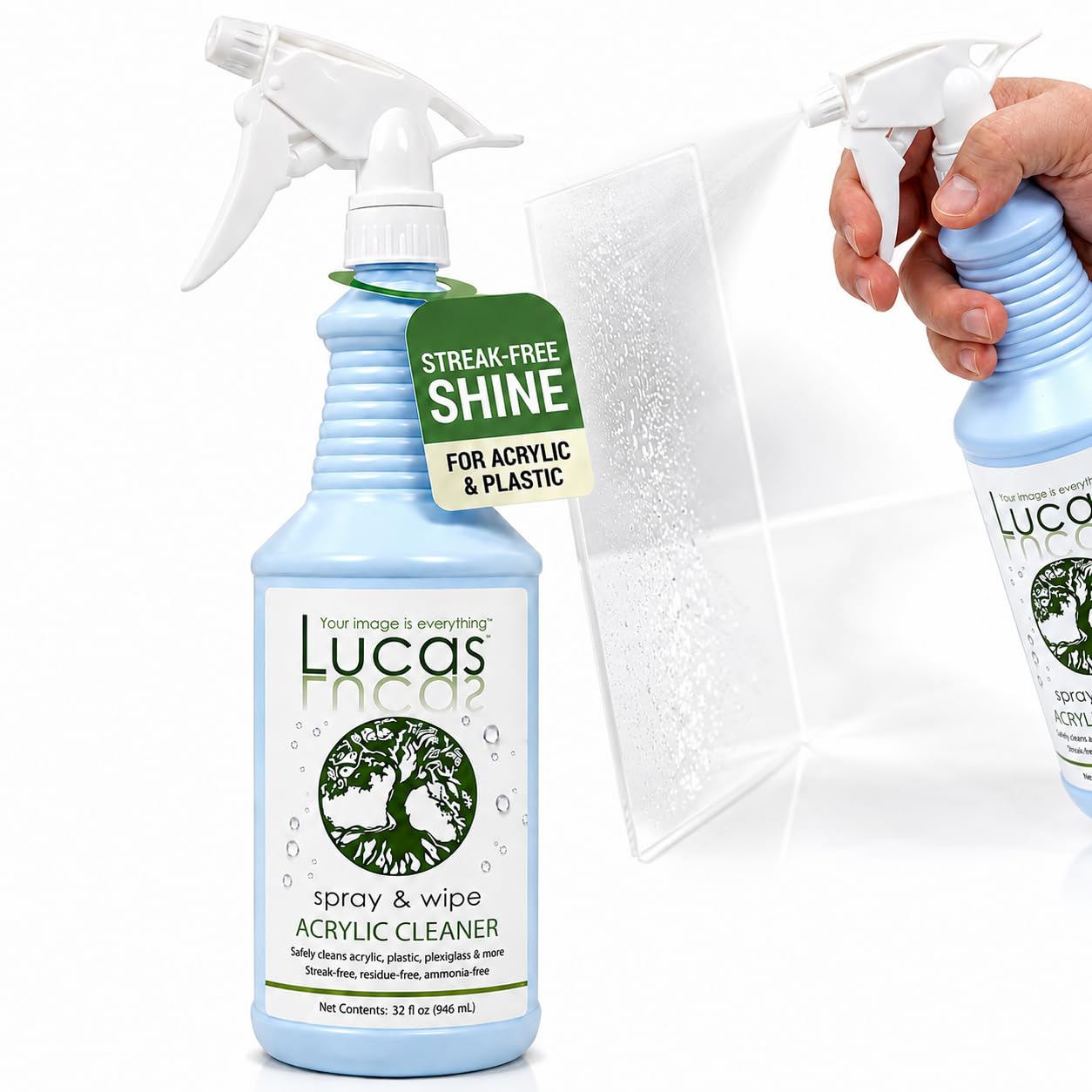
The Lucasol cleaner is the top pick because it nails the three essential criteria for acrylic safety: it is free of both alcohol and ammonia, it leaves no residue behind, and it is gentle enough for sensitive surfaces like tanning beds and plexiglass. The 32-ounce bottle provides generous coverage for weekly maintenance.
Users on sensitive acrylic surfaces report that a single spray and wipe removes fingerprints and smudges without any chemical odor. The consistency is thin enough to avoid pooling in the corners of the tub, yet effective enough to dissolve light soap scum buildup. The formula is also EPA List N compliant, adding a layer of disinfectant assurance for households that prioritize hygiene.
Some users note that heavy limescale requires more elbow grease and multiple applications. If your tub has thick white calcium rings, you may need to pair this spray with a dedicated descaler for the initial deep clean. For ongoing care, this product keeps the acrylic glossy and clear.
Why it’s great
- Completely safe for acrylic — no clouding or cracking risk
- No strong chemical fumes, pleasant for enclosed bathrooms
Good to know
- Not strong enough for heavy, built-up limescale or rust stains
- Requires a microfiber cloth to achieve a truly streak-free finish
2. Zud Cream Cleanser (2-Pack)
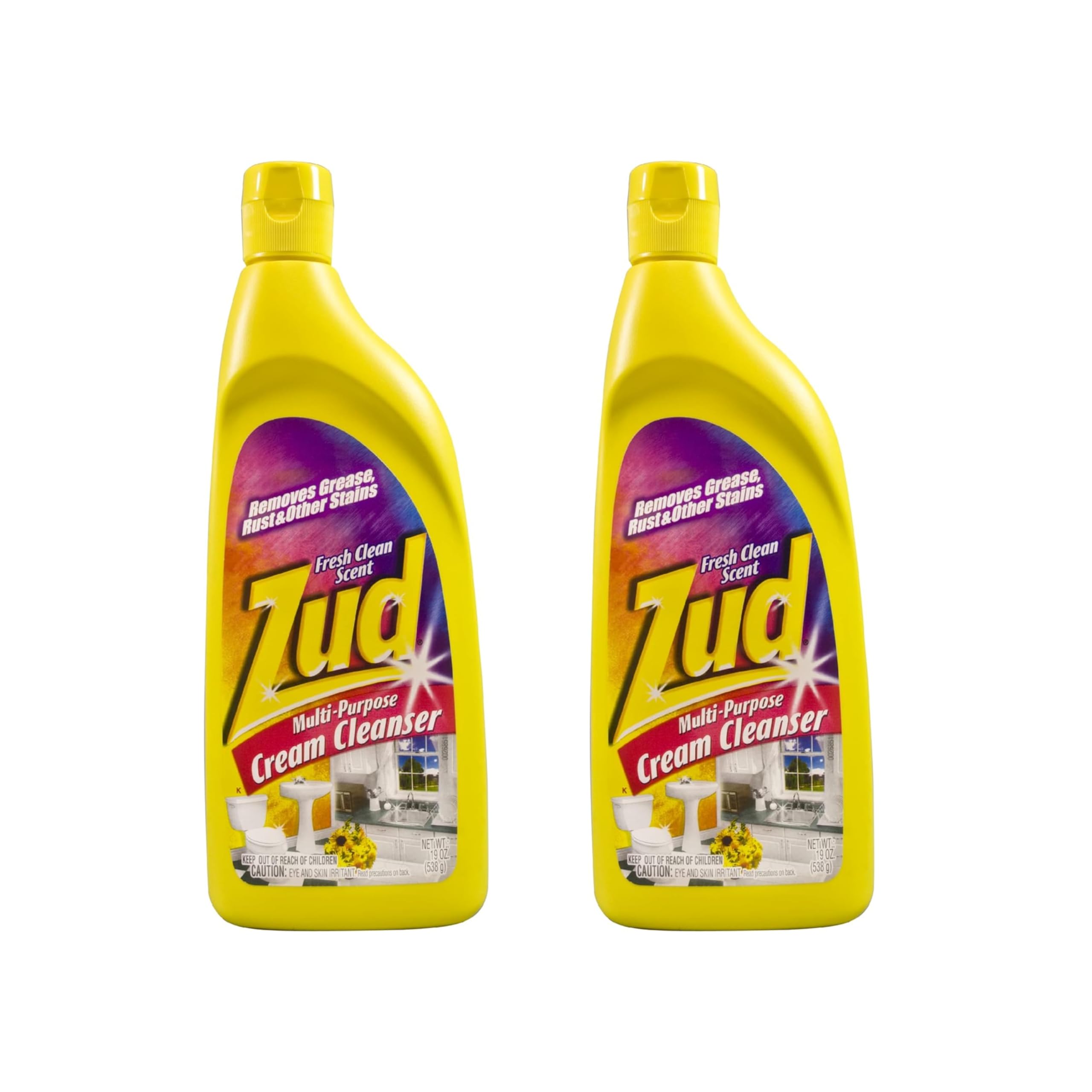
Zud targets the toughest stains that sprays cannot dissolve: rust rings around the drain, stubborn hard water mineral deposits, and yellowing on the tub floor. The cream format uses mild abrasives combined with oxalic acid to chemically break down rust molecules without scratching the acrylic when applied with a soft sponge.
Reviewers consistently highlight that this product transforms years-old mineral stains in a single application. The bleach-free formulation is crucial for acrylic because bleach can cause yellowing and weaken the polymer structure over time. The two-pack gives you a solid rotation.
The primary consideration is that cream cleansers require you to spread the paste, let it sit for a few minutes, then rinse thoroughly. If you do not rinse completely, the fine abrasive particles can create a chalky residue. For weekly maintenance, a spray is faster, but for monthly deep cleaning, Zud is unmatched.
Why it’s great
- Dissolves rust and yellow mineral stains that other cleaners leave behind
- Bleach-free formula protects acrylic from chemical yellowing
Good to know
- Requires thorough rinsing to avoid abrasive residue
- Not ideal for daily use — better suited for a weekly or monthly deep clean
3. CLR Calcium, Lime & Rust Remover Free & Clear
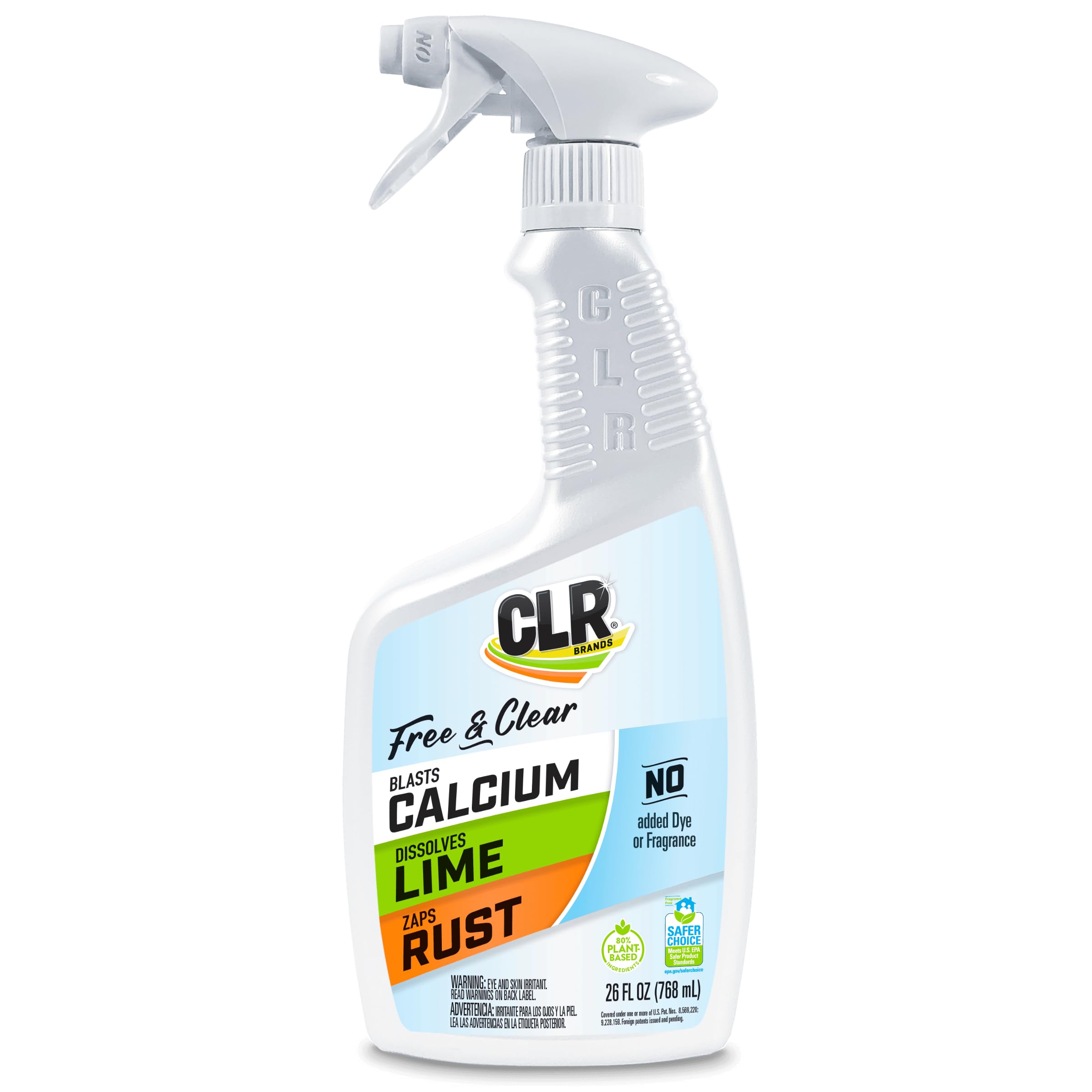
The CLR Free & Clear version drops the dyes and fragrances but keeps the core formulation that dissolves calcium carbonate, lime scale, and iron oxide. This 26-ounce bottle is designed for surfaces that develop hard water buildup, which is a common issue for acrylic tubs in areas with high mineral content in the water supply.
Users confirm that a few minutes of contact time removes the white film that makes an acrylic tub look dull. The formula is thick enough to cling to vertical surfaces of the tub wall. Because it is part of the EPA Safer Choice program, it contains no phosphates, ammonia, or bleach, making it a safer choice for households with children or pets.
The main downside is that the fragrance-free version still has a noticeable chemical odor during use, and it is less effective on old, thick limescale that has been building for years. For that, you may need to apply it multiple times or use a cream cleaner as a follow-up. It is excellent as a monthly maintenance descaler.
Why it’s great
- Effectively dissolves calcium and lime deposits without harsh fumes
- Safe for resin and acrylic surfaces when used as directed
Good to know
- Fragrance-free does not mean odor-free — carries a chemical smell during use
- Older, thick limescale may require more than one application
4. Rolite RPAC16z Plastic & Acrylic Cleaner
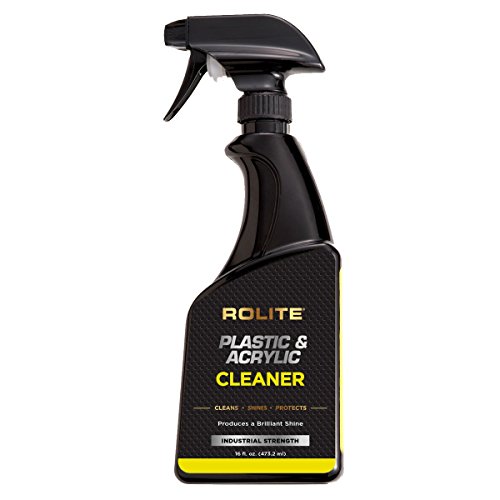
Rolite’s formula is unique among the group because it includes an anti-static agent that repels dust and fingerprints after cleaning. For an acrylic bathtub that sits in a bathroom with high humidity and airborne particles, this is a real advantage — the surface stays cleaner for longer between wipe-downs.
The 16-ounce spray is water-based and contains no ammonia or alcohol, so it is safe for nonporous surfaces like acrylic. Users report that it effectively lifts micro-dirt and haze that ordinary glass cleaners leave behind. It works well on shower doors and tub surrounds, making it a versatile cleaning tool for the whole bathroom.
The spray nozzle has been cited as a reliability issue by several users; some bottles arrive with a defective nozzle that leaks from the bottom. Transferring the liquid to a different spray bottle solves the problem permanently. Also, it is not formulated for heavy limescale or rust—stick to maintenance cleaning only.
Why it’s great
- Anti-static formula repels dust and reduces cleaning frequency
- Zero haze or residue on acrylic when used correctly
Good to know
- Defective spray nozzle is a common complaint requiring a bottle swap
- Not effective on thick limescale or rust deposits
5. La’s Totally Awesome All Purpose Cleaner Combo

La’s Totally Awesome is a degreaser at its core, and it works well on soap scum and body oil residue that builds up on the tub surface. The combo includes a 24oz spray and a 64oz refill, giving you a very high volume per use. The formula contains no ammonia, bleach, or phosphorus, meeting basic safety requirements for acrylic.
User reviews show that this cleaner excels at dissolving greasy grime — the kind of film that accumulates from bath oils and body washes. On an acrylic tub, this means a quick spray and wipe can restore the bright white finish. It is also effective on the bathroom floor and shower walls, making it a solid all-around choice.
Because it is an all-purpose degreaser, it does not target hard water minerals or rust specifically. If your acrylic tub has visible white calcium rings or orange rust streaks, this cleaner will not dissolve them. It is best suited for households with soft water where the primary cleaning need is organic buildup (oils, dirt, and soap).
Why it’s great
- Excellent degreasing power for bath oil and soap scum buildup
- High volume refill system offers excellent long-term value
Good to know
- Not formulated to dissolve hard water minerals or rust stains
- Strong scent, though it dissipates quickly after rinsing
FAQ
Can I use standard bathroom bleach cleaner on my acrylic tub?
What causes the cloudy film on my acrylic tub if I clean it regularly?
How often should I deep clean my acrylic bathtub to maintain the shine?
Final Thoughts: The Verdict
For most users, the best acrylic bathtub cleaner winner is the Lucasol Acrylic & Plastic Cleaner because it offers the safest chemical profile with streak-free results for weekly maintenance. If you want targeted rust and mineral removal, grab the Zud Cream Cleanser. And for a high-volume, budget-conscious solution that handles grease and soap scum effectively, nothing beats the La’s Totally Awesome Combo.

Mo Maruf
I created WellFizz to bridge the gap between vague wellness advice and actionable solutions. My mission is simple: to decode the research and give you practical tools you can actually use.
Beyond the data, I am a passionate traveler. I believe that stepping away from the screen to explore new environments is essential for mental clarity and physical vitality.