Our readers keep the lights on and my smoothie glass nicely filled. As an Amazon Associate, I earn from qualifying purchases.
Room echo and slap-back reverb don’t just degrade audio recordings — they create auditory fatigue that makes concentration harder and entertainment less immersive. Whether you are mixing a track, holding video conferences, or simply wanting your home theater to sound as good as it looks, the core problem is always the same: hard reflective surfaces bouncing sound waves back into the listening zone. Acoustic panels absorb these errant frequencies at the source, turning a chaotic sonic environment into a controlled, pleasant listening space.
I’m Mohammad Maruf — the founder and writer behind WellFizz. I’ve spent years analyzing acoustic treatment materials, NRC ratings, and panel construction methods across hundreds of products to understand what actually separates a dead-sounding room from a worthless visual gimmick.
This guide evaluates seven fundamentally different approaches to room treatment — from traditional mineral-wool broadband absorbers to modern slat-wall hybrids — so you can confidently choose the best acoustic panels for your specific space, budget, and aesthetic requirements.
How To Choose The Best Acoustic Panels
Selecting acoustic panels involves more than just picking a color that matches your sofa. The three decisive factors are absorption performance (measured by NRC), material density and composition, and installation method relative to your wall surface.
NRC Rating and Frequency Coverage
The Noise Reduction Coefficient averages absorption across 250 Hz, 500 Hz, 1000 Hz, and 2000 Hz. A panel rated NRC 1.0 absorbs 100% of sound energy at those frequencies — the theoretical maximum. For home studio and critical listening applications, target NRC 0.85 or higher. Panels with mineral wool cores tend to maintain absorption deeper into the bass region compared to polyester fiber alternatives, which primarily tame mids and highs.
Material Construction: Core and Wrap
Three core materials dominate the category: mineral wool (dense, fire-resistant, excellent low-frequency absorption), high-density polyester fiber (lightweight, eco-friendly from recycled PET, no itch), and open-cell polyurethane foam (cheapest but least effective per unit thickness). The wrap fabric matters too — acoustically transparent jute or polyester mesh allows sound waves to pass through to the core, while thicker decorative fabrics can reflect high frequencies before they reach the absorber.
Mounting Strategy and Air Gap
All acoustic panels perform better when spaced away from the wall. A 2-inch panel mounted directly on drywall absorbs mostly mids and highs. Adding a 2-inch air gap behind the same panel extends absorption down roughly one full octave deeper. Self-adhesive panels forfeit this gap by design, so their effective low-frequency performance is inherently limited. For permanent installations, consider panels with solid wood backs and Z-clips that create a built-in standoff.
Quick Comparison
On smaller screens, swipe sideways to see the full table.
| Model | Category | Best For | Key Spec | Amazon |
|---|---|---|---|---|
| ATS Acoustics 24x48x2 | Broadband | Critical listening & recording | NRC 1.0 / Mineral Wool Core | Amazon |
| AudioSilk ROOM KIT Natural | Broadband | Home studio & office | NRC 0.91 / Recycled PET | Amazon |
| TONOR Dual-Layer Polyester | Self-Adhesive | Rental & quick echo reduction | 0.72″ thick / Peel-and-Stick | Amazon |
| TONOR Wood Slatwall Walnut | Slat Hybrid | Home decor accent walls | 0.39″ MDF + PET felt | Amazon |
| Art3d Fluted Wood Panel | Slat Hybrid | Feature walls & ceilings | 94.5″ length per panel | Amazon |
| NeatiEase 96″ Teak Slat | Slat Hybrid | Large wall coverage & gyms | 96″ tall panels / 33 sq ft | Amazon |
| Avana Gray Oak Slat | Slat Hybrid | Commercial lobby & high-end | 93.2″ length / Gray Oak | Amazon |
In‑Depth Reviews
1. ATS Acoustics 24″ x 48″ x 2″ Beveled Edge Panel
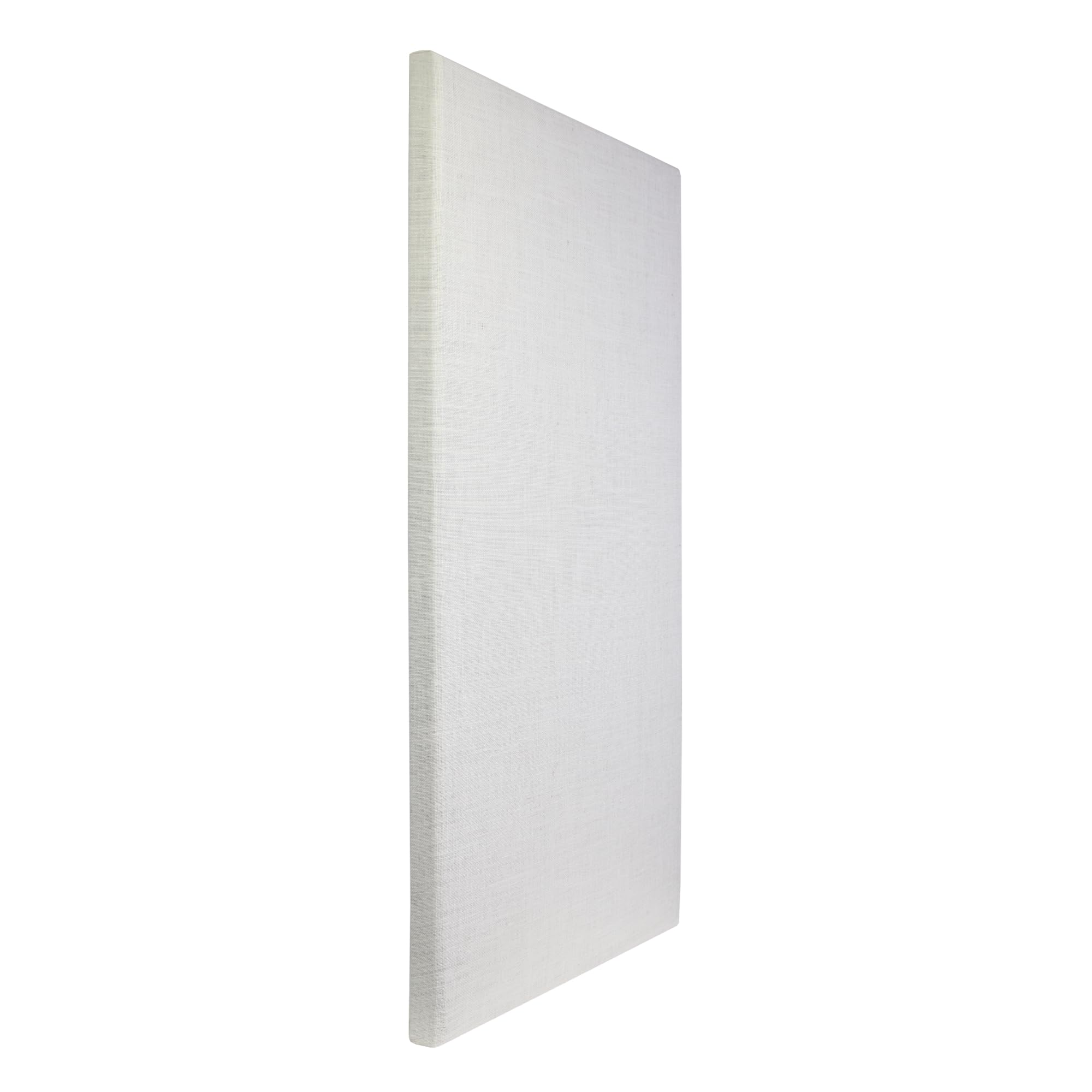
This is the gold standard for critical listening environments. The solid wood internal frame with a full plywood back creates a rigid diaphragm that supports the dense mineral wool core without sagging over years of vertical mounting. At 2 inches thick and wrapped in acoustically transparent jute burlap, this panel achieves a perfect NRC 1.0 rating — meaning it absorbs virtually all incident sound energy across the speech and midrange frequencies that cause the most noticeable flutter echo.
Installation is genuinely straightforward thanks to the included mounting template and Z-clip hardware. The beveled edge design gives the panels a finished, frameless look when butted together, which matters when covering large wall areas in a control room or home theater. The mineral wool core is noticeably denser than polyester alternatives and provides measurable low-frequency absorption down to around 125 Hz, which foam panels cannot touch.
Two panels from this kit cut reverberation time in a typical 12×14 foot room by approximately 50%. For recording vocals, acoustic guitar, or podcast dialogue, these panels transform a live-sounding bedroom into a dead-enough space for professional results. The Ivory color is neutral and clean, though the burlap texture appears slightly fuzzy at close range — invisible from a normal listening position.
Why it’s great
- Perfect NRC 1.0 absorption across critical frequencies
- Solid wood frame prevents warping and sagging over time
- Includes full mounting kit with Z-clips and paper template
Good to know
- Burlap fabric appears slightly fuzzy at close inspection
- Heavier than polyester panels at 8.25 pounds each
- Only available in solid neutral tones
2. AudioSilk ROOM KIT 4-Pack Natural

AudioSilk takes a fundamentally different approach by using compressed post-consumer recycled PET fiber instead of mineral wool or foam. The material is completely itch-free, emits zero chemical odor, and weighs significantly less than mineral wool panels — each 46-inch panel comes in at roughly 2.6 pounds. With an NRC of 0.91, this kit delivers 91% absorption across the standardized test frequencies, which places it far above any acoustic foam product at a comparable thickness.
The panels measure 45.7 x 22.8 x 0.4 inches — notably thinner than the ATS Acoustics option but still effective for taming flutter echo and midrange reflections. Several users report that the natural color works beautifully as a minimalist wall treatment in modern offices and project studios. The surface texture is clean and professional without the fuzzy appearance of burlap. The material does not sag, shrink, or peel, which is a common complaint with foam panels that degrade under UV exposure over time.
Installation requires a separate purchase of 3M Command strips or nano tape, as no adhesive is included. This is a deliberate trade-off: removable strips suit renters and temporary setups, but the lack of included hardware is a minor inconvenience compared to the ATS Acoustics kit. For permanent mounting, spray contact adhesive works well. The 0.4-inch thickness means these panels are best used in arrays to build up effective broadband absorption coverage.
Why it’s great
- Eco-friendly recycled PET core with zero odor or itch
- NRC 0.91 outperforms foam by a wide margin
- Clean, modern surface that stays flat without sagging
Good to know
- No mounting hardware included; requires separate adhesive purchase
- Only 0.4 inches thick — less effective on low bass than thicker alternatives
- Thicker versions would be welcome for critical mixing environments
3. TONOR Dual-Layer Thickened Acoustic Panels 4-Pack Black

The TONOR Dual-Layer panels solve the biggest friction point in acoustic treatment: installation. The peel-and-stick adhesive backing eliminates the need for Z-clips, spray adhesive, or power tools. Each 47.2 x 23.6 inch panel uses a dual-layer construction with a high-density polyester fiber core that measures 0.72 inches thick — almost double the thickness of the AudioSilk panels, though still half the thickness of the ATS Acoustics option.
Real-world performance from customer feedback shows a measurable reduction in echo and noise transfer. Users report that covering approximately 90 square feet of wall space reduces sound transmission from adjacent rooms to the point where normal conversation and TV audio are comfortable without disturbing neighbors. The classic ribbed stripe pattern gives the panels a deliberate decorative look that reads as textured wall art rather than obvious acoustic foam.
The self-adhesive mounting is the standout feature here, but it comes with a trade-off: direct wall contact eliminates the air gap that enhances low-frequency absorption. These panels excel at taming high-frequency reflections and slap echo in living rooms, bedrooms, and office cubicles, but they are not the right tool for treating bass buildup in a recording studio control room. The adhesive is strong enough for painted drywall and removes cleanly with heat if you decide to reposition.
Why it’s great
- True peel-and-stick installation with no tools required
- Dual-layer design thicker than most self-adhesive panels
- Stylish ribbed pattern works as decorative wall treatment
Good to know
- No air gap — limited low-frequency absorption
- Felt-like material reads more as fabric than real wood
- Color may vary slightly from product images
4. TONOR Wood Slatwall Panels 4-Pack Walnut
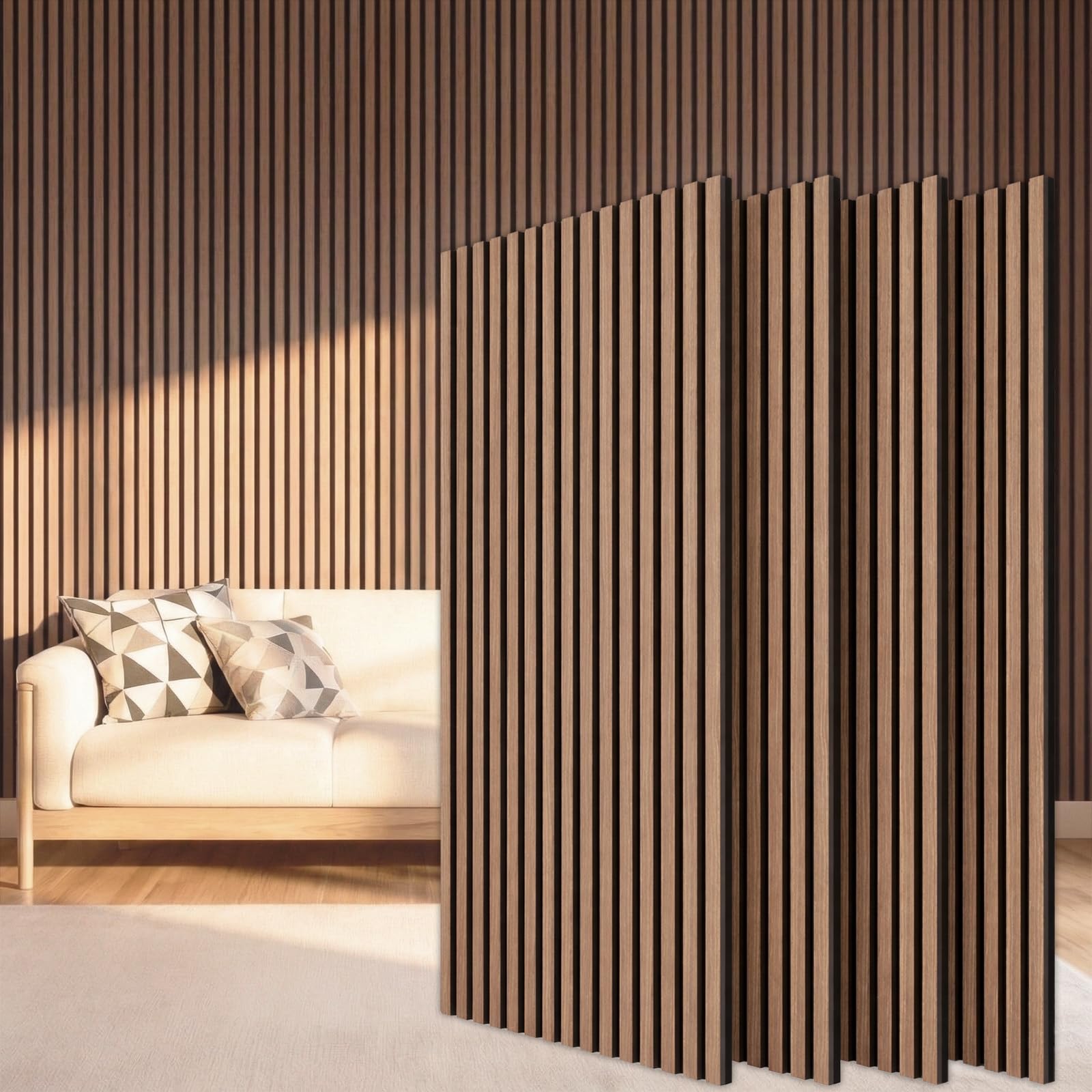
Wood slat panels represent the fastest-growing segment in acoustic treatment because they solve the fundamental aesthetic objection: buyers who want acoustic performance but refuse to cover their walls with gray foam or burlap rectangles. The TONOR Slatwall panels achieve this by alternating solid wood veneer slats with black felt PET backing strips. The slats provide reflective surfaces that scatter high frequencies while the felt absorbs the midrange energy passing through the gaps.
Each panel measures 47.2 x 23.6 inches and is only 0.39 inches thick, which means these are not broadband absorbers in the traditional sense. The acoustic mechanism is closer to a hybrid diffuser-absorber: the slat-to-felt ratio of approximately 60/40 creates a balanced decay that reduces flutter echo without making the room feel dead. This characteristic makes slat panels ideal for living rooms, dining areas, and open-plan offices where you want to reduce reverberation without sacrificing the natural liveliness of the space.
Installation is straightforward with the included screws or construction adhesive. The panels cut cleanly with a jigsaw equipped with a fine-tooth blade. One notable detail: the wood veneer slats are adhered to the felt backing only at their endpoints. If you cut the panel near the middle of a slat, that segment may feel loose and require a staple gun to re-secure. The Walnut finish matches closely to standard walnut furniture veneers, and the panel weight of 6.17 pounds per four-pack makes single-person installation feasible.
Why it’s great
- Elegant wood veneer appearance blends with furniture
- Easy to cut and install with basic tools
- Balanced absorption without deadening the room
Good to know
- Slats are only glued at ends — loose segments after cutting
- 0.39-inch thickness limits deep bass absorption
- Installation hardware included but not heavy-duty
5. Art3d 4-Piece Wood Slat Acoustic Panels Walnut

The Art3d panels differentiate themselves with a fluted vertical profile rather than the typical alternating slat design. Each panel measures 7.9 inches wide by 94.5 inches tall, making them nearly eight feet in length — ideal for floor-to-ceiling installation without horizontal seams. The four-panel set covers approximately 21 square feet, which is less coverage than the TONOR slat panels but in a format designed for accent walls rather than full-room treatment.
Construction quality is notably high. The MDF core with wood veneer is consistently straight across the full 94-inch length, with no warping or cupping reported by users. The veneer finish on the Walnut variant is rich and uniform, with side edges that are unfinished but become invisible when panels are mounted side by side. Cutting requires a 90-tooth or finer blade to prevent chipping the veneer — a detail that matters for clean cuts around outlets and corners.
Acoustically, these panels function similarly to the TONOR slat design: the MDF slats reflect and scatter high-mid frequencies while the felt backing absorbs energy through the gaps. The 0.83-inch overall thickness provides slightly more absorption than thinner slat competitors. Users consistently report that these panels significantly reduce echo in rooms while adding a high-end visual focal point. For a DIY entertainment center backdrop or a statement wall behind a desk, the Art3d panels deliver exceptional fit and finish.
Why it’s great
- Floor-to-ceiling 94.5-inch length eliminates horizontal seams
- Premium veneer finish with straight, consistent boards
- 0.83-inch thickness offers better absorption than thinner slat panels
Good to know
- Requires fine-tooth blade to prevent veneer chipping
- Only 21 square feet coverage per pack
- Side edges are unfinished (hidden when mounted together)
6. NeatiEase Wood Panels 4-Pack Teak

NeatiEase targets the buyer who needs to cover tall wall surfaces efficiently. Each 96 x 12.6 inch panel reaches standard eight-foot ceilings, and the four-pack covers roughly 33 square feet — the highest coverage per pack among the slat-style panels in this guide. The Teak finish uses a realistic wood veneer over MDF with a thick felt PET backing, delivering the now-standard hybrid acoustic profile: reflective slats for scattering, felt for midrange absorption.
Build quality is solid, with customers specifically noting that the panels accommodate slightly uneven walls without visible bowing or gaps. The felt backing is denser than some competitors, contributing to more effective absorption in the lower midrange. The panels can be mounted either vertically or horizontally, which adds design flexibility for feature walls, wainscoting, or ceiling applications. The included screw hardware supports fast installation, and many users combine construction adhesive with screws for a permanent hold.
Cutting these panels requires care — a circular saw with painter’s tape over the cut line helps prevent veneer chipping. The material is lightweight enough for single-person handling despite the 96-inch length. The Teak color leans warm and natural, pairing well with mid-century modern furniture and neutral wall colors. While the acoustic effect is modest compared to a deep broadband absorber, the visual upgrade and echo reduction combination is genuinely satisfying for residential and light commercial spaces.
Why it’s great
- 96-inch height for full floor-to-ceiling single-panel coverage
- 33 square feet per pack — best coverage in slat category
- Dense felt backing with solid MDF veneer construction
Good to know
- Veneer chips if cut without painter’s tape protection
- Not a replacement for deep broadband bass traps
- Panels are dusty during cutting — wear a mask
7. Avana Acoustic Wood Wall Panels 4-Pack Gray Oak
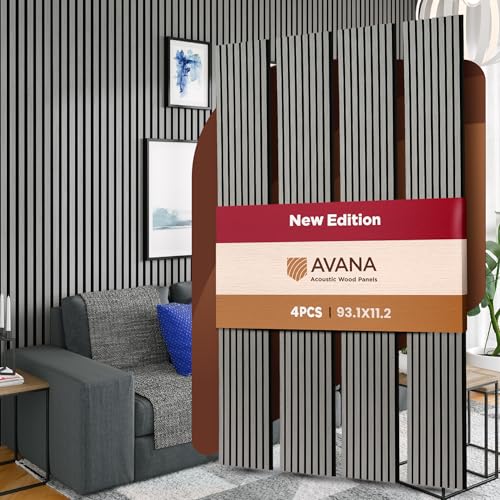
Avana positions its panels at the intersection of commercial-grade acoustic treatment and boutique interior design. The Gray Oak finish is a deliberate departure from the walnut and teak dominance in this category — it reads as contemporary Scandinavian rather than traditional warm wood, making it the clear choice for modern office lobbies, conference rooms, and high-end apartment installations. Each 93.2 x 11.25 inch panel is constructed from MDF with a technical wood veneer and a high-density polyester fiber backing.
Build quality is immediately apparent. The veneer is applied with precision, the edges are clean, and the overall panel feels denser and more rigid than the NeatiEase alternative. The 33.04 square feet of coverage per pack matches the NeatiEase closely, but the Avana material thickness and finish quality justify the premium positioning. Users consistently describe the visual result as “boutique hotel” quality, and multiple reviews note that the panels significantly reduce noise levels in shared spaces — one customer estimated a 65% reduction in basement noise transmission.
Installation requires care. The panels cut well with a track saw or jigsaw, and the material accepts construction adhesive or screw mounting. One important note from customer feedback: packaging during shipping has been inconsistent, with some packs arriving damaged. Ordering a sample pack first to confirm color match and finish is strongly recommended before committing to a full installation. The Gray Oak color matches IKEA cabinet finishes closely, which makes these panels an excellent upgrade for kitchen islands, entertainment walls, and home office feature installations.
Why it’s great
- Distinctive Gray Oak finish for modern interiors
- Dense, rigid construction with premium veneer application
- Significant measurable noise reduction in real-world installations
Good to know
- Packaging sometimes results in damage during transit
- Premium price point reflects commercial-grade quality
- Order sample pack first to verify color and finish
FAQ
How many acoustic panels do I need for a typical room?
Can I use acoustic panels to soundproof a room from noisy neighbors?
What is the difference between acoustic foam and polyester fiber panels?
Do wood slat acoustic panels actually work or are they just decorative?
Should I mount panels flat against the wall or leave an air gap?
Final Thoughts: The Verdict
For most users, the best acoustic panels winner is the ATS Acoustics 24x48x2 Panel because it delivers a perfect NRC 1.0 rating with mineral wool core construction that covers the full frequency range and includes professional-grade mounting hardware. If you need dead-quiet acoustics for recording, this is the uncompromising choice. If you want a decorative upgrade for your living space that also tames echo, the TONOR Wood Slatwall Panels offer the best balance of aesthetics and acoustic performance. And for a quick, tool-free installation in a rented apartment or home office, the TONOR Dual-Layer Self-Adhesive Panels provide immediate echo reduction without damaging your walls.

Mo Maruf
I created WellFizz to bridge the gap between vague wellness advice and actionable solutions. My mission is simple: to decode the research and give you practical tools you can actually use.
Beyond the data, I am a passionate traveler. I believe that stepping away from the screen to explore new environments is essential for mental clarity and physical vitality.