Our readers keep the lights on and my smoothie glass nicely filled. As an Amazon Associate, I earn from qualifying purchases.
Choosing a fitness tracker often feels like a leap of faith. You’re told it counts steps, monitors sleep, and tracks your heart, but the nagging question remains: can you actually trust the numbers? Inaccurate data doesn’t just misinform—it can derail motivation, skew your understanding of effort versus recovery, and lead you to question the very progress you’re working toward.
I’m Mohammad Maruf — the founder and writer behind WellFizz. For over 15 years, my focus has been on dissecting market data and technical specifications to separate marketing hype from measurable performance in wellness tech.
This guide is built from a deep analysis of sensor types, algorithm reliability, and real-user feedback across the spectrum, helping you find a device whose data aligns with your body’s true signals. Our goal is to cut through the noise and identify the trackers that deliver consistent, reliable metrics you can build a fitness plan around, starting with the best accurate fitness tracker for your specific needs.
How To Choose The Best Accurate Fitness Tracker
Accuracy isn’t a single feature; it’s the result of several hardware and software components working in harmony. The “best” tracker for you depends on which metrics matter most and how you intend to use the device daily.
Sensor Technology: The Foundation
This is the core. For step counting, a 3D accelerometer is standard, but a 3D tri-axis sensor (like in dedicated pedometers) often provides superior positional accuracy. For heart rate, optical sensors (PPG) are common, but their precision varies wildly based on sensor quality, skin contact, and algorithm smoothing. More advanced devices may include bioimpedance sensors for body composition or ECGs for heart rhythm, but these are for specialized insights, not core accuracy.
Data Interpretation & Algorithms
Raw sensor data is noisy. The brand’s proprietary algorithms clean this data to identify a “step” versus a hand gesture, or a resting heart rate versus a momentary spike. Established brands with years of physiological research (like Garmin, Fitbit, and WHOOP) often have more refined algorithms. This is why two devices with similar hardware can report different results.
Form Factor & Wearability
Accuracy is directly tied to consistent wear. A bulky watch you remove nightly loses sleep data. A ring must fit perfectly to maintain sensor contact. A simple pedometer must be clipped securely. Choose a form you’ll commit to wearing 24/7 if you want comprehensive data. Also, consider the display: if you can’t read it easily, you can’t verify data at a glance.
Smartphone Integration vs. Standalone
Do you need an app for insights, or do you prefer data directly on the device? App-connected trackers offer deep historical analysis, trends, and social features. Standalone devices (like basic pedometers or some watches) offer simplicity and are ideal for those avoiding smartphone complexity or subscription fees. However, advanced metrics like sleep breakdown or training readiness typically require an app.
Quick Comparison
On smaller screens, swipe sideways to see the full table.
| Model | Type | Best For | Key Feature | Amazon |
|---|---|---|---|---|
| Amazfit Bip 6 | Smartwatch | All-around value & features | Built-in GPS, 14-day battery | Amazon |
| Fitbit Charge 6 | Fitness Band | Google ecosystem integration | ECG, Google Maps/Wallet | Amazon |
| Garmin Vivosmart 5 | Fitness Band | Garmin ecosystem & Body Battery | Stress/Recovery metrics | Amazon |
| Samsung Galaxy Watch 7 | Smartwatch | Samsung/Android users | Galaxy AI Energy Score | Amazon |
| WHOOP 5.0 | Subscription Band | Elite recovery analytics | 24/7 Recovery & Strain | Amazon |
| FITVII Slim Fitness Tracker | Fitness Band | Mid-range health metrics | AMOLED, BP & SpO2 | Amazon |
| Milavan Smart Health Ring | Smart Ring | Discreet 24/7 wear | Finger-based sensors | Amazon |
| Fitpolo Fitness Tracker | Fitness Band | Budget smart features | Large screen, 100 modes | Amazon |
| Pautios Pedometer Watch | Basic Watch | Seniors / No smartphone | App not required | Amazon |
| ZURURU Fitness Tracker | Fitness Band | Entry-level multi-tracker | Built-in USB charging | Amazon |
| 3DFitBud Simple Step Counter | Pedometer | Pure step counting | 3D Tri-Axis Sensor | Amazon |
In‑Depth Reviews
1. Amazfit Bip 6 Smart Watch

The Amazfit Bip 6 strikes a remarkable balance between comprehensive features, reliable accuracy, and exceptional battery life, making it our top pick for most users. Its built-in GPS is a key differentiator, allowing for precise distance and pace tracking during outdoor runs or rides without needing your phone. This independence, combined with a vivid AMOLED display and a lightweight aluminum build, makes it feel like a premium device without the premium cost.
Accuracy across core metrics is consistently praised. The heart rate monitor provides reliable real-time data, and the step counting is sensible, avoiding the “false steps” common in cheaper trackers. The Zepp OS app offers deep insights into your health and fitness data, including detailed sleep staging and stress monitoring, all without a subscription fee. The inclusion of Bluetooth calling and text response from the wrist adds genuine smartwatch utility.
Where the Bip 6 truly shines is in its endurance. The promised 14-day battery life is realistic with typical use, meaning you can track sleep consistently without nightly charging anxiety. For athletes and casual users alike, this combination of dependable tracking, essential smart features, and unbeatable battery life in its class makes it an outstanding and trustworthy choice.
Why it’s great
- Exceptional battery life eliminates daily charging stress.
- Built-in GPS provides accurate, phone-free workout mapping.
- Reliable heart rate and step tracking validated by user reports.
- Feature-rich without a mandatory subscription.
Good to know
- The charger is a proprietary magnetic puck (cable not included).
- The Zepp app, while powerful, has a learning curve.
2. WHOOP 5.0/MG Activity Tracker
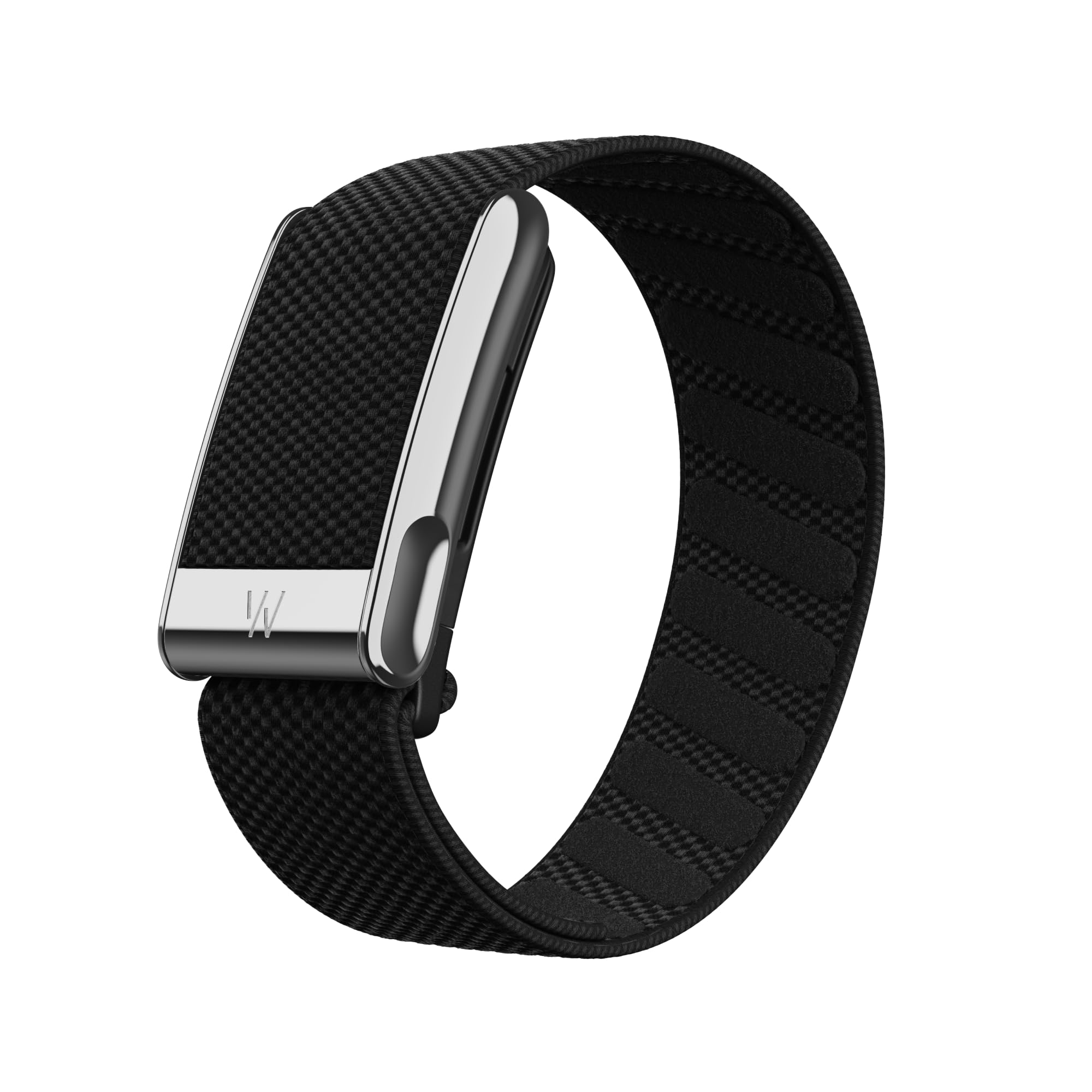
WHOOP redefines the fitness tracker by shifting the focus from simple activity logging to sophisticated physiological strain and recovery analysis. It operates on a membership model, where you’re paying for unparalleled insights, not just hardware. The device itself is a minimal, screen-less band designed for 24/7 wear, with a unique waterproof battery pack that charges the band without you ever taking it off.
Its accuracy in measuring heart rate variability (HRV), resting heart rate (RHR), and sleep stages is its cornerstone. WHOOP uses this data to calculate your daily “Recovery” score (how ready your body is to perform) and “Strain” score (how much cardiovascular load you’ve taken on). This allows for truly personalized feedback, suggesting optimal workout intensity or highlighting the need for rest. The sleep coach and journal features help you quantify lifestyle factors’ impact.
This tracker is for the data-driven individual who views their body as a system to be optimized. It’s less about counting steps and more about understanding the relationship between exertion, recovery, and lifestyle. If your goal is to train smarter based on your body’s actual readiness, WHOOP’s analytical depth is unmatched, though it requires a commitment to the subscription ecosystem.
Why it’s great
- Unmatched analytical depth into recovery, strain, and sleep performance.
- Comfortable, screen-less design and innovative external charging enable 24/7 wear.
- Actionable, personalized recommendations based on physiological data.
- HSA/FSA eligible, recognizing its health-monitoring role.
Good to know
- Requires a monthly/annual membership fee to function.
- No display; all data must be viewed in the smartphone app.
- Strength training auto-detection can be less precise than cardio tracking.
3. Fitbit Charge 6 Fitness Tracker

The Fitbit Charge 6 represents the pinnacle of the dedicated fitness band, merging Fitbit’s long-standing expertise in health tracking with deep integration into the Google ecosystem. It refines the proven formula with improved accuracy for heart rate (especially during workouts) and includes valuable health tools like an ECG app and an EDA sensor for stress management scans. The six-month Premium membership included offers deeper insights and guided programs.
Where the Charge 6 stands out is its smart functionality. The ability to use Google Maps for turn-by-turn navigation on your wrist during a run or to tap and pay with Google Wallet is incredibly convenient. These features, typically found on full smartwatches, make the slim band more powerful than its size suggests. The Fitbit app remains one of the most user-friendly and socially connected platforms, making data review and sharing intuitive.
For those invested in or preferring the Google ecosystem, the Charge 6 is the most accurate and feature-complete band available. It provides hospital-grade ECG readings, dependable sleep staging with a Sleep Score, and Active Zone Minutes—a more meaningful metric than simple step counting. It’s a versatile tool for both general wellness and focused fitness training.
Why it’s great
- Deep Google integration (Maps, Wallet, YouTube Music) adds significant utility.
- Includes advanced health sensors (ECG, EDA) for comprehensive monitoring.
- Refined heart rate sensor known for good accuracy during exercise.
- Polished, user-friendly app with strong social and challenge features.
Good to know
- Battery life is good (~7 days) but shorter than some competitors.
- Many of the most insightful data features require a Premium subscription after the trial.
4. Samsung Galaxy Watch 7

The Samsung Galaxy Watch 7 is a full-featured smartwatch that leverages Galaxy AI to provide personalized health and fitness insights, most notably the “Energy Score.” This metric assesses your physical readiness for the day based on previous activity, sleep, and heart rate data, offering a quick, actionable overview of your condition. For Samsung smartphone users, the integration is seamless, creating a powerful unified health platform.
Accuracy is bolstered by an improved heart rate sensor that uses AI to filter out motion artifacts, leading to more reliable readings during exercise. The sleep apnea detection feature highlights Samsung’s commitment to advanced health monitoring. The watch itself boasts a stunning, bright AMOLED display, a sleek, lightweight design, and the full suite of Wear OS apps and notifications, making it a true wrist-worn computer.
While battery life is its main compromise, requiring a charge roughly every 1-2 days with full features enabled, the trade-off is access to top-tier performance and a vast app ecosystem. If you’re an Android (especially Samsung) user seeking a stylish, accurate smartwatch that provides intelligent health summaries alongside robust smart features, the Galaxy Watch 7 is a premier choice.
Why it’s great
- Galaxy AI provides unique, personalized insights like the Energy Score.
- Superior display and sleek, comfortable design.
- Accurate heart rate tracking enhanced by motion-filtering AI.
- Full Wear OS smartwatch capabilities with excellent app support.
Good to know
- Battery life typically requires daily charging with active use.
- Advanced health features like blood pressure monitoring may have regional limitations or require calibration.
5. Milavan Smart Health Ring
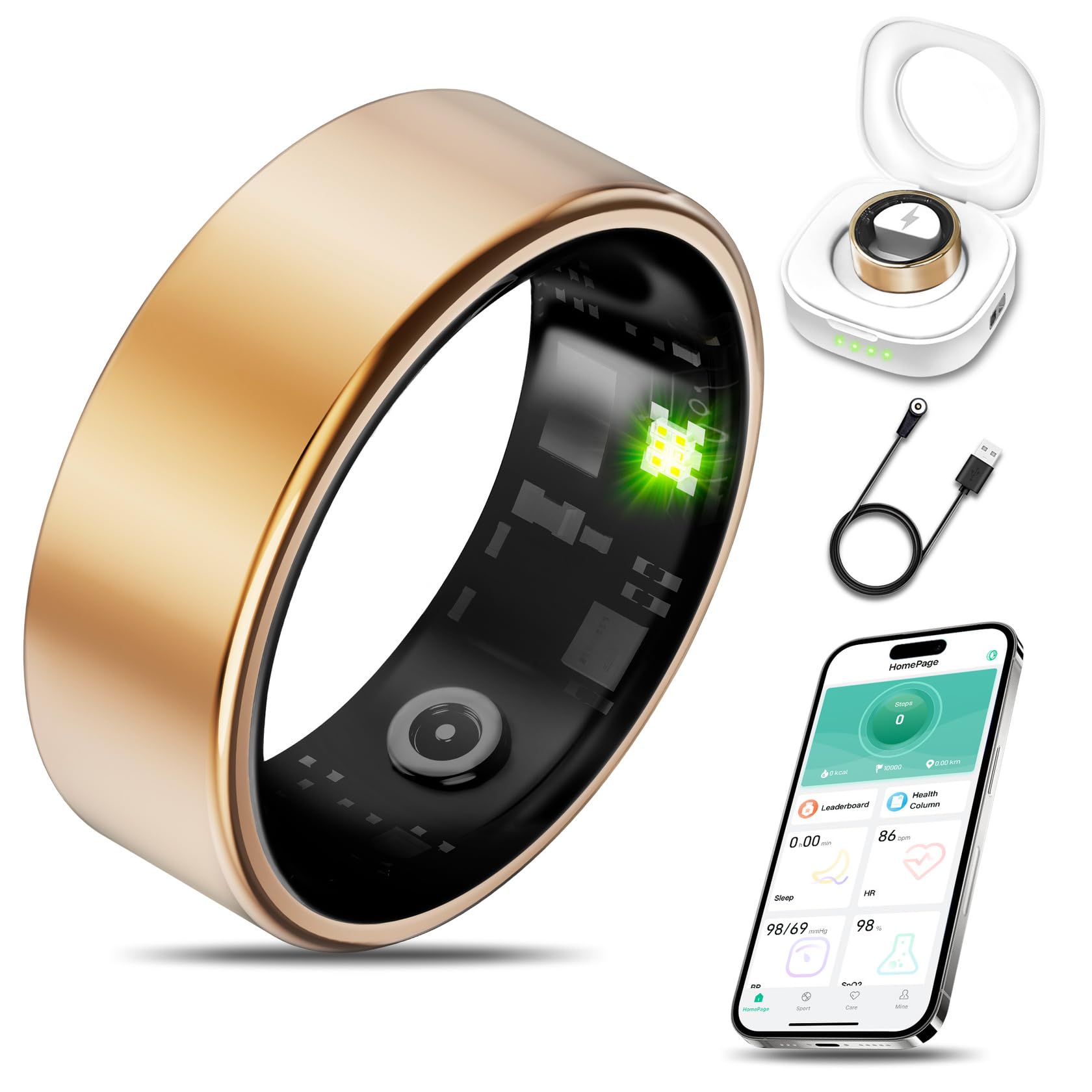
The Milavan Smart Health Ring offers a compelling, discreet alternative to wrist-worn trackers. By placing sensors on the finger, where pulse wave detection can be very strong, it aims for accurate heart rate, blood oxygen, and even blood pressure estimations. Its greatest appeal is 24/7 wearability; it’s unobtrusive during sleep, compatible with gloves, and doesn’t clash with professional attire or other wristwear.
For basic activity and sleep tracking, it performs admirably. Many users report step counts that align well with other devices, and sleep staging that feels representative. The included app is straightforward and, crucially, doesn’t require a subscription fee to access historical data or features. The ring charges in a portable case, offering good battery life for its size.
It’s important to manage expectations: finger-based blood pressure readings are estimations and not medical-grade. Also, the lack of a display means all data is viewed in the app. However, for anyone frustrated by wristbands, wanting to track sleep without a bulky device, or seeking a minimalist way to monitor daily activity and trends, this ring provides a unique and surprisingly capable solution.
Why it’s great
- Extremely comfortable and discreet for 24/7 wear, including during sleep.
- Finger placement can allow for strong pulse signal detection.
- No ongoing subscription fees to access your data.
- Portable charging case is convenient for travel.
Good to know
- Getting the correct size is critical for sensor contact and comfort.
- Blood pressure readings are estimates and require calibration with a cuff for reliability.
- No on-device display; smartphone is needed to view data.
6. FITVII Slim Fitness Tracker

The FITVII Slim Fitness Tracker punches above its weight with a vibrant AMOLED display and a surprisingly long list of health metrics, including blood pressure and blood oxygen monitoring. The screen is a standout feature at this price point, offering crisp, colorful visuals that are easy to read. The slim metal body and overall design give it a more premium look and feel than many other mid-range bands.
For general activity tracking—steps, distance, calories—it provides reliable data that aligns with expectations. The heart rate monitoring during steady-state cardio is reasonably accurate for training zones. The inclusion of menstrual cycle tracking and a wide array of sports modes adds to its versatility. Battery life is solid, often lasting a week or more on a single charge.
As with many trackers in this category, the advanced health metrics (like blood pressure) should be viewed as trend indicators rather than clinically accurate readings. The app is functional but may not be as polished as those from larger brands. However, for someone wanting a feature-packed, good-looking band with a great screen for general fitness and wellness tracking, the FITVII offers impressive value.
Why it’s great
- Bright, beautiful AMOLED display uncommon in this price range.
- Tracks a wide array of metrics including SpO2 and estimated blood pressure.
- Slim, stylish metal body design.
- Good battery life and comprehensive sport modes.
Good to know
- Advanced health metrics are for wellness trending, not medical diagnosis.
- The app interface can feel a bit cluttered compared to industry leaders.
- Real-time heart rate updates during intense intervals may lag.
7. Garmin Vivosmart 5

The Garmin Vivosmart 5 is the entry point into the respected Garmin ecosystem, renowned for its accurate sensors and athlete-focused metrics. Its standout feature is the “Body Battery” energy monitor, which synthesizes stress, sleep, and activity data to estimate your energy reserves throughout the day. This, combined with all-day stress tracking, provides a nuanced picture of how your body is responding to both physical and mental load.
As a pure fitness tracker, it excels. Step counting is notably accurate, and the heart rate sensor is reliable for daily tracking and guided workouts. It uses connected GPS (via your phone) to map outdoor activities. The device is slim, comfortable for 24/7 wear, and boasts a week of battery life. The physical button is a welcome addition for easy navigation, especially during workouts or with wet hands.
While its monochrome display is simple, the data it provides is powerful when viewed in the comprehensive Garmin Connect app. For someone who values data accuracy and actionable physiological insights like recovery status over a flashy smartwatch experience, the Vivosmart 5 is a trustworthy and focused tool.
Why it’s great
- Accurate step counting and reliable heart rate monitoring.
- Unique Body Battery and stress tracking provide meaningful recovery insights.
- Slim, comfortable design ideal for constant wear.
- Integrates with the powerful, free Garmin Connect platform.
Good to know
- The display is basic and monochrome.
- Relies on your smartphone’s GPS for outdoor activity mapping.
- Smart notifications are more limited than a full smartwatch.
8. Fitpolo Fitness Tracker

The Fitpolo Fitness Tracker wins users over with its large, 1.8-inch color touchscreen, making it exceptionally easy to read stats at a glance—a boon for those who prefer not to squint. It covers all the fitness basics well: step counting, heart rate monitoring, sleep tracking, and notifications for calls and texts. The IP68 waterproof rating means you can wear it in the pool or shower without worry.
It connects via the VeryFit app, which offers a good degree of customization for watch faces and alerts. The battery life is a strong point, consistently delivering close to a week of use. For the price, the breadth of features is impressive, including sedentary reminders, find-my-phone functionality, and remote camera control.
Long-term consistency with heart rate accuracy during variable-intensity exercise can be a point of feedback, as is common in this segment. However, for general daily activity tracking, sleep trend analysis, and as a sleek notification bridge for your phone, the Fitpolo delivers reliable performance and excellent readability in a budget-friendly package.
Why it’s great
- Large, clear color screen is highly readable.
- Excellent battery life for a screen of this size.
- IP68 waterproofing allows for swimming.
- Offers strong value with comprehensive basic smart features.
Good to know
- Heart rate accuracy may vary during high-intensity interval training.
- Build quality and long-term durability are average for the category.
9. Pautios Pedometer Watch
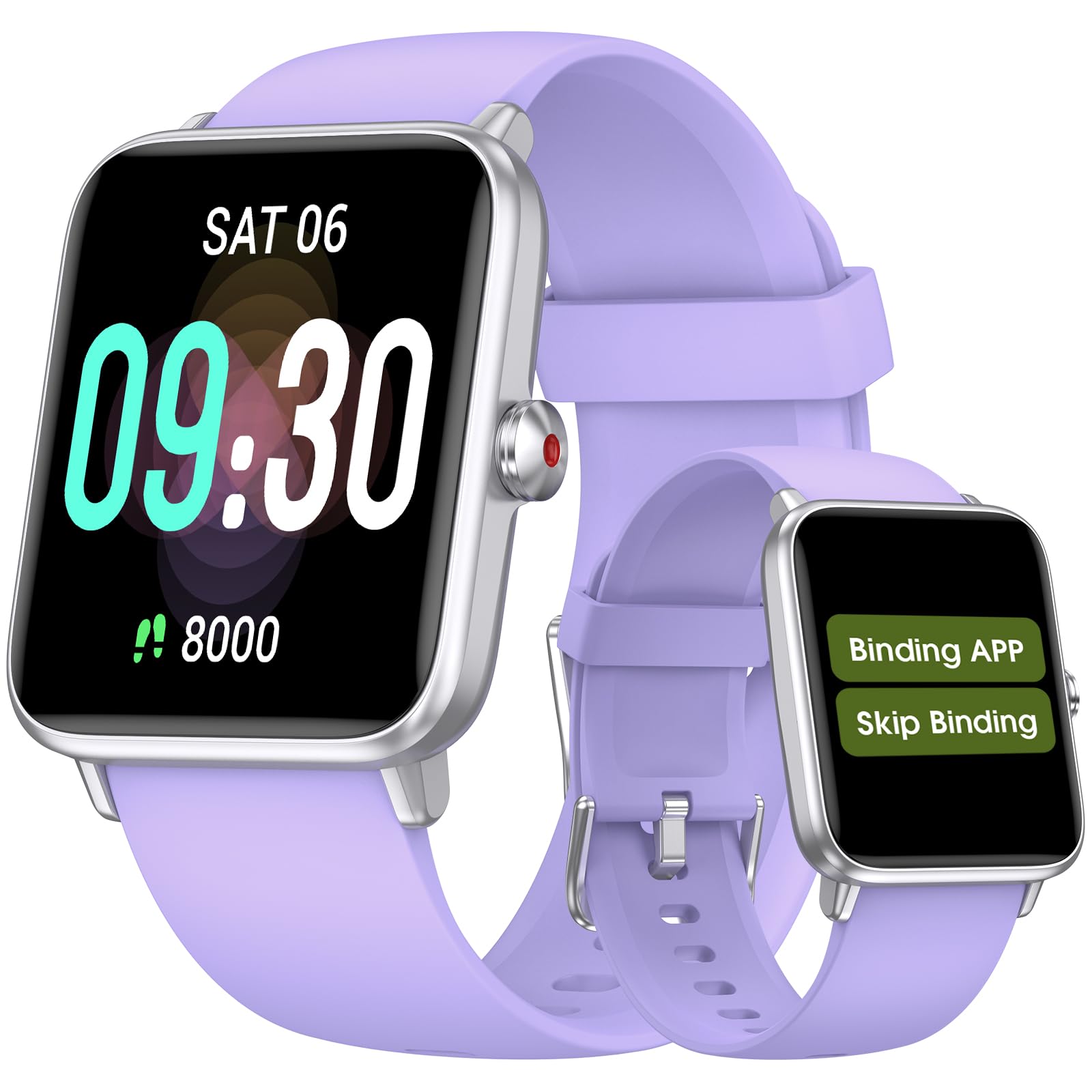
The Pautios Pedometer Watch solvesa common problem for seniors or anyone who wants a simple fitness watch without smartphone complexity. It functions as a regular watch with a color touchscreen but includes built-in sensors to track steps, calories, distance, and sleep directly on the device. You can view your daily progress and even check heart rate and blood oxygen with a manual measurement, all without ever connecting to an app.
This independence is its primary advantage. It’s ready to use right out of the box, with settings adjusted via the touchscreen. The large, clear display and simple interface are genuinely senior-friendly. It’s also waterproof and offers a solid week of battery life with magnetic charging. For basic activity awareness and sleep trend observation, it provides the essential data in the most straightforward way possible.
It’s important to note that without app synchronization, historical data is limited to what you see on the watch, and some features like detailed sleep stages aren’t available. Accuracy is good for steps but may be less refined for heart rate during movement. However, as a gift for a parent or for personal use when you want to unplug but still track activity, it’s a thoughtfully designed solution.
Why it’s great
- Completely independent operation with no smartphone or app required.
- Senior-friendly large touchscreen and intuitive interface.
- Tracks core metrics (steps, sleep, HR) directly on the watch.
- IP68 waterproof and good battery life.
Good to know
- No detailed historical data or trends without an app connection.
- Advanced metrics like sleep stages are not available.
- Manual measurement required for heart rate and SpO2 (not continuous).
10. ZURURU Fitness Tracker

The ZURURU tracker is an entry-level option that packs a surprising number of features into a budget-friendly band, including blood pressure monitoring and SpO2. Its most convenient hardware feature is the built-in USB plug—simply pop the tracker out of its band and plug it directly into any USB port to charge, eliminating the need for a separate cable.
For basic activity tracking and heart rate monitoring during steady-state activities, it performs adequately. The connected GPS allows for route mapping when your phone is present, and the app provides a decent overview of your data. It handles smart notifications for calls and texts reliably, making it a functional wrist-based alert system.
As with many trackers at this price point, accuracy can be inconsistent, particularly for the blood pressure feature (which should be considered a rough estimate only) and for step counting during non-walking movements. The band material may also show wear over time. However, for someone wanting to experiment with fitness tracking features without a significant investment, the ZURURU offers a low-risk starting point.
Why it’s great
- Extremely convenient built-in USB charging requires no extra cable.
- Includes a wide array of features like BP and SpO2 at a low cost.
- Connected GPS and smart notifications add functionality.
- Easy entry point for first-time fitness tracker users.
Good to know
- Accuracy, especially for blood pressure and steps, can be inconsistent.
- The band and build quality are reflective of the budget nature.
- Data reporting in the app can sometimes be buggy or delayed.
11. 3DFitBud Simple Step Counter

When your sole requirement is accurate step counting without any frills, the 3DFitBud is a masterclass in focused design. This basic pedometer uses a 3D Tri-Axis sensor, which is notably more accurate than older pendulum-style models, and it works in any position—clip it to your waist, pocket, or wear it on a lanyard. It has no Bluetooth, no app, and no screen beyond a large digital step counter.
Its accuracy for walking steps is excellent, often matching or surpassing more expensive devices for this single task. The simplicity is liberating: you press a button to reset it daily, and that’s it. The battery lasts up to a year, and the device is durable and lightweight. For walkers, seniors, or anyone who has been frustrated by smartwatches over-counting steps from arm movements, this device provides trustworthy, unambiguous feedback.
Obviously, it does nothing else. There’s no heart rate, no sleep tracking, no notifications. But that’s the point. If your fitness goal is centered on daily step count and you want a reliable, zero-hassle tool that won’t break or become obsolete, the 3DFitBud is arguably the most accurate and dependable device for the job.
Why it’s great
- Exceptional accuracy for step counting due to 3D Tri-Axis sensor.
- Extremely simple operation with year-long battery life.
- Multiple wearing options (clip, lanyard, pocket).
- No complicated setup, Bluetooth pairing, or charging cables.
Good to know
- Tracks steps only—no other metrics or smart features.
- Requires manual reset each day.
- No historical data logging or trend analysis.
Understanding the Specs
Sensor Type
This is the hardware that collects raw data. 3D Accelerometers/Gyroscopes track movement for steps and distance. Optical Heart Rate (PPG) sensors use light to detect blood flow at your wrist. Bioimpedance sensors send a tiny current to measure body composition. Higher-quality sensors and multiple sensors working together (sensor fusion) generally yield more accurate and consistent data.
GPS (Global Positioning System)
Built-in GPS uses satellite signals to map your route and calculate distance/pace without your phone. Connected GPS uses your phone’s GPS, which is accurate but requires you to carry your phone. No GPS means distance is estimated from steps and stride length, which is less accurate for running/cycling. For outdoor activity accuracy, built-in GPS is superior.
FAQ
Which type of fitness tracker is most accurate for heart rate?
Can a fitness tracker accurately measure blood pressure?
Why does my step count vary between devices?
How important is sleep stage tracking accuracy?
Final Thoughts: The Verdict
For most people, the best accurate fitness tracker winner is the Amazfit Bip 6 because it delivers reliable accuracy across steps, heart rate, and GPS, paired with an incredible two-week battery life and smart features, all at a mid-range point. If you want deep, recovery-focused analytics and are willing to invest in a subscription, grab the WHOOP 5.0. And for pure, no-frills step counting accuracy, nothing beats the simplicity and reliability of the 3DFitBud Simple Step Counter.

Mo Maruf
I created WellFizz to bridge the gap between vague wellness advice and actionable solutions. My mission is simple: to decode the research and give you practical tools you can actually use.
Beyond the data, I am a passionate traveler. I believe that stepping away from the screen to explore new environments is essential for mental clarity and physical vitality.