Our readers keep the lights on and my smoothie glass nicely filled. As an Amazon Associate, I earn from qualifying purchases.
A condenser coil clogged with dust, pollen, and grime doesn’t just struggle to shed heat—it forces your compressor to run longer, harder, and hotter, driving up your electric bill and shortening the system’s life. You do not need harsh acid or a pressure washer to fix it; the right foaming cleaner expands into those tight fin spaces, lifts the debris, and rinses clean without bending a single aluminum slat.
I’m Mohammad Maruf — the founder and writer behind WellFizz. I spend my weeks comparing the chemical profiles, foaming dwell times, and application methods of HVAC cleaning products so you don’t have to decode the ingredient labels yourself.
This guide isolates the five aerosol and concentrate options that actually restore heat exchange efficiency, ranking them by cleaning power, metal safety, and real-world user results to help you find the best ac condenser coil cleaner for your home or service van.
How To Choose The Best AC Condenser Coil Cleaner
Picking the wrong cleaner can leave dirt baked onto the fins or, worse, pit the aluminum with acid residue. Focus on three variables: the chemical base, the application form, and the safety profile for the metals in your unit.
Alkaline vs. Acid: Why chemical base matters
Acid-based brighteners strip oxidation aggressively, but they can weaken aluminum fins over repeated use and require full neutralization. Alkaline (high-pH) foaming cleaners lift grease and organic grime without etching the metal. For routine maintenance on residential condensers, a non-acid alkaline formula is the safer, longer-lasting choice.
Aerosol foam vs. liquid concentrate
Aerosol foam cans give you instant expansion—the foam crawls into tight fin packs and clings to vertical surfaces without running off. Concentrated liquids (like Coil King) must be mixed with water and applied with a pump sprayer, but they offer much greater volume per dollar and adjustable strength for heavily soiled units. Choose aerosol for quick touch-ups; choose concentrate for deep seasonal cleans on multiple units.
No-rinse vs. rinse-required application
No-rinse cleaners evaporate or drain away as liquid, leaving no chemical film—ideal for indoor evaporator coils where rinse water is hard to control. On outdoor condenser coils, a rinse-required formula is typically more thorough because you can flush out dislodged debris. Check the label: some products offer both options depending on how long you let them dwell.
Quick Comparison
On smaller screens, swipe sideways to see the full table.
| Model | Category | Best For | Key Spec | Amazon |
|---|---|---|---|---|
| Coil King 90-099 | Concentrate | Heavy-duty seasonal cleaning | 1 quart concentrate (dilutes up to 10:1) | Amazon |
| QwikProducts B00CD710NE | Aerosol Foam | Multi-surface versatility | Self-rinsing, 1.12 lbs per can | Amazon |
| 3X:Chemistry 46822 | Aerosol Foam | Deep organic odor removal | 18 oz, organic, no-rinse formula | Amazon |
| KEFPO B0GJS97V75 | Aerosol Foam | Budget-friendly quick clean | 19 oz, bamboo scent, non-toxic | Amazon |
| BERIOVE B0GJ5CJ6GX | Aerosol Foam | Entry-level DIY maintenance | 19 oz, high-efficiency no-rinse foam | Amazon |
In‑Depth Reviews
1. Coil King 90-099
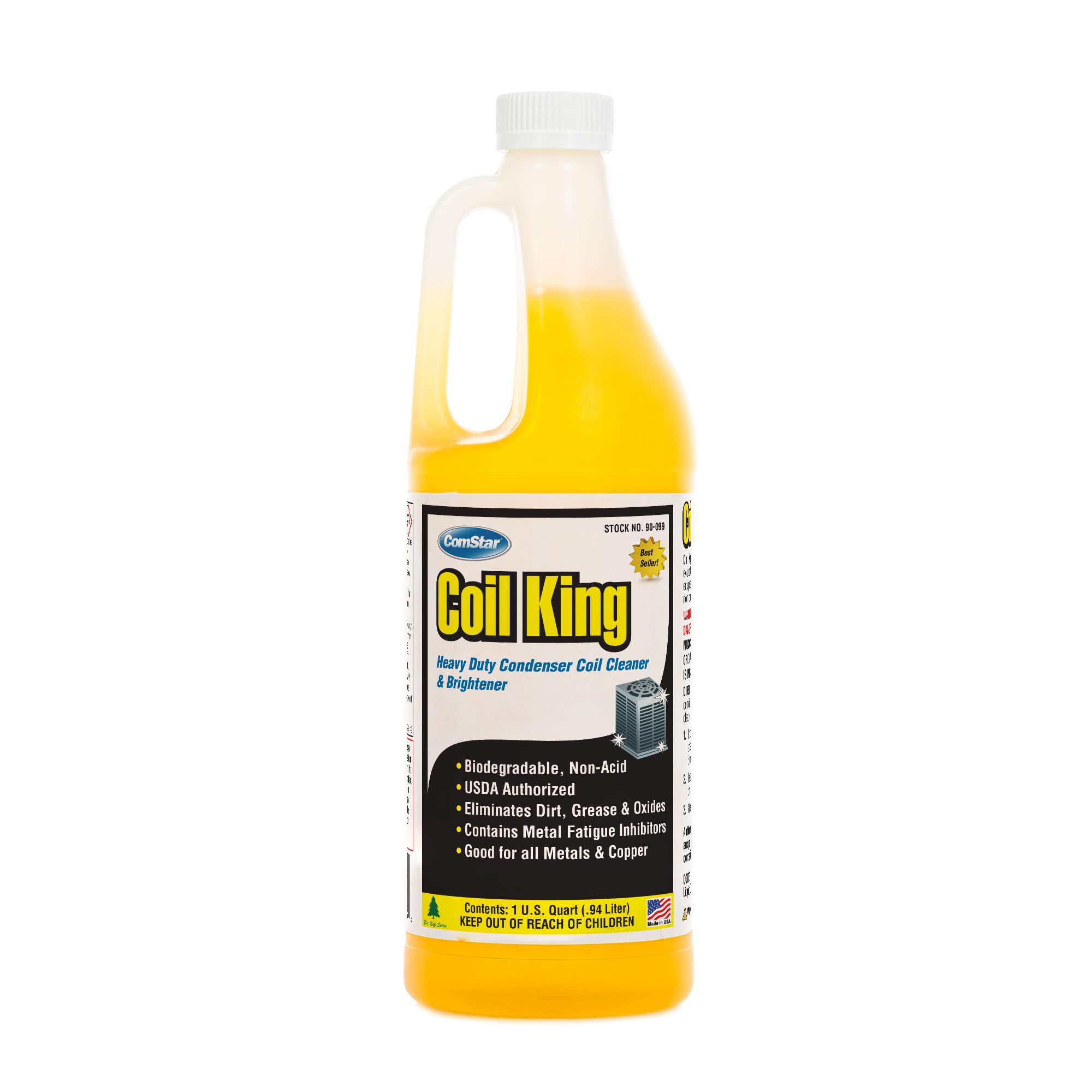
Coil King is an alkaline, non-acid concentrate that you mix with water at ratios from 3:1 for tough grime up to 10:1 for light maintenance. Users report that a 1:1 mix liquefies caked-on dirt in minutes, and the high-foaming action pushes debris out from between tightly packed aluminum fins. The quart bottle delivers far more cleaning volume per dollar than any aerosol can, making it the logical choice for homeowners with multiple units or service techs who clean coils regularly.
Formula strength is the headline here. This cleaner restored a 4-ton outdoor unit that was nearly stopped up with lint and oxidation after a 15-minute dwell and a garden-hose rinse. The bottle includes clear dilution instructions, and the biodegradable label aligns with environmentally conscious disposal. Unlike acid-based brighteners, Coil King does not require a neutralizing step, which simplifies the workflow significantly.
The main trade-off is handling. The concentrate has a strong alkaline odor that can irritate lungs if inhaled directly, so a respirator and gloves are non-negotiable during mixing and spraying. Users also note that the foaming action requires a pump sprayer—you cannot just point and shoot like an aerosol can. But for the cleaning power per ounce, this is the most cost-effective option on the list.
Why it’s great
- Adjustable dilution ratio (3:1 to 10:1) for light to heavy soil
- Non-acid alkaline formula safe on aluminum, copper, and steel
- Biodegradable and rinses clean without neutralization
Good to know
- Strong fumes require a respirator and gloves during use
- Requires a pump sprayer; no aerosol convenience
2. QwikProducts Foaming Coil Cleaner

QwikProducts markets this as an industrial-strength aerosol that works on condenser coils, evaporator coils, refrigerator coils, auto radiators, and even CPU heatsinks—and the user feedback backs up that versatility. The self-rinsing design means you spray the foam onto the coil, let it dwell, and the condensation and runoff carry the dissolved dirt away without a separate water rinse. For outdoor condenser units, a light hose spray afterwards ensures no residue remains.
The foam expansion is aggressive enough to crawl into the gaps of a tightly packed fin pack, and the lemon scent is a welcome departure from the chemical stench of many coil cleaners. Users report that a single can is enough to clean a standard central AC condenser plus a small mini-split evaporator. The formula is alkaline and non-acid, so it will not etch aluminum or copper even if left on for a slightly extended dwell time.
On the downside, the 1.12-pound can is small relative to a concentrate bottle, so if you clean multiple large units every season, you will go through cans quickly. A few users noted that very thick grease deposits required two applications. Still, for a grab-and-go aerosol that does not require mixing or special equipment, this is a strong performer.
Why it’s great
- Self-rinsing design eliminates the need for a hose in tight spaces
- Safe on multiple metals and effective on grease, dust, and oil
- Leaves a pleasant lemon scent instead of harsh chemical odor
Good to know
- Small can size; heavy users will need multiple units
- Heavy grease may require a second application
3. 3X:Chemistry 46822

This 18-ounce aerosol from 3X:Chemistry is specifically designed to remove organic odors and leave no harsh fumes behind—making it a favorite for users battling moldy-smelling window units and car evaporators. The foam turns gray fins back to bright silver, and the organic-material-based formula is gentle enough that several users spray it into the fresh-air intake of vehicles to clean the evaporator core without disassembly.
The cleaning action is rapid. Reviews note that a 15-minute dwell time on a wall AC unit lifted years of dust and mold, restoring airflow to like-new condition. The unscented profile means no cover-up fragrance; the odor removal is genuinely neutralization-based. This product also works well as a pre-treatment before a deeper rinse on heavily soiled units, especially where biological growth is the primary issue.
The cautionary note comes from experienced techs: the formula is potent enough that leaving it on aluminum fins for too long (overnight, for example) may cause minor pitting. Stick to the recommended dwell time of 10–15 minutes. The can does not include a straw in all production runs, so check the packaging or have a separate extension tube ready.
Why it’s great
- Excellent at neutralizing organic odors from mold and mildew
- Non-acid organic formula; no harsh lingering fumes
- Works well on evaporator cores via fresh-air intake in vehicles
Good to know
- Can damage aluminum if left on longer than 15 minutes
- Some cans ship without the extension straw nozzle
4. KEFPO Foaming AC Coil Cleaner
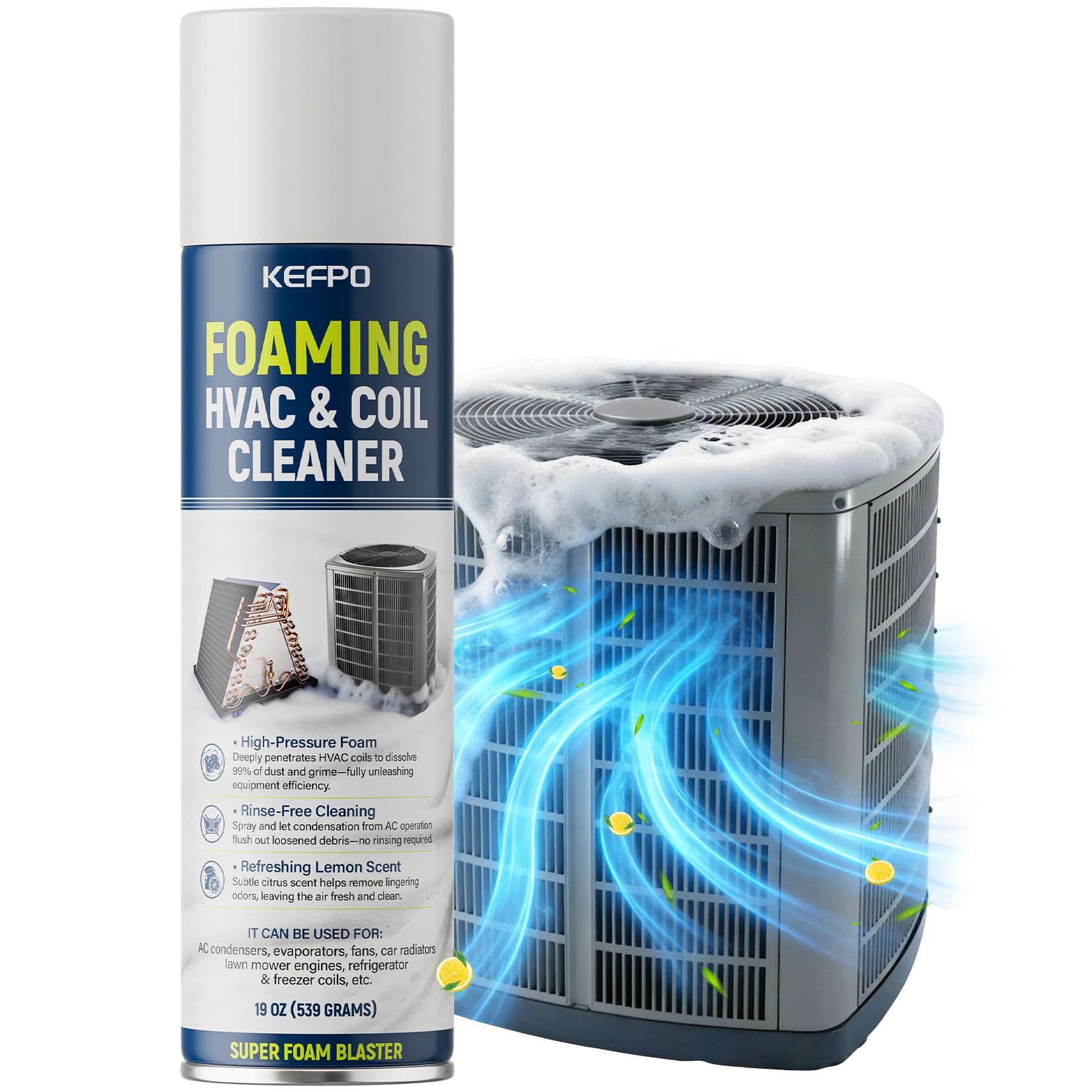
KEFPO delivers a 19-ounce foaming aerosol at a price point that makes it an easy impulse buy for a one-time coil cleaning. The non-toxic, alcohol-based formula is labeled safe for aluminum surfaces, and the bamboo scent is a nice touch for indoor use where odor sensitivity matters. User reports confirm that a 15-minute dwell followed by a wipe-down completely restored a 5-year-old window unit, using only a quarter of the can.
The foam expansion is respectable for a budget-tier product. It clings to vertical condenser fins without dripping excessively, and the no-rinse option works as advertised for light to moderate dirt. For outdoor units, a quick hose rinse afterward ensures no foam residue attracts more dust. The formula also handled an RV air conditioner well, needing three spray cycles on a heavily soiled unit.
The obvious compromise is cleaning power on heavy grease or years of baked-on grime. Several reviews mention that the product struggled with thick restaurant-kitchen condenser buildup without manual scrubbing. Also, the can lacks an extension straw in recent production runs, making it harder to direct foam into tight fin packs. For light seasonal maintenance on residential units, this is a fine entry-level choice.
Why it’s great
- Non-toxic formula safe for indoor use on evaporator coils
- Pleasant bamboo scent; no harsh chemical odor
- Affordable price for single-use or light maintenance jobs
Good to know
- Heavy grease may require manual agitation or multiple applications
- Straw not included in current packaging runs
5. BERIOVE Foaming AC Coil Cleaner
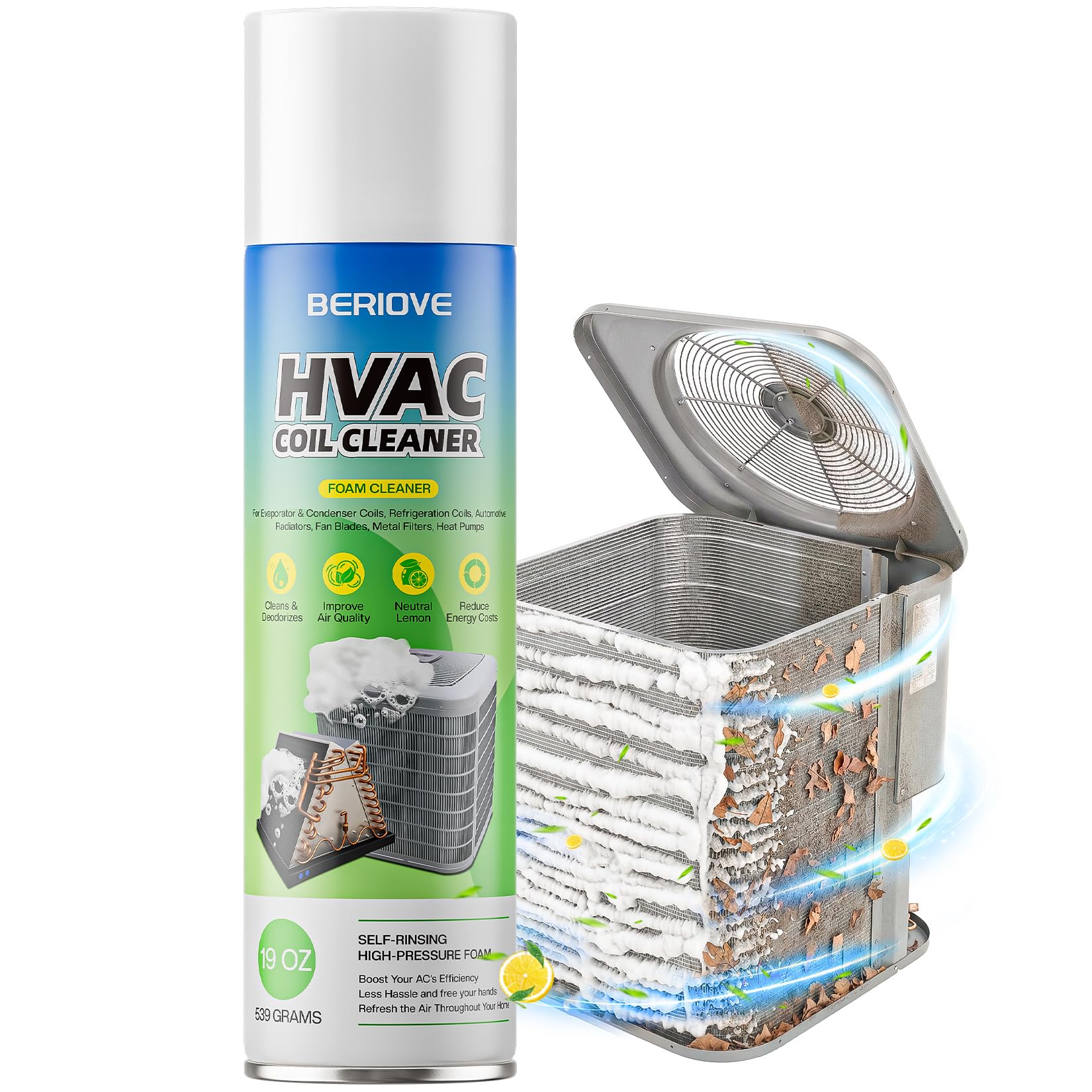
BERIOVE positions this 19-ounce aerosol as a high-efficiency no-rinse foam for both evaporator and condenser coils. The “delayed foaming” claim means the liquid penetrates deeper into the fin pack before expanding, which theoretically pushes more debris out during the expansion phase. Users running restaurant groups report that a wire brush pre-clean followed by a BERIOVE spray eliminated the need for wiping altogether—the foam carried the loosened dirt away on its own.
The fresh scent is a genuine improvement over the industrial odor of traditional coil cleaners, and the no-rinse convenience for evaporator coils saves time when cleaning indoor air handlers. Several reviewers noted that their AC systems recovered cooling performance noticeably after a single application, with the foam lifting years of dust that vacuuming had missed.
The biggest recurring complaint is the missing extension straw across multiple batches, which makes it harder to direct foam into tightly packed condenser fins. Users also observed that the foam volume was inconsistent within a single can—the first half sprayed less foam than the second half despite shaking, leading to some product waste. For a beginner DIYer who just needs to clean a single window unit or mini-split, it works well; for a tech cleaning multiple large condensers, the inconsistency is frustrating.
Why it’s great
- Delayed foaming action penetrates deep into fin packs before expansion
- No-rinse option simplifies evaporator coil cleaning indoors
- Pleasant fresh scent and effective on light to moderate grime
Good to know
- Extension straw frequently missing from package
- Foam expansion can be inconsistent within a single can
FAQ
Can I use an AC coil cleaner on a mini-split evaporator without disassembling the unit?
How often should I clean my outdoor condenser coils with a foaming cleaner?
What is the difference between a self-rinsing and a rinse-required coil cleaner?
Final Thoughts: The Verdict
For most users, the best ac condenser coil cleaner winner is the Coil King 90-099 because its alkaline concentrate gives you adjustable strength, massive cleaning volume per dollar, and safe chemistry for aluminum fins. If you want grab-and-go aerosol convenience for a quick seasonal clean, grab the QwikProducts Foaming Coil Cleaner. And for neutralizing mold odors in window units or car evaporators, nothing beats the organic formulation of the 3X:Chemistry 46822.

Mo Maruf
I created WellFizz to bridge the gap between vague wellness advice and actionable solutions. My mission is simple: to decode the research and give you practical tools you can actually use.
Beyond the data, I am a passionate traveler. I believe that stepping away from the screen to explore new environments is essential for mental clarity and physical vitality.