Our readers keep the lights on and my smoothie glass nicely filled. As an Amazon Associate, I earn from qualifying purchases.
Your air conditioner’s condenser and evaporator coils are the lungs of the system. When dust, pollen, and grime coat the fins, airflow drops and the compressor has to work harder, often leading to higher energy bills and premature breakdowns. A dedicated foaming coil cleaner is designed to penetrate those tight aluminum fins and lift years of buildup without damaging the metal.
I’m Mohammad Maruf — the founder and writer behind WellFizz. I’ve spent hundreds of hours analyzing chemical formulations, customer feedback, and real-world performance data to understand which AC cleaners actually restore airflow versus just smelling fresh.
After cross-referencing pH levels, foam density, rinsing requirements, and metal safety across dozens of products, I’ve built an unbiased guide to the best ac cleaner for every type of unit and budget.
How To Choose The Best AC Cleaner
Not all coil cleaners are created equal. A product that works beautifully on a window unit may be too weak for a central condenser that hasn’t been touched in five years. Here are the three critical factors to consider before you buy.
Foam Density and Dwell Time
Foaming action is essential for clinging to vertical coil surfaces. A thin liquid runs straight through the fins, doing little to dissolve stuck-on debris. The best cleaners produce a thick foam that expands into the coil block, lifts the grime, and holds it suspended for 10–15 minutes so water can wash it away cleanly. Check customer photos and reviews to see if the foam actually holds its structure on a hot, dry condenser.
Chemistry: Non-Acid, Alkaline, or Biodegradable
Acid-based cleaners (often muriatic or phosphoric acid) are rarely needed for routine residential maintenance and can pit aluminum fins if left on too long. For home use, stick with alkaline or non-acid formulas that are safe on copper, aluminum, and steel. Biodegradable, low-odor options are also available if you’re spraying near gardens or living areas.
Application Type: Aerosol, Concentrate, or No-Rinse
Aerosol cans are the most convenient — just spray and rinse. They’re ideal for first-timers or quick seasonal maintenance. Concentrates (diluted with water in a pump sprayer) offer better value for large outdoor units and let you adjust the strength. No-rinse cleaners are a time-saver for indoor evaporators where hosing is difficult, but they require more careful application to avoid leaving residue.
Quick Comparison
On smaller screens, swipe sideways to see the full table.
| Model | Category | Best For | Key Spec | Amazon |
|---|---|---|---|---|
| Coil King 90-099 | Concentrate | Heavy-duty outdoor condensers | Dilution ratio 3:1 to 10:1 | Amazon |
| QwikProducts Foaming Coil Cleaner | No-Rinse Aerosol | Indoor evaporators & mini-splits | Self-rinsing alkaline foam | Amazon |
| Rectorseal Clean-N-Safe 83780 | Non-Acid Aerosol | Microchannel & sensitive coils | Biodegradable, 20 oz aerosol | Amazon |
| EZGA EZ Green Foam | Eco Aerosol | Routine seasonal maintenance | 19 oz, 360° nozzle | Amazon |
| Simple Green Foaming Aerosol | Multi-Purpose Foam | Light cleaning & non-HVAC uses | 20 oz pack of 2 | Amazon |
In‑Depth Reviews
1. Coil King, 1 Quart, Heavy Duty Foaming Condenser Coil Cleaner & Brightener
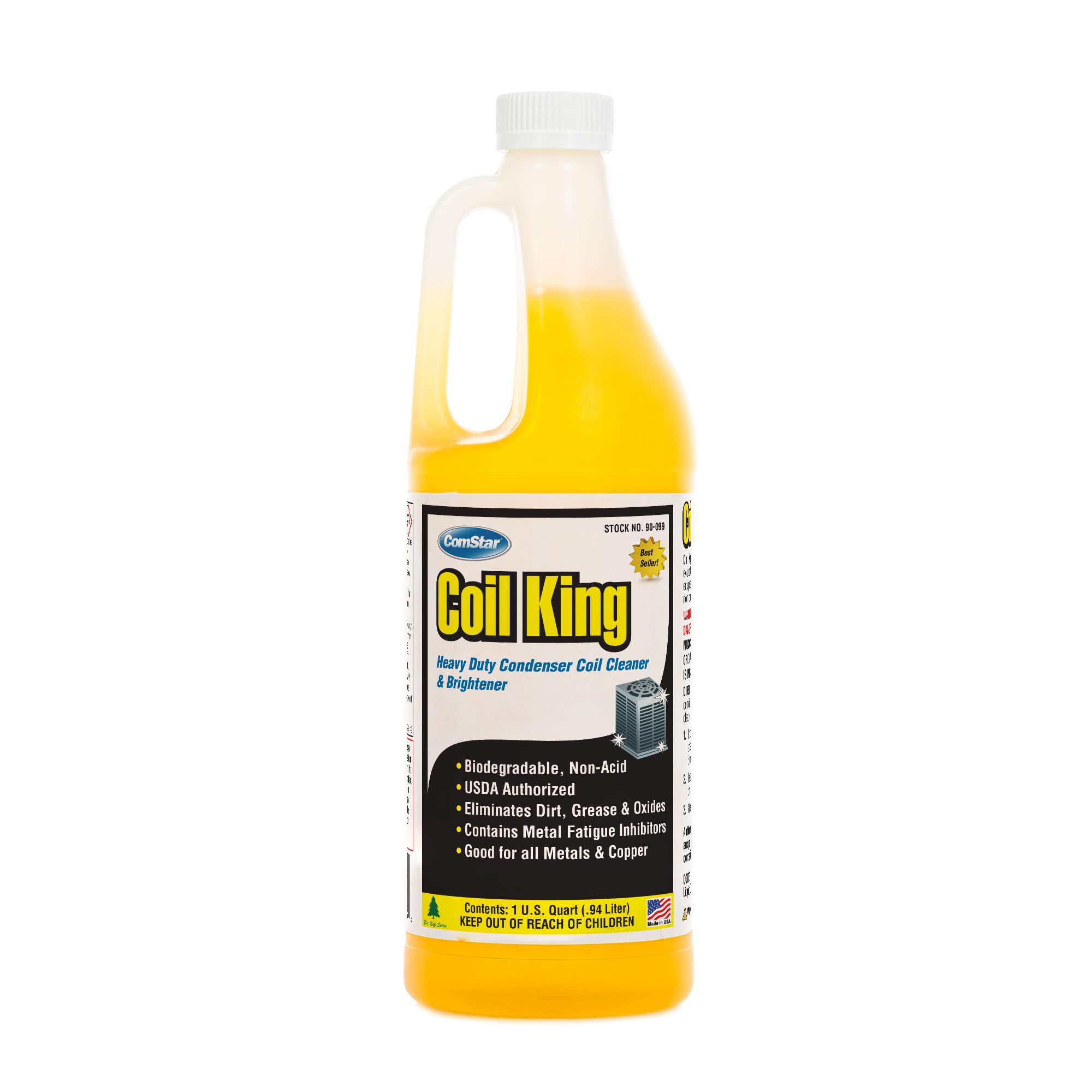
This professional-strength concentrate from ComStar International is the most versatile pick for anyone with a large outdoor condenser. The alkaline formula is non-acidic, meaning it brightens aluminum fins without etching them, and it can be diluted anywhere from 3:1 for heavy grease to 10:1 for light maintenance. One quart makes multiple gallons, so it offers tremendous value if you service more than one unit.
Users report that even heavily clogged coils — nearly stopped up with lint and dirt — return to factory-like performance after a 15-minute dwell and rinse. The foam is thick enough to cling to vertical fin blocks, and it flushes out contaminants effectively when applied with a standard pump sprayer. The brightening effect is a real bonus: the metal looks visibly cleaner, not just wet.
On the downside, the undiluted concentrate has a strong alkaline odor that can irritate the lungs. A respirator and gloves are non-negotiable if you’re working at full strength. But for raw cleaning power and cost-per-use, nothing else in this lineup comes close.
Why it’s great
- Adjustable dilution for light to heavy cleaning
- Safe on copper, aluminum, and steel
- Extremely economical per use
Good to know
- Requires pump sprayer and PPE
- Strong fumes when used undiluted
2. QwikProducts Foaming Coil Cleaner for AC Unit, No Rinse

If you need to clean indoor evaporator coils, mini-splits, or refrigerator coils where hosing down is impractical, this self-rinsing alkaline foam is the solution. The no-rinse chemistry breaks down dirt, dust, and grease into a liquid that drains away with condensate or a gentle wipe. It eliminates the risk of overspray damaging drywall or electronics.
The foam expands well and leaves a pleasant lemon scent rather than a chemical odor. Multiple reviews note that it works effectively on window ACs, car evaporators, and even CPU heatsink fins, proving its versatility. The can size is generous enough for a standard condenser and a small mini-split in one session.
The trade-off is that no-rinse formulas are less aggressive on heavy, baked-on grime compared to a full-rinse concentrate. For routine maintenance rather than a deep restoration job, though, the convenience is unmatched.
Why it’s great
- No rinsing required — great for indoor units
- Pleasant lemon scent neutralizes odors
- Safe on metals with no residue buildup
Good to know
- Less powerful on extremely caked-on dirt
- One can may not cover large commercial coils
3. Rectorseal Clean-N-Safe 83780 Coil Cleaner, Non-Acid Deep Cleaning Foam

RectorSeal’s Clean-N-Safe is engineered for the most sensitive coil types, including microchannel coils that can be damaged by aggressive chemicals. The non-acid formula is biodegradable and presents almost no hazard to plants, animals, or aquatic life — a major plus if you’re spraying near landscaping. It cleans and removes soils without corrosion, making it a safe choice for DIY homeowners who are unsure about their coil material.
The 20-ounce aerosol produces a thick foam that clings well and requires a hose rinse. Users consistently report impressive results, with one reviewer cutting over from their electric bill after cleaning a heavily soiled unit. The product is also effective on backwater valves and sewage equipment, though that’s a niche use.
Be aware that one can may be insufficient for a large 32-inch square condenser. Multiple users advise buying two cans for a standard central AC unit. It also requires vigorous shaking to produce maximum foam.
Why it’s great
- Safe on microchannel, copper, and aluminum coils
- Biodegradable and low environmental impact
- Effectively reduces energy consumption after cleaning
Good to know
- One can may not cover large units
- Needs thorough shaking to activate foam
4. EZGA EZ Green Biodegradable HVAC Coil Cleaner Foam Aerosol

The EZ Green foam from SimpleAir is a strong contender for environmentally conscious homeowners. It surpasses industry standards for green products, meaning it breaks down without harming the ecosystem. The 19-ounce aerosol features a 360-degree nozzle, which is genuinely useful for reaching coils that are tucked into tight unit corners or positioned awkwardly.
The foam activates quickly — just spray, wait 5–10 minutes, and rinse. It has a fresh, inoffensive scent that reviewers describe as pleasant. One user noted that a single can was enough to spray both the inside and outside of their 30-year-old unit, restoring it to full cooling performance after thorough cleaning.
The main limitation is that for extremely dirty coils (years of neglect), the non-acid foam may require a second application or a more aggressive concentrate. It’s best classified as a maintenance-grade cleaner rather than a restoration product.
Why it’s great
- Eco-friendly formula exceeds green standards
- 360° nozzle simplifies application in tight spaces
- Pleasant scent with effective foaming action
Good to know
- May need multiple cans for heavy buildup
- Less aggressive than alkaline concentrates
5. Simple Green All-Purpose Foaming Aerosol Cleaner, 20 Oz (Pack of 2)

Simple Green’s foaming aerosol is an entry-level option that works on a wide range of surfaces beyond just AC coils. While not specifically formulated as a heavy-duty HVAC coil cleaner, its foaming action does cling to vertical surfaces and cuts through light dirt and grease. The pack of two cans is budget-friendly, and the non-abrasive formula won’t scratch coated surfaces.
It sprays upside down, which is handy for under-sink or tight mechanical spaces, and it rinses off cleanly. Reviewers have used it successfully on RC car chassis, carpets, and automotive parts, underscoring its general-purpose nature. For a quick clean on a mildly dusty window AC unit, it works fine.
However, it lacks the dedicated degreasing strength and metal-safe certifications of the other cleaners on this list. For a central condenser with years of caked-on grime, this product will likely require significant scrubbing and multiple applications. It’s best kept for maintenance of already-clean units.
Why it’s great
- Versatile across many household surfaces
- Pack of two provides good value
- Non-abrasive formula won’t damage finishes
Good to know
- Not formulated for heavy HVAC grime
- Requires scrubbing on baked-on dirt
FAQ
Can I use Simple Green to clean my AC coils?
How often should I clean my AC condenser coils?
Is a no-rinse coil cleaner safe for my air conditioner?
What happens if I don’t rinse my AC cleaner properly?
Final Thoughts: The Verdict
For most users, the best ac cleaner winner is the Coil King because its adjustable dilution ratio delivers professional-level cleaning power at a cost that beats any aerosol. If you want no-rinse convenience for an indoor mini-split, grab the QwikProducts Foaming Coil Cleaner. And for a safe, biodegradable option that protects microchannel coils, nothing beats the Rectorseal Clean-N-Safe.

Mo Maruf
I created WellFizz to bridge the gap between vague wellness advice and actionable solutions. My mission is simple: to decode the research and give you practical tools you can actually use.
Beyond the data, I am a passionate traveler. I believe that stepping away from the screen to explore new environments is essential for mental clarity and physical vitality.