Our readers keep the lights on and my smoothie glass nicely filled. As an Amazon Associate, I earn from qualifying purchases.
The constant voltage chase defines the modern rechargeable battery market. Standard NiMH cells deliver a nominal 1.2V, which drops under load, causing high-drain devices like smart locks, VR controllers, and security cameras to trigger false low-battery warnings or shut down prematurely. Lithium-ion AA batteries solve this by maintaining a steady 1.5V output until the very end of their charge cycle, matching the voltage profile of disposables while offering hundreds of recharge cycles.
I’m Mohammad Maruf — the founder and writer behind WellFizz. Over the last decade I’ve tracked the chemical shift from NiMH to lithium-ion in the consumer battery space, analyzing discharge curves, cycle-life test results, and real-world failure modes across dozens of brands.
Five models passed the constant-voltage filter, and each one brings a specific strength to the table. If you are looking for the best aa rechargeable lithium batteries to keep your high-draw gear running without voltage sag, this guide breaks down the trade-offs between capacity, cycle life, and charging convenience.
How To Choose The Best AA Rechargeable Lithium Batteries
Not all lithium-ion AA cells are built alike. The chemistry is similar, but the implementation — from the internal protection circuit to the charging interface — varies widely. Focus on three core specs before you buy.
Capacity in MilliWatt-Hours (mWh)
Manufacturers often quote capacity in mWh instead of mAh because lithium-ion cells run at a higher voltage (3.7V internally, stepped down to 1.5V). A 3000mWh cell is roughly equivalent to 2000mAh in NiMH terms. For a Blink camera that runs on two AAs, a set of 3600mWh batteries can last weeks longer than standard 3000mWh budget units. Check the mWh rating against your device’s power draw.
Constant 1.5V Output vs. Voltage Sag
The entire reason to buy lithium-ion over NiMH is voltage stability. Cheap lithium cells may drop below 1.5V under heavy load. Read reviews for phrases like “false low-battery alert” or “powers razor at full speed” — those are signs the regulator circuit holds up under pressure. A true constant 1.5V output means the device sees full power until the battery is empty.
Charging Method and Cycle Life
Some packs include a dedicated charger with independent slots; others offer a built-in USB-C port on each cell. USB-C batteries are more portable (no dock required) but usually have a shorter cycle-life rating (1,200 cycles). Docked chargers often support 1,600 to 2,000 cycles and allow charging of mixed cell counts. Choose the form factor that fits your routine.
Quick Comparison
On smaller screens, swipe sideways to see the full table.
| Model | Category | Best For | Key Spec | Amazon |
|---|---|---|---|---|
| INSZIII 4100mWh 4-Pack | Premium | Maximum runtime per charge | 4100mWh / 2733mAh | Amazon |
| EBL 8-Pack + Charger | Premium | Outdoor cameras & all-weather gear | 1600 cycles / -40°F to 140°F | Amazon |
| Tanatare 8-Pack + Charger | Mid-Range | Large multi-device households | 2000 cycles / IPX67 | Amazon |
| HW 3600mWh 4-Pack | Mid-Range | VR & gaming controllers | 3600mWh / USB-C cable | Amazon |
| RayHom 3700mWh 4-Pack | Budget | Blink cameras & security systems | 3700mWh / 3A instant current | Amazon |
In‑Depth Reviews
1. INSZIII 4100mWh 4-Pack
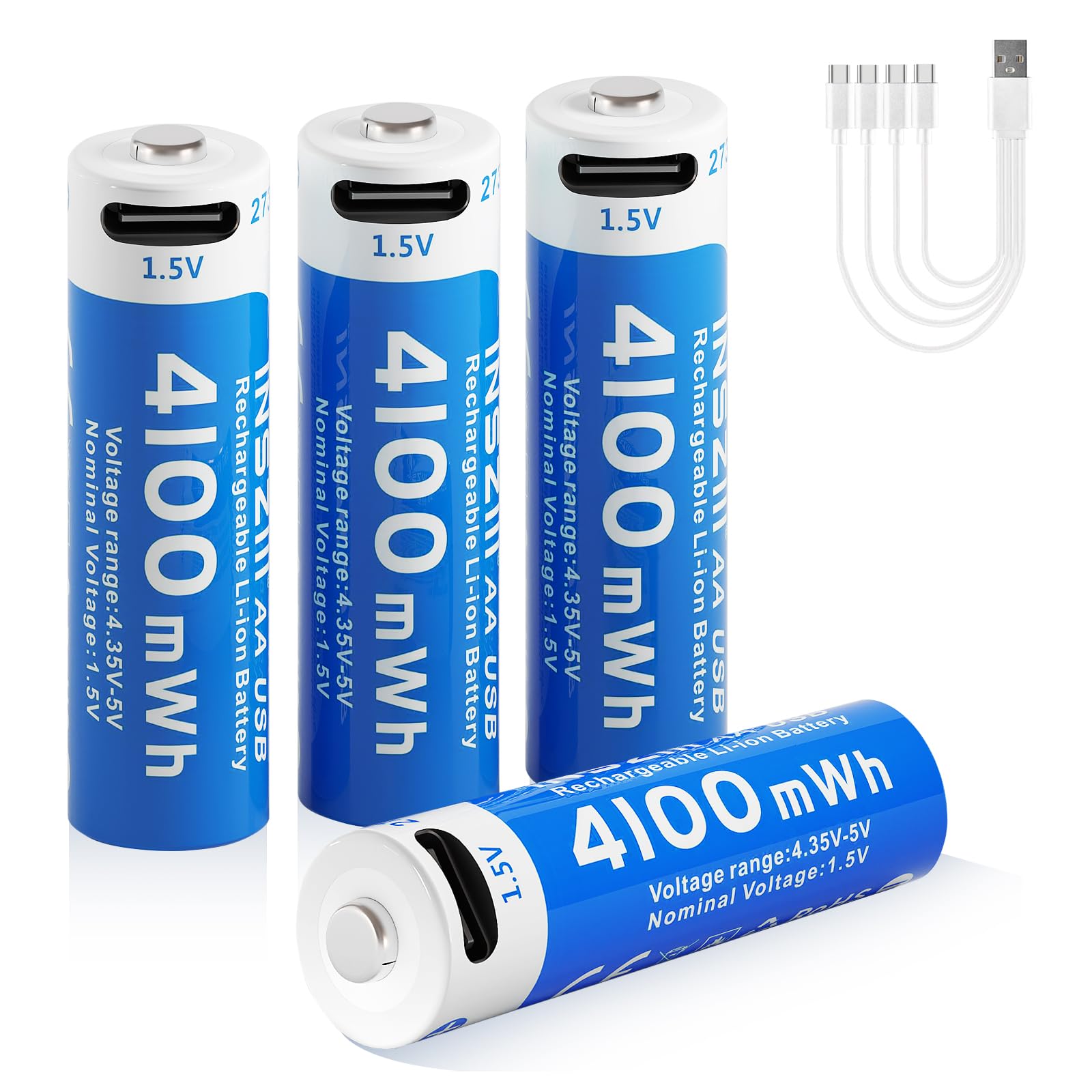
At 4100mWh, the INSZIII cells post the highest raw capacity in this lineup. Each battery integrates a USB-C port directly into the can, eliminating the need for a dedicated charger. The 4-in-1 USB-C cable charges all four simultaneously, and the built-in LED glows flashing green during charge and solid green when full.
The 1.5V constant output holds steady under the 3.5A peak draw of a motorized deadbolt. Users report no false low-battery warnings in digital locks or flashlights. The charging convenience is a genuine step forward — no dock, no wall wart, just a single cable. The trade-off is a 1,200-cycle rating, which is lower than the 1,600-plus cycles offered by docked systems.
For users who value runtime between charges above all else and want to ditch the charger entirely, this is the most direct upgrade from disposables. The 80-gram weight per cell is lighter than a pair of alkaline AAs, which is noticeable in handheld devices.
Why it’s great
- Highest mWh capacity in the roundup
- Charges via standard USB-C, no dock needed
- Full 1.5V output under the 3.5A load
Good to know
- 1,200-cycle rating is lower than premium docked packs
- Battery cuts off abruptly when depleted — no dimming warning
- Occasional dud reported in larger orders
2. EBL 8-Pack with Charger

EBL is a known name in the rechargeable space, and this 8-pack with charger represents the most complete kit. The 3-in-1 charger handles 1–8 AA/AAA lithium-ion, NiMH, and Ni-CD cells, making it a universal hub if you have legacy rechargeables in the house. The batteries themselves are lab-tested to hold 80% capacity after 1,600 cycles — a meaningful longevity advantage over the 1,000-cycle standard.
The constant 1.5V output keeps Blink cameras and video doorbells from triggering false low-battery alerts. Users report matching the runtime of disposable lithium primaries after adjusting device settings, and the payback period is roughly two uses versus buying disposables. The operating range of -40°F to 140°F means these cells do not falter in freezing outdoor conditions, which is critical for security cameras mounted on exterior walls.
The charger’s independent slot detection is a practical feature — you can charge one, two, or eight cells without worrying about pairing. The 19-gram weight per cell is 35% lighter than alkaline, reducing the load on mount brackets and enclosures.
Why it’s great
- Universal charger supports NiMH and Ni-CD too
- 1,600-cycle retention tested to 80% capacity
- Works reliably from -40°F to 140°F
Good to know
- Some cells may trigger a BMS safety lock requiring brief contact jump-start
- Initial runtime in Blink cameras is shorter than Energizer Ultimate lithium
3. Tanatare 8-Pack with Smart Charger
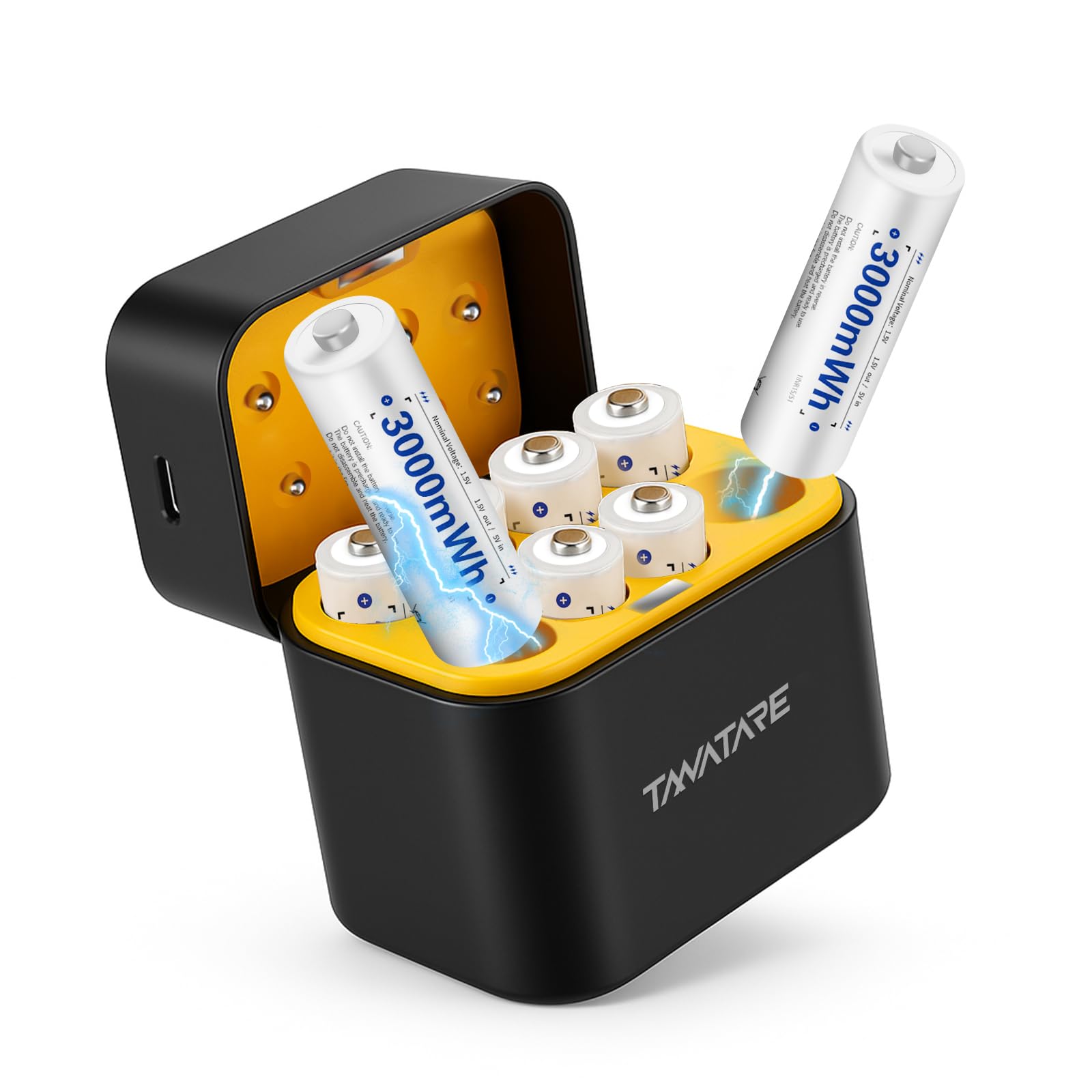
Tanatare targets the user who needs volume — eight cells in the box plus an eight-slot smart charger. The 3,000mWh per cell is sufficient for Meta Quest controllers, where users report charge cycles lasting through extended gaming sessions. The charger delivers 375mAh per slot, filling all eight cells in 2.5 hours, which is faster than many NiMH chargers that trickle at half that rate.
The standout spec is the 2,000-cycle claim, the highest in this roundup. If you rotate through eight cells across multiple high-drain devices daily, that lifespan translates to years of use before capacity degradation becomes noticeable. The IPX67 rating on the charger is unusual — it is sealed against dust and water immersion up to one meter, so a spilled drink on the nightstand won’t kill your charging setup.
The magnetic integrated design keeps the charger and cells together as one block, which is tidy for travel. The recommended storage condition (20°C, 50% state of charge) is worth noting: like all lithium cells, they prefer partial charge and cool storage for maximum calendar life.
Why it’s great
- Highest cycle-life claim at 2,000 cycles
- IPX67 waterproof charger
- Charges all 8 cells independently in 2.5 hours
Good to know
- 3,000mWh capacity is lower than the INSZIII or RayHom packs
- Charger works only with Tanatare AA lithium batteries
- Storage at 50% charge requires reminder every 6 months
4. HW 3600mWh 4-Pack
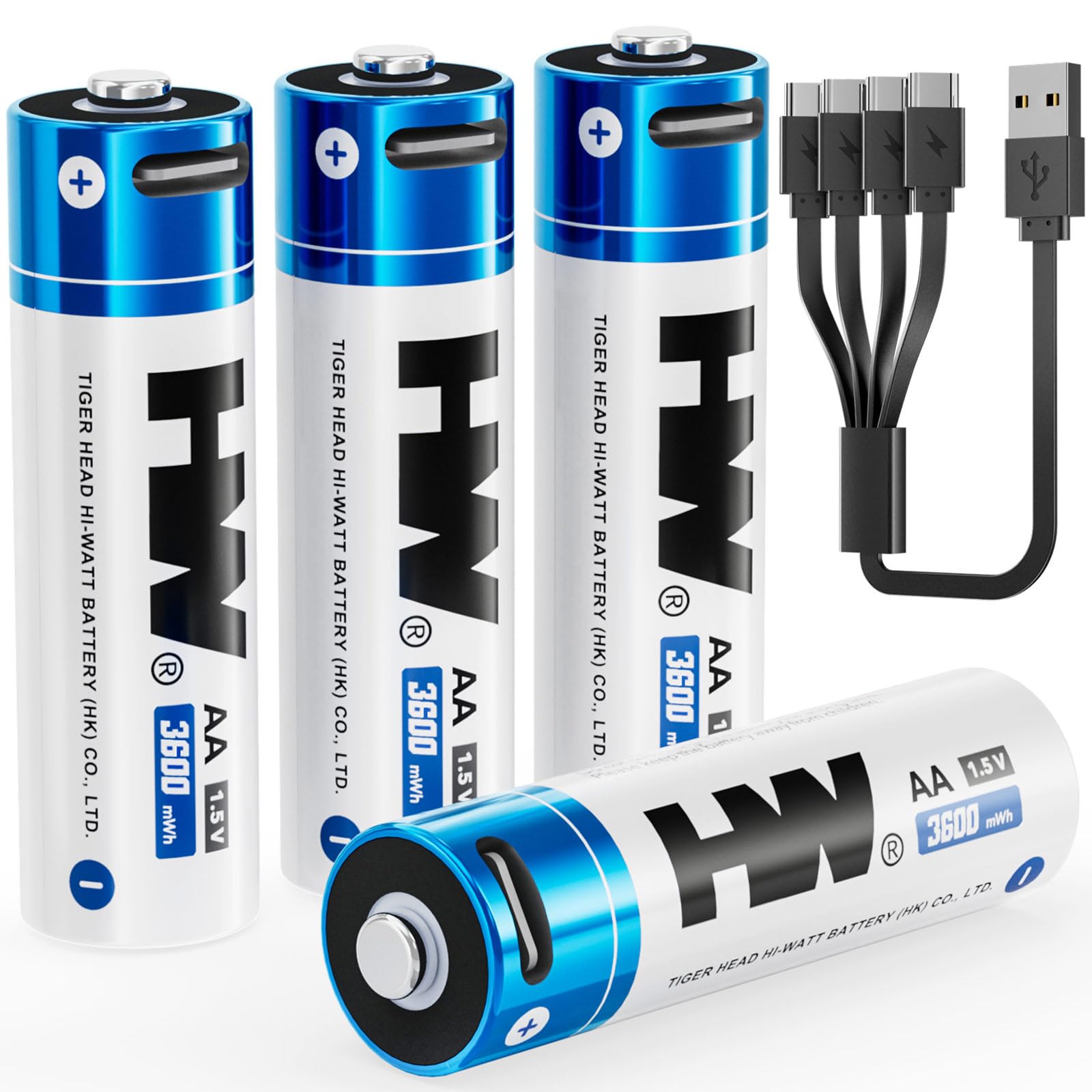
HW delivers the most balanced package in this comparison. The 3,600mWh capacity is mid-pack on paper but punches above its weight in practice. Real-world tests show the gradual 1.5V voltage decline — engineered rather than abrupt — means high-drain devices like Xbox controllers and VR headsets get stable runtime without the sudden cutoff that plagues some lithium cells. Users running wireless microphones (Shure body packs) report hours of steady performance per charge.
The 4-in-1 USB-C cable charges all four cells at once from any USB port, including a power bank. The 1,000-cycle rating is adequate for most households: even daily charging means three years before noticeable wear. The six-layer safety circuit covers overcharge, over-discharge, short circuit, and overheating, which is reassuring for devices left in cradles or drawers between uses.
One limitation: these cells struggle with motorized devices like foil shavers, where the current draw exceeds what the regulator can sustain. For LED lights, cameras, clocks, and gaming controllers, they are near-flawless. The 72-gram weight for a four-pack is competitive.
Why it’s great
- Gradual 1.5V decline prevents abrupt device shutdown
- USB-C cable charges all four simultaneously
- Excellent for VR, gaming controllers, and wireless mics
Good to know
- Not suitable for high-current motorized devices
- 1,000-cycle rating is lower than some competitors
5. RayHom 3700mWh 4-Pack
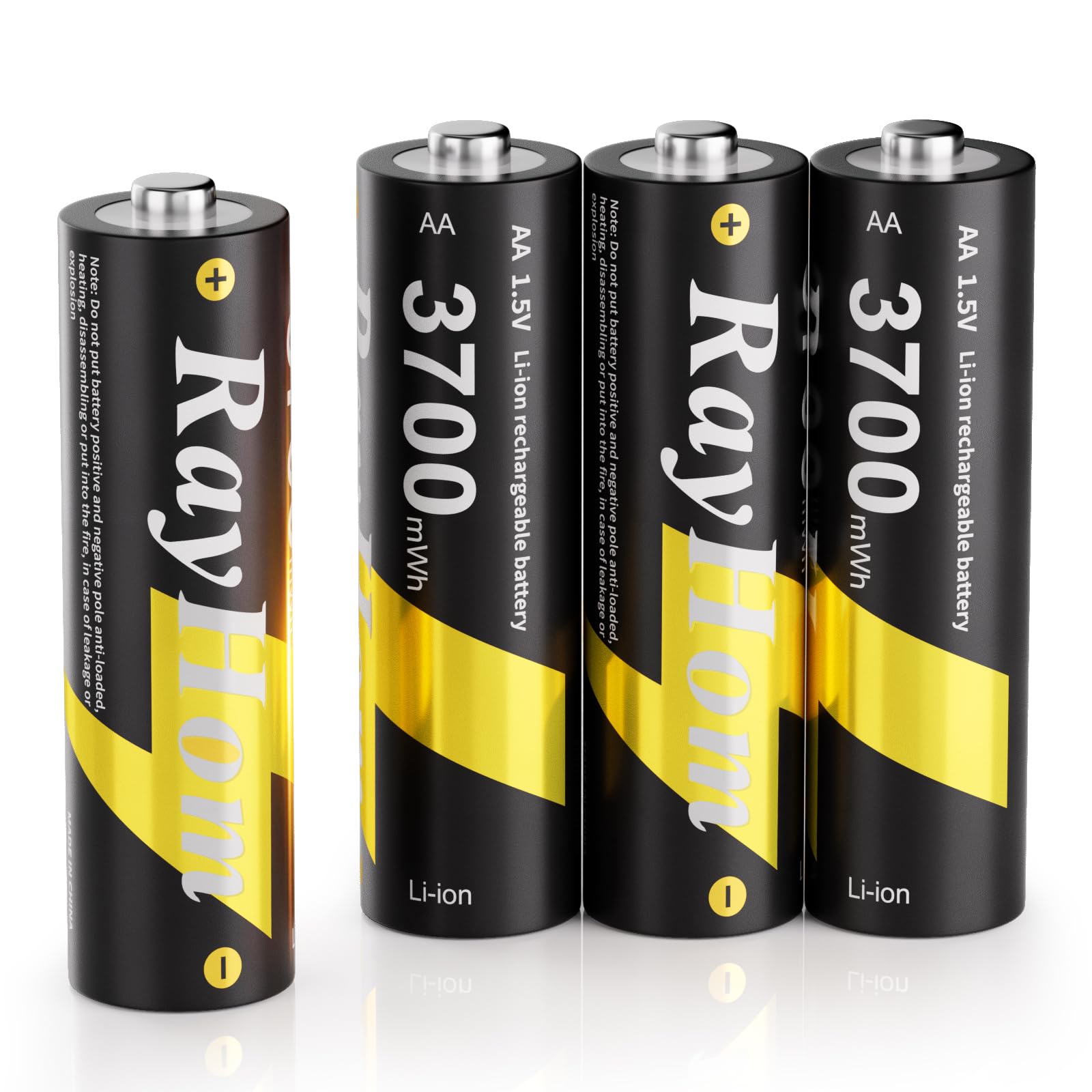
RayHom focuses on the security-camera crowd. The 3,700mWh capacity and 3A instant current rating mean these cells can handle the burst draw of a Blink camera’s infrared illuminator and motorized pan-tilt without voltage sag. The CPBI Sealing Technology is a manufacturing detail that increases energy density and reduces internal resistance, contributing to the 1,600+ cycle life.
The operating range of -20°F to 131°F covers outdoor mounting without brittle performance in winter. Users specifically mention these cells for deep-freeze temperature alarms and outdoor floodlights. The one-year warranty and responsive seller support (one reviewer reported a replacement shipped within a week) add a layer of confidence that entry-level packs often lack.
A critical note: these batteries require a dedicated 1.5V lithium charger. Using a standard NiMH charger will not work and may damage the cells. The pack includes four batteries but no charger, so factor that into your total cost if you are new to the lithium rechargeable ecosystem. Some units have reported early failures — one battery in a set of four failed after the first cycle — so test all cells immediately upon arrival.
Why it’s great
- 3A instant current handles camera burst draws cleanly
- 1,600+ cycle life with CPBI sealing tech
- Rated for -20°F to 131°F outdoor use
Good to know
- Requires separate 1.5V lithium charger (not included)
- Inconsistent quality — some cells fail at first use
FAQ
Can I charge lithium AA batteries in a standard NiMH charger?
Why do some lithium AA batteries stop working in cold weather?
Final Thoughts: The Verdict
For most users, the best aa rechargeable lithium batteries winner is the HW 3600mWh 4-Pack because it delivers the best balance of capacity, charging convenience via USB-C, and a gradual voltage decline that works across gaming controllers, cameras, and audio gear without sudden cutoffs. If you want maximum per-cell runtime and the convenience of built-in USB-C ports, grab the INSZIII 4100mWh 4-Pack. And for all-weather outdoor cameras and a universal charger that handles legacy NiMH cells too, nothing beats the EBL 8-Pack with Charger.

Mo Maruf
I created WellFizz to bridge the gap between vague wellness advice and actionable solutions. My mission is simple: to decode the research and give you practical tools you can actually use.
Beyond the data, I am a passionate traveler. I believe that stepping away from the screen to explore new environments is essential for mental clarity and physical vitality.