Our readers keep the lights on and my smoothie glass nicely filled. As an Amazon Associate, I earn from qualifying purchases.
The jump to an 8K-class projector isn’t about raw pixel count—it’s about the signal chain. Every HDMI 2.1 port, every triple-laser engine, and every pixel-shifting algorithm you choose determines whether that 150-inch screen looks like a window or a mosaic.
I’m Mohammad Maruf — the founder and writer behind WellFizz. I spend my weeks dissecting laser light sources, contrast ratios, and optical zoom ranges so you don’t have to guess which flagship projector actually earns its premium badge.
Whether you’re building a dedicated theater or upgrading the living room to a laser TV, this guide breaks down the real specs that separate a good picture from a great one — and helps you lock in the best 8k projector for your space and budget.
How To Choose The Best 8K Projector
An 8K projector isn’t a single product category—it’s a convergence of laser brightness, optical lens quality, video processing, and HDMI bandwidth. Understanding how these pieces fit together will save you from overpaying for lumens you can’t use or missing the inputs you need.
Laser Light Engine and Brightness
A triple-laser light source delivers a wider color gamut and longer lifespan than single-laser or lamp-based models. Look for 2,500 ISO lumens or higher if you plan to watch with ambient light. The color volume—measured in DCI-P3 or Rec.2020 coverage—determines whether the reds and greens look natural or artificial.
Optical Flexibility: Lens Shift and Zoom
A motorized lens with vertical and horizontal shift lets you place the projector off-center without keystone distortion—essential for retrofits and non-dedicated rooms. Optical zoom (e.g., 0.84-2.0:1) preserves sharpness at different throw distances, while digital zoom destroys resolution. Always prioritize optical adjustments over digital ones.
Video Processing and Pixel Shifting
Because true 8K native panels remain extremely rare and expensive, the best projectors use advanced pixel-shifting technology to generate 8.3 million pixels on screen. The quality of the internal scaler and real-time HDR tone mapping determines how convincingly that 8K image appears. Look for processors that handle motion interpolation and dynamic tone mapping without introducing artifacts.
Quick Comparison
On smaller screens, swipe sideways to see the full table.
| Model | Category | Best For | Key Spec | Amazon |
|---|---|---|---|---|
| AWOL VISION Aetherion Max | Triple Laser UST | Bright-room living cinema | 3,300 ISO Lumens / 6,000:1 Contrast | Amazon |
| Hisense XR10 | Triple Laser | Large screen with lens shift | 6,000 ANSI Lumens / 0.84-2.0x Zoom | Amazon |
| Epson LS11000 | 3LCD Laser | Zero rainbow-effect theater | 2,500 Lumens / 1,200,000:1 Dynamic CR | Amazon |
| Valerion VisionMaster Pro2 | Triple Laser DLP | Competitive gaming + cinema | 3,000 ISO Lumens / 15,000:1 Native CR | Amazon |
| Hisense PX3-PRO | Triple Laser UST | Spacious living room upgrade | 3,000 Lumens / 110% BT.2020 Color | Amazon |
| Sony VPL-XW5000ES | Native 4K SXRD | Dedicated theater purists | 2,000 Lumens / Native 4K Panel | Amazon |
| AWOL VISION LTV-3000 Pro | Triple Laser UST | 3D home theater on a budget | 2,000 Lumens / 147% DCI-P3 Color | Amazon |
In‑Depth Reviews
1. AWOL VISION Aetherion Max
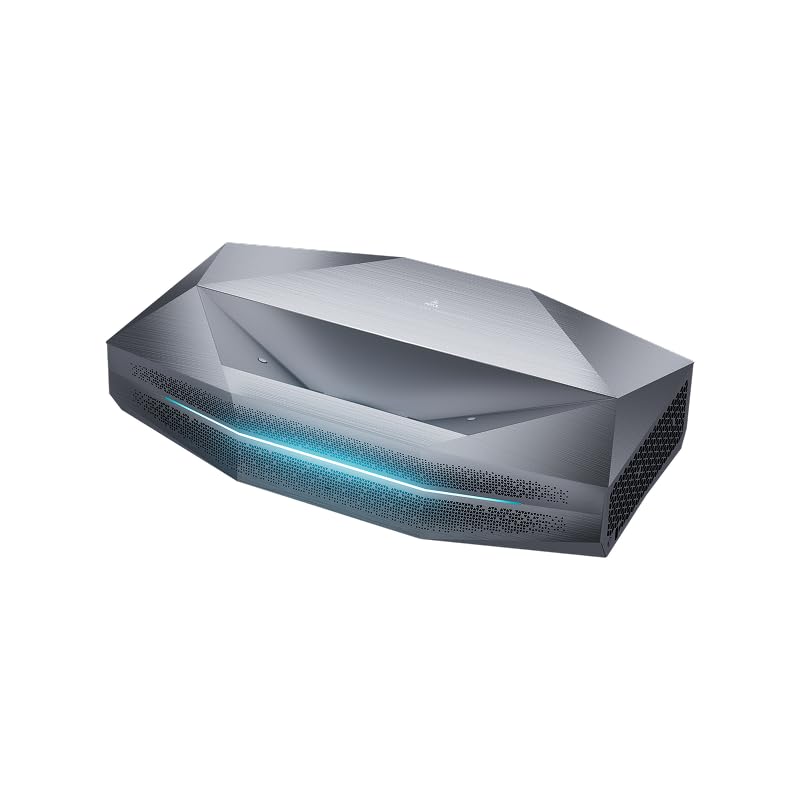
The Aetherion Max is the most complete living-room laser TV I’ve seen. Its 3,300 ISO Lumens and 110% Rec.2020 color gamut mean you don’t need blackout curtains—afternoon sports look punchy and skin tones remain natural even with windows open. The 7-level IRIS system and EBL algorithm deliver a 6,000:1 native contrast ratio that makes dark scenes in *Dune* or *The Batman* feel genuinely deep, not just dim.
Gamers will appreciate the 1ms-class input latency at 240Hz, plus three HDMI 2.1a ports and a DisplayPort 1.4a—no cable swapping between PS5, Xbox Series X, and a gaming PC. The built-in Anti-RBE technology virtually eliminates rainbow-effect distractions, a rare comfort feature in the UST space. It also includes TÜV-certified harmful light reduction for marathon viewing sessions.
At 0.2:1 throw ratio, it sits inches from the wall and fills a 200-inch diagonal without ceiling mounting. The dark gunmetal chassis is understated, and the 2-year warranty with U.S.-based support adds confidence for a flagship purchase. If you want one projector that handles daytime TV, late-night movies, and competitive gaming without compromise, this is the pick.
Why it’s great
- Exceptional daytime brightness without washing out color
- Ultra-low input lag with full HDMI 2.1a bandwidth
- Anti-RBE technology eliminates rainbow artifacts for sensitive viewers
Good to know
- Requires an ALR screen for best results in bright rooms
- Premium price tier places it above budget-oriented shoppers
2. Hisense XR10
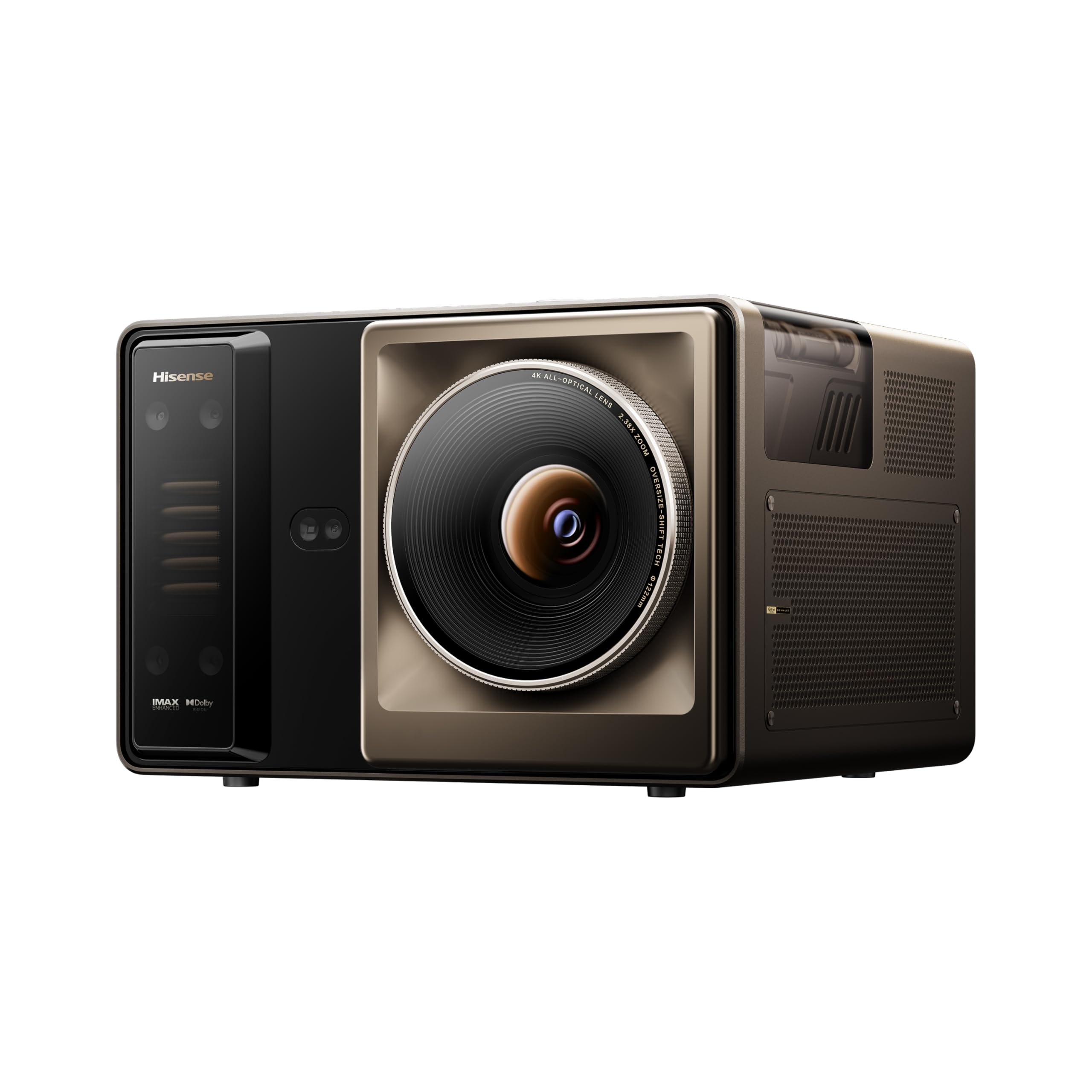
The Hisense XR10 is built for homeowners who need optical placement freedom. Its 0.84-2.0:1 optical zoom range and motorized lens shift let you place the projector on a shelf, in a media cabinet, or mounted rear-ceiling without digital keystone distortion. The 17-element all-glass lens preserves edge-to-edge sharpness even at extreme zoom settings, while the liquid cooling system keeps the 6,000 ANSI lumens stable during long movie nights.
Color performance is anchored by a pure triple-laser engine that hits deep reds and greens without the cyan tint common in cheaper single-laser designs. The 7-level iris lets you fine-tune black levels to match room darkness, producing a 6,000:1 contrast ratio that feels filmic rather than video-gamey. It supports Dolby Vision, HDR10+, and IMAX Enhanced, so you get proper dynamic tone mapping across streaming and disc sources.
The VIDAA smart OS is fast and free of ad-heavy interfaces, though it lacks some niche streaming apps found on Google TV. At 65- to 300-inch projection capability, this is the most flexible single unit for buyers who don’t know exactly where the projector will live long-term. The liquid cooling means fan noise stays whisper-quiet even during peak brightness.
Why it’s great
- Broad optical zoom and full lens shift for flexible room placement
- 17-element all-glass lens prevents fringing and focus falloff
- Liquid cooling system keeps performance consistent and quiet
Good to know
- VIDAA OS has fewer apps than Google TV ecosystem
- Peak brightness may be overkill in smaller dedicated rooms with full light control
3. Epson LS11000

The Epson LS11000 uses a three-chip 3LCD architecture that completely eliminates the rainbow effect (RBE) common to single-chip DLP projectors. For viewers sensitive to those flickering color flashes, this is the only laser projector in this list that guarantees a solid white field and artifact-free motion. The laser array light source produces 2,500 lumens of both color and white brightness—no brightness sacrifice for color accuracy.
Its dynamic contrast ratio of 1,200,000:1 relies on laser dimming rather than a mechanical iris, so transitions between bright and dark scenes feel smooth rather than abrupt. The motorized lens offers generous vertical and horizontal shift, plus powered zoom and focus, making installation a one-time calibration. HDMI 2.1 with 120Hz support means it works with PS5 and Xbox Series X at 4K 120fps, though input lag is higher than DLP competitors at around 26ms.
Where the LS11000 truly shines is in long ownership—the sealed optical engine reduces dust blobs, and Epson’s warranty service is well-regarded. The chassis is larger than UST models, so it’s best paired with a ceiling mount or rear shelf in a dedicated theater room. It lacks 3D support, which matters if you have a library of 3D Blu-rays.
Why it’s great
- Zero rainbow effect due to three-chip LCD design
- Excellent dynamic contrast with smooth laser dimming
- Motorized lens with wide shift range simplifies installation
Good to know
- Input lag at 4K is higher than DLP gaming projectors
- No 3D support for those with 3D Blu-ray collections
4. Valerion VisionMaster Pro2

The VisionMaster Pro2 is built for speed. With a 4ms input lag at 1080p 240Hz and 15,000:1 native contrast ratio (with EBL), it delivers the fast response times and deep blacks that competitive gamers and cinephiles both crave. The DLP RGB triple-laser engine produces 3,000 ISO Lumens and 110% Rec.2020 coverage, so Call of Duty and *Top Gun: Maverick* look equally vibrant—even with some ambient light in the room.
The OpticFlex lens system offers a 0.9-1.5:1 throw ratio with auto focus and keystone, but there’s no optical lens shift, so placement must be centered horizontally. This is a portable form factor that ships with a carrying case, making it a strong candidate for outdoor movie nights or moving between rooms. The AI-SoC MT9618 chipset with 4GB RAM and 128GB ROM ensures the Google TV interface is snappier than most built-in smart platforms.
HDR performance is handled by Dynamic Tone Mapping and HDR10+, though Dolby Vision is not listed among its supported formats. The projector supports ultra-wide 21:9 and 32:9 aspect ratios, which is rare for the price tier and valuable for PC sim-racing or flight-sim setups. If frame-rate and contrast matter more than Dolby Vision licensing, this is a serious contender.
Why it’s great
- Extremely low 4ms input lag for competitive gaming
- Native contrast ratio of 15,000:1 produces deep inky blacks
- Ultra-wide 21:9 and 32:9 support for PC gaming
Good to know
- No optical lens shift limits placement flexibility
- Dolby Vision not supported—HDR10+ only
5. Hisense PX3-PRO

The PX3-PRO is Hisense’s mid-range UST that punches above its weight in color accuracy. The LPU (Trichroma) triple-laser engine covers 110% of the BT.2020 color space and achieves a Delta E of roughly 0.9, meaning colors are perceptually indistinguishable from reference monitors. That kind of color fidelity matters for nature documentaries and animated films where subtle gradients define the image.
At 3,000 lumens brightness, it handles soft indoor lighting well but won’t overpower a sun-drenched living room without an ALR screen. The built-in Google TV interface is smooth and supports major streaming apps natively, removing the need for an external streaming stick. Harmon Kardon speakers deliver surprisingly full sound for a UST, though you’ll still want a dedicated audio system for critical listening.
Active 3D support is included, which is increasingly rare. The auto-keystone system requires snapping a photo of the projected image via a web interface, which is less elegant than competitors’ sensor-based setups. The 4K AI upscaler does a respectable job with 1080p content, adding sharpness without introducing excessive noise artifacts. For hisense fans wanting Dolby Vision and IMAX Enhanced without jumping to the XR10, this is the sweet spot.
Why it’s great
- Excellent color accuracy with Delta E ≈0.9 out of the box
- Active 3D support for home theater enthusiasts
- Built-in Google TV provides smooth app streaming
Good to know
- Auto-keystone uses a clunky photo-based alignment method
- Not bright enough for high-ambient-light rooms without an ALR screen
6. Sony VPL-XW5000ES

The Sony VPL-XW5000ES is the only projector on this list with a native 4K SXRD panel—no pixel shifting required. Each of the 8.8 million pixels is physically present on the chip, producing razor-sharp text, fine fabric textures, and facial details that pixel-shifted designs cannot fully resolve. The X1 Ultimate for projector processor handles upscaling and motion flow with the same sophistication found in Sony’s flagship TVs.
Brightness is rated at 2,000 lumens, which is lower than some competition, but the 95% DCI-P3 color volume and TRILUMINOS PRO algorithm mean the light it produces is used more efficiently. Blacks are exceptionally deep for a laser projector thanks to the Wide Dynamic Range Optics. The chassis is about 30% lighter than Sony’s previous VPL-VW915ES, measuring more compact for a ceiling-mounted setup—though at 28 pounds, a sturdy mount is required.
Input lag is under 21ms at 4K 60Hz and under 13ms at 2K 120Hz, making it viable for casual gaming, though competitive players will still prefer a DLP with sub-10ms latency. There is no lens shift for horizontal placement—only vertical—so centering is mandatory. It also lacks built-in smart TV apps; you’ll need an external Apple TV or Roku. The 20,000-hour laser lifespan and silent fan make it the best choice for a purist home theater where external sources are already the standard.
Why it’s great
- Native 4K SXRD panel delivers true 8.8 million pixels on screen
- X1 Ultimate processor upscales and smoothes motion beautifully
- Compact and lightweight for a high-end home theater projector
Good to know
- No built-in smart platform—requires an external streaming device
- Horizontal lens shift is absent; exact centering placement is required
7. AWOL VISION LTV-3000 Pro

The LTV-3000 Pro is the entry point into triple-laser 8K-class projection without sacrificing the core features that matter. It covers 147% of the DCI-P3 color gamut, delivering cinema-grade color saturation that rivals projectors costing significantly more. The 0.25:1 ultra-short throw ratio places it inches from the wall, and it supports 3D playback via active shutter glasses—a rare feature at this price that opens up a massive library of 3D Blu-ray content.
Brightness is rated at 2,000 lumens, which works best in controlled or dim lighting. The built-in center-channel speaker mapping is a clever perk for dialogue clarity without an AVR, but serious viewers will still want a separate sound system. The Dolby Vision and HDR10+ support ensures proper tone mapping across HDR sources, and the triple-laser engine eliminates the need for a color wheel, removing one potential point of failure over time.
Setup is straightforward with geometric correction, though the menu system is dense and requires some patience to master. Some users have reported dead pixels within the first year, but AWOL’s customer support is responsive about replacements. If your priority is getting a 3D-compatible, color-accurate UST laser TV for less and you can manage a dark room environment, the LTV-3000 Pro delivers tremendous value per pixel.
Why it’s great
- Wide 147% DCI-P3 color gamut at a relatively accessible price
- Active 3D support adds a unique home theater dimension
- Triple-laser engine means no color wheel wear over time
Good to know
- Brightness limited to 2,000 lumens—requires dim or dark room for best results
- Menu system is dense and takes time to navigate for fine-tuning
FAQ
Does an 8K projector need native 8K panels to look good?
Do I need a special screen to get the most out of a triple-laser projector?
Can an 8K projector upscale standard 1080p and 4K content well?
Final Thoughts: The Verdict
For most users, the best 8k projector winner is the AWOL VISION Aetherion Max because it combines high-brightness triple-laser performance with 1ms gaming latency and comprehensive HDMI 2.1 connectivity in a UST form factor that fits any living room. If you want a native 4K panel with zero rainbow effect, grab the Sony VPL-XW5000ES. And for a competitively-priced 3D-capable UST with fantastic color coverage, the AWOL VISION LTV-3000 Pro remains a solid entry point.

Mo Maruf
I created WellFizz to bridge the gap between vague wellness advice and actionable solutions. My mission is simple: to decode the research and give you practical tools you can actually use.
Beyond the data, I am a passionate traveler. I believe that stepping away from the screen to explore new environments is essential for mental clarity and physical vitality.