Our readers keep the lights on and my smoothie glass nicely filled. As an Amazon Associate, I earn from qualifying purchases.
Choosing a 65-inch TV means deciding between display technologies that define your entire viewing experience—from the deep, inky blacks of OLED to the blistering brightness of Mini LED. The wrong panel choice can leave you with washed-out HDR in a bright room or motion blur during a crucial game, while the right one transforms your living space into a personal cinema.
I’m Mohammad Maruf — the founder and writer behind WellFizz. I’ve spent thousands of hours comparing panel technologies, local dimming algorithms, processor capabilities, and real-world performance metrics across every major TV brand to decode what actually matters when you’re spending your money.
This breakdown covers the best current models for every use case and budget, helping you navigate the key specs so you can confidently choose the right 65 inch tv for your home without overpaying or undershooting your needs.
How To Choose The Best 65 Inch TV
A 65-inch screen is a commitment, both in space and budget. Before you click buy, three core factors will determine whether your new TV delivers joy or regret: panel technology, processing power, and the smart platform it runs.
Panel Technology: OLED vs. QLED vs. Mini LED
OLED panels produce perfect blacks by turning off individual pixels, delivering infinite contrast that makes HDR content pop in a dark room. The downside? Peak brightness is lower than LED-based sets, so a bright living room with windows can wash out the image. QLED uses a standard LED backlight with a quantum dot layer to boost color volume and brightness—great for brightly lit spaces. Mini LED takes the QLED approach further by shrinking the LEDs, allowing hundreds or thousands of local dimming zones for much better black levels without the burn-in risk of OLED. Your room’s ambient light level should drive this decision.
Refresh Rate and Gaming Features
Standard 60Hz panels handle movies and casual viewing fine, but if you connect a PlayStation 5, Xbox Series X, or gaming PC, a 120Hz or 144Hz panel unlocks smoother motion and tear-free gameplay. Look for HDMI 2.1 ports to support 4K at high refresh rates, and check for Variable Refresh Rate (VRR) and Auto Low Latency Mode (ALLM) to eliminate screen tearing and minimize input lag. Some premium sets now offer native 165Hz, which future-proofs for the next generation of PC gaming.
Smart TV Platform and Sound
Your TV’s operating system dictates how quickly you can jump into Netflix, Prime Video, or YouTube. Roku offers the simplest interface with regular updates, Google TV provides deep integration with Android and Chromecast, Fire TV is ideal for Amazon Prime households, and webOS on LG sets delivers a polished experience with long-term software support. Don’t neglect audio—while many modern TVs have improved onboard sound, a separate soundbar or AV receiver remains the best path to cinematic audio, especially if you want Dolby Atmos with height effects.
Quick Comparison
On smaller screens, swipe sideways to see the full table.
| Model | Category | Best For | Key Spec | Amazon |
|---|---|---|---|---|
| LG G5 (2025) | Premium OLED | Cinema purists & competitive gaming | Alpha 11 Gen2 AI Processor / 165Hz | Amazon |
| Sony BRAVIA 8 OLED | Premium OLED | Movie lovers & PS5 owners | XR Processor / XR OLED Motion | Amazon |
| LG G4 OLED evo | Premium OLED | Bright-room OLED performance | a11 AI Processor / Brightness Booster Max | Amazon |
| Hisense U7 Mini-LED | Premium Mini-LED | High brightness & PC gaming | Native 165Hz / 3000 dimming zones | Amazon |
| Samsung Neo QLED QN70F | Premium Mini-LED | Bright rooms & sports | NQ4 AI Gen2 / 144Hz Motion Xcelerator | Amazon |
| TCL QM7K Mini-LED | Mid-Range Mini-LED | Value-focused HDR & gaming | LD2500 dimming zones / 144Hz | Amazon |
| Amazon Ember QLED | Mid-Range QLED | Fire TV ecosystem users | Quad-core processor / Dolby Vision | Amazon |
| Samsung QLED Q8F | Mid-Range QLED | Everyday mixed use | Q4 AI Processor / 100% Color Volume | Amazon |
| Sony BRAVIA 2 II | Mid-Range LED | PS5 gaming at a lower price | 4K Processor X1 / Motionflow XR | Amazon |
| Roku Plus Series Mini-LED | Mid-Range Mini-LED | Roku OS fans & easy setup | Mini-LED backlight / Dolby Vision | Amazon |
| Panasonic W70 Series | Budget LED | Basic streaming & casual use | Fire TV built-in / HDR10+ | Amazon |
In‑Depth Reviews
1. LG 65-Inch Class OLED evo G5 Series (2025)

The LG G5 represents the current peak of OLED engineering, combining LG’s Brightness Booster Max technology with the new Alpha 11 Gen2 AI Processor. This combination delivers measured peak HDR brightness exceeding 2000 nits—a staggering figure for an OLED panel that still maintains perfect black levels. The result is a picture that looks spectacular in both dim home theater rooms and brightly lit living areas, solving the traditional OLED brightness limitation.
For gamers, the 165Hz refresh rate, 0.1ms response time, and full suite of VRR support (NVIDIA G-Sync, AMD FreeSync Premium) make this one of the fastest 65-inch panels available. The four HDMI 2.1 inputs mean you can connect a PS5, Xbox Series X, and a gaming PC simultaneously without juggling cables. LG’s webOS platform remains intuitive and now promises five years of software updates through the webOS Re:New program, ensuring long-term relevance.
The One Wall Design leaves virtually no gap when wall-mounted, and the included mounting bracket simplifies installation. Audio performance is above average for an OLED thanks to the Wow Orchestra feature that pairs with compatible LG soundbars, but videophiles will still want a dedicated audio system. The remote lacks backlit buttons, which can be a minor annoyance in darkened rooms, but the overall build quality and picture fidelity are undeniably flagship-grade.
Why it’s great
- Over 2000 nits peak brightness with perfect OLED blacks
- Native 165Hz refresh rate with ultra-low 0.1ms response time
- Four full HDMI 2.1 inputs for multi-console gaming
- Five years of guaranteed webOS software updates
Good to know
- Remote control lacks backlit buttons
- No stand included; wall mount bracket provided instead
- Premium price positions it at the top of the market
2. Sony 65 Inch OLED BRAVIA 8

Sony’s XR processor remains the gold standard for motion handling and upscaling, and the BRAVIA 8 OLED benefits directly from this expertise. The panel’s self-lit pixels deliver the infinite contrast ratio that makes OLED famous, but Sony’s XR Contrast Booster 15 pushes brightness higher than previous generations, improving HDR highlight punch without compromising black depth. The XR Triluminos Pro color engine reproduces over a billion accurate real-world colors, giving skin tones and natural landscapes a lifelike quality that is difficult to match.
PS5 owners will appreciate the exclusive Auto HDR Tone Mapping and Auto Genre Picture Mode, which automatically optimize settings when the console is connected. The Game Menu consolidates all gaming picture settings into a single overlay, and Motionflow XR keeps fast-moving sports and action sequences blur-free. Google TV provides a clean interface with access to all major streaming apps, and the included Sony Pictures CORE app offers five movie credits for high-bitrate 4K UHD streams that showcase the panel’s capabilities.
The Acoustic Surface Audio+ system uses the OLED panel itself as a diaphragm, creating sound that seems to emanate from the picture rather than from below. It works well for dialogue clarity but lacks the bass extension of a dedicated soundbar. Some users report occasional software glitches with Google TV, particularly sound dropouts in certain apps, though these are often resolved through firmware updates. The BRAVIA 8 is best suited for a controlled lighting environment where its OLED strengths can truly shine.
Why it’s great
- Industry-leading XR motion processing and upscaling
- Exclusive PS5 Auto HDR and Genre Picture modes
- Acoustic Surface Audio creates immersive screen-based sound
- Studio-calibrated picture modes for Netflix and Prime Video
Good to know
- Google TV software can exhibit intermittent app glitches
- Peak brightness still trails premium Mini LED sets in very bright rooms
- Heavy panel requires two-person installation
3. LG 65-Inch Class OLED evo G4 Series

The LG G4 sits just below the G5 in the lineup but remains a formidable OLED performer, especially for buyers who want OLED image quality without the absolute highest price. The a11 AI Processor drives AI Picture Pro and AI Super Upscaling, which analyze content scene by scene to optimize sharpness, color, and contrast. Brightness Booster Max technology magnifies each pixel’s luminance, resulting in HDR highlights that can compete with many Mini LED sets while maintaining OLED’s hallmark perfect blacks.
Gaming performance is excellent with 120Hz refresh rate support, NVIDIA G-Sync, AMD FreeSync Premium, and VRR. The four HDMI 2.1 inputs mirror the G5’s connectivity suite, making it equally viable for multi-console setups. The webOS platform is smooth and responsive, and the Re:New program promises five years of feature updates. The One Wall Design leaves minimal gap when wall-mounted, though it’s worth noting the G4 is designed primarily for wall mounting and does not include a table stand in the box.
Color volume and fidelity are superb across the brightness range, with 100% Color Volume and 100% Color Fidelity ratings that ensure accurate reproduction from the darkest shadows to the brightest highlights. The built-in speakers are decent for casual viewing but pale next to the visual quality—external audio is strongly recommended for anyone who prioritizes sound. The interface, while improved, can still feel less intuitive than Roku or Google TV to some users, but the raw picture quality makes the G4 a compelling choice for videophiles on a slightly tighter budget.
Why it’s great
- Excellent OLED brightness with perfect black levels
- Four HDMI 2.1 inputs with G-Sync and FreeSync support
- Five-year webOS software update commitment
- Industry-leading color volume and fidelity
Good to know
- No table stand included; designed for wall mounting
- Standard remote can feel less intuitive than competitors
- Built-in audio requires external soundbar for immersion
4. Hisense 65″ U7 Mini-LED ULED
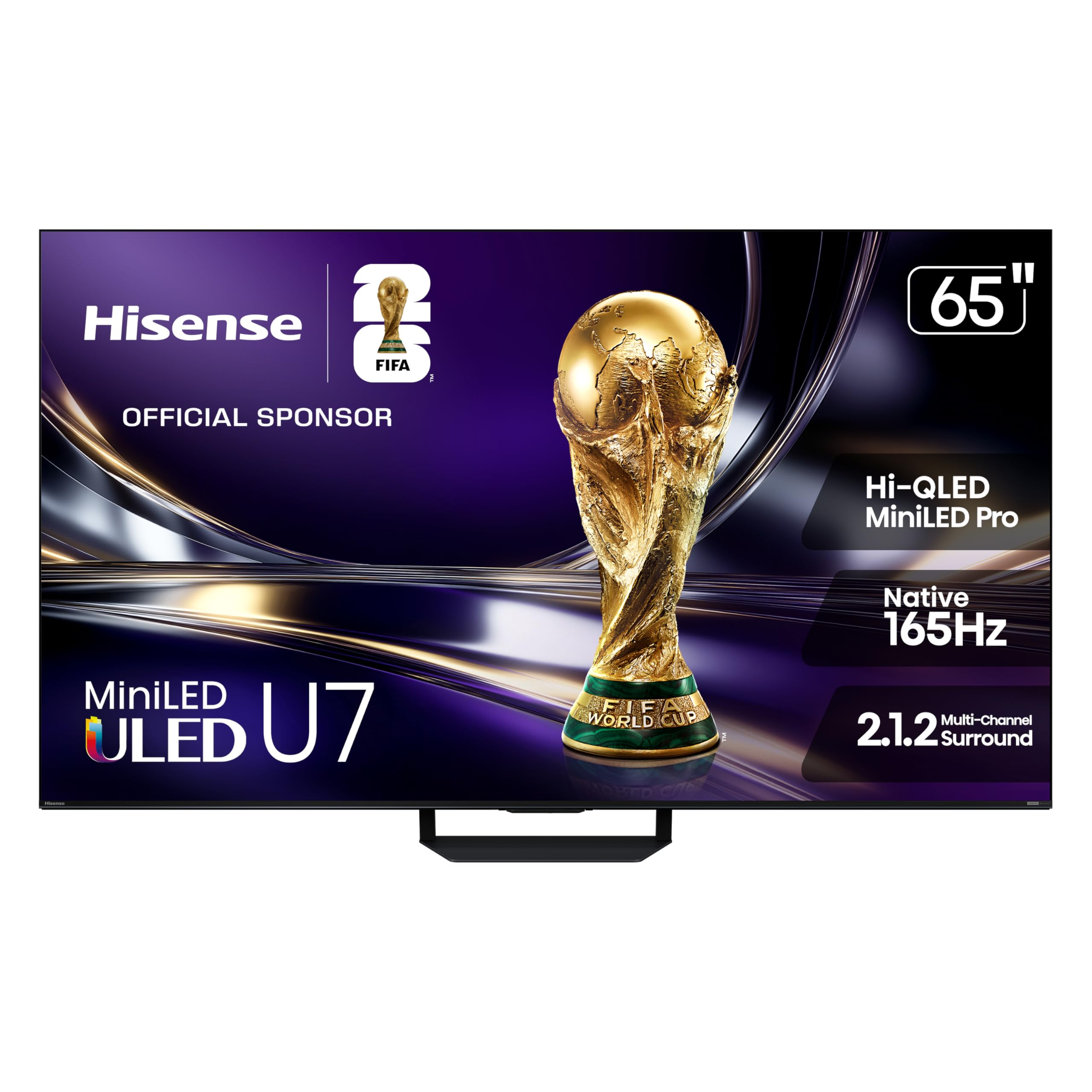
Hisense has made aggressive strides in the premium TV space, and the U7 Mini-LED is the brand’s strongest statement yet. With up to 3000 local dimming zones and a peak brightness of 3000 nits, this set delivers the kind of HDR punch that was once reserved for flagship TVs costing twice as much. The Hi-QLED MiniLED Pro technology produces vibrant, lifelike colors with Pantone validation, ensuring accurate reproduction across the spectrum. The anti-reflection and glare-free layer is genuinely effective, making this an excellent choice for bright living rooms with large windows.
The native 165Hz refresh rate is a standout spec for PC gamers, offering fluid motion that exceeds even most high-end TVs. The Hi-View AI Engine Pro processor constantly adjusts color, contrast, and detail scene by scene, and the results are immediately noticeable—shadow detail remains intact in dark scenes while bright highlights avoid clipping. Google TV serves as the smart platform, providing seamless integration with Android devices and Chromecast built-in.
Audio is handled by a 2.1.2 channel system that includes upward-firing speakers for Dolby Atmos height effects. It outperforms most built-in TV speakers, though purists will still prefer a separate soundbar system. The optical audio connection can be a bit finicky to set up, and the remote control feels inexpensive compared to the premium build of the TV itself. For the price, however, the U7 offers a feature set that rivals sets in a significantly higher bracket.
Why it’s great
- 3000 nits peak brightness with 3000 local dimming zones
- Native 165Hz refresh rate for ultra-smooth PC gaming
- Effective anti-glare coating for bright room viewing
- Pantone-validated color accuracy
Good to know
- Optical audio setup can be unintuitive
- Remote control feels cheaper than the TV’s build quality
- Built-in sound benefits from external speaker upgrade
5. Samsung 65-Inch Neo QLED QN70F

Samsung’s Neo QLED line leverages Mini LED backlighting with Quantum Matrix Technology to deliver precise control over thousands of tiny LEDs. The QN70F, powered by the NQ4 AI Gen2 processor using 20 neural networks, analyzes every scene to upscale content to near-4K quality while optimizing brightness, color, and contrast in real time. The result is a picture that looks sharp and vibrant regardless of source quality, and the high sustained brightness makes it a top performer in rooms with uncontrolled ambient light.
Motion Xcelerator Turbo Pro pushes the refresh rate to 144Hz, making this a strong choice for console and PC gamers who want smooth motion without the risk of burn-in associated with OLED. VRR support at up to 4K 144Hz ensures tear-free gameplay, and the Game Mode reduces input lag to competitive levels. Samsung’s Tizen-based smart platform is fast and responsive, with access to over 2700 free channels through Samsung TV Plus, though the interface can feel a bit cluttered compared to the cleaner Roku or Google TV layouts.
The AirSlim design keeps the profile remarkably thin, and the TV sits nearly flush against the wall when mounted. Build quality is solid, with a metal frame that feels premium. Sound quality is good for a slim TV but lacks the bass and spatial presence needed for a truly cinematic experience—a soundbar is a recommended addition. Some users note that the remote is quite small and takes getting used to, but the solar charging feature eliminates battery replacements.
Why it’s great
- NQ4 AI Gen2 processor with 20 neural networks for superior upscaling
- 144Hz Motion Xcelerator with VRR for tear-free gaming
- Excellent brightness and contrast for bright room viewing
- Sleek AirSlim design with near-flush wall mounting
Good to know
- Smart platform interface can feel cluttered
- Built-in sound lacks depth without a soundbar
- Thin panel requires careful handling during setup
6. TCL 65-Inch QM7K Mini LED QLED
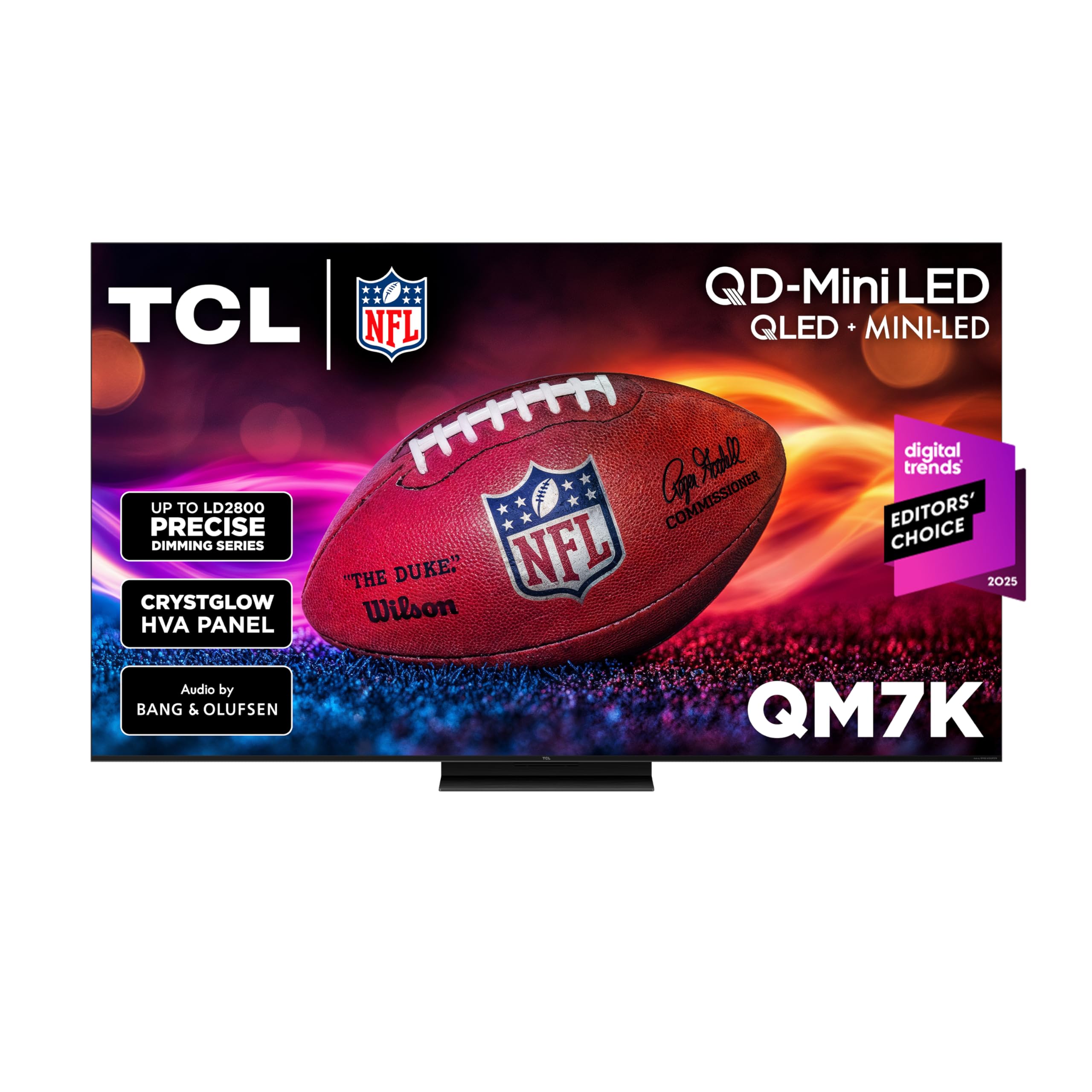
TCL has positioned the QM7K as the value king of Mini LED, and the specs back up the claim. The LD2500 Precise Dimming Series delivers up to 2500 local dimming zones—an exceptionally high count at this price point—resulting in deep black levels with minimal halo effect around bright objects. The QD-Mini LED panel combines quantum dot color with Mini LED backlighting, producing vibrant, saturated colors that approach OLED territory in dark scenes while maintaining the high brightness needed for HDR impact in lit rooms.
The CrystGlow HVA panel includes an anti-reflective coating that effectively reduces glare, making it a solid choice for living rooms with ambient light. A native 144Hz refresh rate with a 288Hz variable gaming refresh rate ensures smooth motion for fast-paced titles, and Google TV provides a familiar, app-rich smart platform. The Onkyo-tuned audio system with Dolby Atmos support is a step above most built-in speakers, delivering clear dialogue and decent bass, though audio purists will still prefer external options.
Connectivity includes Bluetooth 5.4, multiple HDMI ports, and support for Dolby Vision and HDR10+. The remote control is the most common complaint—it feels cheap and lightweight compared to the TV’s otherwise solid build. Some units may exhibit slight blooming in extreme contrast scenes, but at this price point, the trade-off for OLED-like black levels with superior brightness is hard to beat. The QM7K is the clear choice for shoppers who want premium Mini LED performance without the premium price tag.
Why it’s great
- 2500 local dimming zones for excellent contrast at a value price
- 144Hz native refresh rate with 288Hz VRR for gaming
- Effective anti-reflective coating for bright rooms
- Onkyo audio delivers better-than-average built-in sound
Good to know
- Remote control feels noticeably cheap
- Slight blooming can appear in extreme contrast scenes
- B&O audio branding is overhyped; external soundbar still improves sound
7. Amazon Ember 65″ QLED Series
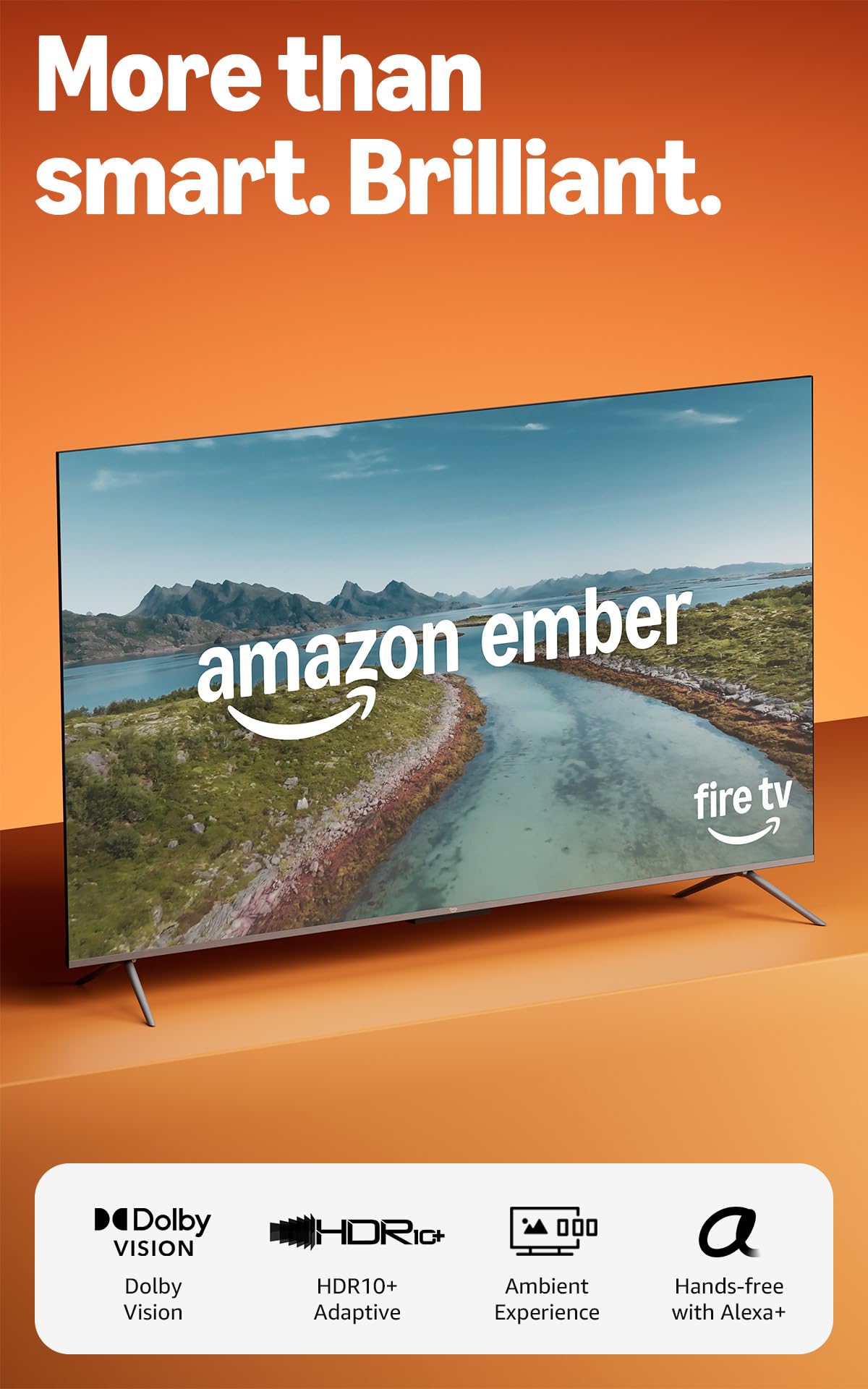
The Amazon Ember QLED Series represents Amazon’s most ambitious TV effort, combining a 4K QLED display with full-array local dimming and support for both Dolby Vision and HDR10+ Adaptive. The quad-core processor and Wi-Fi 6 ensure snappy performance, with apps launching quickly and the Fire TV interface feeling responsive. The custom Omnisense technology with built-in sensors can wake the display when you enter the room, adding a layer of convenience that is genuinely useful in high-traffic areas.
The new Alexa+ integration allows hands-free voice control even when the screen is off, and the tight integration with Amazon services—Prime Video, Amazon Music, Alexa routines—makes this the best choice for households already invested in the Amazon ecosystem. Gaming features include support for Amazon Luna cloud gaming and Xbox Game Pass without requiring a console, though serious gamers will still prefer a dedicated console or PC. The four HDMI inputs provide ample connectivity for external devices.
Picture quality is impressive for the price, with vibrant colors and decent contrast thanks to the full-array local dimming. However, some users report that 4K content doesn’t always look as crisp as expected, particularly when compared to higher-end Sony or LG sets—motion handling and fine detail reproduction are areas where the Ember falls short of the very best. Audio quality is adequate but benefits greatly from a soundbar. The Ember is a solid all-rounder for the Fire TV faithful, but picture purists may want to look elsewhere.
Why it’s great
- Deep Amazon ecosystem integration with Alexa+ and Fire TV
- Full-array local dimming with Dolby Vision and HDR10+
- Omnisense motion-activated wake feature
- Wi-Fi 6 and quad-core processor for snappy performance
Good to know
- 4K sharpness and motion handling lag behind premium competitors
- Built-in sound benefits from external audio upgrade
- Occasional app stutter or audio desync in Prime Video
8. Samsung 65-Inch QLED Q8F

Samsung’s Q8F sits comfortably in the mid-range, offering a QLED panel with 100% Color Volume that maintains color accuracy even at peak brightness. The Q4 AI Processor handles upscaling duties, bringing lower-resolution content closer to 4K quality with decent results, though it doesn’t match the sophistication of the higher-end NQ4 processor found in the QN70F. Quantum Dot technology ensures wide color coverage, and the set supports HDR10+ for dynamic metadata in compatible content.
The 144Hz VRR gaming support is a pleasant surprise at this price point, making the Q8F a viable option for gamers who want smooth motion without the cost of a Neo QLED or OLED. Input lag is low in Game Mode, and the TV automatically detects connected consoles to optimize settings. The Samsung Tizen platform provides access to major streaming apps and Samsung TV Plus for free live channels. The solar-powered remote is a thoughtful touch that eliminates battery waste.
Picture quality is generally very good, with bright, punchy colors that look great in well-lit rooms. Black levels are decent for a standard QLED but don’t match the depth of Mini LED or OLED panels—there’s noticeable backlight bloom in dark scenes. The built-in speakers are mediocre, lacking bass and clarity, which is the set’s most notable weakness. The AirSlim design keeps the profile sleek, and the metal stand provides stable support. For the price, the Q8F is a reliable performer that won’t disappoint casual viewers and gamers alike.
Why it’s great
- 100% Color Volume with Quantum Dot technology
- 144Hz VRR support for smooth gaming
- Solar-powered remote eliminates battery waste
- Sleek AirSlim design with stable metal stand
Good to know
- Black levels show noticeable backlight bloom in dark scenes
- Built-in speakers lack bass and clarity
- Upscaling performance trails premium Samsung models
9. Sony BRAVIA 2 II 65 Inch

The Sony BRAVIA 2 II is positioned as the affordable entry point into Sony’s TV ecosystem, and it leverages the 4K Processor X1 to deliver solid picture quality at a competitive price. The LED panel produces natural colors and decent contrast, though it lacks the local dimming found in more expensive models, so black levels are standard for a non-dimmed LED set. Motionflow XR keeps fast-moving content reasonably smooth, and 4K XR-Reality PRO upscaling does a good job of cleaning up lower-resolution sources.
Where this TV truly earns its keep is PlayStation 5 integration. Exclusive features like Auto HDR Tone Mapping and Auto Genre Picture Mode automatically optimize the TV’s settings when a PS5 is detected, ensuring you get the best possible picture without manual adjustment. The Game Menu puts all gaming-related settings in one overlay, and input lag is low enough for casual and competitive play. Google TV serves as the smart platform, offering broad app support and Chromecast built-in.
Energy efficiency is a standout feature—the BRAVIA 2 II uses significantly less power than older LCD TVs and runs cool even after extended viewing. The Eco Dashboard keeps all power settings accessible. Build quality is typical Sony: solid and well-constructed. The main drawbacks are the lack of advanced dimming features for HDR content and the relatively basic sound system, which is adequate for dialogue but lacks any real bass or spatial presence. For PS5 owners on a budget, however, the dedicated features make this a compelling choice.
Why it’s great
- PS5 Auto HDR Tone Mapping and Genre Picture modes included
- Excellent energy efficiency with Eco Dashboard
- 4K Processor X1 delivers reliable upscaling
- Google TV with broad app support and Chromecast
Good to know
- No local dimming, so black levels are standard LED
- Built-in sound lacks bass for immersive audio
- Google TV interface may show a startup menu each power-on
10. Roku Plus Series 65-Inch Mini-LED
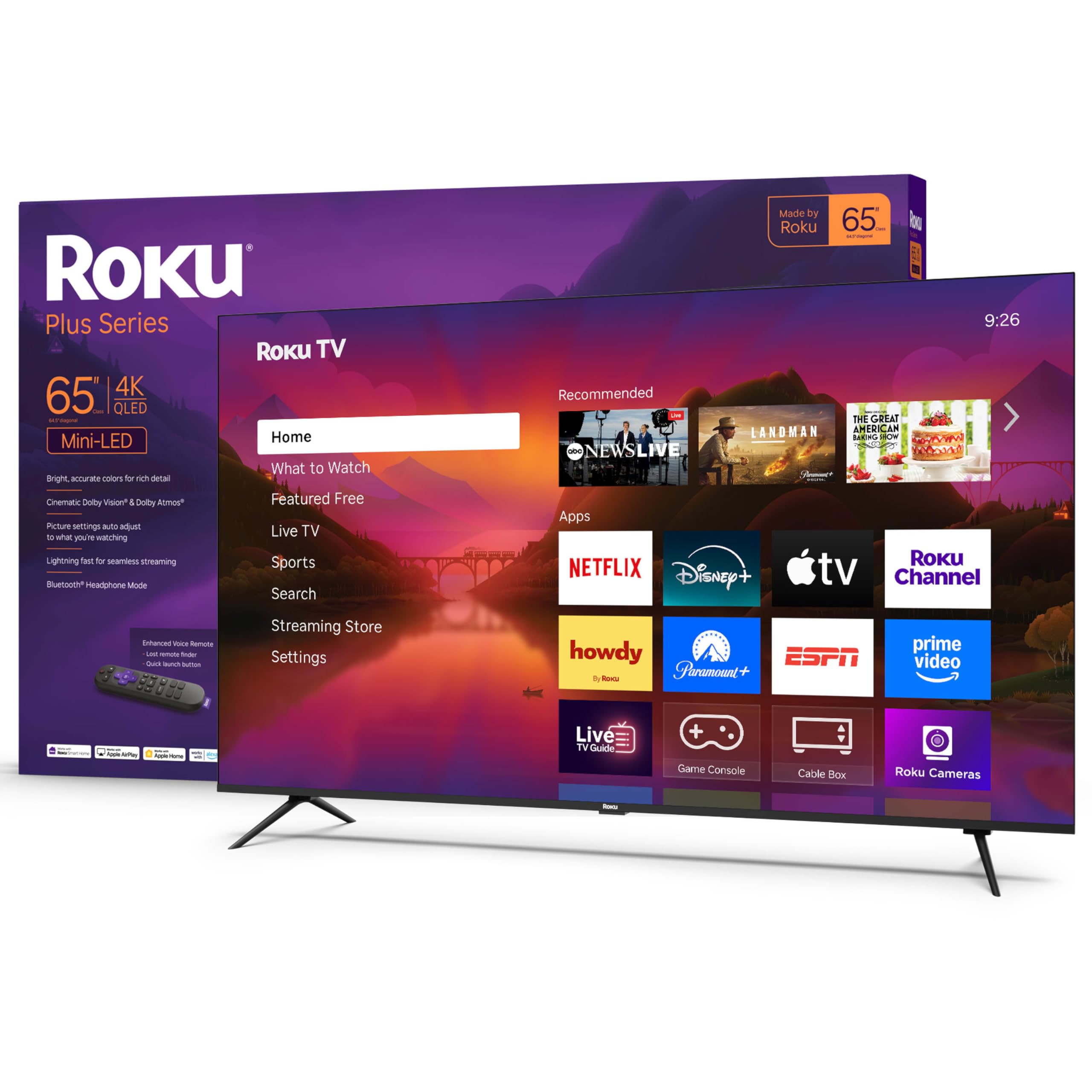
Roku’s Plus Series brings Mini LED backlighting to the famously simple Roku platform, creating a TV that balances picture quality with ease of use. The Mini LED panel, combined with QLED and Dolby Vision, produces vibrant colors with improved contrast over standard LED sets. Deep blacks are not quite OLED-caliber, but the local dimming does a commendable job of minimizing bloom around bright objects. The Roku Smart Picture Max feature uses AI to clean up and optimize incoming signals across different content types.
The Roku OS is the star of the show—it remains the most intuitive and clutter-free smart TV platform available. Apps launch quickly, the home screen is customizable, and the search function works across multiple streaming services. The Enhanced Voice Remote includes a lost remote finder and programmable shortcut buttons for favorite apps. Apple AirPlay and HomeKit support make it easy to share content from Apple devices, and voice control works with Alexa, Google Assistant, and Siri.
Audio performance is surprisingly good for a TV in this class, with a built-in subwoofer that adds some low-end presence and Dolby Atmos support for spatial audio. The Bluetooth Headphone Mode is a welcome feature for late-night viewing. Build quality is solid with metal feet, though the USB port has a quirk where bias lighting stays on for several minutes after the TV is turned off. The Roku Plus Series is an excellent choice for anyone who prioritizes a straightforward, responsive user experience over bleeding-edge picture technology.
Why it’s great
- Best-in-class Roku OS with intuitive, clutter-free interface
- Mini LED backlight with Dolby Vision for improved contrast
- Built-in subwoofer delivers better-than-average TV audio
- Enhanced Voice Remote with lost remote finder
Good to know
- USB port keeps power on for ~10 minutes after shutdown
- Roku settings menu is basic compared to competitors
- Peak brightness doesn’t match top-tier Mini LED competitors
11. Panasonic W70 Series 65″ LED

The Panasonic W70 Series brings a trusted global brand into the budget 65-inch space, combining a 4K LED panel with Fire TV built-in for a streamlined streaming experience. The HDR Bright Panel, powered by Panasonic’s 4K Studio Color Engine, delivers respectable HDR support with HDR10+ and HLG compatibility. The MEMC (Motion Estimation Motion Compensation) technology helps smooth out fast-moving content, reducing judder in sports and action scenes—a feature often missing at this price point.
Connectivity is a strong point, with four HDMI ports including one HDMI 2.1 input for modern gaming consoles. Bluetooth 5.0 support allows pairing with wireless speakers or headphones for private listening. The Fire TV platform provides access to thousands of apps and Alexa voice control through the included remote. Setup is straightforward, often taking less than ten minutes via QR code scanning, and the metal stand adds a surprising touch of sturdiness to the build.
Performance is mixed at this budget level. The processor is notably slower than more expensive sets, with app switching and menu navigation feeling sluggish at times. Some users report reliability concerns, including defective units and Fire TV software that can become slow or unresponsive over time. The Fire OS lock-in means the interface is built around Amazon services, which may not suit everyone. For basic streaming and casual viewing at an entry-level price, the Panasonic W70 delivers adequate performance, but those who prioritize speed and fluidity should consider saving for a higher-tier model.
Why it’s great
- Fire TV built-in with Alexa voice control and wide app support
- MEMC motion smoothing enhances sports and action content
- Four HDMI ports with HDMI 2.1 for gaming
- Sturdy metal stand exceeds expectations at this price
Good to know
- Processor is slow, causing lag in app switching
- Fire OS locked into Amazon ecosystem
- Reliability concerns with some units reported by users
FAQ
Should I buy an OLED or Mini LED 65-inch TV?
What is the most important spec for PS5 gaming on a 65-inch TV?
Final Thoughts: The Verdict
For most users, the 65 inch tv winner is the LG G5 OLED because it combines record-breaking brightness with perfect blacks, a 165Hz refresh rate, and four HDMI 2.1 inputs, making it equally suited for movies, sports, and next-gen gaming. If you want the absolute best picture for dark-room movie viewing, grab the Sony BRAVIA 8 OLED for its superior motion processing and PS5 integration. And for a bright living room where glare and ambient light are constant challenges, nothing beats the Hisense U7 Mini-LED with its 3000-nit peak brightness and effective anti-glare coating.

Mo Maruf
I created WellFizz to bridge the gap between vague wellness advice and actionable solutions. My mission is simple: to decode the research and give you practical tools you can actually use.
Beyond the data, I am a passionate traveler. I believe that stepping away from the screen to explore new environments is essential for mental clarity and physical vitality.