Our readers keep the lights on and my smoothie glass nicely filled. As an Amazon Associate, I earn from qualifying purchases.
The 65-inch sweet spot is where television technology meets real-world living rooms, but the market is flooded with panels that wash out in daylight, crush blacks in dark scenes, or force you to choose between gaming fluidity and cinematic color. The tension between Mini LED backlighting, QLED quantum dots, and self-emissive OLED has never been sharper, and finding a panel that delivers genuine HDR impact without requiring a second mortgage demands separating spec-sheet hype from real-viewing performance.
I’m Mohammad Maruf — the founder and writer behind WellFizz. I’ve spent years analyzing display hardware, from local dimming zone counts and peak luminance measurements to HDMI 2.1 bandwidth allocation and motion interpolation artifacts, to help buyers cut through the marketing noise.
Whether you prioritize deep black levels for movie nights, ultra-bright highlights for a sun-drenched living room, or tear-free 120Hz gaming with VRR, the 65-inch tv under $1500 market now offers genuine premium-tier technology at prices that would have been unthinkable just three years ago.
How To Choose The Best 65-Inch TV Under $1500
The sub-$1500 65-inch category is fiercely competitive, which means the line between a genuinely great panel and an average one is drawn by specific hardware decisions, not brand names. Understanding these key differentiators will prevent the disappointment of bringing home a TV that crushes shadow detail or blooms around white subtitles.
Backlight Technology: Mini LED vs. QLED vs. OLED
Mini LED backlighting uses thousands of tiny LEDs arranged in dense zones that can be dimmed independently, producing deep blacks with minimal haloing and high peak brightness — ideal for bright rooms with mixed content. Traditional QLED (Quantum Dot LED) uses a standard LED backlight with a quantum dot film for wide color volume; it’s bright and color-rich but has limited black depth due to fewer dimming zones. OLED employs self-emissive pixels that turn off completely for true blacks, offering infinite contrast, but at lower peak brightness and potential burn-in risk for static elements like news tickers or HUDs.
Panel Refresh Rate and HDMI 2.1 Support
A native 120Hz panel refreshes 120 times per second, critical for smooth motion in sports and 40-60fps console games with VRR. Many budget TVs claim higher motion rates through software frame insertion (BFI), but only native 120Hz panels reduce motion blur on fast content. For PS5 and Xbox Series X, at least two HDMI 2.1 ports are needed to run 4K at 120Hz with variable refresh rate enabled — verify the full 48Gbps bandwidth per port, as some TVs label HDMI 2.1 but limit one port to the full spec.
HDR Performance: Peak Brightness and Local Dimming Zones
HDR impact depends on sustained peak brightness (measured in nits) and the number of local dimming zones. For Dolby Vision and HDR10+ content, aim for at least 600 nits sustained brightness and over 100 dimming zones to avoid blooming. TVs with fewer than 50 zones will show obvious halos around bright objects on dark backgrounds. Check whether the TV supports Dolby Vision, HDR10+, or both — Dolby Vision is more widespread in streaming, while HDR10+ appears on some Prime Video and 4K Blu-ray discs.
Smart Platform and Sound Considerations
Google TV and Samsung’s Tizen both offer extensive app libraries, but Google TV generally receives faster third-party app updates. LG’s webOS is slick but has a narrower app selection. For sound, look for Dolby Atmos passthrough via eARC if you plan to use a soundbar, and check whether the TV supports DTS:X or DTS Virtual:X for physical media. Built-in speakers in this price range are adequate for casual viewing but rarely deliver convincing spatial audio.
Quick Comparison
On smaller screens, swipe sideways to see the full table.
| Model | Category | Best For | Key Spec | Amazon |
|---|---|---|---|---|
| Sony BRAVIA 5 Mini LED | Premium | Cinema & PS5 gaming | Mini LED / XR Processor / Dolby Atmos | Amazon |
| Samsung Neo QLED QN70F | Premium | Bright-room viewing & sports | Mini LED / 144Hz / NQ4 AI Gen2 | Amazon |
| Hisense U7 Mini-LED | Premium | High-refresh gaming & daytime living rooms | 165Hz Native / Hi-QLED / 3000 nits | Amazon |
| TCL QM7K Mini LED | Mid-Range | Budget conscious mini LED performance | QD-Mini LED / LD2500 Dimming / 144Hz | Amazon |
| LG QNED evo Mini LED | Mid-Range | Versatile smart TV with wide color gamut | Mini LED / Alpha 8 AI / 120Hz native | Amazon |
| Samsung QLED Q70D | Mid-Range | Reliable QLED with gaming hub | Quantum HDR / Motion Xcelerator 120Hz | Amazon |
| Hisense CanvasTV S7 | Mid-Range | Art gallery aesthetic & casual viewing | Hi-Matte Display / 144Hz / Art Mode | Amazon |
| iFFALCON QLED F75 | Mid-Range | Ultra-slim wall mount & legacy device support | QLED / 1.1″ Profile / 144Hz | Amazon |
| Sony BRAVIA 2 II | Budget | Entry-level Sony processing & PS5 integration | 4K Processor X1 / Motionflow XR | Amazon |
| SYLVOX Pool Pro 3.0 | Specialty | Outdoor / full-sun environments | 2000 nit / IP56 Waterproof | Amazon |
In‑Depth Reviews
1. Sony BRAVIA 5 Mini LED (K-65XR50)

The Sony BRAVIA 5 is the most refined television in this price band, leveraging thousands of Mini LEDs controlled by the XR Backlight Master Drive to deliver deep, uniform blacks without the blooming cloudiness that plagues lesser Mini LED implementations. The XR Triluminos Pro color processing produces billions of real-world hues that look natural rather than artificially saturated, and the XR Motion Clarity system keeps fast-moving sports and action sequences blur-free without the soap-opera effect that cheaper motion smoothing introduces.
Gamers benefit from Sony’s exclusive PlayStation 5 integration — Auto HDR Tone Mapping and Auto Genre Picture Mode optimize the picture automatically when a PS5 is connected, eliminating the manual calibration guesswork. With Dolby Vision Atmos, IMAX Enhanced, and DTS:X support, the BRAVIA 5 covers every HDR format currently available, making it a future-proof investment for physical media collectors and streaming enthusiasts alike.
The primary limitation is that only two of the four HDMI ports are full 48Gbps HDMI 2.1, so if you need to connect both a PS5 and an Xbox Series X at 4K 120Hz simultaneously, you will have to choose which device gets the secondary port. The Google TV interface is smooth and responsive, with zero lag on power-on, and the built-in sound, while not replacement for a dedicated soundbar, offers clear dialogue out of the box.
Why it’s great
- Superb Mini LED black levels and peak brightness for HDR impact
- XR upscaling cleans up low-resolution content better than any competitor
- Flawless PS5 integration with Auto HDR Tone Mapping
- Supports Dolby Vision, HDR10, IMAX Enhanced, and DTS:X
Good to know
- Only two of four HDMI ports support full 48Gbps HDMI 2.1 bandwidth
- Premium pricing pushes close to the upper budget limit
- Built-in speakers lack bass depth for immersive Atmos content
2. Samsung Neo QLED QN70F (65QN70F)

Samsung’s Neo QLED lineup brings Mini LED precision to the QN70F, with Quantum Matrix Technology controlling the Mini LEDs for sharp contrast and minimal blooming. The NQ4 AI Gen2 processor uses 20 neural networks to upscale content to 4K, and the neural network approach produces noticeably cleaner edges and reduced noise on compressed streaming content compared to standard machine-learning upscalers. The Motion Xcelerator Turbo Pro supports up to 4K 144Hz, making this one of the fastest native refresh rate TVs in the category for PC gaming.
The Samsung Tizen smart platform is fast and includes Samsung TV Plus with over 2,700 free channels, though it lacks the independent app store breadth of Google TV. Samsung Vision AI adds ambient brightness adaptation and object tracking sound that adjusts audio panning based on on-screen movement, creating a modest surround effect without needing rear satellite speakers. The slim design and single-leg stand require a stable, wide surface, but the profile is clean enough for wall mounting without protruding awkwardly.
The main trade-off is Samsung’s continued avoidance of Dolby Vision support, relying instead on HDR10+ which is less widely adopted across streaming services. The anti-glare coating is effective, but in very bright rooms, the panel’s black floor lifts slightly compared to the Sony BRAVIA 5. The AI picture presets can be over-aggressive with color temperature shifts, so manual calibration is recommended for purists.
Why it’s great
- Excellent Mini LED contrast with 20 neural network upscaling
- Native 144Hz panel ideal for PC gaming at high frame rates
- Samsung Vision AI enhances motion tracking and ambient adaptation
- Sturdy build quality with minimal blooming in real content
Good to know
- No Dolby Vision support — relies on less common HDR10+
- AI picture settings may oversaturate colors out of box
- Single-leg stand requires a wide, stable entertainment center
3. Hisense U7 Mini-LED (65U7SG)
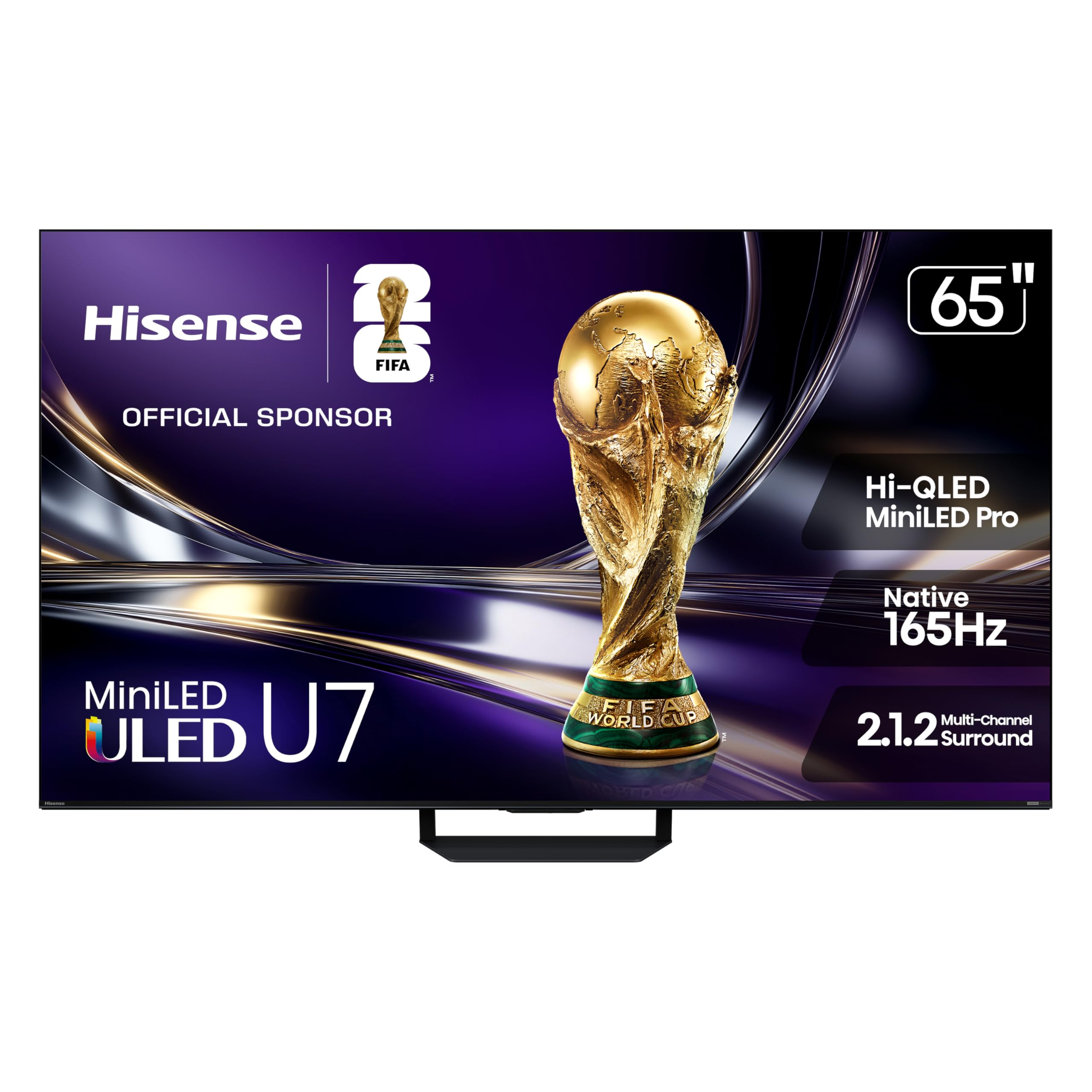
The Hisense U7 is the performance outlier in this group, offering a native 165Hz refresh rate and variable refresh rate up to 330Hz — a figure typically reserved for enthusiast gaming monitors. The Hi-QLED Mini LED Pro backlight employs thousands of dimming zones with a peak brightness rating of up to 3000 nits, which translates to genuinely staggering HDR highlight intensity that outshines every other TV in this price bracket. Sunlight on a desert landscape or an explosion in an action film has a visceral punch that lower-brightness panels cannot match.
The Hi-View AI Engine Pro provides real-time scene-by-scene optimization of color, contrast, and detail, and the anti-reflection layer uses a dual-layer screen treatment that handles overhead lighting and window glare far better than standard single-layer coatings. Filmmaker Mode is exceptionally well-implemented, disabling motion smoothing and maintaining accurate color temperature for a true director-intended viewing experience. Google TV integration is snappy, and the inclusion of Dolby Vision IQ and HDR10+ ensures format compatibility across all major streaming platforms.
The trade-off for this extreme brightness and refresh rate capability is that out-of-the-box color accuracy is slightly oversaturated in Vivid and Standard presets, requiring a few minutes of adjustment to reach natural skin tones. The built-in sound system is decent for a flat panel, but to appreciate Dolby Atmos spatial audio fully, an external soundbar is recommended. The bezels are relatively thick compared to the ultra-slim iFFALCON or Samsung models, but the performance per dollar is unmatched.
Why it’s great
- Native 165Hz panel with VRR up to 330Hz for competitive gaming
- Up to 3000 nits peak brightness for stunning HDR highlights
- Effective dual-layer anti-reflection coating for bright rooms
- Supports Dolby Vision IQ and HDR10+ simultaneously
Good to know
- Out-of-box color presets lean oversaturated in Standard mode
- Built-in speakers lack clarity for dialog-heavy content
- Thicker bezel design compared to premium competitors
4. TCL QM7K Mini LED (65QM7K)
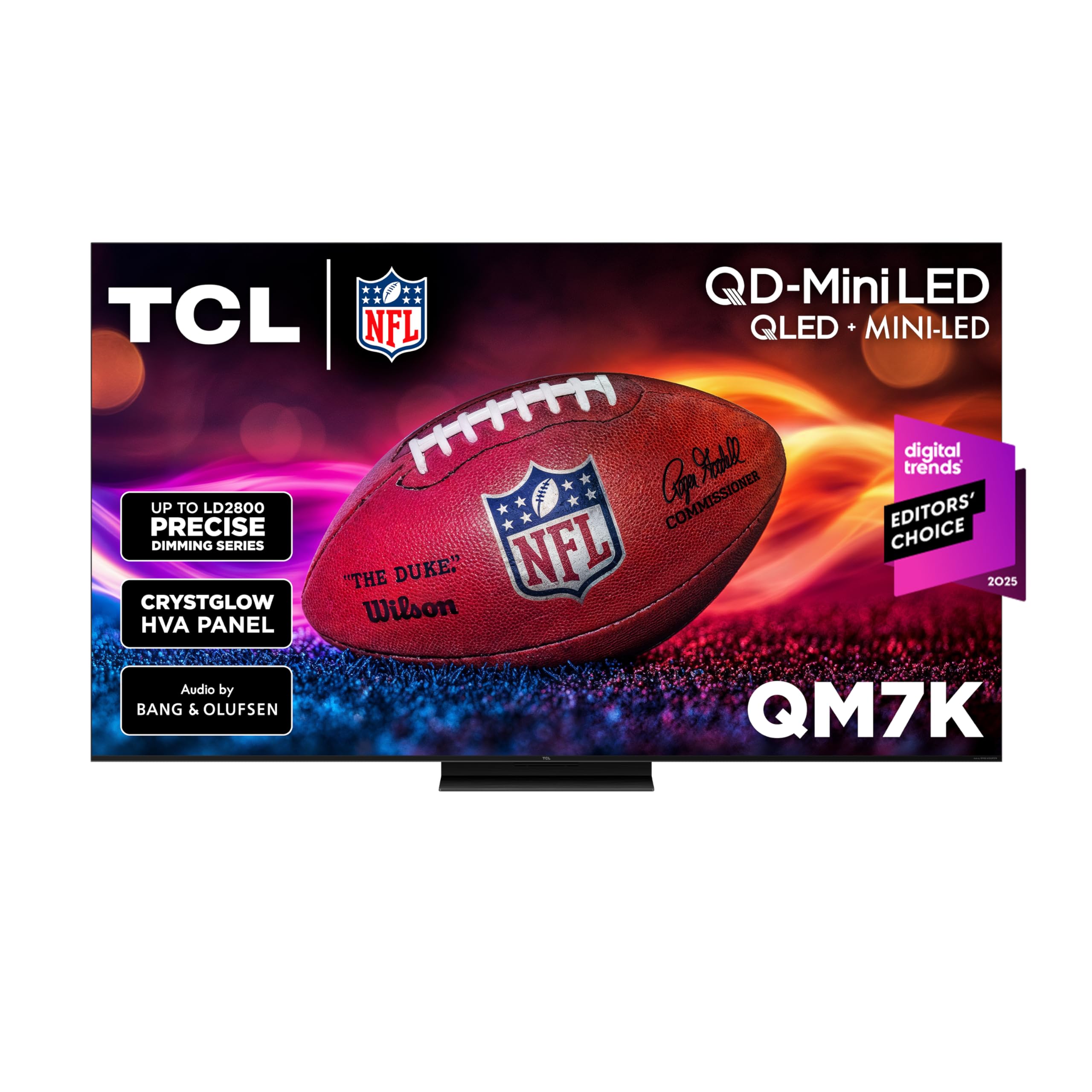
The TCL QM7K punches well above its mid-range price by combining Quantum Dot and Mini LED technologies in a panel that delivers up to LD2500 precise local dimming zones — a number that would have been unthinkable at this price tier just two years ago. The result is deep, clean blacks with minimal haloing and excellent highlight separation, making dark HDR scenes look properly cinematic rather than gray and washed out. The CrystGlow HVA panel uses an anti-reflective coating that cuts glare effectively, keeping the image crisp even in rooms with significant ambient light.
With a native 144Hz refresh rate and variable gaming refresh rate up to 288Hz, the QM7K handles fast-paced console and PC gaming smoothly, and the inclusion of Dolby Vision, HDR10+, and Dolby Atmos ensures broad content compatibility. The integrated Onkyo audio system offers better clarity than many competitors in this tier, though for true low-end authority, a soundbar remains a worthwhile addition. Google TV is responsive and well-organized, though the included remote feels noticeably cheap compared to the premium build of the TV itself.
The key compromises are in the audio department — the Bang & Olufsen branded speakers are merely average, and for immersive viewing, an external system is strongly advised. Some users have reported bloatware on the Google TV home screen, though this is easily managed by disabling recommendations in settings. For the price, the QM7K offers the best balance of Mini LED performance and gaming features available in the current market.
Why it’s great
- Exceptional LD2500 local dimming zone count for deep blacks
- Excellent anti-reflective CrystGlow panel
- 144Hz native with up to 288Hz VRR gaming support
- Strong HDR brightness for a mid-range panel
Good to know
- Included remote feels cheap and lightweight
- Onkyo speakers are average, not replacement for a soundbar
- Google TV bloatware requires settings adjustment
5. LG QNED evo Mini LED (65QNED92AUA)
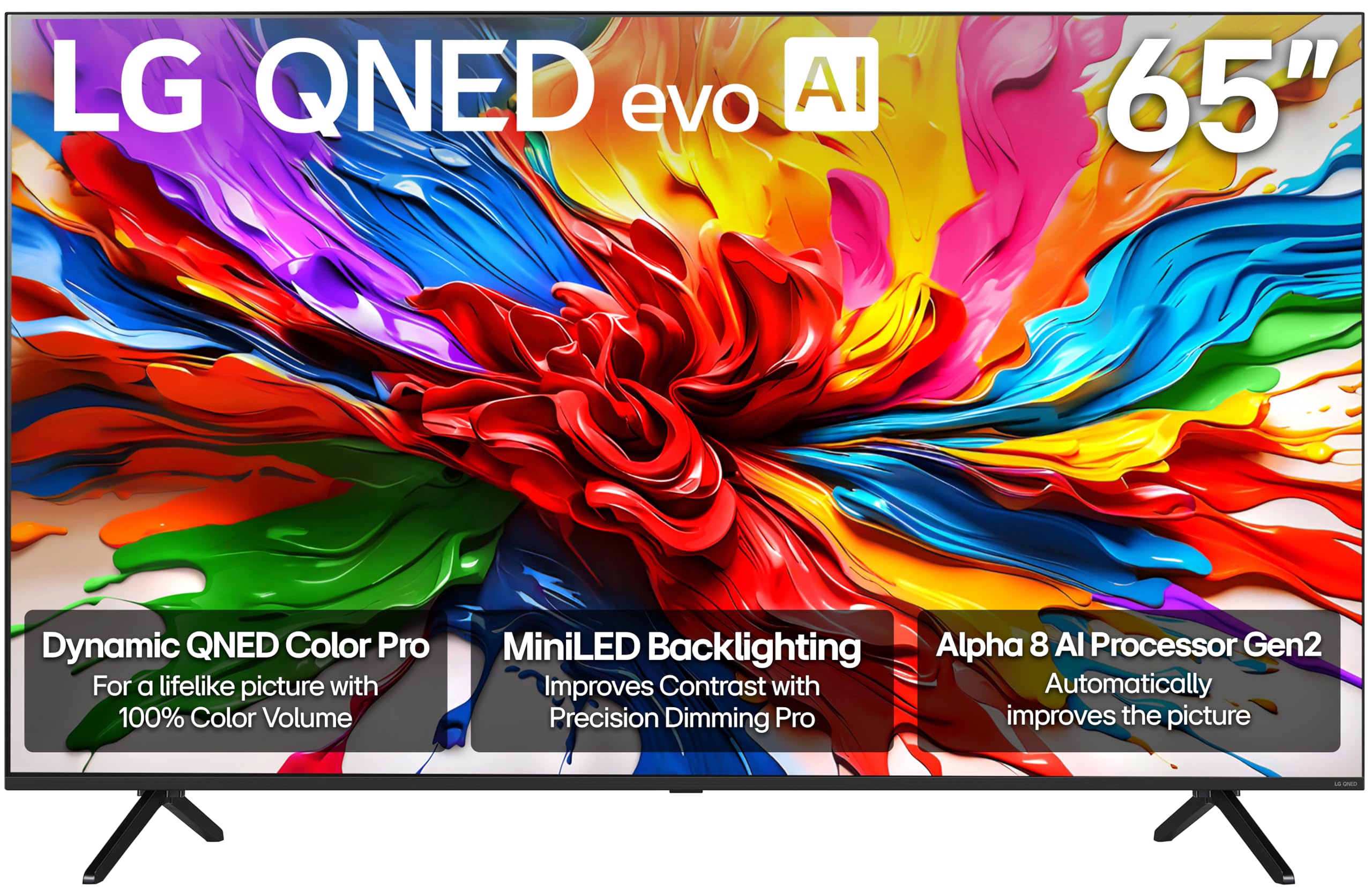
LG’s QNED evo series combines Mini LED backlighting with the company’s Precision Dimming Pro technology, which individually controls hundreds of dimming zones to produce solid black levels and vibrant colors. The Alpha 8 AI Processor Gen2 analyzes incoming content in real time and adjusts both picture and sound based on the context — a dark thriller gets deeper shadow detail, while a sports broadcast gets brighter colors and smoother motion. Dynamic QNED Color Pro covers 100% of the DCI-P3 color volume, ensuring that skin tones and natural landscapes remain accurate without artificial boosting.
The 120Hz native panel supports FreeSync Premium and VRR, making it a capable gaming television, and the four HDMI 2.1 ports are a rarity at this price. LG’s webOS platform is slick and responsive, with the Magic Remote that includes a cursor pointer, though some users find the pointer frustrating for standard navigation and note that the app selection is narrower than Google TV. The WOW Orchestra feature allows the TV’s speakers to sync with an LG soundbar for a unified soundstage, a nice touch for LG ecosystem users.
Critically, the out-of-box picture settings for the AI presets were reported as poor by multiple users, requiring manual calibration in the Expert mode to achieve natural color. The halo effect (blooming) around bright subtitles on dark backgrounds is more noticeable than on Sony or Hisense Mini LED panels, and the glossy screen is prone to reflections in rooms with direct light sources. For buyers who value app ecosystem breadth, the limited support for smaller streaming services like PBS or MeTV may require a separate streaming stick.
Why it’s great
- Four full-bandwidth HDMI 2.1 ports for multi-console setups
- 100% DCI-P3 color volume with accurate wide gamut
- Smooth webOS interface with Magic Remote pointer option
- WOW Orchestra syncs TV speakers with LG soundbars
Good to know
- AI picture presets require manual calibration out of box
- Noticeable halo effect on dark scenes with white subtitles
- Limited smaller streaming app support (no PBS, MeTV)
6. Samsung QLED Q70D (QN65Q70D)
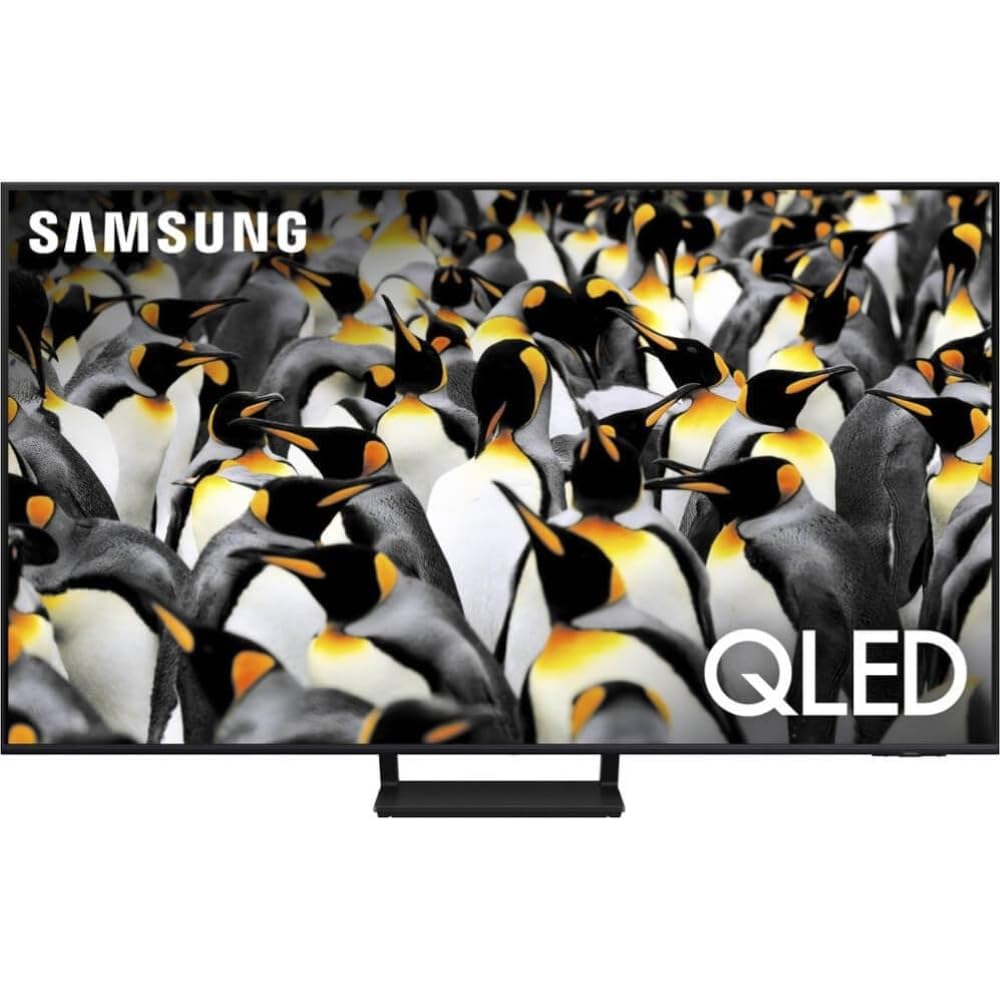
The Samsung Q70D represents the midpoint where QLED technology meets the Motion Xcelerator 120Hz system, providing smooth frame handling for sports and gaming without the complexity of Mini LED dimming. The Dual LED backlight adjusts white balance automatically based on the content, resulting in natural, realistic contrast that avoids the cold blue shift seen in some budget LED panels. The Quantum Processor 4K with AI upscaling sharpens lower-resolution content effectively, and 100% Color Volume with Quantum Dot ensures that even bright HDR scenes maintain vibrant skin tones and landscape colors without washing out.
Object Tracking Sound Lite creates a virtual 3D surround effect that follows movement across the screen, which works surprisingly well for a two-speaker system, and Eye Comfort Mode adjusts blue light output based on sunrise and sunset times for late-night viewing. The Tizen smart platform is fast and includes Samsung Gaming Hub, allowing cloud gaming without a console. The Pantone Validated certification adds a layer of color accuracy confidence for design-conscious buyers who prioritize true-to-life representation.
The main drawback is the limited local dimming — the Q70D uses edge-lit or basic direct LED backlighting rather than full-array or Mini LED, so black levels are not as deep as the Mini LED entries in this list, and blooming around bright objects on dark backgrounds is more apparent. The single-leg stand is visually clean but requires a very stable, wide surface, and some users reported motion blur during fast-moving sports content in standard settings. It is a solid, reliable QLED, but not a performance leader in HDR contrast.
Why it’s great
- Accurate Quantum Dot color with Pantone validation
- Dual LED backlight adapts white balance naturally
- Object Tracking Sound Lite creates convincing virtual surround
- Samsung Gaming Hub enables cloud gaming without console
Good to know
- Basic LED backlight limits black depth vs. Mini LED panels
- Motion blur occasionally visible in fast sports content
- Single-leg stand requires stable, wide support surface
7. Hisense CanvasTV S7 (65S7SG)
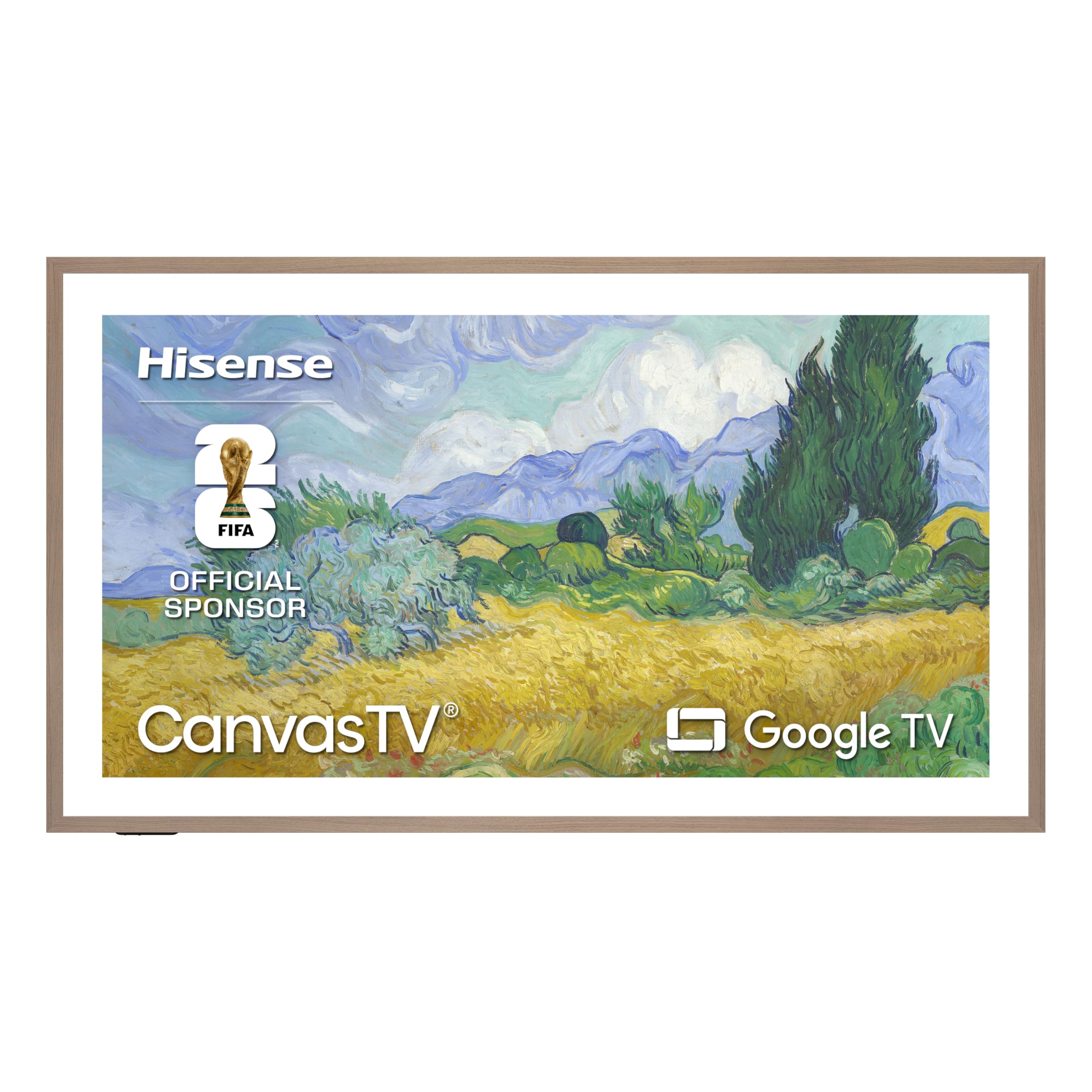
The Hisense CanvasTV S7 is designed specifically for living spaces where the television is expected to blend in as a piece of decor when not in use. The Hi-Matte Display uses an anti-glare panel that reduces reflections to the point where the screen genuinely resembles a canvas print when Art Mode is active, complete with a magnetic Teak frame that attaches to the bezel. The included UltraSlim Wall Mount sits flush against the wall with zero gap, and the motion detector automatically wakes the TV when you enter the room and fades it when you leave, reinforcing the gallery illusion.
Despite its aesthetic focus, the CanvasTV does not compromise on picture quality — the 4K Hi-QLED panel delivers solid color accuracy and a native 144Hz refresh rate with AI Smooth Motion for sports and gaming. The 2.0.2 multi-dimensional sound system with DTS Virtual:X produces a wider soundstage than typical flat-panel speakers, though bass is lacking. Google TV provides access to over 10,000 apps, and the CanvasTV includes over 1,000 free artworks without requiring a subscription, with the option to add your own photos.
The main caveat is that the Art Mode color temperature adjustments needed to make the display look like a physical canvas are not perfect out of box — some users found the art reproduction unconvincing until tweaking brightness and warmth settings. The wall mount has no adjustment flexibility, which means you need to plan your power and HDMI outlets precisely for a truly flush install. For buyers who prioritize aesthetics equally with performance, the CanvasTV is the clear winner in this niche.
Why it’s great
- Hi-Matte display effectively mimics canvas texture in Art Mode
- Ultraslim flush wall mount included, no gap to wall
- Motion sensor auto on/off saves energy and reinforces gallery feel
- Thousands of free artworks with no subscription required
Good to know
- Art Mode requires manual color/brightness tweaks to look convincing
- Wall mount offers no adjustment flexibility for outlet placement
- 2.0.2 sound lacks bass for cinematic content
8. iFFALCON QLED F75 (65-Inch)
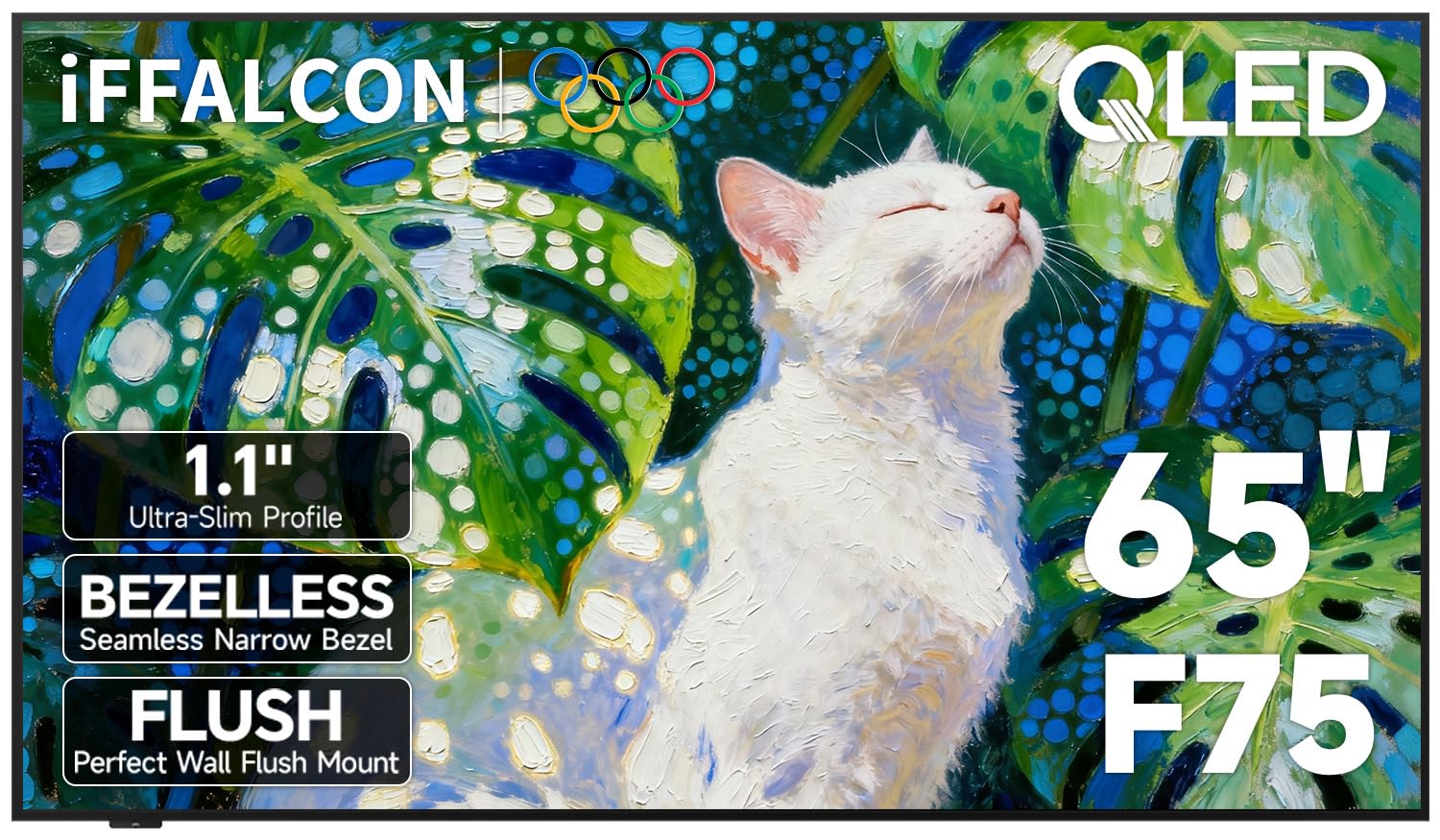
The iFFALCON F75 is a QLED 4K panel that prioritizes physical design integration — at just 1.1 inches deep with a black metal front frame, it sits nearly flush against the wall using the included wall mount, and hidden cable management ensures no stray wires disrupt the clean aesthetic. The floating picture frame concept is supported by a 144Hz native refresh rate with MEMC (motion estimation motion compensation) that keeps sports and action films smooth, and the Dolby Vision IQ with ambient light sensing adjusts the picture based on the room’s lighting conditions automatically.
One standout feature is the composite AV input via 3.5mm adapter, which allows legacy devices like older game consoles, DVD players, and camcorders to connect without needing a separate converter. With four HDMI ports (one with eARC), two USB ports, and optical audio out, connectivity is generous for a mid-range model. Google TV is fast and responsive, and voice search via Alexa or Google Assistant works across apps without needing to specify which service you want to search.
The QLED color coverage is rated at 93% DCI-P3, which is solid but not class-leading — side-by-side with the Hisense U7 or TCL QM7K, the iFFALCON’s color volume and black depth are noticeably less dramatic. The built-in speakers are adequate for casual viewing but lack the clarity for dialogue-heavy content, and the interface can occasionally stutter when switching between apps quickly. For buyers who prioritize an invisible, wall-hugging installation above all else, the F75 delivers that experience without sacrificing fundamental performance.
Why it’s great
- Ultra-slim 1.1-inch profile with flush wall-mount design
- Composite AV input via adapter for legacy game consoles and DVD players
- Dolby Vision IQ auto-adjusts for room lighting
- 144Hz with MEMC for smooth motion content
Good to know
- 93% DCI-P3 color coverage is lower than premium rivals
- Built-in speakers lack clarity for dialogue in movies
- Interface can stutter during rapid app switching
9. Sony BRAVIA 2 II (K-65S20M2)

The Sony BRAVIA 2 II is the entry-level gateway into Sony’s 2025 lineup, trading Mini LED sophistication for a standard LED backlight driven by the 4K Processor X1. This processor provides a lifelike picture with rich colors and sharp details, and the 4K XR-Reality PRO upscaling brings lost texture and detail back into lower-resolution content with impressive fidelity for the price. Motionflow XR keeps fast-moving sports and action movies reasonably blur-free, though not at the level of Sony’s higher-end XR Motion Clarity implementation.
The Google TV interface is clean and responsive, and the exclusive PlayStation 5 features include Auto HDR Tone Mapping and Auto Genre Picture Mode, which automatically optimize picture quality when a PS5 is connected. The inclusion of Sony Pictures CORE app provides access to a library of movies, including IMAX Enhanced titles, and the Dolby Atmos support ensures compatibility with modern soundbars. Power consumption is notably efficient — under 190 watts annual average — and the panel runs barely warm during extended viewing.
The major limitations are in contrast and black depth — the standard LED backlight produces grayish blacks in dark scenes, especially noticeable during letterboxed movies, and there is no local dimming to mitigate blooming around bright objects. Some users reported random freezing that required unplugging the TV to reset, though this appears to be firmware-related rather than a hardware defect. The built-in speakers are adequate for an office or bedroom but lack bass and clarity for a primary living room setup. For the price, it offers Sony processing and PS5 integration without the HDR performance of the Mini LED competitors.
Why it’s great
- Sony 4K Processor X1 delivers sharp upscaling and natural color
- PS5 exclusive features optimize picture automatically
- Very low power consumption, runs cool during extended use
- Sony Pictures CORE app with IMAX Enhanced movie access
Good to know
- Standard LED backlight produces gray blacks in dark scenes
- No local dimming results in noticeable blooming
- Reports of intermittent freezing requiring power cycle reset
10. Sony BRAVIA XR8B OLED (K-65XR8B)

The Sony BRAVIA XR8B brings true OLED performance to the table, with over 8 million self-lit pixels that can turn off individually to produce absolute black, infinite contrast, and per-pixel precision that no Mini LED panel can fully replicate. The XR Processor with AI technology enhances every scene in real time, boosting color, contrast, and clarity, and the XR OLED Motion processing keeps pans and fast action smooth without introducing visible judder. Skin tones are rendered with Sony’s characteristic natural accuracy, and the wide viewing angles inherent to OLED technology mean the picture remains consistent even when viewed from extreme side positions.
The Google TV interface is as responsive as on the BRAVIA 5, and the exclusive PS5 features are fully supported, with the added benefit that the OLED’s instant pixel response virtually eliminates input lag in Game Mode. Studio calibrated picture modes for Netflix and Prime Video ensure that streaming content matches the creator’s intent, and Dolby Vision Atmos along with IMAX Enhanced and DTS:X provide comprehensive format support. The Acoustic Surface Audio+ technology uses the screen itself as a speaker, creating sound that appears to come from the exact location of the on-screen action, which is genuinely immersive for dialogue and effects.
The critical trade-off is brightness — OLED panels typically max out around 800-1000 nits peak, compared to the 2000-3000 nits achievable by premium Mini LED sets, so HDR highlights in sunlit scenes will not have the same piercing intensity. The screen is also reflective when turned off, and in a bright room, ambient light can wash out shadow detail. Burn-in risk, while reduced in modern OLEDs, remains a consideration for users who watch channels with persistent static logos or play games with fixed HUD elements. The built-in speakers, while innovative, lack the bass and volume of a dedicated soundbar system.
Why it’s great
- Perfect black levels and infinite contrast from self-emissive OLED pixels
- Sony XR processing delivers industry-leading color accuracy and motion
- Acoustic Surface Audio creates screen-based directional sound
- Superb viewing angles with zero color shift off-axis
Good to know
- Peak brightness limited compared to high-end Mini LED panels
- Screen reflections distracting in brightly lit rooms
- Burn-in risk with persistent static content over extended periods
11. SYLVOX Pool Pro 3.0 Outdoor TV
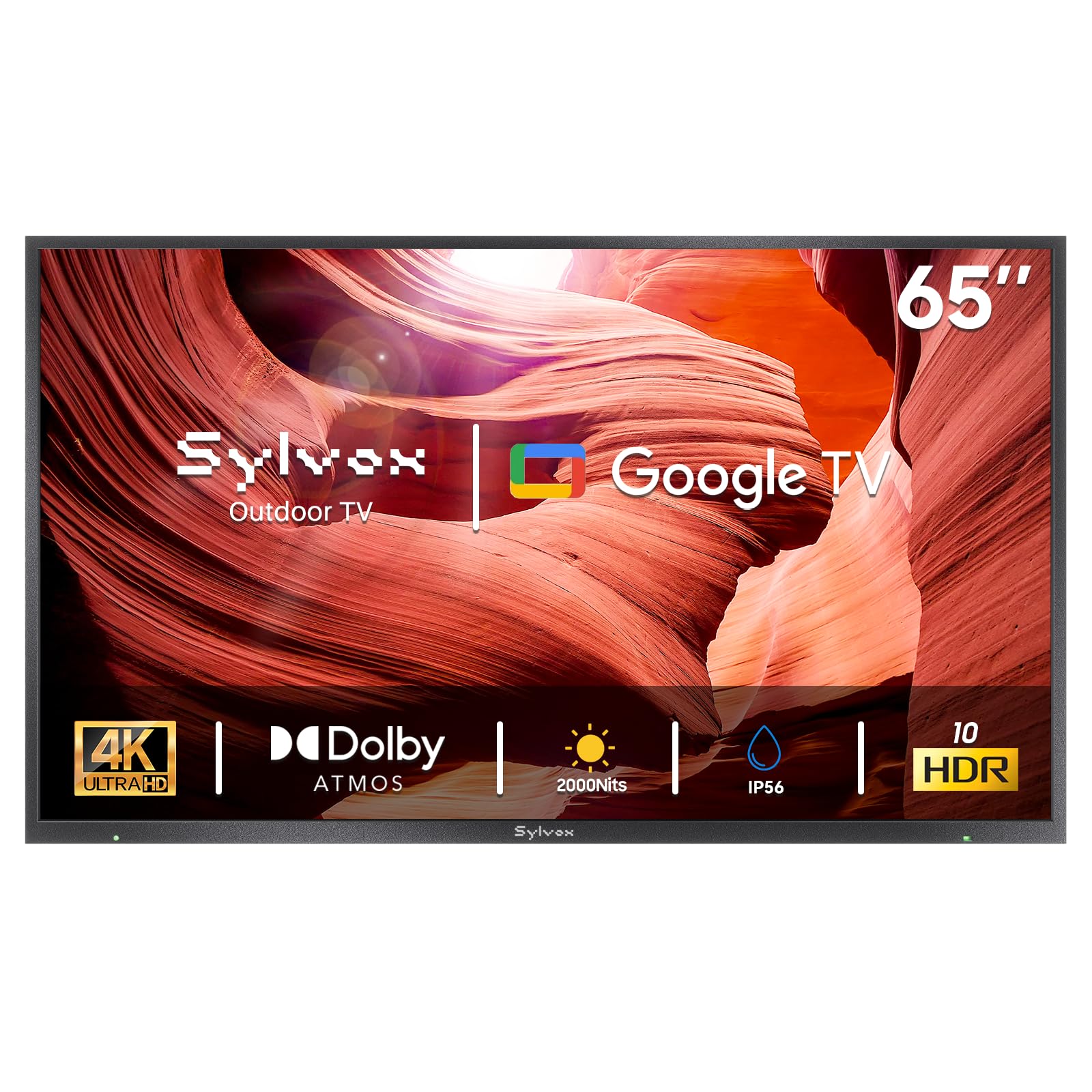
The SYLVOX Pool Pro 3.0 is a completely separate category of television — purpose-built for outdoor use with a 2000 nit ultra-high brightness display that remains readable even under direct sunlight. The IP56 waterproof rating ensures the TV can withstand rain, wind, and temperature extremes, with a full metal casing and internal temperature control that prevents overheating in direct sun. The anti-glare screen treatment combined with the extreme brightness means daytime sports viewing on a pool deck or patio is genuinely possible without squinting or moving to the shade.
The smart TV system provides access to over 10,000 apps and 800 free channels via voice remote, with screen mirroring from mobile devices for outdoor movie nights. The 4K resolution at 65 inches delivers crisp detail even at typical patio viewing distances, and the 3D surround sound system is impressively loud for an outdoor-optimized unit. The included wall mount and weather-sealed construction mean the TV can remain installed year-round without a cover, surviving cold winters and hot summers as reported by users in Chicago and comparable climates.
Obviously, the SYLVOX’s intended use case is highly specific — its extreme brightness and weatherproofing come at a significant premium over indoor TVs, and the 60Hz refresh rate and lack of variable refresh rate make it unsuitable for competitive gaming. The smart platform is functional but not as polished as Google TV or Tizen, and the included remote is basic. For anyone needing a dedicated outdoor entertainment hub, the Pool Pro 3.0 is the only serious option in this price range, but for standard living room use, an indoor TV will offer better contrast and features for a fraction of the cost.
Why it’s great
- 2000 nit brightness ensures daylight outdoor viewing without shade
- IP56 weatherproof with full metal casing for year-round outdoor use
- Internal temperature control prevents damage in direct sun
- Smart TV system with 10,000+ apps and screen mirroring
Good to know
- Premium cost that exceeds standard indoor TV options
- 60Hz panel without VRR unsuitable for competitive gaming
- Smart platform less polished than Google TV or Tizen
FAQ
Is Mini LED better than OLED for a bright living room?
Do I need HDMI 2.1 for regular streaming and cable TV?
What is the difference between native 120Hz and motion rate 120?
Does Dolby Vision matter if my TV has HDR10?
Will a 65-inch TV fit in a standard apartment elevator?
Final Thoughts: The Verdict
For most buyers, the 65-inch tv under $1500 winner is the Sony BRAVIA 5 Mini LED because it delivers the best balance of Mini LED contrast, XR processing power, Dolby Vision support, and PS5 gaming integration at a price that undercuts comparably specced competitors. If you want absolute peak brightness and the highest native refresh rate for competitive PC gaming, grab the Hisense U7. And for a bright room where glare control and daytime sports viewing matter most, nothing beats the Samsung Neo QLED QN70F.

Mo Maruf
I created WellFizz to bridge the gap between vague wellness advice and actionable solutions. My mission is simple: to decode the research and give you practical tools you can actually use.
Beyond the data, I am a passionate traveler. I believe that stepping away from the screen to explore new environments is essential for mental clarity and physical vitality.