Our readers keep the lights on and my smoothie glass nicely filled. As an Amazon Associate, I earn from qualifying purchases.
A 65-inch QLED TV sits at the intersection of cinematic color volume and practical living-room brightness. The decision isn’t between OLED and LCD anymore — quantum dots have closed that gap, delivering over a billion shades of color with the sustained luminance that direct sunlight and long movie marathons demand. The real question is which zone count, which processor, and which panel technology — Mini-LED, ULED, or Neo QLED — handles your specific viewing environment.
I’m Mohammad Maruf — the founder and writer behind WellFizz. My research into this category involves comparing local dimming zone densities, peak nits across different HDR formats, and real-world motion handling from brands like Samsung, Sony, Hisense, and TCL to separate genuine performance from marketing claims.
This guide breaks down the top models by their core strengths — gaming responsiveness, cinematic color accuracy, and ambient light performance — so you can confidently choose the 65-inch qled tv that matches your room and your habits.
How To Choose The Best 65-Inch QLED TV
The QLED category spans from entry-level frame TVs to flagship Mini-LED monsters. Your choice hinges on three factors: the room’s ambient light, your primary content (sports, movies, or gaming), and how much you value near-OLED black levels versus raw brightness.
Local Dimming Zone Density
This is the single most important spec for contrast. A TV with hundreds of dimming zones can turn off sections of the backlight behind dark areas, producing deep blacks without blooming around bright subtitles. Basic QLED models may have no local dimming or just a few dozen zones, while premium Mini-LED sets pack thousands. More zones directly reduce halo effects in letterbox bars and high-contrast scenes.
Peak Brightness and HDR Performance
Peak brightness, measured in nits, determines how vivid HDR content looks. A mid-range QLED might hit 600-800 nits, while high-end Mini-LED TVs exceed 2,000 nits. For a living room with large windows, higher nits preserve detail in bright scenes that would otherwise wash out. Dolby Vision IQ and HDR10+ Adaptive take this further by adjusting the picture based on your room’s lighting.
Refresh Rate and Gaming Features
Native 120Hz or 144Hz panels provide smooth motion for fast-paced sports and PC gaming. Variable Refresh Rate (VRR) and AMD FreeSync Premium Pro eliminate screen tearing. Input lag under 10ms at 4K 120Hz is essential for competitive console gaming. Some models offer a Game Bar overlay for quick adjustments to response time and black stabilizer settings.
Quick Comparison
On smaller screens, swipe sideways to see the full table.
| Model | Category | Best For | Key Spec | Amazon |
|---|---|---|---|---|
| Samsung Neo QLED 8K QN900F | Premium 8K | Ultimate clarity & upscaling | 256 AI neural networks | Amazon |
| Sony BRAVIA 9 Mini LED | Flagship Mini-LED | Cinematic processing & PS5 | XR Backlight Master Drive | Amazon |
| Samsung OLED S95F | OLED | Perfect blacks & anti-glare | Glare Free matte finish | Amazon |
| TCL QM8L Series | Premium Mini-LED | Bright-room HDR & gaming | 6,000 peak nits, 4000+ zones | Amazon |
| Toshiba Z670R Mini-LED | Mid-Range Mini-LED | Value Mini-LED with bass woofer | REGZA Engine ZRi Gen3 | Amazon |
| Sony BRAVIA 7 Mini LED | Upper Mid-Range | Upscaling & color accuracy | XR Triluminos Pro | Amazon |
| Hisense U8 Series | Performance Mini-LED | Maximum brightness & gaming | 5,000 nits, 5600 dimming zones | Amazon |
| TCL QM8K Series | Mini-LED | Balanced HDR & gaming | Game Accelerator 288 VRR | Amazon |
| Hisense CanvasTV S7 | Art TV | Gallery design with Hi-Matte | Native 144Hz, Teak Frame inc. | Amazon |
| Samsung The Frame LS03D | Art TV | Museum-quality art display | Pantone Validated ArtfulColor | Amazon |
| Amazon Ember Mini-LED | Mini-LED | Fire TV integration & gaming | 512 dimming zones, 1400 nits | Amazon |
| Amazon Ember QLED Series | Entry QLED | Budget Fire TV experience | Full-array local dimming | Amazon |
| iFFALCON F75 QLED | Value QLED | Ultra-slim flush mount & legacy | 93% DCI-P3, 144Hz panel | Amazon |
In‑Depth Reviews
1. Samsung Neo QLED 8K QN900F

The 65QN900F represents the summit of Samsung’s Mini-LED engineering, packing 256 AI neural networks into the NQ4 AI Gen3 processor to upscale any content to near-8K clarity. The Neo Quantum HDR 8K Pro delivers peak brightness that turns specular highlights into tangible visual events, while the anti-glare layer keeps reflections at bay even in sun-drenched rooms. The metal chassis sits nearly flush against the wall, and the Object Tracking Sound+ with Dolby Atmos creates a soundstage that follows on-screen action with uncanny precision.
Gamers benefit from Motion Xcelerator 164Hz VRR and FreeSync Premium Pro, making fast-paced shooters feel fluid at 4K. The One Connect Box keeps cable clutter to a single thin wire running to the panel. The glare-free finish is superior to most QLEDs at this level, maintaining deep black uniformity in bright ambient conditions. The solar-powered remote eliminates battery waste entirely.
The premium here buys future-proofing — 8K resolution, 256-zone neural processing, and a design that disappears into the wall. For buyers who want the most advanced processing and brightest QLED image available in a 65-inch format, the QN900F is the definitive choice.
Why it’s great
- Best-in-class 8K upscaling with 256 neural networks
- Object Tracking Sound+ delivers wide, positional audio
- Near-edge bezel and flush wall mount design
Good to know
- 8K content is still scarce; value relies on upscaling quality
- Very high price point compared to 4K-only alternatives
2. Sony BRAVIA 9 Mini LED

Sony’s BRAVIA 9 uses the XR Backlight Master Drive to precisely control thousands of Mini LEDs, delivering the brand’s signature natural contrast without the over-sharpened look that plagues lesser sets. The XR Triluminos Pro reaches billions of real-world colors, calibrated to look accurate rather than oversaturated. X-Wide Angle and X-Anti Reflection ensure the image holds from nearly every seat, even with lamps or windows in the room. The dedicated PS5 features — Auto HDR Tone Mapping and Auto Genre Picture Mode — make this the best choice for PlayStation gamers who want one-command optimization.
The included Sony Pictures Core app provides 10 movie credits and a 24-month subscription to hundreds of 4K UHD titles, adding immediate content value. The Acoustic Multi-Audio system positions sound to match the on-screen action, creating a convincing sense of height without a separate soundbar. Studio-calibrated modes for Netflix, Prime Video, and Sony Pictures Core mean you get the creator’s intent without manual tweaking.
Where the BRAVIA 9 truly excels is upscaling — the XR Processor cleans up low-bitrate streams and older HD content better than any competitor, making it ideal if your viewing mix includes YouTube, cable, or broadcast sports alongside 4K discs.
Why it’s great
- Superior upscaling of HD and low-bitrate content
- PS5 exclusive features for seamless gaming optimization
- X-Wide Angle maintains color and contrast off-axis
Good to know
- Lower peak brightness than some Mini-LED rivals at this price
- Narrow viewing angle compared to OLED panels
3. Samsung OLED S95F

The S95F is Samsung’s boldest OLED yet, combining per-pixel perfect blacks with a Glare Free matte finish that eliminates reflections without washing out the image. The NQ4 AI Gen3 processor with 128 neural networks upscales everything to 4K while preserving the OLED’s infinite contrast. HDR Pro pushes brightness higher than previous Samsung OLEDs, making specular highlights in movies like Dune or Mad Max: Fury Road genuinely punchy without sacrificing black-level depth.
Motion Xcelerator 164Hz VRR and AMD FreeSync Premium Pro make it a top-tier gaming display, with near-instantaneous pixel response and tear-free gameplay. The anti-glare treatment is a genuine game-changer — bright living rooms and lamps behind the couch no longer ruin dark scenes. The slim metal design with nearly invisible bezels lets the image float on the wall.
As an OLED, it retains burn-in risk with static elements if left on news channels or game HUDs for hours daily. However, the 2025 panel improvements and pixel refresh technology have made this far less concerning than earlier generations.
Why it’s great
- Infinite contrast with per-pixel black levels
- Best-in-class anti-glare for bright rooms
- Fast 164Hz VRR for competitive gaming
Good to know
- Potential burn-in risk with static UI elements
- Lower overall brightness than Mini-LED flagships
4. TCL QM8L Series
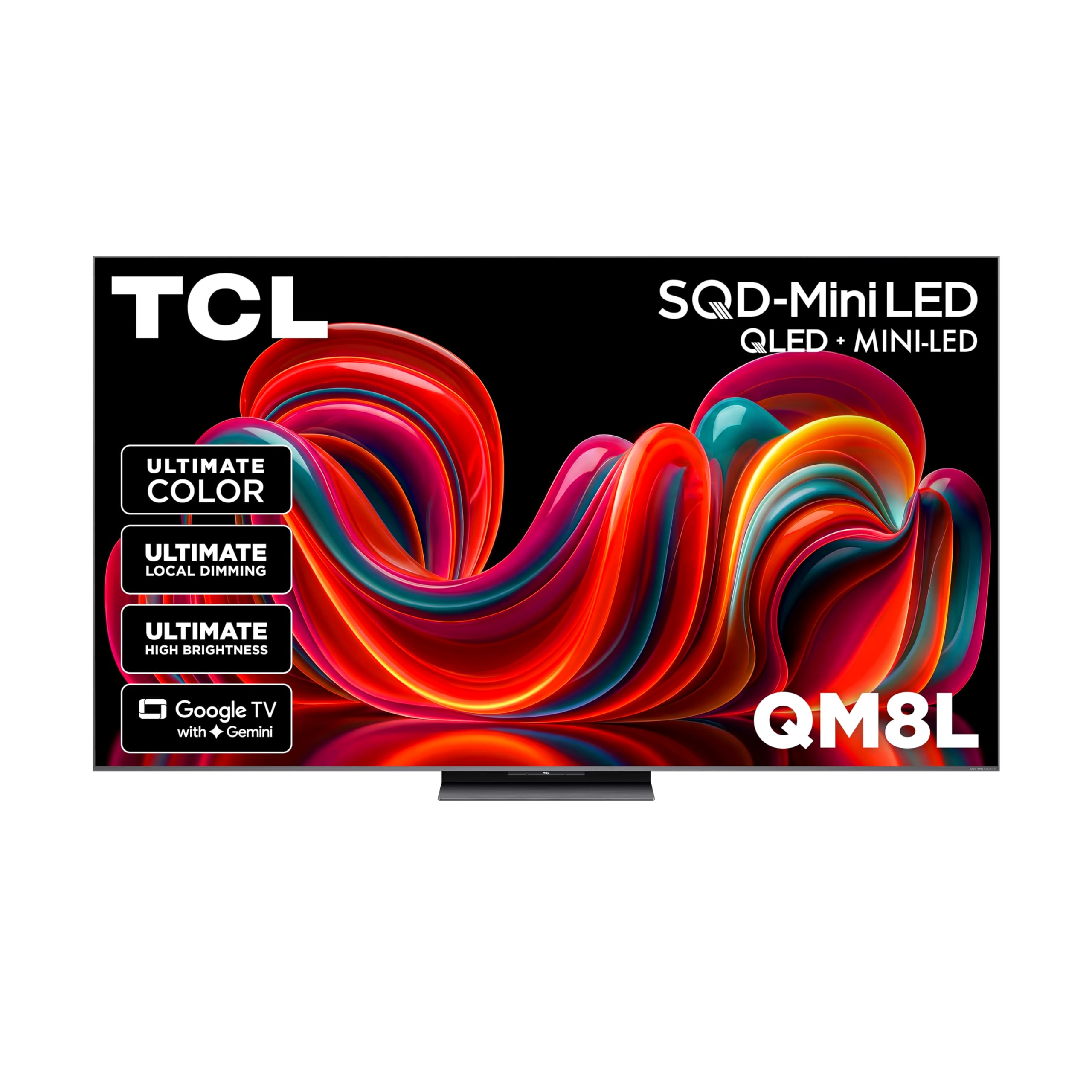
The QM8L is the brightest QLED we’ve tested from TCL, hitting an extraordinary 6,000 peak nits with over 4,000 discrete dimming zones. The SQD-Mini LED architecture combines the TCL Deep Color System with the Halo Control System to minimize blooming around bright objects. The 5-nanometer Ultra Color Filter particles (versus the standard 60nm) produce pinpoint color accuracy that challenges Sony’s Triluminos. Audio by Bang & Olufsen provides a wide, detailed soundstage with clear dialogue separation.
The Game Accelerator 288 VRR, AMD FreeSync Premium Pro, and TCL Game Bar make this a serious gaming contender. The WHVA 2.0 Ultra Panel maintains off-axis contrast better than typical VA panels. Google Gemini Interactive AI allows voice control that actually understands context, like “show me action movies with good reviews.” The 26-bit dynamic dimming provides subtle gradations in dark scenes that cheaper Mini-LEDs crush into banding.
At this brightness level, the QM8L handles daylight living rooms effortlessly. The included backlit remote and optional wireless subwoofer expand the ecosystem.
Why it’s great
- Highest peak brightness in class at 6,000 nits
- 4000+ dimming zones for minimal blooming
- Bang & Olufsen audio integration
Good to know
- Requires professional calibration for accurate out-of-box color
- Google TV interface can lag with heavy app usage
5. Toshiba Z670R Mini-LED
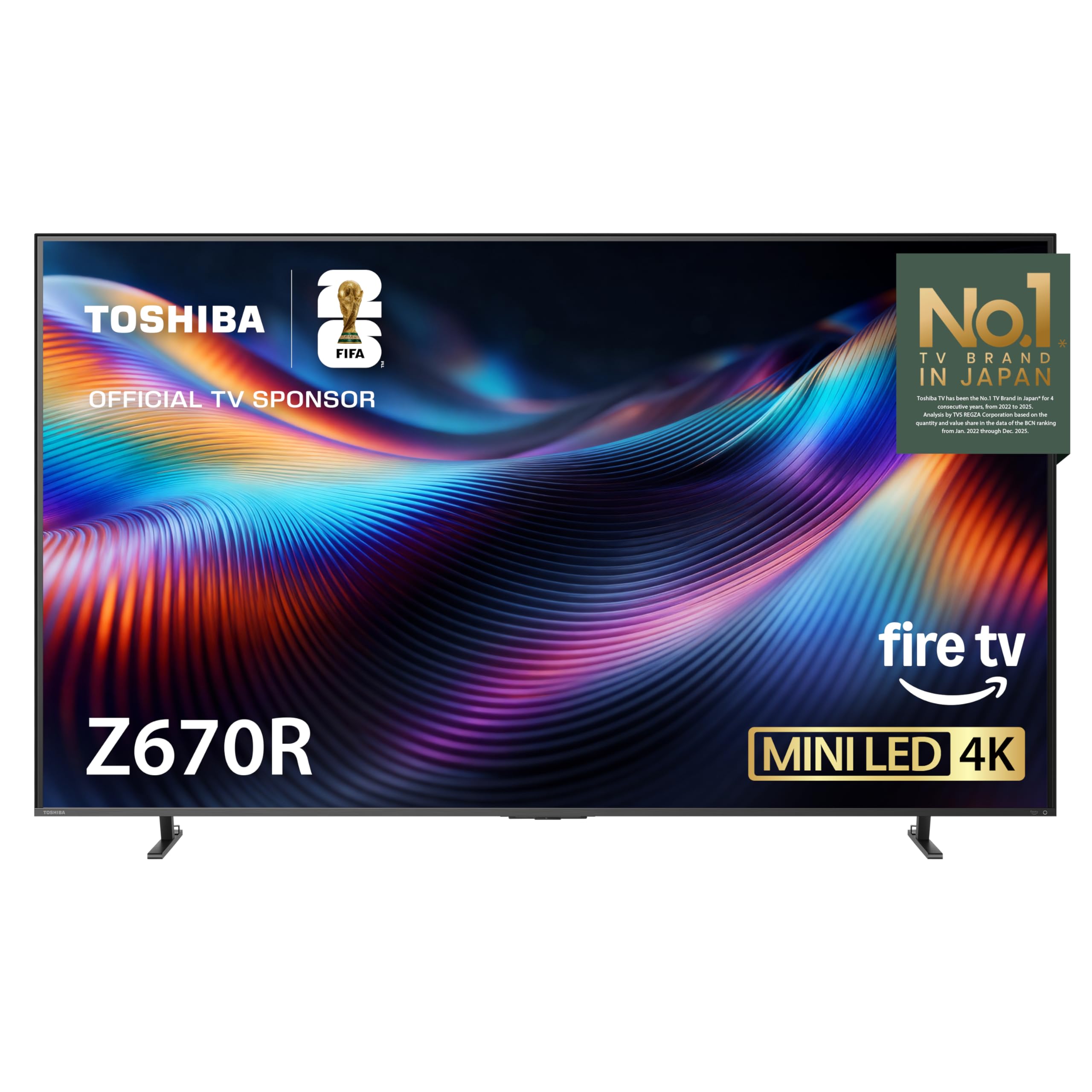
Toshiba’s Z670R brings Mini-LED precision to a more accessible price tier, using the REGZA Engine ZRi Gen3 (fine-tuned in Japan) for AI picture and sound optimization. The full-array local dimming with Mini LEDs delivers deeper blacks and brighter highlights than traditional edge-lit QLEDs. The REGZA Power Audio Pro with dedicated bass woofer produces genuine low-end rumble — explosions and soundtracks have weight without a separate subwoofer.
The native 144Hz panel with AMD FreeSync Premium and VRR 144Hz ensures smooth gameplay on PS5 and Xbox Series X. Dolby Vision IQ and HDR10+ Adaptive adjust the picture based on ambient light, keeping details visible whether you watch at noon or midnight. The Fire TV interface integrates live channels and streaming apps into a single home screen, with Alexa voice control for hands-free operation.
The minimalist Japanese design sits flush on the included stand. The AI Light Sensor Pro reduces eye strain by matching brightness to room conditions. For the price, this is the most complete Mini-LED package available.
Why it’s great
- Built-in bass woofer adds depth to audio
- REGZA Engine provides excellent AI scene optimization
- Native 144Hz with FreeSync Premium
Good to know
- Fire TV interface has more ads than Google TV
- Limited zone count compared to旗舰 competitors
6. Sony BRAVIA 7 Mini LED

The BRAVIA 7 sits as Sony’s upper mid-range Mini LED, inheriting the XR Processor and XR Triluminos Pro from its more expensive siblings. It delivers billions of accurate real-world colors with the natural Sony look that avoids the over-saturated glow common in budget QLEDs. The XR Backlight Master Drive controls the Mini LEDs to maintain contrast in mixed-brightness scenes, though with fewer zones than the BRAVIA 9.
It includes the same PS5-exclusive features — Auto HDR Tone Mapping and Auto Genre Picture Mode — making it a strong choice for PlayStation owners on a tighter budget. The 120Hz native panel supports VRR and ALLM for responsive gaming. Sony Pictures Core provides 5 movie credits and a 12-month subscription to classic 4K films. The Acoustic Multi-Audio system positions sound to match on-screen movement, creating a convincing sense of space.
The primary trade-off versus the BRAVIA 9 is lower peak brightness and fewer dimming zones, meaning some blooming in the most demanding HDR scenes. However, the superb upscaling and color accuracy keep it competitive.
Why it’s great
- Excellent color accuracy with XR Triluminos Pro
- PS5 Auto HDR Tone Mapping works flawlessly
- Studio-calibrated modes for Netflix and Prime Video
Good to know
- Noticeable blooming in high-contrast HDR scenes
- Narrow viewing angle with color shift off-axis
7. Hisense U8 Series
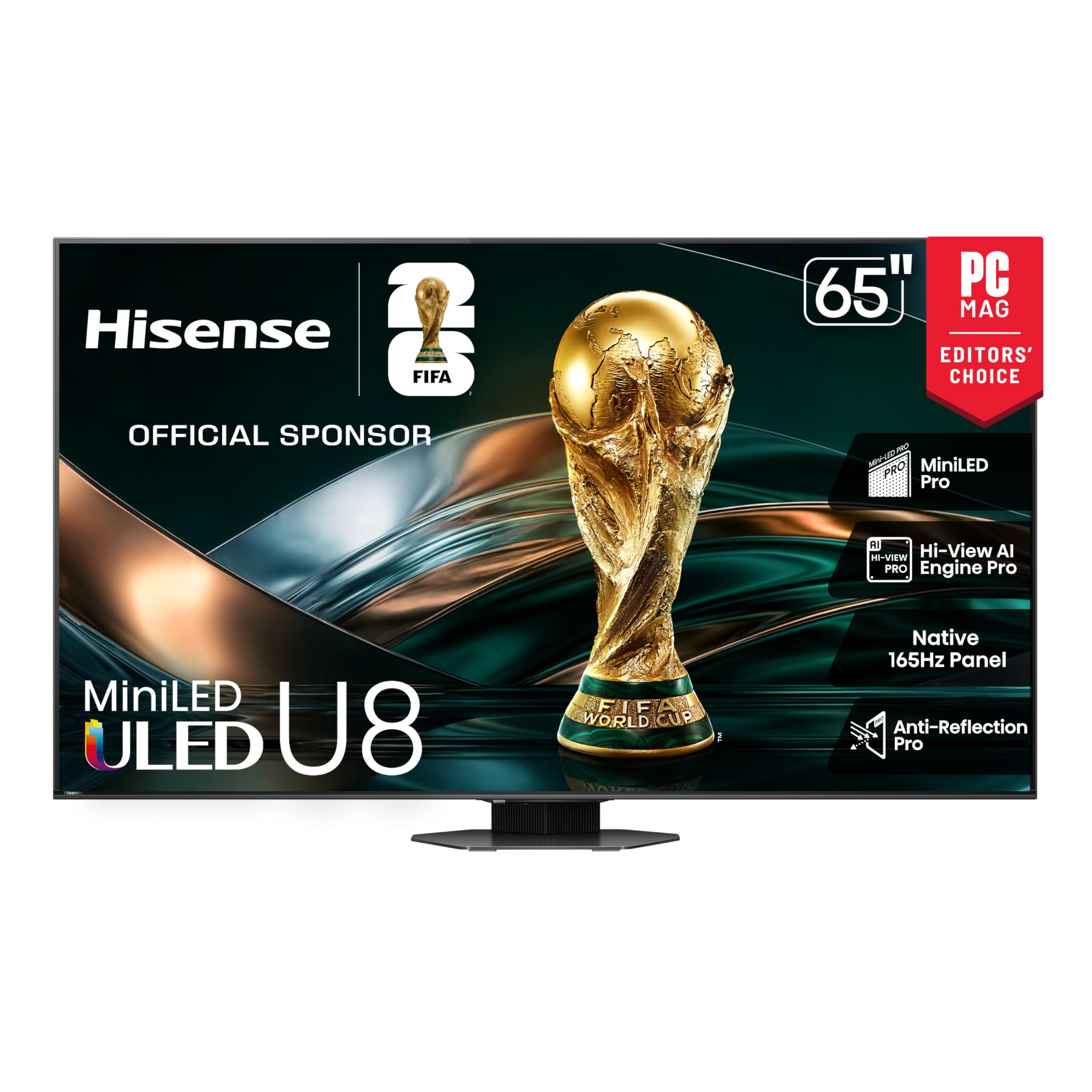
Hisense’s U8 Series pushes Mini-LED performance to extreme levels — 5,000 nits peak brightness with up to 5,600 local dimming zones. The Hi-View AI Engine Pro automatically optimizes picture and sound based on content, detecting scene types and adjusting contrast, color, and clarity in real time. The native 165Hz panel with Game Booster 288 VRR is the fastest refresh rate available at this price, making it ideal for PC gamers who want buttery-smooth motion.
The 4.1.2 multi-channel audio system includes a built-in subwoofer and two up-firing speakers, creating genuine Dolby Atmos immersion without a soundbar. QLED Color is Pantone Validated, ensuring accurate hues across sports, movies, and games. Anti-Reflection Pro minimizes glare in bright rooms. IMAX Enhanced certification guarantees picture and audio quality for supported content.
The Google TV interface is responsive and intuitive. The main trade-off is software reliability — some users report occasional app crashes or the need for periodic resets. For raw brightness and gaming specs, however, the U8 Series is unmatched.
Why it’s great
- 5,000 nits peak brightness for extreme HDR
- 165Hz native panel with 288 VRR
- Built-in 4.1.2 channel Dolby Atmos audio
Good to know
- Google TV software can be buggy with apps
- Requires soundbar for best audio experience
8. TCL QM8K Series
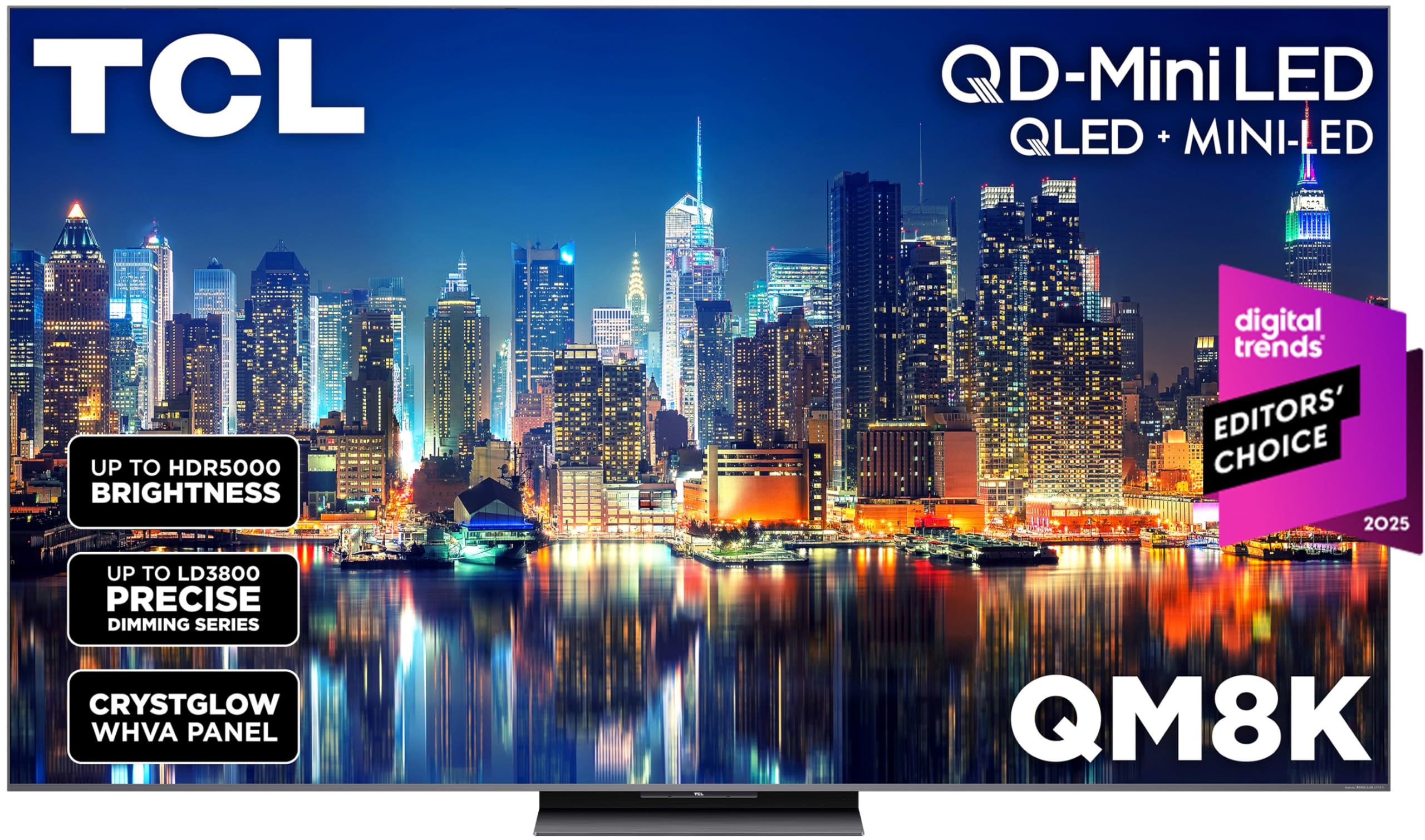
The QM8K establishes a strong mid-point in TCL’s Mini-LED lineup, featuring the QD-Mini LED panel with the Halo Control System for “halo-free” images. The CrystGlow WHVA panel provides wide viewing angles with minimal color shift, and the anti-reflective coating handles room lighting well. Game Accelerator 288 VRR ensures tear-free gameplay at high frame rates, making it suitable for both console and PC gaming.
The Google TV interface with hands-free voice control and a backlit premium remote makes navigation fast. The built-in Bang & Olufsen audio delivers clean dialogue and decent bass, though purists will still want a dedicated soundbar. The 144Hz refresh rate with MEMC keeps sports smooth without the soap opera effect. Dolby Vision IQ and HDR10+ provide broad HDR format support.
Build quality is solid, and the flush wall mount option keeps the TV close to the wall. Some users note that the Hulu app can have sync issues, but most streaming services work smoothly.
Why it’s great
- Wide viewing angle with CrystGlow WHVA panel
- Game Accelerator 288 VRR for smooth gaming
- Anti-reflective screen handles bright rooms well
Good to know
- Some streaming apps have audio sync issues
- Built-in audio lacks deep bass without subwoofer
9. Hisense CanvasTV S7
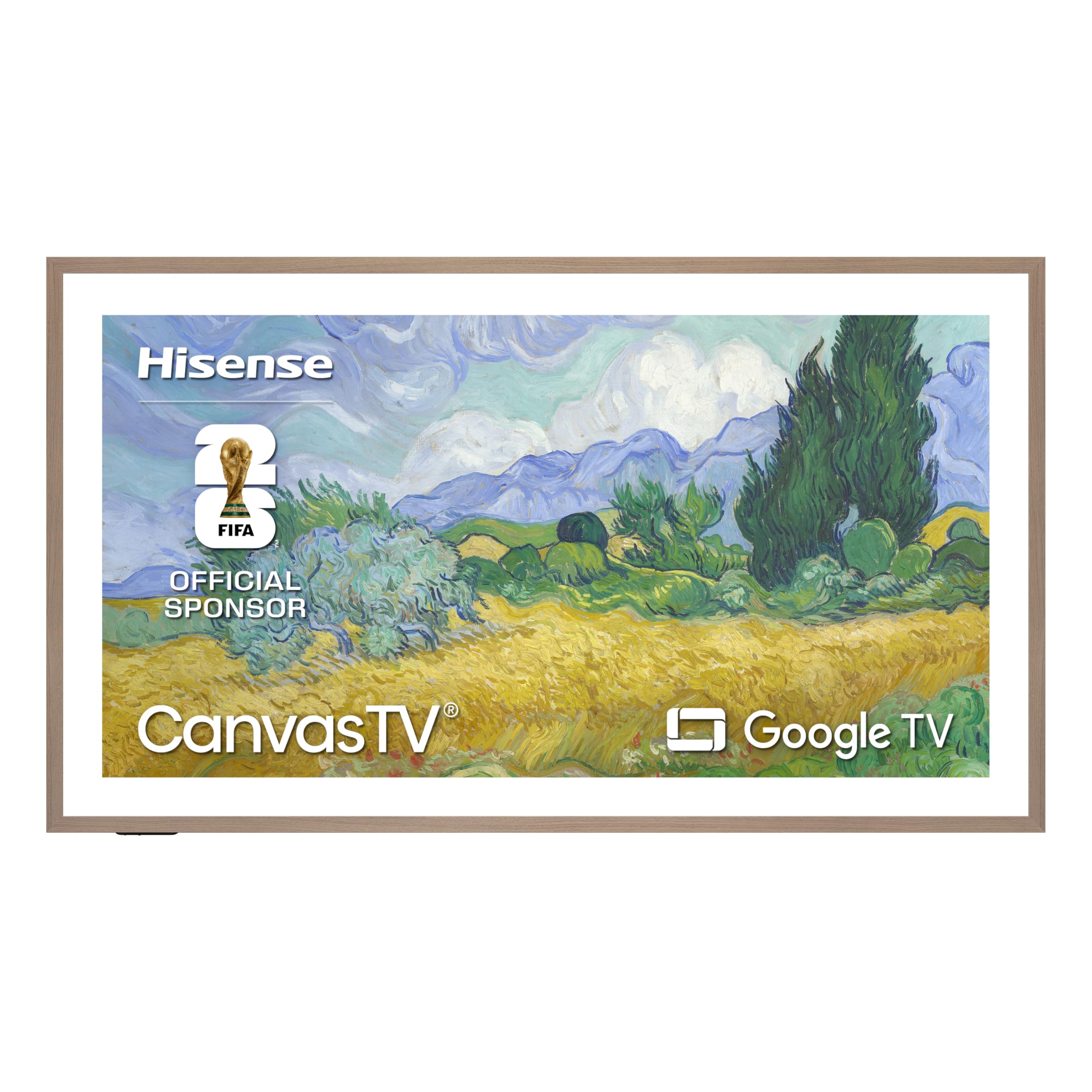
The CanvasTV is Hisense’s direct answer to Samsung’s The Frame, but with a crucial advantage: the Hi-Matte anti-glare display that eliminates reflections better than any glossy screen. The included teak magnetic frame snaps on easily, and the ultra-slim wall mount sits the TV flush against the wall with zero gap. The motion detector wakes the display when you enter the room and fades it when you leave, turning your TV into a living gallery that saves energy.
Beyond art mode, the CanvasTV is a fully capable 4K QLED with a native 144Hz refresh rate. The AI Ambient Light Sensor adjusts brightness and color temperature based on room lighting, ensuring consistent picture quality throughout the day. The 2.0.2 multi-dimensional sound with DTS Virtual:X creates immersive audio with virtual height effects. Google TV provides access to 10,000+ apps.
Unlike The Frame, the CanvasTV includes the wall mount and frame in the box, saving hundreds on accessories. Some units have reported quality control issues with screen uniformity or missing frame pieces, so inspect upon arrival.
Why it’s great
- Hi-Matte display virtually eliminates glare
- Includes teak frame and ultra-slim wall mount
- Motion detector for automatic art display
Good to know
- Some units have screen uniformity issues
- Teak frame may clash with modern decor
10. Samsung The Frame LS03D

The Frame LS03D is the benchmark for art TVs, featuring a UL-certified glare-free matte display that makes on-screen art look like a printed canvas. The Pantone Validated ArtfulColor ensures artworks from The Met, MoMA, and Basquiat appear true to the original — no oversaturation, no crushed shadows. The One Connect Box routes all cables through a single thin line, keeping the wall clean. The Slim Fit Wall Mount (included) hangs the TV flush, and optional customizable bezels (sold separately) allow endless personalization.
The Quantum HDR and Quantum Processor 4K ensure the 4K picture quality is solid for movies and shows, though it doesn’t match the brightness or zone count of dedicated Mini-LED models. The anti-reflection finish works best in controlled lighting. The included remote controls both the TV and the One Connect Box. Alexa built-in provides voice control for the entire smart home ecosystem.
The Art Store subscription (after the initial free period) is a recurring cost that some users resent. Uploading your own artwork is possible but requires using the SmartThings app, which some find unintuitive.
Why it’s great
- Best-in-class matte display for printed-art illusion
- Pantone Validated color for museum-accurate art
- One Connect Box eliminates cable clutter
Good to know
- Art Store subscription required for premium collections
- Lower peak brightness than Mini-LED alternatives
11. Amazon Ember Mini-LED
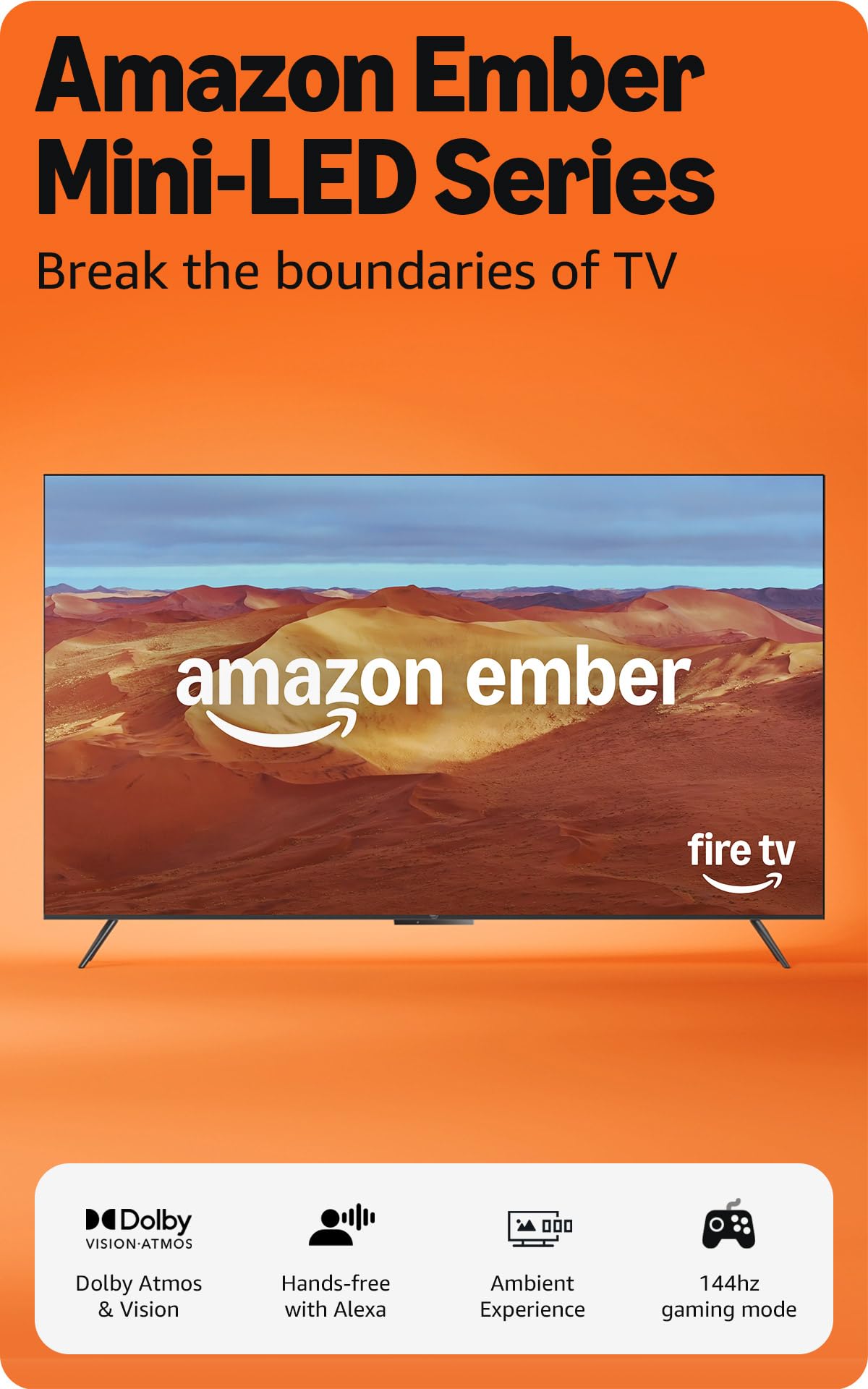
The Amazon Ember Mini-LED brings 512 local dimming zones and up to 1,400 nits of peak brightness to the Fire TV ecosystem, creating a strong mid-range option for Prime subscribers. The 4K QLED Mini-LED display delivers over a billion colors with Dolby Vision IQ and HDR10+ Adaptive for scene-by-scene optimization. The 144Hz native panel with AMD FreeSync Premium Pro certification makes it Amazon’s best TV for gaming, with tear-free visuals and fluid motion.
The Fire TV Intelligent Picture uses a powerful processor to automatically fine-tune the picture scene-to-scene, also adapting to your room’s ambient light and color temperature. The 2.1 channel Dolby Atmos audio with built-in subwoofer provides dramatic bass and clear dialogue. The Omnisense technology wakes the display when you enter the room, showing artwork or letting you start watching instantly.
The main trade-off is the Fire TV interface itself — heavy with Amazon promotions, and the menu can feel laggy after prolonged use. Some users report random reboots or slow app loading.
Why it’s great
- 512 dimming zones for good contrast control
- 144Hz with FreeSync Premium Pro for gaming
- Deep Fire TV integration with Alexa+ voice control
Good to know
- Fire OS interface has intrusive Amazon ads
- Random reboots reported by some users
12. Amazon Ember QLED Series
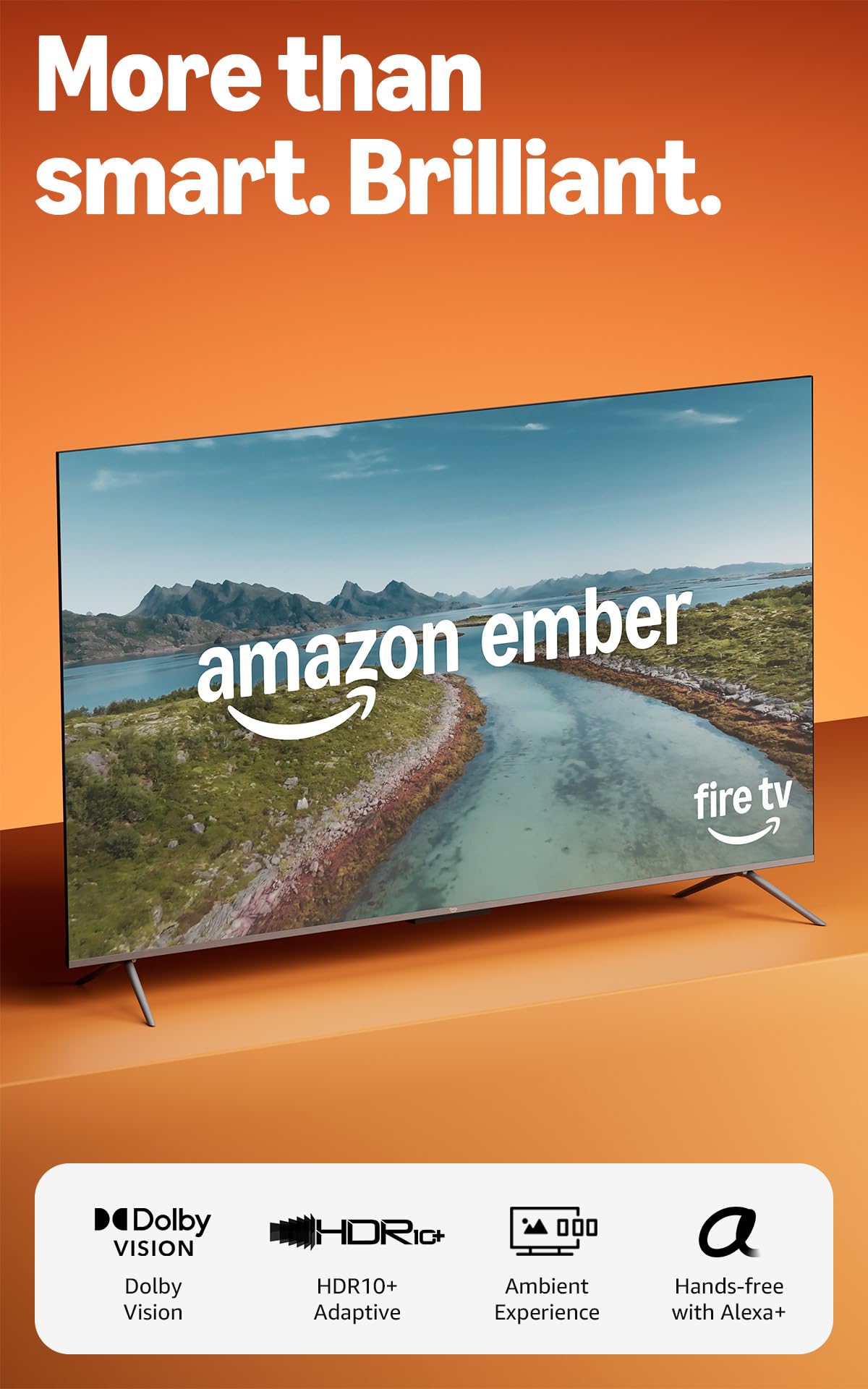
The basic Amazon Ember QLED Series strips back the Mini-LED complexity to offer a solid 4K QLED experience with full-array local dimming for better contrast than edge-lit alternatives. Dolby Vision and HDR10+ Adaptive ensure HDR content looks good in various lighting conditions. The quad-core processor with Wi-Fi 6 provides snappy app loading and smooth streaming, while the Omnisense technology wakes the display when you enter the room.
The hands-free Alexa with the new AI-powered interface lets you find shows, manage smart home devices, and ask questions without the remote. The four HDMI inputs provide enough connectivity for most setups. AirPlay support allows easy sharing from Apple devices. Amazon Luna and Xbox Game Pass streaming are directly supported without a console.
Picture quality is good for the price but lacks the depth and brightness of Mini-LED models. The Fire TV interface is ad-heavy, and some users report audio delay issues that require adjusting settings. For deep Prime Video users on a budget, it’s a capable entry point.
Why it’s great
- Full-array local dimming for improved contrast
- Wi-Fi 6 for fast streaming connectivity
- Hands-free Alexa with Omnisense wake
Good to know
- Fire OS interface has excessive ads
- Audio delay issues may require settings adjustment
13. iFFALCON F75 QLED
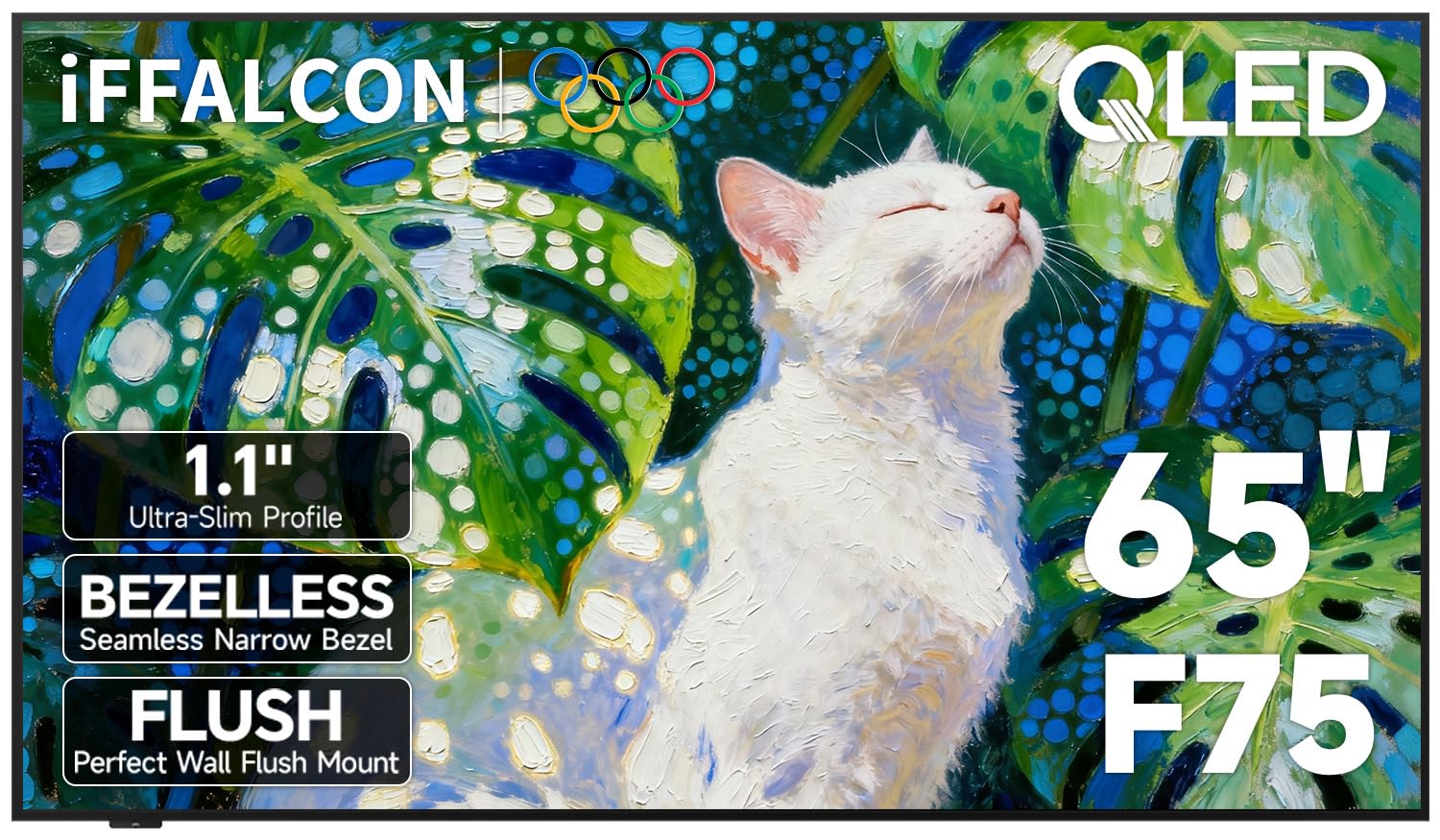
The iFFALCON F75 proves that a QLED TV can be both ultra-slim and genuinely affordable. At 1.1 inches thick with a black metal frame, it hangs nearly flush against the wall using the included mount — no bulky plastic, no visible gap. The hidden cable management keeps the installation clean. The quantum dot panel covers 93% of the DCI-P3 cinema color space, delivering natural skin tones and realistic landscapes without oversaturation.
Dolby Vision IQ reads ambient room light and adjusts the picture automatically, whether you watch on a bright afternoon or during a dark movie night. The 144Hz panel with FreeSync Premium Pro handles fast-paced sports and casual gaming smoothly. The Art Mode turns the TV into a personal art gallery when idle, displaying curated works. A standout feature is the composite AV input via 3.5mm adapter — allowing legacy consoles, DVD players, and camcorders to connect directly.
The Google TV interface is fast and organized. Four HDMI ports (one with eARC), two USB ports, and optical audio out cover modern devices. The built-in sound has good dialogue clarity but lacks deep bass.
Why it’s great
- Ultra-slim 1.1 inch flush mount design
- Legacy AV input works with old consoles and DVD players
- 93% DCI-P3 color coverage for accurate picture
Good to know
- Built-in sound lacks bass for cinematic content
- Dark scene performance limited in bright rooms
FAQ
Is QLED better than OLED for a bright living room?
How many dimming zones do I really need for good HDR?
Can I use a 65-inch QLED as a PC monitor?
What’s the difference between Mini-LED and standard QLED?
Do I need a soundbar with a QLED TV?
Final Thoughts: The Verdict
For most users, the 65-inch qled tv winner is the Samsung Neo QLED 8K QN900F because it combines the brightest Mini-LED panel with the most advanced AI upscaling, delivering future-proof 8K clarity and best-in-class anti-glare. If you want the most accurate color and the best PS5 experience, grab the Sony BRAVIA 9. And for extreme brightness and gaming performance at a lower price, nothing beats the Hisense U8 Series.

Mo Maruf
I created WellFizz to bridge the gap between vague wellness advice and actionable solutions. My mission is simple: to decode the research and give you practical tools you can actually use.
Beyond the data, I am a passionate traveler. I believe that stepping away from the screen to explore new environments is essential for mental clarity and physical vitality.