Our readers keep the lights on and my smoothie glass nicely filled. As an Amazon Associate, I earn from qualifying purchases.
Specs are compiled from manufacturer listings and verified buyer reviews and can change over time — please confirm the key details on the product page before buying.
Mounting a 55-inch TV feels permanent the second you drill into a stud. Get the bracket wrong and you face sag, limited movement, or a screen that sits too high. The right mount does three things: it disappears visually, lets you tilt or swivel without wrestling the panel, and locks solid so your screen stays exactly where you put it. This guide cuts through the listings to the mounts that actually deliver on those promises.
I’m Mohammad Maruf — the founder and writer behind WellFizz. This guide is built by comparing the manufacturers’ published specifications and the patterns across verified customer reviews, so you get each pick’s real strengths and trade-offs instead of marketing spin.
A full-motion mount for a 55-inch TV should give you at least 8 degrees of tilt (the angle the screen tilts forward to fight glare) and enough extension to swing the screen toward a kitchen island or a second sofa. This breakdown of the 55 inch tv mount market separates the rock-solid designs from the ones that just look good on paper.
Our Picks at a Glance


How To Choose The Best 55 Inch TV Mount
Picking a TV mount is a short checklist — style, weight, and fit — but each step has a gotcha that catches first-time buyers. Here is what matters most.
Full Motion vs. Tilt vs. Fixed
Full-motion mounts, also called articulating mounts, let you pull the TV away from the wall, swivel it left or right, and tilt it up or down. This is the best choice for a 55-inch TV in a living room where seating is off-center or for a bedroom where you watch from the bed. Tilt-only mounts angle the screen forward (typically 8 to 15 degrees) to kill glare but do not swivel. Fixed mounts sit flat and are best for a dedicated theater room where the TV never moves. For most homes, a full-motion mount gives the most flexibility without much extra cost.
VESA Pattern and Weight Capacity
The VESA pattern is the square of screw holes on the back of your TV, measured in millimeters — a 55-inch set typically uses 200x200mm or 300x300mm. Your mount must match that pattern or have an adapter that covers it. The weight capacity matters too. A mid-range 55-inch panel weighs around 35 to 50 pounds, but a heavy-duty mount rated for 100-plus pounds gives confidence and room if you ever upgrade to a larger or heavier screen.
Stud Spacing and Installation
Most U.S. walls have wood studs spaced 16 inches apart on center, but some homes have 18-inch or 24-inch spacing. Before you buy, check your stud spacing with a stud finder and pick a mount that explicitly supports it. A mount that only fits 16-inch studs will be a headache if your wall uses 24-inch spacing. Also, look for a mount that ships with a paper drilling template — this saves you from holding a heavy bracket against the wall while you mark holes.
Quick Comparison
| Model | Best For | Max Weight | Tilt Angle | Distance from Wall | Amazon |
|---|---|---|---|---|---|
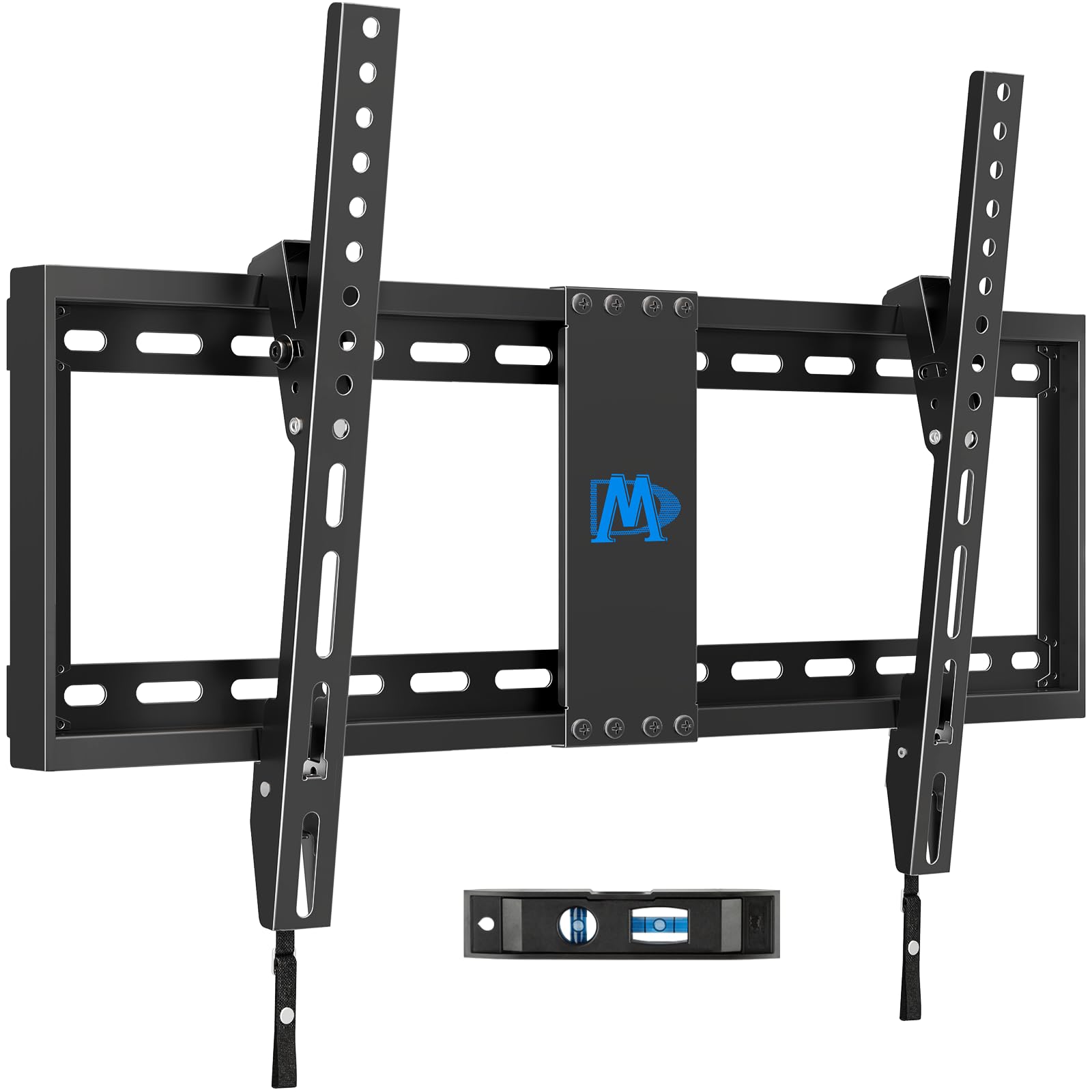
| Mounting Dream MD2617★ Best Overall | Full motion with deep reach | 100 lbs | 15° | 2.5″ – 16.6″ | Amazon |
| Mounting Dream MD2268-LKBest Value | Ultra-slim tilt for glare | 132 lbs | 8° | 1.5″ | Amazon |
| Amazon Basics Full MotionCompact Pick | Budget full motion on one stud | 80 lbs | +10° to -5° | 2.6″ – 16.3″ | Amazon |
| Pipishell PIMFK1-C | Mid-range full motion with wide tilt | 99 lbs | +5° to -15° | 3.98″ – 15.34″ | Amazon |
| monTEK HW1243BK | Ultra-slim full motion | 132 lbs | +3° to -12° | 1.1″ – 16.5″ | Amazon |
| Perlegear PGLF11 | Premium full motion with power strip | 150 lbs | +5° to -15° | 2.9″ – 22″ | Amazon |
| SANUS OLF22 | Premium full motion with high tilt | 125 lbs | 35° | 2.5″ – 22″ | Amazon |
| VIVO MOUNT-CR100C | Dedicated corner mount | — | +10° to -10° | — | Amazon |
| MOUNTUP B0F6Y2DTN9 | Heavy duty for giant TVs | 250 lbs | 30° | 1.65″ – 19.9″ | Amazon |
In‑Depth Reviews
1. Mounting Dream MD2617
Our pick — over 4.5★ from 75,000+ verified ratings; the strongest balance of quality and price.
The crowd favorite that balances reach, stability, and a price that undercuts nearly every rival.
The Mounting Dream MD2617 gives your 55-inch TV a full 15 degrees of downward tilt (the maximum in this list alongside the Pipishell) and an extension range from 2.5 inches flush against the wall out to 16.6 inches. That 15-degree tilt is noticeably steeper than the 8 degrees on the Mounting Dream MD2268-LK below, making it the better call for a high bedroom mount where you want to angle the screen toward a low bed. The six articulating arms are built from cold-formed steel (a strong steel shaped at room temperature for extra durability), providing a rock-solid hold — one buyer described it as a “sturdy, well-made mount” that holds the TV securely even on a brick exterior wall.
The included paper template and pre-labeled hardware bags earn consistent praise. Over 4,800 customer reviews discuss the installation, and the overwhelming majority call it straightforward. At 100 pounds of capacity, it handles even a heavy 55-inch set with headroom. The honest trade-off is that the single-arm design on some variations can introduce a tiny sag after major movement, requiring a quick relevel, but owners treat this as a minor quirk rather than a defect.
sturdy budget tilt
- Generous 15° tilt cuts glare from any angle
- Six-arm cold-formed steel frame feels bombproof
- Installation kit (template + labeled bags) saves time
limited extension range
- Single-arm design can need releveling after large swings
- Minimum screen size of 42 inches means it won’t fit a smaller bedroom TV
value seekers: you want the most tilt and a proven install experience from among the most-reviewed mounts on the market — over 75,000 owners back this pick.
wide screens: you need a mount for a TV smaller than 42 inches or you plan to swing the TV every day and want zero relevel adjustments.
2. Mounting Dream MD2268-LK
The tilt-only champion that hangs your TV a mere 1.5 inches from the wall for a near-painting look.
If your main goal is glare reduction and you do not need to swivel the screen, the Mounting Dream MD2268-LK is the smarter buy. It tilts forward up to 8 degrees, fits TVs from 37 to 90 inches, and supports an impressive 132 pounds — the same weight limit as the premium monTEK below. The low-profile design keeps the back of your TV just 1.5 inches off the wall, which looks cleaner than any full-motion arm ever can. One reviewer noted it is a “great price, sturdy design with two-piece brackets bolted together.”
The install process is a three-step affair, and the quick-release pull straps let you lift the TV off the wall plate in seconds without tools — handy if you ever need to access cables behind the panel. Over 120,000 ratings make this the most-reviewed mount in this list, with nearly 2,000 mentions of its value-for-money.
ultra-slim profile: you get zero swivel and zero extension — this is a set-and-forget mount for a room where everyone watches from one direction.
tight spaces: budget-conscious buyers who want the slimmest profile and a 132-pound safety margin for a TV that stays put.
heavy TVs: you need to pull the TV out to reach ports or swivel it toward a kitchen or second seating area.
3. Amazon Basics Full Motion
A single-stud full-motion mount that keeps the price low and the movement smooth for smaller living rooms.
The Amazon Basics mount is a minimalist’s solution: one wall plate, one stud, and a full-motion arm that extends from 2.6 inches to 16.3 inches with a 180-degree swivel. It tilts from +10 degrees upward to -5 degrees downward, giving you enough range to dial out ceiling glare. The design targets 26-inch to 55-inch TVs and supports up to 80 pounds, which is lighter than the 100-pound MD2617 or the 132-pound MD2268-LK — but still well within spec for a typical 55-inch panel that weighs around 35 to 45 pounds. One buyer summed it up: “here’s one that was cheap, looks great, is easy to install and works like it should.”
The instructions get mixed feedback, one of the only aspects marked mixed across the entire list with over 700 mentions, so expect to spend a few extra minutes studying the manual. The single-stud design also means the TV’s weight is concentrated on one point in the wall — fine for a 55-inch set, but you would want a two-stud mount for anything larger or heavier. For a budget pick that still swivels and articulates, this delivers the core features without the premium price tag.
full motion cheap: the 80-pound max is 65% less than the 132-pound ceiling of the MD2268-LK, so this is strictly a mid-size TV mount, not an upgrade path.
light TVs: you want your first full-motion mount on a tight budget and your TV weighs under 80 pounds.
large TVs: you have a heavier 55-inch set or want a mount that could handle a future upgrade to a larger screen.
4. Pipishell PIMFK1-C
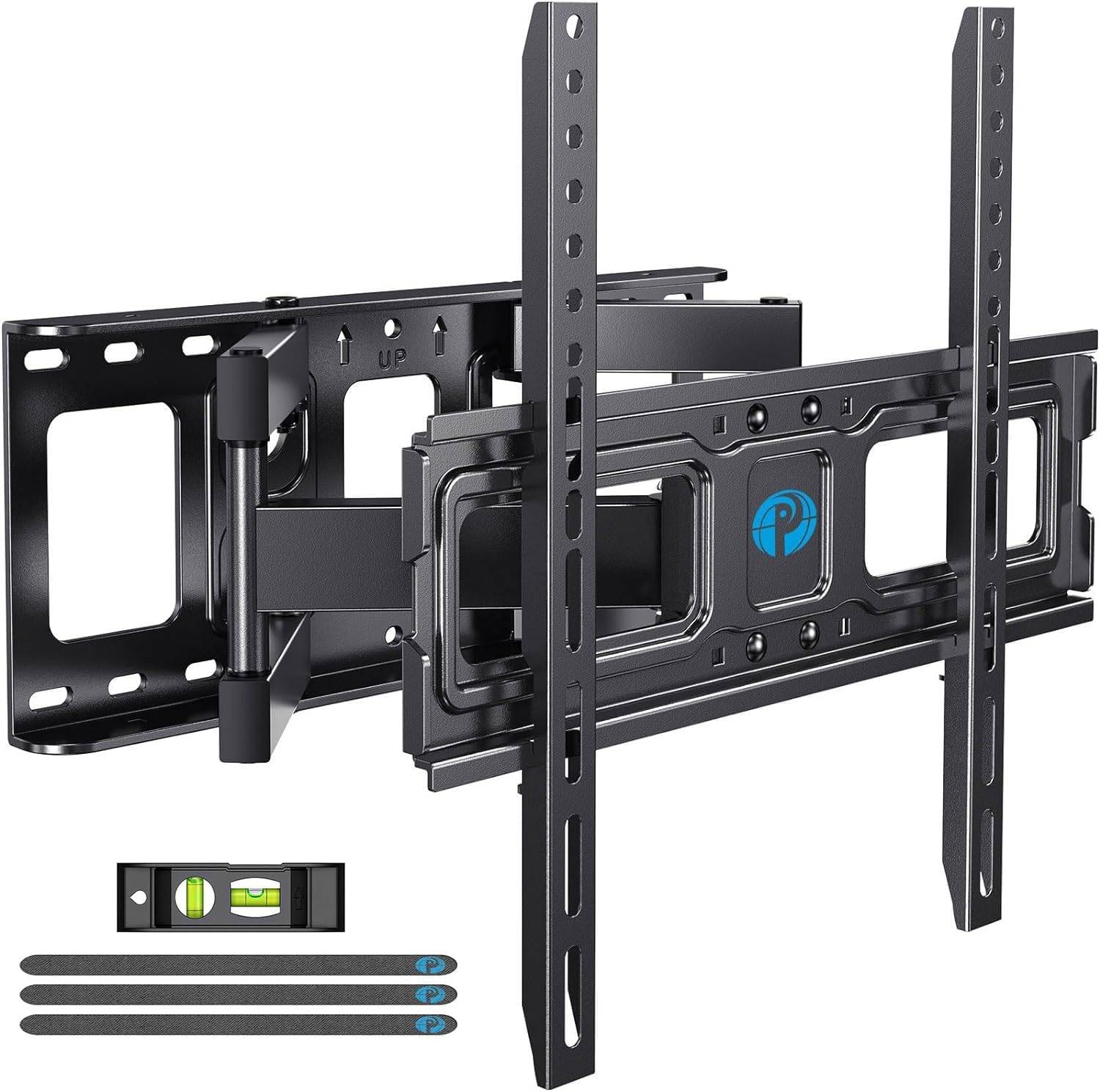
Heavy-gauge steel arms and a generous +5 to -15 tilt range at a price that undercuts the premium contenders.
The Pipishell PIMFK1-C matches the Mounting Dream MD2617 on downward tilt (15 degrees) while adding 5 degrees of upward tilt, giving you more flexibility if the mount sits below your eyeline. It supports VESA patterns up to 400x400mm and TVs up to 99 pounds, extending to 15.34 inches and collapsing to 3.98 inches when not in use. The dual articulating arms are made from heavy-gauge steel (thicker steel that resists flexing), and buyers call the construction “crazy easy to install” with the included template eliminating the need to hold the bracket while marking holes.
The most common trade-off is stiff pivot joints — if you plan to swivel the TV multiple times a day, the arms require noticeable effort compared to the smoother SANUS or Perlegear. One owner framed it honestly: “if you plan on mounting your tv and leaving it alone then it’s perfect.” The installation crowd (nearly 800 mentions) and the quality crowd (over 680 mentions) both rate this highly, making it a strong mid-range choice that sits between the Amazon Basics budget pick and the premium full-motion options.
first-time buyers: the buyer who wants the widest tilt range (+5 to -15 degrees) in a mid-range mount and does not need daily swiveling.
full motion: you regularly push and pull the TV to face different seating areas — the stiffness becomes a chore.
5. monTEK HW1243BK

The slimmest full-motion bracket here at a mere 1.1 inches when pushed back against the wall.
monTEK’s HW1243BK achieves a rare feat: it is a full-motion mount that retracts to 1.1 inches, making it nearly as flush as a tilt-only bracket while still offering 16.5 inches of extension and +/-60 degrees of swivel. The tilt range is +3 to -12 degrees, and the mount carries the same 132-pound capacity as the tilt-only MD2268-LK — impressive for a full-motion arm. It ships with a 10-year warranty, which signals confidence in the alloy steel construction. As one buyer mentioned, it is a “very sturdy tv wall mount and super thin.”
The main caveat is the weight: at 12.5 pounds, this mount is noticeably heavier than most competitors, and the dense steel makes it harder to maneuver during solo installation. Some owners also note that the center steel piece on the TV bracket can extend below the bottom of the screen on certain sets, requiring a cut of about 1.5 inches. If you prize a flush look and are willing to manage a slightly fussier install, this is the ultimate slim full-motion option.
light loads: you want a full-motion mount that looks almost invisible from the side and can handle a future upgrade to a larger, heavier TV.
heavy duty: you are mounting solo or want the lightest bracket to work with.
6. Perlegear PGLF11

The full-motion mount that hides a three-outlet power strip and two USB ports inside its frame.
The Perlegear PGLF11 solves the single most annoying part of wall-mounting: the ugly power strip dangling below the TV. An integrated power strip with 3 AC outlets, 2 USB ports, and a 7.87-foot cord is bolted directly to the mount, so you plug everything into the bracket itself. The arms extend a generous 22 inches (the same reach as the SANUS OLF22) and retract to 2.9 inches. The tilt range is +5 to -15 degrees with tool-free adjustment, and the 130-degree swivel lets you aim the screen across a wide room.
The dual arms carry up to 150 pounds, making this the second-highest capacity mount in the list behind the MOUNTUP. Pre-assembled front support cuts installation steps, and the template makes stud marking simple. The one practical note: pushing a large TV back against the wall to collapse the linkages is tough alone — you will want a second person to avoid flexing the panel. Over 800 ratings average 4.8 stars, with quality as the top-mentioned aspect.
medium TVs: the buyer who values clean cable management and wants to power a console and streaming stick directly from the mount.
budget builds: you mount solo — the weight and arm tension practically demand two people for a smooth install.
7. SANUS OLF22
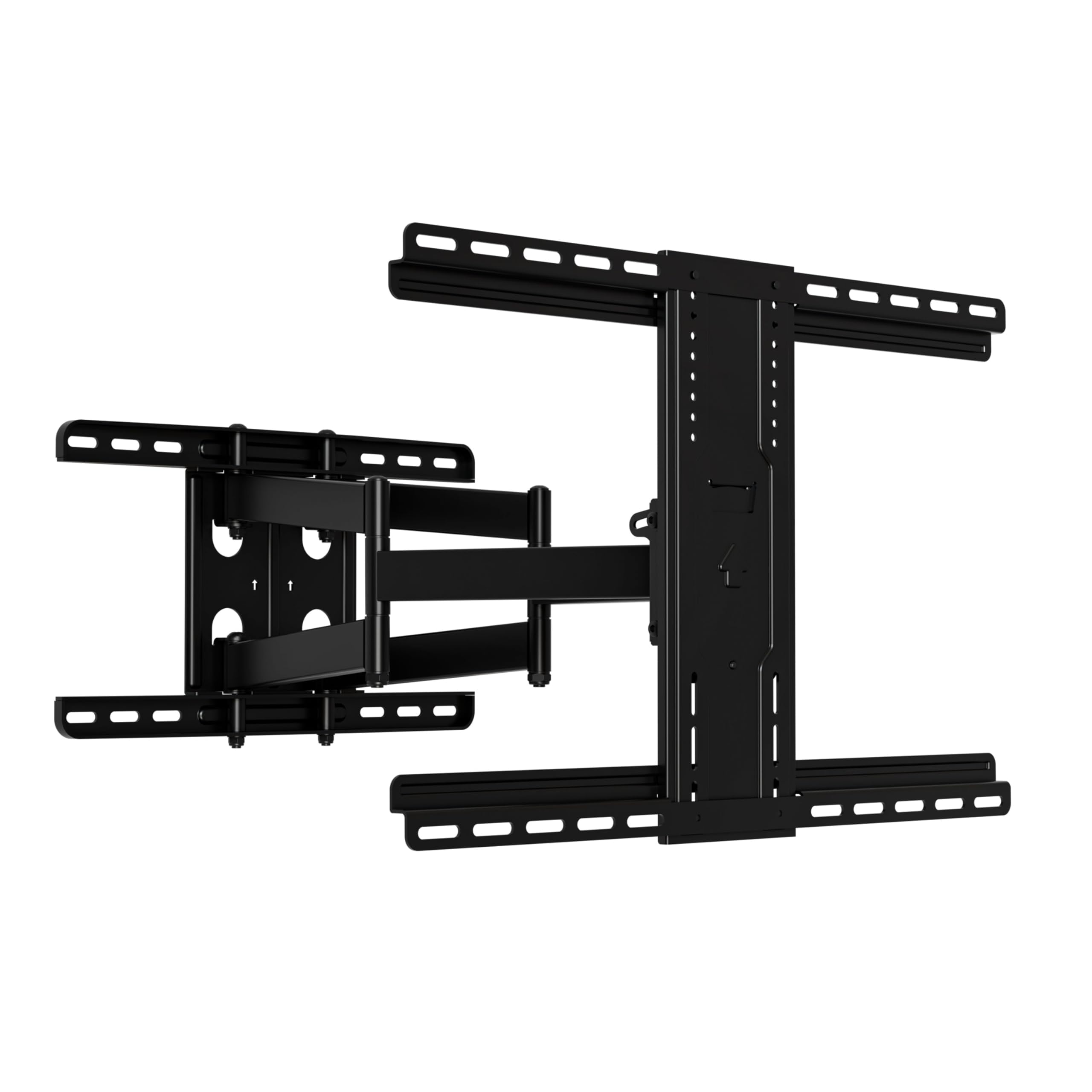
The smoothest one-finger movement in the test, paired with a heavy 35-degree tilt range.
SANUS is a name that home theater installers recognize, and the OLF22 justifies the reputation. It extends 22 inches from the wall (equal to the Perlegear), retracts to 2.5 inches, and offers a massive 35 degrees of tilt — the widest tilt range in this entire roundup by a clear margin. That matters if your mount sits above a fireplace or in a room with unusually high ceilings. The swivel is famously smooth, described by owners as easy with just a touch of a finger, and the UL listing (Underwriters Laboratories certification, meaning it passed independent safety testing) gives you extra confidence.
The adjustable tilt is one aspect flagged as mixed, and some owners note the tilt friction clamp requires heavy torque to set. The mount also does not swing out as far as expected if extension is a priority. The capacity is 125 pounds, lower than the Perlegear’s 150 pounds and the MD2268-LK’s 132 pounds, but still more than enough for a 55-inch TV. For the buyer who wants the premium feel and the widest tilt range, this is the pick.
quality seekers: high-ceiling rooms or above-fireplace mounts where the 35-degree tilt solves a specific angle problem.
tight budgets: maximum extension (more than 22 inches) or a higher weight capacity are deal-making specs.
8. VIVO MOUNT-CR100C
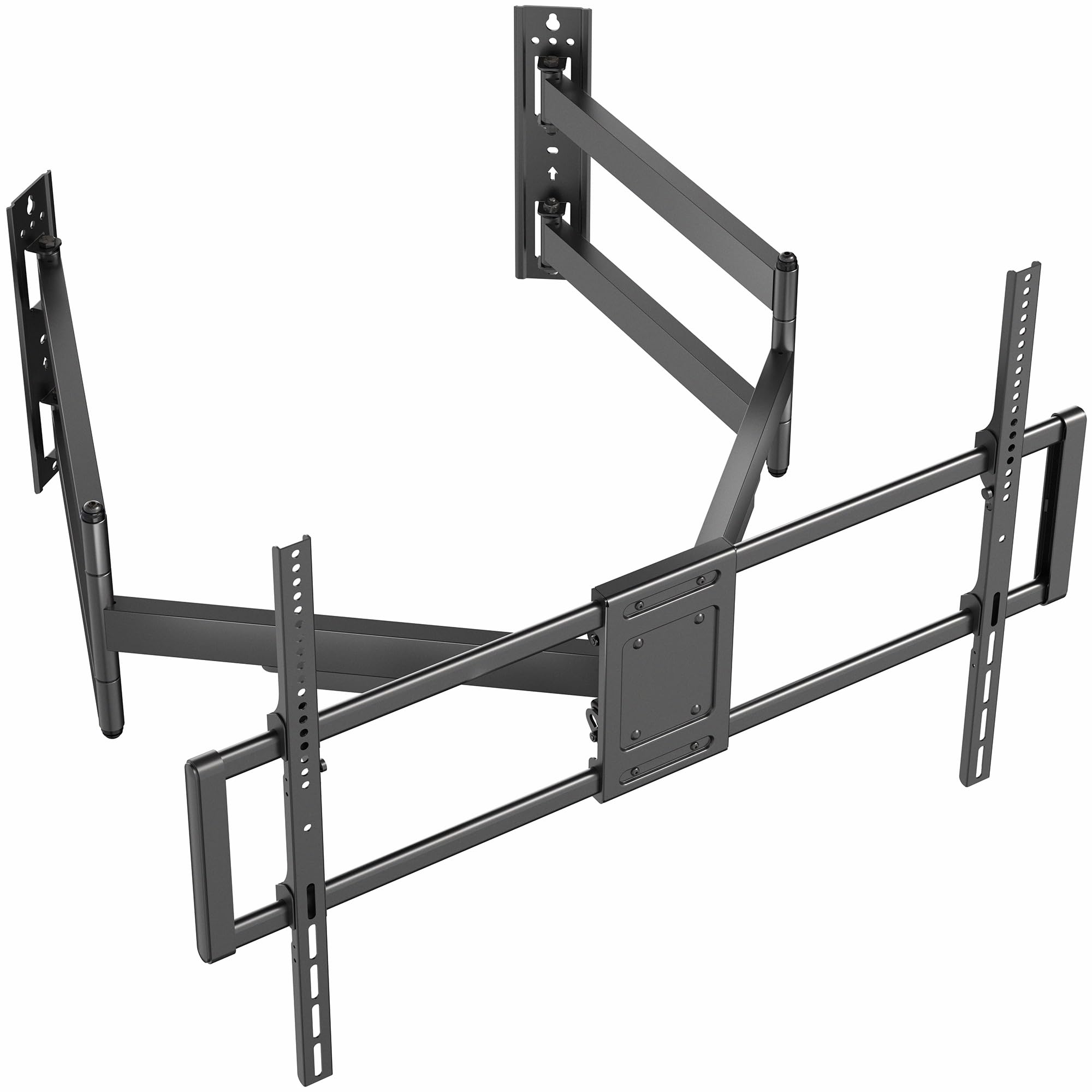
The only mount here designed specifically to tuck a big TV into a corner without wasting inches on either side.
Most full-motion mounts sit on a flat wall, but the VIVO MOUNT-CR100C uses separating wall plates that fit corners with mounting holes 24 to 47 inches from the corner. It handles TVs from 46 to 100 inches with a 120-degree swivel and +10 to -10 degrees of tilt. The mount comes nearly fully assembled from the start — you attach the VESA brackets to the TV and hang it, a process buyers complete in 5 to 10 minutes. As one owner puts it, “if you need a corner wall mount for a big TV, this is the one.”
The unit itself weighs 35.1 pounds, which is the heaviest bracket in the lineup. That heft translates to durability, but it also means the mount is not something you casually reposition. For corner setups where a standard mount would leave the screen awkwardly jutted out, this is specifically engineered for that exact problem.
small rooms: the exact buyer with a corner wall placement — there is no general-purpose mount that does this job as cleanly.
large TVs: your wall is flat — you are paying extra for a corner-specific design and 35 pounds of steel you do not need.
9. MOUNTUP B0F6Y2DTN9
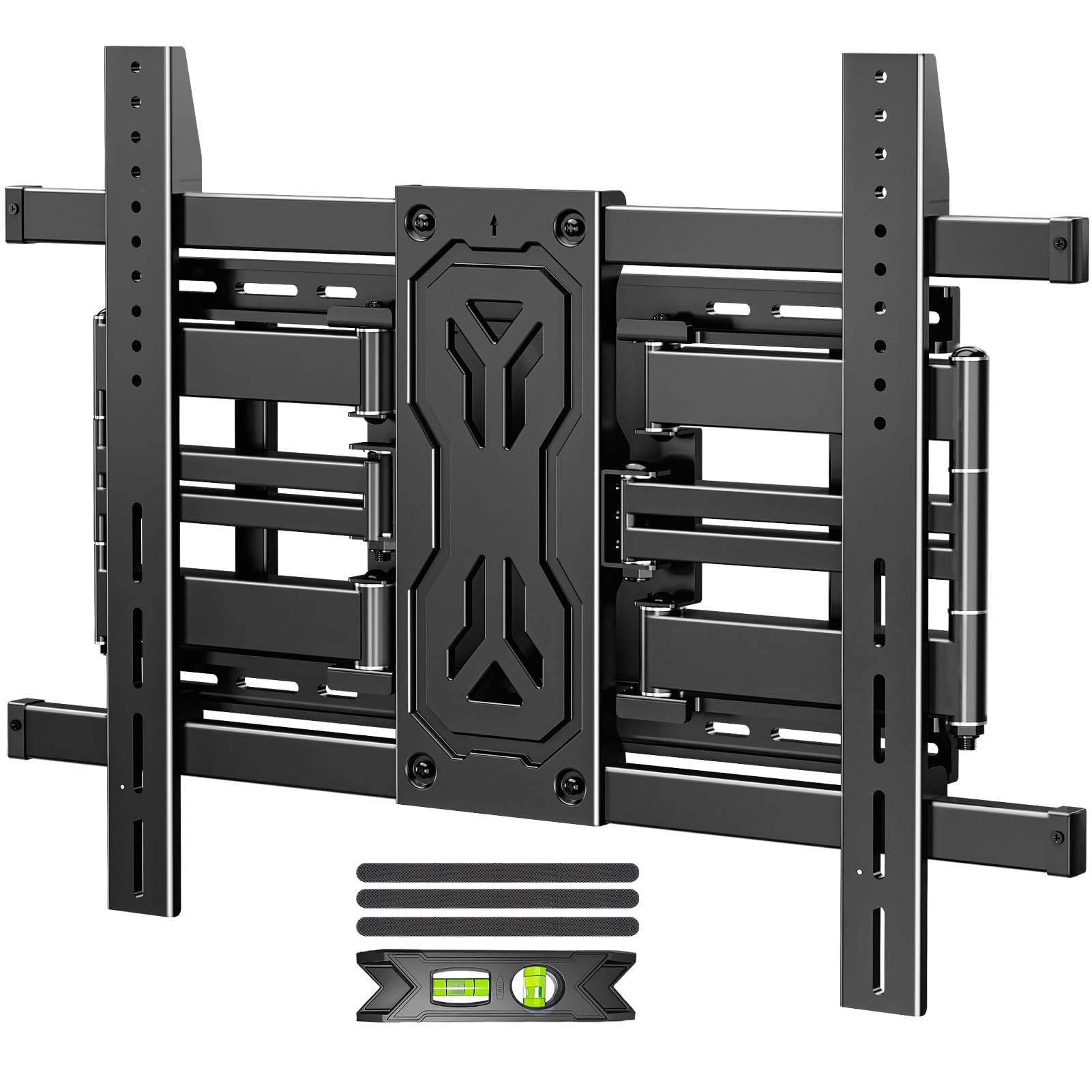
Six strengthened steel arms and a 250-pound ceiling make this the true heavy lifter for jumbo panels.
The MOUNTUP B0F6Y2DTN9 is overbuilt by design — it supports TVs from 50 to 110 inches and holds up to 250 pounds, compared to 100 pounds for the Mounting Dream MD2617. The six-arm design distributes weight across a reinforced alloy steel frame, and the mount passes a 4x max load test at the factory, according to the manufacturer. It tilts +15 to -15 degrees (30 degrees total, the second widest after the SANUS) and swivels +/-45 degrees, with the dual arms extending to 19.9 inches. When retracted, it sits only 1.65 inches from the wall.
The sheer strength means the mount is suitable for future-proofing — if you ever replace your 55-inch TV with an 85-inch or 98-inch panel, this bracket stays. The sturdiness aspect is the most-mentioned positive, with owners of 85-inch and 100-inch TVs calling it rock-solid. The downside is that the rotational leveling shifts slightly when you move the arm, so you may need to fine-tune the level after each extension. It also lacks integrated cable channels, so you will need to manage wires separately.
flush mounts: the buyer who wants to mount once and never worry about weight limits, even for a future 85-inch screen.
corner setups: you have a standard 55-inch TV and want a lighter, cheaper, or slimmer bracket — this is over-engineered for typical use.
Understanding the Specs
Tilt Angle
Tilt angle is how far the screen can angle forward or backward to fight glare or improve the sightline when the TV is mounted above eye level. An 8-degree tilt is the baseline for bedrooms, while 15 degrees is better when the TV is substantially higher than your seated position. The SANUS OLF22’s 35-degree range is atypical and meant for extreme angles like above-fireplace mounts.
VESA Pattern
The VESA pattern is the rectangular arrangement of mounting holes on the back of your TV, given in millimeters (width x height). Most 55-inch TVs use 200x200mm or 300x300mm, but some larger panels use 400x400mm or 600x400mm. Always check your TV’s VESA pattern before buying a mount — a mismatch means the bracket will not attach without an adapter, and some mounts cap out at certain VESA sizes.
Weight Capacity
Weight capacity is the maximum load the mount is designed to hold safely. A typical 55-inch LED TV weighs 35 to 50 pounds, so even an 80-pound mount (like the Amazon Basics) is technically sufficient. However, heavier OLED panels and future upgrades to larger screens benefit from a 100-pound or higher ceiling. Always add a margin — a mount rated for 132 pounds gives you room for a bigger screen down the line.
Stud Spacing
Stud spacing refers to the distance between the vertical wood studs inside your wall, measured center-to-center. In most U.S. homes, studs are spaced 16 inches apart, but some homes have 18-inch or 24-inch spacing. A mount’s wall plate must span across at least two studs for proper anchoring. If your studs are 24 inches apart, choose a mount that explicitly supports that spacing, like the Mounting Dream MD2617 or the Perlegear PGLF11.
FAQ
Will any 55-inch TV mount fit my brand of TV?
How far from the wall will a full-motion mount let my TV sit?
Can I install a TV mount into drywall without hitting a stud?
What does the tilt angle number mean in practice?
How long does it take to install a TV wall mount?
Is a tilt-only mount or a full-motion mount better for a living room?
Will a 55-inch TV mount work with my 65-inch or 75-inch TV later?
What tools do I need to install a TV wall mount?
Final Thoughts: The Verdict
For most people, the 55 inch tv mount winner is the Mounting Dream MD2617 because it combines the widest practical tilt range (15 degrees), a proven install process backed by over 75,000 ratings, and a price that undercuts the premium competitors. If you want the thinnest possible profile on a budget, grab the Mounting Dream MD2268-LK — it sits 1.5 inches from the wall and holds 132 pounds. And for corner wall placements, the VIVO MOUNT-CR100C is the one to reach for.
How We Picked
We do not accept paid placement. Every pick is matched to a real buyer and a real use-case; we do not hands-on test units.
Sources & Methodology
Specifications: manufacturer listings and product documentation. Review insights: verified customer reviews, as of July 2026. Pricing: not shown on this page (it changes often); check the current price via the retailer link.
As an Amazon Associate, WellFizz earns from qualifying purchases. This does not affect which products we feature.
Related Guides

Mo Maruf
I created WellFizz to bridge the gap between vague wellness advice and actionable solutions. My mission is simple: to decode the research and give you practical tools you can actually use.
Beyond the data, I am a passionate traveler. I believe that stepping away from the screen to explore new environments is essential for mental clarity and physical vitality.