Our readers keep the lights on and my smoothie glass nicely filled. As an Amazon Associate, I earn from qualifying purchases.
A fast-moving puck, a quarterback’s spiral, a blur of soccer cleats—these are the moments that separate a good TV from a great one. The wrong panel turns a game-winning play into a smear of pixels, robbing you of the visual edge that makes modern sports broadcast so gripping. For fans who demand clarity, motion handling is not a feature; it is the only spec that matters.
I’m Mohammad Maruf — the founder and writer behind WellFizz. I spend my time breaking down hardware specifications like refresh rates, local dimming zones, and Quantum Dot color volumes to find the displays that handle fast action without compromise.
After hours of comparing panels, processing chips, and real-world motion performance, I’ve filtered down the options that truly deliver. This guide is built around the best 55 inch tv for sports, focusing on the precise technology that keeps every play sharp, bright, and fluid from kickoff to final whistle.
How To Choose The Best 55 Inch TV For Sports
Sports viewing demands a specific set of capabilities that a standard 60Hz panel simply cannot deliver. The difference between seeing a baseball pitch as a clean spinning blur versus a choppy stutter comes down to three core areas: refresh rate, backlight technology, and motion processing. Here is what to look for before you click “buy”.
Native Refresh Rate — The 120Hz Baseline
A native 120Hz panel updates the image 120 times per second, effectively doubling the frame rate of a standard 60Hz TV. For fast-panning shots in football or basketball, this extra fluidity eliminates the judder that makes players look like they are teleporting. Many budget TVs advertise “effective” or “motion rate” numbers that rely on backlight scanning, but only a native 120Hz panel delivers true motion clarity. If you watch live sports, skip anything below 120Hz.
Backlight Technology — Mini-LED vs QLED vs OLED
Mini-LED uses thousands of tiny LEDs behind the screen to create precise local dimming zones, producing deep blacks without washing out bright highlights like a stadium scoreboard. QLED (Quantum Dot) enhances color volume, making jerseys and field grass look more lifelike. OLED delivers perfect black levels but can struggle in brightly lit rooms due to lower overall brightness. For a living room with windows, a Mini-LED QLED combination hits the sweet spot of high brightness and rich contrast.
Motion Handling and Upscaling
Most live sports broadcasts are still 1080p or 720p, so a TV’s upscaling engine is critical. An AI-driven processor (like Sony’s XR or Samsung’s NQ4) cleans up low-resolution signals and reduces noise on fast-moving grass and uniforms. Look for MEMC (Motion Estimation Motion Compensation) frame insertion, which smooths out judder without introducing the soap-opera effect that ruins the cinematic feel. A good motion processing chip makes a mid-tier panel look like a premium one.
Quick Comparison
On smaller screens, swipe sideways to see the full table.
| Model | Category | Best For | Key Spec | Amazon |
|---|---|---|---|---|
| Sony BRAVIA 5 | Premium Mini-LED | Crystal-clear motion & upscaling | XR Processor / 120Hz Native | Amazon |
| Hisense U7 Mini-LED | High-End Gaming | 165Hz fluidity & bright rooms | 165Hz Native / 3000 Nits | Amazon |
| LG B5 OLED | OLED Cinema | Perfect blacks & contrast | 0.1ms Response / 120Hz | Amazon |
| Samsung Neo QLED QN70F | Mid-Premium QLED | AI upscaling & sports | 144Hz Motion Xcelerator | Amazon |
| Amazon Ember Mini-LED | Smart Home Hub | Alexa integration & gaming | 144Hz / 512 Dimming Zones | Amazon |
| Roku Pro Series | Streaming-First | Simple UI & sports | 120Hz / Dolby Vision IQ | Amazon |
| Roku Plus Mini-LED | Value QLED | Budget QLED with Roku OS | Mini-LED / Dolby Vision | Amazon |
| TCL QM7K Mini-LED | Pro-Grade Dimming | High contrast & no halos | 2500 Dimming Zones | Amazon |
| iFFALCON 55U85 | Gaming & Hotel | 144Hz gaming & hospitality | 144Hz / 4x HDMI 2.1 | Amazon |
| Hisense CanvasTV S7N | Design & Art | Anti-glare & flush mount | 144Hz / Hi-Matte Display | Amazon |
| TCL Q7 QLED | Mid-Range 120Hz | Budget 120Hz gaming | 120Hz / Game Accelerator | Amazon |
In‑Depth Reviews
1. Sony BRAVIA 5 (XR50)

The Sony BRAVIA 5 sets the gold standard for sports viewing thanks to its XR Processor, which uses AI to upscale low-resolution broadcasts into near-4K sharpness. The Mini-LED backlight, paired with XR Backlight Master Drive, controls thousands of tiny LEDs to produce deep blacks and blindingly bright highlights without blooming around score overlays. This combination means that a muddy 720p football game looks clean, and a 4K HDR match feels like you are in the stands.
Motion clarity is the star here — the 120Hz native panel, combined with XR Motion Clear technology, handles fast panning shots across the soccer pitch without stutter or ghosting. The anti-glare coating also reduces reflections from overhead lights, a common pain for afternoon game-watching. For PlayStation 5 owners, the exclusive Auto HDR Tone Mapping and Auto Genre Picture Mode automatically optimize the display for sports gaming, removing all manual calibration guesswork.
While the built-in speakers are decent, the TV truly shines with a soundbar to match the Dolby Atmos soundstage. The only compromise is that only two of the four HDMI ports support the full 48Gbps HDMI 2.1 bandwidth, though most setups will not need more than two high-speed inputs. For pure picture quality and upscaling of live broadcasts, this is the top-tier choice for the discerning sports fan.
Why it’s great
- Best-in-class AI upscaling for 720p/1080p broadcasts
- XR Backlight Master Drive eliminates blooming
Good to know
- Only two HDMI 2.1 ports
- Premium price point
2. Hisense 55″ U7 Mini-LED (55U7SG)
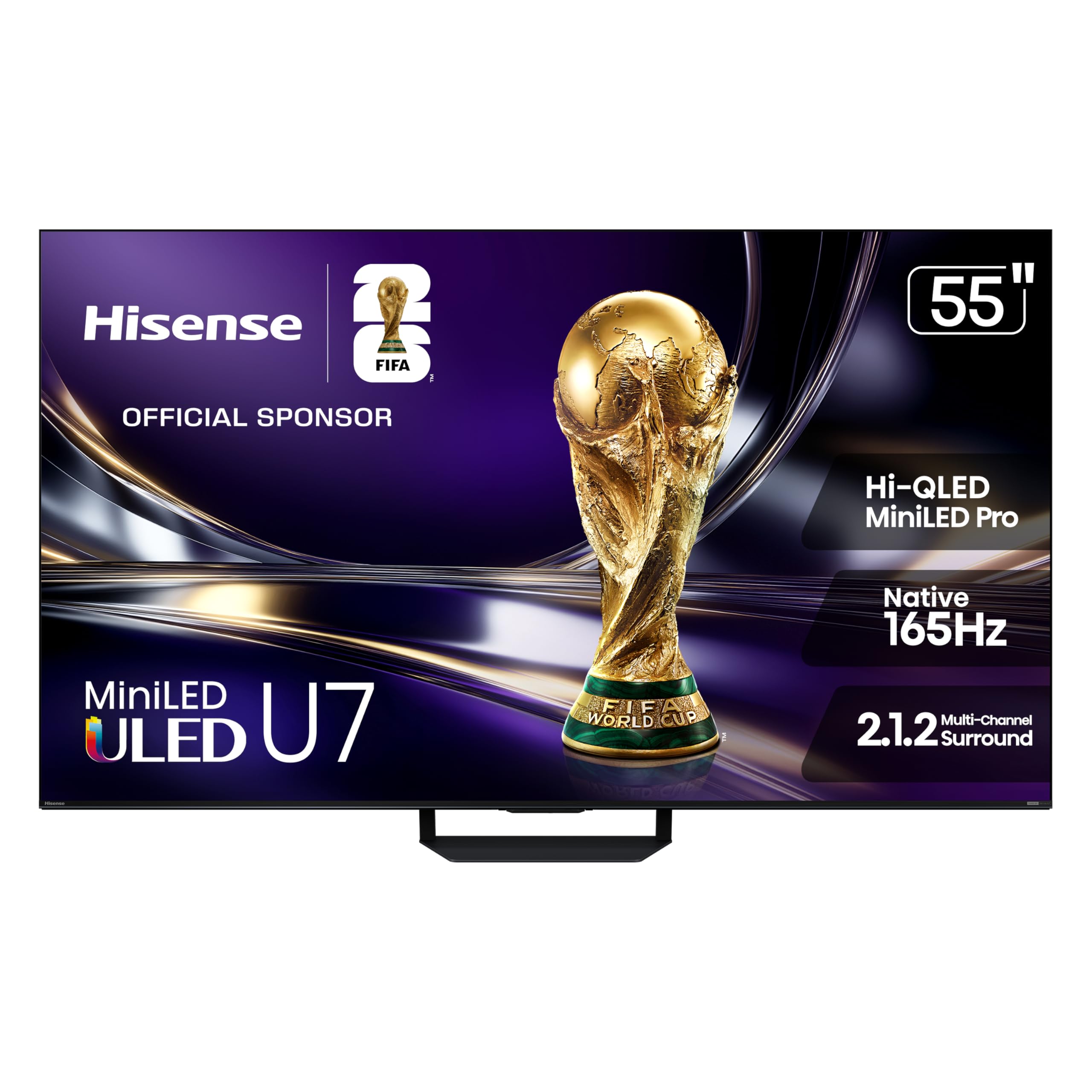
The Hisense U7 is built for speed freaks. With a native 165Hz refresh rate and VRR that goes up to 330Hz, this panel handles the fastest sports content — think Formula 1 pit exits or NHL slap shots — without a hint of motion blur. The Hi-QLED Mini-LED Pro backlight, coupled with up to 3,000 local dimming zones, delivers a staggering 3,000 nits of peak brightness. This means that even in a sun-drenched living room, the action remains vivid and glare-free.
The anti-reflection layer is genuinely effective, using a dual-layer screen treatment that minimizes mirror-like reflections from windows. The Hi-View AI Engine Pro processor constantly analyzes the scene, adjusting color and contrast on the fly. For sports broadcast, this results in consistently vibrant team colors and deep shadows in stadium corners. The 2.1.2 channel audio system provides a surprisingly robust soundstage with noticeable bass, reducing the immediate need for a soundbar.
On the gaming side, the native 165Hz panel and FreeSync Premium Pro certification make this a top candidate for sports gamers who need tear-free 4K action. The Google TV interface is snappy and intuitive. The main trade-off is that the premium brightness and refresh rate come at a higher cost compared to entry-level QLEDs, but for the performance, it is a strong value proposition for serious sports fans.
Why it’s great
- Native 165Hz refresh rate is the fastest in class
- High brightness handles bright rooms effortlessly
Good to know
- Audio output settings can be less intuitive
- Premium pricing for the high-end specs
3. LG 55″ OLED B5 (2025)

OLED is the undisputed king of contrast, and the LG B5 delivers that signature Perfect Black technology where pixels turn off completely, creating infinite contrast. For sports with dark uniforms against bright floodlights — like a night game or indoor arena — the OLED panel renders shadow details that Mini-LEDs can struggle to match. The 120Hz refresh rate ensures smooth motion, while the 0.1ms response time eliminates any ghosting on fast-moving pucks and balls.
The Alpha 8 AI Gen2 processor optimizes picture settings in real-time, adjusting brightness and color based on what you are watching. Dolby Vision IQ reads the ambient light in the room and adapts the HDR tone mapping, keeping the image looking natural whether you are watching in a dark den or a bright living room. For gamers, the four HDMI 2.1 ports with G-Sync and FreeSync Premium support make it a plug-and-play companion for next-gen consoles.
The trade-off is peak brightness — at around 800 nits, it will not compete with Mini-LEDs in a very bright room with direct sunlight. Additionally, the risk of burn-in from static scoreboard logos is a long-term consideration, though modern OLEDs have robust pixel-shift and logo-dimming features. If you control the lighting in your room and crave the deepest blacks, this remains a stellar pick for immersive sports viewing.
Why it’s great
- Perfect black levels for infinite contrast
- 0.1ms response time eliminates ghosting
Good to know
- Lower peak brightness than Mini-LEDs
- Burn-in risk with static scoreboards long term
4. Samsung Neo QLED QN70F (2025)

The Samsung QN70F leverages the NQ4 AI Gen2 processor with 20 neural networks to upscale low-bitrate sports streams to near-4K quality. The Quantum Matrix Technology with Mini-LED ensures high brightness and precise contrast, making the green of a baseball field pop with realistic saturation. The Motion Xcelerator 144Hz feature smooths out panning shots across the field, reducing the stutter that plagues lower-end panels during fast camera movements.
Samsung Vision AI intelligently analyzes scene content to adjust backlight and color, giving you a picture that feels alive without needing manual tuning. The slim design and Samsung Tizen OS provide access to thousands of free channels via Samsung TV Plus, including live sports content. The anti-glare layer is effective, but does not match the heavy-duty anti-reflection treatment found on the Hisense U7 or Sony BRAVIA.
For gaming, the 144Hz VRR support and Game Mode ensure responsive play. The audio from the built-in speakers is surprisingly full, with clear dialogue even at low volumes. The remote is compact, which takes some getting used to, but the functionality is solid. If you want a well-rounded premium Mini-LED with strong upscaling for sports, this is a compelling mid-premium option.
Why it’s great
- Superb AI upscaling for sports broadcasts
- High brightness with Mini-LED precision
Good to know
- Thin design requires careful handling during setup
- Minor blooming in high-contrast scenes
5. Amazon Ember 55″ Mini-LED
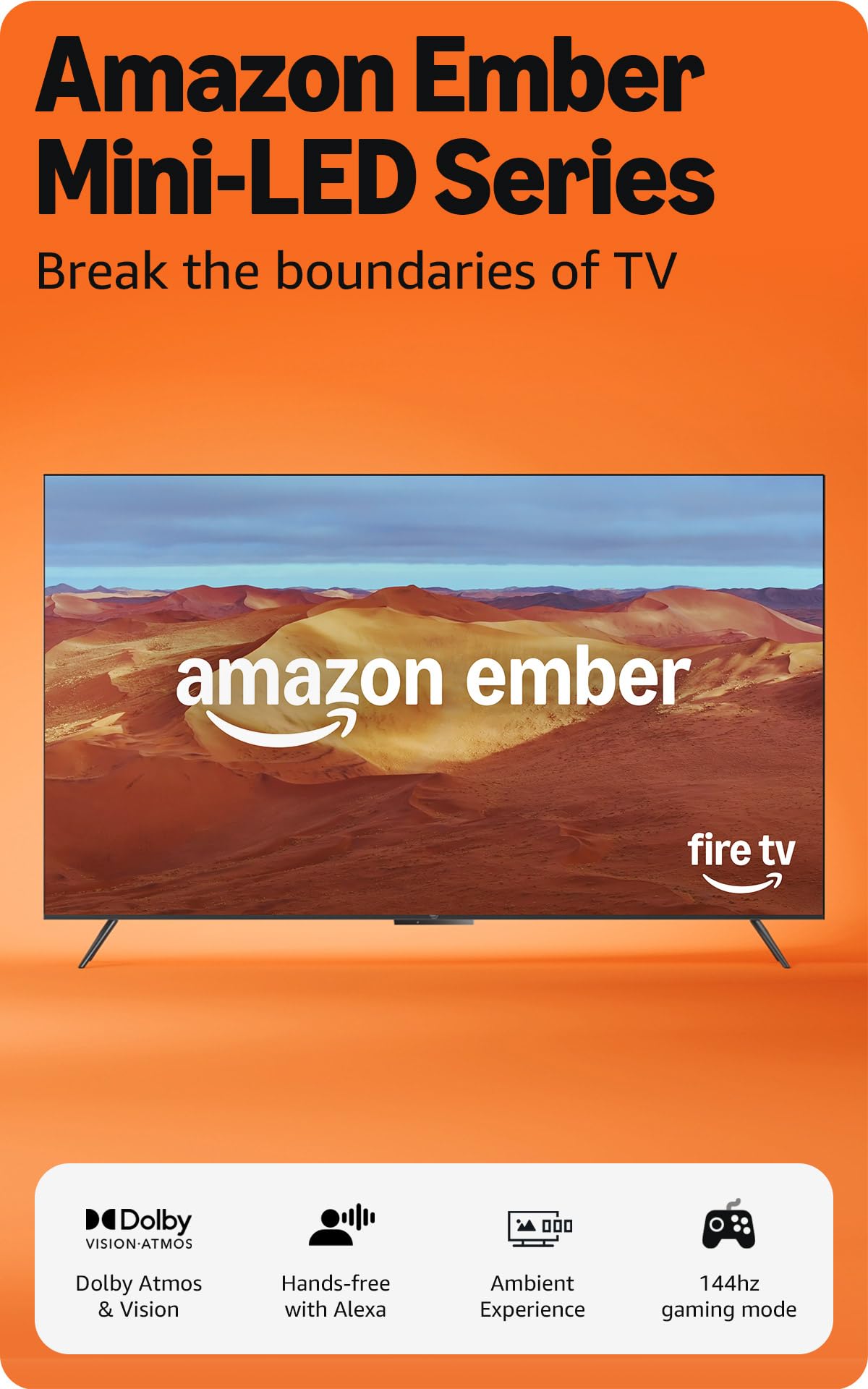
The Amazon Ember brings together 144Hz gaming, Dolby Vision IQ, and 512 local dimming zones in a package that integrates deeply with the Fire TV ecosystem. The Mini-LED display delivers up to 1,400 nits of peak brightness, which is more than enough to cut through glare in a standard living room. The AMD FreeSync Premium Pro certification ensures tear-free motion during fast-cut replays and sports gaming sessions.
The Fire TV Intelligent Picture processor adapts scene-by-scene adjustments, cleaning up noise from live broadcasts. The new Alexa+ experience allows hands-free control, including asking Alexa to find specific games or players without needing the remote. The built-in Omnisense technology wakes the screen when you enter the room, showing artwork or turning on to the last channel instantly.
The 2.1 Dolby Atmos audio system produces clear dialogue and decent bass, making a soundbar optional for casual viewing. The main criticism is that the Fire TV interface can feel cluttered with ads and recommendations, and some users report periodic lag if too many apps are running. For households already invested in Amazon’s ecosystem, this is a strong, feature-rich choice for sports and gaming.
Why it’s great
- Excellent Mini-LED brightness and contrast
- Seamless Alexa integration for hands-free control
Good to know
- Fire TV interface can feel ad-heavy
- Periodic software lag reported
6. Roku Pro Series 55″
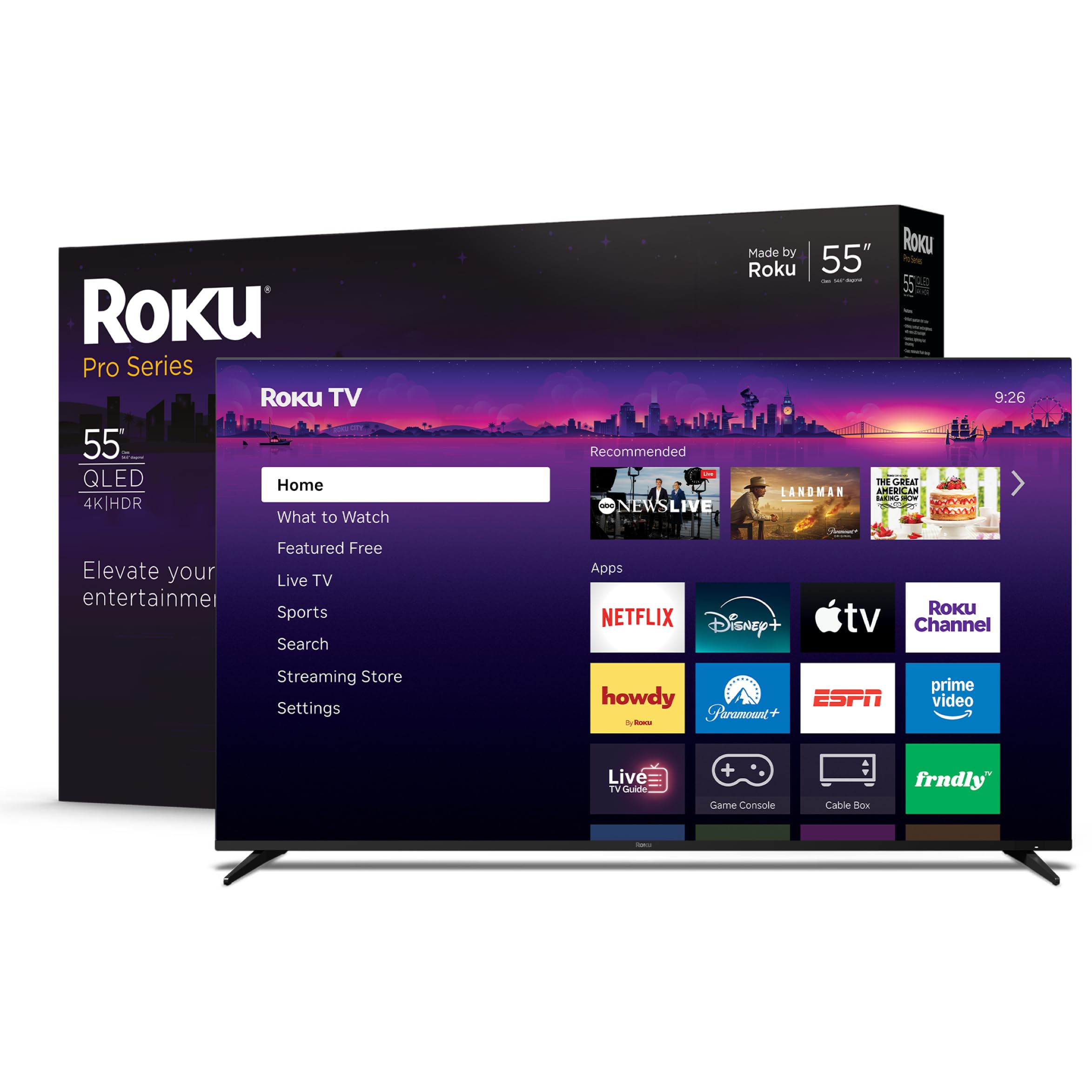
The Roku Pro Series is designed for those who want a premium picture without the learning curve of a complex smart TV OS. The 120Hz native panel, combined with Dolby Vision IQ and HDR10+, delivers smooth, vibrant sports content right out of the box. The Roku Smart Picture Max AI engine cleans up incoming signals and optimizes color per scene, which is especially helpful for older 1080i broadcasts that look soft on other panels.
Gamers will appreciate the FreeSync Premium Pro and VRR support, which ensures no screen tearing during fast-paced action games or sports sims. The side-firing speakers provide a wider soundstage than typical downward-firing units, creating a more immersive atmosphere. The rechargeable voice remote with backlit buttons and lost remote finder is a thoughtful addition for late-night viewing.
The minimalist design sits flush against the wall when wall-mounted, maintaining a clean aesthetic. The Roku OS is famously simple and free of bloatware compared to Google TV. The only caveat is that the eARC audio sync can occasionally drift with external soundbars, though firmware updates have addressed this for most users. For pure simplicity and strong motion handling, this is a top contender.
Why it’s great
- Clean, bloatware-free Roku OS
- Excellent motion handling with 120Hz panel
Good to know
- eARC audio sync can drift with some soundbars
- Delivery delays reported in some regions
7. Roku Plus Series 55″ Mini-LED
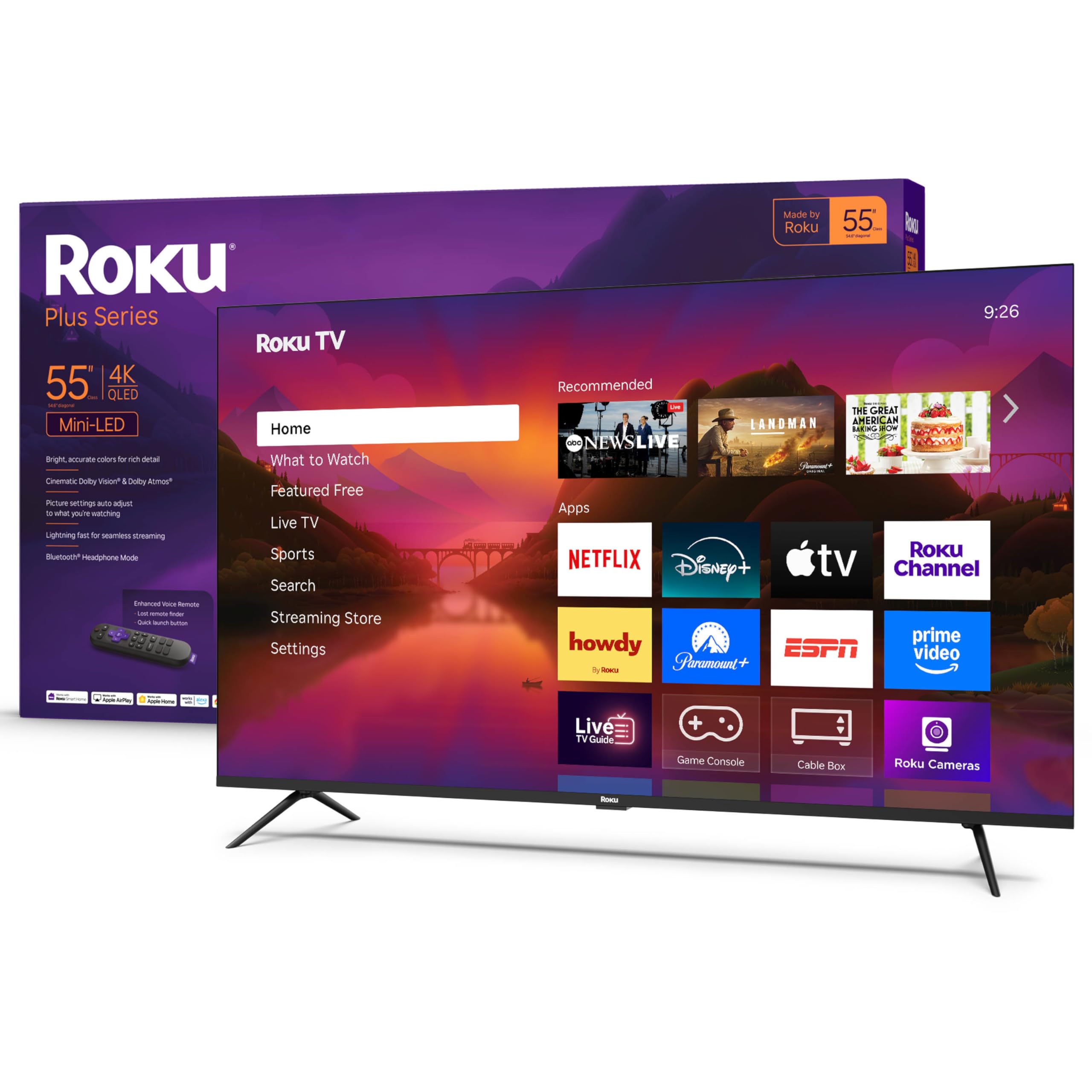
The Roku Plus Series brings Mini-LED backlighting and QLED color to a more accessible price tier. The Dolby Vision HDR support produces vibrant highlights, while the AI-powered Roku Smart Picture Max cleans up noise from standard-definition sports feeds. The 4K panel may not hit 120Hz (it likely runs at 60Hz), but the motion processing is competent for casual sports watching without heavy fast-panning action.
The built-in speakers feature a subwoofer, delivering deeper bass than most budget TVs, which enhances the roar of a stadium crowd. The Roku OS remains one of the fastest and easiest to navigate, with automatic software updates and access to 500+ free TV channels, including live local sports in many markets. The Bluetooth headphone mode is a great feature for late-night games without disturbing others.
The USB port has a quirk: bias lights connected to it may stay on for approximately 10 minutes after the TV shuts off. This is a minor nuisance for those using ambient lighting. Overall, for buyers on a tighter budget who want the benefits of Mini-LED contrast and a simple interface, this represents the best value in the lower price tier.
Why it’s great
- Mini-LED contrast at a budget-friendly price
- Excellent sound with built-in subwoofer
Good to know
- USB port keeps bias lights on after shutdown
- 60Hz panel, lacks high refresh rate for fast sports
8. TCL QM7K Mini-LED (55QM7K)
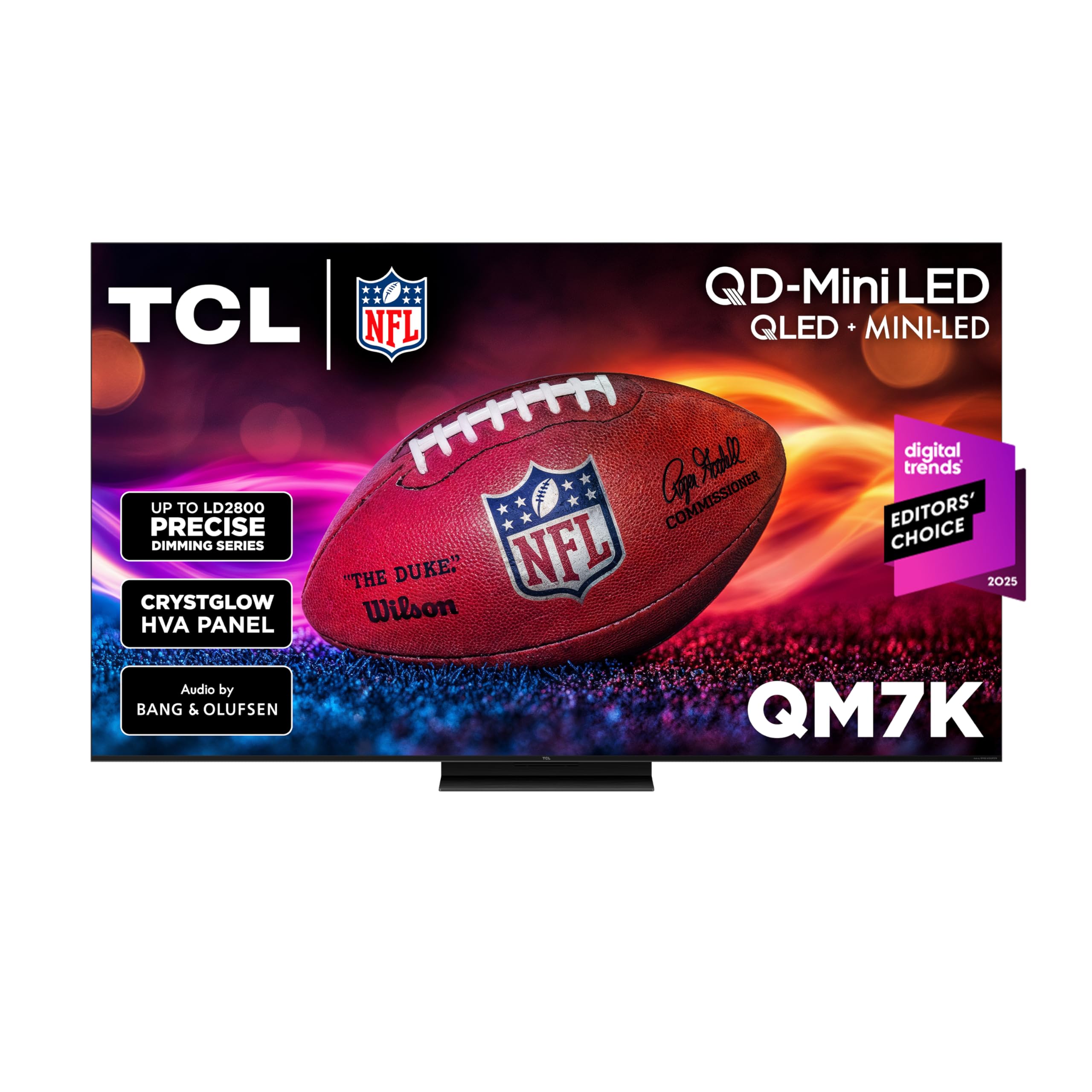
The TCL QM7K is a beast of local dimming, featuring up to 2,500 precisely controlled zones (LD2500 series). This allows the TV to produce near-OLED black levels on a Mini-LED platform while maintaining high brightness. The CrystGlow HVA panel blocks reflections effectively, keeping the image crisp even with windows behind you. The 120Hz to 144Hz variable refresh rate ensures fluid motion for sports and gaming alike.
The Onkyo audio system (co-engineered with Bang & Olufsen) provides a surprisingly full sound profile with clear mids and a noticeable low end, reducing the immediate need for external speakers. The TCL Halo Control System uses advanced algorithms to minimize haloing around bright objects, a common issue with dense dimming arrays. For sports, this means bright score ticks do not bleed into dark sections of the screen.
The Google TV interface is responsive but comes with some pre-installed apps. The included remote feels a bit cheap compared to the TV’s build quality, but it is functional with a backlit option. For those who prioritize contrast and deep blacks without the burn-in risk of OLED, the QM7K is a powerful mid-premium choice.
Why it’s great
- 2500 dimming zones for pristine black levels
- Excellent anti-reflection coating
Good to know
- Remote feels lower quality than the TV
- Google TV includes some pre-installed apps
9. iFFALCON 55U85 Mini-LED
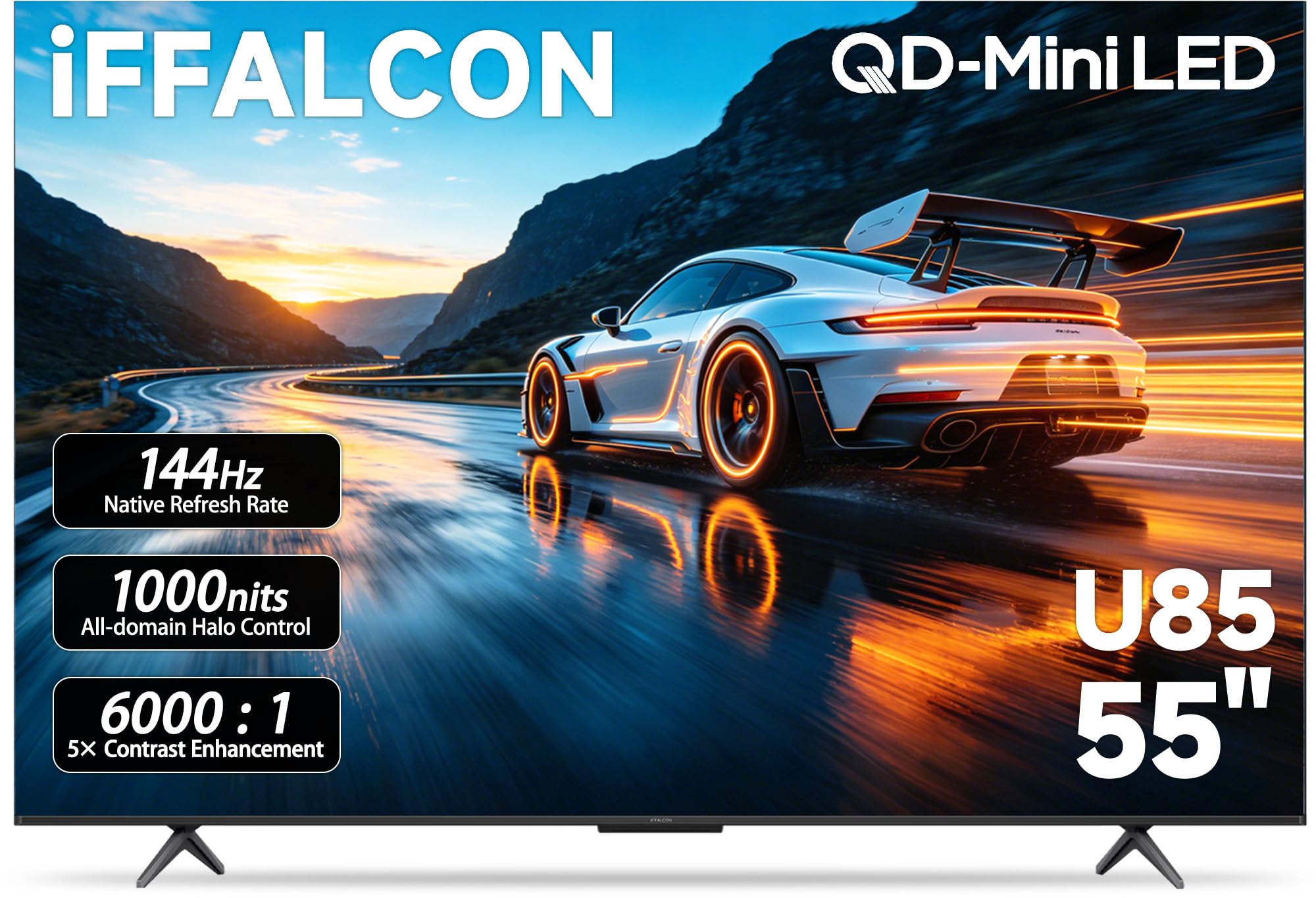
The iFFALCON 55U85 is a dark horse that punches well above its price class, offering four HDMI 2.1 ports — a rarity even on some premium models. The native 144Hz panel with VRR up to 288Hz and FreeSync Premium Pro ensures silky-smooth motion for both sports and competitive gaming. The Mini-LED backlight delivers a 6,000:1 contrast ratio with local dimming, producing deep blacks and bright highlights without haloing.
The 50W 2.1-channel sound system (with a dedicated woofer) provides room-filling audio, rivaling entry-level soundbars. The built-in hotel mode is a bonus for those using the TV in an Airbnb or commercial setting, allowing menu locking and remote management. The Google TV interface is responsive and offers access to all major streaming apps. The IP/IR control support makes it a flexible choice for smart home integration.
Some reviews note that the peak brightness could be higher for very bright rooms, but for most living rooms, it is more than adequate. The build quality feels robust, with a metal stand. If you need multiple HDMI 2.1 inputs for a PS5, Xbox, and PC while also watching sports, this is arguably the best value proposition on the list.
Why it’s great
- Four HDMI 2.1 ports for multi-console setups
- Excellent value with high refresh rate
Good to know
- Not the highest peak brightness
- Lesser-known brand may have limited support
10. Hisense CanvasTV S7N (55S7N)
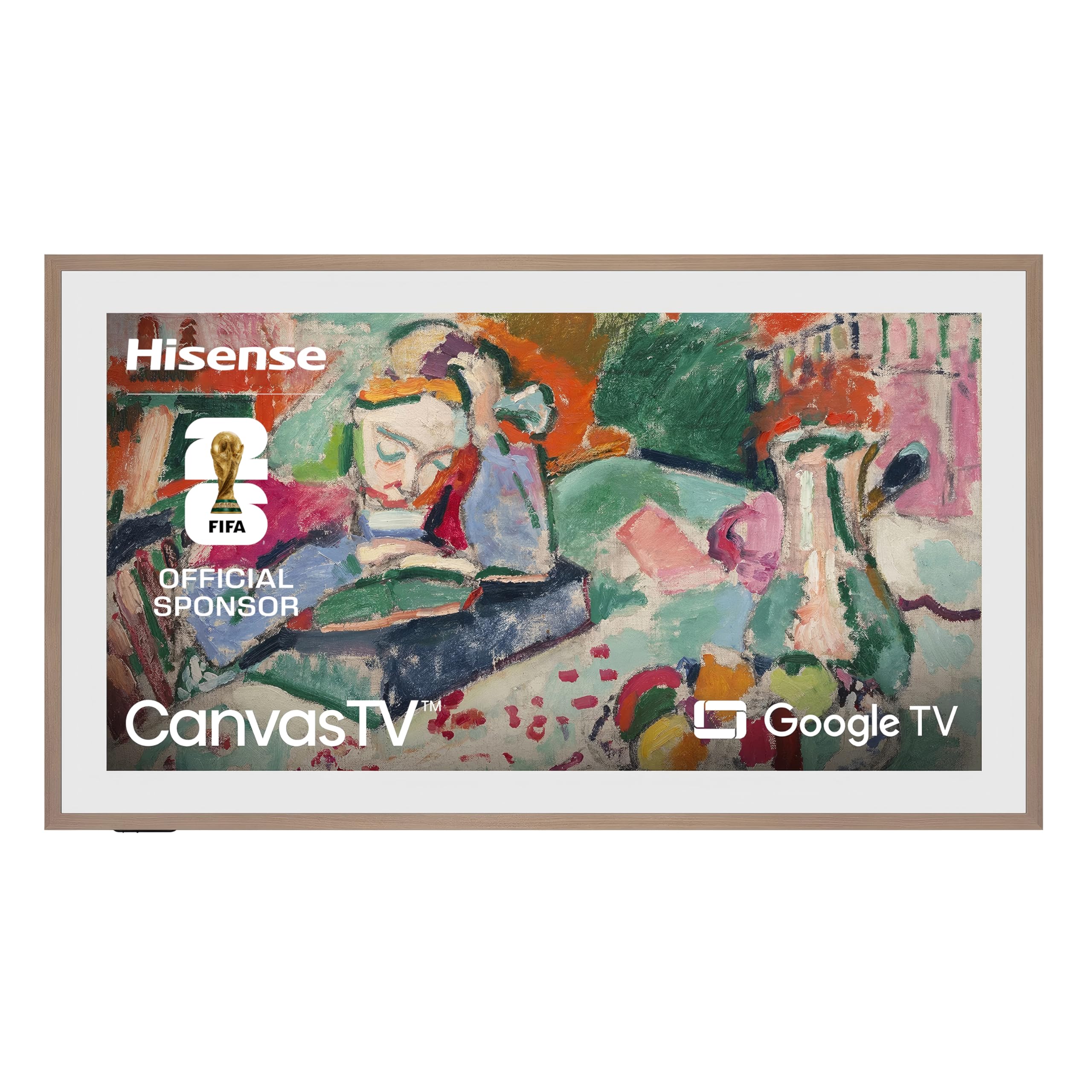
The Hisense CanvasTV S7N is a hybrid design TV that doubles as a digital art frame, but it does not compromise on sports performance. The 4K QLED panel with Quantum Dot technology produces over a billion colors, and the Hi-Matte display minimizes glare to a degree that standard matte TVs cannot match. The 144Hz refresh rate ensures smooth motion for sports, even at this unique price intersection.
Art Mode is the headline feature, but the TV still needs to function well as a primary screen. The included ultra-slim wall mount and magnetic teak frame make it look like a framed painting on the wall. The built-in speakers are adequate for casual viewing, though a soundbar is recommended for an immersive game-day experience. The Google TV interface handles streaming smoothly.
The trade-off is that the Hi-Matte coating, while great for glare reduction, slightly softens the perceived sharpness compared to glossy panels. The fixed wall mount means recessed power and HDMI outlets are needed for a truly flush finish. If your priority is a living room aesthetic that blends art with functionality, and you want a TV that can handle Sunday football, this is a compelling niche choice.
Why it’s great
- Excellent anti-glare Hi-Matte display
- Unique art mode design with included frame
Good to know
- Hi-Matte coating slightly softens sharpness
- Wall mount requires recessed outlets for flush look
11. TCL Q7 QLED (55Q750G)

The TCL Q7 is the entry-level bridge to true 120Hz sports viewing. It features a native 120Hz panel with a Game Accelerator that pushes VRR to 240Hz for compatible titles. The Full Array Pro Local Dimming with over 200 zones delivers deeper black levels than similarly priced edge-lit TVs, reducing blooming around score graphics. The QLED Quantum Dot technology ensures vibrant, accurate colors for team uniforms.
The Motion Rate 240, combined with MEMC frame insertion, smooths out fast camera pans better than any 60Hz TV. The Google TV platform is responsive, though it does come with some ad-supported recommendations. The included voice remote is functional, but the TV is best controlled via a streaming box if you prefer a clutter-free interface.
The main compromises are the lower brightness compared to Mini-LED models — it will struggle in very bright rooms — and the speakers are merely average, requiring a soundbar for an immersive audio experience. For the price, however, this is one of the cheapest ways to get a genuine 120Hz panel with decent local dimming, making it an excellent budget pick for sports.
Why it’s great
- True native 120Hz at an accessible price
- Full Array Local Dimming with 200+ zones
Good to know
- Lower peak brightness for bright rooms
- Built-in speakers are just average
FAQ
Does 60Hz ruin sports viewing?
Is OLED or Mini-LED better for bright room sports?
What does HDMI 2.1 matter for sports?
Final Thoughts: The Verdict
For most users, the best 55 inch tv for sports winner is the Sony BRAVIA 5 because its XR processor upscales low-res broadcasts better than any competitor, and the Mini-LED panel delivers both brightness and deep blacks without blooming. If you want the fastest possible motion handling, grab the Hisense U7 with its 165Hz native panel. And for the best value that still delivers a true 120Hz experience and solid local dimming, nothing beats the TCL Q7 QLED.

Mo Maruf
I created WellFizz to bridge the gap between vague wellness advice and actionable solutions. My mission is simple: to decode the research and give you practical tools you can actually use.
Beyond the data, I am a passionate traveler. I believe that stepping away from the screen to explore new environments is essential for mental clarity and physical vitality.