Our readers keep the lights on and my smoothie glass nicely filled. As an Amazon Associate, I earn from qualifying purchases.
A 5-year journal is a commitment to a daily pause — a single line that captures a thought, a milestone, or a moment you would otherwise forget. The format is deceptively simple, but finding a notebook that survives five years of daily use without falling apart, bleeding ink, or running out of room requires more attention to binding and paper weight than most buyers expect.
I’m Mohammad Maruf — the founder and writer behind WellFizz. I’ve pored over hundreds of customer reviews and torn-down spec sheets on paper thickness, binding durability, and page layout to build a reliable guide for this exact category.
After analyzing dozens of models, I have narrowed the field down to the five notebooks that will genuinely last the full half-decade span. Whether you need a guided gratitude log or a blank canvas for daily reflection, these picks define the best 5 year journal for different habits and budgets.
How To Choose The Best 5 Year Journal
A five-year journal is a long-term relationship with a notebook. The wrong choice means frayed ribbons, cracked spines, or ink bleed that ruins the following year’s entry. Here are the three factors that separate a keepsake from a regret.
Paper Weight Matters More Than You Think
Standard notebook paper sits around 80 GSM. For a 5-year journal where both sides of the page carry writing, you want 120 GSM or higher. Thinner paper allows ghosting and bleed-through from gel pens and markers, which can obscure the entries from previous years. Premium models use 160 GSM paper that feels like cardstock and eliminates bleed-through entirely even with fountain pens.
Binding Must Survive Five Years of Daily Opening
A journal that must be forced flat will develop a cracked spine within months. Look for lay-flat binding — sewn signatures or a flexible glue bind that lets the book rest open without pressure. Hardcover construction protects the pages from being crushed in a bag, and an elastic closure band keeps the book closed when you are not writing.
Page Layout Should Match Your Habit
The classic 5-year layout gives you five lines per page, one for each year, with the same date. Some buyers prefer six or more lines for longer entries, while others appreciate exactly one line to reduce pressure. Dated layouts require writing on the correct day, which can cause guilt when you miss entries. Undated layouts offer flexibility but require self-discipline to fill in the date yourself.
Quick Comparison
On smaller screens, swipe sideways to see the full table.
| Model | Category | Best For | Key Spec | Amazon |
|---|---|---|---|---|
| Bright Line Eating 5 Year Journal | Premium | Writers who want bleed-free 160gsm paper | 160 GSM paper weight | Amazon |
| Clever Fox One Line A Day (Aquamarine) | Mid-Range | Daily habit builders who want lay-flat pages | 120 GSM paper, 5.8″ x 8.3″ | Amazon |
| Clever Fox One Line A Day (Forest Green) | Mid-Range | Buyers who want a different color option | 120 GSM paper, 5.8″ x 8.3″ | Amazon |
| BookFactory 5 Year Journal | Premium | Buyers who want a wide 8″ x 10″ page size | 368 pages, 8″ x 10″ | Amazon |
| DESIGNPHIL Midori 5 Year Diary | Entry-Level | Minimalists who want a slim, lightweight book | Soft cover, 1.72 lbs | Amazon |
In‑Depth Reviews
1. Bright Line Eating 5 Year Journal

The Bright Line Eating journal stands apart because of its paper: 160 GSM stock that feels closer to cardstock than typical notebook paper. Fountain pen users and heavy gel-ink writers will find no bleed-through or ghosting even on the densest entries. The vegan leather hardcover looks professional and the binding lays flat without cracking, which matters when you are opening the same page five years in a row.
Two satin ribbon bookmarks allow you to split your place between the current day and a past year entry for comparison. The expandable back pocket stores ticket stubs or photos, turning the journal into a true time capsule. At this tier, the paper quality alone justifies the step up from budget-friendly models.
One minor drawback is the branded logo on the cover, which some buyers feel limits gifting appeal. The entry spaces are intentionally small — roughly three lines per day — which encourages concise writing but may feel cramped for verbose record-keepers. For daily, low-pressure journaling, this is the most durable option tested.
Why it’s great
- 160 GSM paper eliminates ghosting and bleed-through
- Two ribbon bookmarks for easy cross-year reference
- Expandable back pocket for keepsakes and photos
Good to know
- Brand logo on cover may feel less neutral for gifting
- Small entry areas favor short daily summaries
2. Clever Fox One Line A Day Journal (Aquamarine)
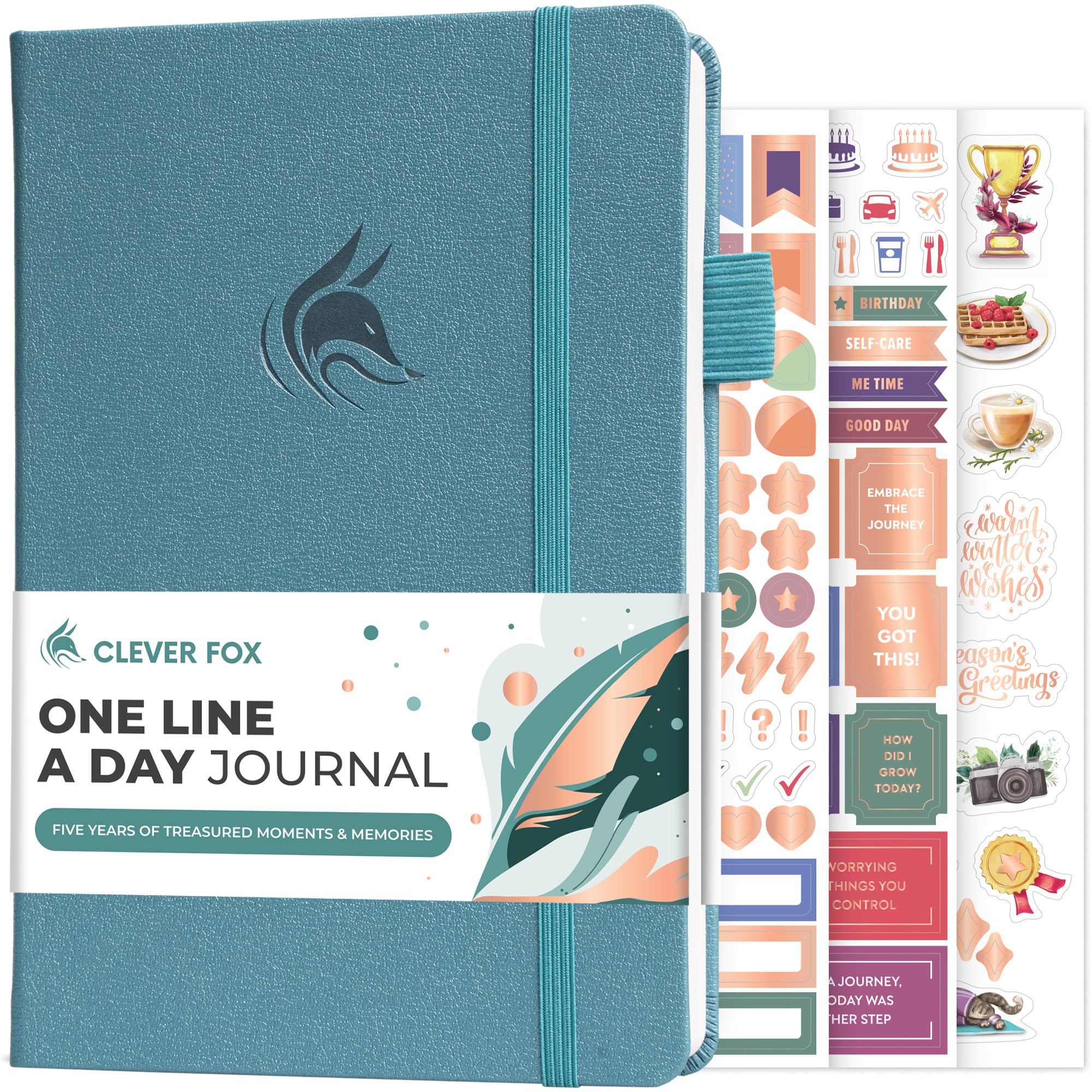
The Clever Fox journal strikes the strongest balance between quality and everyday affordability. The 120 GSM paper is thick enough to prevent ink bleed from ballpoint and most gel pens, though fountain pen users may see slight ghosting. The faux leather hardcover comes in several colors — the aquamarine version has a calming, modern feel that fits desk or bedside use.
Lay-flat binding is the standout feature at this tier. The book opens completely flat without needing weights on the pages, making one-handed writing comfortable. The included stickers and elastic pen loop add practical extras that improve the daily experience.
The undated layout means you never feel behind if you skip a week, which is a psychological advantage for habit-building. Some users have noted that while the paper is thick, it is not fully bleed-proof with alcohol markers. For the price, however, the build quality and thoughtful design make this the safest recommendation for most buyers.
Why it’s great
- Lay-flat binding allows comfortable one-handed writing
- Six lines per day give more space than standard five-line layouts
- Undated pages eliminate guilt from missed days
Good to know
- 120 GSM paper may show ghosting with wet fountain pens
- Not fully bleed-proof with alcohol-based markers
3. Clever Fox One Line A Day Journal (Forest Green)

This Forest Green variant is the same excellent notebook as the Aquamarine, offered for buyers who prefer a deeper, earthier aesthetic. The build quality is identical: 120 GSM paper with minimal ghosting, sewn lay-flat binding, and a durable faux leather cover that resists scuffs. The green cover looks especially refined on a bookshelf and does not show fingerprints as readily as lighter colors.
Practical details remain unchanged — six writing lines per day, an elastic closure band, a ribbon bookmark, and a pen loop. The 5.8 by 8.3 inch size fits into most bags without adding bulk. Customer reviews consistently praise the generous entry space compared to other 5-year journals that cram five years into smaller pages. Users report the paper holds up well to daily ballpoint and gel pen use.
The only reason to choose this over the Aquamarine is color preference. Both share the same 60-day money-back guarantee. If you are buying for a household with multiple journals, the two colors make it easy to tell them apart at a glance. For a single purchase, pick the color that best matches your workspace or nightstand.
Why it’s great
- Same high-quality build and specs as the Aquamarine version
- Forest green cover hides wear and stains better than light colors
- Lay-flat binding makes daily writing effortless
Good to know
- Identical to Aquamarine — only the color differs
- Not fully bleed-proof for fountain pens
4. BookFactory 5 Year Journal

The BookFactory journal takes a different approach with its large 8 by 10 inch format — meaning substantially more space per entry than the standard A5 size. Each page provides roughly 6.5 lines for writing, which allows for two full sentences per row with a fine-tip pen. The soft light wood finish cover gives the journal a natural, tactile feel that stands out from faux leather competitors.
Proudly made in the USA by a veteran-owned business, this journal uses thick, bleed-resistant paper that handles most pens well. The binding is sturdy enough to survive daily opening over five years, though some users have noted the ribbon bookmark can fray slightly over time. The paper is plain white with a ruling type of plain — meaning no printed prompts or lines — making it suitable for those who want complete freedom in their daily entries.
The main trade-off is portability. At nearly 1.7 pounds and covering a larger footprint, this journal is better suited for desk use than carrying in a bag daily. The wood cover is heavier and more rigid than leather alternatives, which adds durability but reduces flexibility. For home-based journalers who value writing space above all else, this is the strongest option.
Why it’s great
- Large 8″ x 10″ pages provide generous writing space per entry
- Unique wood-grain cover is durable and visually distinctive
- Made in the USA by a veteran-owned business
Good to know
- Heavier and bulkier than standard size journals — not ideal for daily carry
- Ribbon bookmark may fray over the five-year life
5. DESIGNPHIL Midori 5 Year Diary
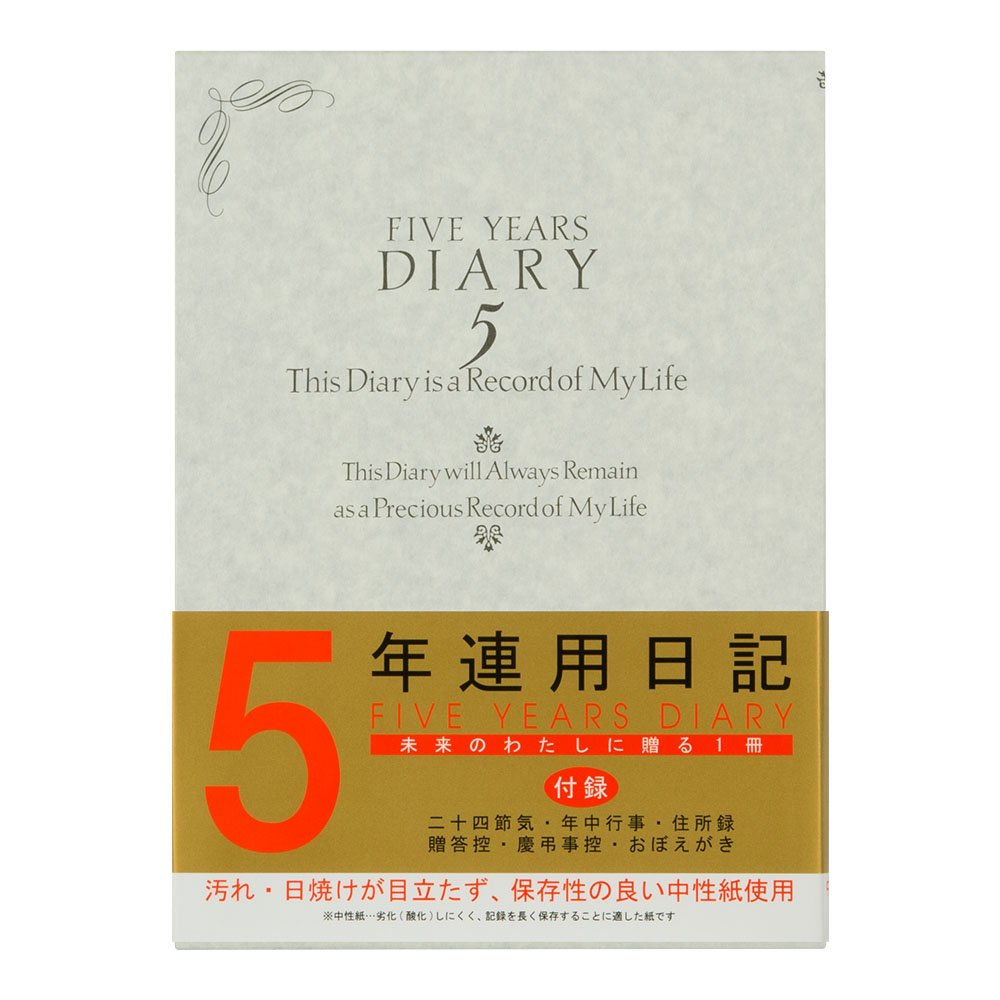
The Midori 5 Year Diary is the entry-level option that relies on a minimalist Japanese design philosophy. The soft paper cover and compact 5 by 8 inch size make it the lightest journal in this guide at just 1.72 pounds total — easy to slip into a work bag or keep on a nightstand. The paper has a warm cream tone that Japanese stationery enthusiasts love, with a smooth texture that takes fountain pen ink beautifully.
Each page is pre-dated with the month and day, and includes a small section for recording weather and temperature — a charming detail that adds context to future reflections. The binding is a glued soft cover, which means it will not lay completely flat unless you gently break the spine. The 366 pages cover leap years, and the book is thin enough that a five-year accumulation of entries still feels manageable.
The trade-offs are significant for some buyers. The soft cover offers less protection than a hardcover, and the paper weight is lighter than 120 GSM models, meaning ghosting can occur with broader nibs. The entry space per year is also smaller — roughly three lines — which works for one line a day but feels tight for anyone who writes more. This journal rewards disciplined minimalists who value portability and paper feel over robustness.
Why it’s great
- Lightweight and slim — easiest to carry or store on a shelf
- Warm cream paper with excellent fountain pen feel
- Pre-dated pages with weather/temperature fields add context
Good to know
- Soft cover offers less long-term protection than hardcover options
- Small entry area restricts verbose writers
FAQ
What GSM paper do I need to prevent bleed-through in a 5-year journal?
Dated or undated — which layout is better for a five-year journal?
How many lines per page do I need for a 5-year journal?
Final Thoughts: The Verdict
For most users, the best 5 year journal winner is the Clever Fox One Line A Day (Aquamarine) because it balances 120 GSM paper, lay-flat binding, and an undated layout at a price that rewards daily habit-builders without the premium tax. If you want bleed-proof 160 GSM paper and dual bookmarks for cross-year comparison, grab the Bright Line Eating Journal. And for maximalists who need room for full paragraphs each day, nothing beats the spacious pages of the BookFactory 5 Year Journal.

Mo Maruf
I created WellFizz to bridge the gap between vague wellness advice and actionable solutions. My mission is simple: to decode the research and give you practical tools you can actually use.
Beyond the data, I am a passionate traveler. I believe that stepping away from the screen to explore new environments is essential for mental clarity and physical vitality.