Our readers keep the lights on and my smoothie glass nicely filled. As an Amazon Associate, I earn from qualifying purchases.
Choosing the right chapter books for your fourth grader is more than just picking a story—it’s about finding a key that unlocks their imagination, strengthens their reading confidence, and helps them navigate the complex world of friendships and feelings. The perfect book can turn a reluctant reader into an avid one, making this selection process incredibly important.
I’m Mohammad Maruf — the founder and writer behind WellFizz. For over 15 years, I’ve specialized in deep market research, analyzing specifications and consumer data to identify what truly makes a product stand out in crowded categories like children’s literature.
This guide is the result of that analysis, synthesizing thousands of data points from reviews, educator recommendations, and literary awards to bring you a strategically curated list. Our goal is to move beyond simple lists and help you match your child’s unique interests and reading level with a title that will resonate deeply, ensuring the journey to find the best 4th grade books is both successful and straightforward.
How To Choose The Best 4Th Grade Books
Fourth grade is a pivotal year for reading. Kids are transitioning from learning-to-read to reading-to-learn, and their books need to reflect that growth. The right selection will challenge them just enough, captivate their interest, and provide a safe space to explore bigger ideas. Here’s what to focus on.
Consider Reading Level and Engagement
Look for books with a Lexile measure or Guided Reading Level that aligns with your child’s current ability, but don’t be rigid. A gripping story can motivate a reader to tackle slightly more complex vocabulary. Pay attention to chapter length—shorter chapters can make a thicker book feel less daunting and provide natural stopping points, which is great for building stamina and a sense of accomplishment.
Evaluate Themes and Emotional Weight
Fourth graders are developing a strong sense of justice and empathy. Books that explore themes like friendship, courage, family, perseverance, and kindness are incredibly resonant. Historical fiction can introduce complex history in an accessible way, while fantasy can explore moral dilemmas in a safe, metaphorical space. It’s okay for stories to have moments of sadness or conflict; these are opportunities for meaningful discussion.
Prioritize Award Winners and Modern Classics
Newbery Medal and Honor books are an excellent starting point, as they represent distinguished contributions to children’s literature. These books are typically well-written, thought-provoking, and have stood up to rigorous scrutiny. Balancing these with popular modern series or standalone hits ensures your child experiences both literary quality and the joy of reading what their peers are talking about.
Quick Comparison
On smaller screens, swipe sideways to see the full table.
| Model | Type | Best For | Key Feature | Amazon |
|---|---|---|---|---|
| Wonder | Contemporary | Multiple narrators, profound theme | Amazon | |
| The Girl Who Drank the Moon | Fantasy | Newbery Winner, rich world-building | Amazon | |
| Holes | Adventure/Mystery | Interwoven plots, clever humor | Amazon | |
| Island of the Blue Dolphins | Historical Survival | Based on a true story, survival details | Amazon | |
| The Wednesday Wars | Historical/Coming-of-Age | Newbery Honor, Shakespeare woven in | Amazon | |
| Because of Winn-Dixie | Heartwarming Contemporary | Uplifting story of community | Amazon | |
| Pax | Animal Story | Dual perspective (boy & fox) | Amazon | |
| Crenshaw | Magical Realism | Imaginary friend tackles real issues | Amazon | |
| The One and Only Ivan | Animal Narrative | Based on a true story, unique voice | Amazon | |
| Number the Stars | Historical Fiction | Newbery Winner, accessible perspective | Amazon | |
| The Wild Robot | Sci-Fi Adventure | Short chapters, engaging illustrations | Amazon |
In‑Depth Reviews
1. Wonder

R.J. Palacio’s “Wonder” is more than a book; it’s a cultural touchstone that belongs on every fourth grader’s shelf. It tells the story of August Pullman, a boy with a facial difference, as he navigates the treacherous waters of starting fifth grade at a mainstream school for the first time. The narrative genius lies in its structure, shifting between the perspectives of Auggie, his sister, his friends, and others, which masterfully builds a 360-degree view of how kindness and cruelty ripple through a community.
The book handles difficult themes of bullying, friendship, and acceptance with a remarkable balance of honesty and hope. It never feels preachy, instead allowing readers to draw their own conclusions by living inside different characters’ heads. This makes the lessons about choosing kindness profoundly personal and sticky. The writing is accessible and engaging, with humor and heart that will have readers laughing one moment and deeply moved the next.
For fourth graders, “Wonder” provides a crucial framework for discussing empathy, difference, and the impact of their choices. It’s frequently used in classrooms because it sparks incredible discussions and has the power to genuinely shift a group’s dynamic. As a premium option, it represents a significant literary and emotional investment in your child’s development as both a reader and a person.
Why it’s great
- Unparalleled tool for teaching empathy and perspective-taking.
- Engaging, multi-narrator structure that keeps the story dynamic.
- Addresses real-world school dynamics with sensitivity and hope.
- Has sparked a global movement encouraging kindness.
Good to know
- Deals directly with bullying and emotional cruelty, which may require guidance for sensitive readers.
- Some pop-culture references may date the book slightly for future readers.
2. The Girl Who Drank the Moon

Kelly Barnhill’s Newbery Medal-winning fantasy is a masterclass in lush, poetic writing for middle-grade readers. The story revolves around a kind witch named Xan, a magical child named Luna, and a sorrowful town that sacrifices a baby each year to a witch they believe is evil. This is sophisticated fantasy that trusts its young readers with complex themes of grief, hope, tyranny, and the true nature of magic.
The world-building is exceptional, creating a setting that feels both wondrous and tangible. Barnhill populates it with memorable characters, including a perfectly tiny dragon and a philosophical swamp monster, who provide both humor and wisdom. The plot is meticulously woven, connecting the lives of characters across years in a way that feels both surprising and inevitable, rewarding attentive readers.
This is a perfect pick for the fourth grader who is ready to move beyond basic fantasy tropes into a more nuanced and beautifully written narrative. It’s a longer book, but the chapters are compelling and the prose is so enchanting that it often doesn’t feel like a challenge. It demonstrates that children’s literature can be profound, artistic, and deeply moving, all while delivering a cracking good story.
Why it’s great
- Exquisitely written with lyrical, memorable prose.
- Features a unique and heartwarming cast of magical beings.
- Explores deep themes of sorrow, love, and power in an accessible way.
- Smart, layered plot that respects the reader’s intelligence.
Good to know
- The poetic style and slower initial character building may not hook every reader immediately.
- Themes of parental loss and societal control are central to the plot.
3. Holes

Louis Sachar’s Newbery and National Book Award-winning “Holes” is a brilliant puzzle-box of a novel. It follows Stanley Yelnats, a boy sent to a bizarre desert detention camp where the punishment is digging holes five feet wide and five feet deep. The genius of the book is how it seamlessly stitches together Stanley’s present-day ordeal with the centuries-old curse on his family and the legend of the outlaw Kissin’ Kate Barlow.
The writing is deceptively simple, dry, and hilarious, making it incredibly accessible. Sachar never talks down to his readers, trusting them to make connections between the three seemingly separate storylines. The satisfaction when all the pieces click into place is immense, offering a terrific lesson in how history and fate can interconnect. The themes of friendship, fairness, and digging up the truth are universally resonant.
For fourth graders, especially those who might be wary of “older” classics, “Holes” is a gateway. Its short chapters, constant mystery, and clever humor provide irresistible momentum. It’s a book that makes kids feel smart, as they piece together clues alongside Stanley and his friend Zero. It remains a mid-range staple for its flawless construction and enduring appeal.
Why it’s great
- Ingeniously constructed plot that rewards careful reading.
- Dry, witty humor that appeals to kids and adults alike.
- Explores deep themes of justice and legacy with a light touch.
- Extremely high “re-readability” as you catch new details.
Good to know
- The desert setting and premise can feel a little bleak initially.
- Some minor character names (e.g., Armpit, Barfbag) are juvenile.
4. Island of the Blue Dolphins

Scott O’Dell’s Newbery-winning classic is a powerful story of solitude, resilience, and resourcefulness. Based on the true story of a Native American woman left alone on an island off the California coast for eighteen years, the novel follows the fictional Karana as she learns to survive—building shelter, finding food, crafting weapons, and taming wild animals.
The narrative is quiet and detailed, focusing on the practicalities and emotional reality of Karana’s life. There’s a profound peace and strength in her journey that is deeply compelling. It provides a unique window into a life of total self-reliance and a deep connection with the natural world, which is a fascinating contrast to most children’s modern experiences.
For the thoughtful, patient fourth grader, this book is transformative. It moves at its own pace, offering not frantic action but steady accomplishment. Karana is a phenomenal role model—intelligent, courageous, and compassionate. As a premium offering, this book is a literary heirloom, a story that has inspired generations of readers with its testament to the human spirit.
Why it’s great
- Features one of literature’s most capable and inspiring female protagonists.
- Excellent integration of survival skills and natural history.
- Provides a calm, introspective reading experience.
- Opens discussions about history, indigenous cultures, and solitude.
Good to know
- The pacing is deliberate and descriptive, which some readers may find slow.
- Deals with themes of loss, loneliness, and the death of family members.
5. The Wednesday Wars

Gary Schmidt’s Newbery Honor book is a hilarious and heartfelt coming-of-age story set against the backdrop of the 1967-68 school year. Holling Hoodhood is convinced his teacher hates him because, as the only Presbyterian in class, he’s stuck with her every Wednesday afternoon while his classmates attend religious school. Their forced time together leads to a study of Shakespeare that becomes surprisingly relevant to Holling’s life.
The book’s great strength is its voice. Holling’s narration is witty, observant, and perfectly captures the comic angst of a seventh-grader. Schmidt brilliantly uses Shakespeare’s plays as a lens to explore the larger dramas in Holling’s life: family tension, the Vietnam War, first love, and finding his own path apart from his father’s expectations. The historical setting is woven in seamlessly, making the era accessible.
This is a fantastic choice for a fourth grader with a good sense of humor and an interest in history or language. It demystifies Shakespeare in the best way possible, showing how his themes are eternally human. As a mid-range option, it offers substantial literary value, laughs, and heart in equal measure.
Why it’s great
- Exceptionally funny and authentic narrator’s voice.
- Makes Shakespeare relatable and exciting.
- Skillfully blends personal story with historical events.
- Features a wonderful, evolving student-teacher relationship.
Good to know
- References to 1960s politics and culture may require some explanation.
- The middle-school setting features some minor bullying and family conflict.
6. Because of Winn-Dixie

Kate DiCamillo’s debut novel is a modern classic that radiates warmth and kindness. It tells the story of ten-year-old Opal, who adopts a scruffy, smiling dog she names Winn-Dixie after the supermarket where she finds him. This dog becomes the catalyst for Opal to build a new community in her Florida town, befriending a cast of lovingly eccentric characters who are all dealing with their own loneliness and past hurts.
The prose is simple, clear, and deeply moving. DiCamillo has a gift for creating characters who feel real and flawed yet ultimately connected. The story deals gently with themes of abandonment, grief, and forgiveness, but always with a foundation of hope and the healing power of friendship. It’s a book that makes you feel better about the world.
For the sensitive fourth grader or any child who loves animals, this is a perfect, premium choice. It’s not overly long or complex, but its emotional depth is significant. It beautifully illustrates how one small act of kindness—adopting a dog—can create a ripple effect that mends many hearts, offering a gentle lesson on empathy and community.
Why it’s great
- An overwhelmingly positive and hopeful narrative.
- Celebrates quirky individuals and the making of a chosen family.
- Excellent for animal lovers and sensitive readers.
- Accessible writing with profound emotional payoff.
Good to know
- The plot is more character-driven and episodic than high-action.
- Central theme of a mother’s abandonment may touch a nerve for some children.
7. Pax

Sara Pennypacker’s “Pax” is a poignant and beautifully crafted story about the unbreakable bond between a boy named Peter and his pet fox, Pax. Forced to release Pax into the wild when his father goes to war, Peter is quickly wracked with guilt and embarks on a perilous journey to find him. The chapters alternate between Peter’s difficult trek and Pax’s struggle to survive and understand his new life in the forest.
The dual narrative is exceptionally well-executed, giving readers insight into both the human and animal worlds without anthropomorphizing the fox. The illustrations by Jon Klassen add a layer of stark beauty to the text. The book doesn’t shy away from the harsh realities of war, loss, and nature, making it a deeply felt and emotionally mature read.
This mid-range novel is ideal for the child who is ready to grapple with more complex emotional material. It’s a story about love, letting go, and finding one’s true nature. The journey of both boy and fox is gripping and ultimately transformative, offering a powerful reading experience about responsibility and the cost of attachment.
Why it’s great
- Unique and compelling dual-perspective structure.
- Treats its animal characters with realistic respect.
- Explores themes of war, independence, and healing with grace.
- Stunning, atmospheric illustrations complement the prose.
Good to know
- Contains scenes of animal peril and the impacts of war that are emotionally intense.
- The ending is bittersweet and philosophical, not purely happy.
8. Crenshaw
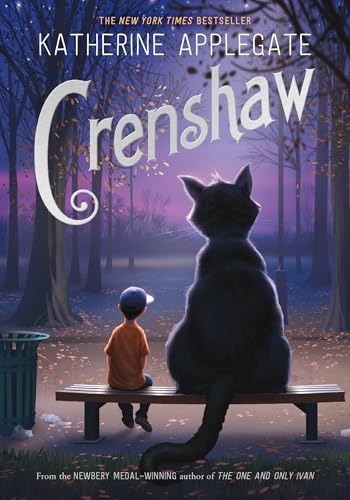
From the author of “The One and Only Ivan,” Katherine Applegate’s “Crenshaw” tackles the hidden issue of childhood homelessness and family financial insecurity with tenderness and a touch of magic. Jackson, a fact-obsessed boy, is stressed because his family might have to live in their minivan again. His stress manifests in the return of his giant, imaginary feline friend from years earlier: the outspoken and wise Crenshaw.
Applegate handles a difficult subject with immense care, making it relatable for kids who may or may not have experienced similar worries. Crenshaw isn’t just a silly imaginary friend; he’s a coping mechanism, a catalyst for honesty, and a source of comfort. The book validates Jackson’s fears while also showing the resilience of families and the importance of asking for help.
This mid-range title is an invaluable resource for building empathy and understanding. For a child worrying about “adult” problems, it can be profoundly reassuring. It provides a gentle way to discuss economic insecurity, reminding readers that imagination and friendship—even the imaginary kind—can be powerful tools for navigating hard times.
Why it’s great
- Addresses an important, often overlooked real-world issue with sensitivity.
- Crenshaw is a hilarious and memorable character who provides levity.
- Empowers kids to speak up about their worries.
- Short chapters and accessible writing make a serious topic approachable.
Good to know
- Centers on family financial crisis and the threat of homelessness, which could be anxiety-provoking.
- The magical element is subtle; it’s more realistic fiction than fantasy.
9. The One and Only Ivan

Katherine Applegate’s Newbery Medal winner is a masterpiece of economy and emotion. Based on the true story of a gorilla who spent 27 years in a shopping mall cage, the novel is told from the first-person perspective of Ivan, a silverback who finds solace in art and his friendships with a stray dog and a baby elephant. The prose is sparse and poetic, with very short chapters that feel like vignettes or thoughts.
This style makes it incredibly accessible for reluctant readers or those building stamina. Despite the simple language, the emotional depth is profound. Ivan’s voice is gentle, observant, and deeply moving as he grapples with memory, captivity, and what it means to promise protection to a friend. It’s an excellent, gentle introduction to themes of animal welfare and captivity.
As a budget-friendly entry point to award-winning literature, it’s unbeatable. The book demonstrates that powerful stories don’t need complex vocabulary or lengthy descriptions. It connects immediately with a reader’s heart, fostering empathy for creatures unlike ourselves and sparking interest in the real animal’s story, which can lead tomeaningful research and discussion.
Why it’s great
- Unique, poetic first-person narrative from an animal’s perspective.
- Short chapters and accessible language are perfect for building confidence.
- Based on a compelling true story that encourages further learning.
- Teaches empathy and advocacy in a gentle, non-preachy way.
Good to know
- Deals with themes of captivity and animal sadness.
- The very short, sparse style may not satisfy readers craving detailed, action-packed plots.
10. Number the Stars

Lois Lowry’s Newbery-winning novel is often a child’s first introduction to the Holocaust, and it handles this weighty subject with remarkable grace and appropriateness. Set in Nazi-occupied Denmark, it follows ten-year-old Annemarie Johansen as her family takes great risks to help her Jewish best friend, Ellen, and her family escape to safety.
The story is told through the lens of childhood, focusing on bravery, friendship, and the quiet heroism of ordinary people. Lowry builds tension masterfully, but the violence and horror of the war are kept off-stage, making it manageable for younger readers while still conveying the stakes and fear. It’s a lesson in history that feels personal and immediate.
This budget-friendly classic is a cornerstone of fourth-grade reading lists for good reason. It provides a framework for discussing one of history’s darkest periods in a way that emphasizes hope, resistance, and moral courage. It’s an essential book for developing historical awareness and empathy, showing children that even the young can play a part in standing up against injustice.
Why it’s great
- Perfectly pitched introduction to WWII and the Holocaust for middle grade.
- Fast-paced and suspenseful, emphasizing courage and cleverness.
- Based on true historical events about the Danish resistance.
- Fosters deep discussions about ethics, friendship, and sacrifice.
Good to know
- Naturally involves themes of danger, persecution, and fear.
- Parents should be prepared to discuss the historical context.
11. The Wild Robot

Peter Brown’s illustrated novel is a phenomenal entry point for reluctant readers or those transitioning to longer books. It tells the story of Roz, a robot who wakes up alone on a wild island and must learn to adapt to her surroundings, befriend the wary animals, and eventually become a part of the community. The concept—nature vs. technology—is immediately intriguing.
The book’s design is a huge part of its appeal. Short chapters, wide margins, and frequent, beautiful black-and-white illustrations make the pages fly by, providing a sense of accomplishment. The prose is clear, direct, and filled with gentle humor and action. Underneath the adventure, it explores deep themes of belonging, family, and what it means to be alive.
As a budget-friendly option, this book offers tremendous value. It’s often the book that hooks a child who claims they “don’t like reading.” The sequel provides immediate follow-up for hungry readers. It’s a modern story with a classic feel, proving that exciting, thought-provoking literature can be utterly accessible.
Why it’s great
- Highly appealing hybrid of sci-fi and wilderness survival.
- Format with short chapters and illustrations builds reading confidence.
- Heartwarming story of found family and community.
- Leads seamlessly into a popular series.
Good to know
- The robot protagonist may not appeal to every child’s interests.
- Some mild peril and animal deaths occur as part of the natural cycle.
Understanding the Specs
Reading Level & Lexile
This refers to the quantitative difficulty of the text, often measured by tools like Lexile or Guided Reading (GRL). A book within your child’s range ensures they can decode the words, but don’t be afraid to stretch slightly with a captivating story. Engagement often trumps a perfect level match.
Thematic Depth
This is the qualitative weight of the book’s ideas. A great 4th grade book introduces complex themes—friendship under pressure, historical injustice, moral choices—in an age-appropriate way. Look for stories that provide “windows” into other experiences and “mirrors” of your child’s own, fostering empathy and critical thinking.
FAQ
My child is a reluctant reader. Which book should I start with?
Are Newbery Award books always the best choice?
How do I handle sad or difficult moments in these stories?
Should I prioritize classics or contemporary books?
Final Thoughts: The Verdict
For most people, the best 4th grade books winner is the Wonder because its masterful exploration of kindness and perspective is both a compelling read and a genuine tool for character development. If you want a rich, imaginative escape, grab the The Girl Who Drank the Moon. And for hooking a hesitant reader with sheer cleverness and fun, nothing beats the Holes.

Mo Maruf
I created WellFizz to bridge the gap between vague wellness advice and actionable solutions. My mission is simple: to decode the research and give you practical tools you can actually use.
Beyond the data, I am a passionate traveler. I believe that stepping away from the screen to explore new environments is essential for mental clarity and physical vitality.