Our readers keep the lights on and my smoothie glass nicely filled. As an Amazon Associate, I earn from qualifying purchases.
You know the sound of a great vlog before you see the video: crisp audio, no wind noise, and a voice that doesn’t compete with the environment. The wrong camera gives you clipped dialogue and shaky pans, ruining the viewer’s trust in seconds. Your next rig needs to deliver reliable autofocus, usable in-body stabilization, and a sensor that handles mixed lighting without washing out your face.
I’m Mohammad Maruf — the founder and writer behind WellFizz. I’ve spent countless hours dissecting the video specifications, autofocus systems, and sensor architectures that separate a true 4K vlogging camera from a marketing label.
This guide delivers a focused comparison of the best 4k vlogging camera models on the market today, breaking down sensor sizes, codecs, and stabilization features so you can make a confident buying decision.
How To Choose The Best 4K Vlogging Camera
Selecting the right 4K vlogging camera involves more than just looking at resolution. You need a body that fits your shooting style, a lens that frames your face at arm’s length, and an audio solution that doesn’t require a separate recorder. Below are the three most critical factors to evaluate before you buy.
Sensor Size and Low-Light Performance
A larger sensor collects more light, which directly reduces noise when you’re filming indoors or during golden hour. Full-frame sensors (like the one in the Sony ZV-E1) offer the best dynamic range but come with a higher body price. APS-C sensors strike a balance between image quality and portability, while 1-inch sensors keep the camera compact and still deliver solid results in moderate light. Micro Four Thirds sensors offer excellent stabilization in a small package but require faster lenses to match the low-light performance of larger formats.
Autofocus and Subject Tracking
Reliable autofocus is non-negotiable for a solo creator. You need a system that locks onto your eye and stays there even when you turn your head or move in and out of frame. Phase-detection autofocus with dedicated AI processing, as found in the Sony Alpha 6700 and Canon EOS R50 V, dramatically reduces hunting and failed takes. Contrast-detection-only systems struggle when you move quickly, so prioritize cameras with proven hybrid or phase-detect AF for action-heavy vlogs.
Stabilization: Gimbal vs. In-Body vs. Lens
Shaky footage is the fastest way to lose an audience. A mechanical gimbal, like the one in the DJI Osmo Pocket 3, delivers the smoothest walking shots but adds a fixed-lens limitation. In-body image stabilization (IBIS) corrects your natural hand movement without extra gear, making it ideal for interchangeable lens cameras. Lens-based optical stabilization helps but won’t replace IBIS for walking footage. Consider your primary shooting style: static tripod work needs little stabilization, while city walk-and-talks demand either a gimbal or strong IBIS.
Quick Comparison
On smaller screens, swipe sideways to see the full table.
| Model | Category | Best For | Key Spec | Amazon |
|---|---|---|---|---|
| DJI Osmo Pocket 3 Creator Combo | Compact Gimbal | Walk-and-Talk Vlogging | 1-inch CMOS, 3-Axis Gimbal, 4K/120fps | Amazon |
| Sony ZV-E1 | Full-Frame | Cinematic Low-Light Vlogging | 12MP Full-Frame, 5-Axis IBIS, 4K/60fps | Amazon |
| Sony Alpha 6700 | APS-C | Hybrid Photo/Video Creator | 26MP APS-C, AI AF, 4K/120fps | Amazon |
| Sony ZV-1 II | Compact Point & Shoot | Selfie-First Vlogging | 1-inch Sensor, 18-50mm F1.8-4.0, 4K HDR | Amazon |
| Canon EOS R8 Kit | Full-Frame Mirrorless | Budget Full-Frame 4K | 24.2MP Full-Frame, Dual Pixel AF II, 4K/60fps | Amazon |
| Panasonic GH7 | Pro Video | Professional Post-Production | 25.2MP MFT, ProRes RAW, 32-bit Float Audio | Amazon |
| Sony ZV-1 | Compact Point & Shoot | Desktop Streaming & Vlogging | 20.1MP 1-inch, F1.8-2.8, 4K HDR | Amazon |
| Canon PowerShot V1 | Compact Hybrid | Live Streaming & Home Studio | 1.4-type, CLog 3, Built-in Fan | Amazon |
| Panasonic G100 | MFT Entry-Level | Beginners & Webcam Use | MFT Sensor, 5-Axis Hybrid I.S., 360° Audio | Amazon |
| Sony ZV-1F | Compact Entry-Level | Ultra-Wide Selfie Vlogging | 1-inch, 20mm Ultra-Wide, 4K Video | Amazon |
| Canon EOS R50 V | APS-C Mirrorless | Content Creator Kit | 24.2MP APS-C, 14-30mm Kit Lens, 4K/30p | Amazon |
In‑Depth Reviews
1. DJI Osmo Pocket 3 Creator Combo

The DJI Osmo Pocket 3 redefines what a pocket-sized vlogging rig can do. Its 1-inch CMOS sensor captures 4K resolution at 120fps, giving you clean slow-motion without sacrificing clarity. The built-in 3-axis mechanical gimbal delivers walking shots that would require a separate stabilizer on any other camera, and the 2-inch rotatable touchscreen lets you frame vertical or horizontal content without rotating the whole unit.
The Creator Combo bundles the DJI Mic 2 transmitter, a wide-angle lens, a battery handle, and a mini tripod. The OsmoAudio feature lets you connect the mic wirelessly, simplifying your run-and-gun setup. ActiveTrack 6.0 keeps you centered in the frame even when you move quickly, and the 10-bit D-Log M color profile gives you room to grade in post. Battery life lands around 166 minutes, which is generous for a compact gimbal camera.
The fixed lens design limits creative flexibility, and the gimbal mechanism is delicate enough that you’ll want the included carrying bag. For pure mobility and smooth footage straight out of the box, this is the most complete vlogging package in this price tier.
Why it’s great
- Mechanical 3-axis gimbal eliminates walk-shake entirely
- 4K/120fps slow-motion with 10-bit color depth
- Bundled DJI Mic 2 for wireless, interference-free audio
- Rotatable touchscreen for instant vertical/horizontal switching
Good to know
- Non-interchangeable lens limits framing options
- Gimbal is fragile; requires careful storage
- Higher upfront investment for the Creator Combo
2. Sony ZV-E1 Full-Frame Body

The ZV-E1 packs a full-frame 12.1MP Exmor R sensor into a body that weighs less than many APS-C competitors. The resolution seems low on paper, but every pixel is optimized for light gathering and 4K readout. You get 10-bit 4:2:2 internal recording with Long GOP or All Intra codecs, and the Cinematic Vlog Setting applies a look that saves grading time for quick turnaround content.
The 5-axis in-body stabilization includes a Dynamic Active Mode that crops slightly but handles walking footage remarkably well. The dedicated AI processor drives real-time subject recognition, locking onto eyes even when you’re backlit or wearing sunglasses. The built-in 3-capsule microphone with a windscreen accessory captures usable audio for quiet indoor shoots, though an external mic improves outdoor clarity.
Overheating during extended 4K 60p recording in warm environments has been reported by multiple users. A third-party fan or strategic breaks can manage this, and the low-light performance at ISO 12,800 is genuinely impressive for a body this compact. If you want full-frame dynamic range without the bulk, this is the vlogging camera to build your kit around.
Why it’s great
- Full-frame sensor delivers exceptional low-light ISO performance
- Dynamic Active stabilization smooths walking footage well
- AI-based subject tracking is fast and accurate
- Compact body for a full-frame interchangeable camera
Good to know
- Overheating can occur during extended 4K 60p sessions
- Built-in mic needs supplementation for outdoor use
- No electronic viewfinder included
3. Sony Alpha 6700 w/ 18-135mm Lens

The Alpha 6700 is Sony’s most capable APS-C vlogging body, pairing a 26MP back-illuminated sensor with a dedicated AI processing unit. The autofocus system tracks people, pets, and vehicles with a level of reliability that eliminates reframing anxiety. The 6K oversampled 4K/60p recording produces sharp, detailed footage, and the 4K/120p high-frame-rate mode is available for slow-motion clips.
The included 18-135mm F3.5-5.6 lens covers a useful walk-around range, though the variable aperture means you’ll want a faster prime for indoor low-light vlogging. The in-body image stabilization works with Sony OSS lenses to steady handheld shots, and the variable-angle touchscreen flips forward for self-recording. The BIONZ XR processor handles the 10-bit 4:2:2 codec without stuttering, even during All Intra recording.
The single UHS-II SD card slot is a bottleneck for backup-conscious shooters, and the small electronic viewfinder feels cramped compared to larger full-frame models. For a hybrid shooter who needs stills and video in one compact interchangeable body, this is the most balanced Sony option in this range.
Why it’s great
- AI autofocus is the fastest in its class for subject tracking
- 6K oversampled 4K video is sharp with good color depth
- Compact body fits in larger pockets or a small bag
- IBIS works well with compatible OSS lenses
Good to know
- Single SD card slot limits on-set backup workflow
- Kit lens aperture is slow for indoor low-light shooting
- Overheating possible after about 40 minutes of 4K 60fps recording
4. Sony ZV-1 II Vlog Camera White

The ZV-1 II refines the original ZV-1 formula with an ultra-wide 18-50mm lens that frames group selfies and wide backgrounds without needing an external wider lens. The 1-inch sensor with an F1.8-4.0 aperture delivers defocused backgrounds at the wide end while keeping enough sharpness for product showcase shots. The 3-capsule directional microphone includes a windscreen accessory, and the side tripod mount no longer blocks your cable access.
The touchscreen is fully responsive, and the Real-time Eye AF tracks your eye reliably during handheld filming. The attached USB-C port supports direct livestreaming, making this a seamless desktop companion. The all-day battery life matches most one-day vlogging sessions without needing a mid-day recharge.
The removal of Optical Steadyshot from the original ZV-1 is noticeable during walking shots, producing bouncier footage. You’ll need a gimbal or steady hands for any movement. The button layout has a learning curve, and some functions like face smoothing are locked when in burst mode. For static-to-slight-motion vlogging in a compact package, this is a clear step forward in usability.
Why it’s great
- 18-50mm ultra-wide lens is ideal for arm’s-length selfie framing
- Touchscreen and USB-C livestreaming work seamlessly
- Side tripod mount keeps cable access free
- Good battery life for a compact camera
Good to know
- Removed optical stabilization makes walking shots bouncy
- No USB-C cable or battery charger included
- UI has a learning curve for new Sony users
5. Canon EOS R8 Content Creator Kit

The EOS R8 brings full-frame 4K video to a compact body, using a 24.2MP CMOS sensor with DIGIC X processing. The 6K oversampled 4K footage at up to 60fps is crisp, and the Dual Pixel CMOS AF II covers the entire frame with 1,053 AF zones using deep learning for subject detection. The Content Creator Kit adds a tripod grip with a wireless remote and a unidirectional stereo microphone, giving you a ready-to-record bundle.
The RF 24-50mm F4.5-6.3 kit lens is compact and includes Image Stabilization, but the variable aperture means you’ll need good light or a faster lens for indoor vlogging. The vari-angle touchscreen and 0.39-inch OLED EVF give dual framing options. The silent electronic shutter at up to 40fps is great for capturing still moments during an event without disturbing anyone.
Battery life is a genuine weakness, even by compact full-frame standards. Canon locks out third-party batteries, forcing you to buy LP-E17 packs. The kit microphone improves on the internal audio but won’t match a dedicated shotgun. For a compact full-frame entry point with professional autofocus, this is a compelling bundle.
Why it’s great
- Full-frame 6K oversampled 4K video with excellent detail
- Dual Pixel AF II covers full sensor with subject detection
- Compact body with high-speed silent shutter
- Kit includes tripod, remote, and external mic
Good to know
- Battery life is below average; carries slow charging
- Kit lens aperture is slow in low-light conditions
- Canon blocks third-party battery compatibility
6. Panasonic LUMIX GH7 Body
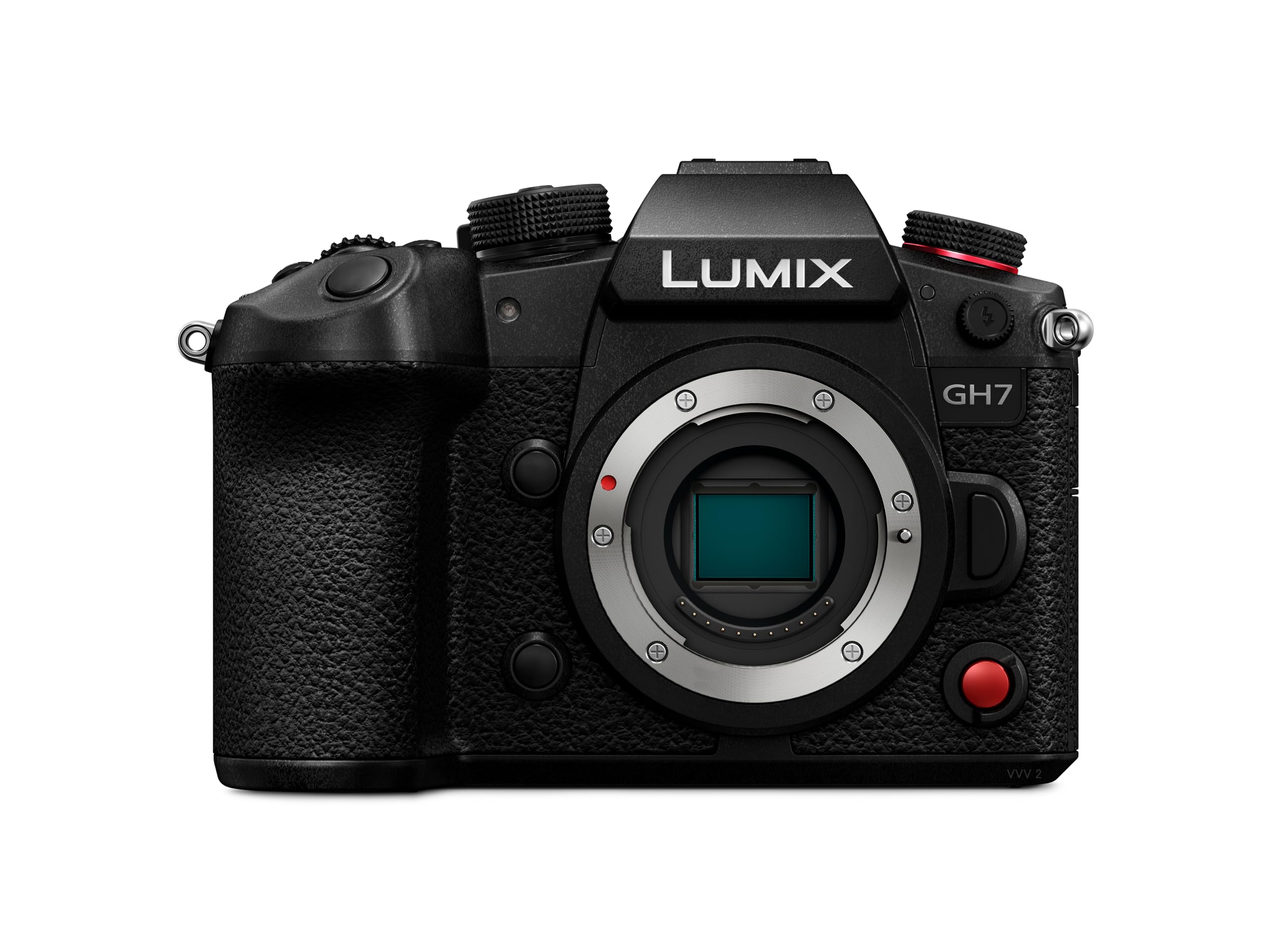
The GH7 is a video-first tool that sets new standards for the Micro Four Thirds format. It records internal Apple ProRes RAW HQ and 5.7K 30p ProRes 422 HQ, letting you work in the most demanding post-production pipelines without an external recorder. The world-first 32-bit float audio recording via the DMW-XLR2 adaptor means you never need to set recording levels during a shoot, a massive safety net for one-person crews.
The 25.2MP BSI sensor with phase-detection autofocus solves the GH-series’ historical AF weakness. The 13+ stop dynamic range in boost mode handles high-contrast scenes well, and the Open Gate recording option lets you shoot in all aspect ratios from a single file for social content repurposing. The active cooling system runs without overheating even during multi-hour event recording, a claim few competitors can match.
The GH7 body alone demands a serious investment, and the Micro Four Thirds system needs fast glass to match full-frame low-light performance. Battery life is short enough that a V-Mount rig becomes almost mandatory for full-day shoots. For a creator whose primary output is video and who values codec flexibility over still photography, this is the most capable body in this lineup.
Why it’s great
- Internal Apple ProRes RAW and ProRes 422 HQ recording
- 32-bit float audio eliminates level-setting anxiety
- Active cooling prevents overheating during long shoots
- Open Gate mode captures all aspect ratios from one take
Good to know
- Micro Four Thirds sensor struggles in very low light
- Short battery life; external battery solution recommended
- Expensive body; fast MFT glass adds significant cost
7. Sony ZV-1 Digital Camera

The original ZV-1 remains one of the most popular vlogging cameras for good reason. The 20.1MP stacked 1-inch Exmor RS sensor with a 24-70mm F1.8-2.8 ZEISS Vario-Sonnar lens captures bright, defocused backgrounds even in moderate light. The Fast Hybrid Autofocus with Real-time Eye AF locks onto faces quickly, and the Product Showcase Setting transitions focus from face to object when you hold something to the lens.
The built-in directional 3-capsule microphone with the detachable windscreen captures clear dialogue for indoor and moderate outdoor use. The 4K HDR video with HLG and S-Log profiles gives you room to grade in post. The side flip-out 3-inch touchscreen is bright enough for outdoor framing, and the USB streaming feature makes it a capable webcam for live calls.
Battery life is the biggest complaint, with a single charge lasting roughly two hours of real recording. A dummy battery adapter solves this for desktop use. The camera can also overheat during extended continuous streaming. For a fixed-lens point-and-shoot that nails the vlogging basics out of the box, this is still a solid mid-range choice.
Why it’s great
- Bright F1.8-2.8 lens for good background defocus
- Fast Hybrid AF with reliable Eye Tracking
- Product Showcase mode transitions focus smoothly to objects
- Compact and ready for desk streaming via USB
Good to know
- Battery lasts about two hours; dummy battery helps for streaming
- Overheating possible during extended use
- No lens flexibility with the fixed design
8. Canon PowerShot V1

The Canon PowerShot V1 is a purpose-built hybrid camera with a 1.4-type sensor that delivers 22.3MP for stills and 18.7MP for video. The built-in 16-50mm F2.8-4.5 wide-angle zoom lens covers a useful range for selfie vlogging and handheld reporting. Canon Log 3 with 10-bit color depth provides a flat profile for professional grading, and the built-in cooling fan allows for extended high-resolution recording without throttling.
The eye autofocus is fast and accurate for both stills and video, using Canon’s Dual Pixel system. The camera supports USB power delivery, so you can run it continuously during livestreams. The sensor’s performance at ISO 6400 shows reduced grain compared to older G7X models, making it useful for dimmer studio environments.
The PowerShot V1 lacks optical image stabilization, relying on electronic stabilization that produces a crop and is only adequate for stationary or very slow movement. The SD card slot sits under the battery door, making it awkward to swap cards when mounted on a tripod with a quick-release plate. For a compact camera that prioritizes video codecs and heat management, this is a smart studio-first tool.
Why it’s great
- Built-in cooling fan enables long recording sessions without overheating
- Canon Log 3 with 10-bit color depth for grading flexibility
- 16-50mm wide zoom suits self-recording and close-up vlogging
- USB power delivery for desk-bound streaming setups
Good to know
- No optical stabilization; electronic crop for shake reduction
- SD slot under battery door is inconvenient with a tripod
- Larger body than typical compact point-and-shoots
9. Panasonic LUMIX G100 w/ 12-32mm Lens

The LUMIX G100 is built for the creator who wants to learn the craft without being overwhelmed. Its Micro Four Thirds sensor records 4K 24p and 30p video with good color science and the 12-32mm kit lens covers a standard walk-around range. The 5-Axis Hybrid I.S. reduces handheld shake enough for static-to-slow movement vlogging, though it won’t replace a gimbal for walking shots.
The standout feature is the built-in 360-degree tracking microphone. It auto-adjusts its directionality to follow the subject’s voice, improving clarity in crowded or outdoor environments. The camera doubles as a webcam via USB, and the frame marker feature overlays social media aspect ratios on the screen to guide your composition for Instagram or TikTok.
4K recording time is capped, stopping at a maximum duration per clip, which frustrates long-talk creators. The contrast-detect autofocus can hunt in dim lighting, making it less reliable than phase-detect systems. For the price-conscious beginner who wants interchangeable lenses and a unique audio solution, the G100 is a smart educational entry point.
Why it’s great
- 360-degree tracking mic improves location sound without external gear
- 5-Axis Hybrid I.S. helps with casual handheld vlogging
- Frame marker overlay guides social-specific composition
- Webcam ready with good color reproduction
Good to know
- 4K recording time per clip is limited by firmware
- Contrast-detect autofocus struggles in low-light scenes
- Kit lens is slow; faster glass recommended for indoor work
10. Sony ZV-1F Vlog Camera Black

The ZV-1F strips the vlogging formula to its essentials: a 20mm ultra-wide lens that fits your face and background into one frame, a 1-inch sensor for decent depth of field, and a flip-out touchscreen for self-framing. The 20mm focal length is intentionally wide so you can shoot at arm’s length without looking cramped, and the F2 lens at the wide end gives some defocusing ability for separation.
The Eye AF and autofocus tracking work reliably for static to moderate-motion recording. The directional 3-capsule microphone with the included windscreen captures clean audio for indoor vlogs. The red recording light makes it obvious when you’re live, and the Bluetooth smartphone connection simplifies file transfer for quick social posting.
The fixed F2-3.0 aperture means the lens darkens significantly when you zoom in digitally. The battery life barely reaches 45 minutes of continuous recording. The camera feels fragile, and some users report that a drop can knock the autofocus out of calibration. For the lowest-cost entry into Sony’s vlogging ecosystem, you trade durability and zoom flexibility for ultra-wide simplicity.
Why it’s great
- 20mm ultra-wide lens captures full scene at arm’s length
- Eye AF and tracking are reliable for solo creators
- Built-in directional mic with windscreen for better audio
- Flip-out touchscreen and red recording indicator
Good to know
- Battery life is short; carry extra packs
- Digital zoom darkens the lens quickly
- Fragile build; a drop can knock AF out of alignment
11. Canon EOS R50 V w/ 14-30mm Lens & Accessories
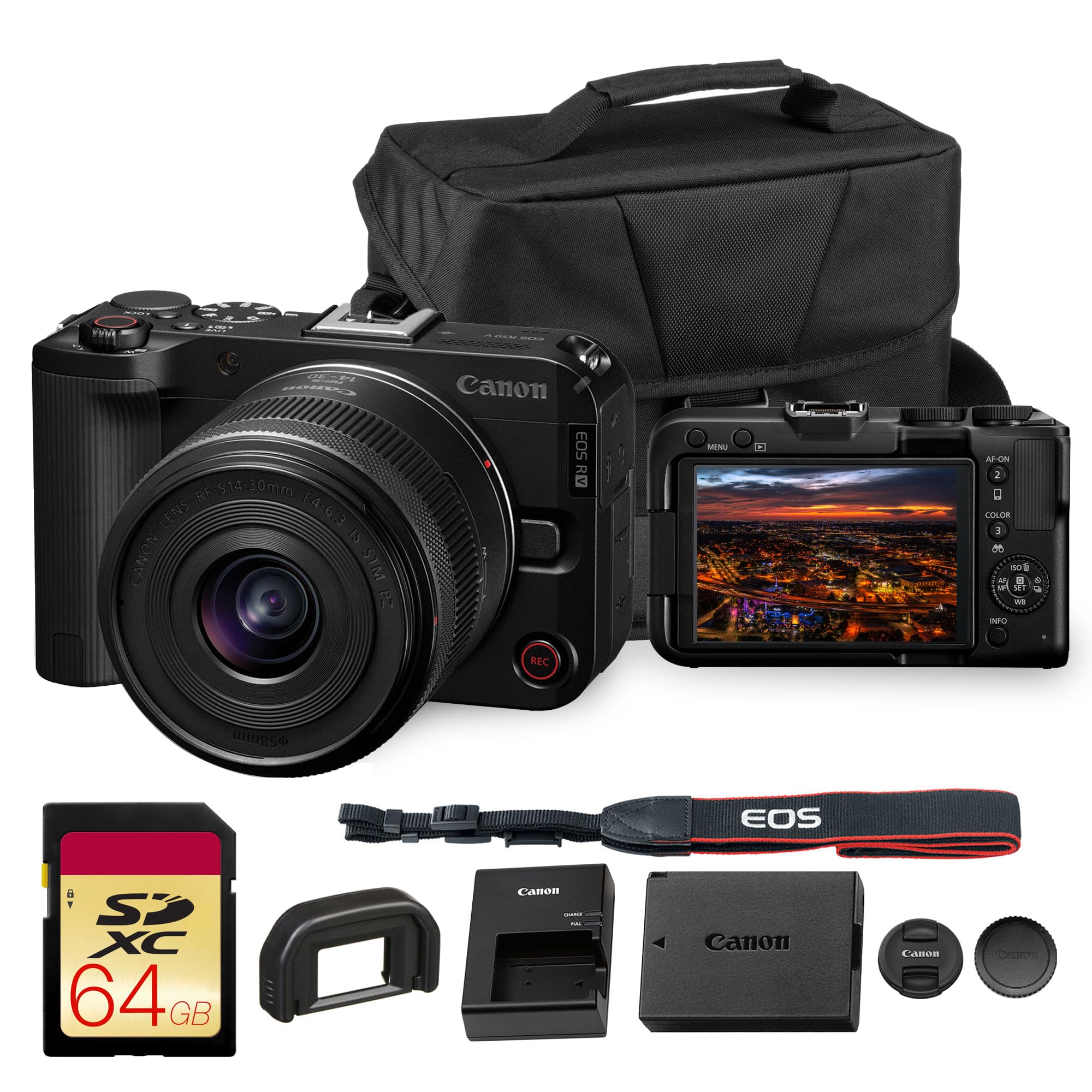
The EOS R50 V is Canon’s creator-focused mirrorless kit with a 24.2MP APS-C CMOS sensor and DIGIC X processor. The bundled RF-S 14-30mm f/4-6.3 IS STM PZ lens features power zoom for smooth, controlled focal length transitions during recording. The Dual Pixel CMOS AF with eye, face, and subject detection covers the frame responsively, and the fully articulating flip screen makes front-facing shooting straightforward.
The kit includes a shoulder bag, a 64GB memory card, a tripod, and a microphone, making it a true out-of-the-box solution. The vertical video mode and livestream-ready USB-C connectivity are built for current social media workflows. The camera can capture 4K 30p and Full HD 120p for slow motion, and the Creative Assist mode helps beginners achieve a polished look without manual adjustments.
Some units have been reported to fail completely within months, a reliability concern that points to possible quality control issues. The kit lens is a variable aperture model, limiting low-light performance. For a complete creator kit that requires no immediate purchases, this is a convenient option if you accept the potential durability risk.
Why it’s great
- Bundle includes bag, card, tripod, and mic for immediate recording
- Power zoom lens gives smooth focal length transitions
- Fully articulating screen is excellent for self-filming
- Vertical video mode streams directly to social platforms
Good to know
- Some users report complete failure within months of ownership
- Kit lens is slow; upgrade to faster glass recommended
- Limited 4K high-frame-rate options vs. Sony competitors
FAQ
Can I use a 4K vlogging camera as a webcam for live streaming?
What lens focal length is best for handheld vlogging?
Does a bigger sensor always mean better video quality for vlogs?
Why do some 4K cameras overheat and how can I prevent it?
Final Thoughts: The Verdict
For most users, the best 4k vlogging camera winner is the DJI Osmo Pocket 3 Creator Combo because it combines a 1-inch sensor with a built-in mechanical gimbal and wireless mic in a package that fits any bag. If you want full-frame dynamic range and premium low-light performance, grab the Sony ZV-E1. And for a complete out-of-box kit with versatile APS-C features, the Canon EOS R50 V is a solid choice.

Mo Maruf
I created WellFizz to bridge the gap between vague wellness advice and actionable solutions. My mission is simple: to decode the research and give you practical tools you can actually use.
Beyond the data, I am a passionate traveler. I believe that stepping away from the screen to explore new environments is essential for mental clarity and physical vitality.