Our readers keep the lights on and my smoothie glass nicely filled. As an Amazon Associate, I earn from qualifying purchases.
Filming a fast break, a penalty kick, or a downhill run demands a camera that can track motion without turning the action into a blurry mess. The wrong choice means shaky footage, missed highlights, and frustration in editing.
I’m Mohammad Maruf — the founder and writer behind WellFizz. I’ve spent thousands of hours breaking down the specs, stabilization systems, and frame-rate capabilities of sports cameras across every price tier to separate the real performers from the marketing noise.
Whether you’re tracking a player from the sidelines or mounting a camera on your helmet, you need gear that keeps up. This guide cuts through the clutter to help you find the best 4k video camera for sports that matches your specific sport, budget, and shooting style.
How To Choose The Best 4K Video Camera For Sports
Sports footage is a unique beast. You’re dealing with rapid movement, variable lighting from bright sun to evening shadows, and often a need to go hands-free. Here are the concrete specs and features that separate a great sports camera from a frustrating one.
Stabilization: The Difference Between Watchable and Wobbly
Electronic Image Stabilization (EIS) crops the frame to smooth out shakes, but aggressive EIS introduces a jello effect during fast pans. A gimbal-based system or a camera with Horizon Lock (keeping the horizon level through full 360° rotation) is superior for running, biking, or any sport where the camera itself is in motion. For stationary sideline recording, a tripod and a camera with good in-body stabilization is sufficient.
Frame Rate: Why 60fps Is the Real Floor for Action
A 30fps 4K signal looks smooth on TV, but for fast sports — soccer, hockey, basketball — you need at least 60fps to capture a clean ball or puck trajectory without motion blur. High-speed slow-motion requires 120fps or 240fps at 1080p. Don’t be fooled by a camera that advertises 4K resolution if it can only do 24fps; you’ll miss the peak of the action.
Battery Runtime and Heat Management
Filming a full match or practice session can run 60 to 90 minutes continuously. Action cameras with small batteries may overheat and shut down in direct sun. Look for cameras with a rated continuous 4K recording time of at least 90 minutes, or budget for additional batteries. Fan-cooled camcorders and larger mirrorless bodies dissipate heat more effectively for marathon recording sessions.
Quick Comparison
On smaller screens, swipe sideways to see the full table.
| Model | Category | Best For | Key Spec | Amazon |
|---|---|---|---|---|
| DJI Osmo Action 5 Pro | Action Camera | All-day adventure & vlogging | 4K/120fps, 360° HorizonSteady | Amazon |
| GoPro HERO13 Black | Action Camera | High-res 5.3K & HB lens mods | 5.3K60, 27MP photos | Amazon |
| GoPro MAX2 | 360 Action Cam | 360° reframing & invisible selfie | True 8K spherical video | Amazon |
| Insta360 X5 | 360 Action Cam | Motorcycle & rugged low-light | 8K30, 3-hour battery | Amazon |
| XbotGo Chameleon | AI Tracking Gimbal | Auto-follow for team sports | 360° pan, 8-hour battery | Amazon |
| Canon EOS R100 | Mirrorless Camera | Entry-level interchangeable lens | 24.1MP APS-C, 4K24 | Amazon |
| Blackmagic Pocket Cinema 4K | Cinema Camera | Pro-grade narrative & doc sports | 13 stops dynamic range, RAW | Amazon |
| Canon VIXIA HF G70 | Camcorder | Long-zoom sideline recording | 20x optical zoom, 4K30 | Amazon |
| Xtra Edge Pro | Budget Action Cam | Entry-level waterproof filming | 4K/60fps, 65ft waterproof | Amazon |
In‑Depth Reviews
1. DJI Osmo Action 5 Pro

The DJI Osmo Action 5 Pro sets the gold standard for a do-everything sports camera. Its 1/1.3″ sensor delivers 4K footage at 120fps with a 13.5-stop dynamic range, meaning you can shoot a sunset mountain bike run and still see detail in both the shadows and the sky. The 360° HorizonSteady stabilization keeps the horizon locked even when you whip the camera around corners — no gimbal required.
Battery life is a standout feature: the 1950mAh Extreme Battery pushes recording time to roughly 4 hours in moderate conditions and still delivers 3.6 hours at -20°C. The dual OLED touchscreens are genuinely useful for framing a selfie or a low-angle shot, and voice control works reliably when you’re wearing gloves.
For sports vloggers who want one camera that handles everything from first-person POV to interview-style clips, this is the pick. The built-in 47GB storage gives you a buffer before needing a microSD card, and the ability to connect directly to the DJI Mic 2 without a receiver simplifies audio capture on the field.
Why it’s great
- Industry-leading stabilization with full 360° Horizon Lock
- Long battery life (4 hours) with cold-weather performance
- Dual OLED screens for flexible framing
Good to know
- Extra batteries and a charging dock are recommended for travel
- Higher price point than basic action cameras
2. GoPro HERO13 Black

The HERO13 Black is GoPro’s most versatile flagship, and the headline feature is the 5.3K60 video mode — that’s 91% more resolution than 4K, which translates into sharper crops and more detail when you reframe in post. The HyperSmooth stabilization rivals a mechanical gimbal, making running footage look like it was shot on a dolly.
What truly sets this camera apart is the HB-Series lens system. Swap on the Ultra Wide Lens Mod for immersive POV, the Macro Lens Mod for close-up detail, or the Anamorphic Lens Mod for a cinematic 2.35:1 aspect ratio. The camera auto-detects the lens and adjusts settings accordingly — no digging through menus. The Burst Slo-Mo captures 13x slow-motion at 720p and 4x slo-mo at 5.3K.
The tradeoff is battery life: the Enduro battery rates at about 79 minutes of active recording, so marathon sessions require a multi-battery setup. The rugged build is waterproof to 33 feet without a housing, and the water-repelling lens cover reduces flare in wet conditions.
Why it’s great
- 5.3K resolution allows extensive cropping without quality loss
- Interchangeable HB-Series lenses for creative control
- Exceptional HyperSmooth stabilization
Good to know
- Battery life is shorter than some competitors (79 min typical)
- Lens mods require additional purchase
3. GoPro MAX2
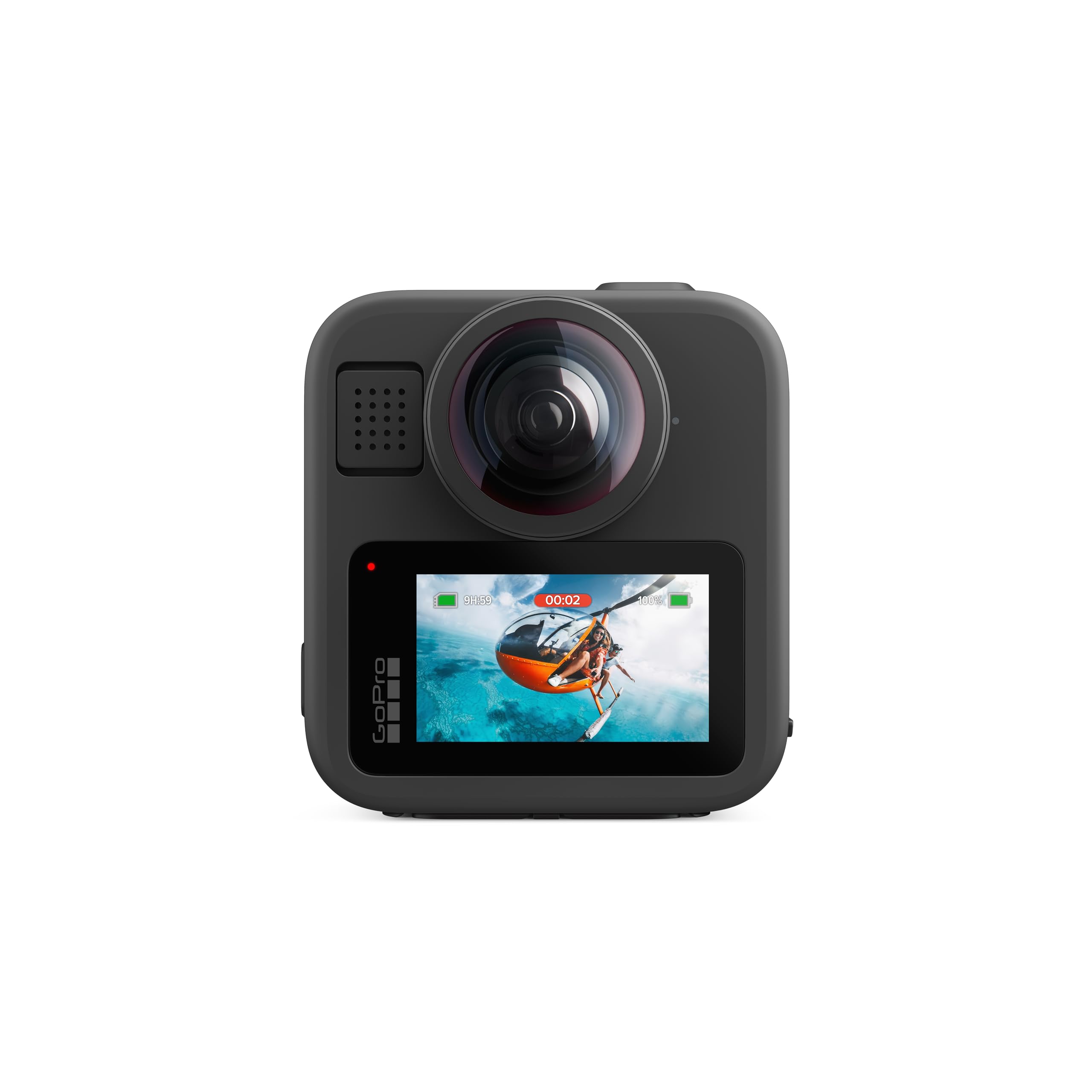
The MAX2 is the first GoPro to deliver true 8K spherical video — that’s 21% more resolution than the previous generation, meaning you can reframe your 360 footage into crisp 4K clips without visible pixelation. The invisible mounting effect works brilliantly: attach it to a pole, and the pole disappears from the final shot, giving you drone-like angles from ground level.
The build quality is a big step up. The replaceable glass lenses are water-repelling and scratch-resistant, so a drop on gravel no longer means a dead camera. The 6-microphone array captures ambisonic audio that shifts perspective as you pan the video, and wind reduction is genuinely effective for outdoor sports like snowboarding or cycling.
Heat management is the primary concern — the MAX2 can get warm during extended 8K recording, and the battery life is roughly 90 minutes of mixed 360 shooting. For pure 360 action, it’s unmatched; if you rarely need spherical shots, the HERO13 Black offers more conventional versatility with better battery economy.
Why it’s great
- True 8K spherical video for high-quality reframing
- Replaceable glass lenses reduce repair costs
- Ambisonic audio with effective wind reduction
Good to know
- Can overheat during prolonged 8K shooting in direct sun
- Requires app for editing 360 footage
4. Insta360 X5 Motorcycle Bundle

Insta360’s X5 is built for the most demanding outdoor environments, and the Motorcycle Bundle includes a heavy-duty clamp and invisible selfie stick right out of the box. The dual 1/1.28″ sensors shoot 8K at 30fps with a triple AI chip that handles noise reduction in low-light conditions — so dusk rides or indoor skate parks look clean instead of grainy.
The FlowState stabilization combined with full 360° Horizon Lock ensures the footage stays level even during sharp turns or bumpy terrain. The new Wind Guard on the 4-microphone array dramatically cuts wind roar during high-speed recording, making voiceovers and vlog narration usable without a separate mic. The replaceable lenses are tougher and easier to swap than previous generations.
The 185-minute rated battery supports fast charging to 80% in 20 minutes, which is a lifesaver when you’re between sessions. One catch: recording to cloud storage during a ride can drain the battery faster, so plan to offload footage after shooting rather than in real-time.
Why it’s great
- Excellent low-light performance for a 360 camera
- Fast charging to 80% in 20 minutes
- Waterproof to 49ft without a housing
Good to know
- Cloud upload while recording reduces battery runtime
- MicroSD card sold separately
5. XbotGo Chameleon AI Auto Sports Action Camera
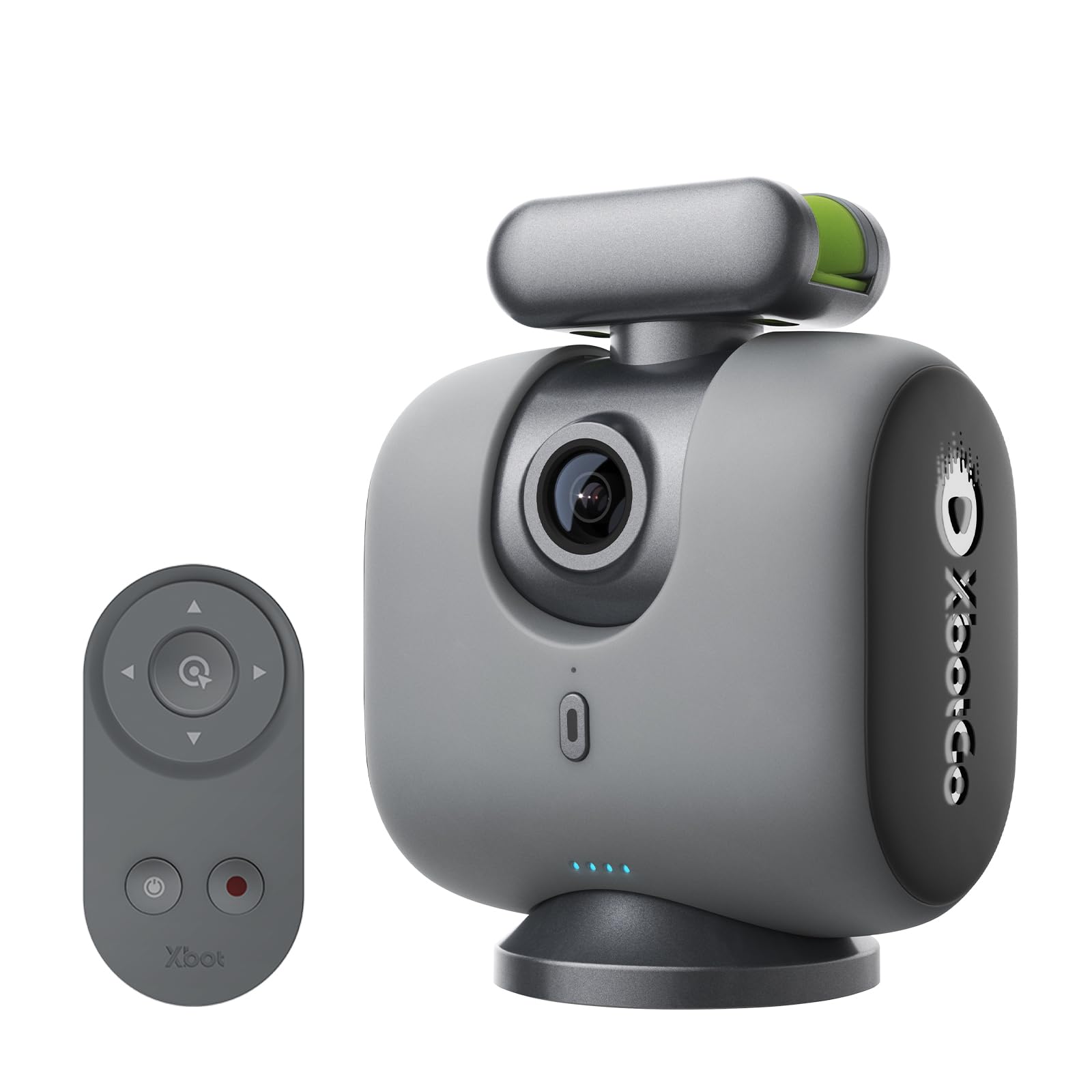
The XbotGo Chameleon is not an action camera in the traditional sense — it’s a motorized gimbal that uses your smartphone’s camera (and the XbotGo app) to automatically track sports action. The xbotVision AI 2.0 algorithm recognizes over 20 sports including soccer, basketball, gymnastics, and hockey, and it follows the ball or a selected player with 360° pan and a 120° ultra-wide AI lens.
Setup is straightforward: mount your phone, select the sport and age group, and the gimbal handles the rest. The Bluetooth remote and Apple Watch integration let you adjust framing and trigger recording from the sideline without touching the camera. The battery life is a massive 8 hours, easily covering a tournament day. Live streaming to YouTube or Facebook with a real-time scoreboard overlay via a second phone is a standout feature for team parents and coaches.
The learning curve on the app is real — some users report that the manual explains features without walking through the setup steps, and the Follow Me mode requires patience to calibrate. Ice hockey and fast near-side action can occasionally cause the gimbal to pan jerkily or lose the subject. For sideline autonomy, it’s excellent; for pure video quality, you’re limited by your phone’s camera sensor.
Why it’s great
- Auto-tracking frees you to watch the game live
- 8-hour battery covers full-day tournaments
- Live streaming with scoreboard overlay
Good to know
- Steep learning curve for the app and tracking modes
- Video quality depends entirely on your smartphone camera
6. Canon EOS R100

The EOS R100 is Canon’s smallest and lightest EOS R-series mirrorless body, and it’s aimed squarely at beginners who want interchangeable-lens versatility without the pro price tag. The 24.1MP APS-C sensor with DIGIC 8 processor delivers good stills and decent 4K video, but the 4K mode is capped at 24fps — fine for tripod shots of a baseball game or a training drill, but too slow for fast action where motion blur is a problem.
The Dual Pixel CMOS AF covers 143 zones with face and eye detection for humans and animals, and the continuous shooting rate of 6.5 fps works well for sequence captures. The RF-S 18-45mm kit lens provides a standard zoom range with optical stabilization, and the compact body is easy to pack in a gym bag. The built-in Wi-Fi and Bluetooth make it simple to transfer clips to your phone for quick editing.
For sports use, the biggest limitation is the 4K frame rate. If your primary need is slow-motion analysis or smooth fast-action filming, you’ll want to look at action cameras or a camcorder instead. The EOS R100 is best suited for static sideline photography, vlogging before or after the game, and general family sports event documentation.
Why it’s great
- Lightest and most compact EOS R body
- Dual Pixel AF with face and eye detection
- Affordable entry into interchangeable-lens system
Good to know
- 4K limited to 24fps — poor for fast action
- No in-body stabilization; relies on lens stabilization
7. Blackmagic Design Pocket Cinema Camera 4K

The Pocket Cinema Camera 4K is not for casual users — it’s a professional filmmaking tool that happens to be small enough to mount on a gimbal for sports shoots. The 4/3″ sensor with 13 stops of dynamic range records 4096 x 2160 in Blackmagic RAW or Apple ProRes, giving you immense latitude to recover highlights and shadows in post-production. Dual native ISO up to 25,600 keeps noise low in indoor arena lighting.
The MFT lens mount opens up a huge library of affordable manual glass from brands like Rokinon and Olympus, allowing you to dial in a specific field of view for sideline or field-level coverage. The 5″ LCD touchscreen is bright enough for outdoor monitoring, and the included DaVinci Resolve Studio license provides a full post-production pipeline for color grading and editing.
This camera has no in-body stabilization and no continuous autofocus — you’ll need a gimbal, tripod, or a skilled operator to keep shots steady. The LP-E6 battery lasts roughly 30-40 minutes, making external power or a cage with V-mount batteries essential for a full match. For a serious sports filmmaker aiming for broadcast-quality results, it’s unmatched; for sideline simplicity, it’s overkill.
Why it’s great
- 13 stops of dynamic range for professional grade
- Records in Blackmagic RAW and Apple ProRes
- Includes DaVinci Resolve Studio license
Good to know
- No in-body stabilization — requires gimbal or tripod
- Battery life is very short (30-40 min per LP-E6)
8. Canon VIXIA HF G70

The VIXIA HF G70 is a dedicated 4K camcorder that brings back the point-and-shoot simplicity that mirrorless cameras often lack. The 20x optical zoom (with 800x digital zoom) lets you punch in from the bleachers to the field for a close-up of a goal or a touchdown, and the DIGIC DV6 image processor keeps the 4K30 footage sharp with natural color science from Canon.
The On-Screen Display Time Stamp recording embeds date, time, and timecode directly into the file — a feature that’s critical for coaching analysis, referee review, and legal documentation of sports events. The UVC live streaming mode lets you broadcast 1080p video directly to a computer via USB, making it a viable tool for real-time match streaming without complex capture hardware.
The autofocus uses a Hybrid AF system with face detection, and it locks on reliably during slow zooms and pans. However, low-light performance is the primary weakness: gain above +4 dB introduces visible noise, and gain above +10 dB becomes mushy. The autofocus can also jitter in 4K mode, though switching to 1080p resolves the issue. For well-lit daytime sports, it’s a supremely practical workhorse.
Why it’s great
- 20x optical zoom for distant sideline shooting
- Time Stamp recording for coaching and legal use
- Simple point-and-shoot operation
Good to know
- Poor low-light performance above +4 dB gain
- HDMI and USB streaming limited to 1080p, not 4K
9. Xtra Edge Pro Action Camera
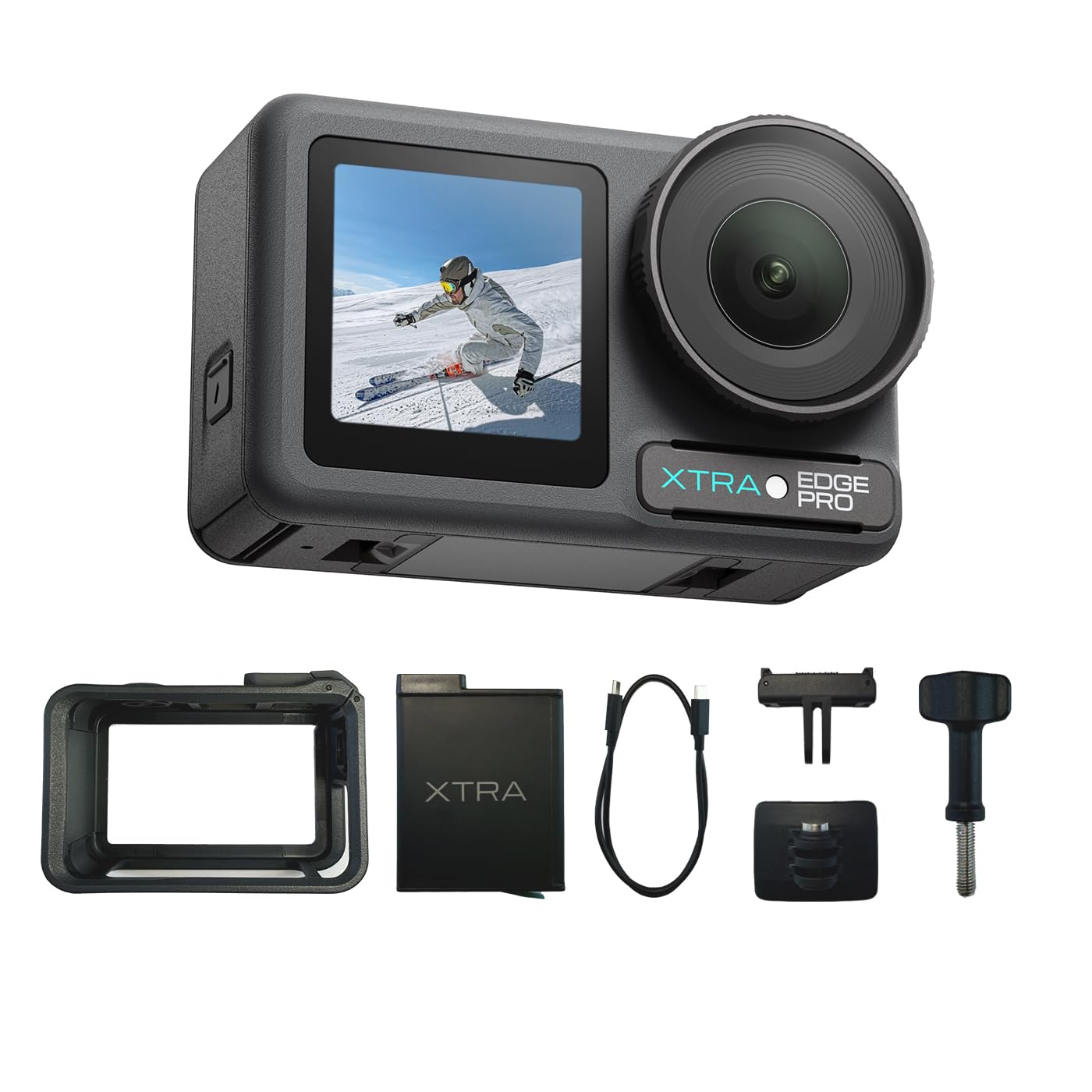
The Xtra Edge Pro is an entry-level action camera that punches above its weight class for budget-conscious sports shooters. The 1/1.3″ sensor captures 4K video at 60fps — a solid frame rate for most recreational sports, and the Night View mode extends usability into evening sessions without turning the footage into a noisy mess. The waterproof rating of 65 feet without a housing makes it a strong candidate for swimming, snorkeling, or wet-weather sports.
The stabilization system combines 360 Lock, TiltGuard, and MotionMaster to smooth out the shakes of running or mountain biking. It’s not as refined as DJI’s HorizonSteady or GoPro’s HyperSmooth, but it delivers usable footage for casual sharing on social media. The included Dual-Facing Mount Adapter and Cold-Resistant Battery make the value proposition even stronger for outdoor enthusiasts.
Build quality and warranty support are the areas where budget options typically compromise. Some users report that the battery life at 4K/60fps runs closer to 90 minutes than the advertised 240 minutes, so plan for spares during long sessions. The interface is intuitive, and the bundled accessories are generous. For someone who needs a waterproof 4K camera for weekend sports without spending premium dollars, this is a solid gateway.
Why it’s great
- Impressive 65ft waterproof rating without a housing
- 4K/60fps with usable stabilization for the price
- Generous bundle includes extra battery and mounts
Good to know
- Battery runtime is shorter than advertised at 4K/60fps
- Stabilization lags behind premium competitors
FAQ
Can I use a mirrorless camera for sideline sports?
What is the real-world battery runtime for 4K action cameras?
Do I really need a 360-degree camera for sports?
Final Thoughts: The Verdict
For most users, the best 4k video camera for sports winner is the DJI Osmo Action 5 Pro because it combines the best stabilization, longest battery life, and pro-grade low-light performance in a package that works for everything from vlogging to helmet-mounted action. If you want the creative flexibility of 360 reframing and invisible selfie shots, grab the GoPro MAX2. And for a coach or parent who wants automated sideline tracking without touching the camera, nothing beats the XbotGo Chameleon for hands-free autonomy.

Mo Maruf
I created WellFizz to bridge the gap between vague wellness advice and actionable solutions. My mission is simple: to decode the research and give you practical tools you can actually use.
Beyond the data, I am a passionate traveler. I believe that stepping away from the screen to explore new environments is essential for mental clarity and physical vitality.