Our readers keep the lights on and my smoothie glass nicely filled. As an Amazon Associate, I earn from qualifying purchases.
Whether you’re documenting a family vacation, building a YouTube channel, or capturing corporate events, the jump to a dedicated 4K camcorder is about getting consistent, sharp, and smooth video without fighting your gear. Unlike a smartphone that struggles in low light or overheats on a long take, a proper video camera puts control of focus, zoom, and audio back in your hands.
I’m Mohammad Maruf — the founder and writer behind WellFizz. I’ve spent hundreds of hours analyzing sensor sizes, stabilization systems, optical zoom ranges, and codec options across this category to help you find the camcorder that matches your actual shooting needs.
This guide breaks down the best options available for creating high-quality video content, focusing on the specs and real-world performance that matter. After thorough research, here are my top recommendations for a 4k video camcorder that fits your workflow and budget.
How To Choose The Best 4K Video Camcorder
Buying a 4K camcorder isn’t like buying a phone. The feature set — from the sensor that captures the image to the lens that zooms into action — determines whether your footage looks professional or amateur. Here’s what to examine before you click buy.
Sensor Size: 1-inch vs 1/2.3-inch
The physical size of the sensor is the single biggest factor in image quality. A 1-inch CMOS sensor, found on models like the DJI Osmo Pocket 3 and Sony ZV-1F, captures significantly more light than the smaller 1/2.3-inch sensors in traditional camcorders like the Canon VIXIA HF G70. This translates to cleaner footage with less grain when you shoot indoors, at dusk, or in any low-light situation. For serious content creators, a 1-inch sensor is the baseline.
Stabilization: Gimbal vs Optical vs Digital
Shaky footage ruins the professional look faster than anything else. A built-in gimbal, as seen on the DJI Osmo Pocket 3 and Xtra Muse, physically moves the camera to counteract your movement — it’s the gold standard for walk-and-talk vlogging. Optical image stabilization (OIS) uses lens elements to smooth out minor shakes, which is valuable at long zoom ranges. Digital stabilization crops the frame and can introduce a wobbly look. For handheld shooting, prioritize mechanical or optical stabilization over digital.
Optical Zoom Range
Zoom is where camcorders still beat most mirrorless cameras. The Panasonic LUMIX FZ80D offers a 60x optical zoom reaching 1200mm, letting you capture wildlife, sports, or distant subjects clearly. The Sony FDR-AX43 provides 20x optical zoom with Clear Image Zoom extending that reach for 4K. If your shooting involves action from a distance (soccer games, birds, concerts), a longer optical zoom is worth the trade-off in portability.
Audio Inputs and Connectivity
Great video with bad audio is unwatchable. A camcorder with a dedicated microphone input (3.5mm or XLR) gives you the option to attach a professional lavalier or shotgun mic. For live streaming and multi-camera work, look for UVC support (plug-and-play webcam), NDI compatibility (network video), or an HDMI port that doesn’t downscale to 1080p. These features separate a consumer toy from a serious production tool.
Quick Comparison
On smaller screens, swipe sideways to see the full table.
| Model | Category | Best For | Key Spec | Amazon |
|---|---|---|---|---|
| DJI Osmo Pocket 3 | Gimbal Cam | Walk-and-talk vlogging | 1″ CMOS, 3-Axis Gimbal | Amazon |
| Sony FDR-AX43 | Handycam | Family events & travel | 20x Optical Zoom, Balanced OIS | Amazon |
| Canon VIXIA HF G70 | Prosumer Cam | Documentaries & livestreaming | 20x Optical Zoom, UVC Streaming | Amazon |
| Panasonic HC-X2 | Pro Camcorder | News & corporate video | 1″ Sensor, SDI/HDMI Out | Amazon |
| Blackmagic Pocket 6K G2 | Cinema Camera | Film & narrative work | Super 35 Sensor, 13 Stops DR | Amazon |
| Sony ZV-1F | Vlog Camera | Beginner content creators | 1″ Sensor, 20mm Ultra-Wide | Amazon |
| Xtra Muse | Gimbal Cam | Budget pocket vlogging | 1″ CMOS, 3-Axis Gimbal | Amazon |
| Panasonic LUMIX FZ80D | Bridge Camera | Long zoom & nature | 60x Optical (20-1200mm) | Amazon |
| OBSBOT Tail Air | PTZ Camera | Streaming & tracking | AI Tracking, NDI Support | Amazon |
| Canon EOS Rebel T7 | DSLR Kit | Entry-level photo & video | 24.1MP APS-C, 1080p Video | Amazon |
| Blackmagic Pocket 6K Pro | Cinema Camera | Professional HDR production | Internal ND, 1500 nits LCD | Amazon |
In‑Depth Reviews
1. DJI Osmo Pocket 3
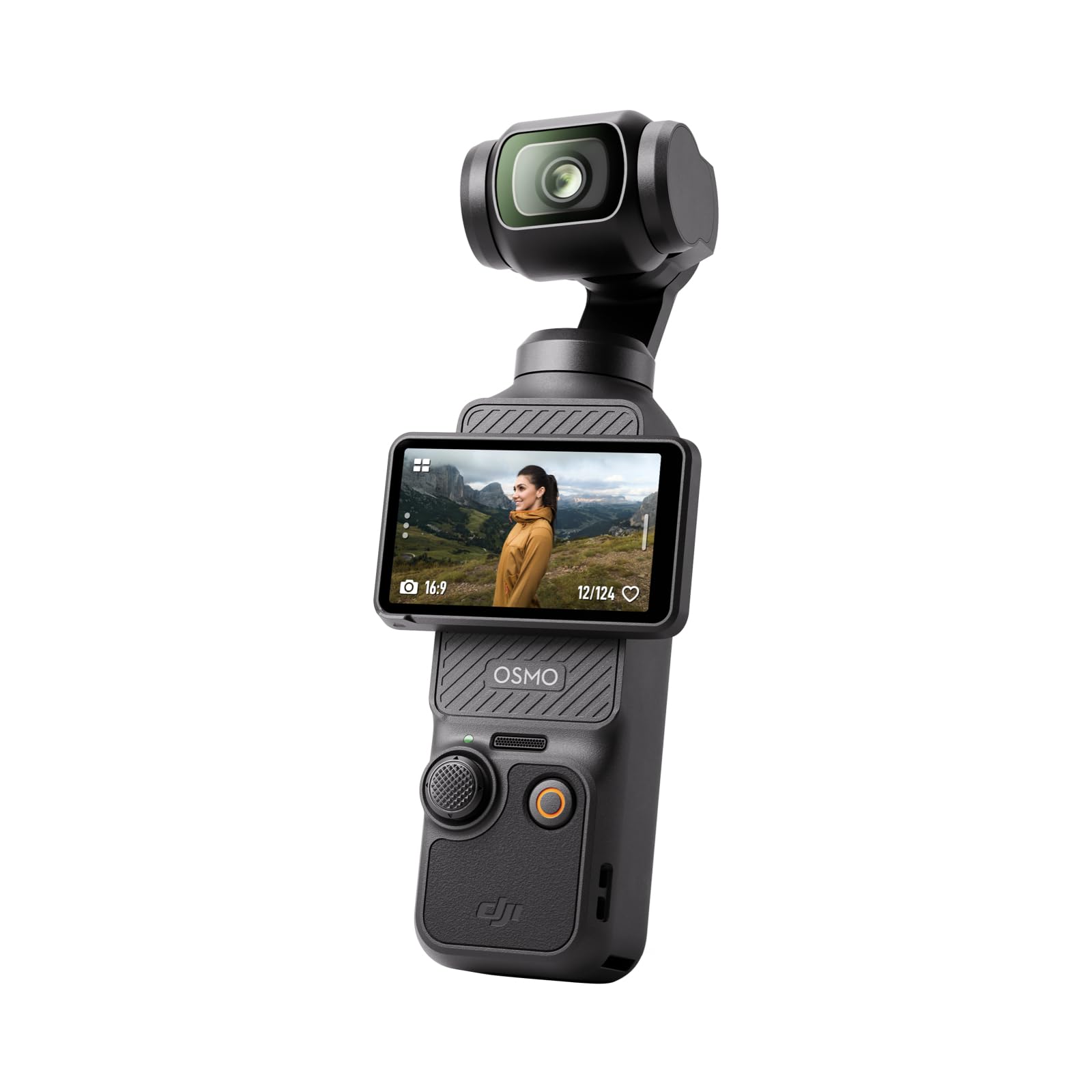
The DJI Osmo Pocket 3 sets the standard for pocketable 4K video. Its 1-inch CMOS sensor delivers exceptional low-light performance and rich dynamic range, while the integrated 3-axis gimbal provides stabilization that rivals much larger rigs. The 2-inch rotatable touchscreen makes switching between horizontal and vertical framing instant — a critical feature for creators publishing across social platforms.
ActiveTrack 6.0 keeps subjects centered reliably, whether you’re dancing or running, and the ability to connect directly to two DJI Mic 2 transmitters simplifies wireless audio dramatically. Battery life averages 166 minutes, which comfortably covers a full day of shooting between charges. The autofocus is fast and accurate, locking onto faces even in chaotic environments.
Registration via the DJI Mimo app is required before you can film, which is an extra step some users find annoying. The snap-on base adds length and lacks mounting threads, so tripod attachment requires the included handle. Despite these quirks, the image quality and gimbal smoothness make this the best all-around 4K camcorder for vloggers and travelers.
Why it’s great
- 1-inch CMOS sensor for outstanding video in low light
- Rotating touchscreen for instant vertical/horizontal switching
- Professional-grade gimbal stabilization for handheld walking shots
Good to know
- Requires app registration before use
- No built-in mounting threads on the gimbal body
2. Sony FDR-AX43 Handycam

The Sony FDR-AX43 is a traditional Handycam built for family events, vacations, and casual shooting where optical reach matters. Its Balanced Optical SteadyShot acts like a built-in gimbal, smoothing out shakes even when you’re zoomed in at the full 20x optical range. The 1/2.5-inch Exmor R sensor is smaller than the 1-inch found in vlogging cameras, but the BIONZ X processor does a commendable job keeping noise in check for well-lit scenes.
Fast Intelligent AF tracks subjects reliably, and the 26.8mm wide-angle ZEISS lens lets you capture wide group shots without stepping back. The Highlight Movie Maker automatically pulls out the best clips, which is handy for parents who want quick highlight reels. It also includes a mic input, a rare convenience in this class that allows for better audio than the built-in mic.
The protruding battery pack makes handling on a selfie stick awkward, and the date/time resets quickly when the battery is removed. There is no internal memory, so a UHS-I SD card is mandatory before the first use. For point-and-shoot simplicity with serious optical zoom, this remains a strong choice.
Why it’s great
- Balanced optical stabilization works well at full zoom
- Dedicated microphone input for better audio
- Wi-Fi remote control via smartphone app
Good to know
- Battery protrudes, making selfie stick use awkward
- No internal memory — an SD card is essential
3. Canon VIXIA HF G70

The Canon VIXIA HF G70 is a serious prosumer camcorder that brings traditional camcorder ergonomics into the 4K era. Its 1/2.3-inch 4K UHD sensor paired with the DIGIC DV 6 processor produces crisp, sharp footage, and the 20x optical zoom lens is sharp even at its longest reach. The 8-blade aperture creates pleasing cinematic bokeh, a feature typically reserved for more expensive lenses.
UVC livestreaming support lets you plug the camera into a PC or Mac via USB and stream at HD resolutions without a separate capture card — a killer feature for church services, webinars, and live events. The Hybrid AF system with face detection locks onto subjects quickly, and the dual SD card slots give you backup recording or extended capacity for long shoots. The On-Screen Display time stamp feature is valuable for archival and legal documentation purposes.
Low-light performance is mediocre — gain becomes soft above 4 and mushy above 10. HDMI output and UVC mode are both limited to 1080p, not 4K, so you won’t get a pristine 4K signal out for external recording or streaming. The autofocus jitter present in 1080p recording is absent when shooting in 4K, so stick to UHD for the cleanest results.
Why it’s great
- UVC streaming without needing a capture card
- Sharp 20x optical zoom lens
- Dual SD card slots for backup recording
Good to know
- Poor low-light performance compared to 1-inch sensor cameras
- HDMI and UVC output only at 1080p
4. Sony ZV-1F

The Sony ZV-1F is designed explicitly for beginners who want better video than a phone without the complexity of interchangeable lenses. The ultra-wide 20mm f/2.0 lens ensures you get everyone in the frame even at arm’s length, and the large 1-inch sensor delivers impressive background defocus and low-light performance. The side-articulating touchscreen makes selfie composition easy, and the Background Defocus button lets you blur the background with one press.
Autofocus is where Sony excels — Eye AF and object tracking reliably keep faces sharp even as you move around the frame. The directional 3-capsule microphone with the included windscreen captures clear audio outdoors, and Product Showcase mode automatically racks focus to an object held close to the lens. The USB-C charging is convenient for topping up between shoots.
Battery life is short at about 45 minutes of continuous recording, meaning you will need at least one spare battery for a day of shooting. The camera is also fragile — a light drop can damage the autofocus system. The zoom is digital and only offers a 2x crop with acceptable quality, so the wide-angle is really your only lens option.
Why it’s great
- 1-inch sensor and f/2.0 lens for great low-light footage
- Simple interface with background defocus button
- Ultra-wide 20mm lens captures more in selfie mode
Good to know
- Short battery life — extra batteries are required
- Very fragile build; a drop can ruin autofocus
5. Panasonic HC-X2

The Panasonic HC-X2 is a professional camcorder built for news, events, and corporate production. Its large 1-inch MOS sensor records 4K 60p 4:2:2 10-bit video with HEVC encoding, providing rich color grading headroom and smooth motion. The built-in 24.5mm wide-angle lens with 20x optical zoom covers a practical range, and the i.ZOOM extends to 32x in HD without significant quality loss.
This camera is packed with pro connectivity: simultaneous SDI and HDMI output, XLR audio inputs for professional microphones, Ethernet for direct live streaming, and a wired remote terminal for multi-camera control. The 13-stop V-Log gamma mode lets you match the color profile of Panasonic’s cinema cameras, making integration into a larger production workflow seamless.
The auto exposure tends to darken the image in very bright scenes, requiring manual adjustment to get the right look. The Varizoom Rock Style Zoom is extremely sensitive and takes practice to operate smoothly. The body is large and heavy, designed for shoulder-mounted use rather than pocketable vlogging. For professional-grade reliability and image quality in a traditional camcorder form factor, it’s hard to beat.
Why it’s great
- 1-inch sensor with 4K 60p 4:2:2 10-bit recording
- SDI and HDMI simultaneous output for studio use
- 13-stop V-Log for professional color grading
Good to know
- Auto exposure can underexpose in bright daylight
- Very touchy zoom rocker requires gentle operation
6. Blackmagic Design Pocket Cinema Camera 6K G2

The Blackmagic Design Pocket Cinema Camera 6K G2 is a serious tool for filmmakers who need cinema-grade image quality. Its Super 35 sensor records at 6144 x 3456 resolution, delivering 13 stops of dynamic range that preserves detail in shadows and highlights. The dual native ISO up to 25,600 keeps noise minimal even in extremely low-light environments, and the active Canon EF lens mount opens up thousands of high-quality lenses.
Recording options are flexible: internal CFast 2.0 and SD/UHS-II cards, plus external USB-C SSD recording. The included DaVinci Resolve Studio license provides a professional color grading and editing workflow. The 5-inch bright touchscreen is large enough to serve as your primary monitor, eliminating the need for an external display in many setups.
Battery life is the biggest weak point — the included NP-F570 lasts about 60 minutes, so a V-lock battery plate is almost mandatory for full-day shoots. Post-processing demands are heavy: 6K Blackmagic RAW files require a powerful computer and patience. Autofocus is not reliable for run-and-gun work; manual focus is the standard operating mode. This is not a camcorder for casual shooting — it is a cinema camera that rewards deliberate filmmaking.
Why it’s great
- Super 35 sensor with 13 stops of dynamic range
- Records 6K Blackmagic RAW and ProRes
- Comes with DaVinci Resolve Studio license
Good to know
- Short battery life — spare batteries or V-lock essential
- Requires manual focus and heavy post-processing
7. Xtra Muse Vlogging Camera

The Xtra Muse is a budget-friendly alternative to the DJI Pocket 3 that brings a 1-inch CMOS sensor and a built-in 3-axis gimbal to a much lower price point. It records 4K video at 120fps for smooth slow-motion playback, and the gimbal stabilization effectively eliminates the jitter typical of walking shots. The 2-inch touchscreen is intuitive, and the included carrying bag, wrist strap, and handle with 1/4-inch thread make the kit ready to use out of the box.
The Master Follow mode keeps the subject centered automatically, which works well for stationary tripod setups where you jump, dance, or move around. The 10-bit X-Log color mode provides grading flexibility in post-production, capturing up to one billion colors for sunrises and sunsets. Battery life averages 161 minutes, which is competitive with more expensive options.
Some users report that the DJI Mic 2 now connects after a firmware update, but this is not guaranteed out of the box. The build quality is not as refined as the DJI — the gimbal feels slightly less robust. The bundled accessories are generous, and for the price, it delivers 80-90% of the Pocket 3’s core experience.
Why it’s great
- 1-inch sensor and 3-axis gimbal at a budget price
- 4K/120fps for smooth slow-motion capture
- 10-bit X-Log color for flexible grading
Good to know
- Gimbal build quality is slightly less robust than DJI
- DJI Mic 2 compatibility may require a firmware update
8. Panasonic LUMIX FZ80D

The Panasonic LUMIX FZ80D is a bridge camera that annihilates the zoom limitations of pocket cameras. Its 60x optical zoom covers 20-1200mm, letting you capture subjects that are hundreds of yards away — ideal for wildlife, sports, and outdoor events. The POWER O.I.S. stabilizer does a heroic job suppressing shake at the telephoto end, though a tripod is still recommended for the longest shots.
The 4K Photo mode extracts 8-megapixel stills from 4K video at 30fps, and the Post Focus feature lets you select the focus point after you’ve taken the shot. The 2,360K-dot electronic viewfinder is bright and glare-free, making outdoor shooting comfortable. It shoots 4K video at 30fps, which is adequate for casual use but falls short of the 60fps available on higher-end camcorders.
Image quality suffers in low light — the small sensor means grain is noticeable even at moderate ISO settings. The battery drains quickly when you are using the zoom heavily, so carrying two extra batteries is smart. The interface is not as intuitive as Sony’s menus, and there is no built-in Wi-Fi for easy sharing. It is a specialized tool for reach, not for general-purpose video.
Why it’s great
- 60x optical zoom (20-1200mm) for extreme telephoto reach
- Effective optical stabilization at full zoom
- Post Focus feature allows reframing focus after the shot
Good to know
- Poor low-light performance due to small sensor
- Battery drains quickly with heavy zoom use
9. OBSBOT Tail Air

The OBSBOT Tail Air is a compact PTZ camera designed for live streaming and AI-driven tracking. It packs a 4K sensor into a body smaller than a soda can, with 320-degree horizontal and 180-degree vertical rotation for complete coverage. The AI tracking is genuinely impressive — it can follow humans, animals, and even objects, making it ideal for church services, fitness classes, and unscripted events where a camera operator isn’t available.
Connectivity is a highlight: USB-C, Micro HDMI, Ethernet, and NDI (with a separate license key) let you integrate into almost any streaming workflow. The companion OBSBOT Start app gives you full manual control over exposure, framing, and presets. Gesture control and the included remote allow hands-free operation, and the 4x digital zoom is acceptable for wide-room shots.
A critical long-term issue: the battery is non-replaceable, and if it dies, the entire camera becomes useless. Several users report battery failure after just over a year, with no way to bypass it. The 50MP still resolution is marketing hype — actual usable photo quality is far below that. For streaming and tracking, it’s excellent; for reliability beyond a two-year window, it’s a gamble.
Why it’s great
- AI tracking for people, animals, and objects
- Multiple connectivity options (NDI, USB, Ethernet, HDMI)
- Gesture control and remote for hands-free operation
Good to know
- Non-replaceable battery fails after 1-2 years
- 50MP still resolution is inflated; actual photo quality is low
10. Canon EOS Rebel T7 DSLR Kit
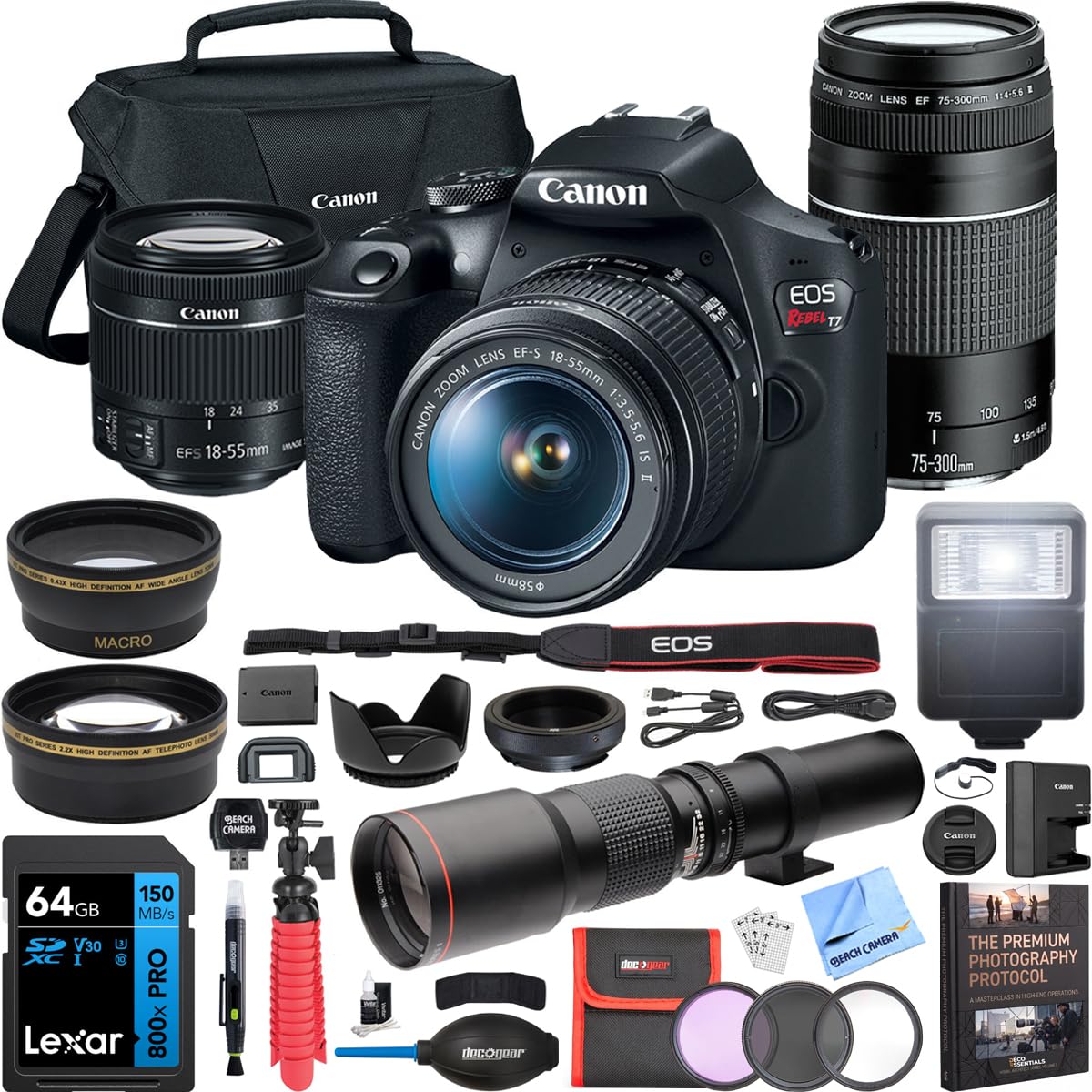
The Canon EOS Rebel T7 is a DSLR, not a traditional camcorder, but it appears in this guide because the bundle includes everything you need to start shooting video. The 24.1-megapixel APS-C sensor with DIGIC 4+ processor delivers excellent photo quality and Full HD 1080p video at 30fps — but not 4K. The dual zoom kit (18-55mm and 75-300mm) plus a 500mm preset telephoto lens gives you massive reach for the price.
The 9-point Phase Detection AF system is slow by modern mirrorless standards but reliable for stationary subjects. The 3-inch LCD with 920K dots is adequate for framing but not as responsive as a touchscreen. The kit includes a 64GB memory card, a camera bag, a flash, filters, and a tripod, making it a true all-in-one starter package for photography and entry-level videography.
The Rebel T7 is limited to 1080p video, which is a significant gap when the rest of this guide focuses on 4K. The continuous shooting speed of 3fps is sluggish, and the battery drains quickly — some users report it dying after just 8 photos on a full charge. The included accessories are mostly generic and lower quality. For a beginner who wants both photos and video on a strict budget, it works; for pure 4K video, look elsewhere.
Why it’s great
- Large APS-C sensor for excellent photos and 1080p video
- Comprehensive bundle with telephoto lens and accessories
- Canon USA warranty and broad lens ecosystem
Good to know
- No 4K video recording — limited to 1080p
- Battery drains extremely fast
11. Blackmagic Design Pocket Cinema Camera 6K Pro

The Blackmagic Pocket Cinema Camera 6K Pro is the ultimate tool for independent filmmakers who need a compact cinema camera. It shares the Super 35 sensor and 13 stops of dynamic range with the 6K G2, but adds three critical upgrades: built-in 2/4/6-stop ND filters, a bright 1500-nit HDR LCD that’s usable in direct sunlight, and a larger NP-F570 battery with a better charging system. The internal ND filters alone save you the hassle of screw-on ND systems.
The camera records 12-bit Blackmagic RAW internally, giving you extreme latitude in post-production for recovering highlights and shadows. The Canon EF mount lets you use any EF lens, from vintage glass to modern cinema primes. The DaVinci Resolve Studio license is included, providing a full professional color grading and editing solution out of the box.
The auto exposure system is weak — it cannot control ISO independently, and iris/shutter transitions are harsh, making the camera unsuitable for run-and-gun use without manual control. Battery life is still only around 60 minutes, so a V-lock battery plate is essential for a full day of shooting. The body is heavy and requires a rig for comfortable handheld use. This is a cinema camera that demands a deliberate, manual workflow.
Why it’s great
- Built-in 2/4/6-stop ND filters for outdoor shooting
- Bright 1500-nit HDR LCD viewable in bright sun
- 13 stops dynamic range and 12-bit Blackmagic RAW
Good to know
- Auto exposure system is not usable for run-and-gun
- Battery life is short; external V-lock is recommended
FAQ
Is a 1-inch sensor worth the extra money in a 4K camcorder?
Can I use a 4K camcorder as a webcam for live streaming?
Why does my 4K camcorder footage look shaky even with stabilization?
How much optical zoom do I need for sports or wildlife?
What is the advantage of a camcorder over a mirrorless camera for video?
Final Thoughts: The Verdict
For most users, the 4k video camcorder winner is the DJI Osmo Pocket 3 because it combines a 1-inch sensor, professional-grade gimbal stabilization, and pocketable portability into a single device that works for both casual vloggers and serious creators. If you need extreme optical zoom for wildlife or events, grab the Panasonic LUMIX FZ80D. And for professional live streaming and multi-camera production, nothing beats the Panasonic HC-X2.

Mo Maruf
I created WellFizz to bridge the gap between vague wellness advice and actionable solutions. My mission is simple: to decode the research and give you practical tools you can actually use.
Beyond the data, I am a passionate traveler. I believe that stepping away from the screen to explore new environments is essential for mental clarity and physical vitality.