Our readers keep the lights on and my smoothie glass nicely filled. As an Amazon Associate, I earn from qualifying purchases.
Choosing a new television today isn’t about just picking a screen size anymore. The real challenge lies in understanding how panel technology, processing power, and refresh rates actually translate into the experience of watching your favorite content, from a dimly lit movie night to a sun-drenched afternoon sports game. You are balancing a complex set of trade-offs between peak brightness, black levels, color volume, and motion clarity, and the wrong decision can mean years of buyer’s remorse.
I’m Mohammad Maruf — the founder and writer behind WellFizz. Over the past decade, I have dissected the specifications and market positioning of dozens of TV models to help consumers navigate the often-overblown marketing claims of the home entertainment industry.
After analyzing the current landscape of panel types, processing chips, and smart platforms, I am confident this guide will help you find the best 4k smart tv for your specific room conditions, viewing habits, and performance expectations without paying for features you will never use.
How To Choose The Best 4K Smart TV
Navigating the TV market requires you to ignore the glossy terms and focus on a few hard metrics that define the viewing experience. Not every big-screen budget buy delivers the same picture quality, and not every premium model will suit a brightly lit living room.
Panel Technology: The Foundation of Picture Quality
The panel type dictates the ceiling for black levels, brightness, and viewing angles. Standard LED/QLED panels use a backlight that can cause blooming—halos of light around bright objects on a dark background. Mini-LED reduces the size of these backlight LEDs, allowing for many more local dimming zones and significantly better contrast control. OLED panels are self-emissive; each pixel produces its own light and can turn off completely, delivering perfect blacks and infinite contrast, but they often struggle in very bright rooms and carry the risk of burn-in over years. Your choice here should match the ambient light in your primary viewing room.
Processing Power and Motion Handling
The video processor is the brain of the TV, responsible for upscaling lower-resolution content to 4K and smoothing motion without creating the dreaded “soap opera effect.” A powerful processor from Sony, Samsung, or LG uses neural networks to reduce noise and add texture. For gamers, the native refresh rate is the key spec. A 60Hz panel is fine for casual TV, but a 120Hz or 165Hz panel, paired with HDMI 2.1 ports, is mandatory for smooth, tear-free gaming on modern consoles and PCs. Motion blur tests are more revealing than the listed megahertz of the processor.
Smart Platform and Connectivity
The operating system determines how quickly you can access your apps and how long the TV stays responsive. Google TV and Roku TV are widely considered the fastest and most intuitive, while Fire TV and webOS offer deep ecosystem integration. Pay attention to the number of HDMI 2.1 ports—you need at least two if you have a soundbar and a next-gen console. Also verify the specific Wi-Fi standard (Wi-Fi 6 is a major upgrade for streaming stability) and whether the TV supports basic audio return channel (eARC) for lossless audio passthrough.
Quick Comparison
On smaller screens, swipe sideways to see the full table.
| Model | Category | Best For | Key Spec | Amazon |
|---|---|---|---|---|
| TCL QM7K Series | Mini-LED QLED | Bright rooms & HDR gaming | 2500 Local Dimming Zones | Amazon |
| Samsung S90F | QD-OLED | Reference picture quality | NQ4 AI Gen3 Processor | Amazon |
| LG OLED G5 | OLED evo | Cinema & wall-mount design | Brightness Booster Max | Amazon |
| Hisense U7 Mini-LED | Mini-LED ULED | High-refresh gaming | Native 165Hz Refresh Rate | Amazon |
| Roku Plus Series | Mini-LED QLED | Ease of use & free content | Roku Smart Picture Max | Amazon |
| Sony BRAVIA 2 II 65″ | LED Smart TV | PS5 gaming & upscaling | 4K Processor X1 | Amazon |
| Sony BRAVIA 2 II 75″ | LED Smart TV | PS5 gaming, large screen | Motionflow XR | Amazon |
| Samsung Q8F QLED | QLED | Bright room family viewing | 100% Color Volume | Amazon |
| LG OLED C1 | OLED | Home theater with deep blacks | A9 Gen 4 Processor | Amazon |
| TOSHIBA C350 | LED Fire TV | Budget-friendly large screen | 60Hz Panel, Voice Remote | Amazon |
| INSIGNIA F50 | LED Fire TV | Value-conscious large screen | DTS Virtual-X Sound | Amazon |
In‑Depth Reviews
1. TCL 65 Inch Class QM7K Series
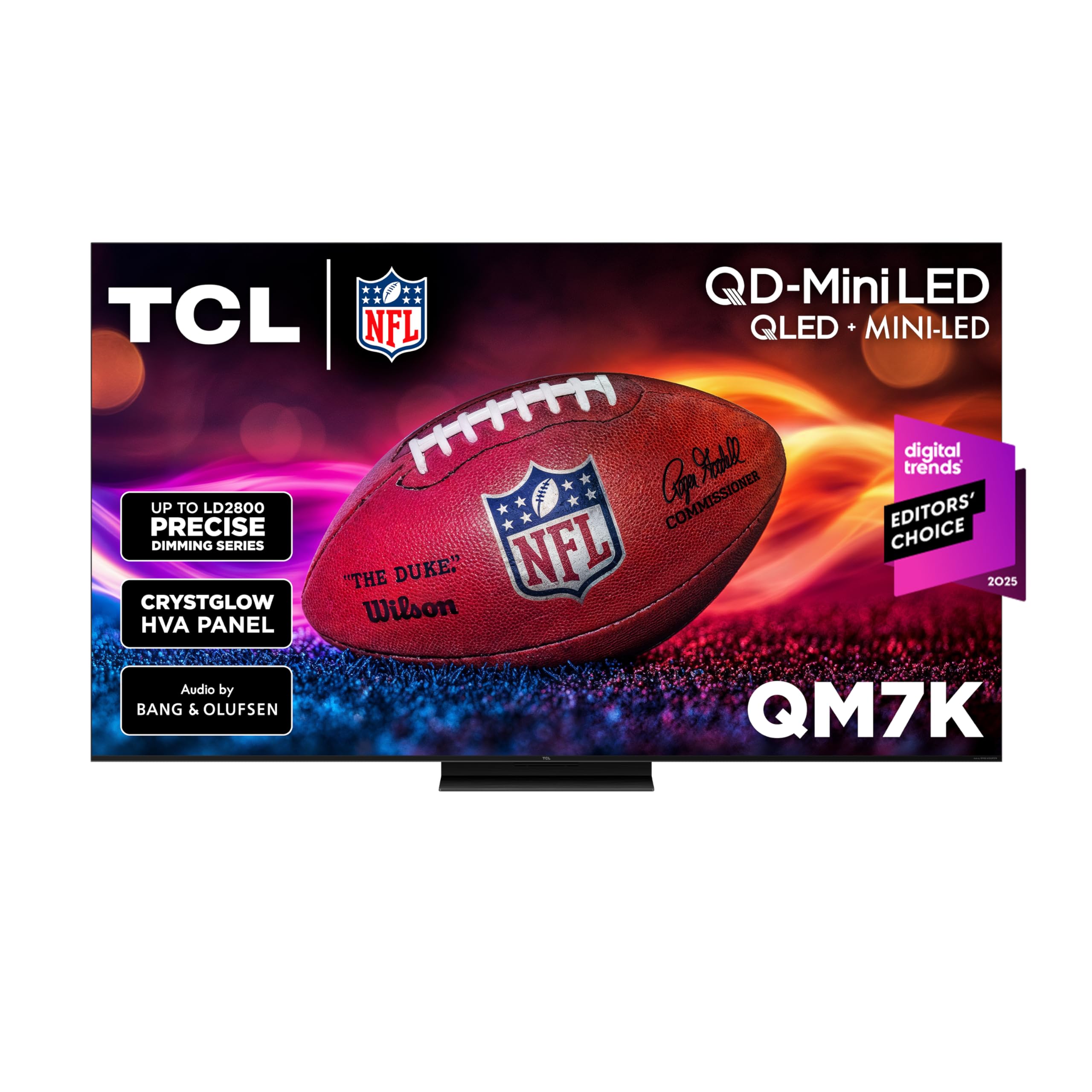
The TCL QM7K strikes the optimal balance between premium Mini-LED performance and mid-range pricing. With up to 2,500 local dimming zones, this 2025 model delivers the kind of contrast that makes HDR content pop—bright highlights against deep, near-inky blacks without the distracting halo effect seen on less sophisticated backlights. The CrystGlow HVA panel actively filters reflections, so even a window behind your couch won’t wash out a crucial scene.
Gamers will appreciate the native 144Hz variable refresh rate that supports 288Hz in gaming mode, paired with HDMI 2.1 inputs for smooth, tear-free action on a PS5 or Xbox Series X. The built-in Onkyo audio is a cut above standard TV speakers, offering a wider soundstage, though hitting the full Dolby Atmos height channels still calls for a dedicated soundbar.
The Google TV interface is responsive and clutter-free for the most part, though some users note a bit of bloatware on first boot. Those coming from an older 1080p panel will notice a dramatic jump in sharpness and color volume, especially in well-lit living rooms where the QM7K’s high brightness ceiling gives it a clear edge over mid-range OLEDs.
Why it’s great
- Excellent Mini-LED contrast with minimal blooming thanks to 2,500 zones
- Superb anti-reflective screen for bright rooms
- High 144Hz refresh rate with VRR for serious gaming
Good to know
- Built-in sound is good but not enough for true Atmos immersion
- Remote control feels cheap compared to the TV’s build quality
- Google TV has some pre-loaded apps that can’t be removed
2. Samsung 55-Inch Class S90F

The S90F represents Samsung’s mastery of QD-OLED technology, fusing the perfect black levels of OLED with the heightened brightness and color volume of quantum dots. The result is a picture that feels almost three-dimensional—colors are more saturated without being unnatural, and specular highlights in HDR content have a punch that a standard OLED struggles to match. The NQ4 AI Gen3 processor, powered by 128 neural networks, upscales standard 1080p streams to near-4K clarity with impressive noise reduction.
Motion handling is top-tier, handling fast-moving sports with minimal blur, and the VRR support up to 144Hz ensures buttery-smooth gaming. However, this panel is not the best choice for a sun-drenched living room. While brighter than older OLEDs, its peak brightness still lags behind the best Mini-LEDs, and the glossy screen can pick up reflections.
Build quality is very good with a slim metal frame, but the thin edges are fragile; mounting requires care. Samsung’s Tizen OS is smooth, and the SolarCell remote is a nice touch, but the interface can feel a bit busy with promoted content. For a dedicated home theater room, this is a spectacular choice.
Why it’s great
- Stunning QD-OLED color volume and perfect black levels
- Exceptional AI upscaling via 128-neural network processor
- 144Hz VRR for elite gaming performance
Good to know
- Peak brightness is good but bright rooms still cause reflections
- Panel edges are very thin and fragile during installation
- Tizen OS can feel cluttered with promotional content
3. LG 65-Inch Class OLED evo G5

The G5 is LG’s statement that OLED can live in a bright room without compromise. The Brightness Booster Max technology pushes light output significantly higher than the C-series, while UL verification for Discomfort Glare Free (UGR under 22) means the anti-reflective coating actually works. Black levels remain perfect—self-lit pixels turn off completely—so contrast is superior to any Mini-LED in a controlled lighting environment.
The Gallery Design (One Wall Design) mounts virtually flush against the wall, making it a stunning architectural statement. The Alpha 11 AI Processor Gen2 handles precise tone mapping for Dolby Vision content, and the 120Hz refresh rate with 0.1ms response time makes it an excellent option for competitive gaming, though the native 120Hz cap means it doesn’t match the 144Hz+ speeds of some rivals.
The webOS platform is intuitive and fast, offering five years of software updates, but the remote lacks backlit buttons—a surprising omission at this level. This TV comes without a stand; you must purchase a VESA mount separately. It is the definitive choice for buyers who prioritize cinematic picture quality and modern aesthetics above all else.
Why it’s great
- Best-in-class OLED brightness with effective anti-glare coating
- Perfect blacks and infinite contrast for cinema immersion
- Ultra-slim flush wall-mount design
- Four HDMI 2.1 inputs with low 0.1ms response time
Good to know
- No stand included in the box, wall mount required
- Remote is not backlit
- Price point is the highest in this lineup
4. Hisense 75″ U7 Mini-LED ULED
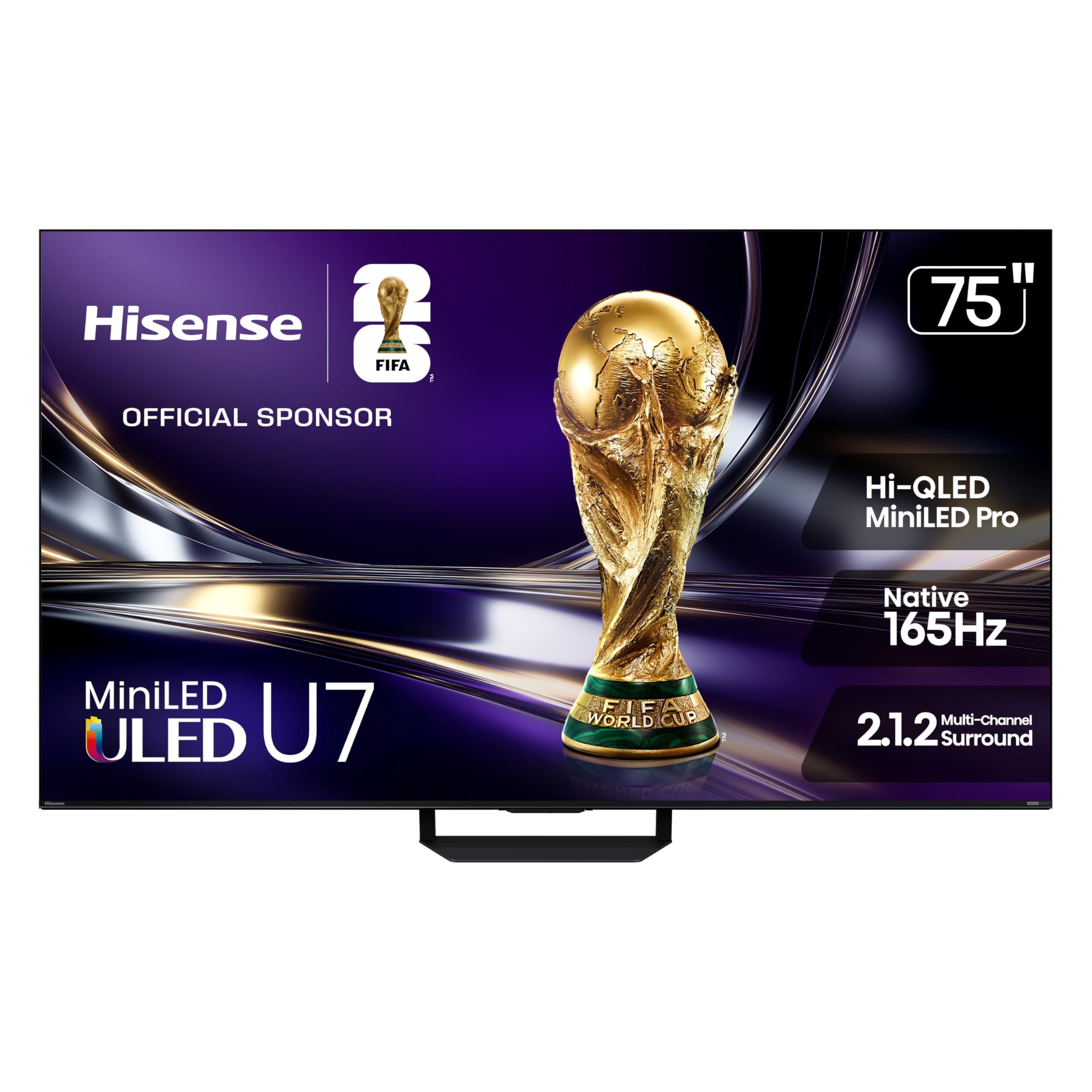
The Hisense U7 is engineered for the gamer who demands the highest possible frame rates without paying a fortune. A native 165Hz refresh rate with a VRR range extending to 330Hz makes this one of the most fluid displays available for PC gaming, eliminating tearing and stuttering in fast-paced competitive titles. The Mini-LED Pro backlight delivers up to 3,000 nits of peak brightness with a claimed 3,000 local dimming zones, resulting in strong HDR impact and deep contrast.
The anti-reflection layer is exceptionally aggressive, making this a top candidate for rooms with large windows or bright overhead lights. The Hi-View AI Engine Pro processor handles upscaling competently, and the inclusion of Dolby Vision IQ and IMAX Enhanced means the TV automatically adjusts based on both the content and the ambient light sensor.
On the downside, the native Google TV interface can feel slightly sluggish compared to the Roku or webOS competitors, and the 2.1.2 channel sound system, while decent, is no substitute for a dedicated surround setup. For a gamer who also watches a lot of daytime sports, this is a powerhouse at its price tier.
Why it’s great
- Industry-leading native 165Hz refresh rate for PC gaming
- Very high peak brightness (3,000 nits) with strong anti-glare
- Excellent value for a large-screen Mini-LED panel
Good to know
- Google TV interface can be a bit sluggish at times
- Built-in sound needs a soundbar for true Atmos
- Limited to one 165Hz HDMI input on some setups
5. Roku Smart TV – 65-Inch Plus Series
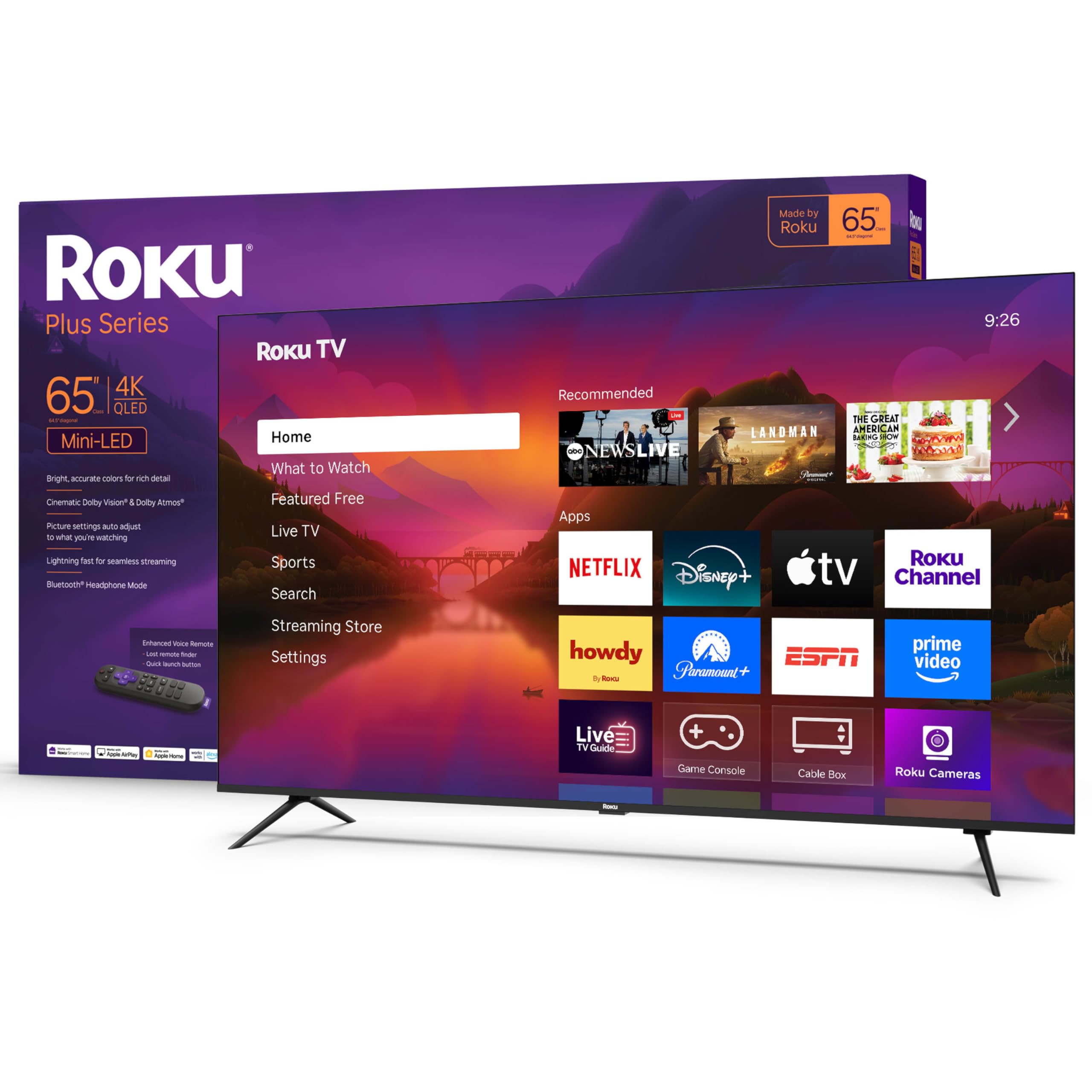
Roku’s Plus Series is the rare TV that gets the software as right as the hardware. The Roku OS is universally praised for its simplicity, speed, and lack of promotional clutter. It launches apps instantly and presents your content—whether from free channels or subscription services—on a clean home screen without overwhelming you with ad tiles. This model finally upgrades the hardware to match the software, featuring a Mini-LED backlight with QLED color for vibrant, punchy HDR.
The Dolby Vision and Dolby Atmos support is solid, creating an impressive cinematic experience for a mid-range panel. The addition of a built-in subwoofer gives the speakers a surprising amount of low-end presence that most slim TVs lack, making dialogue clear and action scenes feel weighty straight out of the box. The Enhanced Voice Remote includes a handy lost remote finder button.
The trade-off is that the Roku settings menu is quite basic compared to the deep calibration options found on Sony or Samsung sets. Enthusiasts who want to tweak white balance and gamma curves may find it limiting, but for the vast majority of families, its ease of use is a massive advantage. It lacks a USB port for local media playback, which is a minor inconvenience.
Why it’s great
- Best-in-class Roku OS—fast, simple, and ad-light
- Built-in subwoofer provides solid, room-filling sound
- Mini-LED QLED panel delivers great color and contrast
Good to know
- Settings menu is basic, missing advanced calibration options
- No USB port for local file playback
- Upscaling is good but not as sharp as Sony or Samsung
6. Sony BRAVIA 2 II 65 Inch

Sony’s BRAVIA 2 II is built around the 4K Processor X1, which is the secret sauce for this LED panel. While it doesn’t have Mini-LED or OLED black levels, the processing is so sophisticated that it still produces a lifelike, natural picture with excellent color accuracy. The upscaling from 1080p is among the best in the business, using a database of patterns to fill in missing detail that makes older cable and streaming content look remarkably crisp.
Where this Sony truly shines is integration with the PlayStation 5. Exclusive features like Auto HDR Tone Mapping and Auto Genre Picture Mode are seamless—the TV detects when you launch a game and instantly switches to the lowest latency mode with optimized HDR settings. The Game Menu puts all gaming picture controls in one place, a very elegant design.
Motionflow XR handles fast sports without introducing the soap opera effect when set correctly, and the Google TV platform is robust. The built-in audio is clear and surprisingly full for a non-premium set. However, it is a standard LED panel, so blooming is visible on subtitles in a dark room, and the peak brightness is not head-turning. It is a brilliant choice for a mixed-use family room where upscaling and gaming matter most.
Why it’s great
- Exceptional upscaling of low-resolution content to near-4K
- Deep PS5 integration with auto HDR and game mode
- Natural, lifelike color processing out of the box
Good to know
- Standard LED panel; visible blooming on dark scenes
- Peak brightness is moderate, not ideal for very bright rooms
- Google TV may boot to menus, slight delay for live TV
7. Sony BRAVIA 2 II 75 Inch
This is the same Sony BRAVIA 2 II platform in a larger 75-inch chassis, offering the same 4K Processor X1, Motionflow XR motion handling, and PlayStation 5 exclusive features. The larger size makes it a better fit for big living rooms or home theaters where seating distance exceeds eight feet, as the screen will fill the peripheral vision for a more immersive experience.
The core strengths remain unchanged: brilliant upscaling that cleans up grainy cable feeds, accurate colors without the oversaturation that some competitors use to impress in showrooms, and the ultra-responsive Game Menu for PS5 use. Sony’s Eco Dashboard is also a welcome touch, allowing you to manage power consumption easily.
The 75-inch size exposes the limitations of a standard LED backlight more—blooming around white text on a black background in a dark room is more noticeable on a larger canvas. Audio is decent for everyday watching but lacks the bass and soundstage for cinematic experiences. For those who prioritize a large, accurate picture with excellent processing over premium contrast technology, this is a logical step up from the 65-inch version.
Why it’s great
- Excellent upscaling makes cable and streaming look sharp at 75″
- Seamless PS5 integration with auto HDR Tone Mapping
- Larger screen for immersive viewing in big rooms
Good to know
- Standard LED panel; blooming artifacts are more visible at this size
- Built-in speakers lack low-end depth for movie bass
- Heavy unit; strong wall mount or sturdy stand is essential
8. Samsung 75-Inch Class QLED Q8F

The Q8F is Samsung’s premium QLED offering that prioritizes high brightness and color volume for well-lit family spaces. With 100% Color Volume using Quantum Dot technology, the TV maintains its vibrancy and saturation even when the brightness is cranked up to combat ambient light. This makes it ideal for daytime viewing of sports and reality TV where the room cannot be fully darkened.
The AirSlim design is genuinely thin, giving it an expensive, floating-on-the-wall look. The Q4 AI processor does a solid job of upscaling content and optimizing the sound for different genres. The inclusion of 144Hz VRR support means it handles new consoles and high-end PC gaming without tearing, though the edge-lit panel lacks the zone control of Mini-LED, so blooming is present in dark room scenarios.
The biggest practical drawback is the sound. The built-in speakers are underwhelming for a TV at this level, lacking depth and bass extension. Almost every user will want to add a soundbar, which is a significant added cost. The solar-powered remote is innovative, but the stand legs are unstable and require a very wide surface. It is a fantastic bright-room performer with some classic QLED limitations.
Why it’s great
- Exceptional color volume stays vivid in bright, sunlit rooms
- Sleek AirSlim design is perfect for wall mounting
- Supports 144Hz VRR for next-gen console gaming
Good to know
- Edge-lit panel causes noticeable blooming in dark scenes
- Built-in sound is weak; a soundbar is almost mandatory
- Stand legs are wide and can feel unstable
9. LG OLED C1 Series 77”

The LG C1 remains a benchmark for home theater enthusiasts even alongside newer models. Its self-lit OLED pixels deliver infinite contrast and perfect black levels that make Mini-LED and QLED panels look washed out by comparison in a dark room. The A9 Gen 4 Intelligent Processor handles Dolby Vision beautifully, producing a cinematic image that is both punchy and natural.
Gaming performance is still excellent, with four full-bandwidth HDMI 2.1 ports, a 120Hz refresh rate, and support for NVIDIA G-Sync and AMD FreeSync Premium. The 1ms response time makes it a top choice for competitive gaming on consoles. The C1 also includes useful OLED care features like Pixel Cleaning and Screen Move to mitigate the risk of burn-in over the long term.
The drawbacks are well-known but worth repeating. It is not ideal for bright rooms, as the glossy screen shows reflections from windows and lamps. webOS 6 has intrusive advertisements on the home screen, and the magic remote’s gyro cursor can be disorienting. This is a 2021 model, so it lacks the latest AI enhancements of the G5, but its core picture quality still competes with many new TVs at a lower price point for a dedicated dark room setup.
Why it’s great
- Perfect blacks and infinite contrast for a superior cinema experience
- Four full HDMI 2.1 ports, G-Sync, and FreeSync Premium
- Excellent built-in OLED care features for long-term prevention
Good to know
- Glossy screen reflects light; not suitable for bright rooms
- webOS has intrusive ad placements on the home screen
- Older 2021 model; no latest-gen AI processing
10. TOSHIBA 75-inch Class C350 Series

For those who need a massive screen on a tight budget, the Toshiba C350 delivers the entry-level 4K experience without major compromise. At 75 inches, it dominates a wall and offers a decently bright picture with good contrast for a basic LED panel. The Fire TV platform is a major convenience, putting Alexa, Prime Video, Netflix, and a host of apps on the home screen right out of the box.
The C350 is a 60Hz panel, so it is not designed for hardcore competitive gaming, but casual console gaming looks fine for most people. Color accuracy out of the box tends toward a warm yellow tint, which is easily corrected with a quick calibration in the settings. The sound is surprisingly robust for a budget TV, with several reviewers noting they did not feel the need to immediately attach a soundbar.
The biggest limitation is the lack of local dimming zones. Blacks appear more like dark grays in a dark room, and blooming is present around bright objects. The remote has a slight delay when navigating some streaming menus. For a primary viewing room, the contrast will disappoint, but for a guest room, basement, or as a secondary TV where screen size is the priority, it offers incredible value.
Why it’s great
- Exceptional value for a 75-inch 4K screen
- Built-in Fire TV platform with Alexa voice remote
- Surprisingly good built-in sound for the price
Good to know
- No local dimming; blacks appear gray in dark rooms
- 60Hz panel limits high-frame-rate gaming
- Out-of-box color needs calibration to remove yellow tint
11. INSIGNIA 75-inch Class F50 Series

The Insignia F50 competes directly with the Toshiba C350 as a budget entry point into large-screen 4K. It offers a pristine 75-inch 4K UHD panel with HDR10 support and the Fire TV smart platform, making it incredibly easy to set up and stream content. The picture quality is crisp and vibrant in a standard living room environment, with many users praising the screen quality for the price during sales events.
For the entry-level price, you get decent viewing angles and a lightweight design that is easy to wall-mount. The inclusion of DTS Virtual:X is a nice touch, aiming to widen the soundstage from the built-in speakers. This feature helps a bit with dialogue clarity, though the speakers still lack the bass range for an immersive movie experience. Setup is generally quick, with the TV readily recognizing external soundbars and devices.
The risks at this price level are real. Some units have been reported with poor quality control, including setup loops, remote pairing issues, and a sluggish interface. Careful unboxing to check for damage and a straightforward return process are strongly recommended. For a casual viewer who prioritizes screen real estate over picture depth, and wants a familiar Fire TV interface, this is a very affordable gateway to big-screen 4K.
Why it’s great
- Very low cost for a large 75-inch 4K display
- DTS Virtual:X audio expands the soundstage a bit
- Thin bezels and lightweight for easy mounting
Good to know
- Quality control can be inconsistent; check unit upon arrival
- Interface can feel sluggish compared to premium TVs
- Weak black levels and limited HDR impact
FAQ
Is a Mini-LED TV better than an OLED TV for a living room?
What is the difference between a 60Hz and a 120Hz panel for watching movies?
Does the number of HDMI 2.1 ports matter if I only use a soundbar?
Final Thoughts: The Verdict
For most users, the best 4k smart tv winner is the TCL 65 Inch Class QM7K Series because it delivers superb Mini-LED contrast, excellent brightness for bright rooms, and a high 144Hz refresh rate for gaming at a price that is significantly lower than comparable OLEDs. If you want the absolute best picture quality with perfect blacks and vibrant QD-OLED color, grab the Samsung 55-Inch Class S90F. And for a massive screen on a tight budget, nothing beats the sheer value of the TOSHIBA 75-inch Class C350 Series.

Mo Maruf
I created WellFizz to bridge the gap between vague wellness advice and actionable solutions. My mission is simple: to decode the research and give you practical tools you can actually use.
Beyond the data, I am a passionate traveler. I believe that stepping away from the screen to explore new environments is essential for mental clarity and physical vitality.