Our readers keep the lights on and my smoothie glass nicely filled. As an Amazon Associate, I earn from qualifying purchases.
The leap from a standard lamp-based projector to a 4K laser model is not incremental; it is a complete sensory upgrade. You are trading finite, fading bulbs for a stable, high-lumen light source that delivers punchy contrast and vibrant colors instantly, without a warm-up period. For anyone building a dedicated home theater or a living-room entertainment hub, the laser light engine solves the two biggest headaches of traditional projection: lamp replacement costs and the constant battle against washed-out images in ambient light.
I’m Mohammad Maruf — the founder and writer behind WellFizz. My deep market research focuses on the optical engineering and real-world lumen output comparisons that define the true value of laser projection hardware, from tri-color RGB engines to single-chip DLP and 3LCD architectures.
Whether you are upgrading from a 1080p setup or building your first dedicated cinema space, this guide breaks down the top contenders for the best 4k laser projectors under 4000, focusing on the specs that actually dictate your viewing experience — brightness, contrast, color volume, and gaming latency.
How To Choose The Best 4K Laser Projectors Under 4000
Selecting the right laser projector in this price band requires balancing brightness against contrast, throw distance against room dimensions, and native resolution against pixel-shifting technologies. The goal is to avoid paying for specs that your viewing environment cannot reproduce.
Laser Engine Type: Single, Dual, or Triple?
The most impactful decision you will make is the type of laser light source. Single-blue laser projectors use a phosphor wheel to generate red and green, often resulting in a narrower color gamut. Triple-laser (RGB) projectors use independent red, green, and blue lasers, achieving over 100% BT.2020 coverage and eliminating color wheel artifacts like the rainbow effect. Dual-laser systems strike a middle ground, offering better color than single-laser without the cost of three separate diodes.
Brightness: ANSI Lumens vs. ISO Lumens and Real-World Use
Brightness is the single most important spec for a non-light-controlled room. ANSI lumens measure white brightness on a standardized grid, while ISO lumens test both white and color brightness, often yielding a lower number. A projector rated at 2,000 ANSI lumens will be adequate for evening viewing with some ambient light, but 3,000+ lumens is recommended for daytime use on a screen larger than 120 inches. Pay attention to color brightness — a 3LCD projector can deliver significantly better color volume at the same lumen rating compared to a single-chip DLP.
Contrast, HDR, and Dynamic Tone Mapping
Contrast ratio dictates the depth of blacks and the perceived sharpness of the image. Native contrast (measured without dynamic dimming) is more revealing of panel quality than dynamic contrast numbers. For HDR performance, look for projectors with robust dynamic tone mapping that adjusts brightness on a frame-by-frame basis. Dolby Vision certification is a strong indicator of superior HDR handling, as it uses metadata to optimize each scene. A projector with 2,000:1 native contrast and good tone mapping can out-perform a higher-rated model with poor HDR processing in dark scenes.
Throw Ratio and Lens Features
The throw ratio determines how far the projector must sit from the screen to achieve a given image size. Standard throw projectors (1.2:1 to 1.5:1) offer flexibility with lens shift and optical zoom, allowing placement on a ceiling or rear shelf. Ultra-short-throw (UST) projectors (0.21:1 to 0.25:1) sit inches from the wall, eliminating shadows and making them ideal for small living rooms, but they require a perfectly flat, high-gain screen. Motorized lens shift and optical zoom are premium features that simplify installation and allow you to adjust the image without degrading quality.
Gaming Performance: Input Lag and Refresh Rate
If gaming is a priority, look for HDMI 2.1 input with support for 4K at 120Hz and sub-16ms input lag. The best gaming projectors in this category offer a dedicated low-latency mode that reduces processing lag to under 10ms at 1080p/240Hz or 4K/60Hz. Variable Refresh Rate (VRR) and Auto Low Latency Mode (ALLM) are emerging features that eliminate screen tearing and automatically switch to game mode, respectively. For competitive play, sub-8ms input lag at 1080p/240Hz is essential for a responsive experience.
Quick Comparison
On smaller screens, swipe sideways to see the full table.
| Model | Category | Best For | Key Spec | Amazon |
|---|---|---|---|---|
| Valerion VisionMaster Pro2 | Standard Throw | Cinema & Gaming Hybrid | 15,000:1 contrast, 3000 ISO lumens | Amazon |
| Hisense C2 Ultra | Standard Throw | Portable Premium Cinema | Triple Laser, 3000 ANSI lumens | Amazon |
| Epson LS11000 | Standard Throw | Light-Controlled Theater | 3LCD, 120Hz 4K, 2,500 lumens | Amazon |
| XGIMI Horizon 20 Max | Standard Throw | Daylight Brightness King | 5700 ISO lumens, triple laser | Amazon |
| Nebula X1 by Anker | Standard Throw | High-Contrast Portable | 3500 ANSI lumens, 56,000:1 dynamic | Amazon |
| Epson LS800 | Ultra Short Throw | Bright Room UST Setup | 4,000 lumens, 3LCD, 3-chip | Amazon |
| Hisense C2 | Standard Throw | Value Triple Laser Entry | Triple Laser, 2000 ANSI Lumens | Amazon |
| XGIMI AURA 2 | Ultra Short Throw | Design-Conscious UST | Dolby Vision, IMAX Enhanced | Amazon |
| AWOL LTV-3000 Pro | Ultra Short Throw | Built-in Center Channel Audio | Triple Laser, 107% BT.2020 | Amazon |
| LG HU810PW | Standard Throw | Dual Laser with Lens Shift | Dual Laser, 97% DCI-P3 | Amazon |
| WEMAX Nova Pro | Ultra Short Throw | Smart UST with ALPD Tech | 2100 ISO lumens, 150-inch max | Amazon |
| NexiGo Aurora Pro MKII | Ultra Short Throw | Dynamic Contrast UST | 30,000:1 contrast, ALPD 5.0 | Amazon |
| BenQ TK710 | Standard Throw | Budget Gaming & Movies | 3200 Lumens, 4ms 1080p/240Hz | Amazon |
In‑Depth Reviews
1. Valerion VisionMaster Pro2 Triple Laser Projector

The Valerion VisionMaster Pro2 represents a new benchmark for this class, delivering a true triple-laser RGB engine with a remarkable 15,000:1 native contrast ratio. This contrast figure is not a dynamic marketing number; it creates real depth in dark scenes, with blacks that approach the inky levels of a premium OLED, something rare in a sub-4K-laser projector. The 3,000 ISO lumens output ensures the image retains punch even with a lamp or some indirect sunlight in the room.
Gamers will appreciate the 4ms input lag at 1080p/240Hz, coupled with 240Hz support for ultra-wide 21:9 and 32:9 aspect ratios, making this one of the most responsive projectors available for competitive play. The OpticFlex Lens System with a 0.9–1.5x optical zoom provides significant placement flexibility, allowing you to fill a 150-inch screen from a relatively short throw without losing clarity. Built-in Google TV with AirPlay 2 and Chromecast completes the smart package.
The active Enhanced Black Level (EBL) technology dynamically adjusts the laser output to improve shadow detail in HDR content, while the ISF-certified calibration ensures out-of-box color accuracy that rivals reference monitors. The combination of high contrast, low input lag, and robust HDR handling makes the Pro2 a true all-rounder that excels in both a dark theater and a daytime family room.
Why it’s great
- Industry-leading native contrast eliminates washed-out blacks in dark scenes.
- Ultra-low 4ms input lag with 240Hz refresh for competitive gaming.
- Flexible 0.9-1.5x optical zoom simplifies installation in various room sizes.
Good to know
- Single-chip DLP may produce rainbow effect for sensitive viewers in bright scenes.
- Lacks a motorized lens shift; physical placement requires more precision.
2. Hisense C2 Ultra Triple Laser Portable Projector

Hisense has iterated aggressively with the C2 Ultra, bringing a full triple-laser light source and 3000 ANSI lumens into a portable gimbal-mounted chassis. The inclusion of a 1.67x optical zoom (0.9–1.5:1 throw ratio) is a standout feature, allowing you to resize the image without moving the projector or losing resolution — a massive convenience for rooms where furniture placement is fixed. The 360-degree horizontal and 135-degree vertical gimbal tilt means you can project onto a wall, ceiling, or even a high shelf with zero setup friction.
The C2 Ultra is certified for both Dolby Vision and IMAX Enhanced, and the triple laser covers 110% of the BT.2020 color space, delivering reds, greens, and blues that look saturated without being artificial. The native 2000:1 contrast ratio is decent, but the real magic is in the dynamic tone mapping, which handles HDR highlights with enough headroom to avoid clipping on bright specular reflections. The built-in JBL speakers with DTS Virtual:X produce clear dialogue and surprising bass response for a portable unit.
Gaming performance is strong with support for 240Hz at 1080p and a tested input lag under 16ms at 4K/60Hz. The Xbox certification ensures seamless Auto Low Latency Mode switching. The VIDAA OS is smooth and ad-light, and the HDMI 2.1 ports with eARC pass through Dolby Atmos without issue. This is the most versatile single unit for someone who wants cinema quality in a moveable, living-room-friendly form factor.
Why it’s great
- Triple laser delivers 110% BT.2020 color coverage with excellent saturation.
- Gimbal mount and optical zoom offer unmatched placement flexibility.
- Certified Dolby Vision and IMAX Enhanced for premium HDR handling.
Good to know
- Lacks motorized lens shift; relies on gimbal tilt for vertical adjustment.
- Native blacks can appear slightly raised in a fully darkened room compared to higher-contrast models.
3. Epson Home Cinema LS11000 4K PRO-UHD Laser Projector

The Epson LS11000 is the enthusiast’s choice for a dedicated, light-controlled theater, and its 3-chip 3LCD engine is fundamentally different from the DLP projectors dominating this list. Because it uses three independent LCD panels, it delivers 100% of the RGB color signal simultaneously, which means zero rainbow effect (RBE) — a critical advantage for the ~15% of viewers who find DLP rainbows distracting. The laser array light source provides instant-on and consistent 2,500 lumens with a dynamic contrast ratio exceeding 1,200,000:1.
The Precision Shift Glass Plate technology produces a sharp 4K image that, on a 150-inch screen, appears pixel-free and ultra-detailed. The motorized lens with generous vertical and horizontal lens shift, along with powered zoom and focus, makes installation effortless, even with a fixed ceiling mount. The 10-bit HDR processing with real-time curve adjustment allows 16 steps of fine-tuning, which is invaluable for getting the most out of demanding HDR10+ content where shadow detail and highlight roll-off matter.
For gamers, the LS11000 supports 4K at 120Hz via HDMI 2.1, with input lag measured at under 20ms in the fast mode. The lack of VRR is a minor omission, but the smooth frame interpolation and excellent motion handling make it a joy for sports and action movies. The chassis is large and requires a substantial shelf or ceiling mount, and the price sits at the upper bound of this category, but for those prioritizing color accuracy and zero artifacts, it remains a reference-grade option.
Why it’s great
- 3-chip 3LCD delivers perfect color brightness and zero rainbow effect.
- Full motorized lens shift, zoom, and focus for precise installation.
- 120Hz 4K support with excellent HDR tone mapping controls.
Good to know
- Large chassis requires substantial space and a robust mount.
- Native contrast is good, but dynamic iris pumping can be audible in quiet scenes.
4. XGIMI Horizon 20 Max Triple Laser Projector
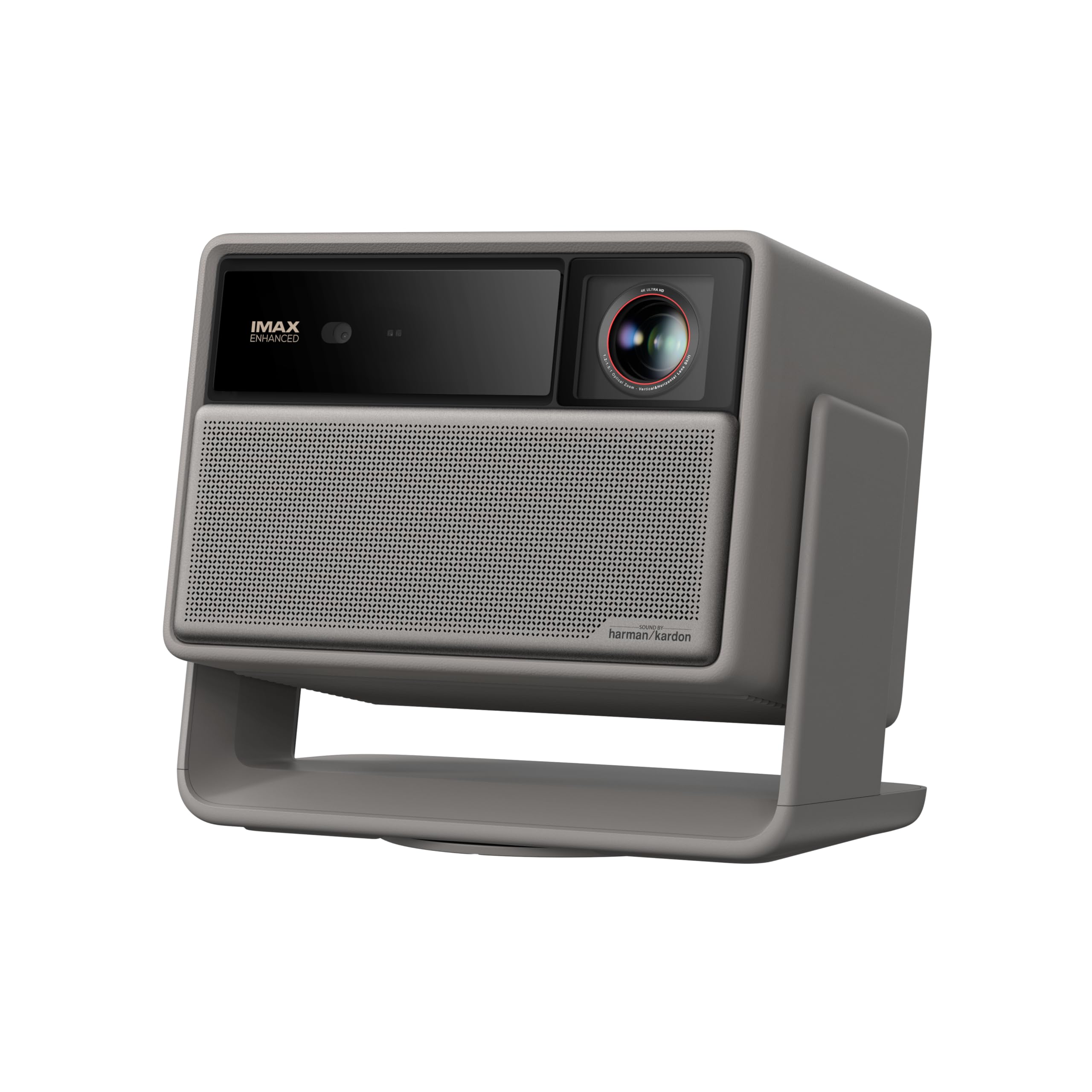
The XGIMI Horizon 20 Max is the undisputed brightness champion in this roundup, boasting a claimed 5,700 ISO lumens from its X-Master RGB triple laser engine. In real-world testing, standard mode delivers around 3,600-3,900 lumens, which is still enough to overpower ambient light in a living room with large windows, producing a watchable image even before noon. The 20,000:1 native contrast and 110% BT.2020 coverage ensure that this brightness is not just white light — colors remain saturated and punchy.
Optical capabilities include a flexible motorized lens shift and optical zoom, which are a rarity at this price point and eliminate the need for digital keystone distortion. The 1ms input lag at 1080p/240Hz is the fastest in this lineup, making it a serious contender for competitive gamers who also want a living-room projector. The built-in Google TV is fully integrated with licensed Netflix, and the Harman Kardon speakers produce clear, neutral audio that can fill a medium-sized room.
The primary trade-off is the single-chip DLP architecture, which some users report causes noticeable laser speckle on bright, uniform surfaces like skies or animated backgrounds. The 3D performance is excellent, with bright, sharp, and flicker-free images. For buyers who prioritize daytime visibility and gaming speed above all else, and who can accept the potential for subtle speckle artifact, the Horizon 20 Max delivers unmatched luminous power.
Why it’s great
- Class-leading real-world brightness handles bright living rooms easily.
- Motorized lens shift and optical zoom for lossless image alignment.
- Fastest input lag at 1ms 1080p/240Hz for competitive gaming.
Good to know
- Laser speckle visible in bright solid-color scenes for some viewers.
- Peak brightness is Dimmer in HDR mode compared to standard SDR.
5. Nebula X1 4K Projector by Anker

The Nebula X1 from Anker combines a triple-laser engine with a custom 6-blade iris and NebulaMaster dynamic contrast technology to deliver a staggering 56,000:1 dynamic contrast ratio. While dynamic numbers are always inflated, the real-world result is visible: deep, inky blacks for a portable DLP projector, with excellent shadow separation during dark movie sequences. The 3,500 ANSI lumens output ensures the projector holds its own in mixed lighting without washing out the image.
What sets the X1 apart is its auto-alignment system. The built-in sensors scan your projection surface and automatically adjust focus, keystone, and screen size in one click. The Spatial Recall feature remembers settings for different locations — living room, backyard, or camping — making it genuinely portable. The 14-element all-glass lens maintains edge-to-edge sharpness even on a 300-inch screen, with no visible color fringing or corner softness.
ISF certification and TÜV Rheinland eye-comfort certification are rare in this category. The Dolby Vision support is fully implemented, and the 5,000:1 native contrast (before dynamic enhancement) is respectable. The main compromises are a 60Hz input limit (no 120Hz gaming) and a remote that lacks a dedicated input selection button. The operating system uses Android 14 with Google TV, which is smooth after the mandatory firmware update that improves the dynamic iris control algorithm.
Why it’s great
- Impressive dynamic contrast provides deep blacks for a portable DLP.
- Auto-alignment and Spatial Recall make it genuinely versatile for indoor and outdoor use.
- Custom all-glass lens maintains sharpness across the entire 300-inch image.
Good to know
- Input limited to 60Hz; not suitable for high-refresh-rate gaming.
- Some units have inconsistent color calibration out of the box, requiring manual tuning.
6. Epson LS800 Ultra Short Throw 3LCD Projector

The Epson LS800 is the ultra-short-throw projector that solves the ambient light problem definitively, delivering 4,000 lumens of both color and white brightness from its 3-chip 3LCD engine. This is the same brightness that DLP projectors with double the lumen rating struggle to match in color volume. The LS800 can produce a vibrant, watchable image on a 120-inch ALR screen even with the blinds partially open, making it the best option for a living room that doubles as a daytime TV replacement.
True 3-chip LCD means zero rainbow effect, and the image is free of the color breakup that plagues single-chip DLP projectors. The ultra-short throw ratio allows the projector to sit just inches from the wall, and the built-in Android TV offers streaming apps without a separate dongle. The built-in Yamaha speakers deliver sound that is surprisingly robust for an integrated system, with clear dialogue and a decent stereo image.
The 4K PRO-UHD system uses pixel-shifting to create an 8.29-million-pixel image, which is sharp on screens up to 150 inches, though some users note that text and UI elements show limitations compared to native 4K projectors. Installation is straightforward thanks to individually adjustable feet and multi-point picture adjustment, but aligning corners perfectly can be finicky at extreme throw angles. The LS800 is a one-box solution for bright rooms that prioritizes ease of use and color fidelity above raw pixel count.
Why it’s great
- 3LCD provides true color brightness without rainbow effect — best-in-class for bright rooms.
- Ultra-short throw design sits against the wall, ideal for small living rooms.
- 4,000 lumens deliver a bright, saturated image even with windows uncovered.
Good to know
- Pixel-shifting means it is not true native 4K; text clarity is limited.
- Complicated corner alignment at extreme throw angles can be frustrating.
7. Hisense Laser Mini Projector C2

The Hisense C2 (base model) offers the same triple-color laser light source found in its Ultra sibling for a significantly lower entry point, making it the best value proposition for buyers who want the color advantages of an RGB laser without the premium price. With 2,000 ANSI lumens and 110% BT.2020 coverage, the C2 delivers vibrant, punchy colors that look noticeably richer than any single-laser or LED projector in its price bracket. The gimbal design with 360-degree rotation and 135-degree tilt is identical to the Ultra model, providing exceptional placement freedom.
Dolby Vision support for a sub- projector is rare, and the C2 handles HDR content with competent dynamic tone mapping that preserves shadow detail without crushing blacks. The 1700:1 native contrast is modest, but the triple laser’s ability to produce deep, saturated reds and greens compensates during high-saturation scenes. The 240Hz refresh rate with 12ms input lag makes it a capable gaming projector for console and PC players, though not as fast as the dedicated gaming models.
The built-in JBL speakers are a genuine surprise — they produce clear, balanced audio with enough volume for a medium-sized room. The VIDAA OS is responsive and free of bloatware. The main sacrifice compared to the C2 Ultra is the lower brightness (2,000 vs. 3,000 lumens) and the lack of a 1.67x optical zoom (only digital zoom). For evening viewing or rooms with controlled light, the C2 is a smart, cost-effective entry into true triple-laser projection.
Why it’s great
- Triple laser delivers BT.2020 color coverage at a breakthrough price point.
- Gimbal mount provides effortless ceiling, wall, and angled projection.
- Dolby Vision support with solid dynamic tone mapping for HDR content.
Good to know
- 2,000 lumens may feel dim in a bright living room; better for controlled light.
- Lacks the optical zoom of the Ultra model; relies on digital zoom.
8. XGIMI AURA Series UST Laser Projector (AURA 2)

The XGIMI AURA 2 is the most design-conscious ultra-short-throw projector in this guide, with a sleek, compact footprint (20.08 inches wide) and a premium build that looks like a piece of modern furniture rather than a home theater component. The Dual Light 2.0 technology combines a phosphor laser with an LED light source to produce 2,300 lumens with 1,000,000:1 dynamic contrast, resulting in a bright, vivid image that works well with an ALR screen. The built-in Harman Kardon speakers are among the best integrated audio solutions in a UST, delivering clear dialogue and respectable bass without a soundbar.
Dolby Vision and IMAX Enhanced certification ensure that the AURA 2 can handle high-dynamic-range content with proper metadata processing. The auto-keystone and auto-focus features, including wall-color adaptation, simplify setup significantly, and the protective auto-shutter extends the laser’s lifespan. The ultra-short-throw ratio of 0.177:1 means it can throw a 100-inch image from just a few inches away from the wall, but the offset requires a specific cabinet depth.
Some users report keystone issues with uneven walls, and the Android TV interface lacks the polish of Google TV. The color reproduction, while vibrant, does not match the accuracy of a high-end triple-laser system. It is an excellent choice for a buyer who values a low-profile, all-in-one UST solution with great sound and a refined aesthetic, rather than the absolute best color volume.
Why it’s great
- Ultra-compact and elegant design fits into modern living room furniture.
- Built-in Harman Kardon speakers deliver excellent integrated audio.
- Dolby Vision, IMAX Enhanced, and fast auto-adjustment features for easy setup.
Good to know
- Color accuracy is good but not competitive with true triple-laser models.
- Keystone adjustment can struggle with walls that are not perfectly flat.
9. AWOL VISION LTV-3000 Pro UST Triple Laser Projector

The AWOL LTV-3000 Pro is the first ultra-short-throw projector to include a built-in center channel speaker that maps dialogue directly to the screen, creating a phantom center that significantly improves vocal clarity without requiring external speakers. This makes it a standout for buyers who want a complete TV replacement in a single box. The triple laser engine covers 107% of the BT.2020 color space, delivering cinema-grade color accuracy with a 2500:1 native contrast ratio.
True triple-laser technology means no color wheel and no rainbow effect, and the image is speckle-free even on high-gain screens. The 2,000 lumens of brightness is adequate for a dark room or one with indirect light, but it is not a daytime powerhouse. The 0.25:1 throw ratio requires a specific cabinet depth — about 8.5 inches for a 100-inch image and 12.8 inches for 150 inches, so careful furniture planning is needed.
3D performance is excellent, with bright, sharp images that exceed previous-generation projectors. The PJ Link IP control allows integration with home automation systems like Control4, a feature rarely seen in this category. The setup lacks auto-adjustment features, requiring manual positioning for focus and keystone. The image quality, particularly for 4K HDR and 3D content, is reference-level for a UST, making it a strong choice for a serious dark-room theater.
Why it’s great
- Built-in center channel speaker dramatically improves dialogue clarity.
- Triple laser delivers 107% BT.2020 with accurate, vibrant colors.
- Excellent 3D performance with bright, flicker-free images.
Good to know
- Brightness is limited to 2,000 lumens; not suitable for bright rooms.
- Manual setup requires precise physical placement; no auto keystone.
10. LG HU810PW 4K Dual Laser CineBeam Projector

The LG HU810PW uses a dual-laser light source to achieve 97% of the DCI-P3 color space, a figure that was impressive when it launched and remains competitive. The 2,700 ANSI lumens output is consistent and reliable, producing a sharp 4K image with good contrast on screens up to 120 inches. The inclusion of motorized lens shift, zoom, and focus is a significant convenience feature that makes installation on a ceiling mount straightforward.
The webOS 5.0 smart platform is mature and responsive, with built-in AirPlay 2 and Miracast for easy screen mirroring. The 2,000,000:1 dynamic contrast ratio provides a lively HDR image with decent black levels, though the native contrast is lower than premium DLP or 3LCD competitors. The 10-bit HDR processing supports HDR10 and HLG, and the dynamic tone mapping works well for most content, though it lacks Dolby Vision support.
Fan noise is low, and the laser light source means no warm-up or cooldown time. Some long-term users report dead pixels after a year of heavy use, and the 1-year warranty is a concern for a projector at this price. The 50ms input lag makes it unsuitable for competitive gaming. It is a solid, reliable dual-laser projector for movies and general TV watching in a living room, but the lack of Dolby Vision and higher input lag limit it in comparison to newer triple-laser models.
Why it’s great
- Dual laser delivers 97% DCI-P3 with consistent, accurate color.
- Motorized lens shift, zoom, and focus simplify ceiling installation.
- Low fan noise and no lamp warm-up make it user-friendly.
Good to know
- No Dolby Vision support; HDR tone mapping is less refined than competitors.
- Input lag at 50ms is too high for competitive gaming.
11. WEMAX Nova Pro 4K Ultra Short Throw Projector
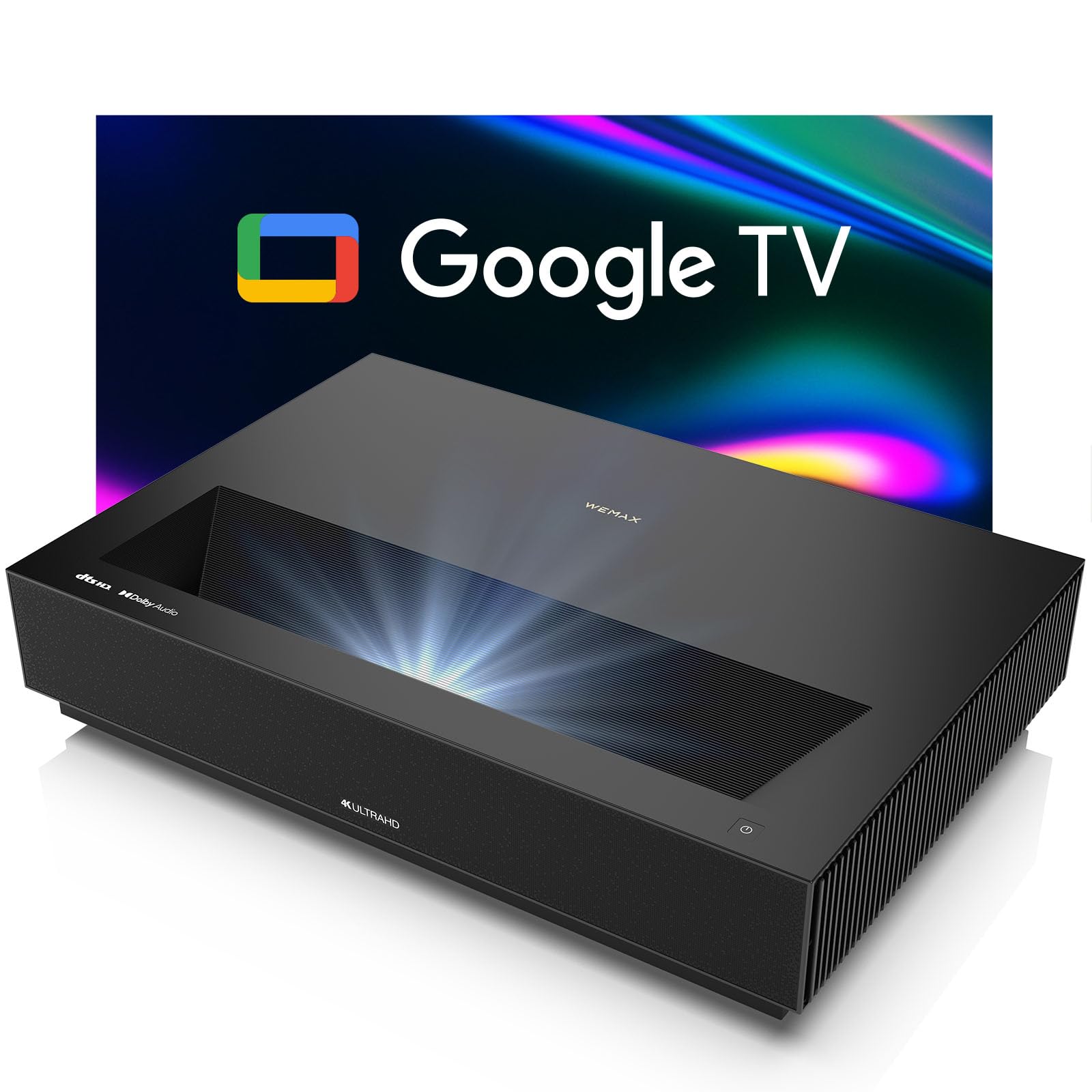
The WEMAX Nova Pro is an excellent entry into ultra-short-throw laser projection, powered by ALPD laser technology that produces speckle-free images with 110% Rec.709 color gamut and 1.07 billion colors. The 2,100 ISO lumens brightness is sufficient for evening viewing and moderate ambient light, but it is best paired with an ALR screen for daytime use. The ultra-short throw ratio of 0.23:1 means you can project a 150-inch image from just 19 inches away from the wall.
Built-in Google TV with native Netflix support (which bypasses the usual UST streaming headaches) is a major convenience. The built-in MEMC motion compensation works well for smoothing out fast-moving sports content. The dual 15W speakers with Dolby Audio and DTS-HD produce a respectable soundstage for a projector, though external speakers will be needed for a truly cinematic experience.
Some users report glitchy HDMI input detection that requires periodic restarts, and the remote lacks a dedicated input source button. The smart features require a fiber optic connection for full sound output, adding a potential setup complication. The picture quality after calibration is excellent for the price, making it a top pick for someone on a tighter budget who wants the convenience of a UST form factor and integrated smart TV.
Why it’s great
- ALPD technology provides speckle-free 4K with excellent color accuracy.
- Built-in Google TV with native Netflix eliminates the need for a streaming stick.
- Ultra-short throw creates a 150-inch image from inches away from the wall.
Good to know
- HDMI input detection can be glitchy, requiring occasional restarts.
- Remote control lacks a dedicated button for switching input sources.
12. NexiGo Aurora Pro MKII Tri-Color Laser UST

The NexiGo Aurora Pro MKII uses the advanced ALPD 5.0 laser engine to produce a tri-color laser image with a claimed contrast ratio exceeding 30,000:1, thanks to its Scene Adapt Engine (SAE) that combines a Dynamic Iris and Dynamic Laser Dimming. This system adjusts the laser output in real-time based on content, allowing for significantly deeper blacks than typical UST projectors. The 2,400 lumens brightness is modest, but the dynamic contrast management makes dark scenes appear much more immersive.
Gaming performance is strong with support for 4K at 120Hz and an ultra-low input lag of 4.2ms to 8ms in Gaming Mode. The 0.21:1 throw ratio allows a 150-inch image from a very close distance, making it suitable for tight spaces. The built-in 60W speakers with Dolby Atmos support are powerful enough for a medium room, though purists will want an external system. The 107% BT.2020 color gamut and ΔE≈1 color accuracy ensure that out-of-box colors are reference-grade.
Some users report that the projector requires a completely dark room to look its best, as the modest 2,400 lumens can get washed out by ambient light. There are also reports of the projector overheating and shutting down in warm environments, and the remote sensor is very directional. The image quality, when conditions are right, is spectacular for the price, with exceptional sharpness and color uniformity across the entire screen.
Why it’s great
- Scene Adapt Engine delivers deep blacks and strong dynamic contrast for a UST.
- Ultra-low 4.2ms input lag at 4K/120Hz for responsive gaming.
- ALPD 5.0 provides excellent color accuracy and edge-to-edge sharpness.
Good to know
- Brightness is limited; performs best in a dark or light-controlled room.
- Reports of overheating shutdown and finicky remote sensor accuracy.
13. BenQ TK710 4K Laser 3200 Lumens Gaming Projector

The BenQ TK710 is the most budget-friendly entry into the 4K laser category, focusing on gaming performance and brightness rather than premium color volume. With 3,200 ANSI lumens and a 600,000:1 dynamic contrast ratio, it is bright enough for a living room with ambient light, making it a strong candidate for a first-time projector buyer who gamifies as much as they watch movies. The 4ms response time at 1080p/240Hz is the fastest in this lineup alongside the XGIMI Horizon 20 Max, making it ideal for fast-paced shooters.
The single-laser DLP engine delivers sharp 4K UHD images with HDR10 and HLG support, and the dynamic function adjusts the laser output for improved contrast. The 1.3x optical zoom and vertical lens shift provide decent placement flexibility for a budget model. The built-in speaker is serviceable for casual use but will not replace a dedicated sound system.
Color coverage is limited to 95% Rec.709, which is narrower than the triple-laser competitors, meaning reds and greens will appear less saturated. The plastic build feels less premium than the metal chassis of the Hisense or Valerion models. For a gamer on a tighter budget who prioritizes low input lag and high brightness over color volume and premium build, the TK710 is a smart, no-nonsense pick.
Why it’s great
- Fastest gaming response time at 4ms and 240Hz for competitive play.
- High 3,200 lumens brightness works well in rooms with ambient light.
- Best entry-level price for a 4K laser projector with gaming features.
Good to know
- Limited to 95% Rec.709 color space; colors look less vibrant than triple-laser models.
- Build quality is plastic and feels less premium than higher-tier options.
FAQ
Is a triple laser projector worth the extra cost over a single laser model?
What is the difference between ANSI lumens and ISO lumens for a 4K laser projector?
Can I use a 4K laser projector for competitive gaming without input lag issues?
Why do I need a special screen for an ultra-short-throw (UST) laser projector?
Final Thoughts: The Verdict
For most users seeking the ultimate balance of contrast, color, and gaming performance among the best 4k laser projectors under 4000, the clear winner is the Valerion VisionMaster Pro2 because its 15,000:1 native contrast and triple-laser engine deliver true cinema blacks and vibrant color volume that are unmatched at this price. If you need maximum daytime brightness and portability in a premium package, grab the Hisense C2 Ultra with its 3,000 lumens and versatile gimbal design. And for the enthusiast building a dedicated dark theater with zero rainbow effect and 120Hz 4K clarity, nothing beats the Epson LS11000.

Mo Maruf
I created WellFizz to bridge the gap between vague wellness advice and actionable solutions. My mission is simple: to decode the research and give you practical tools you can actually use.
Beyond the data, I am a passionate traveler. I believe that stepping away from the screen to explore new environments is essential for mental clarity and physical vitality.