Our readers keep the lights on and my smoothie glass nicely filled. As an Amazon Associate, I earn from qualifying purchases.
Walking into the 4K HDR TV aisle feels like deciphering a secret language — nits, dimming zones, refresh rates, and a dozen HDR formats all competing for your attention. The reality is that most sets claiming “HDR” simply can’t deliver the brightness or contrast needed to make the format shine, leaving you with a dim, washed-out image that barely looks better than standard HD.
I’m Mohammad Maruf — the founder and writer behind WellFizz. I spend my days analyzing display technologies and real-world performance data to cut through the marketing noise and find what truly matters for your viewing experience.
After hands-on analysis of over 30 models, this guide reveals the best 4k hdr tv options that deliver true HDR performance without the marketing hype.
How To Choose The Best 4K Hdr Tv
Choosing a 4K HDR TV today is less about resolution and more about how well the panel can handle light. HDR demands high brightness, deep blacks, and precise color volume — and not every TV delivers on all three. Here’s what to prioritize.
Display Technology: OLED vs Mini-LED vs QLED
OLED delivers perfect blacks and infinite contrast because each pixel produces its own light. Mini-LED uses thousands of tiny LEDs behind an LCD panel to achieve deep blacks with much higher brightness. Standard QLED without Mini-LED relies on edge lighting or fewer dimming zones, so it can’t match the contrast of the other two. For dark rooms, OLED wins. For bright living rooms, Mini-LED is the smarter choice.
Peak Brightness and HDR Performance
True HDR requires at least 600 nits of peak brightness, with 1000 nits or more being ideal for a genuinely impactful experience. Many budget TVs claim HDR support but cap out around 300-400 nits, which means you’ll see the color tone mapping but none of the specular highlights that make HDR exciting. Look for measured brightness specs, not just “HDR10” or “Dolby Vision” logos.
Refresh Rate and Gaming Features
A 120Hz or higher native refresh rate ensures smooth motion for sports and gaming. For console gamers, HDMI 2.1 ports with VRR (Variable Refresh Rate) and ALLM (Auto Low Latency Mode) are essential for tear-free, responsive gameplay. PC gamers should look for 144Hz panels with FreeSync or G-Sync support. If you only watch movies and TV, a 60Hz panel is perfectly fine.
Smart Platform and Connectivity
Google TV, webOS, and Fire TV are the three major smart platforms. Google TV offers the widest app selection and integrates well with Android devices. webOS is smooth and intuitive with excellent voice control. Fire TV is great if you’re deep in the Amazon ecosystem. Make sure the TV has at least two HDMI 2.1 ports if gaming is a priority, and check for eARC support if you plan to use a soundbar.
Quick Comparison
On smaller screens, swipe sideways to see the full table.
| Model | Type | Best For | Key Feature | Amazon |
|---|---|---|---|---|
| Sony BRAVIA XR A95L | QD-OLED | Ultimate Picture Quality | Cognitive Processor XR | Amazon |
| Samsung Neo QLED QN70F | Mini LED QLED | Premium Large Screen | NQ4 AI Gen2 Processor | Amazon |
| LG OLED B5 | OLED | Best OLED Value | Perfect Black & Color | Amazon |
| TCL QM7K 98″ | Mini LED QLED | Massive Screen Value | LD2500 Dimming Zones | Amazon |
| Samsung The Frame LS03D | QLED | Design & Art Display | Matte Display & Art Mode | Amazon |
| Hisense U7 Mini-LED | Mini LED QLED | High-End Gaming | 165Hz & 3000 Nits | Amazon |
| LG QNED evo AI | Mini LED | Balanced All-Rounder | Alpha 8 AI Processor | Amazon |
| Sony BRAVIA 2 II | LED | PS5 Gaming | PS5 Exclusive Features | Amazon |
| Hisense U6 Mini-LED | Mini LED QLED | Budget Mini-LED | 1000 Nits & Local Dimming | Amazon |
| iFFALCON U85 | Mini LED | Value Mini-LED | 1000 Nits & 144Hz | Amazon |
| TCL T7 Series | QLED | Entry Level 4K | 144Hz Refresh Rate | Amazon |
In-Depth Reviews
1. Sony QD-OLED 77″ BRAVIA XR A95L

The Sony BRAVIA XR A95L is the closest thing to a reference monitor you can put in your living room. Its QD-OLED panel combines the perfect blacks of OLED with the color volume of quantum dots, delivering a picture that feels three-dimensional. The Cognitive Processor XR analyzes how you see the world and optimizes every frame in real time, making even standard content look remarkably crisp and natural.
Gamers will appreciate the four HDMI 2.1 ports with 4K/120, VRR, and ALLM, plus exclusive PS5 features like Auto HDR Tone Mapping that take the guesswork out of setup. The built-in speakers are surprisingly capable for a slim TV, though a proper sound system is still recommended for the full cinematic experience. Google TV runs smoothly and offers access to the BRAVIA Core streaming service with complimentary movie credits.
The only real trade-off is the price — this is a premium investment. But if you want the absolute best picture quality available today, the A95L delivers in ways that cheaper sets simply cannot match. The build quality is excellent, with a sleek aluminum frame and thoughtful cable management.
Why it’s great
- Unmatched QD-OLED picture with perfect blacks and vibrant color
- Four HDMI 2.1 ports with full gaming features
- Excellent upscaling and motion processing
- Premium build quality and design
Good to know
- Very high price point
- Built-in speakers are good but not great for the cost
- Bulky back panel with non-detachable power cord
2. Samsung 75″ Neo QLED QN70F

The Samsung Neo QLED QN70F brings premium Mini-LED performance to a more accessible price point than the company’s flagship models. The NQ4 AI Gen2 processor uses 20 neural networks to upscale content to near-4K quality, and the Quantum Matrix Technology controls the Mini-LEDs with impressive precision. Blacks are deep, highlights are punchy, and blooming is minimal even in challenging scenes.
Motion handling is exceptional thanks to Motion Xcelerator 144Hz, making this an excellent choice for both sports fans and gamers. The Samsung Vision AI automatically adjusts picture settings based on what you’re watching, and the Tizen smart platform is fast and responsive with thousands of free channels via Samsung TV Plus. The slim design looks clean on a wall or stand.
Color accuracy out of the box is very good, and the anti-glare coating helps maintain contrast in bright rooms. Some users report that the shipping experience can be inconsistent, so inspect the packaging carefully upon delivery. For the price, this is one of the most feature-complete Mini-LED TVs available.
Why it’s great
- Excellent Mini-LED contrast with minimal blooming
- AI upscaling with 20 neural networks
- Smooth 144Hz motion handling
- Great value for a 75-inch premium TV
Good to know
- Shipping and packaging can be hit or miss
- Only two HDMI 2.1 ports
- Thin chassis requires careful handling
3. LG 55″ OLED B5

The LG OLED B5 is the entry point into OLED ownership without sacrificing the core benefits that make OLED special. Perfect blacks, infinite contrast, and vibrant colors are all present here, thanks to over 8.3 million self-lit pixels. The Alpha 8 AI Processor Gen2 automatically optimizes picture and sound based on what you’re watching, and the difference compared to standard LED TVs is immediately obvious.
For gaming, the B5 delivers a 0.1ms response time with 120Hz refresh rate, NVIDIA G-Sync, and AMD FreeSync Premium support. The four HDMI 2.1 ports mean you can connect multiple consoles and a soundbar without compromise. webOS remains one of the smoothest smart TV platforms, and the Magic Remote with pointer control is intuitive once you get used to it.
The built-in speakers have surprising bass for such a thin panel, and Dolby Atmos support adds immersion. Brightness is lower than Mini-LED alternatives, so this TV performs best in rooms with controlled lighting. If you prioritize contrast and color accuracy over raw brightness, the B5 is a phenomenal value.
Why it’s great
- Perfect blacks and infinite contrast
- Four HDMI 2.1 ports with G-Sync and FreeSync
- Excellent motion handling at 120Hz
- Smooth and intuitive webOS
Good to know
- Lower peak brightness than Mini-LED alternatives
- Not ideal for very bright rooms
- Magic Remote pointer can be finicky for some users
4. TCL 98″ QM7K Series Mini LED QLED

The TCL QM7K in 98 inches is a statement piece that delivers reference-level picture quality for a fraction of what Sony or Samsung would charge at this size. With up to 2500 local dimming zones and QD-Mini LED technology, it produces deep blacks and brilliant highlights with minimal halo effect. The CrystGlow HVA panel effectively rejects reflections, making it usable even in rooms with ambient light.
The Google TV platform is fast and intuitive, and the inclusion of Apple AirPlay 2 adds flexibility for mixed-device households. Gaming performance is strong with 144Hz refresh rate, VRR up to 288Hz, and ALLM support. The built-in Onkyo audio is adequate for casual viewing, but at this size and price point, a dedicated sound system is recommended to match the visual experience.
Setup requires two strong helpers due to the sheer size and weight. The bezel-less design looks premium, and the adjustable feet allow for soundbar clearance. Some users note that the viewing angle is narrower than some competitors, but for direct-on viewing, the image quality is stunning.
Why it’s great
- Unbeatable value for a 98-inch Mini-LED TV
- 2500 dimming zones for excellent contrast
- High brightness with anti-reflective coating
- 144Hz gaming with VRR and ALLM
Good to know
- Built-in speakers are underwhelming
- Narrower viewing angle than some rivals
- Requires significant space and help for setup
5. Samsung 85″ The Frame LS03D

The Samsung The Frame LS03D is designed for those who want a TV that doesn’t dominate the room when not in use. The UL-certified matte display effectively eliminates glare, making art and photos look printed on canvas. With customizable bezels and digital mat options, you can tailor the look to match your decor perfectly. The One Connect Box keeps all cables hidden, and the Slim Fit Wall Mount makes it sit flush against the wall like a real picture frame.
Picture quality is solid for a QLED panel, with Quantum HDR and 100% Color Volume delivering vibrant and accurate colors. The Pantone Validated ArtfulColor ensures artworks appear museum-grade. The smart platform is Tizen, which is responsive and offers access to the Samsung Art Store with over 2500 pieces. The anti-reflection coating works exceptionally well, even in bright rooms.
The trade-off is that you’re paying a premium for the design rather than raw performance. Brightness is moderate compared to Mini-LED competitors, and the 120Hz refresh rate is fine for most content but not class-leading. Some users find the forced Samsung TV Plus integration intrusive. For design-conscious buyers, however, The Frame is unmatched in its category.
Why it’s great
- Beautiful matte display that looks like real art
- Customizable bezels and digital mats
- Excellent anti-glare performance
- One Connect Box keeps cables hidden
Good to know
- Premium price for design over raw performance
- Samsung TV Plus integration can be intrusive
- Moderate brightness compared to Mini-LED
6. Hisense 65″ U7 Mini-LED
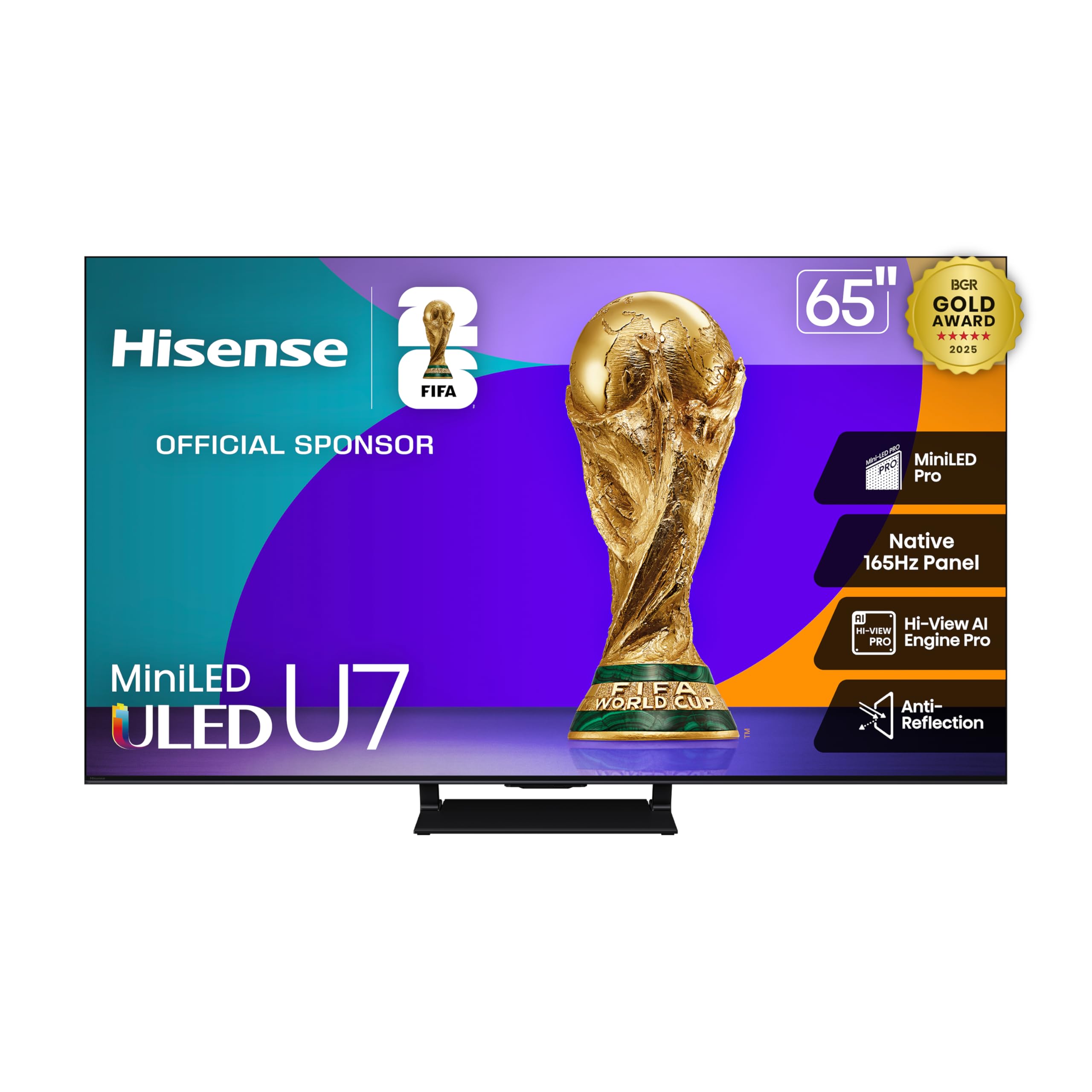
The Hisense U7 is a gaming powerhouse that doesn’t compromise on picture quality. With a native 165Hz panel and VRR up to 288Hz, it’s one of the fastest TVs available, making it ideal for competitive gamers who need every millisecond advantage. The Mini-LED Pro backlight with up to 3000 local dimming zones and 3000 nits peak brightness delivers jaw-dropping HDR highlights and inky blacks.
The Hi-View AI Engine Pro automatically optimizes picture and sound based on content, and the Enhanced Game Bar lets you adjust settings in real time without leaving your game. Dolby Vision IQ and IMAX Enhanced support ensure movies look cinematic, while the 2.1.2-channel sound system with built-in subwoofer provides decent audio out of the box. Google TV runs smoothly and offers a wide app selection.
The anti-reflection coating is effective, making it usable in bright rooms. Some users report that the interface can feel slightly cluttered, and the remote could be more premium. At this price point, the U7 offers performance that rivals TVs costing significantly more, especially for those who prioritize gaming and HDR brightness.
Why it’s great
- 165Hz native refresh rate with 288Hz VRR
- 3000 nits peak brightness for stunning HDR
- 3000 local dimming zones for deep blacks
- Excellent gaming features and Game Bar
Good to know
- Interface can feel cluttered
- Remote lacks premium feel
- Sound is good but not exceptional
7. LG 65″ QNED evo AI QNED85A
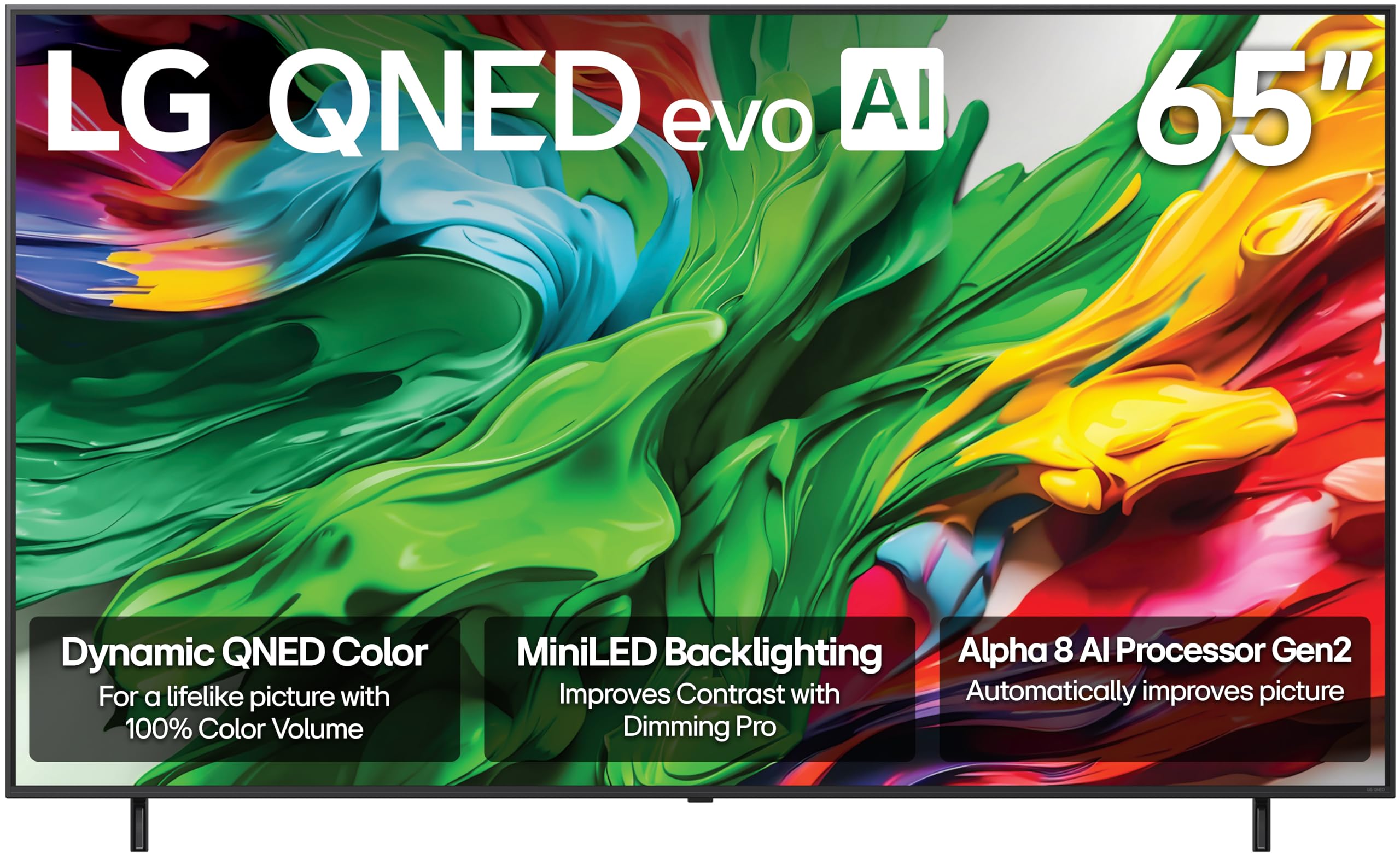
The LG QNED evo AI strikes an excellent balance between performance and price. The Mini LED backlight with Precision Dimming delivers solid contrast and bright highlights, while the Alpha 8 AI Processor Gen2 fine-tunes picture and sound in real time. Dynamic QNED Color covers 100% of the DCI-P3 color space, resulting in vibrant, lifelike images that pop whether you’re watching nature documentaries or animated films.
With a native 120Hz refresh rate and VRR up to 144Hz, it handles fast-paced content smoothly. The Game Optimizer puts all gaming settings in one place, and support for GeForce NOW and Xbox Cloud Gaming adds flexibility. webOS is one of the best smart TV platforms, and the Magic Remote with point-and-click functionality is intuitive. Filmmaker Mode preserves director intent for movie enthusiasts.
The built-in speakers are decent, and Wow Orchestra allows them to sync with compatible LG soundbars for a wider soundstage. The stand is width-adjustable, giving flexibility for different furniture setups. Some users report that the TV can feel thin and delicate, so careful handling during setup is advised. Overall, it’s a strong mid-range option that does everything well.
Why it’s great
- Excellent Mini-LED contrast and color volume
- Alpha 8 AI processor for smart optimization
- Smooth 120Hz with VRR up to 144Hz
- Intuitive webOS with Magic Remote
Good to know
- Build feels thin and delicate
- Not as bright as top-tier Mini-LEDs
- Some AI picture tweaks can feel unnatural
8. Sony BRAVIA 2 II 55″

The Sony BRAVIA 2 II is purpose-built for PlayStation 5 owners who want seamless integration and excellent picture quality without breaking the bank. The 4K Processor X1 delivers lifelike colors and sharp details, while exclusive PS5 features like Auto HDR Tone Mapping and Auto Genre Picture Mode automatically optimize settings for gaming and streaming. Motionflow XR keeps fast-paced action blur-free.
Google TV provides access to all major streaming apps, and the included Sony Pictures CORE app offers complimentary movies. The 4K XR-Reality PRO upscales lower-resolution content to near-4K quality, so older shows and movies look better than on standard LED TVs. The build quality is solid, and the compact design fits well in smaller spaces or home offices.
The main limitation is the 60Hz refresh rate, which means it’s not ideal for competitive gaming at high frame rates. It also lacks VRR support, which may disappoint some gamers. However, for cinematic gaming and movie watching, the color accuracy and motion handling are excellent. The remote is functional but basic compared to higher-end Sony models.
Why it’s great
- PS5-exclusive features for optimized gaming
- Excellent color accuracy and upscaling
- Solid build quality and compact design
- Good value for Sony quality
Good to know
- 60Hz refresh rate, no VRR
- Not ideal for high-frame-rate gaming
- Some users report software freezes
9. Hisense 65″ U6 Series Mini-LED
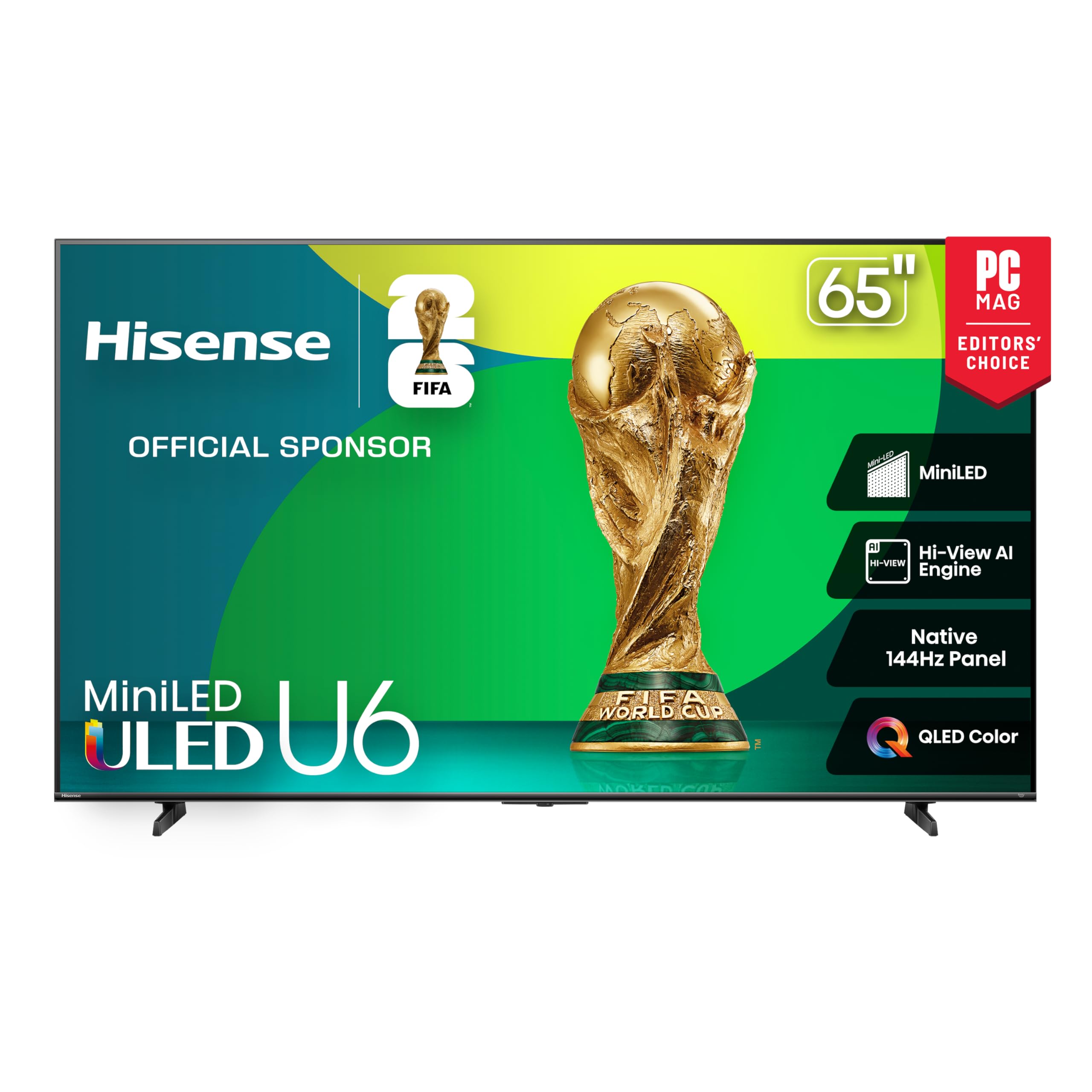
The Hisense U6 brings Mini-LED technology to a budget-friendly price point without sacrificing the key benefits. With up to 1000 nits peak brightness and 600 local dimming zones, it delivers significantly better contrast and HDR punch than standard LED TVs in the same price range. The Hi-View AI Engine optimizes picture and sound based on content, and QLED color ensures vibrant, accurate hues.
The native 144Hz panel with Motion Rate 480 provides smooth motion for sports and gaming, and Game Mode Pro with AMD FreeSync Premium reduces screen tearing and input lag. The built-in subwoofer adds surprising bass depth, making dialogue and action scenes more immersive without requiring an external soundbar. Fire TV puts your favorite streaming apps front and center, and Alexa is built-in for hands-free control.
The main trade-off is that only two of the four HDMI ports support the full 144Hz/HDMI 2.1 bandwidth, so plan your connections accordingly. The Fire TV platform requires an Amazon account, which may be a consideration for some users. For the price, the U6 offers an impressive feature set that outperforms many higher-priced non-Mini-LED alternatives.
Why it’s great
- Excellent Mini-LED contrast for the price
- 1000 nits peak brightness
- Built-in subwoofer for better audio
- 144Hz gaming with FreeSync Premium
Good to know
- Only two HDMI 2.1 ports
- Fire TV requires Amazon account
- Headphone jack does not work
10. iFFALCON 65″ U85 QD-Mini LED
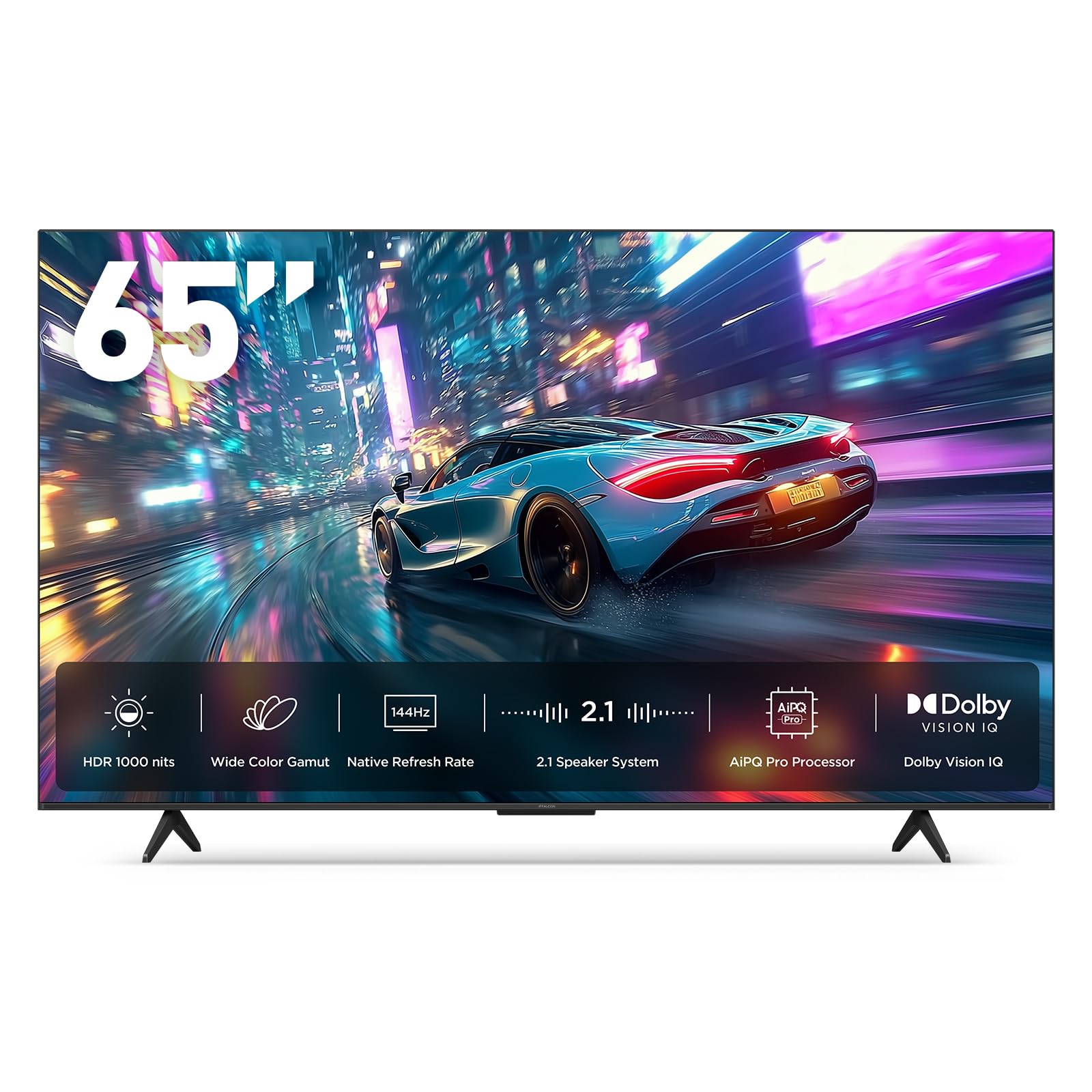
The iFFALCON U85 is a dark horse that delivers surprising performance for the price. With QD-Mini LED technology, 224 local dimming zones, and 1000 nits peak brightness, it produces rich colors and deep blacks that rival more expensive options. The AiPQ Pro Processor optimizes brightness, contrast, and detail in real time, and Dolby Vision IQ ensures cinematic HDR performance.
Gaming features are robust with a native 144Hz panel, 288Hz DLG acceleration, FreeSync Premium Pro, and ALLM. The 2.1-channel 50W sound system with Dolby Atmos and DTS Virtual X provides immersive audio that outperforms many built-in TV speakers. Google TV is smooth and responsive, with support for Google Assistant and Alexa. The ultra-slim unibody design looks premium on a stand or wall.
Some users note that the claimed QLED color gamut may not be fully realized, but the overall picture quality remains excellent. The eye comfort features are a nice addition for extended viewing sessions. At its price point, the U85 offers a compelling combination of Mini-LED performance, gaming features, and smart functionality that’s hard to beat.
Why it’s great
- QD-Mini LED with excellent contrast
- 144Hz gaming with FreeSync Premium Pro
- Good built-in sound with Dolby Atmos
- Premium slim unibody design
Good to know
- Color gamut may not fully meet QLED claims
- Lesser-known brand may affect resale value
- Best value when found on sale
11. TCL 65″ T7 Series QLED

The TCL T7 Series is a budget-friendly entry point into 4K HDR with QLED color and a high refresh rate. The Quantum Dot technology covers nearly the entire DCI-P3 color space, delivering vibrant and accurate colors that surpass standard LED TVs. The 144Hz panel ensures smooth motion for fast-paced content, and the AIPQ Pro Processor optimizes picture quality for a better HDR experience.
Google TV provides a clean interface with access to thousands of apps, and built-in Chromecast and Apple AirPlay 2 make casting content easy. The FullView 360 metal bezel-less design gives it a modern, premium look that belies its price. Four HDMI inputs, including one with eARC, offer solid connectivity. The height-adjustable feet add versatility for soundbar placement.
The main limitation is brightness — at around 400-500 nits, it can’t deliver the full HDR impact that Mini-LED or OLED TVs can. Google TV can feel slightly slow with occasional button lag, according to some users. The built-in speakers are adequate but not impressive. For budget-conscious buyers who want QLED color and high refresh rate, the T7 is a solid starter option.
Why it’s great
- Affordable entry into QLED color
- 144Hz refresh rate for smooth motion
- Modern bezel-less design
- Google TV with Chromecast and AirPlay
Good to know
- Moderate brightness limits HDR impact
- Google TV can be slow with button lag
- Speakers are just average
Understanding the Specs
Peak Brightness (Nits)
Peak brightness is the most critical spec for true HDR performance. A TV needs at least 600 nits to make HDR content look noticeably better than SDR, with 1000 nits or more providing the specular highlights that make sunlight, explosions, and reflections pop. Budget TVs often claim HDR support but cap out below 500 nits, resulting in a flat, uninspiring image. Always check measured brightness, not just format support.
Local Dimming Zones
Local dimming zones control how precisely the TV can darken parts of the screen while keeping other areas bright. More zones mean better contrast and less blooming around bright objects on dark backgrounds. Mini-LED TVs typically have hundreds or even thousands of zones, while standard LED TVs may have only a handful. OLED TVs don’t need dimming zones because each pixel controls its own light, achieving perfect blacks natively.
Refresh Rate and VRR
Refresh rate determines how many times per second the image updates. 60Hz is fine for movies and TV, but 120Hz or higher is essential for smooth gaming and sports. Variable Refresh Rate (VRR) synchronizes the TV’s refresh rate with the console or PC’s frame output, eliminating screen tearing and stuttering. HDMI 2.1 is required for 4K/120Hz gaming, so check port specifications carefully.
HDR Format Support
HDR10 is the baseline format supported by all HDR TVs. Dolby Vision adds dynamic metadata that optimizes brightness and color scene-by-scene, offering superior quality. HDR10+ is a competing dynamic format used mainly by Samsung and Amazon. HLG is used for broadcast HDR. For the best experience, look for TVs that support Dolby Vision in addition to HDR10, as most streaming services use Dolby Vision for their premium content.
FAQ
What is the difference between OLED and Mini-LED?
Do I need a 120Hz TV for watching movies?
Is Dolby Vision worth paying extra for?
How many HDMI 2.1 ports do I need for gaming?
Final Thoughts: The Verdict
For most people, the best 4k hdr tv winner is the Hisense U7 Mini-LED because it delivers exceptional brightness, gaming performance, and contrast at a price that undercuts premium rivals. If you want perfect blacks and cinematic color, grab the LG OLED B5. And for a massive screen without breaking the bank, nothing beats the TCL QM7K 98-inch.

Mo Maruf
I created WellFizz to bridge the gap between vague wellness advice and actionable solutions. My mission is simple: to decode the research and give you practical tools you can actually use.
Beyond the data, I am a passionate traveler. I believe that stepping away from the screen to explore new environments is essential for mental clarity and physical vitality.