Our readers keep the lights on and my smoothie glass nicely filled. As an Amazon Associate, I earn from qualifying purchases.
Stepping up to a 4K HDR monitor means leaving behind the flat, washed-out look of standard displays for a world where shadows hold detail and highlights deliver punch. The leap in pixel density alone transforms text rendering for productivity, while the expanded color volume makes games and HDR video feel dimensional rather than digital. But not every “HDR” badge delivers the same experience—understanding the difference between edge-lit and full-array local dimming, or between a standard VA panel and a self-emissive OLED, is where the real buying decision begins.
I’m Mohammad Maruf — the founder and writer behind WellFizz. I’ve spent years analyzing panel technologies, dimming algorithms, and color gamut specifications across hundreds of models to separate genuine HDR performance from marketing language.
After evaluating dozens of contenders across price tiers, from value-oriented 32-inch workhorses to flagship ultrawide behemoths, I’ve built a focused shortlist of the best 4k hdr monitor options that deliver real, measurable improvements in contrast, brightness, and color fidelity across gaming, creative work, and everyday use.
How To Choose The Best 4K HDR Monitor
The term “HDR” gets thrown around loosely, but real HDR performance hinges on three measurable traits: peak brightness, contrast ratio, and color gamut volume. Without a high enough brightness ceiling (typically 600 nits or more for impactful highlights) and a sufficient number of local dimming zones to prevent haloing, the HDR effect falls flat. Understanding these specs will help you filter out monitors that say HDR from those that truly deliver it.
Panel Technology: The Foundation of HDR
The panel dictates the maximum contrast potential. VA panels offer a native contrast around 3000:1, which provides decent black depth for HDR without aggressive local dimming. Fast IPS panels improve viewing angles and response times but typically sit at 1000:1 static contrast, relying heavily on dimming zones to approach HDR black levels. OLED panels, including WOLED and QD-OLED variants, achieve per-pixel black levels (infinite contrast) and are the gold standard for HDR, though they require burn-in mitigation measures. Mini-LED backlit VA panels bridge the gap with hundreds or thousands of dimming zones, delivering OLED-like contrast with higher peak brightness and no burn-in risk.
Brightness and Dimming: The Real HDR Engine
VESA DisplayHDR certification tiers provide a quick reference: HDR400 is the entry-level badge with minimal local dimming requirements—often disappointing. HDR600 demands 600 nits peak and better dimming, while HDR1000 targets 1000 nits for impactful specular highlights. True Black 400/HDR 400 True Black applies to OLED panels, certifying deep blacks alongside 400 nits brightness. The number of local dimming zones directly correlates with HDR quality: a 16-zone edge-lit display will show obvious blooming, while a Mini-LED panel with 1000+ zones can nearly match OLED shadow detail in mixed scenes.
Color Gamut: The HDR Palette
Standard sRGB covers only about two-thirds of the DCI-P3 color space used in HDR10 content. A monitor covering 90% or more of DCI-P3 ensures that HDR content displays the expanded reds and greens intended by the creators. Look for coverage above 95% DCI-P3 in the product specs. Adobe RGB coverage is more relevant for print photography workflows than for HDR video or gaming. For creative professionals, factory calibration reports with Delta E values below 2 guarantee color accuracy out of the box.
Quick Comparison
On smaller screens, swipe sideways to see the full table.
| Model | Category | Best For | Key Spec | Amazon |
|---|---|---|---|---|
| ASUS ROG Swift PG32UCDM | Premium QD-OLED | High-end Gaming & HDR | 240Hz / 0.03ms / 99% DCI-P3 | Amazon |
| MSI MPG 321URX QD-OLED | Premium QD-OLED | Competitive Gaming & Productivity | 240Hz / 0.03ms / True Black 400 | Amazon |
| LG 32GX850A-B UltraGear | Premium WOLED | Versatile Gaming & Media | 165Hz / 0.03ms / OLED | Amazon |
| ASUS ROG Strix XG32UCG | High-End IPS | Dual-Mode Gaming | 4K 160Hz / FHD 320Hz | Amazon |
| Samsung Odyssey Neo G9 G95NC | Flagship Ultrawide | Productivity & Immersive Sim Gaming | DUHD 7680×2160 / 240Hz | Amazon |
| KTC H32P22P | Value Gaming IPS | Budget 4K Gaming | 165Hz / 1ms / 121% sRGB | Amazon |
| Samsung ViewFinity S8 S80D | Productivity IPS | Office & Color-Accurate Work | 27″ 4K / HDR10 / 350 nits | Amazon |
| Alienware AW3425DWM | Gaming Ultrawide | Immersive WQHD Gaming | 3440×1440 / 180Hz / 1500R | Amazon |
| LG 32UR550K-B UltraFine | Value VA | Home Office & Media | 3000:1 Contrast / HDR10 | Amazon |
| Dell 32 Plus S3225QS | Value VA | Mixed Work & Play | 4K 120Hz / 95% DCI-P3 | Amazon |
In-Depth Reviews
1. ASUS ROG Swift PG32UCDM

The ASUS ROG Swift PG32UCDM sits at the pinnacle of 4K HDR monitors, pairing a 32-inch QD-OLED panel with a 240Hz refresh rate and a 0.03ms response time that leaves ghosting in the dust. The custom heatsink and graphene film reduce burn-in risk while maintaining peak brightness high enough to push specular highlights into genuinely impressive territory. DCI-P3 coverage hits 99%, and the true 10-bit panel ensures smooth color gradients without banding in HDR content.
For gamers, the combination of G-Sync compatibility and FreeSync Premium Pro covers both GPU ecosystems, while the 90W USB-C port simplifies laptop connectivity with a single cable. The glossy screen coating enhances perceived contrast and clarity, though it does reflect ambient light in bright rooms. The 3-year warranty with burn-in coverage provides peace of mind for a premium investment.
Color-critical work benefits from the Delta E < 2 factory calibration, and the uniform brightness setting prevents OLED luminance roll-off in bright window scenarios. The DisplayWidget Center software allows OLED Care adjustments without digging into the on-screen display. The tripod socket on top is a thoughtful touch for streamers.
Why it’s great
- Reference-grade HDR with infinite contrast and vibrant, accurate colors
- 240Hz refresh rate with 0.03ms response delivers elite competitive performance
- Comprehensive 3-year warranty includes burn-in coverage for long-term confidence
Good to know
- Glossy screen finish reflects light; ideal for controlled lighting environments
- Premium price point places it firmly in high-end enthusiast territory
2. MSI MPG 321URX QD-OLED

The MSI MPG 321URX delivers QD-OLED performance at a slightly more accessible price point than its ASUS counterpart, offering the same 32-inch 4K UHD resolution, 240Hz refresh rate, and 0.03ms response time. The VESA DisplayHDR True Black 400 certification ensures deep, inky blacks with bright highlights that make HDR games and movies pop. The 99% DCI-P3 coverage and Delta E ≤2 accuracy make it suitable for creative workflows right out of the box.
OLED Care 2.0 provides pixel shift, panel refresh, and static screen detection to mitigate burn-in, while the KVM function with Picture-in-Picture and Picture-by-Picture lets you control two PCs with a single keyboard and mouse. The 90W USB-C port handles laptop charging and video simultaneously. The 4-way adjustable stand offers height, tilt, swivel, and pivot flexibility for ergonomic positioning.
Console gamers benefit from HDMI 2.1 ports supporting 4K at 120Hz, and the console mode automatically optimizes settings for PlayStation 5 or Xbox Series X. The 240Hz refresh rate gives PC gamers a fluid advantage in fast-paced titles, and the anti-glare coating on the QD-OLED panel reduces reflections better than the glossy finish on competing models.
Why it’s great
- QD-OLED panel provides infinite contrast with vibrant, saturated colors
- OLED Care 2.0 and KVM functionality enhance long-term value and convenience
- Lower price point than flagship OLED competitors without sacrificing core specs
Good to know
- Stand lacks swivel and tilt adjustment compared to premium alternatives
- Some users report a faint purple tint in off-angle reflections with QD-OLED
3. LG 32GX850A-B UltraGear
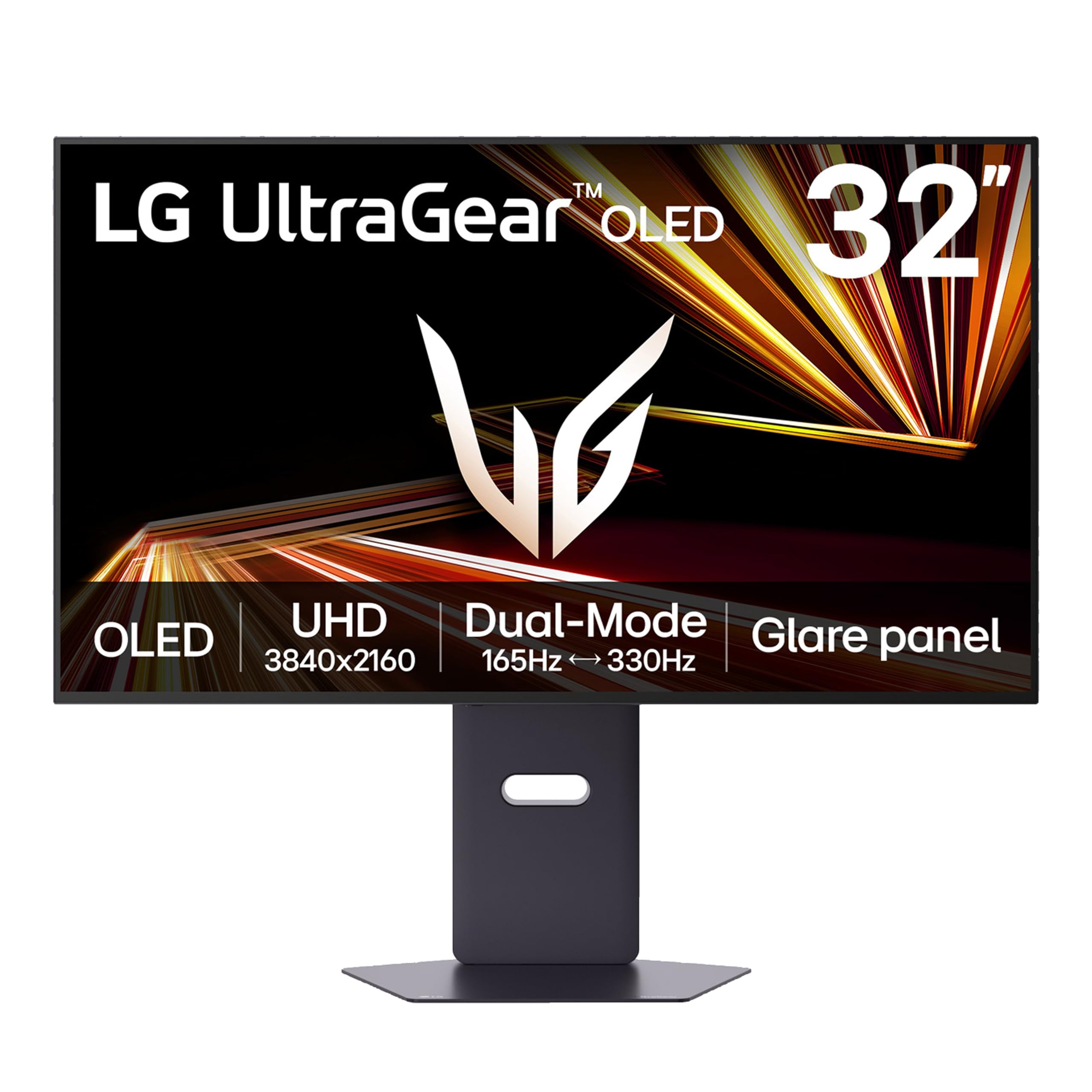
The LG 32GX850A-B uses a glossy WOLED panel with Micro Lens Array+ technology, achieving higher typical brightness than previous LG OLED monitors while maintaining the per-pixel black levels that make OLED so compelling. The 1.5M:1 contrast ratio and VESA DisplayHDR True Black 400 certification deliver deep shadows and bright highlights that make HDR content feel truly dimensional. The 98.5% DCI-P3 color coverage provides rich, saturated colors across games and movies.
The dual-mode feature lets you switch between 4K UHD at 165Hz and Full HD at 330Hz with a single hotkey press, giving competitive players the option to prioritize resolution or frame rate depending on the title. The 0.03ms response time eliminates motion blur entirely, and the G-Sync Compatible plus FreeSync Premium Pro support covers both major GPU brands for tear-free gameplay.
The ul-certified anti-glare, flicker-free, and low blue light ratings reduce eye strain during extended sessions. The ergonomic stand offers height, tilt, swivel, and pivot adjustments. Dynamic Action Sync and Black Stabilizer gaming features improve responsiveness and visibility in dark scenes.
Why it’s great
- Glossy WOLED panel offers excellent vibrancy and deep blacks without purple tint
- Dual-mode switching between 165Hz 4K and 330Hz FHD gives flexibility for any game
- Three ul certifications ensure eye comfort during long gaming sessions
Good to know
- Glossy finish shows reflections; best used in a controlled lighting setup
- Text clarity may show minor sub-pixel artifacts at standard viewing distances
4. ASUS ROG Strix XG32UCG
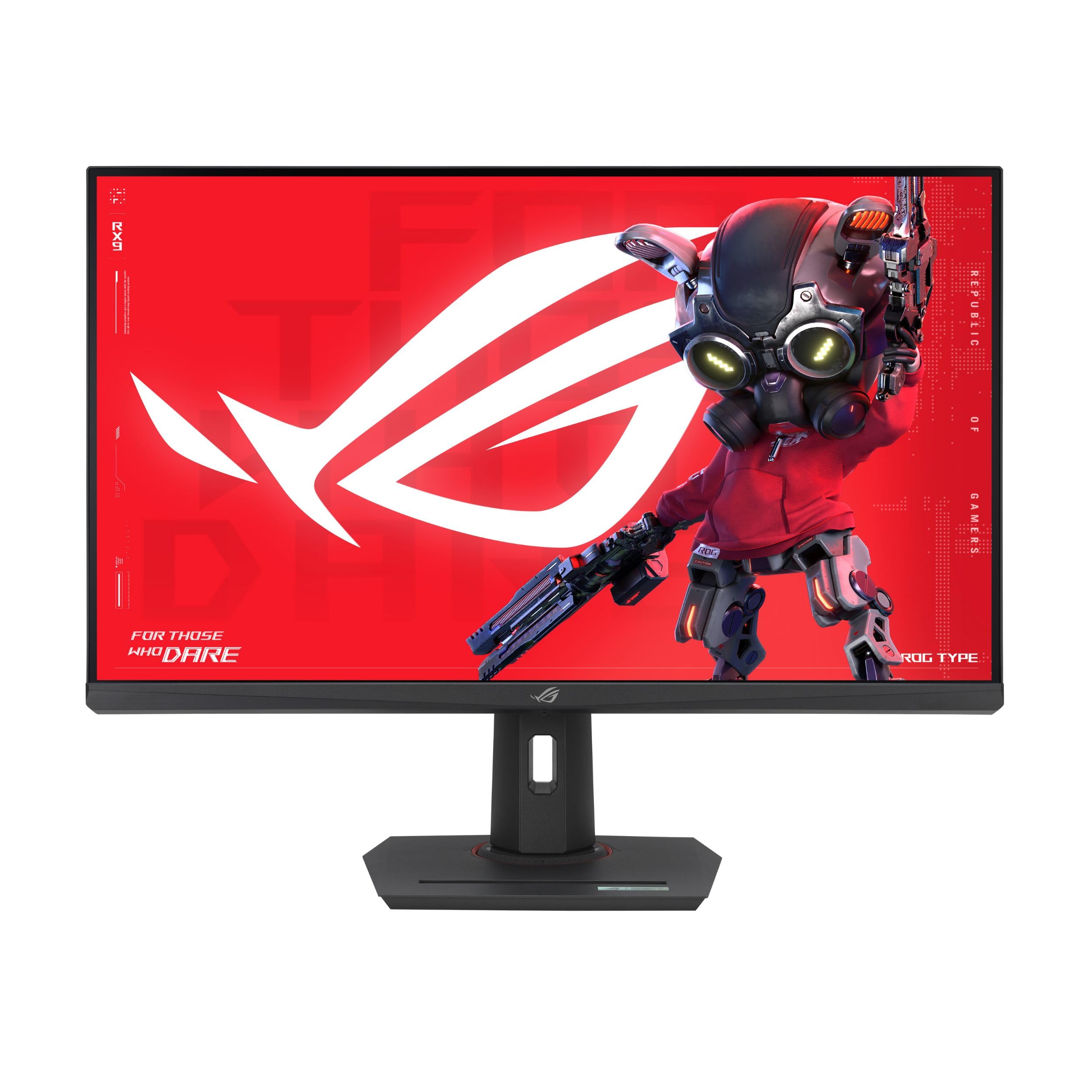
The ASUS ROG Strix XG32UCG brings dual-mode flexibility to the Fast IPS format, allowing instant switching between 4K at 160Hz and Full HD at 320Hz. This makes it ideal for gamers who want sharp resolution for story-driven titles and maximum frame rates for competitive shooters without buying two monitors. The 0.3ms response time is among the fastest for IPS panels, and the Extreme Low Motion Blur Sync technology eliminates ghosting and tearing simultaneously.
The 95% DCI-P3 color gamut and advanced gray-scale tracking ensure smooth color gradations, while the 1000:1 static contrast ratio with a dynamic contrast of 100M:1 helps IPS black levels approach deeper depths. The USB-C port with DP Alt Mode simplifies connectivity for laptops, and the DisplayWidget Center allows mouse-based settings adjustments. The tripod socket on top is a practical feature for content creators.
ELMB Sync works in tandem with variable refresh rate, a feature not available on many competitive monitors, reducing both ghosting and tearing in fast-paced scenes. The 32-inch size with 4K resolution provides ample screen real estate for productivity tasks when not gaming. The ergonomic stand offers height, tilt, and swivel adjustments.
Why it’s great
- Dual-mode technology lets you switch resolution/refresh rate instantly for different games
- ELMB Sync works with VRR for tear-free, ghost-free motion clarity
- Competitive price point for a high-refresh 4K IPS monitor with USB-C
Good to know
- IPS contrast ratio means HDR blacks are not as deep as VA or OLED alternatives
- Peak brightness may not satisfy those seeking high-impact HDR highlights
5. Samsung Odyssey Neo G9 G95NC

The Samsung Odyssey Neo G9 G95NC is a 57-inch ultrawide behemoth with a native DUHD resolution of 7680×2160, effectively offering two 4K monitors side-by-side without a bezel. The 1000R curve wraps around your field of view for deep immersion in supported games and productivity workflows. Quantum Mini-LED technology with 2,392 local dimming zones and VESA DisplayHDR 1000 certification delivers exceptional contrast with peak brightness hitting 1,000 nits.
The 240Hz refresh rate with 1ms response time is remarkable for a panel this large, and the DisplayPort 2.1 input provides the bandwidth needed to drive the full resolution at 240Hz without compression. AMD FreeSync Premium Pro ensures smooth variable refresh rate across the massive screen. The 32:9 aspect ratio gives flight simulators, racing games, and strategy titles an unmatched panoramic view.
Built-in CoreSync lighting projects on-screen colors into your peripheral vision, deepening immersion. The ergonomic stand supports height, tilt, and swivel adjustments, though the 40-pound weight demands a strong desk or VESA arm. Picture-by-Picture mode lets you view two separate sources side-by-side at native resolution, perfect for work-from-home setups.
Why it’s great
- Native DUHD resolution provides a massive, bezel-free dual 4K workspace
- DisplayHDR 1000 with 2,392 Mini-LED zones delivers elite HDR brightness and contrast
- 240Hz refresh rate with DP 2.1 offers uncompressed high-refresh ultrawide performance
Good to know
- Massive size and weight require a sturdy desk and careful placement
- Firmware quirks with Auto Source Switch+ and standby have been reported
6. KTC 32 Inch 4K Gaming Monitor H32P22P
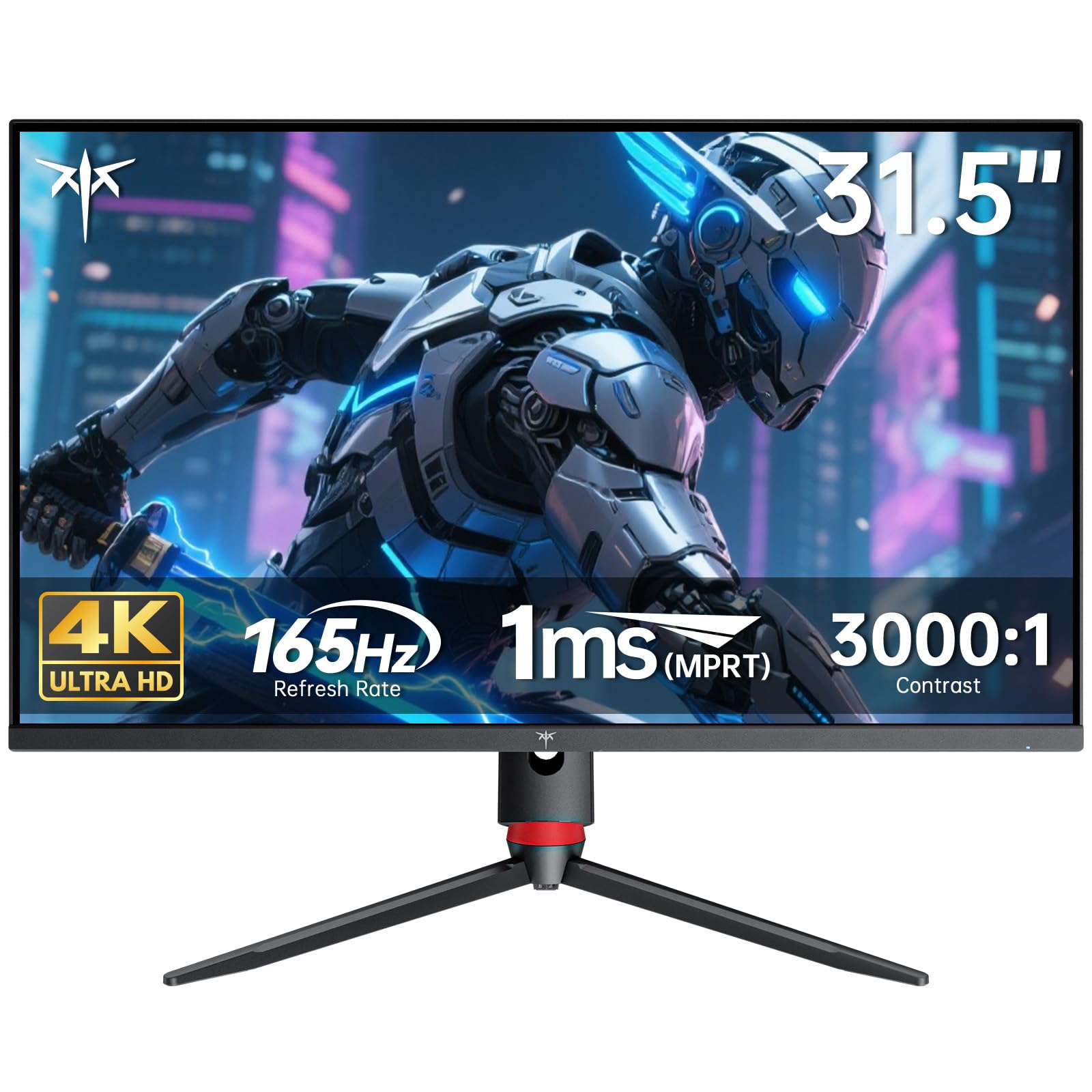
The KTC H32P22P offers a compelling entry point into high-refresh 4K gaming without breaking the bank. The 32-inch Fast IPS panel delivers a 165Hz refresh rate with 1ms MPRT response time, providing smooth gameplay in fast-paced titles. The 3000:1 contrast ratio is unusually high for an IPS-type panel, approaching VA-level black depth. The 121% sRGB color gamut area coverage translates to vibrant, saturated colors that make games and media pop.
Adaptive Sync technology compatible with both FreeSync and G-Sync reduces screen tearing and stuttering for a fluid gaming experience. The HDMI 2.1 and DisplayPort 1.4 ports support next-gen consoles at 4K 120Hz and high-refresh PC gaming. The stand offers height and tilt adjustments, and the 100x100mm VESA mount compatibility allows for arm or wall mounting. A three-year warranty adds long-term value.
The built-in blue light filter helps reduce eye strain during extended sessions, and the RGB lighting on the back adds a subtle gaming aesthetic that can be turned off for a cleaner look. The 300 cd/m² brightness is adequate for indoor use but won’t deliver the high-impact HDR highlights of more expensive models. The included DP cable and screwdriver simplify setup out of the box.
Why it’s great
- Fast IPS panel with 165Hz refresh rate at a very accessible price point
- HDMI 2.1 and DP 1.4 ports support both modern consoles and high-end PCs
- Includes three-year warranty for reliable long-term ownership
Good to know
- 300 nits peak brightness limits HDR impact; best for SDR gaming and media
- Build quality includes plastic bezels that feel less premium than competitors
7. Samsung ViewFinity S8 S80D
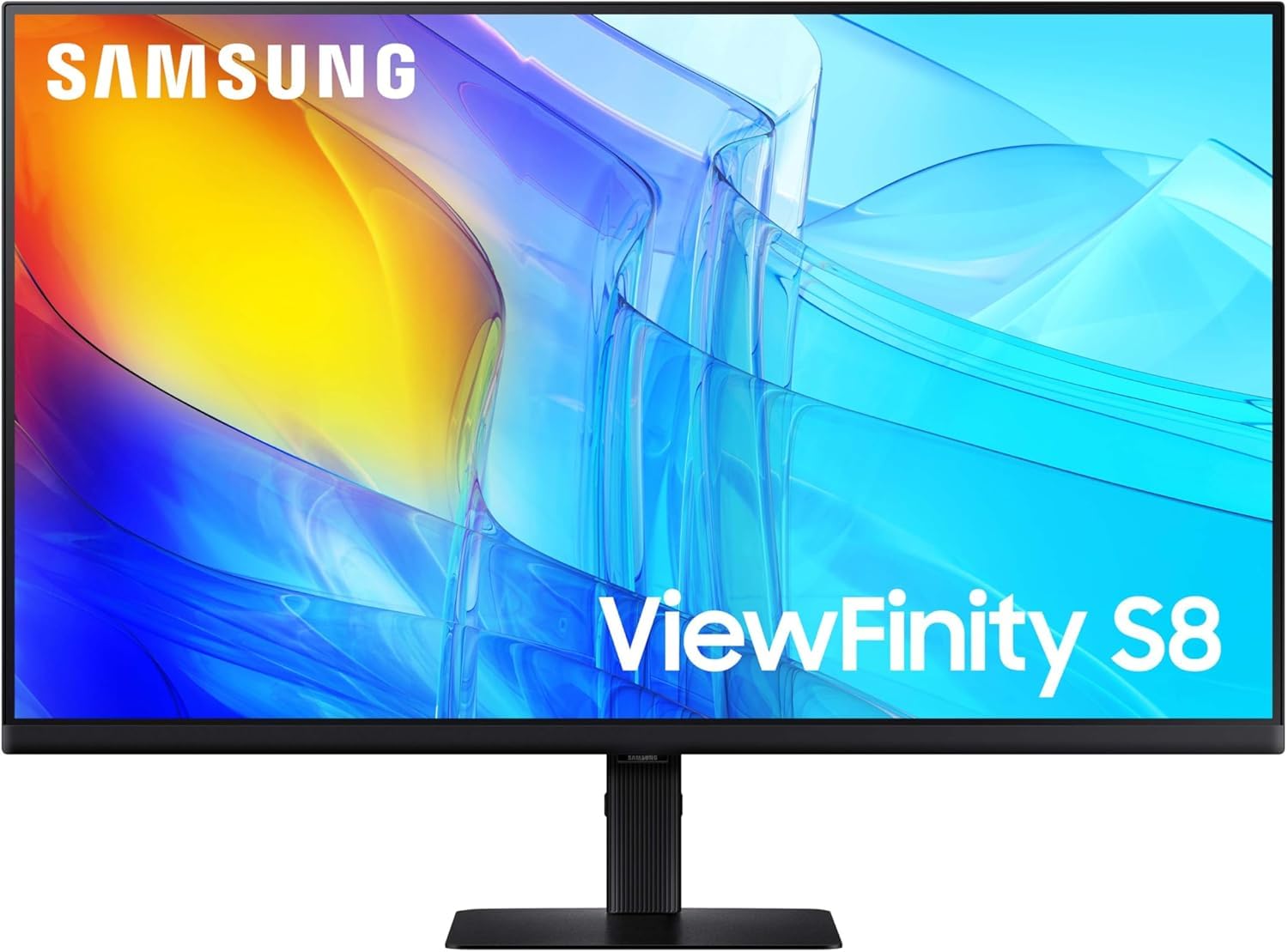
The Samsung ViewFinity S8 S80D is purpose-built for creative professionals who need 4K UHD resolution and color accuracy without gaming-centric features. The 27-inch IPS panel delivers 350 nits of brightness and covers enough of the DCI-P3 space for HDR10 content to display vibrant colors. The matte anti-glare coating reduces reflections, making it suitable for brightly lit offices and studio environments.
The ergonomic stand is a standout feature: tool-free assembly, height adjustment, tilt, swivel, and a full 90-degree pivot for portrait-mode document reading or coding. The USB hub includes DisplayPort, HDMI, USB-A, and USB-B ports, creating a clean workstation with a single cable to the computer. The TÜV-certified intelligent eye care reduces flicker and blue light exposure automatically based on ambient lighting.
The on-screen display controls are handled through a single five-way joystick button, which some users find less intuitive than dedicated buttons. The monitor lacks built-in speakers, so external audio is required. The 1000:1 static contrast ratio is standard for IPS panels, so shadow detail in dark scenes is not as deep as VA or OLED alternatives.
Why it’s great
- Excellent ergonomic stand with tool-free assembly and full pivot adjustment
- TÜV-certified eye care reduces strain during long work sessions
- USB hub with DisplayPort/HDMI simplifies cable management for dual setups
Good to know
- No built-in speakers require external audio solution
- Single-joystick OSD navigation can be cumbersome for quick adjustments
8. Alienware AW3425DWM

The Alienware AW3425DWM is a 34-inch ultrawide gaming monitor that balances immersive WQHD resolution with a 180Hz refresh rate and 1ms response time. The 1500R curve wraps around your peripheral vision, providing an enveloping experience in open-world games and racing simulators. The VA panel delivers a 3000:1 native contrast ratio, giving HDR content deeper blacks than IPS alternatives at a significantly lower price than OLED.
The VESA DisplayHDR 400 certification ensures adequate brightness for HDR gaming, though peak highlights won’t match premium Mini-LED or OLED panels. The 95% DCI-P3 color coverage provides rich, saturated colors that enhance immersion. AMD FreeSync Premium and VESA AdaptiveSync compatibility ensure smooth tear-free gameplay across a wide range of frame rates.
The ergonomic stand offers height, tilt, and swivel adjustments with a clean, functional design. The hardware-based low blue light solution reduces eye strain without washing out colors. Note that the monitor does not include built-in speakers, so external audio is necessary for desktop use.
Why it’s great
- VA panel with 3000:1 contrast delivers deeper blacks than IPS ultrawide alternatives
- 180Hz refresh rate with FreeSync Premium provides smooth, tear-free gameplay
- Immersive 1500R curve enhances field of view in games and productivity
Good to know
- No built-in speakers require external audio for desktop use
- VA panel viewing angles are narrower than IPS or OLED; off-axis colors shift
9. LG 32UR550K-B UltraFine
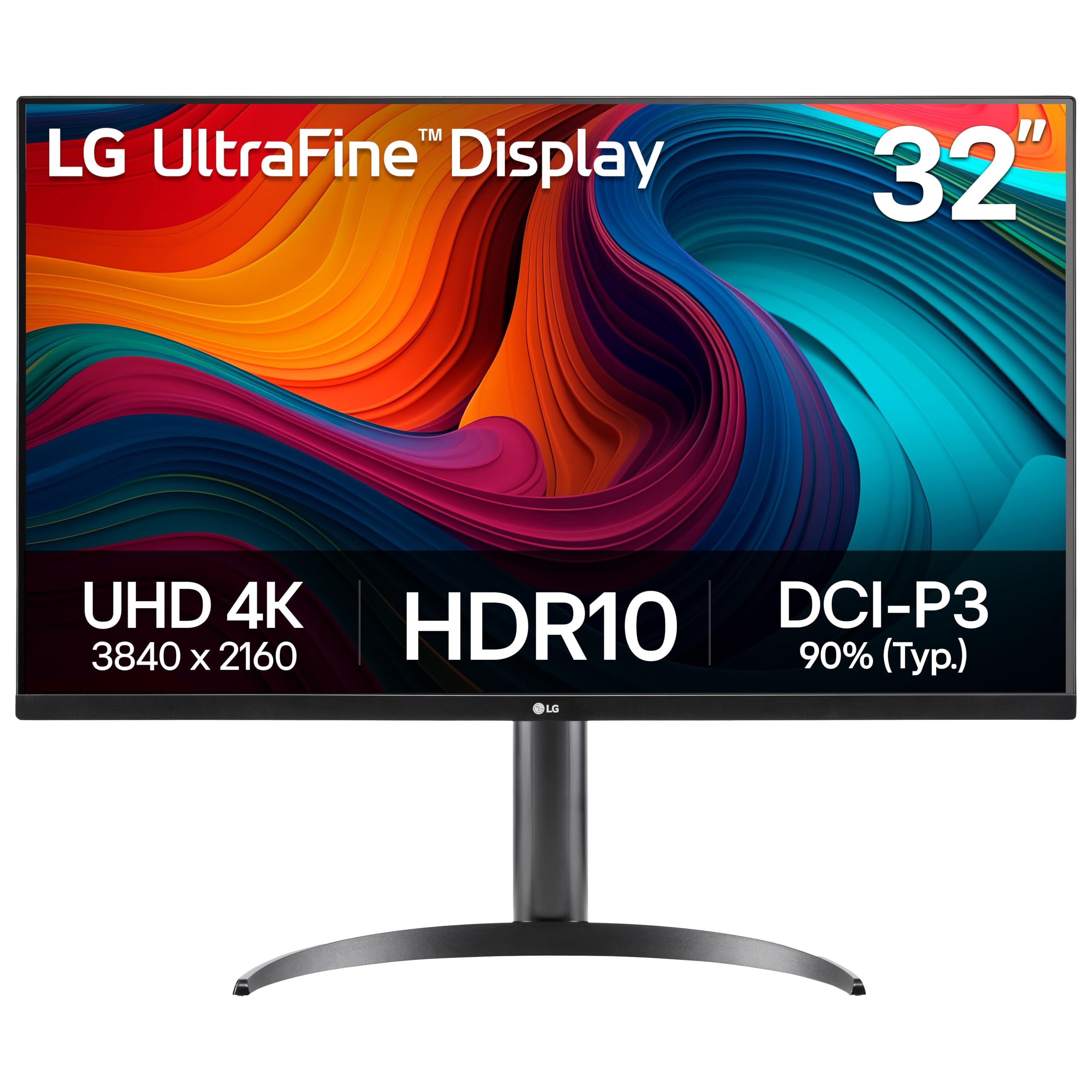
The LG 32UR550K-B delivers a solid 4K UHD experience on a 32-inch VA panel with a 3000:1 native contrast ratio that provides good black depth for HDR10 content without aggressive local dimming. The 60Hz refresh rate is standard for productivity-focused monitors, but the inclusion of Dynamic Action Sync and Black Stabilizer gaming features adds utility for casual gaming. The 90% DCI-P3 color coverage ensures adequate color volume for HDR media.
The stand offers height, tilt, and pivot adjustment, providing ergonomic flexibility for long work sessions. The built-in speakers with Waves MaxxAudio deliver acceptable sound quality for video calls and system audio, though external speakers will provide a better media experience. The two HDMI ports and single DisplayPort provide basic connectivity for multiple devices.
The Switch app allows screen splitting into up to six sections, improving multitasking efficiency for productivity users. The anti-reflective coating on the VA panel effectively reduces glare in bright rooms. The FreeSync and G-Sync compatibility ensures tear-free performance when connected to a compatible GPU.
Why it’s great
- VA panel with 3000:1 contrast offers deeper blacks than typical IPS productivity monitors
- Height, tilt, and pivot adjustments provide excellent ergonomic flexibility
- Built-in speakers and FreeSync/G-Sync compatibility add extra value
Good to know
- 60Hz refresh rate is not suitable for competitive gaming or fast-paced titles
- Peak brightness at 250 nits limits HDR impact in bright rooms
10. Dell 32 Plus S3225QS

The Dell 32 Plus S3225QS brings a 120Hz refresh rate to the budget-friendly 4K VA category, making it a strong choice for users who want smooth motion for console gaming or general desktop use without paying for a dedicated gaming monitor. The 1500:1 native contrast ratio provides decent black depth, and the 95% DCI-P3 coverage ensures vibrant colors for HDR content. The ComfortView Plus technology reduces harmful blue light emissions to 35% or less without compromising color accuracy.
The VA panel’s 0.03ms response time is exceptionally low for the category, contributing to clear motion in fast-paced scenes. AMD FreeSync Premium support ensures smooth tear-free gameplay up to the 120Hz ceiling. The improved sound system delivers deeper bass and wider frequency response than the previous generation, making built-in audio more useful for casual media consumption and video calls.
The slim bezel design in ash white gives the monitor a clean, modern aesthetic that fits minimalist desks. The anti-glare surface reduces reflections effectively, and the height and tilt adjustments provide basic ergonomic flexibility. The stand is sturdy, and the included HDMI cable is 6 feet long, which works well for most desktop configurations.
Why it’s great
- 120Hz refresh rate at 4K with FreeSync Premium provides smooth motion without gaming markup
- ComfortView Plus reduces blue light to 35% without washing out color accuracy
- Improved built-in speakers with deeper bass eliminate the need for external audio for casual use
Good to know
- 300 nits peak brightness is adequate but not high-impact for HDR highlights
- VA panel off-angle viewing shows color shift compared to IPS
FAQ
What is the minimum peak brightness needed for a good HDR experience on a monitor?
What is the difference between WOLED and QD-OLED for a 4K HDR monitor?
How many local dimming zones do I need for good HDR on an LCD monitor?
Final Thoughts: The Verdict
For most users seeking a genuine HDR experience with vibrant colors and deep blacks, the best 4k hdr monitor winner is the ASUS ROG Swift PG32UCDM because it combines a peak QD-OLED panel, 240Hz refresh rate, and comprehensive burn-in warranty into a package that excels for both gaming and creative work. If you want high-refresh gaming at a more accessible price without sacrificing HDR quality, the KTC H32P22P delivers solid 4K 165Hz performance with adaptive sync. And for an unmatched ultrawide HDR experience with massive screen real estate, nothing beats the Samsung Odyssey Neo G9 G95NC with its Mini-LED backlight and 240Hz refresh rate.

Mo Maruf
I created WellFizz to bridge the gap between vague wellness advice and actionable solutions. My mission is simple: to decode the research and give you practical tools you can actually use.
Beyond the data, I am a passionate traveler. I believe that stepping away from the screen to explore new environments is essential for mental clarity and physical vitality.