Our readers keep the lights on and my smoothie glass nicely filled. As an Amazon Associate, I earn from qualifying purchases.
A curved 4K monitor does more than wrap an image around your periphery — it fundamentally changes how your eyes track a 32-inch or wider surface. The inward bend reduces the distance from lens to edge, cutting the saccadic effort your brain normally spends refocusing on a flat panel’s corners. That shift matters whether you are auditing a spreadsheet for an hour or chasing a reticle across a digital battlefield.
I’m Mohammad Maruf — the founder and writer behind WellFizz. I’ve spent the last few years digging into panel substrates, backlight topologies, and adaptive sync implementations to understand exactly where a 4K curved monitor delivers real performance and where it just adds cost.
After parsing eleven display candidates across VA, Fast IPS, QD-OLED, and WOLED architectures, one truth holds: the best way to upgrade your visual workspace is to find a 4k curved monitor whose contrast, refresh, and color gamut align with how you actually use the screen every day.
How To Choose The Best 4K Curved Monitor
Four variables separate a genuinely useful curved 4K display from a dust collector: the panel type, the curvature radius, the refresh rate, and the color volume. Each interacts with your workspace depth, GPU capability, and the genre of content you consume most.
Panel Substrate: VA vs IPS vs OLED
A VA panel delivers native 3000:1 static contrast — the best ratio before crossing into OLED territory. That makes VA the smart pick for anyone who games or watches movies in a dim room. Fast IPS panels trade that black depth for wider viewing angles and faster gray-to-gray transitions, which matters if you share the screen or play competitive shooters. OLED offers per-pixel black and sub-millisecond response, but at a higher upfront cost and with potential burn-in concerns that modern pixel-refresh routines mitigate but do not eliminate.
Curvature Radius and Screen Size
A 1500R curve wraps around a 32-inch panel gently enough that the distortion at the edges stays invisible during productivity work. A 1000R curve matches the human visual field more tightly and works best at 34 inches or larger — anything shallower on a 34-inch ultrawide leaves the far corners feeling flat. Measure your desk depth: a 1500R panel needs about 28 inches of viewing distance; a 1000R panel wants you closer to 24 inches.
Refresh Rate and Adaptive Sync
120Hz covers office scrolling and casual gaming with zero stutter. 165Hz to 240Hz begins to matter when you play first-person shooters or racing sims at frame rates above 100 fps. Make sure your GPU can actually drive that frame rate at 3840×2160 — a mid-range card paired with a 240Hz 4K panel leaves the extra refresh unused. FreeSync Premium works with both AMD and G-Sync Compatible GPUs; G-Sync Ultimate remains a premium lock for Nvidia-only rigs.
Color Gamut and HDR Certification
Look for 95% DCI-P3 or higher if you edit photos or watch HDR content. VESA DisplayHDR 400 is the baseline; HDR 600 and HDR True Black 400 deliver noticeably better highlight detail and shadow separation. A wide gamut alone does not guarantee accurate color — factory calibration matters. Panels that ship with Delta E < 2 save you the trouble of buying a colorimeter.
Quick Comparison
On smaller screens, swipe sideways to see the full table.
| Model | Category | Best For | Key Spec | Amazon |
|---|---|---|---|---|
| ASUS ROG Strix XG32UCWG | Premium OLED | Color-critical work & HDR gaming | 4K@165Hz / FHD@330Hz Dual Mode | Amazon |
| LG 32GX850A-B UltraGear | Glossy OLED | Competitive FPS & vibrant media | 165Hz / 330Hz Dual Mode, 0.03ms | Amazon |
| AOC Agon PRO AG346UCD | QD-OLED | Cinematic ultrawide immersion | 175Hz, 0.03ms, 1500000:1 contrast | Amazon |
| Samsung Odyssey G7 G75F | VA Gaming | Deep-black HDR gaming | 165Hz, 1ms, HDR 600, 3000:1 | Amazon |
| ASUS ROG Strix XG32UCG | Fast IPS | Versatile pro & gaming hybrid | 4K@160Hz / FHD@320Hz, 0.3ms | Amazon |
| LG 34G630A-B UltraGear | VA Ultrawide | Smooth ultrawide at high frame rates | 240Hz, 1ms, 21:9 WQHD | Amazon |
| Dell 34 Plus S3425DW | Productivity VA | Office multitasking with USB-C | 120Hz, 0.03ms, 3000:1 contrast | Amazon |
| Samsung Smart M7 M70F | Smart Monitor | All-in-one streaming & office work | 60Hz, built-in TV apps, USB-C | Amazon |
| Alienware AW3425DWM | VA Ultrawide | Immersive ultrawide on a budget | 180Hz, 1ms, 3000:1 contrast | Amazon |
| Dell 32 Plus S3225QS | VA All-Rounder | All-day office & casual gaming | 120Hz, 0.03ms, 99% sRGB | Amazon |
| CRUA 32″ 4K Curved | Budget VA | Entry-level 4K curved at high Hz | 240Hz, 120% sRGB, 3000:1 | Amazon |
In‑Depth Reviews
1. ASUS ROG Strix XG32UCWG

The XG32UCWG takes the premium slot for a reason: its TrueBlack Glossy WOLED panel delivers per-pixel black levels and a zero-haze surface that makes text look sharper than any matte OLED I have evaluated. The dual-mode feature lets you toggle between 4K at 165Hz and FHD at 330Hz via a hotkey, a real advantage when you switch from a story-driven title to a competitive shooter.
Samsung’s Neo Proximity Sensor is not a gimmick — it detects when you leave the desk and dims the screen automatically to mitigate burn-in. The 99% DCI-P3 coverage and factory Delta E < 2 calibration mean this monitor doubles as a photo-editing reference without needing a separate colorimeter. Build quality is solid, with a metal frame and a quick-release stand that accommodates VESA mounts.
At this price tier, the competition includes LG’s 32GX850A and AOC’s AG346UCD. The ASUS pulls ahead thanks to the wider connectivity (two HDMI 2.1 ports, DisplayPort 1.4 with DSC, and USB-C with 15W power delivery) and the three-year burn-in warranty that removes the anxiety around OLED ownership. The glossy coating does reflect ambient light, so a controlled lighting environment is recommended.
Why it’s great
- True Black Glossy coating eliminates hazy text and enhances perceived contrast in dim rooms
- Dual-mode 4K@165Hz to FHD@330Hz adapts to both cinematic and esports scenarios
- Neo Proximity Sensor and three-year burn-in warranty protect long-term investment
Good to know
- Glossy surface creates visible reflections in bright or window-lit rooms
- Peak full-window brightness is limited to around 250 nits, below high-end Mini-LED panels
- Limited stand tilt/swivel range compared to some competitors
2. LG 32GX850A-B UltraGear
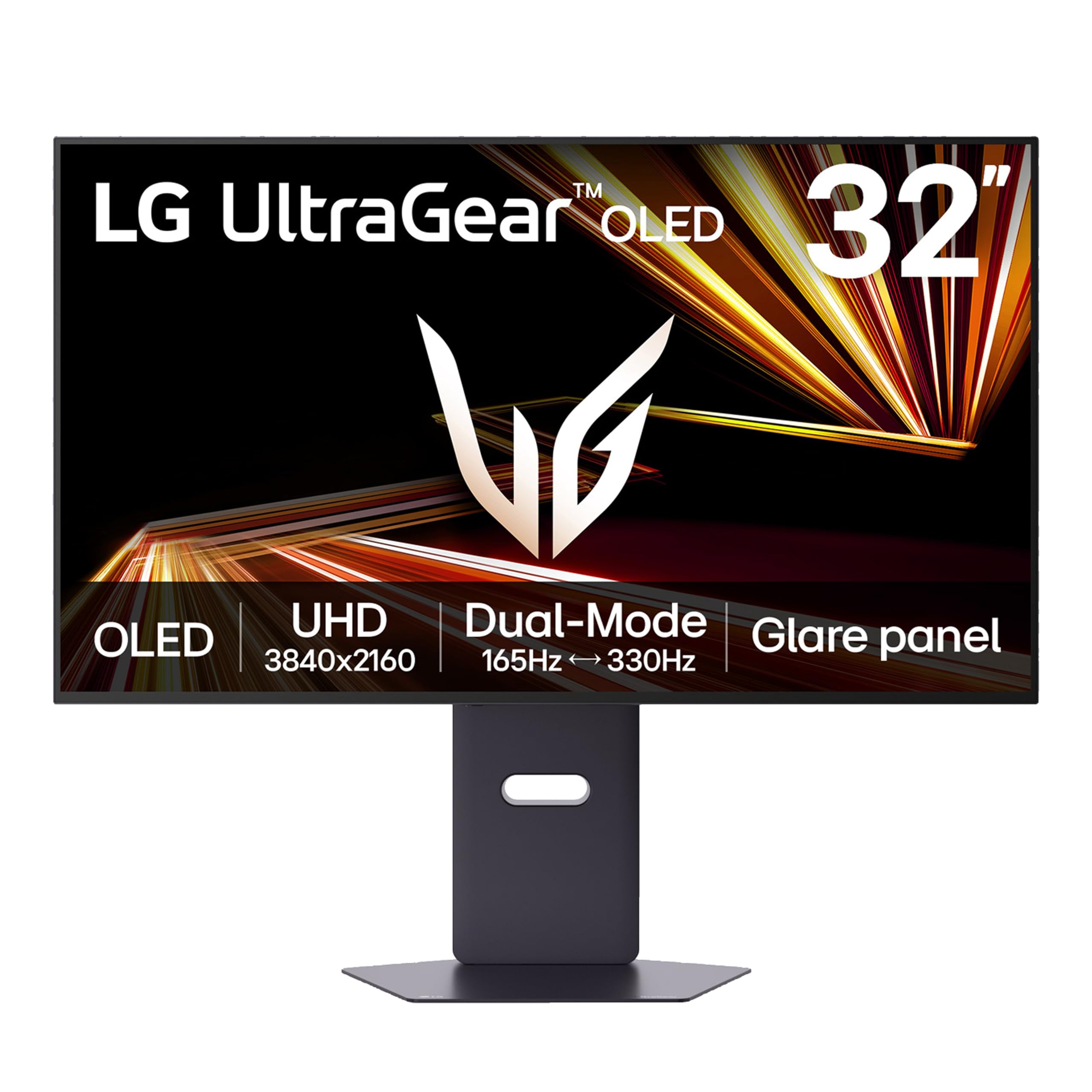
The 32GX850A uses LG’s Micro Lens Array+ technology to push typical brightness to 275 nits, which is noticeably higher than earlier WOLED panels and enough to make HDR highlights pop without the aggressive power management some OLEDs enforce. The 1.5M:1 contrast ratio and TrueBlack 400 certification deliver the inky shadow detail that makes horror games and space sims genuinely immersive.
Its dual-mode capability offers 4K at 165Hz for single-player titles and FHD at 330Hz for fast-paced multiplayer, and the three UL certifications for anti-glare, flicker-free, and low blue light mean marathon sessions cause less eye fatigue. The glossy finish enriches color saturation, though it does pick up reflections from overhead lights — a consideration for brighter workspaces. The stand provides full ergonomic adjustment including pivot, which is rare in this segment.
Color accuracy measures 98.5% DCI-P3 out of the box, and the Dynamic Action Sync and Black Stabilizer features give competitive players granular control over shadow detail without crushing highlights. For users who want OLED-grade contrast without paying the ASUS premium, this LG is the pragmatic alternative. Some units report text fringing on fine fonts, so review your typical display scaling before purchasing.
Why it’s great
- Micro Lens Array+ technology delivers brighter HDR peaks than most WOLED panels
- Full ergonomic stand with height, tilt, swivel, and pivot adjustments
- Triple UL certification for anti-glare, flicker-free, and low blue light comfort
Good to know
- Glossy coating reflects ambient light; best used in a controlled-lighting room
- Some units exhibit minor text fringing on small fonts at 100% scaling
- Brightness is lower than high-end Mini-LED alternatives for sustained SDR use
3. AOC Agon PRO AG346UCD

The AG346UCD is the only QD-OLED in this roundup, and it brings the technology’s signature strength: quantum-dot color saturation that exceeds traditional WOLED panels, particularly in bright scenes where reds and greens appear more vibrant. The 3440×1440 resolution on a 34-inch 21:9 panel hits a sweet spot — higher pixel density than standard 1440p ultrawides while remaining less GPU-taxing than full 4K.
With a 175Hz refresh rate and 0.03ms gray-to-gray response, this monitor handles fast lateral movement with zero perceptible ghosting. The HDR400 True Black certification ensures that the OLED’s per-pixel dimming delivers deep blacks with preserved highlight detail. The stand offers height, swivel, and tilt adjustments, and the VESA compatibility allows for aftermarket arm mounting. Built-in speakers are present, though they serve as a backup rather than a primary audio solution.
The trade-off is that QD-OLED panels can show a slight purple tint when ambient light hits the screen, and the 3440×1440 resolution means you are not getting full 4K vertical pixel count. For users who prioritize color volume and ultrawide immersion over pure pixel count, this AOC is the best choice in the list. The included DisplayPort and HDMI cables are standard length, so plan for a quality cable if your case is far from the desk.
Why it’s great
- QD-OLED panel produces the highest color volume and saturation in this comparison
- 175Hz refresh rate with 0.03ms response virtually eliminates motion blur
- HDR400 True Black delivers excellent shadow detail without blooming
Good to know
- 3440×1440 is WQHD, not full 4K — vertical pixels are lower than 2160
- Ambient light can create a faint purple sheen on the QD-OLED surface
- Built-in speakers are adequate for system sounds but not for gaming or music
4. Samsung Odyssey G7 G75F
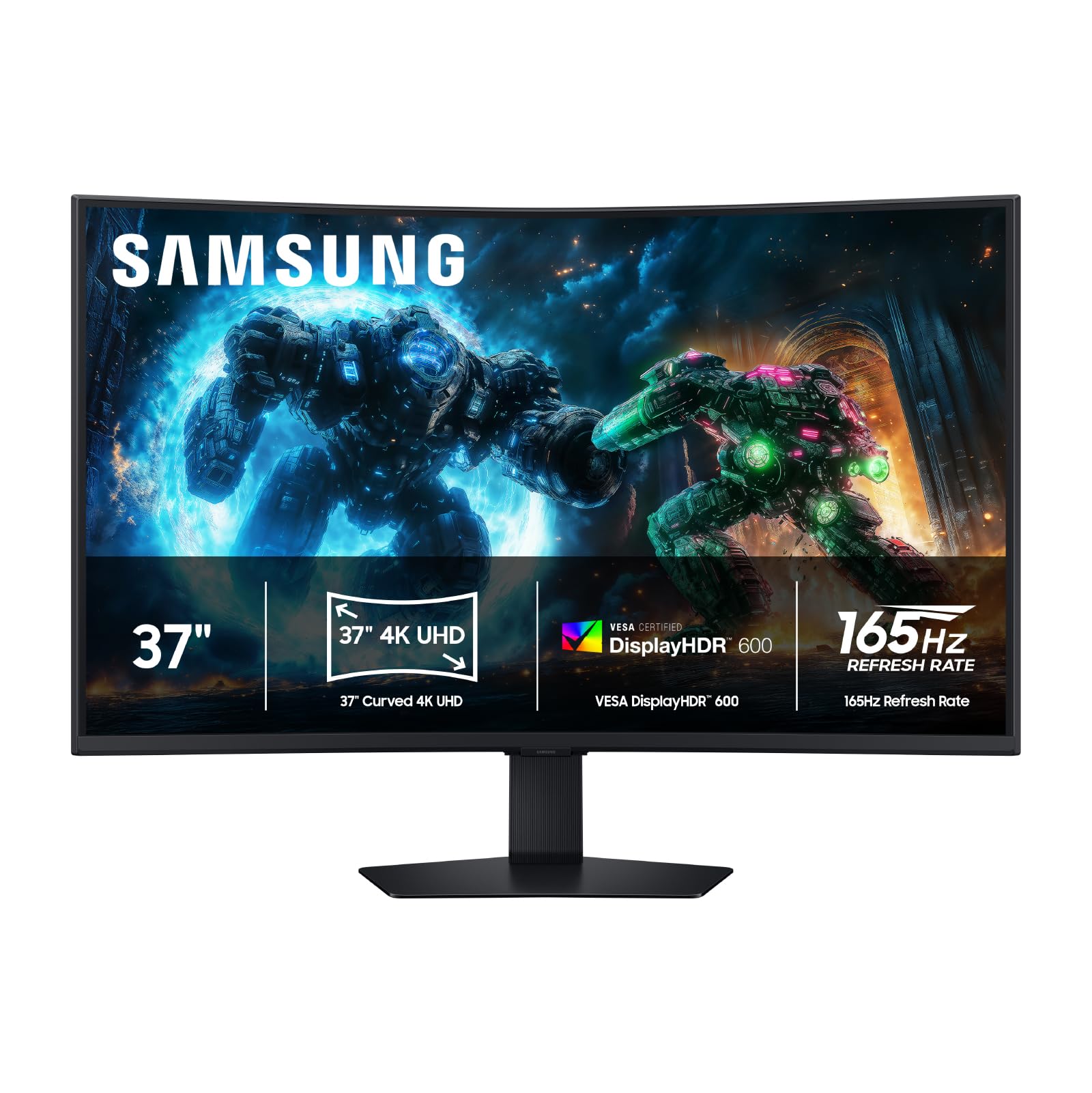
The 37-inch G75F is the largest monitor in this lineup, and its aggressive 1000R curve wraps the 4K image around your periphery in a way that smaller curves cannot match. The VA panel provides a native 3000:1 contrast ratio, and the VESA DisplayHDR 600 certification pushes peak brightness high enough that HDR highlights in movies and games actually look separated rather than muddy.
Samsung tuned this panel for console compatibility as well as PC gaming — the 165Hz refresh rate and FreeSync Premium Pro support keep frame pacing smooth with both Xbox and PlayStation. The 1ms response time (GtG) is competitive with IPS panels in this class, and the anti-glare coating handles overhead lights well. Users report that the 37-inch size at 4K eliminates the need for a multi-monitor setup in many productivity scenarios.
The main drawback is the size itself: you need a desk at least 30 inches deep to avoid neck strain from the aggressive curve. Some units show slight backlight bleed at the corners in completely dark rooms, though it is less pronounced than on typical flat VA panels. For software engineers who run four windows side by side or console gamers who want a truly cinematic single-display experience, this Samsung is the standout option.
Why it’s great
- 37-inch 1000R curve provides the most immersive peripheral wrap in this lineup
- DisplayHDR 600 delivers peak brightness that separates specular highlights from the background
- VA panel’s 3000:1 native contrast ratio delivers deep blacks without blooming
Good to know
- Requires a desk depth of at least 30 inches to avoid neck fatigue
- Some units display minor corner backlight bleed in pitch-black rooms
- No built-in USB-C support; relies on DisplayPort and HDMI connections
5. ASUS ROG Strix XG32UCG
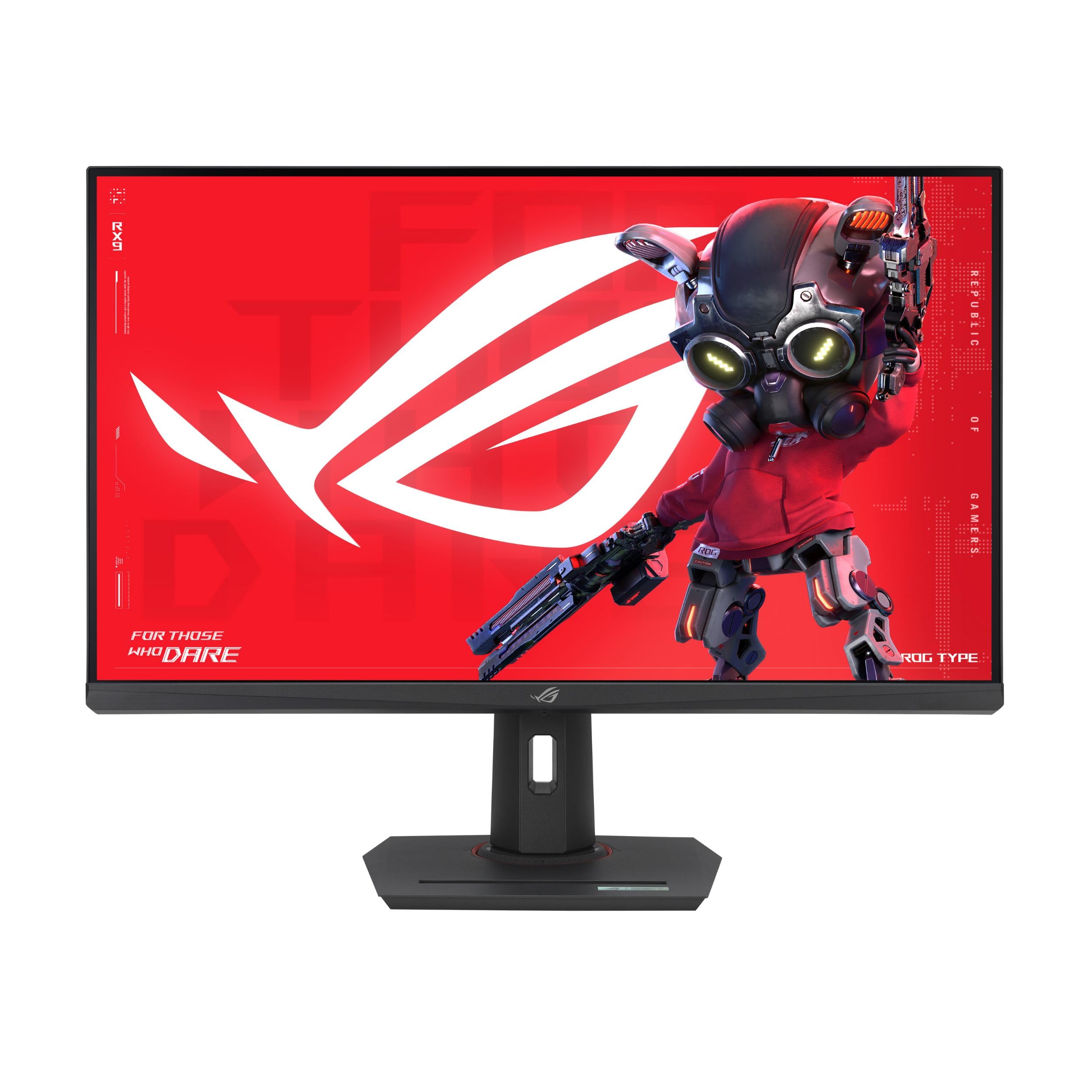
The XG32UCG earns the Best Overall label because it balances the dual-mode concept — 4K at 160Hz for detail-heavy games and FHD at 320Hz for competitive shooters — with a Fast IPS panel that delivers excellent viewing angles and a 0.3ms minimum response time. The Extreme Low Motion Blur Sync (ELMB SYNC) technology works alongside variable refresh rate to eliminate both ghosting and tearing simultaneously, something many monitors still struggle to achieve.
Color coverage hits 95% DCI-P3 with 130% sRGB, and the dynamic contrast ratio of 100,000,000:1 helps HDR content look punchy despite the IPS panel’s lower native contrast. The tripod socket on the stand is a thoughtful inclusion for streamers who want to mount a webcam directly above the screen. DisplayWidget Center lets you adjust settings via mouse rather than fumbling with OSD buttons, and the USB-C port supports DisplayPort Alt Mode for clean single-cable laptop connections.
At this price point, the XG32UCG competes with the Samsung G7 G75F and the LG 34G630A. The ASUS pulls ahead because its Fast IPS panel has wider viewing angles than VA alternatives — useful if you share the screen during co-op sessions or presentations. The semi-gloss screen finish sits between a full matte and a glossy coating, managing reflections without washing out color vibrancy. The three-year warranty adds peace of mind for long-term ownership.
Why it’s great
- Dual-mode 4K@160Hz to FHD@320Hz adapts seamlessly between single-player and esports
- ELMB SYNC eliminates both motion blur and screen tearing simultaneously
- Semi-gloss screen coating strikes an effective balance between reflection control and color punch
Good to know
- Fast IPS native contrast is lower than VA panels at roughly 1000:1 static
- HDR peak brightness is adequate but does not match high-end Mini-LED panels
- OSD joystick location can be slightly awkward to reach on the rear panel
6. LG 34G630A-B UltraGear
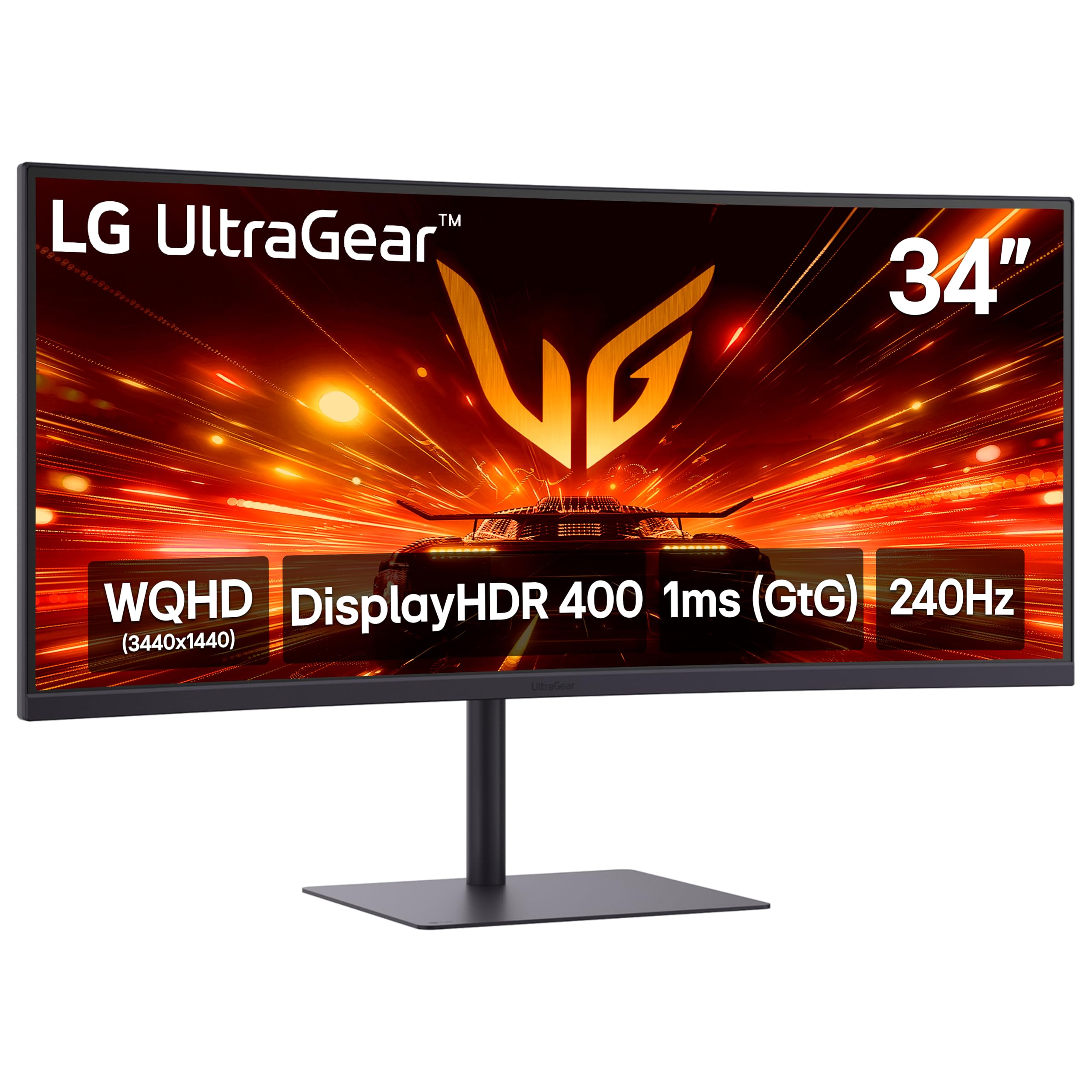
The 34G630A pushes the envelope for a VA panel with a 240Hz refresh rate and 1ms response time, figures that were previously the domain of Fast IPS monitors. The 3440×1440 WQHD resolution on a 21:9 aspect ratio gives you extra horizontal real estate for game maps and productivity timelines without the full GPU load of 4K. The VA substrate delivers a strong 3000:1 native contrast ratio, making dark scenes in games like Metro Exodus or Alan Wake II look appropriately menacing.
FreeSync Premium ensures tear-free gameplay across the full refresh range, and the USB-C port with 15W power delivery supports single-cable laptop setups. The stand provides tilt, height, and swivel adjustments, and the virtually borderless design helps the monitor blend into multi-monitor configurations. The built-in speakers are better than average for a gaming monitor — they handle dialogue clearly without the hollow tone typical of budget implementations.
The compromise is that 3440×1440 is not true 4K, so users who want maximum pixel density for text work will notice the difference versus a 32-inch 2160p panel. The VA panel also shows some gamma shift at extreme viewing angles, though the 1500R curve mitigates this for a centered viewer. For competitive gamers who want high frame rates with better contrast than IPS offers, this LG is a focused and effective choice.
Why it’s great
- 240Hz refresh rate on VA panel delivers both high contrast and buttery-smooth motion
- 21:9 aspect ratio provides genuine horizontal advantage in strategy and racing games
- USB-C with 15W PD simplifies laptop connectivity and reduces cable clutter
Good to know
- WQHD resolution means fewer vertical pixels than a 4K panel
- VA gamma shifts slightly when viewed from off-center angles
- Monitor is physically wide at 34 inches; verify desk space before purchase
7. Dell 34 Plus S3425DW

The S3425DW is built for the productivity user who wants a single ultrawide panel to replace two smaller monitors. The 3440×1440 resolution on a 34-inch VA panel provides enough horizontal space for two full-width document windows at 100% scaling, and the 3000:1 contrast ratio makes reading text in dark mode noticeably easier on the eyes. The 120Hz refresh rate with FreeSync Premium handles casual gaming well without adding gaming-oriented aesthetic penalties.
The defining feature for office use is the USB-C port with 65W power delivery — enough to charge a MacBook Pro or Dell XPS while carrying video and data, keeping the desk clean. ComfortView Plus reduces blue light emissions to ≤35% without shifting the color temperature to a yellow cast, which is a genuine advantage for people who work long hours. The integrated speakers deliver deeper frequency response than the previous generation, making video calls and background music clear without external speakers.
Where the S3425DW falls short is port count: it lacks a dedicated DisplayPort input, relying on HDMI and USB-C. The VESA mount design requires spacers if you plan to use an aftermarket arm, adding an extra step to the setup process. For users who prioritize eye comfort, single-cable convenience, and a clean ultrawide workspace over raw gaming performance, this Dell is a well-considered tool.
Why it’s great
- USB-C with 65W power delivery charges a laptop while carrying video and data over one cable
- ComfortView Plus reduces harmful blue light without sacrificing color accuracy
- VA panel’s 3000:1 contrast makes dark-mode text work significantly more comfortable
Good to know
- No DisplayPort input; relies on HDMI and USB-C for video connectivity
- VESA mounting requires additional spacers or bracket assembly
- 120Hz refresh is fine for casual gaming but insufficient for competitive esports
8. Samsung Smart Monitor M7 M70F
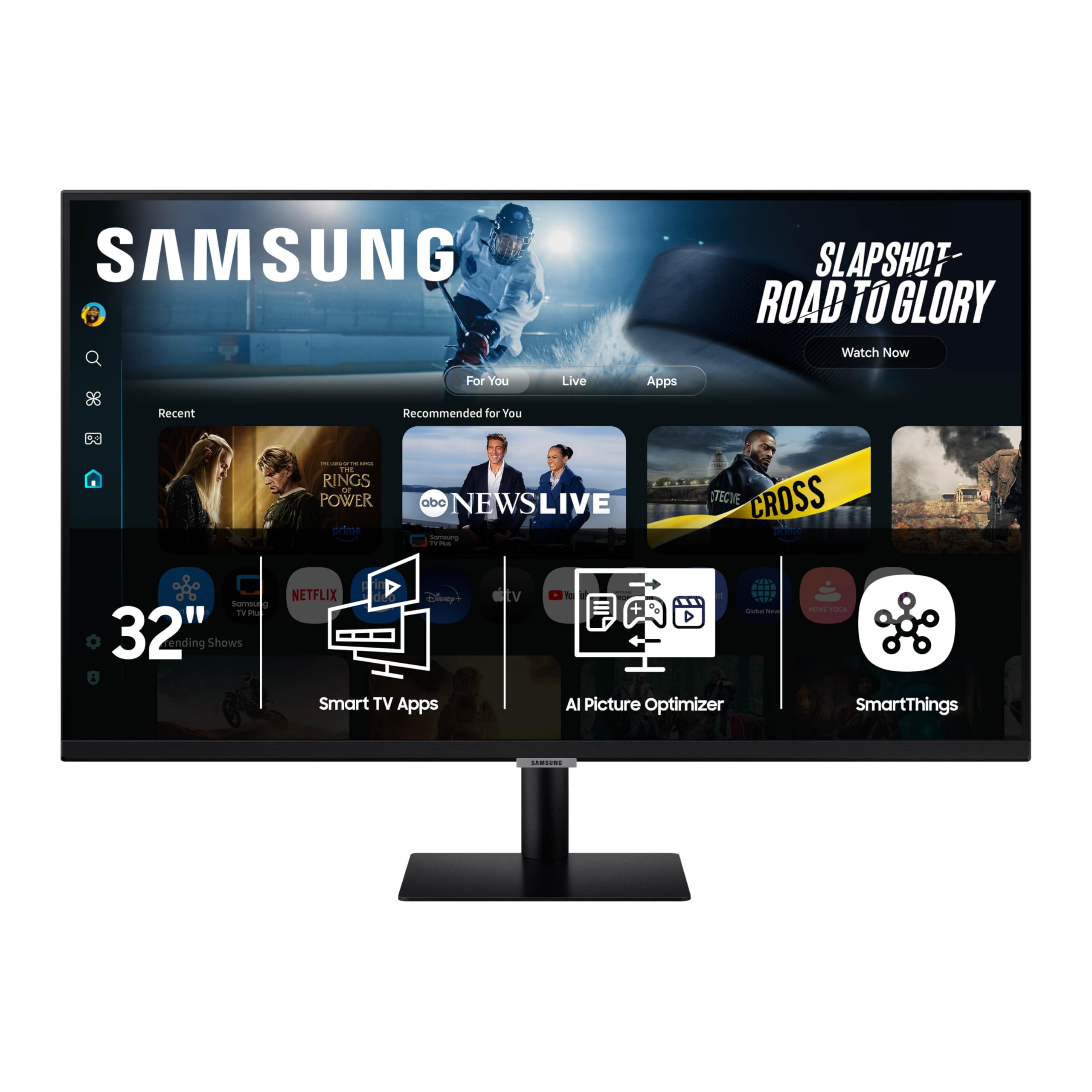
The M70F is not a standard monitor — it runs Samsung’s Tizen operating system, giving you direct access to Netflix, YouTube, Samsung TV Plus, and the Gaming Hub without connecting a PC or console. The 32-inch flat VA panel delivers 4K resolution with a 3000:1 contrast ratio, and the AI Picture Optimizer attempts to adapt the color profile based on whether you are reading a document or watching a movie. The inclusion of a solar-powered remote control is a thoughtful touch.
Connectivity is versatile: Bluetooth 5.0, Wi-Fi, USB-C, and dual HDMI inputs mean you can switch between a work laptop and a streaming stick without touching cables. The Active Voice Amplifier uses the built-in microphone to detect ambient noise and boost dialogue volume automatically — useful for a living room or open office space. Samsung Knox provides multi-layered security for smart home controls and IoT connections accessed through the monitor’s interface.
The 60Hz refresh rate is the biggest limitation here — this is not a gaming monitor despite the Gaming Hub presence. Some users report gradual focus loss and icon blur after the return period, which suggests variable quality control. For a bedroom or small apartment where a TV and a monitor need to coexist in one screen, the M70F delivers unique functionality, but it sacrifices the clean reliability of a dedicated monitor for that versatility.
Why it’s great
- Built-in Tizen OS provides streaming apps and Gaming Hub without needing an external PC
- USB-C connectivity with Bluetooth and Wi-Fi enables a cable-free switching between devices
- Solar-powered remote is a practical and eco-friendly addition
Good to know
- 60Hz refresh rate makes this unsuitable for fast-paced gaming
- Some units experience focus issues and icon blur after extended use
- Stand is not height-adjustable; consider an aftermarket arm for proper ergonomics
9. Alienware AW3425DWM

The AW3425DWM offers a 34-inch ultrawide experience with a 3440×1440 VA panel at a price point that undercuts most competitors. The 180Hz refresh rate and 1ms response time (GtG) provide smooth motion for most gaming genres, and the 1500R curve wraps the image adequately without the aggressive inward pull of a 1000R design. The 3000:1 contrast ratio gives VA owners the black-depth advantage over budget IPS alternatives, particularly in dimly lit game scenes.
Dell ships the AW3425DWM with both HDMI 2.1 and DisplayPort 1.4 cables in the box, and the stand offers height, tilt, and swivel adjustments that make finding the neutral viewing angle straightforward. The OSD includes a dedicated MOBA/RTS preset that boosts shadow detail without washing out the mid-tones, a useful feature for competitive players. The anti-glare coating handles overhead lighting well, and the 95% DCI-P3 color coverage keeps colors vibrant enough for immersive single-player titles.
The trade-off at this price tier is the lack of built-in speakers and the non-OLED black performance — side-by-side with a QD-OLED panel, the VA blacks look gray in comparison. The 3440×1440 resolution also demands a mid-range GPU to push high frame rates in modern titles. For budget-conscious ultrawide buyers who want the contrast advantage of VA and a reliable brand warranty, this Alienware is the most practical entry point in the list.
Why it’s great
- 180Hz VA panel at this price point provides smooth gameplay with excellent contrast
- Included HDMI 2.1 and DisplayPort 1.4 cables reduce out-of-box expenses
- Full ergonomic stand with height, tilt, and swivel adjustments is rare at this tier
Good to know
- No built-in speakers — plan for external audio or headphones
- VA black levels, while strong for LCD, are not comparable to OLED performance
- 3440×1440 requires a capable GPU to push 180 fps in demanding titles
10. Dell 32 Plus S3225QS

The S3225QS is Dell’s 32-inch 4K VA panel designed to serve both office productivity and casual gaming without leaning too far into either extreme. The 1500R curve on a 31.5-inch panel is subtle enough that it does not distort spreadsheet lines or CAD drawings, yet it still reduces the peripheral refocus effort that flat panels require. The 120Hz refresh rate with FreeSync Premium makes desktop navigation feel fluid and handles games up to mid-tier titles with ease.
The VA panel covers 99% sRGB and 95% DCI-P3, and the 1500:1 contrast ratio delivers solid black depth for an LCD — better than typical IPS but not at the level of high-end VA panels like the Dell S3425DW. The improved ComfortView Plus technology reduces blue light emissions to ≤35% while maintaining natural color balance, which genuinely reduces eye strain during eight-hour workdays. The ash white finish and ultra-thin bezels give the monitor a clean, minimalist look that fits modern home offices.
Users consistently report that the monitor is bright, sharp, and has excellent viewing angles for a VA panel. The built-in speakers are notably better than average — deeper bass and wider frequency response than typical monitor audio, though they still top out during loud game explosions. The lack of USB-C is a minor miss for users who want single-cable laptop connectivity; this model relies on HDMI and DisplayPort. For users who want 4K resolution with strong color accuracy, comfortable blue-light filtering, and reliable Dell warranty support, the S3225QS is a dependable choice.
Why it’s great
- ComfortView Plus reduces harmful blue light without shifting to a yellow color cast
- 120Hz FreeSync Premium offers smooth scrolling and fluid casual gaming
- Ash white finish and ultra-thin bezels create a clean, modern desktop aesthetic
Good to know
- No USB-C port; relies on HDMI and DisplayPort for video input
- Speakers can sound overly loud even at minimum volume setting
- 1500:1 contrast is good but not class-leading for VA panels at this price
11. CRUA 32″ 4K Curved
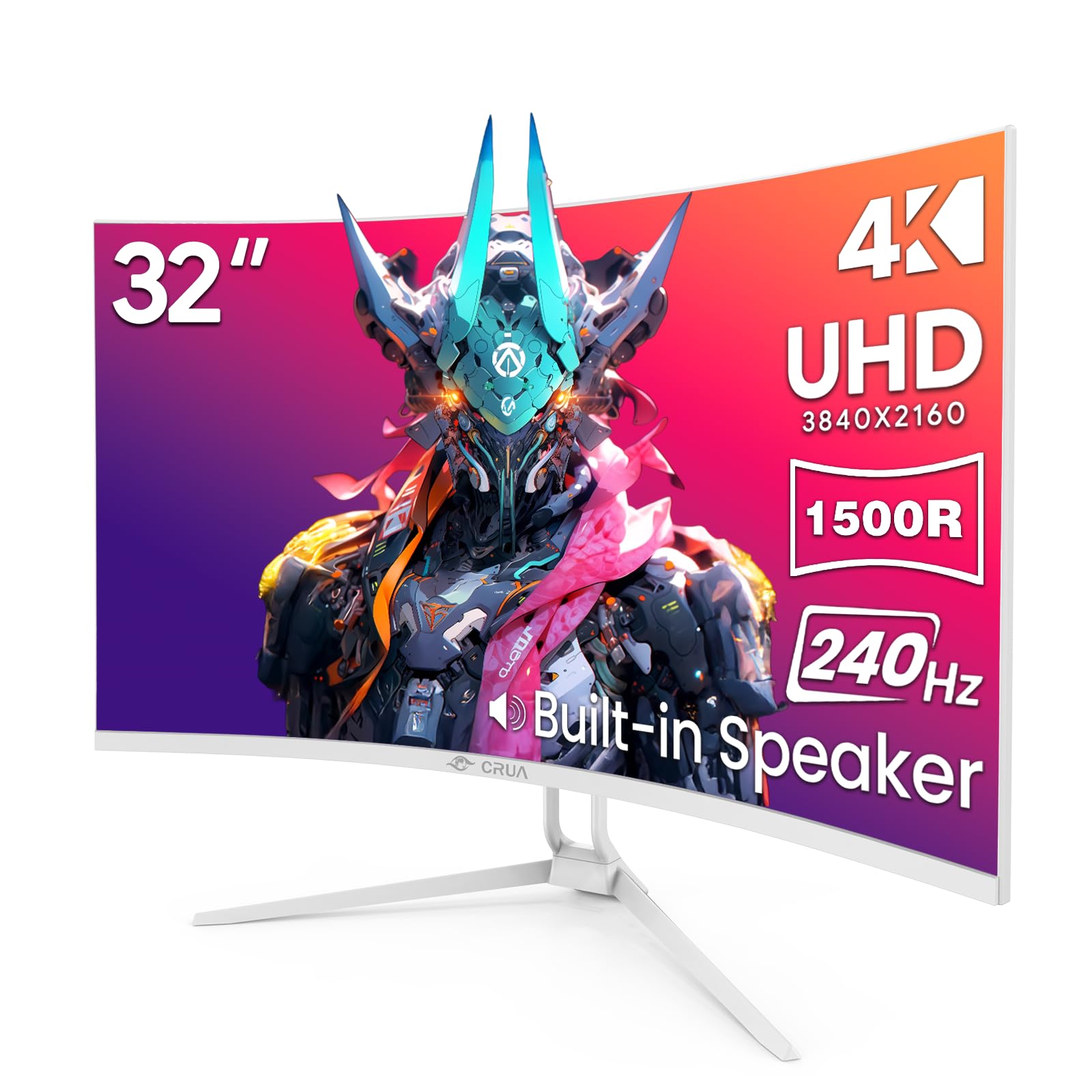
The CRUA 32-inch 4K curved monitor targets the budget-conscious buyer who wants both 4K resolution and a 240Hz refresh rate without paying the VA premium of established brands. The VA panel delivers a 3000:1 contrast ratio, which is competitive with mid-range alternatives, and the 120% sRGB color gamut provides vivid color for media consumption. The 1500R curve is gentle enough for productivity work but present enough to feel immersive during gaming sessions.
Connectivity includes HDMI 2.1 and DisplayPort 1.4, supporting both consoles and PC at the panel’s full refresh rate. The monitor includes built-in speakers, though they are basic and best treated as a fallback rather than a primary audio solution. PIP/PBP mode allows for dual-input multitasking, a feature often missing from entry-level panels. The white finish and slim profile make this a visually distinct option for users who want a lighter aesthetic in their setup.
Build quality and OSD implementation reflect the price tier — the stand has limited tilt adjustment and a slight wobble on less stable desks, and the on-screen menu controls require some patience to navigate. Some users report confusing default settings that need calibration for accurate color. For buyers on a strict budget who prioritize 4K resolution and high refresh rate over premium build quality and factory calibration, this CRUA is the least expensive entry point into the curved 4K market.
Why it’s great
- 240Hz 4K VA panel at an entry-level price point is hard to beat for value
- 3000:1 contrast ratio delivers competitive black levels for a budget LCD
- White casing and slim profile offer a distinct aesthetic alternative to standard black monitors
Good to know
- Stand provides only tilt adjustment with limited range and stability
- Out-of-box color calibration needs adjustments for accurate image quality
- Built-in speakers are basic; plan for external audio in most use cases
FAQ
What curvature radius works best for a 34-inch ultrawide monitor?
Can a 4K curved monitor replace a dual-monitor setup for productivity?
Does a curved monitor cause distortion in photo and video editing applications?
What GPU do I need to drive a 4K curved monitor at high refresh rates?
Final Thoughts: The Verdict
For most users, the 4k curved monitor winner is the ASUS ROG Strix XG32UCG because its Fast IPS dual-mode implementation balances high refresh gaming, wide viewing angles, and 4K sharpness in a single package that works for both work and play. If you want the deepest blacks and most saturated colors for immersive single-player gaming, grab the AOC Agon PRO AG346UCD. And for a clean office ultrawide that keeps cable clutter to a minimum with 65W USB-C power delivery, nothing beats the Dell 34 Plus S3425DW.

Mo Maruf
I created WellFizz to bridge the gap between vague wellness advice and actionable solutions. My mission is simple: to decode the research and give you practical tools you can actually use.
Beyond the data, I am a passionate traveler. I believe that stepping away from the screen to explore new environments is essential for mental clarity and physical vitality.