Our readers keep the lights on and my smoothie glass nicely filled. As an Amazon Associate, I earn from qualifying purchases.
A 4K curved gaming monitor transforms your view of the action. The curvature physically wraps the edges of the 3840×2160 grid around your peripheral vision, reducing distortion at the screen’s far ends and pulling you into the game world’s depth. The spec sheet that mattered yesterday — 60Hz or 120Hz — no longer applies; the baseline for motion clarity in this tier is 240Hz with sub-1ms pixel transitions.
I’m Mohammad Maruf — the founder and writer behind WellFizz. This guide disassembles the latest generation of high-refresh curved 4K displays, from VA panels with deep native contrast to QD-OLED and WOLED monitors that redefine black levels and color volume.
The problem is that only a handful of curved models combine native 4K resolution with the high refresh rates and response times that competitive and immersive gaming demand. This evaluation of the best 4k curved gaming monitor examines eleven distinct solutions ranging from budget-friendly ultrawides to premium QD-OLED flagships.
How To Choose The Best 4K Curved Gaming Monitor
You have entered the high-resolution curved gaming monitor market. Every model here meets the 4K pixel count, but the experience differs enormously based on panel technology, HDR capability, and curvature radius. Do not fixate on the resolution number alone — the panel type determines whether the image looks washed out or punchy.
Panel Technology: VA vs. OLED
VA panels deliver a native contrast ratio of 3000:1, producing solid black levels without the blooming of IPS. OLED panels, whether WOLED or QD-OLED, achieve true black by switching off individual pixels, producing an infinite contrast ratio. The trade-off: VA panels can sustain higher full-screen brightness over long gaming sessions, while OLED monitors offer unrivaled per-pixel luminance and color saturation, especially in HDR content.
Curvature Radius and Ergonomics
The curvature rating describes how tightly the screen bends. A 1500R radius matches the human field of view at about 1.5 meters; a 1000R curve wraps tighter, requiring the monitor closer to your face. For a 32-inch panel, 1500R to 1800R provides a subtle immersion boost without distorting desktop productivity. For a 34-inch or 40-inch ultrawide, a tighter curve like 1000R significantly reduces eye travel across the display.
HDR Certification Levels that Actually Matter
VESA DisplayHDR 400 signals a basic brightness floor but does not guarantee local dimming. DisplayHDR 600 adds meaningful peak brightness for highlights. For OLED panels, DisplayHDR True Black 400 is the gold standard — it certifies that black levels reach near-zero nits while sustaining 400 nits of full-screen brightness and 600-1000 nits on small highlights. Do not buy a premium curved 4K monitor without True Black certification.
Quick Comparison
On smaller screens, swipe sideways to see the full table.
| Model | Category | Best For | Key Spec | Amazon |
|---|---|---|---|---|
| ASUS ROG Swift PG27UCDM | Premium QD-OLED | Elite esports & HDR Visuals | 240Hz / DP 2.1a UHBR20 | Amazon |
| Samsung Odyssey G8 G81SF | Premium QD-OLED | Glare-Free Gaming | 240Hz / 99% DCI-P3 | Amazon |
| MSI MPG 321URX | Premium QD-OLED | Best Value QD-OLED 4K | 240Hz / 90W USB-C PD | Amazon |
| Alienware AW3425DW | Premium Ultrawide QD-OLED | Immersive Ultrawide HDR | 240Hz / 1800R Curve | Amazon |
| LG 32GX850A-B | Premium WOLED | Dual-Mode Gaming & Media | Dual 165Hz / 330Hz | Amazon |
| Acer Predator X32 | Premium QD-OLED | High Brightness HDR | 240Hz / 1000 Nits Peak | Amazon |
| ASUS ROG Strix XG32UCG | Mid-Range Fast IPS | Dual-Mode Fast IPS | Dual 4K 160Hz / FHD 320Hz | Amazon |
| Samsung Odyssey G7 G75F | Mid-Range VA Ultrawide | Productivity & Immersive Gaming | 180Hz / WUHD 5120×2160 | Amazon |
| GIGABYTE M32UC | Mid-Range VA | KVM Workstation & Gaming | 160Hz (OC) / SS VA Panel | Amazon |
| CRUA 32″ 4K 240Hz | Budget VA | Entry-Level 4K 240Hz | 240Hz / 3000:1 Contrast | Amazon |
| LG 34G630A-B | Budget VA Ultrawide | Wide Immersion at Low Cost | 240Hz / 21:9 Ultrawide | Amazon |
In‑Depth Reviews
1. ASUS ROG Swift PG27UCDM

The ASUS ROG Swift PG27UCDM squeezes a full 4K QD-OLED panel into a compact 26.5-inch frame while delivering a 240Hz refresh rate and 0.03ms response time. The fourth-generation QD-OLED panel produces noticeably sharper text than earlier generations due to improved subpixel structure, fixing the soft-font issue that plagued first-gen OLED monitors. The DP 2.1a UHBR20 connection provides the full 80Gbps bandwidth, enabling uncompressed 4K at 240Hz without chroma subsampling — a rare capability in today’s monitor market.
Dolby Vision support combines with VESA DisplayHDR True Black 400 to produce punchy, realistic highlights against perfect black floors. The Neo Proximity Sensor detects when you step away and switches to a black screen, reducing burn-in risk without requiring manual intervention. The OLED Anti-Flicker 2.0 algorithm cuts luminance fluctuations by 20% compared to previous OLED generations, which makes a real difference during long sessions with fluctuating frame rates.
Build quality is excellent, with a sturdy stand offering height, tilt, swivel, and pivot adjustments. The KVM switch lets you share peripherals between two systems via USB-C (90W PD). The only notable trade-offs are the triangular QD-OLED subpixel layout that blurs some Windows text (gaming text is unaffected) and the absence of built-in speakers. For a premium 27-inch curved 4K monitor that nails both esports motion clarity and cinematic HDR, this is the top pick.
Why it’s great
- Full 80Gbps DP 2.1a eliminates chroma subsampling at 4K 240Hz
- Dolby Vision HDR with True Black 400 certification
- OLED Care Pro with proximity sensor for burn-in prevention
Good to know
- Triangular QD-OLED subpixel layout blurs some Windows font rendering
- No built-in speakers
2. Samsung Odyssey G8 G81SF
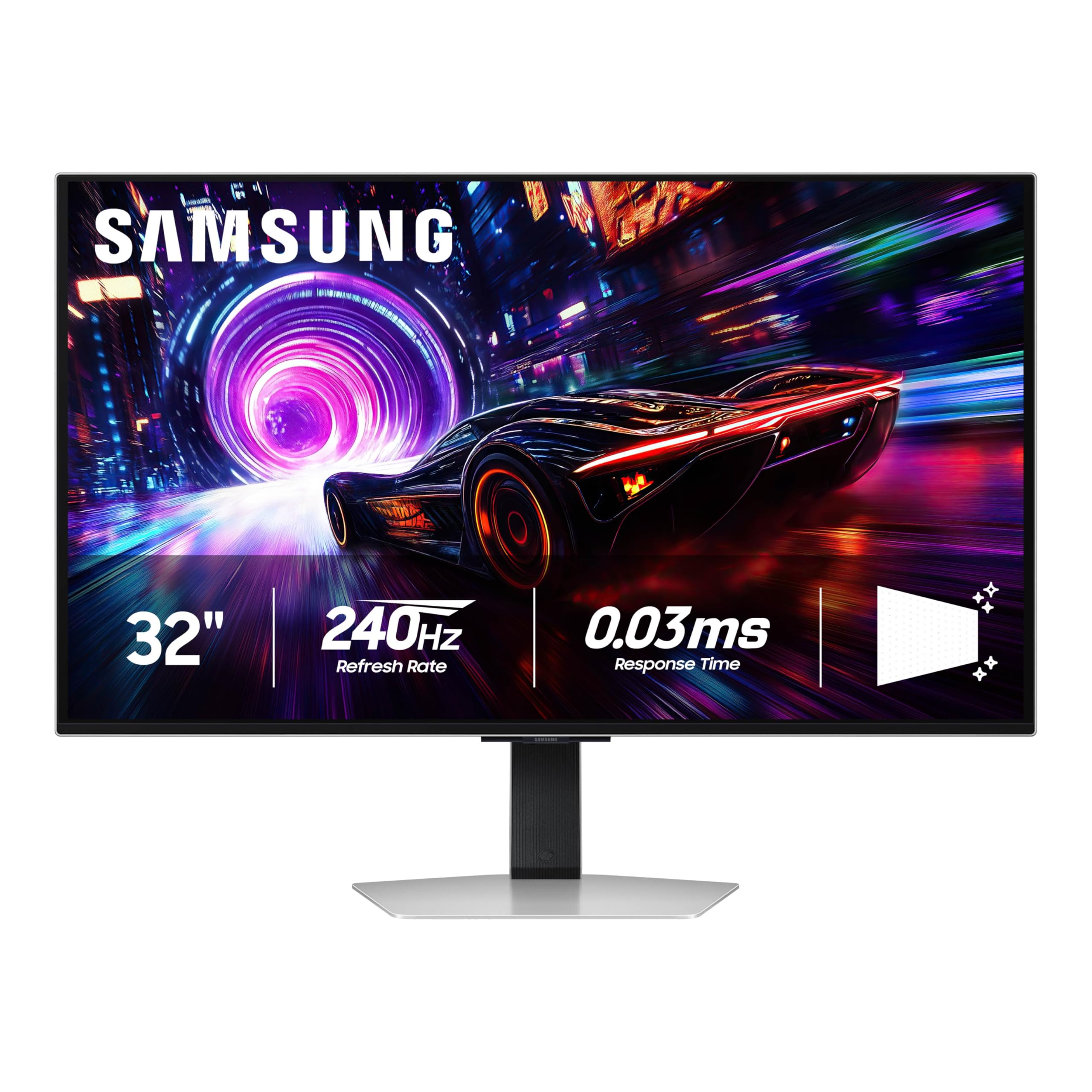
The Samsung Odyssey G8 G81SF pairs a 32-inch 4K QD-OLED panel with Samsung’s proprietary Glare Free technology, which reduces surface reflectivity by 54% compared to conventional anti-reflection coatings. This makes the G81SF uniquely usable in rooms with uncontrolled ambient lighting — the panel retains deep black levels even when a window or overhead light hits the screen. The 240Hz refresh rate and 0.03ms GtG response time deliver the same fluid motion as other premium OLEDs, but the anti-glare finish is the distinguishing feature for real-world setups.
VESA DisplayHDR True Black 400 certification ensures pixel-level black luminance, and the 99% DCI-P3 coverage produces saturated reds and greens without clipping. AMD FreeSync Premium Pro and G-Sync compatibility cover both GPU ecosystems. Samsung’s Pulsating Heat Pipe cooling system actively wicks heat away from the panel — the first implementation of this technology in a monitor. Thermal Modulation algorithms automatically adjust brightness to prevent overheating, while Logo and Taskbar Detection dims static elements to reduce burn-in risk.
Connectivity is adequate with HDMI 2.1, DP 1.4, and a USB-C hub, though the monitor lacks a dedicated KVM switch. The stand offers tilt and height adjustment but feels less premium than competitors at this price tier. Some users report that the mini-joystick OSD controller is finicky. Overall, if your desk sits in a bright room, the G81SF’s Glare Free coating makes it the most practical premium 4K curved gaming monitor available today.
Why it’s great
- Glare Free coating reduces reflections by 54% vs. standard anti-reflection
- Active Pulsating Heat Pipe cooling for burn-in reduction
- Excellent 99% DCI-P3 color gamut out of the box
Good to know
- No dedicated KVM switch
- Stand build quality could be better for the price
3. MSI MPG 321URX

The MSI MPG 321URX delivers a 32-inch 4K QD-OLED panel with 240Hz and 0.03ms response at a price that undercuts many competitors by a wide margin. The 10-bit panel covers 99% DCI-P3 with factory-calibrated Delta E ≤ 2 accuracy, making it suitable for color-sensitive work alongside gaming. VESA DisplayHDR True Black 400 certification delivers punchy HDR highlights with perfect black floors. The 90W USB-C Power Delivery allows single-cable connection to a laptop, simultaneously charging and transmitting video.
OLED Care 2.0 includes pixel shift and panel refresh routines that activate automatically when the monitor is in standby, reducing the risk of permanent burn-in during mixed-use scenarios. The KVM function works with PiP/PbP, letting you control two connected systems with one keyboard and mouse. HDMI 2.1 and DP 1.4a cover modern GPU inputs, though the monitor lacks DisplayPort 2.1 — not a practical limitation for 4K 240Hz, but worth noting for future-proof buyers.
Build quality is good, but the stand is the weakest element: it offers height, tilt, swivel, and pivot adjustments, but the base is large and the movement feels slightly loose compared to premium competitors. Some users report minor purple tint in reflections typical of QD-OLED panels. If you want near-flagship OLED performance without the flagship price, the MPG 321URX is the best value option in today’s curved 4K gaming monitor market.
Why it’s great
- Factory-calibrated Delta E ≤ 2 for accurate color
- 90W USB-C PD for single-cable laptop connection
- Competitive price for 4K 240Hz QD-OLED
Good to know
- Stand feels less refined than premium rivals
- DP 1.4a only — no DP 2.1
4. Alienware AW3425DW

The Alienware AW3425DW is a 34-inch 21:9 ultrawide QD-OLED monitor with a WQHD (3440×1440) resolution and an 1800R curve that wraps the expansive display around your peripheral vision. The 240Hz refresh rate and 0.03ms response time are standard for premium OLED monitors, but the 21:9 aspect ratio gives you a genuine competitive advantage in racing and flight simulators by filling more of your natural field of view. VESA DisplayHDR True Black 400 certification and 1000 nits peak brightness deliver spectacular HDR highlights against infinite black.
DCI-P3 99.3% coverage combined with Delta E < 2 color accuracy makes this monitor viable for photo and video editing, despite the 1440p vertical resolution. AMD FreeSync Premium Pro, NVIDIA G-Sync Compatible, and VESA AdaptiveSync certifications ensure smooth, tear-free playback across all GPU ecosystems. The 1800R curvature is gentler than competing 1000R panels, making the AW3425DW more comfortable for productivity work where you need to read text at the screen edges.
The stand is premium, offering height, tilt, swivel, and tilt adjustments with a sturdy metal base. The glossy QD-OLED finish enhances color saturation but reflects ambient light much more aggressively than matte-coated panels — bright room users will want to control overhead lighting. Some users note that 1440p vertical resolution feels lower than native 4K after using a 32-inch 4K panel. For pure immersion in supported games, the AW3425DW is one of the best curved gaming monitors on the market.
Why it’s great
- 21:9 ultrawide with 1800R curve for deep immersion
- 99.3% DCI-P3 with Delta E < 2 accuracy
- Triple adaptive sync certification (FreeSync, G-Sync, VESA)
Good to know
- 1440p vertical resolution — 4K equivalent horizontal only
- Glossy coating reflects ambient light significantly
5. LG 32GX850A-B
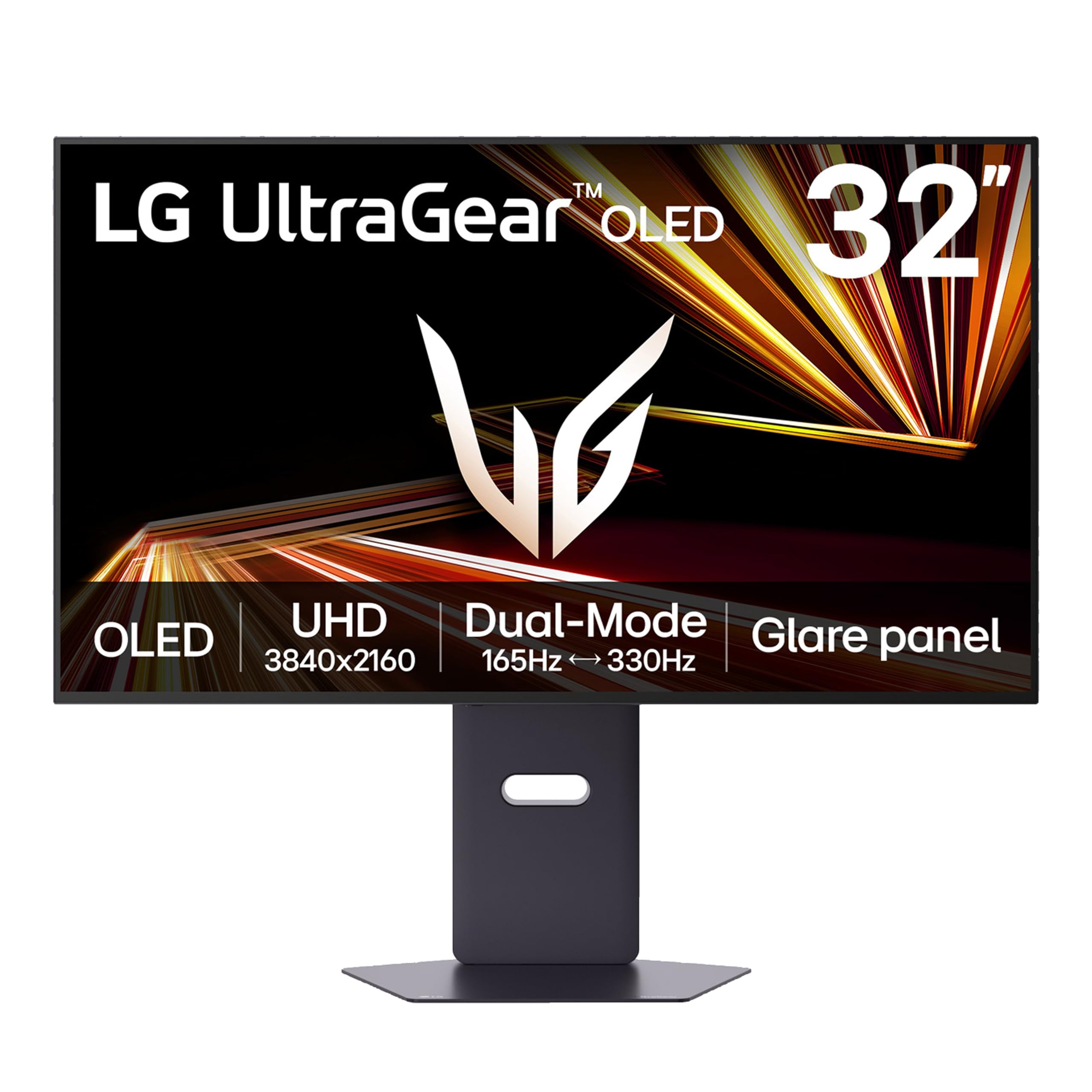
The LG 32GX850A-B uses a 32-inch 4K UHD WOLED panel with Micro Lens Array+ technology that pushes typical brightness to 275 nits — brighter than previous UltraGear OLED generations. The glossy finish enhances perceived contrast and color saturation, delivering punchy, lifelike images that mimic real-world depth. VESA DisplayHDR True Black 400 certification confirms the WOLED panel’s ability to hit perfect black levels, and the 98.5% DCI-P3 coverage ensures vibrant color reproduction across the spectrum.
The real differentiator is Dual Mode: you can toggle between native 4K at 165Hz and Full HD at 330Hz via a hotkey. This enables graphically rich story-driven games at full pixel density while allowing competitive shooters to run at ultra-high frame rates for smoother motion. The 0.03ms GtG response time eliminates ghosting entirely. NVIDIA G-Sync Compatible and AMD FreeSync Premium Pro certifications ensure tear-free gameplay regardless of your GPU brand.
Build quality is strong, with a metal border and a stand that offers height, tilt, swivel, and pivot adjustments. The WOLED panel lacks the purple tint issues seen on some QD-OLED monitors, and text rendering is cleaner than many OLED competitors. However, the glossy screen can be reflective in bright rooms, and the 165Hz ceiling at 4K feels lower than the 240Hz standard that the competition offers. For gamers who want one monitor for both immersive single-player and high-refresh competitive play, the Dual Mode capability is genuinely useful.
Why it’s great
- Dual Mode: 4K 165Hz or FHD 330Hz via hotkey
- Micro Lens Array+ boosts brightness over previous WOLED
- Clean text rendering without QD-OLED purple tint
Good to know
- Glossy screen reflects ambient light
- 165Hz at 4K is lower than 240Hz competitors
6. Acer Predator X32
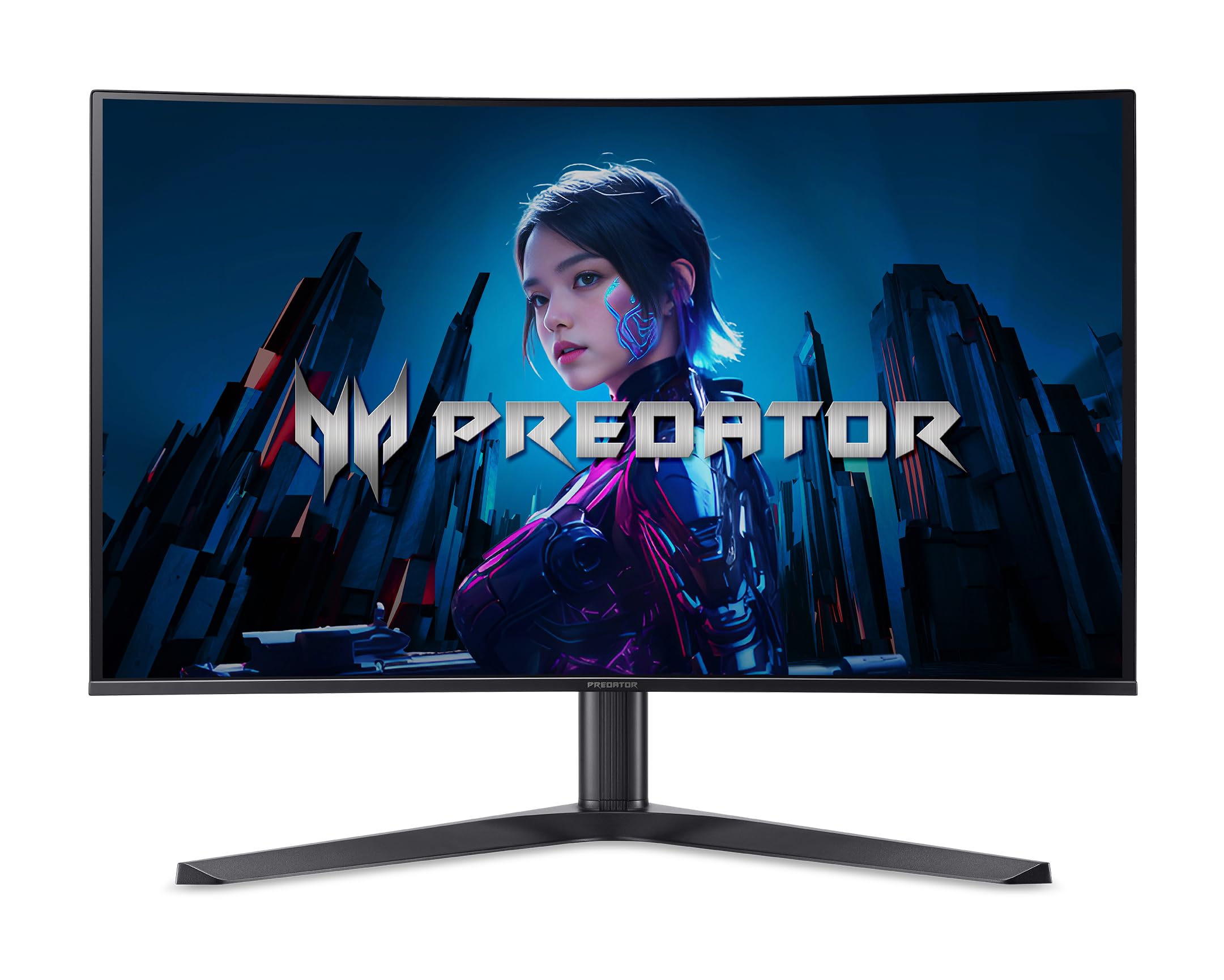
The Acer Predator X32 is a 31.5-inch 4K UHD QD-OLED monitor with a 1700R curve, 240Hz refresh rate, and an extremely fast 0.03ms GtG response time. The headline specification is 1000 nits peak brightness on a 3% HDR window — one of the brightest OLED monitors available. VESA DisplayHDR True Black 400 certification ensures that this high brightness comes with genuine black levels. The DCI-P3 99% color gamut and true 10-bit color depth produce smooth gradients without banding.
The Quantum Dot OLED panel delivers striking color volume, with highly saturated reds and greens that VA and IPS panels cannot reproduce. AMD FreeSync Premium certification ensures tear-free performance across a wide VRR range. The stand provides full ergonomic adjustment including height, tilt, and swivel, making it easy to position the 31.5-inch panel for comfort during long sessions. Built-in speakers are a rare inclusion on a high-end OLED monitor — audio quality is acceptable for casual use.
Several users report that the monitor requires HDR to be enabled to reach its full brightness potential, and the standard SDR mode can appear dim by comparison. The panel runs warm, and the OSD prompts occasional intervention for panel refresh operations. Some reviews mention that peak brightness is only achieved on a very small percentage of the screen, with full-screen brightness being significantly lower. If you play games with frequent bright highlights and want maximum OLED punch, the Predator X32 delivers, but be prepared to manage its quirks.
Why it’s great
- 1000 nits peak brightness for impactful HDR highlights
- 99% DCI-P3 with true 10-bit color depth
- Full ergonomic stand with built-in speakers
Good to know
- SDR mode can appear dim in bright rooms
- Panel runs warm during extended use
7. ASUS ROG Strix XG32UCG
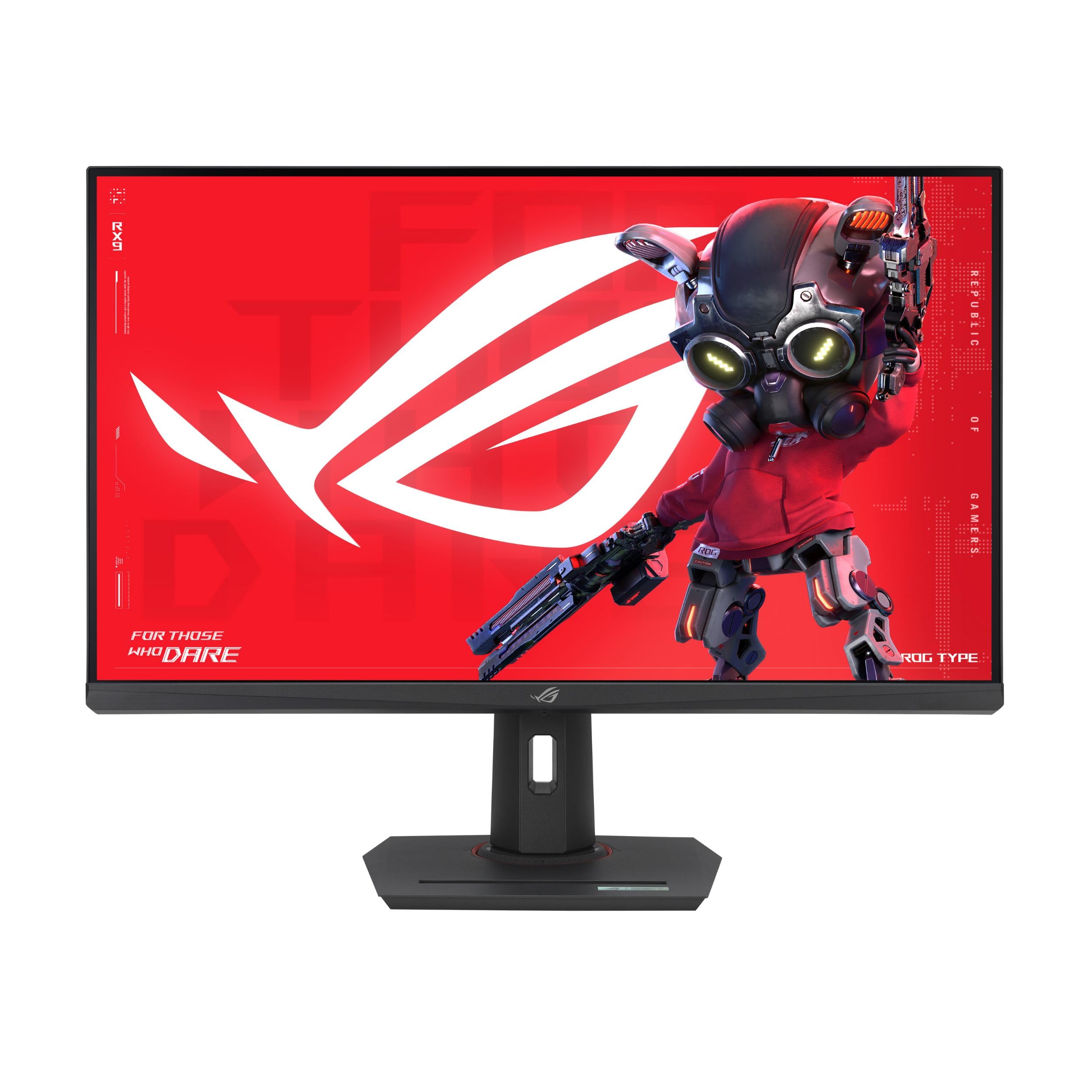
The ASUS ROG Strix XG32UCG uses a 32-inch Fast IPS panel to deliver 4K resolution at 160Hz, with a dual-mode toggle that scales resolution down to Full HD while ramping the refresh rate to 320Hz. The 0.3ms MPRT response time is exceptionally low for an IPS panel, and the Extreme Low Motion Blur Sync (ELMB SYNC) technology works simultaneously with variable refresh rate — a rare pairing that eliminates both ghosting and tearing without forcing you to choose between the two. The monitor supports G-Sync Compatible certification for smooth NVIDIA GPU pairing.
The 95% DCI-P3 color gamut with ASUS gray-scale tracking technology produces uniform color gradation. DisplayWidget Center lets you adjust settings via mouse, reducing reliance on the OSD joystick. Connectivity includes USB-C with DP Alt mode, two HDMI 2.1 ports, and DisplayPort, plus a tripod socket on top for mounting a webcam or streaming camera. The stand offers height, tilt, swivel, and pivot adjustments with a compact footprint.
Being an IPS panel, the static contrast ratio is 1000:1 — significantly lower than VA or OLED panels — so black levels in dark scenes will appear gray in a dark room. The 32-inch size with a subtle curve is comfortable for desktop use, but the curvature itself is less pronounced than the VA or OLED competitors. For gamers who want both high-refresh eSports play and sharp 4K visuals from a single panel, the dual-mode functionality of the XG32UCG is effective, though the trade-off in contrast is real.
Why it’s great
- Dual Mode: 4K 160Hz or FHD 320Hz
- ELMB SYNC works simultaneously with VRR
- Built-in tripod socket and USB-C DP Alt Mode
Good to know
- 1000:1 contrast ratio — grays in dark scenes
- Curve is subtle, less immersive than VA/OLED panels
8. Samsung Odyssey G7 G75F
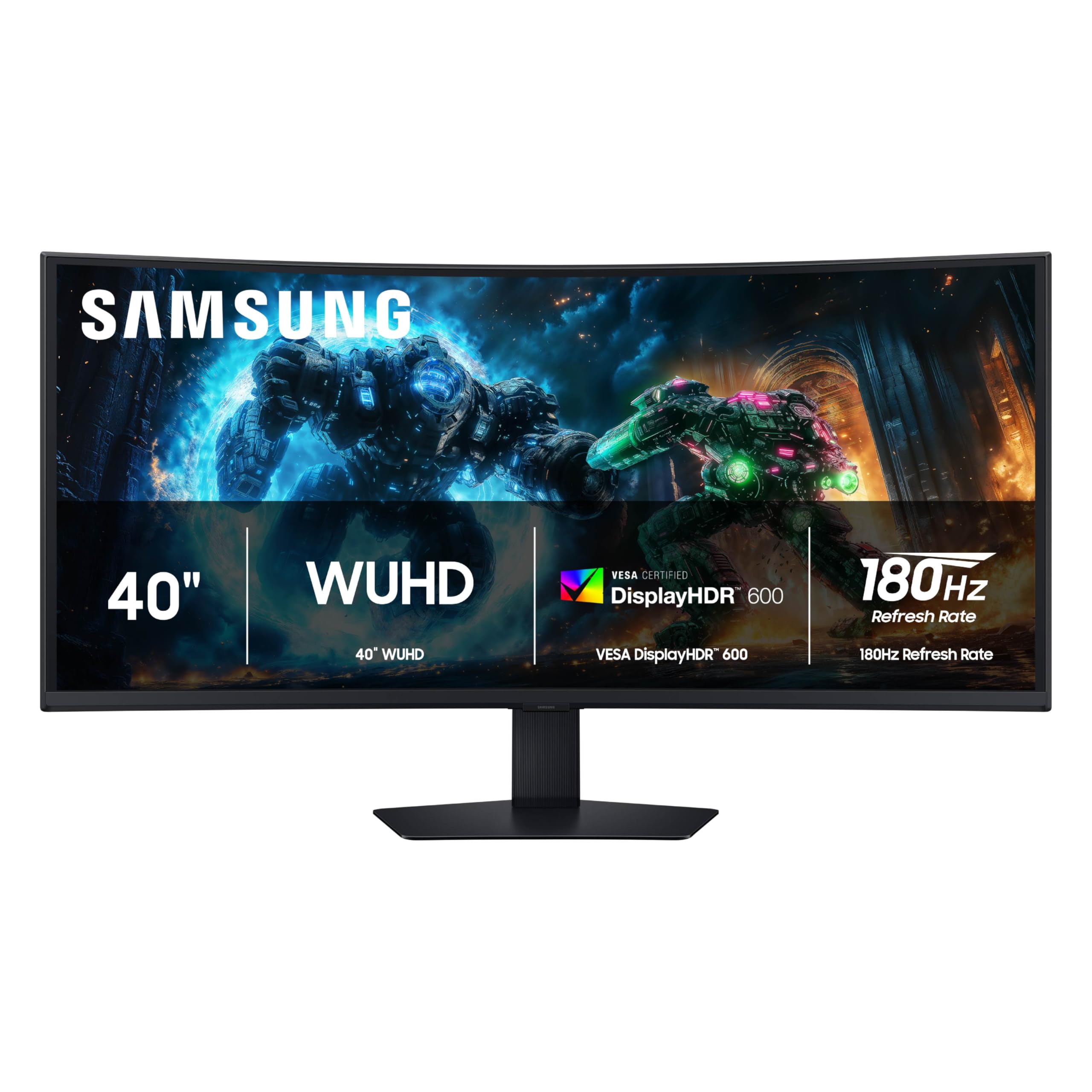
The Samsung Odyssey G7 G75F is a 40-inch ultrawide monitor with a WUHD resolution of 5120×2160 and a sharp 1000R curvature that creates a genuinely immersive visual tunnel. The VA panel delivers a 3000:1 native contrast ratio with 350 cd/m² typical brightness, producing deeper blacks than any IPS monitor. VESA DisplayHDR 600 certification ensures meaningful peak brightness for HDR highlights, giving the G75F an edge over budget HDR monitors. The 180Hz refresh rate and 1ms GtG response time are competitive for a VA panel at this size.
AMD FreeSync Premium Pro certification guarantees tear-free performance across a wide VRR range with HDR support. The 21:9 aspect ratio and 40-inch diagonal creates a vast canvas that works equally well for spreadsheet-heavy productivity and panoramic gaming. The stand offers height and tilt adjustment, and connectivity includes HDMI 2.1, DP 1.4, and USB upstream ports for peripheral sharing. The 5120×2160 resolution is not standard 4K — it is ultrawide 5K2K — so it requires more GPU power than a 3840×2160 panel.
The VA panel can exhibit black smearing at lower refresh rates, though at 120Hz and above it is generally well-controlled. The base is wide and somewhat awkward, requiring a deep desk for optimal positioning. Some users report that HDR requires manual calibration out of the box. If you need a single massive curved display for both immersive gaming and productivity without the burn-in risk of OLED, the G75F is a strong candidate, though it does require a powerful GPU to push all those pixels.
Why it’s great
- Massive 40-inch 21:9 WUHD canvas for work and play
- VESA DisplayHDR 600 for meaningful HDR brightness
- No burn-in risk — safe for mixed-use desktop
Good to know
- Wide base requires deep desk
- Black smearing can appear at lower refresh rates
9. GIGABYTE M32UC

The GIGABYTE M32UC is a 32-inch curved SS VA monitor with a native 4K resolution (3840×2160) and 144Hz refresh rate that overclocks to 160Hz. The VA panel delivers a 3000:1 native contrast ratio with 350 cd/m² brightness, producing significantly better black levels than IPS equivalents. VESA DisplayHDR 400 certification provides a baseline HDR experience, but the real draw is the built-in KVM switch, which lets you control two connected devices with a single keyboard and mouse. The USB-C port supports DP Alt Mode for single-cable laptop connection.
The 93% DCI-P3 and 123% sRGB coverage deliver punchy colors suitable for gaming and content consumption. The 1ms MPRT response time keeps motion blur to a minimum, though VA black smearing can occur in dark transitions when the overdrive setting is not dialed correctly. FreeSync Premium compatibility ensures tear-free gaming with compatible GPUs. The OSD Sidekick software allows mouse-based control of monitor settings, and the PiP/PbP functions work with the KVM for productivity.
Some users report that the default color calibration has a blue tint, requiring a custom profile and calibration to fix. The DP connection can occasionally drop and requires a cable reseat — this seems to be a firmware sensitivity issue. The stand offers only tilt adjustment. If you need a curved 4K monitor with a functional KVM for a dual-system setup and are willing to spend time on calibration, the M32UC provides strong value in the mid-range market.
Why it’s great
- Built-in KVM for dual-system control with one keyboard/mouse
- 3000:1 native contrast for deep blacks
- USB-C DP Alt Mode for single-cable laptop
Good to know
- Default color calibration has blue tint — requires adjustment
- DP connection can drop under certain conditions
10. CRUA 32″ 4K 240Hz
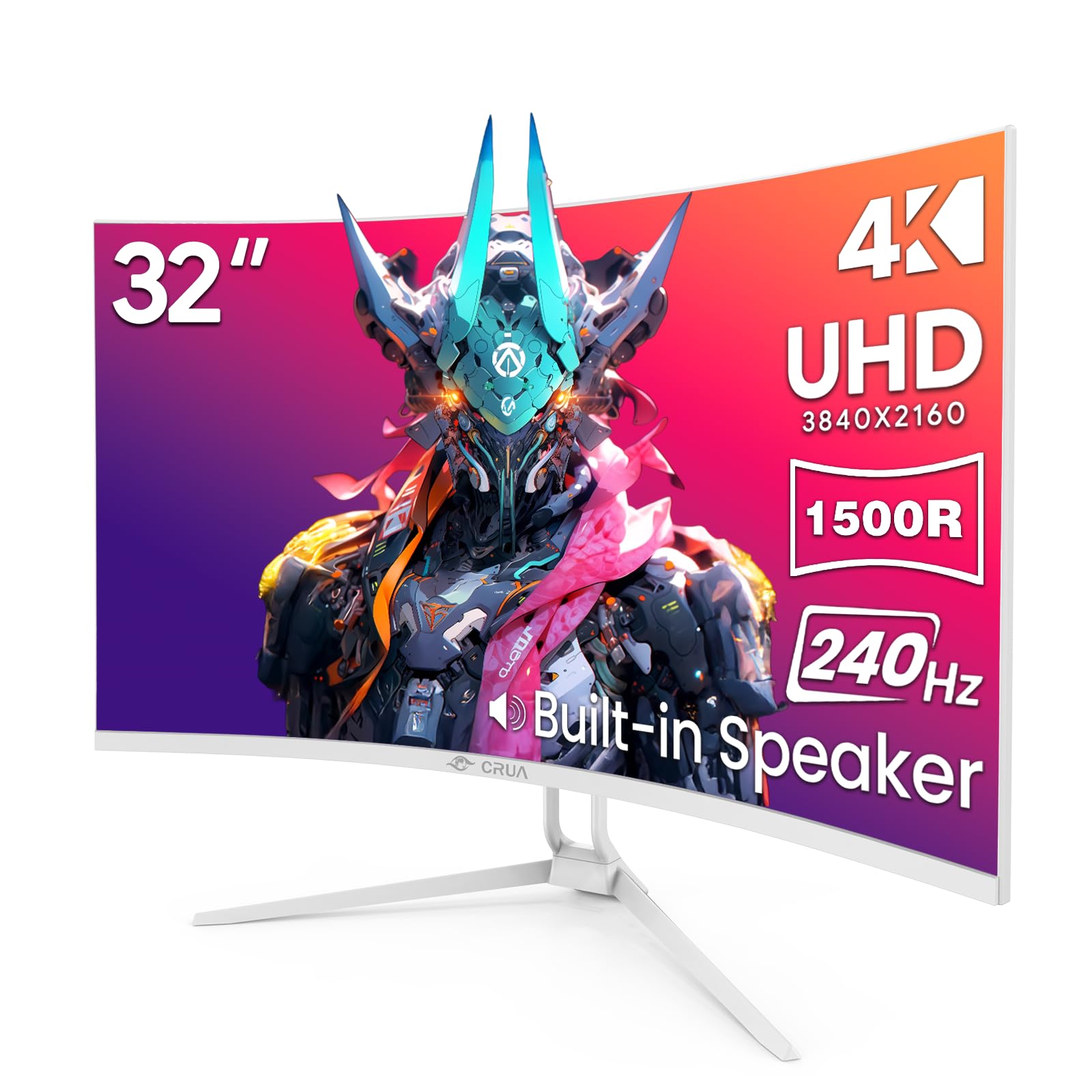
The CRUA 32-inch 4K gaming monitor delivers 240Hz refresh rate and 3840×2160 resolution on a VA panel with 3000:1 contrast ratio, making it one of the most affordable curved 4K monitors that can actually hit 240Hz. The 1500R curvature provides a comfortable wrap effect for a 32-inch panel, reducing edge distortion. The VA panel produces deep blacks and a 120% sRGB color gamut for vibrant color reproduction. AMD FreeSync support reduces screen tearing across a range of frame rates.
The monitor includes HDMI 2.1 and DP 1.4 connectivity, along with built-in speakers and RGB backlighting. The white chassis is a rare aesthetic option in the gaming monitor market, suiting all-white or light-colored setups. PiP/PbP support allows simultaneous display from two sources, which is useful for productivity. The 300 cd/m² brightness is adequate for indoor use but falls short of HDR-certified panels in peak luminance.
The stand offers only tilt adjustment without height or swivel capability. The OSD menu can be confusing to navigate without a remote, and some users note that the built-in speakers are cosmetic slits rather than functional audio — the actual audio output is minimal. Color accuracy out of the box is acceptable but not calibrated for professional work. For gamers on a tight budget who want a genuine 4K 240Hz curved experience, the CRUA delivers the core spec at an entry-level price.
Why it’s great
- Genuine 240Hz at 4K resolution in an affordable package
- 3000:1 VA contrast for deep blacks
- White chassis suits alternate desk aesthetics
Good to know
- Stand offers tilt only — no height or swivel
- Built-in speakers are largely cosmetic
11. LG 34G630A-B
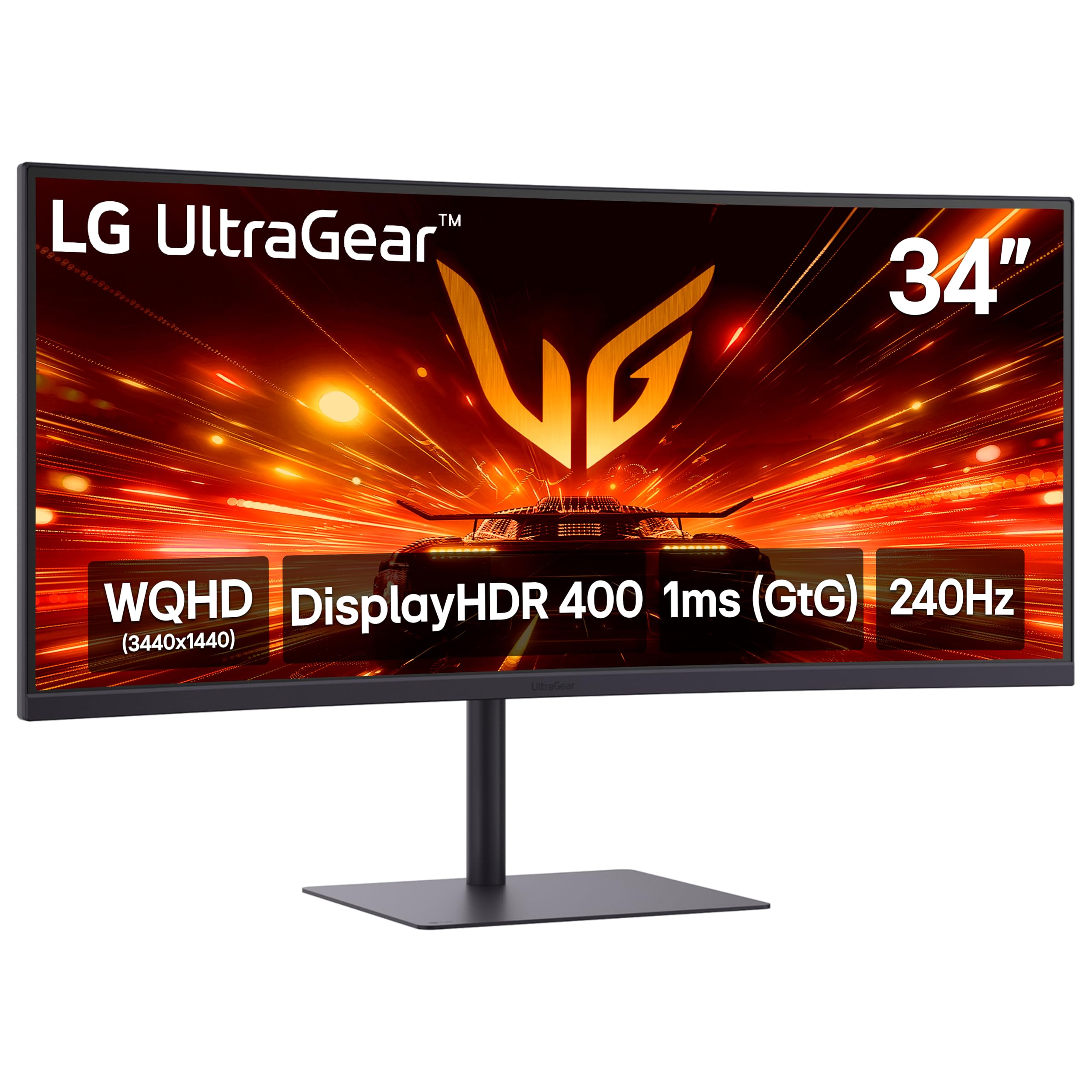
The LG 34G630A-B is a 34-inch 21:9 ultrawide VA gaming monitor with a WQHD resolution of 3440×1440 and a 240Hz refresh rate. The VA panel delivers a 3000:1 native contrast ratio and 300 cd/m² brightness with VESA DisplayHDR 400 certification. The 1ms GtG response time keeps ghosting to a minimum for a VA panel at this price tier. AMD FreeSync Premium certification ensures tear-free gameplay across a wide VRR range, compatible with both AMD and adaptive-sync-capable NVIDIA GPUs.
The 95% DCI-P3 color gamut produces rich, saturated colors that make games and movies pop. USB-C connectivity with 15W Power Delivery allows single-cable connection to a laptop, though 15W is only sufficient for maintaining charge during light use. The stand offers height, tilt, and swivel adjustment with a compact footprint that frees up desk space. Built-in speakers are functional but mediocre in quality — fine for system sounds but not for immersive gaming.
The WQHD resolution is not true 4K — it has 33% fewer vertical pixels than a 3840×2160 display, so desktop text will appear less sharp. The 300 cd/m² brightness is average, and the HDR 400 certification provides only a modest upgrade over SDR. Some users report that the 21:9 aspect ratio can cause compatibility issues with older games that do not support ultrawide. For budget-conscious gamers who want the immersion of a large curved ultrawide with a high refresh rate, the 34G630A-B delivers solid performance without breaking the bank.
Why it’s great
- Large 34-inch 21:9 ultrawide at an accessible price
- 240Hz with 1ms GtG response for smooth motion
- Full ergonomic stand with height, tilt, and swivel
Good to know
- WQHD is not true 4K — 33% fewer pixels than UHD
- 300 cd/m² brightness is average for HDR 400
FAQ
Does a 4K curved gaming monitor require an ultrawide GPU to run at full refresh rate?
What is the difference between WOLED and QD-OLED in a curved gaming monitor?
Can a 4K curved gaming monitor be used for productivity and coding?
How much does curvature affect the viewing experience in a 32-inch 4K monitor?
Is OLED burn-in still a concern on 2025 curved 4K gaming monitors?
Final Thoughts: The Verdict
For most users, the best 4k curved gaming monitor winner is the ASUS ROG Swift PG27UCDM because it combines a fourth-gen QD-OLED panel with full-bandwidth DP 2.1a, Dolby Vision, and intelligent burn-in prevention in a compact 27-inch frame. If you want the brightest possible HDR highlights with infinite black levels, grab the Acer Predator X32. And for the most immersive ultrawide experience with premium QD-OLED color, nothing beats the Alienware AW3425DW.

Mo Maruf
I created WellFizz to bridge the gap between vague wellness advice and actionable solutions. My mission is simple: to decode the research and give you practical tools you can actually use.
Beyond the data, I am a passionate traveler. I believe that stepping away from the screen to explore new environments is essential for mental clarity and physical vitality.