Our readers keep the lights on and my smoothie glass nicely filled. As an Amazon Associate, I earn from qualifying purchases.
Moving from shaky phone footage to a dedicated vlogging camera changes your entire content workflow. A proper 4K camera for vlogging delivers smooth stabilization, reliable autofocus, and a sensor that captures detail in mixed lighting — elements smartphone algorithms often struggle to match. The investment pays off in video quality that holds viewer attention from the first frame.
I’m Mohammad Maruf — the founder and writer behind WellFizz. I’ve spent hundreds of hours analyzing sensor readouts, stabilization systems, codec support, and real-world battery performance across dozens of compact and mirrorless cameras to separate spec-sheet hype from daily usability.
Whether you film walking tours, talking-head segments, or fast-paced outdoor clips, knowing exactly which gimbal type or codec matters to your style is the difference between a purchase you love and one you regret. This guide stacks the top contenders side-by-side so you can confidently choose the right 4k camera for vlogging and stop researching.
How To Choose The Best 4K Camera For Vlogging
Choosing a vlogging camera means balancing portability, stabilization, and video quality. The wrong pick leaves you with footage that’s either too shaky, too dark, or too complicated to edit. Focus on the specs that directly affect your shooting style.
Sensor Size and Low-Light Performance
A 1-inch sensor (found in compact vlogging cameras like the DJI Osmo Pocket 3 and the Xtra Muse) delivers solid low-light results without the bulk of interchangeable-lens systems. APS-C sensors, like those in the Sony ZV-E10 or Canon EOS R50 V, capture more light and allow for shallower depth of field if you want that blurred background look. For pure vlogging on the go, a 1-inch sensor usually offers the best size-to-quality ratio.
Stabilization: Gimbal vs. Electronic
Mechanical 3-axis gimbal stabilization (as seen in the DJI Osmo Pocket 3 and Xtra Muse) physically steadies the lens, producing smooth walking footage electronic stabilization cannot fully match. Electronic or optical image stabilization (common in Sony and Canon mirrorless bodies) works well for static or slow pans but introduces some crop. If your vlog involves running, hiking, or dynamic movement, prioritize a camera with a built-in gimbal.
Autofocus and Subject Tracking
Reliable face and eye tracking keeps you sharp as you move around frame. Cameras like the Sony Alpha 6700 and Canon EOS R50 V use phase-detection autofocus with AI-based subject recognition, locking onto faces, animals, or vehicles. For solo vloggers who film themselves, fast and consistent autofocus is non-negotiable — manual pulling focus while talking is not practical.
Battery Life and Recording Limits
Look for a camera that shoots at least 90-120 minutes of continuous 4K video on a single charge. Pocket cameras (like the Insta360 GO 3S) may record for only 30-40 minutes before needing the action pod. Mirrorless cameras often allow hot-swapping batteries mid-shoot. Also check if the camera has a recording time limit — some older models stop at 30 minutes, which disrupts longer filming sessions.
Quick Comparison
On smaller screens, swipe sideways to see the full table.
| Model | Category | Best For | Key Spec | Amazon |
|---|---|---|---|---|
| DJI Osmo Pocket 3 | Pocket Gimbal | All-around vlogging, travel | 1″ CMOS, 3‑axis gimbal, 4K/120fps | Amazon |
| Xtra Muse | Pocket Gimbal | Budget gimbal camera, active shooting | 1″ CMOS, 3‑axis gimbal, 4K/120fps | Amazon |
| DJI Osmo Nano | Action Cam | Hands-free POV, sports vlogging | 1/1.3″ sensor, 4K/60fps, 200min battery | Amazon |
| Insta360 GO 3S | Tiny POV Cam | Ultra-portable POV, pet/helmet clips | 4K, FlowState stabil., IPX8, 39g | Amazon |
| Canon PowerShot V10 | Compact Point & Shoot | Ultra-compact, casual vlogging | 1″ BSI CMOS, 19mm f/2.8 lens | Amazon |
| Sony ZV-1F | Compact Point & Shoot | Selfie vlogging, product showcases | 1″ sensor, 20mm f/2.0 lens | Amazon |
| Panasonic LUMIX FZ80D | Bridge Superzoom | Wildlife, long reach vlogging | 60x optical zoom, 4K Photo | Amazon |
| Canon EOS R50 V | Mirrorless | Interchangeable lens, pro-quality vlogs | APS-C, 4K crop 59.94p, Dual Pixel AF II | Amazon |
| Sony Alpha ZV-E10 | Mirrorless | Budget mirrorless, YouTube vlogging | APS-C, 4K oversampled from 6K | Amazon |
| Blackmagic Pocket Cinema 4K | Cinema Camera | Cinematic color, professional post-production | MFT sensor, 13 stops DR, Blackmagic RAW | Amazon |
| Sony Alpha 6700 | Mirrorless | AI tracking, high-end hybrid shooting | APS-C, 4K/120p, 6K oversampled | Amazon |
In‑Depth Reviews
1. DJI Osmo Pocket 3
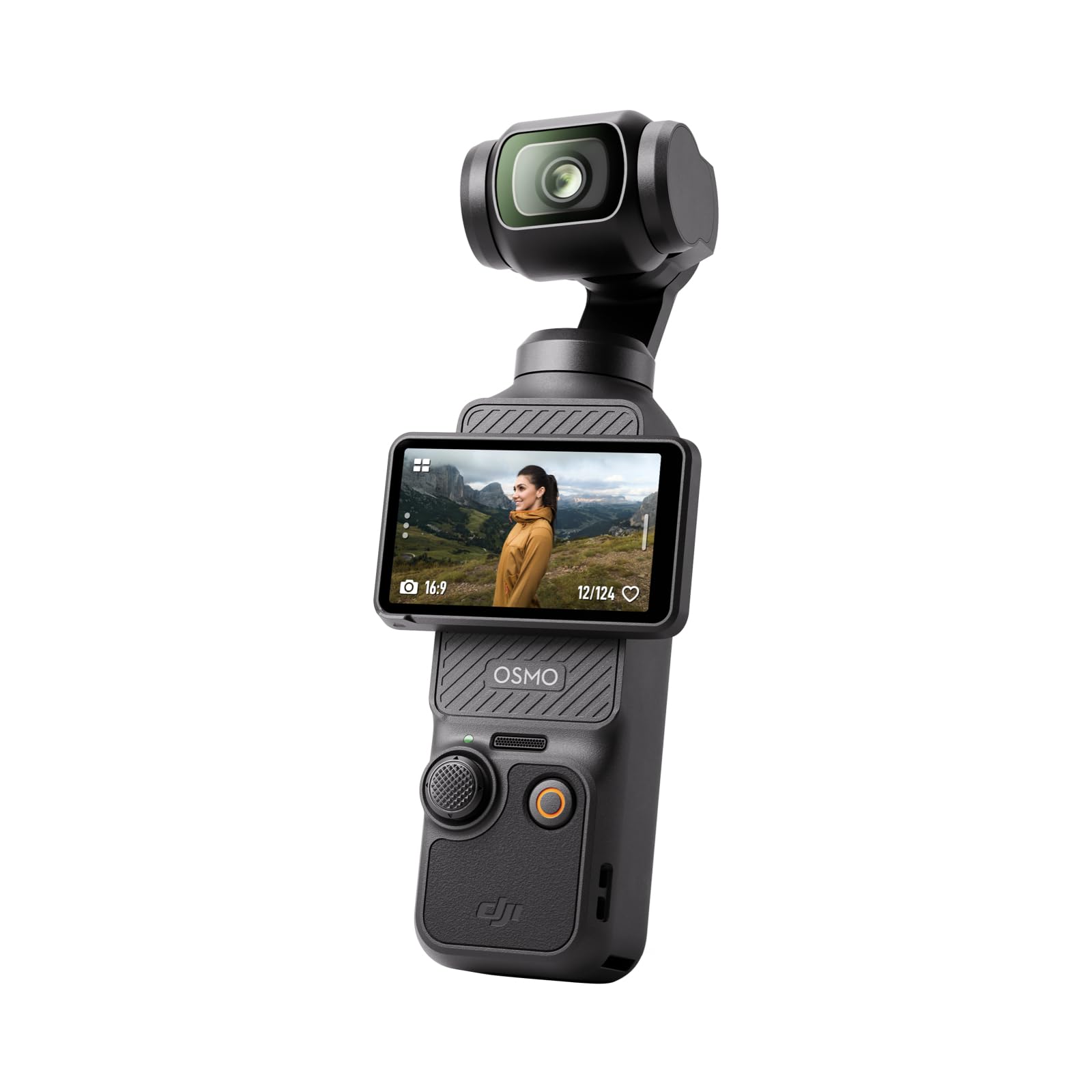
The DJI Osmo Pocket 3 pairs its 1-inch CMOS sensor with a true mechanical 3-axis gimbal, producing gimbal-quality 4K/120fps footage that electronic stabilization simply cannot replicate. The rotating 2-inch touchscreen allows instant switching between horizontal and vertical framing — a huge time-saver when you publish across platforms like YouTube and TikTok. Reviews consistently praise the ActiveTrack 6.0 face/object tracking, which keeps you center-frame even while dancing, spinning, or walking.
Battery life clocks in around 166 minutes of mixed shooting, and the ability to connect directly to two DJI Mic 2 transmitters via OsmoAudio means you do not need an external recorder for clean talking-head audio. The D-Log M color profile with 10-bit depth opens up significant flexibility for color grading sunrises or indoor interviews without banding.
The main trade-off is the lack of interchangeable lenses — you are locked into the built-in wide-angle lens. If you need shallow depth of field or different focal lengths, a mirrorless system makes more sense. But for pure vlogging reliability, the Pocket 3 remains the benchmark.
Why it’s great
- Mechanical 3-axis gimbal eliminates walking shake entirely.
- ActiveTrack 6.0 keeps subject centered automatically.
- D-Log M and 10-bit color for professional-grade grading.
Good to know
- No interchangeable lens system limits focal length options.
- Requires app registration before initial use.
- Gimbal base adds thickness; not truly pocketable with accessory mounts.
2. Xtra Muse

The Xtra Muse enters the market as a direct budget-friendly competitor to the DJI Pocket 3, offering a similar 1-inch CMOS sensor paired with a 3-axis gimbal for stabilized 4K/120fps footage. Reviewers note that its face/object tracking and fast autofocus rival the Pocket 3 experience, while the 2-inch touchscreen supports quick horizontal-to-vertical rotation. The included carrying bag, handle with 1/4-inch thread, and wrist strap deliver strong out-of-box value.
Battery life averages 161 minutes, competitive with the Pocket 3. The 10-bit X-Log color mode allows up to one billion colors for post-production grading, ideal for sunrise and sunset vlog scenes. Early users report the camera works well as a primary travel camera and functions effectively as a timelapse device when powered via USB.
Downsides include the need for DJI mic firmware updates to enable wireless audio connectivity, and some accessories from the Pocket 3 ecosystem fit the Xtra Muse — but this is undocumented. The lens is also fixed, so you cannot swap optics. For vloggers on a tighter budget who still demand gimbal-smooth footage, this is a compelling alternative.
Why it’s great
- Strong gimbal stabilization at a lower entry point than DJI.
- 10-bit X-Log color depth for flexible grading.
- Good battery life around 161 minutes of recording.
Good to know
- Wireless mic compatibility requires firmware updates.
- Fixed lens offers no zoom or focal length flexibility.
- Less ecosystem support than DJI models.
3. DJI Osmo Nano Standard Combo (64GB)
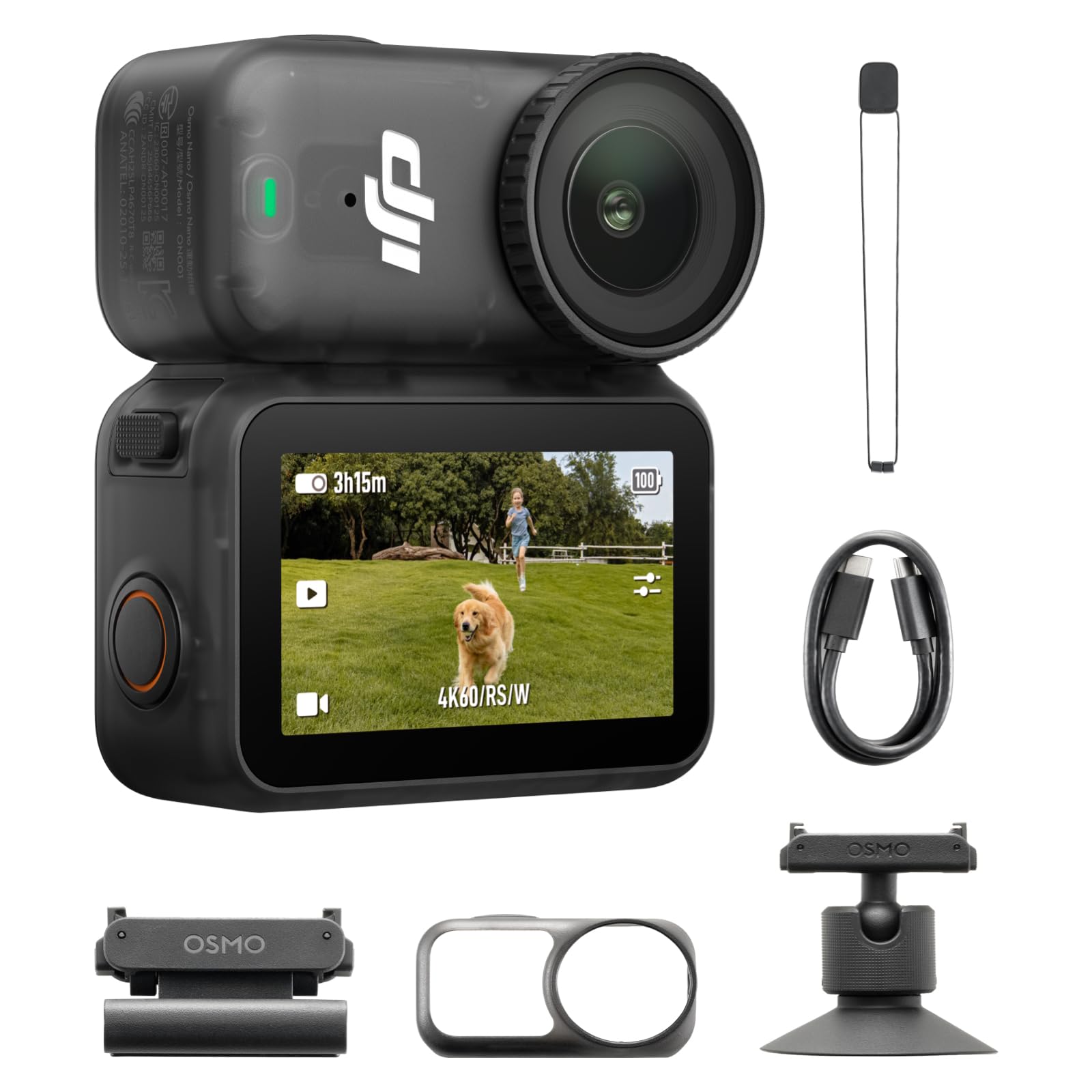
The DJI Osmo Nano is a tiny yet powerful action camera built for hands-free POV vlogging. Its 1/1.3-inch sensor captures more light than traditional action cameras, delivering crisp 4K/60fps video with a 143-degree ultra-wide field of view. Magnetic accessories — hat clip, lanyard, and the multifunctional Vision Dock — let you mount the camera virtually anywhere without bulky rigs. Reviewers highlight the 200-minute total battery life when using the Vision Dock, with about 60 minutes of detached 4K recording.
FlowState Stabilization ensures smooth footage during runs, rides, or pet walks, and 10-bit D-Log M color gives you room to grade in post. The 64GB built-in storage captures plenty before you need a microSD card. Users have reported the dock drains battery quickly even when turned off, so storing the camera outside the dock between shoots is advisable. The splash resistance (Vision Dock IPX4) allows confident use in light rain.
As a main camera for narrative vlogging or talking-head segments, the Nano’s small sensor cannot match a 1-inch or APS-C camera. Its strength is creative POV shots you cannot get with a standard camcorder.
Why it’s great
- Incredibly lightweight (39g) with magnetic mounting versatility.
- 200-minute battery with Vision Dock extends recording sessions.
- FlowState stabilization delivers gimbal-like smoothness.
Good to know
- Smaller sensor struggles in very low light compared to 1-inch cameras.
- Vision Dock drains battery when shut down; store camera separately.
- 4K/60fps max — no 4K/120fps option for ultra slow motion.
4. Insta360 GO 3S (128GB)

The Insta360 GO 3S is the smallest camera on this list at just 39 grams, yet it shoots true 4K video with FlowState stabilization that rivals gimbal footage. Its magnetic clip system lets you mount it to a pet collar, hat brim, or bike handlebar in seconds, making it ideal for first-person vlogs you cannot capture with a larger camera. The Action Pod offers a 2.2-inch flip screen for live preview and extends battery to 140 minutes total (though the standalone camera records roughly 30 minutes continuously).
IPX8 waterproofing (down to 10m without a housing, 60m with the Dive Case) makes it adventure-ready. The MegaView FOV provides ultra-wide shots with less distortion than previous GO models. Reviewers love the AI editing feature that auto-cuts highlights to music, but note the internal battery is non-swappable and the camera continues charging when stored in the Pod, which drains the Pod’s battery over days of non-use.
This camera is not a replacement for a traditional action camera like a GoPro or a proper vlogging cam. Its tiny sensor produces acceptable video in good light but falls apart in dim conditions. For creative, ultra-portable POV content only, it excels.
Why it’s great
- Extremely lightweight (39g) with strong magnetic mounts for creative POVs.
- IPX8 waterproof without housing for wet adventures.
- AI auto-editing saves time creating highlight reels.
Good to know
- Internal battery not swappable; ~30-minute continuous recording standalone.
- Small sensor limits low-light quality for indoor vlogging.
- Pod battery drains if camera is stored inside while charging.
5. Canon PowerShot V10

The Canon PowerShot V10 prioritizes extreme portability and ease of use, featuring a retractable front-facing flip screen and a built-in stand that folds forward or backward for hands-free tabletop shooting. Its 1-inch back-illuminated CMOS sensor captures solid 4K/30fps video with natural color science typical of Canon. The included stereo microphone array (with a third mic to cancel background noise) delivers clear audio without an external mic for quiet indoor vlogs.
Image stabilization benefits from a recent firmware update (version 1.2.0) that adds three IS modes — Off, On, and Enhanced — giving you control over stabilization versus field of view. The 19mm wide-angle lens (35mm equivalent) is excellent for selfie-style vlogging, ensuring your face and background fit in frame. Users praise the pocketable size that fits in a fanny pack and the easy file transfer to Mac.
The fixed lens has no zoom capability whatsoever, which is the V10’s biggest limitation. Battery life is moderate at best, and the camera lacks a lens cap or wind screen in the box. This is a specialty camera for creators who prioritize grab-and-go simplicity over creative lens flexibility.
Why it’s great
- Built-in stand and flip screen for hands-free recording anywhere.
- Compact and lightweight, easily fits in a pocket or small bag.
- Good stereo mic with background noise cancellation for indoor use.
Good to know
- No optical zoom; you cannot change the focal length during filming.
- Battery life drains relatively quickly; keep a power bank handy.
- Image quality in harsh bright lighting can be inconsistent.
6. Sony ZV-1F
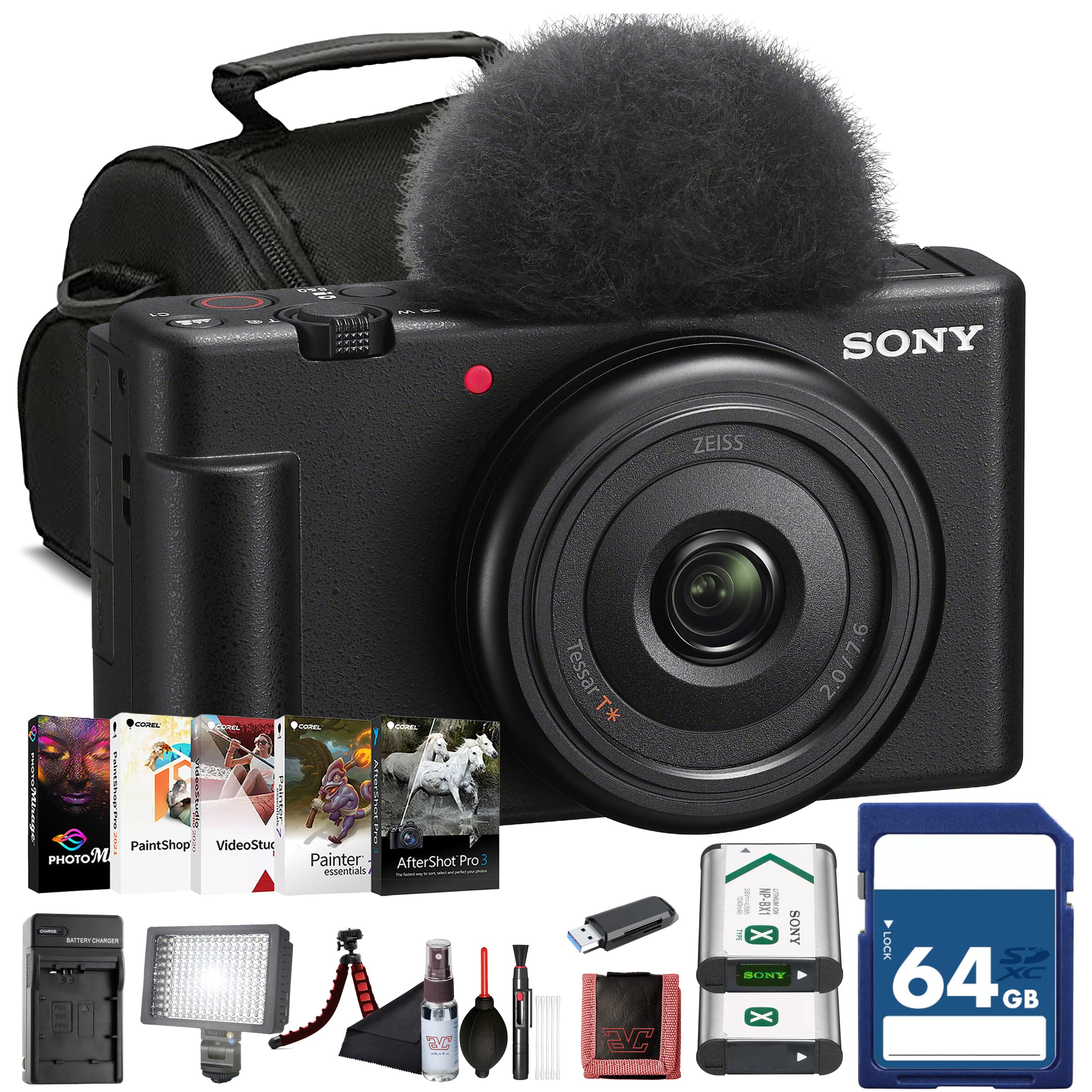
Sony’s ZV-1F is purpose-built for content creators who want high-quality 4K selfie video without the complexity of interchangeable lenses. The 20.1-megapixel 1-inch Exmor RS sensor captures oversampled 4K footage at up to 30fps, and the ultra-wide 20mm f/2.0 lens ensures even tight indoor spaces or group selfies fit comfortably. The flip-out LCD with touch controls makes framing intuitive.
Built-in features like Background Defocus (one-button blur), Product Showcase AF (automatic focus transition to an object held up to the camera), and Creative Look presets eliminate the need for editing. The three-capsule directional microphone with included windscreen keeps audio usable outdoors. Reviewers consistently mention the crisp 4K quality and the classic 24fps film look for vlog intros.
Battery life is the ZV-1F’s Achilles heel — a single NP-BX1 charge struggles to cover a full day of shooting, and the camera lacks in-body stabilization (relying on optical steadystate). It is also a fixed-lens camera, so you cannot swap to a telephoto or wide-angle for different shots. For sit-down or walk-around vlogging in controlled conditions, it is very reliable.
Why it’s great
- One-button background defocus and Product Showcase AF simplify shooting.
- Ultra-wide 20mm lens fits more environment into selfie frames.
- Oversampled 4K retains excellent detail and color.
Good to know
- Fixed lens means no zoom at all.
- Battery drains quickly; spare NP-BX1 is essential.
- No in-body stabilization; footage can look shaky while walking.
7. Panasonic LUMIX FZ80D

The Panasonic LUMIX FZ80D is a superzoom bridge camera that packs a 60x optical zoom (20-1200mm equivalent) into a single body — ideal for wildlife vlogs, sports events, or distanced shots where you cannot physically get closer. Its 18.1-megapixel sensor records 4K video and supports the 4K Photo mode, letting you extract 8-megapixel stills from video. The POWER O.I.S. (optical image stabilization) does a commendable job at keeping telephoto shots viewable.
The 2,360K-dot Live Viewfinder ensures clear composition even in harsh sunlight, a feature missing from most compact vlogging cameras. Post Focus technology lets you select the focus point after capturing — useful for macro-style detail shots. Reviewers note the zoom is exceptional for home inspection or nature walkthrough content but warn that image resolution at full zoom suffers noticeably unless you have excellent lighting.
Battery consumes quickly when using the zoom motor, so carrying two spare batteries is almost mandatory. The sensor struggles in low light, producing grainy images at higher ISOs. This camera is brilliant for its specific niche — long-reach vlogging — but not a good all-around vlogging tool for indoor or dim settings.
Why it’s great
- 60x optical zoom reaches distances impossible with compact cameras.
- POWER O.I.S. stabilizes handheld telephoto shots effectively.
- 4K Photo mode extracts usable stills from video clips.
Good to know
- Small 1/2.3-inch sensor struggles in low light.
- Battery drains fast, especially with heavy zoom use.
- User interface is not the most intuitive for beginners.
8. Canon EOS R50 V (Body Only)
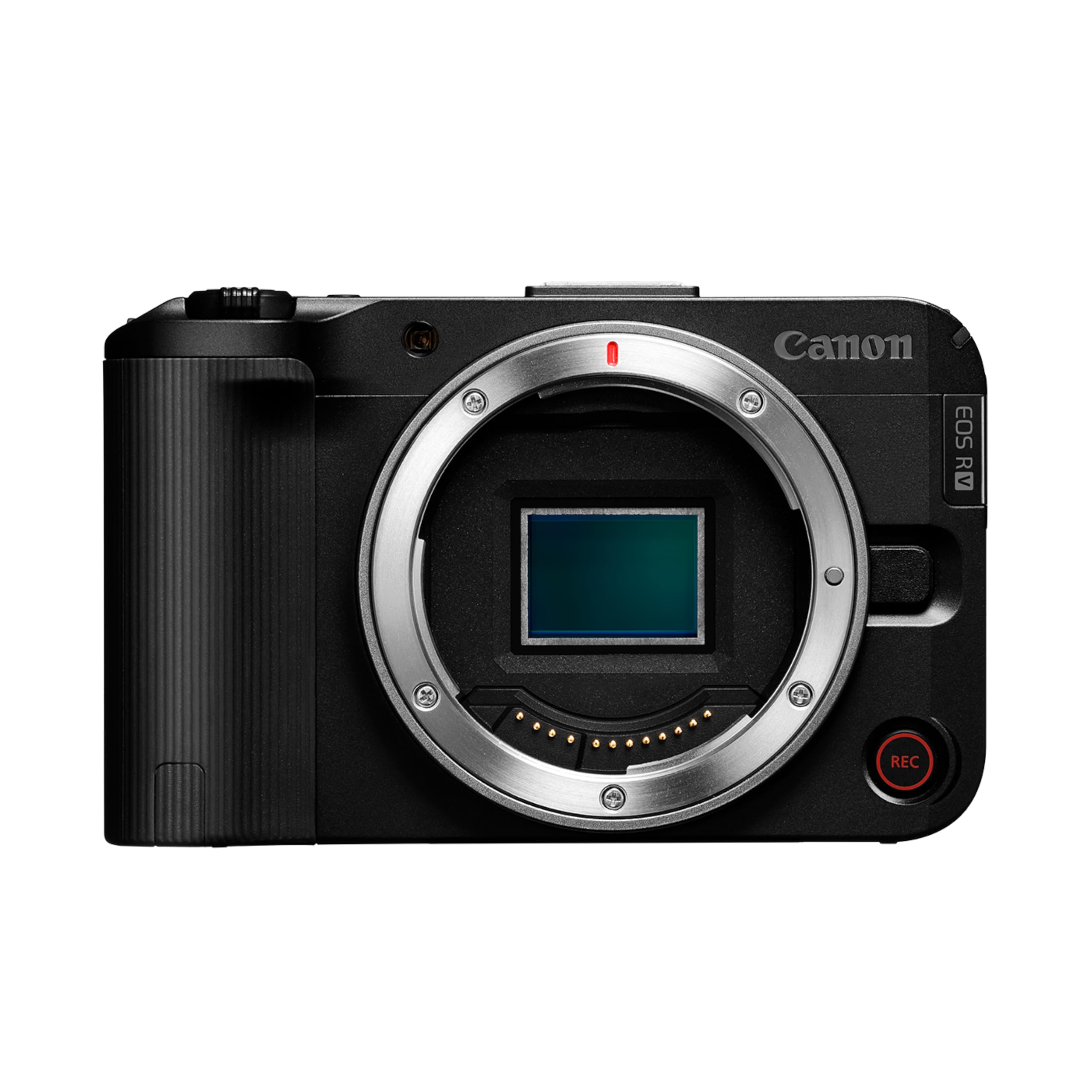
The Canon EOS R50 V is the first body in Canon’s new V series, designed from the ground up for video creators rather than photographers. Its 24.2-megapixel APS-C sensor with DIGIC X processor records full-width 4K/29.97p and 4K crop 59.94p, delivering sharp imagery with Canon’s renowned color science. Dual Pixel CMOS AF II with Register People Priority ensures your face stays in focus even in complex scenes.
A redesigned interface includes a front record button and a vertical video tripod mount, plus Slow and Fast mode for controlling frame rate and playback speed in-camera. The camera supports CLog3 and 10-bit H.265/H.264 recording, enabling professional color grading workflows. Reviewers who also own an R6 II praise the R50 V as an ultra-lightweight everyday companion that slips into a backpack for casual shoots.
The body alone does not include a lens, and RF lenses vary significantly in size and cost. Some users note the temperature gauge rises during extended 4K recording, though it rarely triggers a shutdown. The lack of a viewfinder (relying entirely on the flip screen) can be inconvenient in bright outdoor conditions.
Why it’s great
- Interchangeable RF mount gives lens flexibility for creative shots.
- Dual Pixel CMOS AF II tracks faces and subjects reliably.
- 10-bit CLog3 offers professional color grading bandwidth.
Good to know
- Body only — requires purchasing RF lenses separately.
- No built-in viewfinder; screen viewing in bright sunlight can be tricky.
- Internal temperature can rise during extended 4K recording.
9. Sony Alpha ZV-E10 (Kit with 16-50mm Lens)
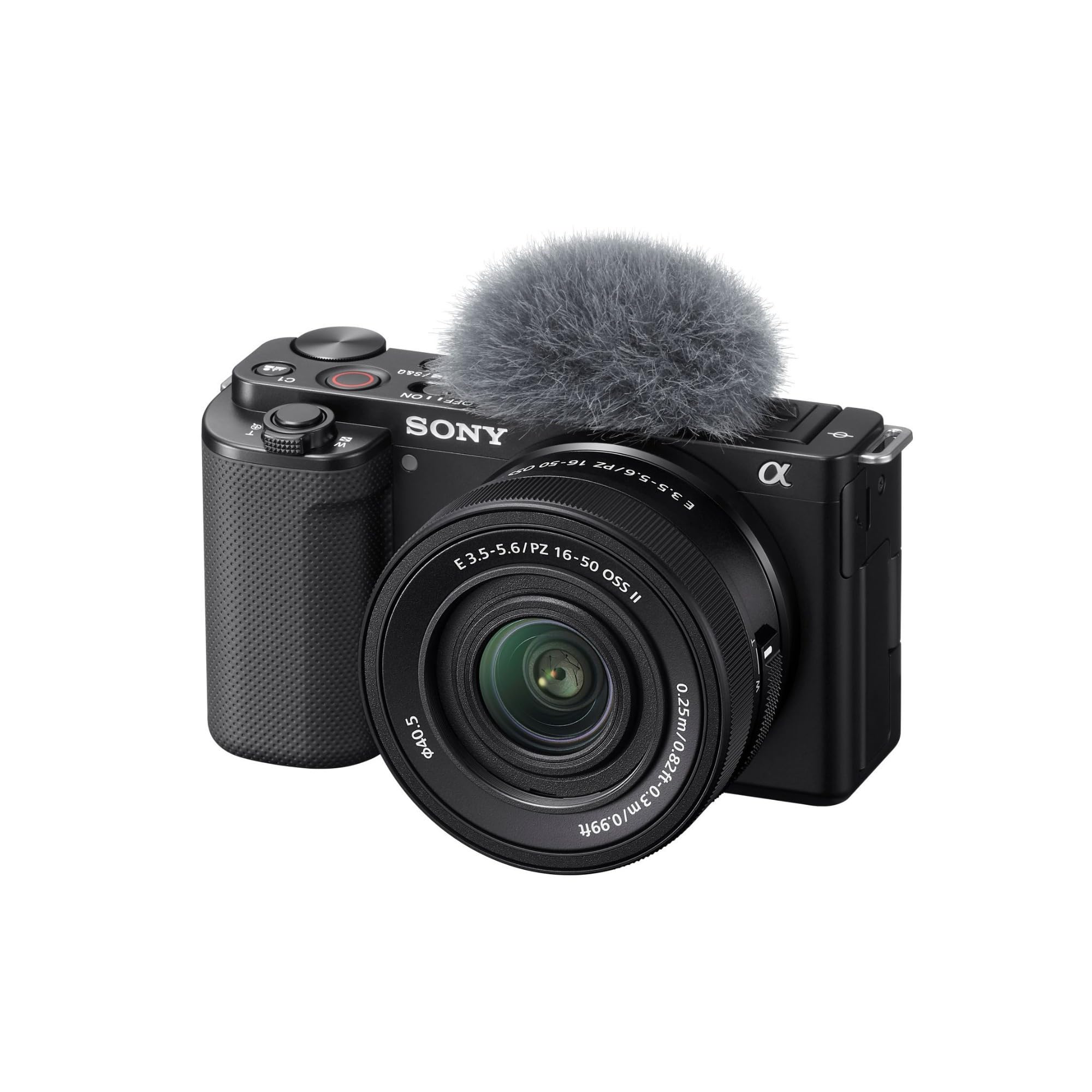
The Sony Alpha ZV-E10 is a mirrorless vlogging camera that uses an APS-C sensor to oversample 4K video from 6K, resulting in particularly sharp and detailed footage with minimal aliasing. The included power zoom 16-50mm OSS II lens gives you a standard zoom range for talking-head shots and wider environmental takes. The E-mount system opens up a wide array of interchangeable lenses for future upgrades.
Creator-focused features include a Background Defocus button for instant blur, Product Showcase Setting for smooth focus transitions to objects, and a built-in directional microphone with windscreen. The flip-out screen and USB-C live streaming capability let you use it as a high-quality webcam without extra hardware. Reviewers appreciate the easy-to-use presets that get good results right out of the box.
The kit lens has a maximum aperture of f/3.5-5.6, so low-light performance is average without a faster prime lens. Battery life is decent for a mirrorless but expect to carry a spare for full-day shoots. The 3.5mm microphone jack is a welcome addition, though you need to buy a windscreen separately if shooting outside often.
Why it’s great
- APS-C sensor oversamples 4K from 6K for exceptional sharpness.
- Interchangeable E-mount system allows lens upgrades over time.
- Background Defocus button simplifies subject isolation.
Good to know
- Kit lens aperture (f/3.5-5.6) limits low-light performance.
- Battery life is average; carry spares for long shoots.
- No in-body stabilization; relies on lens OSS for steady footage.
10. Blackmagic Design Pocket Cinema Camera 4K

The Blackmagic Pocket Cinema Camera 4K (BMPCC 4K) is a professional cinema camera that produces image quality far beyond any compact or mirrorless vlogging camera. Its Micro Four Thirds sensor offers 13 stops of dynamic range and native DCI 4K resolution (4096 x 2160), with Blackmagic RAW and ProRes recording options that give editors maximum flexibility. The included DaVinci Resolve Studio activation key is valued at several hundred dollars alone.
Multiple recording options — SD/UHS-II, CFast 2.0, and external USB-C SSD — ensure you never run out of storage during long shoots. The dual native ISO (up to 25,600) keeps noise minimal in dimly lit interview setups. A large 5-inch LCD touchscreen eliminates the need for an external monitor in many scenarios.
This camera is not beginner-friendly. There is no continuous autofocus, no in-body stabilization, the battery lasts roughly 30 minutes, and the screen is nearly unviewable in direct sunlight (~250 nits). You will need a tripod or gimbal, external power, and likely a monitor. It is a tool for narrative, interview, or cinematic vlogs where image quality is the priority and convenience is secondary.
Why it’s great
- 13-stop dynamic range and dual native ISO for exceptional image quality.
- Records Blackmagic RAW and ProRes for professional post-production.
- Includes DaVinci Resolve Studio license for color grading.
Good to know
- No continuous autofocus or in-body stabilization.
- ~30-minute battery life; external power is recommended.
- Screen is dim (~250 nits), hard to see outdoors without a monitor.
11. Sony Alpha 6700 (with 18-135mm Lens)

The Sony Alpha 6700 sits at the top of the APS-C vlogging hierarchy, combining a 26-megapixel Exmor R back-illuminated sensor with a dedicated AI processor for real-time subject recognition. It tracks people, animals, birds, insects, and vehicles with unusual accuracy, making it a powerful tool for complex vlogs involving moving subjects. The camera records 4K/60p from 6K oversampling and also offers 4K/120p recording for true slow motion.
In-body image stabilization (IBIS) works alongside lens-based stabilization, producing usable handheld footage even with non-stabilized glass. The 18-135mm kit lens is versatile, covering wide-angle to telephoto. 10-bit 4:2:2 recording with LUT handling simplifies color matching across multiple cameras. Users upgrading from older models report huge jumps in focus speed and video quality.
The a6700 is compact for an APS-C body, but with the 18-135mm lens attached, the total weight and bulk are notable. Some users report the camera overheating after approximately 40 minutes of continuous 4K/60p recording, though lower frame rates mitigate this. The single SD slot can also be a bottleneck for professional double-backup workflows. It is a powerful hybrid camera for serious vloggers who also shoot photos.
Why it’s great
- AI-based subject tracking is remarkably accurate for complex scenes.
- 4K/120p recording enables high-quality slow-motion clips.
- In-body stabilization makes handheld use more viable.
Good to know
- Overheats after ~40 min at 4K/60p; lower frame rates are cooler.
- Kit lens adds significant bulk; the whole setup is not ultra-portable.
- Single SD slot limits backup options for critical shoots.
FAQ
Is a 1-inch sensor good enough for low-light vlogging?
Do I need a gimbal camera or is electronic stabilization enough?
What is the real difference between 8-bit and 10-bit video for vlogging?
Can I use a mirrorless camera with kit lens for vlogging?
Final Thoughts: The Verdict
For most users, the 4k camera for vlogging winner is the DJI Osmo Pocket 3 because its mechanical 3-axis gimbal, 1-inch sensor, and reliable active tracking deliver out-of-the-box smoothness without requiring extra rigs. If you want interchangeable lens flexibility for creative depth-of-field control, grab the Canon EOS R50 V. And for a no-fuss, pocket-sized tool with gimbal stabilization at a lower price point, the Xtra Muse is the strongest alternative.

Mo Maruf
I created WellFizz to bridge the gap between vague wellness advice and actionable solutions. My mission is simple: to decode the research and give you practical tools you can actually use.
Beyond the data, I am a passionate traveler. I believe that stepping away from the screen to explore new environments is essential for mental clarity and physical vitality.