Our readers keep the lights on and my smoothie glass nicely filled. As an Amazon Associate, I earn from qualifying purchases.
A streaming setup that relies on a grainy 1080p webcam or a bulky DSLR without clean HDMI output sends a clear message to your audience: you’re not taking the production seriously. Whether you’re hosting a live podcast, running a Sunday church broadcast, or battling it out on Twitch, the camera is the single most important tool in your chain—and settling for less means losing viewers to channels that look sharper, smoother, and more professional.
I’m Mohammad Maruf — the founder and writer behind WellFizz. I’ve spent years analyzing the video hardware market, comparing sensor sizes, autofocus algorithms, output protocols, and low-light performance data to separate true streaming-grade cameras from overpriced consumer toys.
After weeks of rigorous spec analysis and real-world use-case evaluation, I’ve narrowed the market down to the nine models that genuinely deserve your attention in the hunt for the best 4k camera for streaming.
How To Choose The Best 4K Camera For Streaming
Not every 4K camera is built for the demands of live streaming. Latency, connectivity, autofocus behavior, and heat management separate the pro-grade tools from the ones that will frustrate you mid-broadcast. Here are the three factors that matter most.
Sensor Size & Low-Light Performance
A 1/2.3-inch sensor struggles in dimly lit rooms, producing noisy, soft images that look amateur. A larger 1-inch or Micro Four Thirds sensor captures more light, giving you cleaner shadows and richer colors without needing a light bank the size of a broadcast studio. For home streamers and churches, a larger sensor is the single biggest upgrade you can make.
Output Protocol: NDI, HDMI, USB, or SDI
USB webcams are the simplest but compress video and add latency. HDMI delivers uncompressed video to a capture card but runs into cable-length limits. NDI streams full-quality video over a standard Ethernet network, ideal for multi-camera setups without running long HDMI cables. SDI is the broadcast standard for long runs but requires dedicated hardware. Choose the protocol that matches your existing ecosystem and cable budget.
Autofocus & AI Tracking
For a talking head or a presenter who moves around, slow or hunting autofocus is a dealbreaker. Look for cameras with phase-detection or hybrid AF systems that lock onto a face and stay there. AI auto-tracking, which physically pans and tilts the camera to follow movement, adds a huge production value bump—but not all tracking algorithms are equal. Body-tracking that works even when the subject turns away is far more reliable than face-only tracking.
Quick Comparison
On smaller screens, swipe sideways to see the full table.
| Model | Category | Best For | Key Spec | Amazon |
|---|---|---|---|---|
| Insta360 Link 2 Pro | PTZ Webcam | Desk streamers & meetings | 1/1.3″ sensor, AI tracking | Amazon |
| TONGVEO 4K NDI PTZ | NDI PTZ | Church & multi-cam studios | 4K 30fps, 20x zoom, SDI | Amazon |
| OBSBOT Tail Air | Compact AI PTZ | Mobile streamers & creators | 320° pan, 50MP stills | Amazon |
| FoMaKo K600N | NDI HX3 PTZ | High-FPS worship streams | 4K 60fps NDI, 20x zoom | Amazon |
| Prisual TEM-4K20N PRO | Broadcast PTZ | Pro AV & silent operation | 4K 60fps, 1/1.8″ sensor | Amazon |
| Tenveo NDI PTZ | Budget NDI PTZ | Budget live streaming | 1080p 60fps, 20x zoom | Amazon |
| Mevo Core | Wireless 4K | Multi-cam wireless production | Micro 4/3, Wi-Fi 6E | Amazon |
| Blackmagic Pocket 4K | Cinema Camera | High-end cinematic streaming | 13 stops DR, Micro 4/3 | Amazon |
| Canon VIXIA HF G70 | Traditional Camcorder | Event & outdoor streaming | 4K 30fps, 20x zoom, OSD | Amazon |
In‑Depth Reviews
1. Insta360 Link 2 Pro
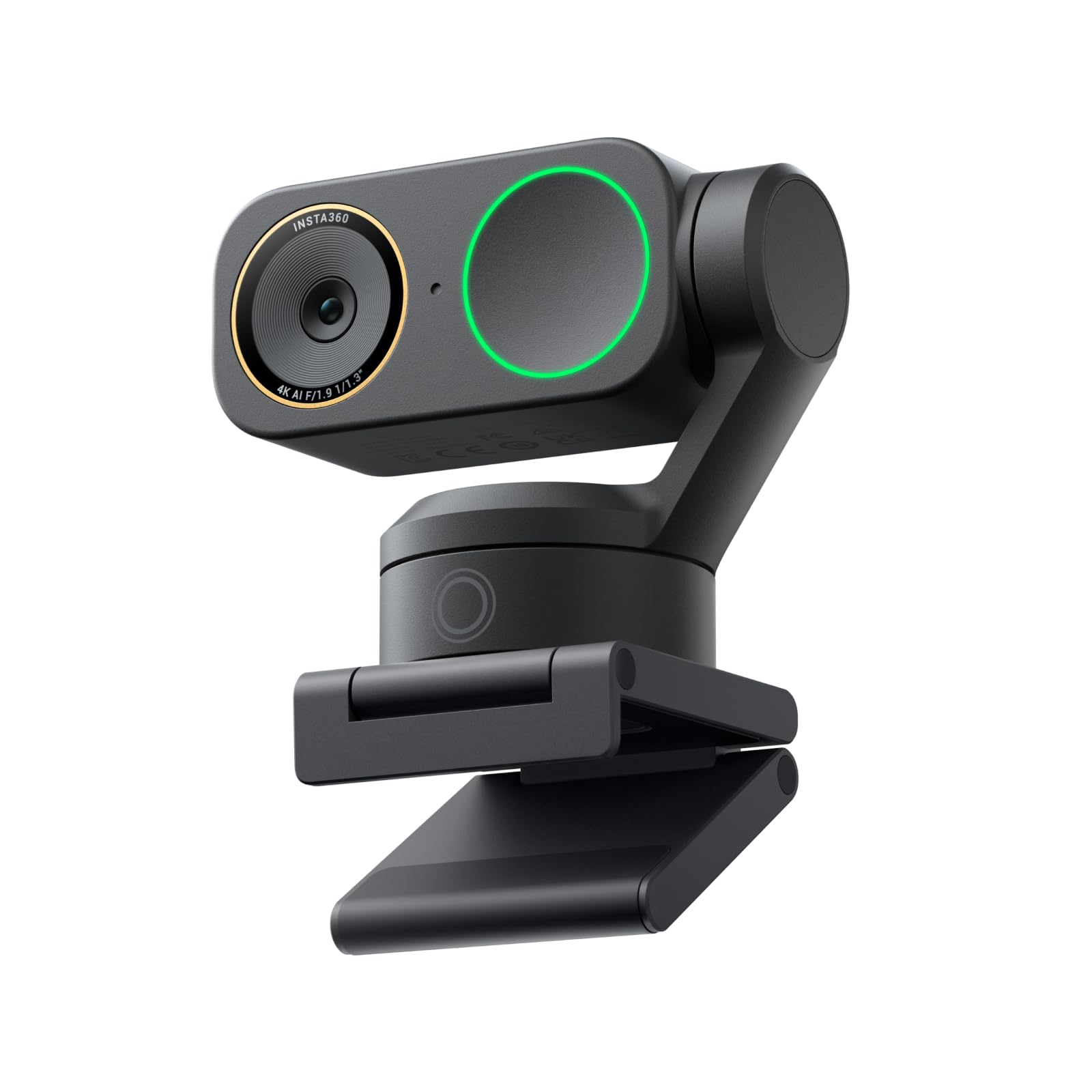
The Insta360 Link 2 Pro sets a new standard for PTZ webcams by packing a large 1/1.3-inch sensor into a compact desktop form factor. That sensor delivers noticeably cleaner video in low-light conditions compared to the 1/2.3-inch sensors found in most competitors, with natural bokeh that mimics a DSLR depth of field without needing a separate lens. The 4K output is crisp at 30fps, and the 1080p 60fps mode is silky smooth for fast-paced streaming.
AI tracking is the headline feature, and it delivers—the camera physically pans and tilts to follow your movement around the room with millisecond-level responsiveness. Gesture control, Stream Deck integration, and a redesigned dual-mic system with directional beamforming make this a complete solution for streamers who want professional production value without cluttering their desk with separate audio gear. Setup takes under five minutes, and the Link Controller software gives you full manual override when needed.
The only real compromise is the short USB-C cable included in the box, which limits placement options unless you buy a longer cable. It’s also not compatible with ARM-based Windows systems or Windows Hello, so check your hardware before buying. For the vast majority of desktop streamers, however, this is the most polished all-in-one 4K streaming camera available today.
Why it’s great
- Large 1/1.3-inch sensor offers exceptional low-light clarity and natural bokeh
- Physical AI pan/tilt tracking, gesture control, and Stream Deck integration
- Directional beamforming mics deliver clean voice isolation in noisy rooms
Good to know
- Included USB-C cable is relatively short, limiting desk placement
- Not compatible with ARM-based Windows systems or Windows Hello
2. TONGVEO 4K NDI PTZ Camera

The TONGVEO 4K NDI PTZ Camera is a true all-in-one production workhorse, offering official NDI integration, 4K 30fps via HDMI and USB, a 20x optical zoom lens, and professional-grade SDI output—all in one package. The official NDI license means plug-and-play compatibility with OBS, vMix, ProPresenter, and Streamlabs, without needing a separate capture card or extra software. For churches and studios running multi-camera setups, this camera dramatically simplifies the cabling and workflow.
AI auto-tracking uses both facial and human body recognition, so even if the presenter’s body is partially obstructed, the system locks onto the face as soon as it reappears. You can choose between Presenter Tracking and Auto-Framing modes, and the web browser control interface lets you adjust settings remotely. The camera also supports PoE, so a single Ethernet cable delivers power, data, and control—reducing cable clutter significantly.
The remote control is a bit clunky—panning is slow and you can only perform one operation at a time—but presets help speed things up once you have your shot angles dialed in. The 4K output is limited to 30fps, and the IP streaming maxes out at 1080p, so this isn’t for high-FPS gaming streams. For worship services, conferences, and broadcast-style productions, it’s an outstanding value that matches cameras costing twice as much.
Why it’s great
- Official NDI license for seamless integration with OBS, vMix, and ProPresenter
- Simultaneous HDMI, SDI, USB, and IP outputs with PoE support
- Dual face-and-body AI tracking works even with partial obstruction
Good to know
- 4K output only through HDMI and USB; IP streaming limited to 1080p
- IR remote control is slow and clunky for live adjustments
3. OBSBOT Tail Air

The OBSBOT Tail Air is the smallest 4K PTZ camera on this list—smaller than a cola can—yet it packs a 50MP sensor, 4K 30fps recording, and a 320-degree horizontal rotation range. The compact size makes it ideal for streamers on the move, podcasters who want a portable multi-camera rig, or anyone who needs to pack a production setup into a single bag. It supports four connection methods: Micro HDMI, USB-C, Ethernet, and wireless, plus RTMP and RTSP protocols for direct streaming to YouTube, Twitch, and Facebook.
The upgraded AI tracking is a standout feature. It can track humans, animals, and even objects, with improved gesture recognition that lets you start or stop tracking with a simple hand motion. The companion Obsbot Start app gives you full manual control over exposure, focus, and presets, and you can also control the camera via the included remote or a Stream Deck. The built-in battery lasts up to 2.5 hours for remote use, and the USB-C splitter allows simultaneous charging and data transfer.
There are two major caveats. First, the NDI license requires an additional purchase, so factor that cost into your budget if you plan to use NDI. Second, the internal battery cannot be bypassed or replaced—if it degrades after a year or two, the camera becomes unusable until serviced. Some users have reported reliability issues within the first year, so a warranty or extended protection plan is highly recommended. When it works, it’s a remarkably flexible streaming camera.
Why it’s great
- Ultra-compact design with 320° pan and 180° tilt, perfect for portable setups
- AI tracking works for humans, animals, and objects with gesture control
- Multiple connection options: HDMI, USB-C, Ethernet, WiFi, and RTMP
Good to know
- NDI license must be purchased separately
- Internal battery is non-replaceable and can degrade, potentially bricking the camera
4. FoMaKo K600N 4K 60fps NDI PTZ
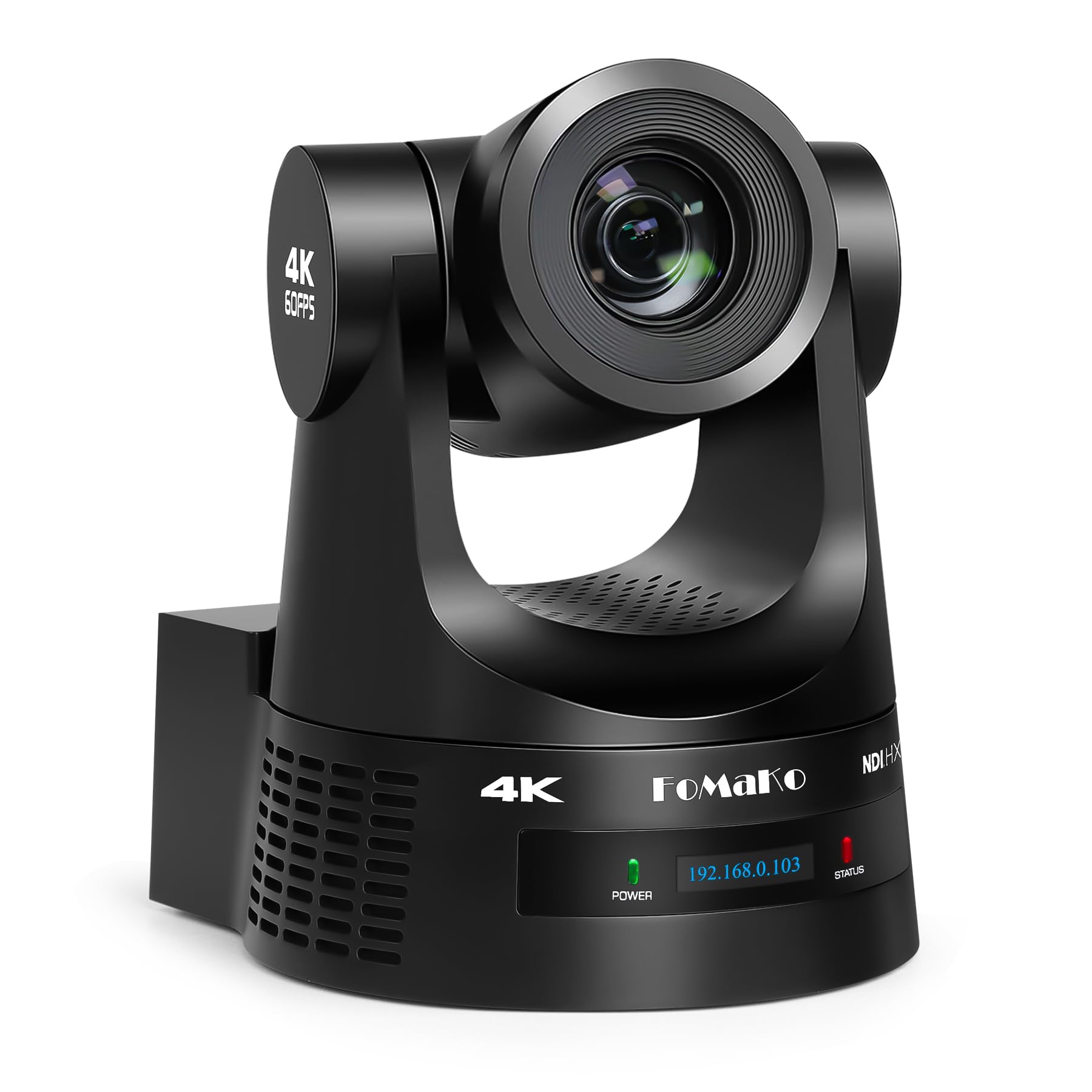
The FoMaKo K600N is one of the few PTZ cameras that delivers true 4K 60fps over NDI HX3, HDMI 2.0, and USB, making it a top contender for streamers who need smooth, high-frame-rate video without dropping to 1080p. The 20x optical zoom lens is paired with a third-generation AI tracking system that lets you customize tracking modes, sensitivity, target size, and even what happens when the subject leaves the frame. The autofocus is noticeably faster than many competitors in this price range, maintaining sharp focus during zoom and camera movement.
The camera outputs simultaneously over four channels: HDMI 2.0 (4K 60fps), NDI (4K 60fps with NDI HX3), USB 3.0 (4K 30fps), and 3G-SDI (1080p 60fps). This gives you enormous flexibility in routing video to different destinations—a switcher, a streaming PC, and a confidence monitor—all from one camera. PoE is supported, and the included NDI license is officially approved by NewTek, so you get full plug-and-play NDI without any extra dongles or fees.
Setup isn’t quite plug-and-play out of the box—initial network configuration can be tricky, especially if you need to access the camera’s web interface for DHCP. The documentation has some translation quirks, and the pan/tilt movement can occasionally feel jerky during slow, precise adjustments. For the price, though, you’re getting 4K 60fps NDI performance that usually costs significantly more, making this a smart choice for budget-conscious studios and churches.
Why it’s great
- True 4K 60fps over NDI HX3 and HDMI 2.0, rare at this price point
- Gen 3 AI tracking with customizable sensitivity, target size, and lost-target actions
- Four simultaneous video outputs (HDMI, NDI, USB, SDI) for flexible routing
Good to know
- Initial network setup can be finicky, requiring HDMI for DHCP configuration
- Pan and tilt movements can have minor jerks at slow speeds
5. Prisual Ultra 4K PRO NDI PTZ Gen 5
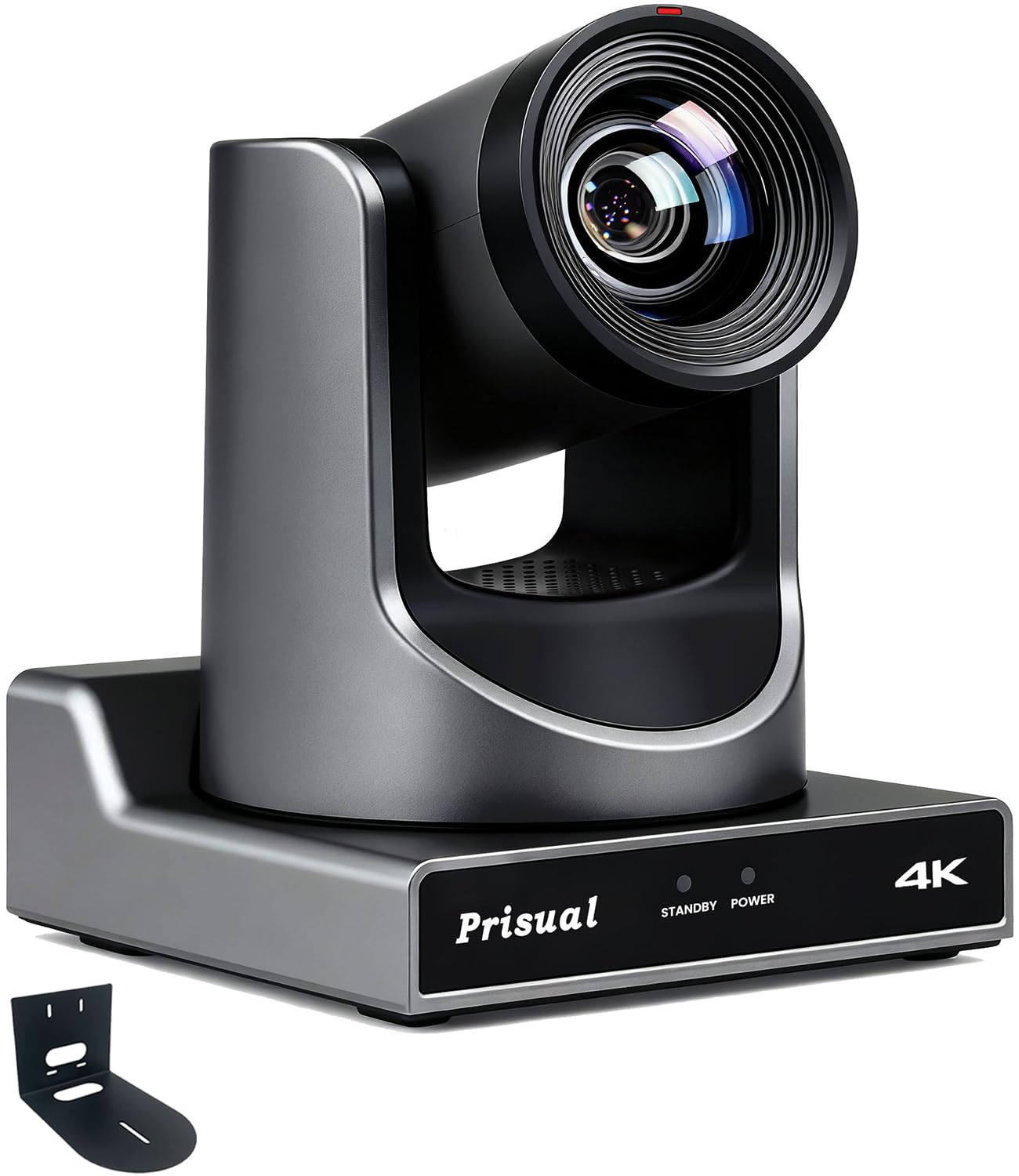
The Prisual TEM-4K20N PRO is built for environments where noise is a dealbreaker—churches, theaters, and quiet studios. Instead of a noisy gear system, it uses a synchronous belt drive that operates in near-complete silence, so your camera movements don’t intrude on a prayer, a live performance, or a quiet interview. The 1/1.8-inch UHD CMOS sensor with 8.42 megapixels delivers exceptional 4K 60fps video with 16x digital zoom on top of the 20x optical zoom, and the Gen 3 AI tracking remembers four different tracking zones for automated presenter following.
Official NDI certification ensures stable, verifiable 4K streaming even on congested networks, and the camera integrates seamlessly with OBS, vMix, and ProPresenter. The all-metal housing is built to last a decade, and the included mounting hardware and PoE support make installation clean and simple. Prisual also offers a 3-year warranty and 24/7 support, which adds peace of mind for organizations that can’t afford downtime.
The embedded web interface can be a bit glitchy, and some users report that the video feed freezes after about 20 minutes if you haven’t purchased the separate NDI license—but that’s a one-time, lifetime fee, not a subscription. The AI tracking is not perfect in low-contrast environments, and the 20-minute free NDI trial behavior is confusing out of the box. For silent, broadcast-grade PTZ operation with solid support, this is a top-tier investment.
Why it’s great
- Synchronous belt drive operates silently, ideal for churches and live performances
- 1/1.8-inch sensor with 4K 60fps output and official NDI certification
- All-metal housing with 3-year warranty and responsive 24/7 support
Good to know
- Embedded web interface can be glitchy; separate NDI license purchase may be needed
- AI tracking can struggle in low-contrast lighting conditions
6. Tenveo NDI PTZ Camera
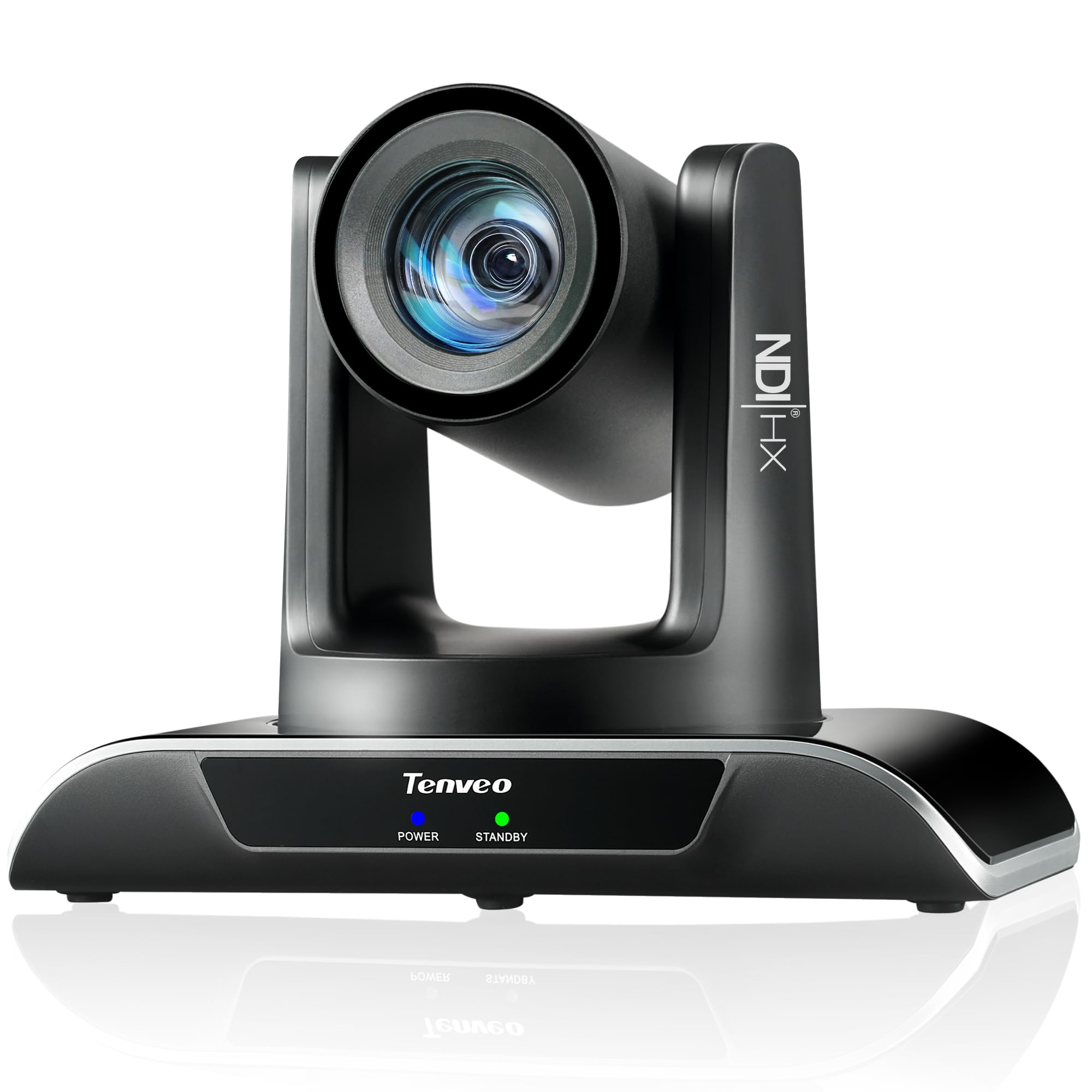
The Tenveo NDI PTZ Camera is a budget-friendly entry point into the world of NDI-based production, offering 1080p 60fps video with a Sony 1/2.8-inch CMOS sensor and a 20x optical zoom lens. While it doesn’t hit the 4K resolution of higher-end models, the 1080p 60fps output is sharp, smooth, and perfectly adequate for church services, conferences, and live streaming applications where 4K isn’t critical. The NDI capability allows low-latency IP-based production without long HDMI cable runs.
The AI auto-tracking uses dual human body and face recognition with deep learning algorithms, achieving millisecond-level response times. The tracking locks onto subjects reliably and can even maintain tracking if the target is partially blocked. It supports three simultaneous video outputs (USB 3.0, HDMI, and LAN), and the PoE support means a single Ethernet cable handles power, video, and control. The 3-year warranty and lifetime technical support are strong value adds at this price tier.
The camera claims PoE support, but some users have found that it doesn’t work reliably with all PoE switches—you may need to use the included power adapter. The remote control can feel laggy, and the camera’s overall response speed is slower than more expensive PTZ units. For a first NDI camera or a secondary angle in a multi-cam setup, it’s a solid performer, but don’t expect the fluid movements or instant AF of a premium unit.
Why it’s great
- Affordable NDI-enabled PTZ with reliable human-and-face AI tracking
- Sharp 1080p 60fps video with 20x optical zoom and smooth movement
- 3-year warranty and lifetime technical support included
Good to know
- Limited to 1080p—no 4K output
- PoE support can be inconsistent; may require the included power adapter
7. Logitech Mevo Core

The Mevo Core is a wireless 4K streaming camera built around a Micro Four Thirds lens mount, giving you access to a huge ecosystem of interchangeable lenses. This is a rarity among streaming cameras, where fixed lenses are the norm. The ability to swap in a wide-angle lens for a podcast roundtable or a portrait lens for a talking-head stream gives you cinematic flexibility that most PTZ cameras simply can’t match. The camera streams directly to YouTube, Twitch, and other platforms at up to 4K 30fps.
The Mevo Multicam ecosystem is the real draw. Use the Mevo Multicam app to control multiple Mevo Core cameras, switch angles, and produce a live stream with a simple iPad or iPhone interface. The built-in 6-hour battery (at 1080p 30fps) means you can set up in a park, a conference hall, or a remote location without hunting for a power outlet. The three-mic array with noise cancellation and support for external audio via analog or digital inputs means you don’t need a separate audio interface for basic productions.
At this price, the camera body alone is expensive, and you still need to buy a lens. The focus mechanism on some units has been reported as defective, and the tech support is email-only with slow response times. The wireless connection, while convenient, can occasionally drop in crowded Wi-Fi environments, and the 4K streaming is limited to 30fps. For wireless multi-camera productions where mobility is key, the Mevo Core is unmatched, but the total cost of ownership can climb quickly.
Why it’s great
- Interchangeable Micro Four Thirds lens mount for cinematic flexibility
- 6-hour battery life for truly wireless, untethered streaming
- Integrated Mevo Multicam ecosystem for multi-angle production from a single device
Good to know
- Expensive body only—lens and accessories add significant cost
- Tech support is email-based and slow; some units have defective focus mechanisms
8. Blackmagic Design Pocket Cinema Camera 4K

The Blackmagic Pocket Cinema Camera 4K is not a traditional streaming camera—it’s a true cinema camera that can be repurposed for live production with the right accessories. The Micro Four Thirds sensor delivers 13 stops of dynamic range, dual native ISO up to 25,600, and records in Blackmagic RAW or Apple ProRes up to 4K DCI 4096×2160. For streamers who want broadcast-grade image quality that surpasses everything else on this list, this is the camera to beat.
Streaming requires a clean HDMI output to a capture card or a compatible switcher, and the 5-inch touchscreen LCD eliminates the need for an external monitor in most setups. The included DaVinci Resolve Studio license gives you professional color grading and live production tools, and the USB-C port supports recording directly to external SSDs. The carbon fiber polycarbonate body is lightweight and the handgrip puts critical controls at your fingertips.
This is not a point-and-shoot streaming camera. It has no continuous autofocus in video mode, no in-body image stabilization, and the battery lasts only about 30 minutes of continuous use—you’ll need external power or a battery grip for any real streaming session. The screen is difficult to see outdoors, and you’ll need to rig it out with a cage, monitor, and audio interface for a full production setup. If you’re willing to invest the time and money in accessories, the image quality is unmatched for this price.
Why it’s great
- 13 stops of dynamic range and dual native ISO for true cinema-grade image quality
- Records in Blackmagic RAW and ProRes; includes DaVinci Resolve Studio
- Micro Four Thirds mount offers huge lens selection and vintage glass compatibility
Good to know
- No continuous autofocus, no image stabilization, and short 30-minute battery life
- Requires significant accessories (cage, monitor, external power) for live streaming
9. Canon VIXIA HF G70

The Canon VIXIA HF G70 is a traditional camcorder that brings a 4K UHD sensor, DIGIC DV6 image processor, and a 20x optical zoom into a familiar handheld body. For streamers who need a single-device solution for events, outdoor shoots, or on-the-go recording, this camcorder’s point-and-shoot simplicity is refreshing. The Hybrid AF system with face detection delivers fast, precise autofocus, and the 8-blade aperture creates smooth, cinema-style bokeh in out-of-focus highlights.
UVC livestreaming via USB allows direct HD streaming to a PC or Mac without a capture card, making it easy to plug into OBS or Zoom. The On-Screen Display Time Stamp recording embeds date, time, and timecode directly into your footage—useful for legal, educational, or archival purposes. Dual SD card slots give you backup recording options, and the built-in lens hood and barrier protect the glass when not in use.
There are two major limitations for streamers. First, the UVC livestreaming output is capped at 1080p, not 4K—the 4K recording is only available for local files. Second, low-light performance is poor; the image becomes soft and noisy once gain exceeds 4dB, and anything above 10dB is mushy. The screen is bright and sharp, and the dynamic stabilization works well for handheld shots, but this is an outdoor or well-lit indoor camera only. For the price, you’re paying for the Canon name and the optical zoom range, not cutting-edge streaming features.
Why it’s great
- Powerful 20x optical zoom with excellent image stabilization for handheld use
- UVC livestreaming via USB for plug-and-play use with OBS and Zoom
- Dual SD card slots and OSD Time Stamp recording for archival footage
Good to know
- UVC livestreaming is limited to 1080p, not 4K
- Poor low-light performance—needs strong, well-diffused indoor lighting
FAQ
Do I need a dedicated capture card for an NDI camera?
Why does my 4K streaming camera only output 1080p over USB?
Can I use a DSLR or mirrorless camera for streaming instead of a PTZ camera?
What is the difference between NDI, NDI HX, and NDI HX3?
Final Thoughts: The Verdict
For most users, the best 4k camera for streaming winner is the Insta360 Link 2 Pro because it combines a large 1/1.3-inch sensor, physical AI pan/tilt tracking, and professional audio in a desktop-friendly package that works out of the box. If you want a multi-camera NDI studio setup for a church or event space, grab the TONGVEO 4K NDI PTZ Camera for its official NDI integration, SDI output, and PoE simplicity. And for a wireless, lens-interchangeable streaming rig that you can take anywhere, nothing beats the Logitech Mevo Core.

Mo Maruf
I created WellFizz to bridge the gap between vague wellness advice and actionable solutions. My mission is simple: to decode the research and give you practical tools you can actually use.
Beyond the data, I am a passionate traveler. I believe that stepping away from the screen to explore new environments is essential for mental clarity and physical vitality.