Our readers keep the lights on and my smoothie glass nicely filled. As an Amazon Associate, I earn from qualifying purchases.
The hunt for a genuinely compact smartphone in a world dominated by towering screens is a specific frustration. You want a device that slips into a small pocket or secures in one hand without a precarious grip, but you refuse to sacrifice the modern performance, camera quality, and battery life that make a phone useful beyond just calls and texts. The market has shifted so aggressively toward large-screened phablets that finding a truly pocket-friendly flagship experience requires navigating a minefield of compromises and niche models.
I’m Mohammad Maruf — the founder and writer behind WellFizz. My research focuses on analyzing hardware specifications and market trends to identify the most robust and reliable options in underserved product categories.
After sifting through the limited pool of compact contenders, I’ve separated the genuine contenders from the outdated relics. This guide breaks down the top performers to help you find the best 4.5 to 5 inch smartphone that matches your need for portability without leaving you stranded by poor battery life or a weak camera.
How To Choose The Best 4.5 To 5 Inch Smartphone
Selecting a compact phone is more about strategic trade-offs than any other category. You are balancing raw power, camera capability, and battery endurance against the physical constraints of a small chassis.
Processor and Real-World Performance
In a compact phone, the processor is the single most important component because you cannot compensate for a slow chip with a larger battery or more efficient cooling. Look for a modern octa-core chipset with a 6nm or smaller fabrication process, like the MediaTek Helio G99 or Dimensity 6300. These deliver flagship-like responsiveness for daily tasks and light gaming without the heat and power draw of older architectures.
Carrier Compatibility is Non-Negotiable
Many compact and rugged phones are imported from markets outside the US. Before you get attached to a model, verify it supports the specific LTE and 5G bands your carrier uses. T-Mobile and its MVNOs (Mint Mobile, Metro) are more forgiving with international devices, while AT&T and Verizon are far more restrictive. A phone that looks perfect on paper is useless if it cannot make a call on your network.
Battery Capacity vs. Charging Speed
A tiny phone cannot house a 5,000mAh cell, so you must assess its endurance through the lens of efficiency. A 2,000mAh battery in a phone with a 3-inch screen and a power-sipping processor can easily last a full day. Meanwhile, a larger 4.7-inch rugged phone can pack a 6,200mAh cell and last multiple days. Prioritize a device with at least 18W fast charging so a quick top-up is effective.
Camera Realism in a Small Package
Physical sensor size is limited in small phones. A 50MP or 64MP sensor does not automatically mean great photos. Pay attention to pixel size (1.2um or larger) and aperture (f/1.8 or wider). Features like Optical Image Stabilization (OIS) are rare in this form factor, so prioritize models with a proven image processing pipeline from brands like Motorola or Samsung.
Quick Comparison
On smaller screens, swipe sideways to see the full table.
| Model | Category | Best For | Key Spec | Amazon |
|---|---|---|---|---|
| Ulefone Armor Mini 20 Pro | Rugged | Ultimate durability & battery life | 4.7″ HD+, 373 PPI | Amazon |
| Motorola Moto G Play 2024 | Value | Reliable everyday US performance | 6.5″ 90Hz HD+ Display | Amazon |
| Moto G 5G 2024 | Premium | Future-proof 5G and media | 6.6″ 120Hz Display | Amazon |
| Unihertz Jelly Star | Ultra-Compact | Maximum portability & screen time reduction | 3″ LCD, 277 PPI | Amazon |
| Samsung Galaxy A06 | Entry-Level | A budget-friendly Samsung experience | 6.7″ PLS LCD, 262 PPI | Amazon |
| realme Note 70T | Battery King | Long-lasting battery in a large screen | 6.75″ 90Hz, 260 PPI | Amazon |
| MIRO Ultra-Light | Budget | An entry-level large screen on a budget | 6.75″ HD+, 273 PPI | Amazon |
In‑Depth Reviews
1. Ulefone Armor Mini 20 Pro 5G

The Ulefone Armor Mini 20 Pro is the most feature-dense compact device available today. Its 4.7-inch HD+ display with a 90Hz refresh rate and 373 PPI provides sharper visuals than most phones in this size class. The MediaTek Dimensity 6300 5G chipset, paired with 16GB of RAM (8GB physical + 8GB virtual), delivers snappy multitasking and app performance that rivals much larger mid-range flagships.
Battery life is the standout feature here. The 6,200mAh solid-state battery powers the phone for three to four days of moderate use and supports 33W wired, 15W wireless, and reverse charging. The triple-camera system, with a 64MP night vision camera and a 50MP primary sensor, captures usable photos in most conditions, though the lack of OIS is noticeable in low light.
Its rugged IP68/IP69K rating and MIL-STD 810G certification mean it can survive drops, submersion, and extreme temperatures. The Versatile LED light with 130 LEDs is a genuinely useful tool for camping or emergencies. The major drawback is carrier compatibility — it does not work with AT&T or Cricket, limiting its US audience to T-Mobile and its MVNOs.
Why it’s great
- Exceptional 3-4 day battery life with fast and wireless charging.
- True IP68/IP69K waterproofing and MIL-STD 810G drop protection.
- Sharp 4.7″ 90Hz display with high 373 PPI pixel density.
- Capable 64MP night vision and 50MP main camera array.
Good to know
- Thick and heavy brick-like design is not pocket-friendly for everyone.
- Requires T-Mobile or T-Mobile MVNO; does not support AT&T or Cricket.
- The camera software can be inconsistent without optical stabilization.
2. Motorola Moto G Play 2024

The Moto G Play 2024 is the most pragmatic choice for a US buyer who wants a reliable daily driver without the import headaches. Its Snapdragon 680 processor and 4GB of RAM handle social media, messaging, and light browsing with acceptable smoothness. The 6.5-inch 90Hz HD+ display is large, but the phone’s overall footprint remains manageable thanks to slim bezels.
The 50MP Quad Pixel camera system is the highlight at this level. It captures detailed shots in good light and uses pixel-binning to improve low-light sensitivity, producing 12.5MP images with better dynamic range than you’d expect from a phone in this bracket. The 5,000mAh battery is the real workhorse, easily lasting a full day and a half on a single charge.
The worst drawback is the display resolution. The 720p panel is sharp enough for most tasks but lacks the crispness of a 1080p screen, and text can appear slightly soft up close. The camera also struggles in very dim conditions, producing noisy images. However, for practical users who prioritize battery life and a headphone jack, this is a smart investment.
Why it’s great
- Long-lasting 5,000mAh battery with efficient Snapdragon 680 processor.
- 50MP camera produces excellent photos in well-lit conditions.
- Includes a 3.5mm headphone jack and expandable storage up to 1TB.
- Full compatibility with US carriers including AT&T, T-Mobile, and Verizon.
Good to know
- 720p display is noticeably less sharp than 1080p panels.
- Camera quality drops significantly in low-light environments.
- Side-mounted fingerprint reader location may be inconvenient for some.
3. Moto G 5G 2024

The Moto G 5G 2024 represents the best balance of future-proofing and features for buyers who need more than just basic functionality. The Snapdragon 4 Gen 1 octa-core processor with 4GB of RAM provides excellent responsiveness, and the addition of 5G connectivity ensures it will remain compatible with evolving network infrastructure. The 6.6-inch 120Hz display makes scrolling and animations feel exceptionally fluid.
Motorola has equipped this model with a 50MP Quad Pixel camera that benefits from better image processing than the G Play, resulting in more consistent color and white balance. The macro vision lens is a fun addition for close-up photography. The 5,000mAh battery lasts a full day, and TurboPower charging gets you back to a usable level quickly.
The vegan leather back gives the phone a premium, grippy feel that resists fingerprints. Dolby Atmos-tuned stereo speakers sound fuller than most phones at this level. The only real concession is the 720p resolution, which is a shame for a phone with a 120Hz panel, as content can look softer than a 1080p 60Hz screen.
Why it’s great
- Fluid 120Hz display for very smooth scrolling and animations.
- 5G connectivity for future-proof network compatibility.
- Vegan leather back provides a secure, premium-feeling grip.
- Dolby Atmos stereo speakers are loud and clear for media.
Good to know
- Display is limited to 720p resolution, not 1080p.
- Some users report occasional lag with multiple apps open.
- Charger may be sold separately from the retail box.
4. Unihertz Jelly Star

The Unihertz Jelly Star is the definition of a niche device, and it excels within that niche. Its 3-inch LCD display and tiny 192g body make it the most pocketable phone on this list. The 6nm MediaTek Helio G99 processor with 8GB of RAM is surprisingly powerful for its size, handling email, messaging, and even light gaming without significant lag, which is a massive leap from older mini phones.
The 2,000mAh battery provides a full day of use for calls, texts, and basic apps, which is impressive given its physical constraints. The transparent back with customizable LED notification lights adds a playful, nostalgic aesthetic. It also includes a 3.5mm headphone jack, NFC for payments, an infrared port, and a programmable button for quick shortcuts.
There are clear trade-offs. The camera is mediocre at best, producing grainy shots in anything but optimal light. The on-screen keyboard is cramped, making fast typing difficult. Most critically, it only works with T-Mobile and Verizon (with a SIM activation trick), so carrier flexibility is limited. It is a fantastic secondary phone or a tool to cut down screen time, but it is not a primary device for most users.
Why it’s great
- Smallest form factor available, truly pocketable and one-hand operable.
- Surprisingly fast Helio G99 processor with 8GB of RAM.
- Includes a 3.5mm jack, NFC, IR blaster, and programmable button.
- Customizable transparent back with LED notification lights.
Good to know
- Camera quality is poor in any lighting condition.
- Limited to T-Mobile and Verizon; no AT&T support.
- Small screen and keyboard make extended typing a chore.
5. Samsung Galaxy A06

The Samsung Galaxy A06 delivers a familiar One UI software experience with a large 6.7-inch PLS LCD display. It is powered by a capable 4G LTE processor and 4GB of RAM, which is adequate for basic tasks but will stutter under heavier multitasking. The 50MP main camera with an f/1.8 aperture is a solid shooter for the price, capturing good detail in daylight.
The 5,000mAh battery provides dependable all-day battery life. Samsung’s software support policy means this phone will likely receive security updates longer than competing budget phones. The face recognition biometrics work well for quick unlocks, though it lacks the speed of a fingerprint sensor.
The biggest caveat is carrier compatibility. This is a Latin version that only works with T-Mobile and its MVNOs inside the US. It will not function on AT&T or Verizon. The display is also a 720p panel, which is serviceable but not sharp. It is a good entry-level device for Samsung loyalists on a budget who are already on T-Mobile.
Why it’s great
- Solid 50MP main camera performance in good lighting.
- Large 5,000mAh battery with dependable longevity.
- Familiar Samsung One UI with good software support.
- Face recognition for convenient biometric unlocking.
Good to know
- Only compatible with T-Mobile and its MVNOs in the US.
- Display is only 720p resolution.
- Performance can lag with heavy multitasking or gaming.
6. realme Note 70T
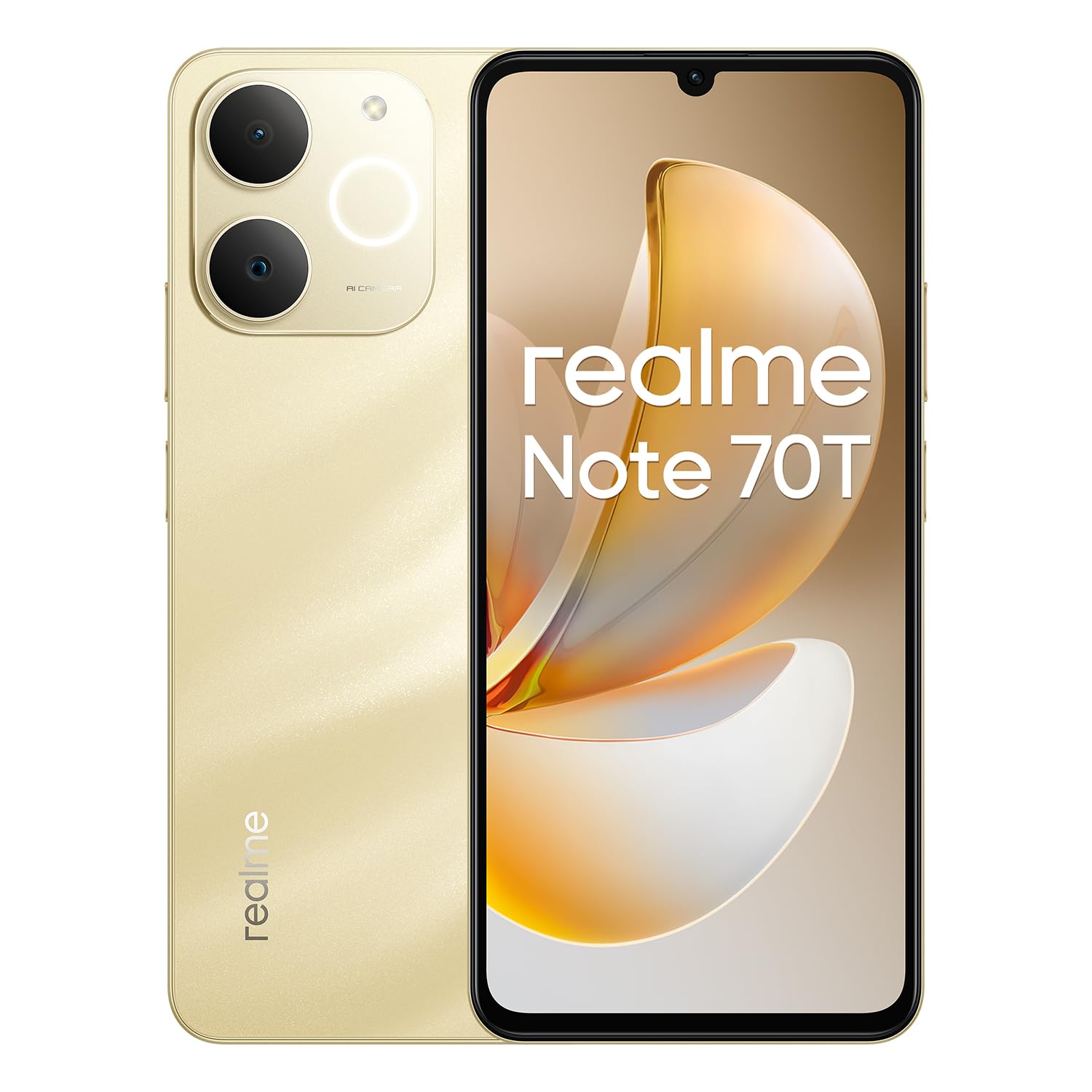
The realme Note 70T is laser-focused on battery performance. Its 6,000mAh battery is an enormous cell that easily provides two full days of heavy usage, making it the endurance leader in this list. The 6.75-inch 90Hz display offers a smooth visual experience for media consumption and casual gaming.
The 32MP camera is capable of capturing decent shots in good light, though it lacks the detail and low-light performance of higher-resolution sensors. The IP54 rating provides splash resistance, protecting the phone from rain or accidental spills. The octa-core processor handles everyday tasks like web browsing and social media without issue.
The main limitation is its very narrow US carrier compatibility. Many users report it does not work on major US networks, including AT&T, T-Mobile, and Verizon, outside of limited testing. It is also missing the Google Play Store on some units, relying on its own Appstore which has a severely limited selection of apps. This device is better suited to international use.
Why it’s great
- Massive 6,000mAh battery for two-day battery life.
- Smooth 90Hz display for fluid scrolling and animations.
- IP54 rating for protection against splashes and dust.
- Decent 32MP camera for daytime photography.
Good to know
- Limited US carrier compatibility; primarily an international model.
- May lack Google Play Store on some units, restricting app access.
- Camera struggles in low-light conditions.
7. MIRO Ultra-Light
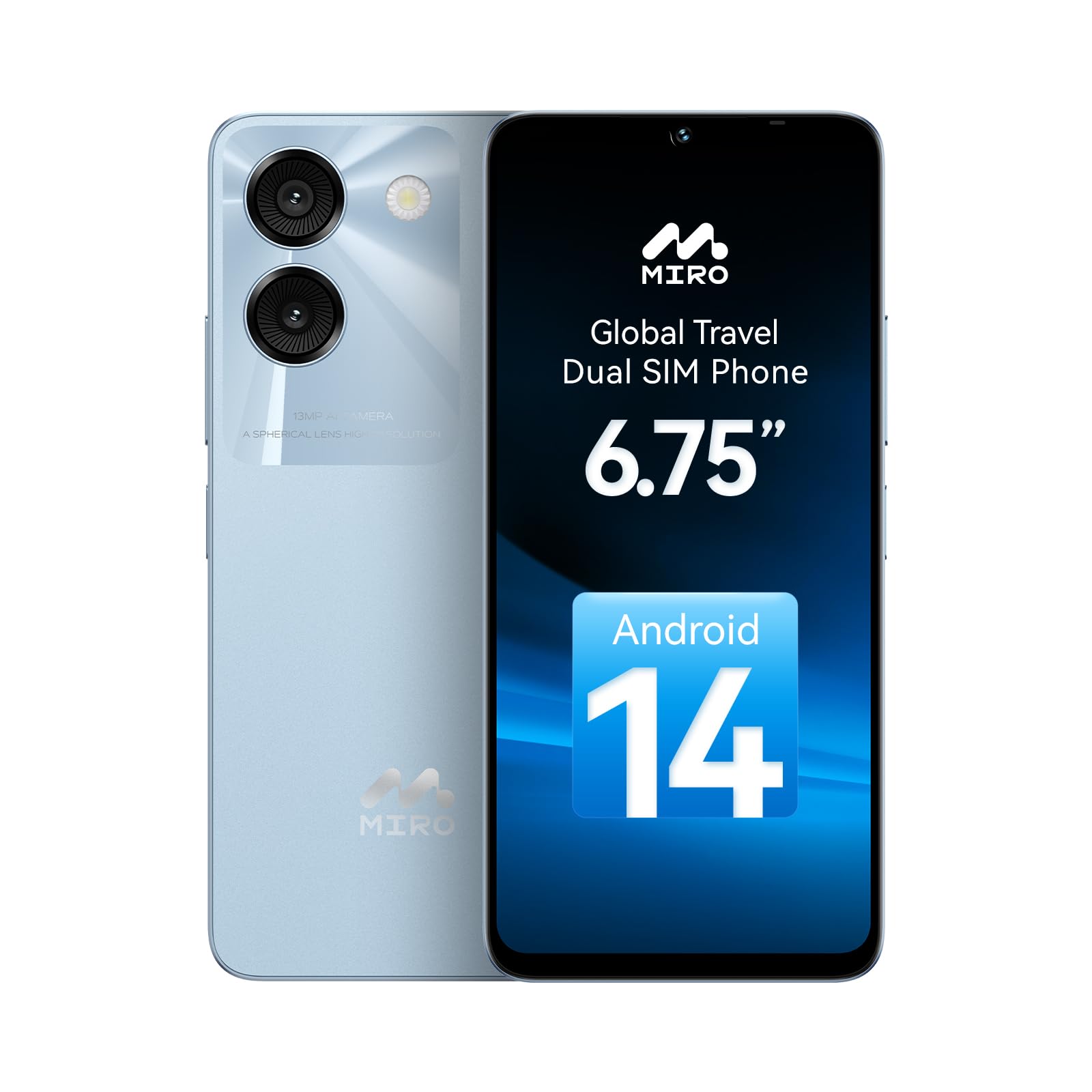
The MIRO Ultra-Light attempts to offer a large screen experience at a budget-friendly price point. Its 6.75-inch HD+ display provides a big canvas for media, and the 192g weight is genuinely light for a phone this size. The 4G LTE connectivity is compatible with T-Mobile and its MVNOs, making it a potential option for travelers needing a secondary device.
The 64GB internal storage combined with support for up to 1TB of microSD expansion is a standout feature for media hoarders. The 13MP AI dual camera is basic, capable of taking usable daylight shots but producing noisy, dark images in low light. The 5MP front camera is adequate for video calls but nothing more.
The feedback on this model is the most inconsistent of the group. Some users report poor screen resolution, a sluggish touchscreen, and excessive pre-installed apps. Several others mention the phone simply did not work with their intended carrier. It is a high-risk device that may work well for a specific subset of users but is not a safe recommendation for general use.
Why it’s great
- Very light 192g design for its large screen size.
- Expandable storage up to 1TB for offline media.
- Budget-friendly entry point for a large display phone.
Good to know
- Inconsistent carrier compatibility and performance issues reported.
- Low-resolution screen and basic 13MP camera.
- Pre-installed bloatware and slow touchscreen responsiveness.
FAQ
Why are most 4.5 to 5 inch smartphones imported from outside the US?
How do I check if a compact phone will work on my US carrier?
Can a mini or compact phone replace my main smartphone?
Final Thoughts: The Verdict
For most users, the 4.5 to 5 inch smartphone winner is the Ulefone Armor Mini 20 Pro because it packs a massive battery, true ruggedness, and a sharp 4.7-inch display into a single manageable package. If you want US carrier compatibility and a balanced daily driver, grab the Motorola Moto G Play 2024. And for extreme portability and a digital detox tool, nothing beats the Unihertz Jelly Star.

Mo Maruf
I created WellFizz to bridge the gap between vague wellness advice and actionable solutions. My mission is simple: to decode the research and give you practical tools you can actually use.
Beyond the data, I am a passionate traveler. I believe that stepping away from the screen to explore new environments is essential for mental clarity and physical vitality.